Toddler Activities by Age: 1 to 3 Years

SCREEN-FREE PLAY · AGES 1 TO 3

Toddler Activities by Age: 1 to 3 Years

Toddler activities by age from 1 to 3 years, using things already at home. Find today's idea in minutes with the Mooshie Moments app and start playing.

  • Free to download
  • No account needed
  • No screen time for your child
QR code to download Mooshie MomentsOn a laptop?
Scan to get Mooshie on your iPhone.
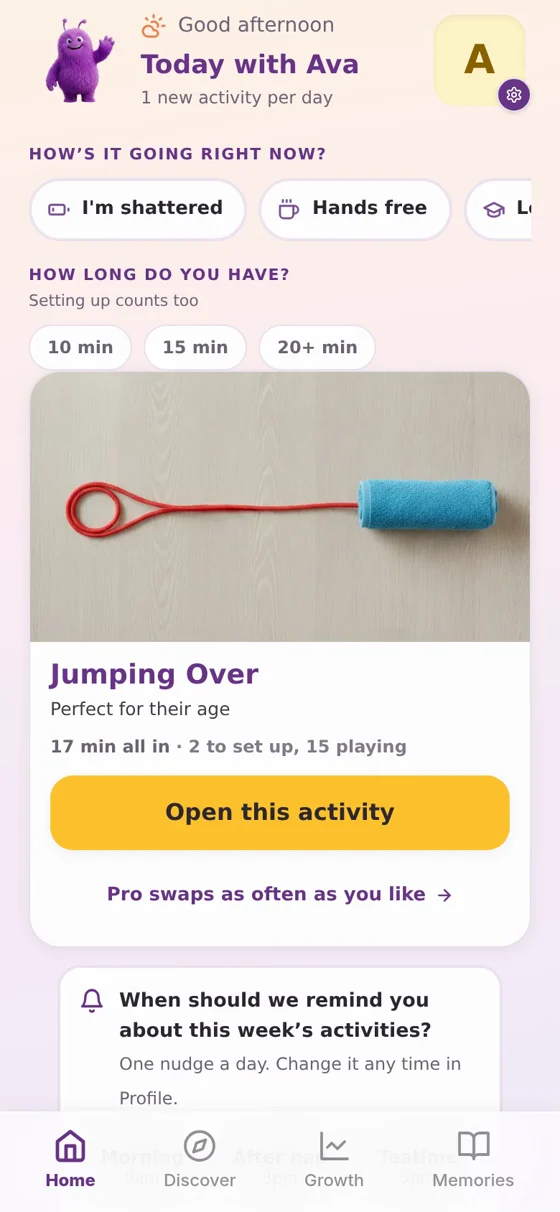
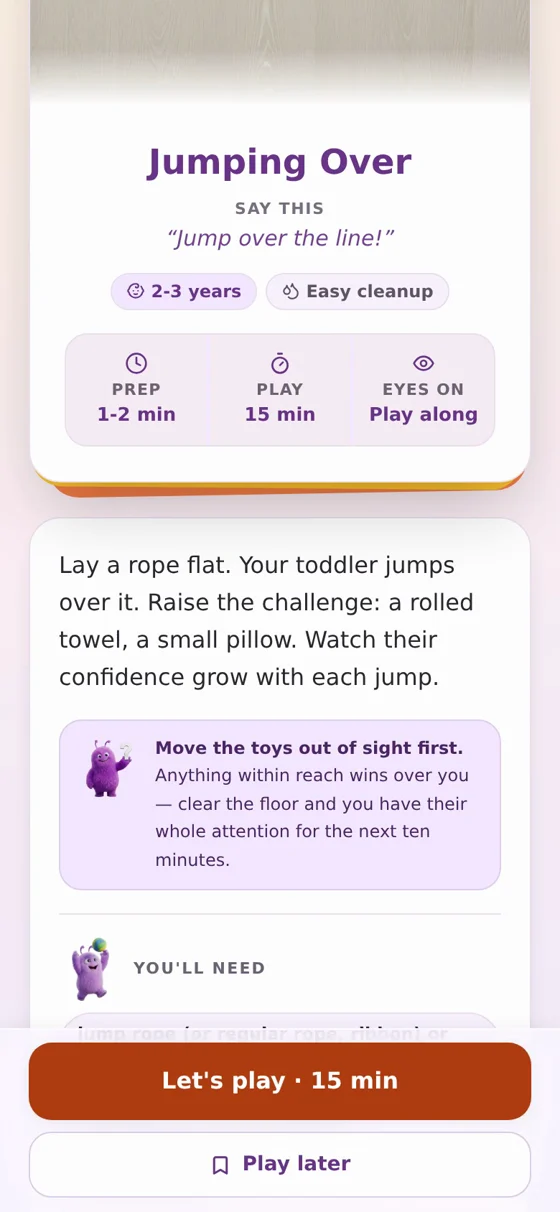
Mooshie Today screen with mood and time options and today's activityMooshie activity screen with Say this words to use
10free ideas on this page
5,918activities for 6 months to 4 years
Say thisthe exact words on every activity
0child details uploaded, ever

Toddler activities need to keep up with a child who changes almost month to month, from wobbly walking to full sentences and a firm opinion about everything. What holds a 15 month old’s attention for half an hour barely registers with a 3 year old, and what a 3 year old finds satisfying would overwhelm a child who’s only just found their feet.

Below are ten activities from the Mooshie Moments app, grouped into three rough stages from 1 to 3 years. Each uses things you already have at home, takes 5 to 20 minutes, and comes with the exact words to say while you play.

12 to 18 months: on the move, into everything

Walking, or nearly walking, changes the whole game. Suddenly the room is theirs to explore, and most play at this stage is physical, repetitive and led entirely by curiosity.

1 to 2 years10 minutes

1. Plant watering helper

Fill a small watering can halfway and walk with your toddler to a houseplant or garden pot. They tip the can, the water flows, and the plant visibly “drinks.” Watch them lean right over to see exactly where it landed.

You’ll need: a small watering can, a plant

How to play
  1. Fill the can and hand it over carefully.
  2. Walk together to the plant.
  3. Let them pour.
  4. Say “drink up, plant!” and repeat with a second plant if there’s one nearby.
1 to 2 years10 minutes

2. Singing names

Take a well-known tune, “Twinkle, Twinkle” works well, and sing your toddler’s name in place of the words, then move on to grandma’s name, the dog’s name, anyone they know. Hearing their own name land inside a song often stops a toddler completely still.

You’ll need: a simple, familiar tune

Say this: “Here’s a song with your name.” · “Who should we sing about next?”
1 to 2 years10 minutes

3. Pretend tea party

Take an empty cup each, say “cheers!” and pretend to sip together, then ask “more tea?” A shared, repeatable ritual like this works just as well at home as it does keeping a toddler settled somewhere unfamiliar, like a long car journey or a wait at the doctor’s.

You’ll need: two empty cups

How to play
  1. Give your toddler an empty cup and take one yourself.
  2. Say “cheers!” and pretend to sip.
  3. They copy, usually with a big theatrical “mmm.”
  4. Offer “more tea?” and repeat as many rounds as they like.

18 months to 2 years: talking, pretending, testing limits

Language is exploding and so is opinion. Activities that give a toddler some choice, or a job to do, tend to land better than anything that feels imposed.

1 to 2 years10 minutes

4. Race car sounds

Push a toy car across the floor making an exaggerated “vroom”, then hand it over and encourage your toddler to make the sound themselves as they push. Linking a sound to an action and an object is an early form of symbolic thinking, and most toddlers find the silliness of a loud “vroom” genuinely funny.

You’ll need: toy cars

Say this: “Vroom, vroom!” · “Fast car!” · “Slow car.”
1 to 2 years10 minutes

5. Climb up, climb down

Offer a safe, low climbing challenge, a couple of stairs with your hand held, or a stack of firm cushions, and let your toddler work out how to get up and, just as importantly, how to come back down slowly. Safe physical challenges like this build real confidence in what their body can do.

You’ll need: low steps, a sturdy platform, or stacked cushions

How to play
  1. Choose a low, stable surface to climb.
  2. Offer your hand and say “up, up, up!”
  3. Celebrate effort rather than speed: “you’re climbing, that’s hard work!”
  4. Model coming down slowly, one step at a time.

2 to 3 years: pretending, building, and finding their voice

By now, toddlers can hold a short story, follow a simple pattern, and negotiate (loudly) for what they want. Activities can ask a little more of their attention and their words.

2 to 3 years20 minutes

6. Nature collage treasure frame

Make a simple cardboard frame, then go on a short walk collecting leaves, sticks and flower heads bigger than your toddler’s fist (small pebbles and seed heads are choking hazards, so leave those on the ground). Back home, they glue one treasure on at a time while you name what they’ve placed.

You’ll need: cardboard, glue, natural items from a walk

How to play
  1. Make the cardboard frame before you head out.
  2. Collect four or five items on your walk, all bigger than a fist.
  3. Let your toddler choose and press each item onto the frame.
  4. Hang it up together and say “we made this from our walk.”
2 to 3 years15 minutes

7. Drumming patterns

Let your toddler walk, stamp or jump across the room while you drum whatever their feet do, slow steps for slow beats, one loud bang for a jump. Then swap, so your drumming tells their feet what to do instead. The pattern coming from their own body first makes this far more engaging than a rhythm you set alone.

You’ll need: a drum, bucket or large pot

Say this: “You copied me!” · “Listen first, then tap.” · “That’s a pattern!”
2 to 3 years10 minutes

8. Rainstorm in a jar

Fill a jar with water, spray a “cloud” of shaving cream on top, then drop blue food colouring on and watch it fall through like rain. Predicting what will happen before it does, and then watching it play out, is exactly the kind of hands-on curiosity toddlers this age thrive on.

You’ll need: a clear jar, water, shaving cream, blue food colouring

How to play
  1. Fill the jar most of the way with water.
  2. Spray shaving cream on top for the “cloud.”
  3. Drop blue food colouring onto the cream.
  4. Watch the “rain” fall through together.
2 to 3 years15 minutes

9. Mess-free sensory bag

Seal some washable paint or hair gel into a sturdy zip-top bag and let your toddler push, squish and chase the contents through the plastic with a fingertip, all without a drop of actual mess. It’s proper sensory play with an easy clean-up, which makes it a good option on days when you can’t face anything wetter.

You’ll need: a sealed bag of paint or hair gel

Say this: “What does that feel like?” · “Can you catch it?” · “Explore it!”
2 to 3 years5 minutes

10. Silly voice requests

When a simple request has turned into a standoff, try asking again in a cartoon voice, a robot voice, or a funny whisper instead of repeating yourself the same way. A change of tone can break a stuck moment without anyone backing down, and it usually gets a giggle along the way.

You’ll need: nothing but your own voice

Say this: imagine any instruction in your silliest robot voice and see what happens.

Hundreds more ideas like these are waiting in the app.

Plus one picked for your child every day, matched to their age and how today is going.

When you only have 5 minutes

Not every moment needs a full set-up. “Silly voice requests” above takes exactly one instruction and no props at all. Singing your toddler’s name into a tune you both know, or a quick round of “cheers” with two empty cups, both work the same way: no preparation, no clean-up, just a minute or two of full attention.

LOVED BY FAMILIES

Parents and experts on Mooshie

“I used to spend 30 minutes looking for an activity on Pinterest, get overwhelmed, and just turn on the TV. Mooshie takes 5 seconds.”
Sarah J.Mum of a 2-year-old
“Finally, an app that tells me to put my phone away. The activities are actually doable with stuff I have in my junk drawer.”
Mark D.Dad of two
“As a pediatric OT, I love that these activities build core developmental skills without feeling like ‘homework’ for parents.”
Dr Emily R.Paediatric occupational therapist
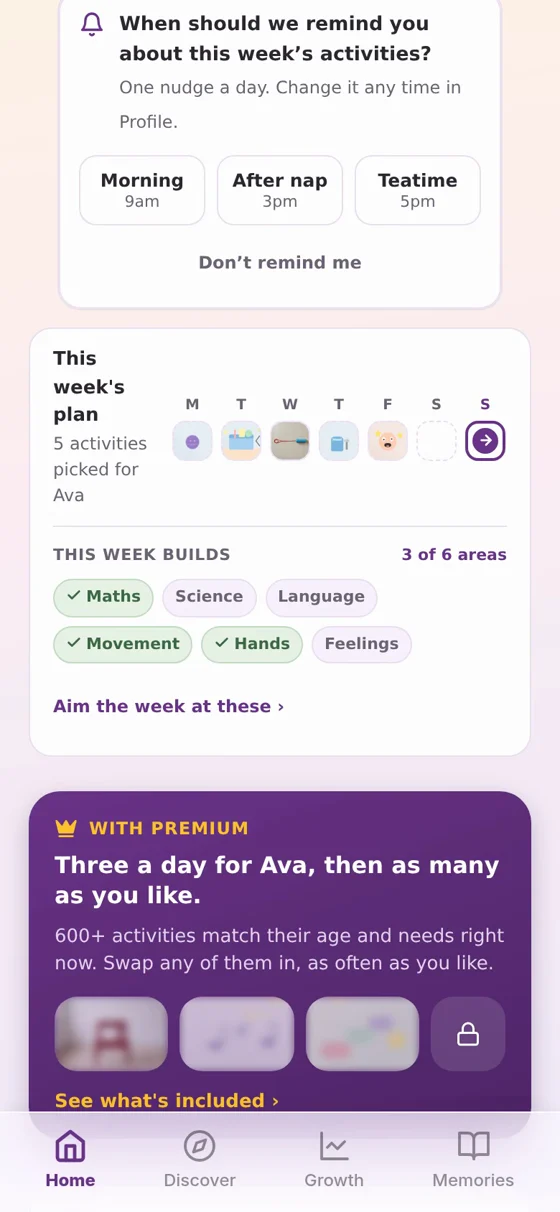
This week's plan showing five activities and the areas they build
HOW MOOSHIE HELPS

How Mooshie helps as your toddler grows

The Mooshie Moments app has 5,918 activities for ages 6 months to 4 years, using things already at home, and it picks one activity a day suited to your toddler’s exact age and stage, along with how the day is going and how long you’ve got.

  • Every activity comes with “Say this” phrases, prep and play times, and a parent tip, so there’s no guesswork before you start.
  • Tap “We’re done” afterwards to see “What that built” and add a photo to save the moment to Memories.
  • The weekly plan picks five activities and shows progress across maths, science, language, movement, hands and feelings.

It’s for you, not your toddler: check the idea in 30 seconds, then put the phone away. Download it free and get a new activity each day without signing up.

Questions parents ask

What activities are best for a 1 year old?

Simple, physical and repeatable ideas work best: pouring, filling, stacking, and games that involve their name or your voice. Attention spans are short at this age, so plan for a few minutes rather than a whole afternoon.

What should I be doing with my 2 year old at home?

A mix of pretend play, simple building or sorting games, and some physical activity every day tends to cover most of what a 2 year old is working on. Following their current fixation, whether that’s cars, animals or a particular song, usually beats planning something entirely new.

How much screen-free play should a toddler have each day?

There’s no single right number, but short bursts of focused, hands-on play spread through the day, rather than one long session, tend to suit toddlers’ attention spans better.

My toddler won’t sit still for any activity. What can I try?

Choose movement-based ideas over anything that needs sitting, at least to begin with. Climbing, drumming and chasing games channel the same energy that’s making stillness hard, and calmer play often follows once some of it is spent.

Do toddler activities need to be educational?

Not deliberately. Almost anything a toddler does with real attention, pouring water, stacking blocks, singing a silly song, is building a skill of some kind. Enjoyment is a good enough reason on its own.

Mooshie is a play app, not medical advice. If you’re worried about your child’s development, speak to your health visitor or GP.

Make memories. Build skills. Play together.

Your first moment is ready as soon as you tell us their age.

Mooshie MomentsFree on iPhone
Get it free