
Cause and Effect Play for Toddlers: Easy Activities That Work
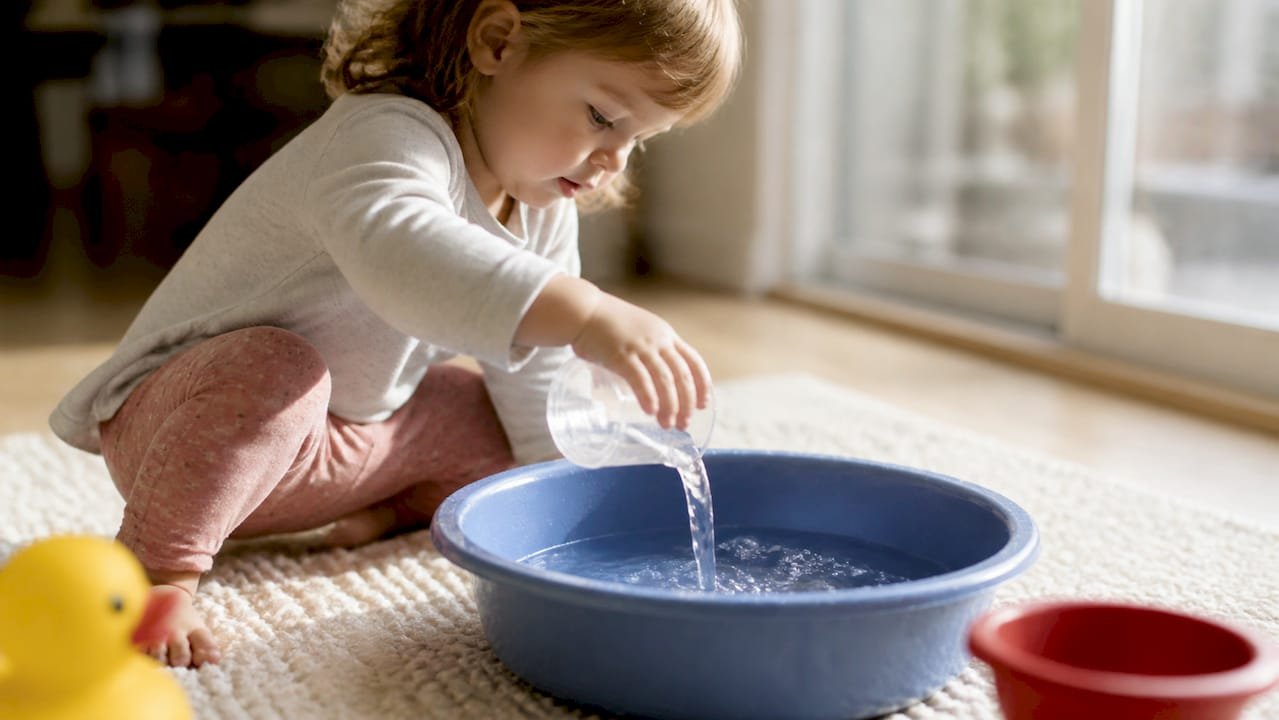
Cause-and-effect play is when a toddler learns that their own action makes something happen, and it’s one of the fastest ways young children build thinking skills without any screens involved. You don’t need special toys. You need five minutes and a few things already sitting in your kitchen or bathroom.
Here’s a shortlist to try today:
- Water pouring: cups, a funnel, and the bath or sink teach volume and force.
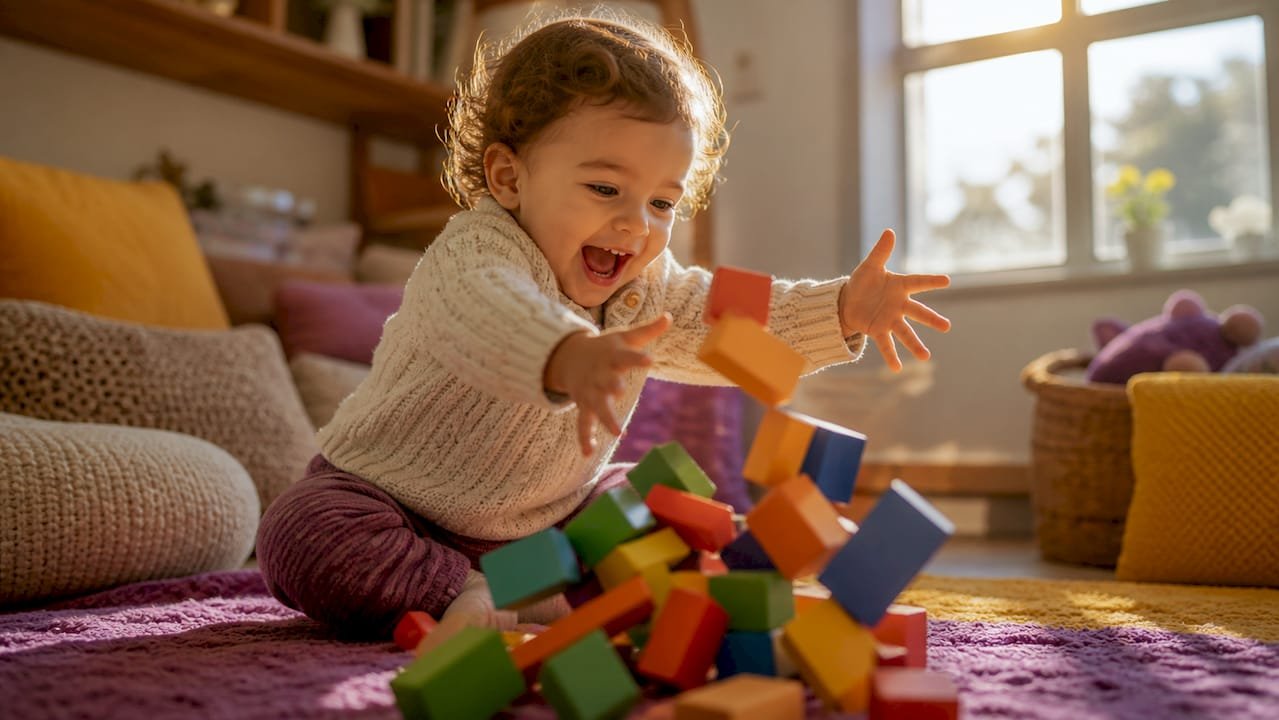
- Build-and-knock blocks: stack, then knock down, to show gravity and cause.
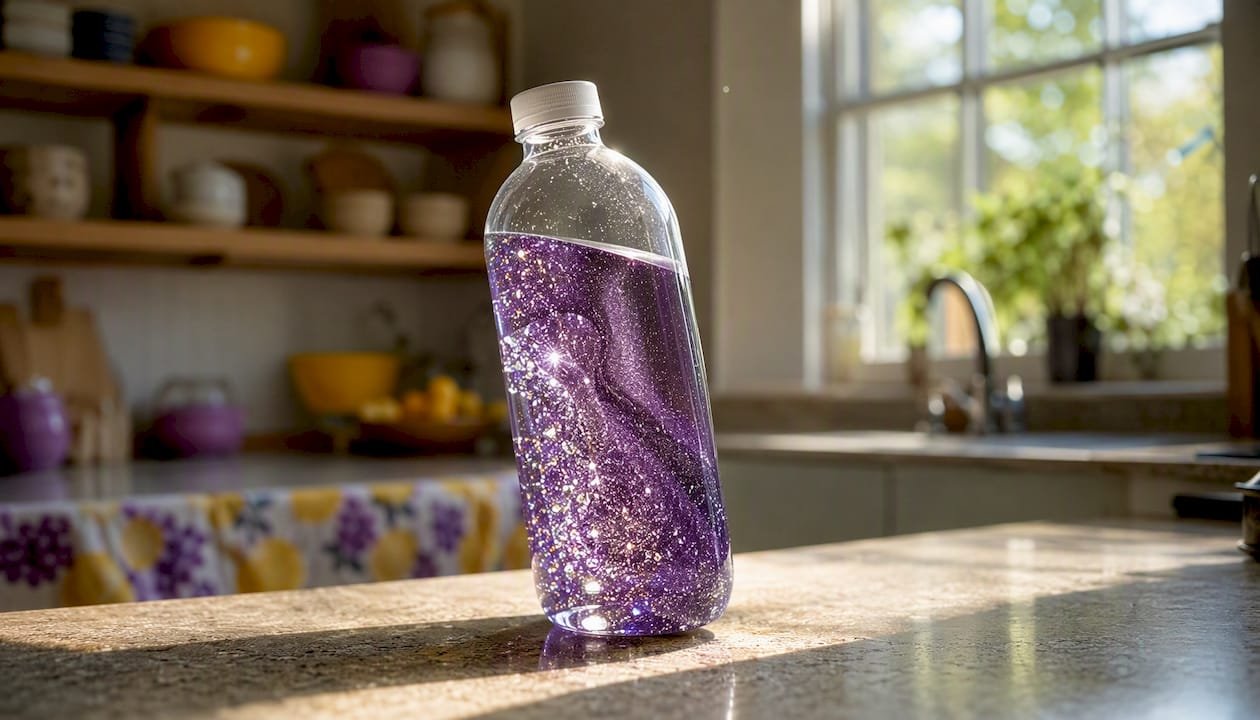
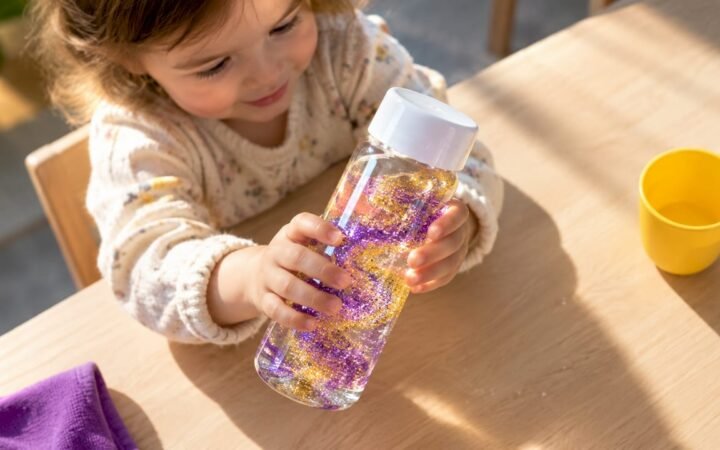
- Sensory bottles: a water bottle with glitter or rice shows motion and settling.
- Push-and-pull ramps: a toy car down a tilted book shows speed changes with angle.
- Torch and light switch: flicking a switch or torch on and off is instant, visible cause and effect.
- Pop-up or hidden-object boxes: lifting a flap or lid rewards the action with a surprise.
- Musical banging: pots, spoons, and lids turn hand movement into sound.
Narrate what happens as it happens: “You pushed the cup, and the water spilled!” That single sentence does more for learning than any flashy toy.
Pro Tip: Keep a towel nearby and let water and sand play happen on a tray or in the bath, so mess becomes part of the fun instead of a reason to stop the activity.
Key Takeaways
Cause-and-effect play works best when caregivers pair repeatable household activities with real-time narration and gradual prediction prompts.
| Point | Details |
|---|---|
| Start with household items | Water, blocks, and pots teach cause and effect better than single-response battery toys. |
| Match activities to age | Expect emergence around 4 to 6 months and prediction skills closer to 36 months. |
| Narrate, then question | Describe the action first, then shift to “what if” prompts once your toddler starts predicting. |
| Repetition builds skill | Repeating the same activity with small tweaks strengthens memory and confidence faster than novelty. |
| Mooshiemoments simplifies the routine | The app suggests age-matched, household-item activities in as little as 5 minutes, with built-in coaching tips. |
Table of Contents
- When Do Toddlers Start Understanding Cause and Effect?
- Twelve Cause-and-Effect Activities Using Things You Already Own
- How to Talk Toddlers Through Cause and Effect
- Why Cause-and-Effect Play Builds Real Skills
- How Mooshie Moments Helps You Put This Into Practice
- What Most Parenting Advice Gets Wrong About This Stage
- Turn These Moments Into a Daily Habit With Mooshiemoments
- Frequently Asked Questions
- Sources
When Do Toddlers Start Understanding Cause and Effect?
Cause-and-effect understanding doesn’t switch on overnight. It builds in stages, and most toddlers follow a fairly predictable path even though the exact timing varies from child to child.
Around 4 to 6 months, babies start noticing that their own movements produce results, like kicking a mobile and watching it swing. By 12 to 18 months, most toddlers can combine two actions on purpose, pushing a button and then pulling a lever to see what happens next. By around 36 months, many children begin predicting outcomes before they act, according to NHS milestone guidance.
Milestone snapshot: Emergence around 4 to 6 months, combined actions by 12 to 18 months, and prediction by roughly 36 months.
Watch for repeated dropping, deliberate experimenting with force or angle, and comments like “again!” These are all signs the concept is taking hold. If a toddler shows no interest in cause-and-effect actions by 18 months, it’s worth mentioning to a health visitor or GP, since variation is normal but persistent absence is worth a conversation.
Twelve Cause-and-Effect Activities Using Things You Already Own
These activities need no shopping trip. Each one takes under ten minutes to set up and can be repeated daily with small tweaks.
1. Water pouring station. Fill a shallow tub, add cups and a funnel. Your toddler pours between containers and sees water level change with volume. Safety note: never leave a toddler unsupervised near water, even a small amount.
2. Stack-and-knock towers. Build a block tower, then let them knock it flat. They learn that a push in one direction always causes the same kind of collapse. Vary the challenge by building taller or using different block shapes.
3. Sensory bottles. A sealed bottle with water, glitter, and a drop of dish soap shows how shaking changes what they see inside. Great for the car or a quiet moment.
4. Push-car ramps. Prop a book or tray against a cushion and roll toy cars down it. Raising the ramp higher makes the car go faster, an easy first physics lesson.
5. Torch exploration. In a dim room, let your toddler click a torch on and off. The immediate light change is one of the clearest cause-and-effect moments available.
6. Hidden objects in boxes. Hide a small toy under a cup or in a box with a lid. Lifting the lid always reveals the surprise, reinforcing predictable outcomes.
7. Bubble popping. Blow bubbles and let them chase and pop them. Clapping hands together pops a bubble every time, a satisfying, repeatable result.
8. Musical pots and pans. Wooden spoons on pots and pans turn arm movement into sound instantly. Louder hits make louder noise, a lesson in proportional cause and effect.
9. Funnel and dry pouring. Dried rice or sugar poured through a funnel into a jar teaches flow and volume without the mess of water.
10. Ball ramp races. Roll balls of different sizes down the same ramp to see which rolls farther or faster.
11. Peekaboo hiding games. Hiding your face behind a cloth and reappearing teaches predictable, repeatable outcomes tied to their own anticipation.
12. Light switch turns. Letting a toddler flip a real light switch (with supervision) connects a small hand motion to a room-wide effect.
Pro Tip: Rotate two or three of these activities each week rather than introducing something brand-new every day. Repetition with small variation, like raising a ramp or adding more water, is what actually builds the learning.
How to Talk Toddlers Through Cause and Effect
The words you use while your toddler plays matter almost as much as the activity itself. Real-time narration gives the child language for what they’re already noticing, according to Development Matters guidance.
Try phrases like these while the action is happening:
- “You pushed the car, and it went down the ramp!”
- “Look, the block tower fell when you tapped it.”
- “The water spilled because the cup got too full.”
Once your toddler starts predicting outcomes on their own, usually somewhere past their second birthday, shift from narrating to asking. “What do you think will happen if we tip the cup?” or “What if we raise the ramp higher?” moves them from watching to hypothesizing.
Vary the materials to keep the challenge fresh: swap water for sand, change the ramp’s angle, or add a second block color. Small changes force your toddler to test new predictions instead of repeating the same motion on autopilot.
Pro Tip: When a toddler gets frustrated after one failed guess, resist jumping in to fix it. A few extra seconds of struggle often leads to the next attempt at problem-solving.
Why Cause-and-Effect Play Builds Real Skills
Cause-and-effect play isn’t just a way to pass twenty minutes before nap time. It lays groundwork for prediction, memory, and problem-solving, the same skills that show up later in early scientific thinking and logical reasoning, according to Fit Kidz.
Pouring water builds fine motor control and hand-eye coordination. Musical banging sharpens sensory processing through sound and rhythm. Ramp play with balls or cars strengthens early measurement concepts like speed and distance.
Allowing manageable, age-appropriate risky play, like climbing slightly higher or pouring without help, supports physical confidence and resilience when balanced with sensible supervision, according to peer-reviewed research.
A toddler who knocks the same tower down ten times in a row isn’t stalling. Each repeat sharpens memory of what happens and confidence in predicting it, which is exactly how skill gets built.
How Mooshie Moments Helps You Put This Into Practice
Mooshiemoments turns everything above into a ready-made routine instead of something you have to plan from scratch. The app filters activity ideas by your toddler’s exact age and by how much time or energy you actually have that day, so a 5-minute window between dinner and bath time still counts as meaningful play.
- Age-based filters match activities to your toddler’s stage, from early cause-and-effect emergence through predictive play near 36 months.
- Quick options fit real routines, including 5-minute activities for tired evenings.
- Every suggestion uses household items already in your home, no shopping list required.
- Coaching tips built into each activity mirror the narration and prediction prompts covered above.
Nurseries and early years settings can extend the same approach through Mooshiemoments’s home learning partnership packs, which align activities with EYFS practice for consistency between home and setting.
What Most Parenting Advice Gets Wrong About This Stage
Most advice on toddler play treats cause and effect as a box to tick rather than a skill built through boring, repeated trials. That’s backwards. The tenth time your toddler knocks over the same tower isn’t a sign they’re bored. It’s the repetition that cements the prediction skill, and rushing them toward a “better” or more advanced activity too soon actually interrupts that process.
The bigger gap is in supervision anxiety. Plenty of caregivers avoid water play or torch exploration because it feels like a mess or a risk, when the actual research points the other way: manageable, supervised risk builds confidence, not accidents waiting to happen.
If you take one thing from this article, prioritize narration over novelty. A parent who says “you pushed it and it fell” during a boring block tower session is doing more developmental work than one who buys a new toy every week. The material matters less than the language wrapped around it.
Turn These Moments Into a Daily Habit With Mooshiemoments
Reading a list of activities is one thing. Having the right one show up exactly when you have five spare minutes and zero ideas left is another. Mooshiemoments solves the second part: open the app, tell it your toddler’s age and how much time you’ve got, and it hands you a screen-free, household-item activity matched to exactly that window.
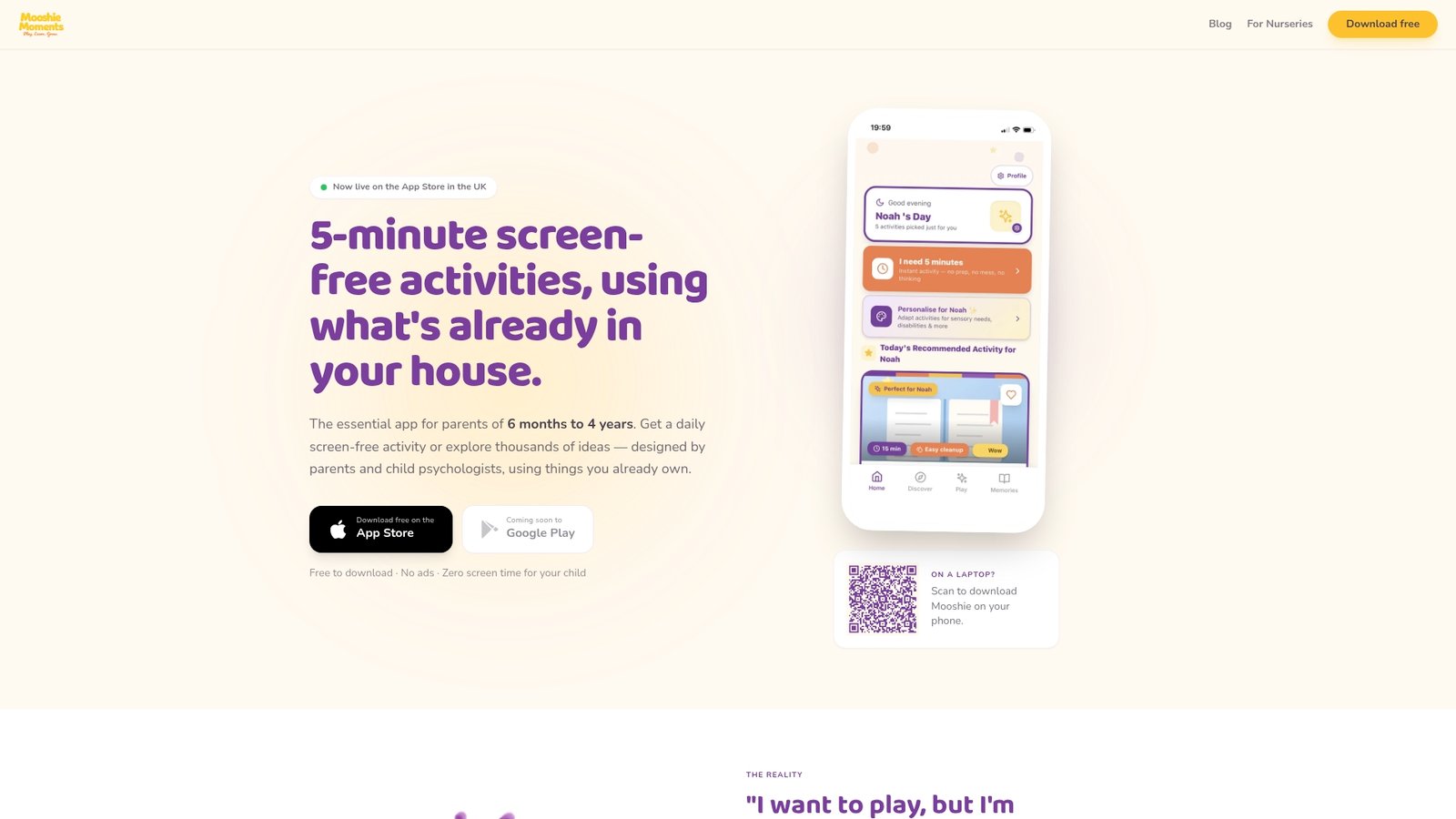
Every suggestion comes with the same kind of coaching language covered here, real narration scripts and prediction prompts, so you’re not guessing what to say while your toddler pours water for the fifth time. If you run a nursery or early years setting, the home learning partnership option extends the same activities into printable packs that connect home routines with EYFS-aligned practice. Download Mooshiemoments and set up your toddler’s first activity in under a minute.
Frequently Asked Questions
What is cause-and-effect play in simple terms?
It’s play where a toddler’s action produces a direct, noticeable result, like pushing a block tower and watching it fall, which helps them link intention to outcome.
What age do toddlers understand cause and effect?
Understanding typically emerges around 4 to 6 months, strengthens by 12 to 18 months as toddlers combine actions, and often includes prediction by about 36 months.
What are the best cause-and-effect toys for toddlers?
Household items like cups, funnels, blocks, pots, and torches often work better than single-response battery toys because they offer more variability for testing different actions.
Is risky play part of cause-and-effect learning?
Yes, manageable risk, such as pouring water without help or climbing slightly higher, builds physical confidence and resilience when supervised appropriately.
How can I encourage cause-and-effect learning without buying new toys?
Narrate what happens during everyday moments, ask simple prediction questions once your toddler is ready, and vary materials like water amount or ramp angle to keep the challenge fresh.
Sources
Recommended
More like this

Five Minute Routine Activities to Help Speech Delay in UK Toddlers
Quick, routine based activities UK parents can use in 5–15 minutes to support a toddler with speech delay. Evidence backed techniques and…
Three Minute Mess Free Sensory Play For UK Parents
Quick, reusable sensory activities UK parents can set up in minutes. Sealed bags, sticky wall art, safety checks, storage tips, and Mooshie…
10 Quiet Bin Ideas UK Parents Can Build in 5 Minutes
Practical, EYFS-aligned quiet-bin ideas UK parents can assemble in five minutes. Includes 10 ready bins, a five-bin rotation, safety checks, and quick...