
Toddler Activity Schedule: A Realistic Day That Works
Updated November 2026 · 10 minute read
A good toddler activity schedule is not a timetable you must hit to the minute. It is a loose order for the day: something active, something calm, meals, a nap, and a few short play blocks, repeated so your child knows what comes next. Below you will find two sample days, how to adjust them for age and naps, what to put in each play slot, and how to make it all work in a British winter. We have kept every idea screen-free and based on things already in your home.
TL;DR
- Keep the order of the day steady and let the clock be flexible. Toddlers do best when they can predict what happens next.
- Plan short play blocks. Many toddlers stay with one activity for only five to fifteen minutes, so one idea per block is plenty.
- Aim for movement all day. The NHS suggests toddlers ideally get 180 minutes of physical activity, spread through the day, indoors or out.
- Build the day around sleep. Toddlers need about 11 to 14 hours in 24 hours, and most move to one nap a day around 18 months.
- Start with one tricky part of the day, not the whole day. A rigid plan is not the goal.
Table of Contents
- Why a predictable day helps toddlers (and you)
- Two sample toddler schedules
- How to adjust the schedule for age, naps and your family
- Build play slots that take five to fifteen minutes
- Fit in enough movement and time outdoors
- Adjusting your schedule for winter and indoor days
- Make the day visible with a simple routine chart
- Keep screens small and shared
- Our perspective: plan the slots, not the whole day
- Get ideas for every slot in your day
- A one-week way to start
- FAQ
- Sources
Why a predictable day helps toddlers (and you)
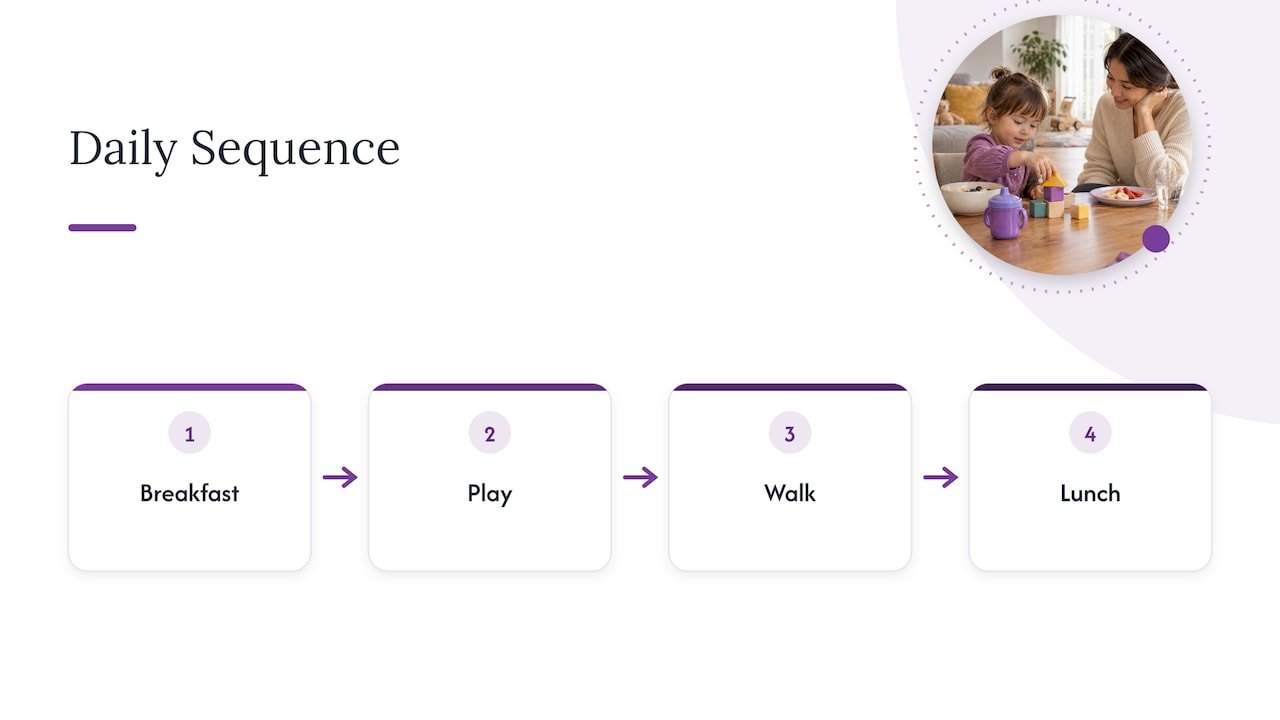
Toddlers cannot read a clock, but they can learn a sequence. When breakfast is followed by play, play by a walk, and a walk by lunch, they stop having to guess. Guidance for parents says a calm, predictable day helps toddlers feel safe and can make mealtimes, changes and sleep easier to manage.
The charity Words for Life says regular routines help children feel secure, learn language through repetition and fight less about what happens next, which also makes the home calmer. That repetition is useful for you too. You make fewer decisions, and “what on earth do we do now?” comes up less often.
A schedule is also a good cure for the 3pm slump of ideas. If every day has an “afternoon activity” slot, you only need to fill that slot, not invent the whole day.
Two sample toddler schedules
These are built from a UK parenting guide’s sample days. Treat the times as a starting point and slide everything earlier or later to match your child.
A day for a younger toddler (1 to 2 years)
| Time | What happens | Play idea |
|---|---|---|
| 08:00 | Wake up | Cuddle and a song |
| 08:15 | Breakfast and tidy | Let them help wipe the table |
| 09:00 | Outdoor play | Walk, park or garden |
| 11:30 | Lunch | Talk about the food colors |
| 12:30 | Nap | Calm room, same routine |
| 15:30 | Snack and quiet play | Books, a basket of safe objects |
| 17:30 | Dinner | Family table if you can |
| 19:00 | Bath and story | Water play, then a book |
| 19:30 | Bedtime | Lights down |
A day for an older toddler (2 to 4 years)
| Time | What happens | Play idea |
|---|---|---|
| 07:30 | Wake up | Choose the clothes together |
| 08:00 | Breakfast | Chat about the day ahead |
| 09:00 | Playgroup or outdoor time | Running, jumping, puddles |
| 12:00 | Lunch | Help set the table |
| 13:00 | Quiet time or short nap | Books, a calm puzzle, rest |
| 15:30 | Activities and snack | Your main creative slot |
| 18:00 | Dinner | Table talk |
| 19:00 | Bedtime routine | Bath, pajamas, story |
Notice what both days have in common: the day opens with movement outdoors, a rest sits in the middle, and the evening winds down the same way every night. The activity slots are short and there are only a few of them.
How to adjust the schedule for age, naps and your family
Sleep is the anchor, so start there. The NHS says toddlers need about 11 to 14 hours of sleep in a 24-hour period, and that at around 18 months naps usually drop to one a day lasting about one to three hours. If your child is nearing that change, expect a few messy weeks while the day shifts. For a closer look at how needs change from one year to five, this guide to toddler sleep needs by age is a handy companion.
Some practical rules of thumb:
- Under 18 months, two naps: put an activity after each nap, when your child is rested and curious. Keep the morning block short.
- One nap: the big outdoor outing goes in the morning, and the creative slot goes after the nap.
- Dropping the nap: keep a quiet hour anyway. Books, a cuddle or a calm game still help everyone reset.
- Nursery or childminder days: schedule only the bookends, such as the morning wake-up and the after-pick-up hour. Do not try to fill the whole evening.
- Siblings: pick one activity both can join, and keep the older child’s slot separate if the baby naps.
When rigid routines do not suit your child
Not every child likes a firm routine. The Open University’s neurodiversity toolkit notes that some neurodivergent children find rigid routines stressful, especially those who thrive on spontaneity. It advises trusting what you see in your own child and keeping what works. A good way in is to pick only one part of the day that is particularly tricky, such as the morning rush or the bedtime wind-down, and give that one part a simple order.
Build play slots that take five to fifteen minutes
Short blocks suit toddler attention. A winter-routine guide suggests that many toddlers stay with one activity for about five to fifteen minutes, so a planned hour-long session often ends in frustration. Plan a handful of mini-slots instead, and treat everything else as free play.
A simple way to organize the day is in four types of slot:
- Move: big body play such as walking, dancing, climbing cushions or an obstacle course.
- Make or explore: dough, water, scooping, sticking, sorting.
- Quiet: books, songs, a puzzle, snuggling.
- Together jobs: cooking, tidying, laundry matching, watering plants.
Each day, choose one idea for each type and slot them around meals and sleep. If something flops after two minutes, that is fine. Move on, or try it again tomorrow.
Screen-free ideas from things you already own
Play does not have to be expensive or complicated. The NHS lists looking at books, singing songs and nursery rhymes, using things already in the house, and water play in the bath, sink or a plastic bowl. The nursery association NDNA suggests a small basket of everyday items such as ribbons, containers, wooden spoons, crinkly paper and clothes pegs, and homemade dough from flour and water.
Here is how those ideas can fill a day:
- Morning move: a walk to the post box, or a cushion path across the living room. We have more morning activities for toddlers that take just minutes.
- Mid-morning make: a bowl of water, a sponge and two cups on a towel.
- Pre-lunch helper job: washing vegetables or matching socks.
- Afternoon quiet: a basket of spoons, pegs and ribbons to explore, or a pile of books.
- Late afternoon move: a 10 minute indoor obstacle course using cushions, a blanket tunnel and a laundry basket.
- Before bath: water play, then a story.
If you are short on ideas that need no toys at all, our list of no toy activities for toddlers covers two to fifteen minute options. And if you would like activities sorted by what they build, such as language, movement or thinking, see our low prep activities by skill area.
Fit in enough movement and time outdoors
The NHS says toddlers should ideally get 180 minutes of physical activity a day, spread across the day, and that all sorts of movement count whether it happens indoors or out. That sounds like a lot until you realize walking to the shops, dancing in the kitchen and climbing the stairs all count.
NDNA’s parent guide adds a daily walk and time outdoors every day, including in winter weather. A waterproof suit and wellies make that much easier. If you want ideas that need no equipment, try our ten minute outdoor activities for UK toddlers or nature play ideas.
Adjusting your schedule for winter and indoor days
Short, dark days mean more time at home. The good news is that a toddler day has a natural winter rhythm: active play, snack, quiet play, lunch, rest, creative play and tidy up. Guidance on winter routines says a loose order like this can reduce frustration because toddlers know what is coming.
A few winter tweaks:
- Get out in the brightest hour. Even twenty minutes in daylight is worth the layers.
- Move the big energy burn indoors. Add a second movement slot, such as a pillow jump or a dance, before lunch or before tea.
- Save one special activity for the afternoon. A craft, baking dough, or something seasonal. For December, we have easy Christmas activities for toddlers at home, and for earlier in the season, autumn activities for toddlers.
- Keep the tidy-up in the plan. A song and a basket make it a game, and it signals that the activity block has ended.
Make the day visible with a simple routine chart
A visual timetable is a row or list of pictures, symbols or words showing what is happening, in order, across part or all of the day. Young toddlers will not follow a printed chart on their own, but they love pointing to pictures of their own things.
To make one:
- Choose one part of the day, such as the morning.
- Write the main steps in order, for example wake up, breakfast, get dressed, shoes on.
- Take photos of your child’s own things and places, such as their cup, their coat and the front door.
- Laminate the photos and add Velcro dots.
- Stick a strip of Velcro along a card at your toddler’s eye level.
- Add a “finished” pocket at the end, so photos can be moved there when done.
The Open University toolkit says predictable routines can reduce anxiety and make transitions smoother, and that a two-part “Now and Next” board is a gentle way to prepare a child for change. If a whole chart feels like too much, start with just two pictures: what we are doing now, and what comes next.
Keep screens small and shared
A schedule makes it easier to see where screens creep in, usually at tired points such as before dinner. UK guidance says that for under-twos you should avoid screen time other than shared family activities that encourage bonding and conversation. For ages two to five, it suggests keeping it to an hour a day, less if possible, and avoiding screens for the hour before bed.
The same guidance suggests swapping screens at bedtime for reading stories together, and at mealtimes for conversation, table games, colouring or “I Spy”. These fit neatly into a schedule as built-in slots. For ideas that bring you closer together, see our bonding activities for toddlers.
Our perspective: plan the slots, not the whole day
Most parents we talk to do not need another rigid timetable. They need a way to answer “what do we do now?” in under a minute, at 4pm, when everyone is tired.
That is why we think of a toddler schedule as a set of small, repeatable slots. Meals and sleep give the day its shape. The play slots sit in between, and each one only needs one idea, ten minutes, and things you already have in the kitchen drawer.
We built Mooshie around this idea. You choose your child’s age and how much time and energy you have, and the app gives you a quick, screen-free activity using household items. Each one explains the developmental reason behind it in plain words, so you know why a game of pegs and a bowl is more than just a way to fill ten minutes. We want grown-ups to be able to put their phone down and actually play.
The best schedule is the one you will still use in three weeks. Start small, keep what works, and let the rest go.
samit
Get ideas for every slot in your day
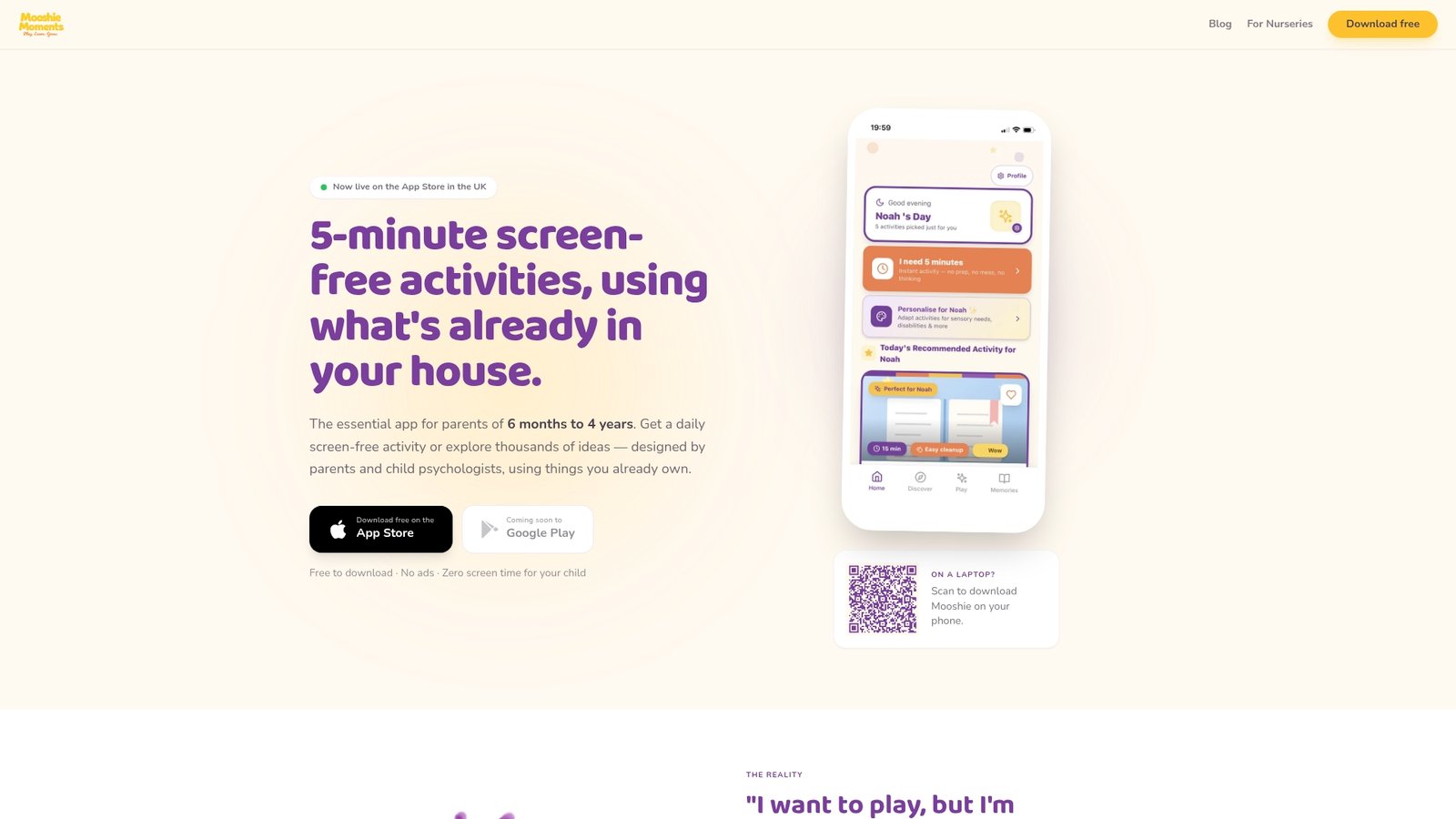
If you want fresh ideas for each slot without searching or shopping, Mooshie is our app for parents and caregivers of children aged 6 months to 4 years. It suggests quick activities based on your child’s age and the time you have, using everyday items and no screens for your child.
Grandparents, aunties and uncles can use it too, which helps when someone else is covering a slot. If you run a nursery, childminding setting or early years group, our activities for nurseries, daycare and childminders and Partnership Pack are made for sharing ideas with families.
A one-week way to start
Do not roll out a full schedule on Monday. Try this instead:
- Days 1 to 2: write down what your day already looks like. You probably have more routine than you think.
- Days 3 to 4: pick one tricky time and give it a fixed order, such as the pre-dinner hour: tidy, wash hands, helper job, table.
- Days 5 to 6: add one planned movement slot and one quiet slot.
- Day 7: notice which slots worked and which did not. Swap out the ones that flopped.
If your child naps differently on different days, keep the order of the day the same and let the clock change. Order is what helps toddlers, not exact times.
FAQ
What is a good daily schedule for a 2-year-old?
A typical day has breakfast around 08:00, outdoor play mid-morning, lunch around 12:00, a rest or short nap after lunch, an activity and snack mid-afternoon, dinner around 18:00 and a bedtime routine by 19:00. These times come from a UK sample schedule for older toddlers. Slide them to fit your child’s own sleep.
How many activities should a toddler have in a day?
There is no set number. Aim for three or four short planned slots, such as a move, a make, a quiet and a together job, and let free play fill the rest. Many toddlers stay with one thing for five to fifteen minutes, so short ideas work best.
How much sleep does a toddler need?
The NHS says toddlers need about 11 to 14 hours of sleep in 24 hours. Around 18 months, naps usually settle into one a day. If you are worried about your child’s sleep, speak to your health visitor or GP.
How much screen time is okay for toddlers?
UK guidance says to avoid screens for under-twos apart from shared family activities. For ages two to five it suggests keeping screens to an hour a day or less, and avoiding them in the hour before bed.
What if my toddler hates routines?
Start with one tricky part of the day rather than the whole day, and trust what you see in your own child. Some children, including some neurodivergent children, find rigid routines stressful. A loose order with plenty of flexibility can work better than set times.
Sources
- How to Structure Your Toddler’s Day, JustParents
- How to establish a routine in your family, Words for Life
- Healthy day for a child, NHS Healthier Together
- Create predictable routines with visual supports, Open University
- Baby and toddler play ideas, NHS
- Playtime and bonding with your toddler, NHS Best Start in Life
- Parent guide: everyday activities to support 0 to 2 year olds, NDNA
- Indoor winter activities to keep toddlers busy and happy
- Visual timetable for home: how to make and use one
- Baby and toddler screen time guidance, Best Start in Life
Recommended
- 5–15 Minute Five Day Weekly Toddler Activity Plan for UK Parents
- Morning Activities for Toddlers: Quick, Screen-Free Ideas
- Low Prep Music and Movement for Busy Parents That Works in 5 Minutes
- UK Parents: 8 Low Energy Toddler Activities for Sofa Days
Want play ideas matched to your child's age?
Mooshie Moments gives you simple, guided play ideas for ages 6 months to 4 years. Try 3 free activities a week.
Download free on the App StoreMore like this

Best Indoor Games for Toddlers: 14 Easy Ideas for Home
The best indoor games for toddlers, using things you already own: active, pretend and quiet ideas, age tweaks, safety checks and how…

Small Space Toddler Activities: 15 Ideas for Any Room
Small space toddler activities that need no shopping and little setup: 15 ideas for flats and tiny living rooms, with safety tips…

10 Minute Toddler Activities Using Things You Already Own
Ten quick, screen-free toddler activities for UK parents. Each takes about 10 minutes, uses household items, and comes with age tweaks and…