
Best Indoor Games for Toddlers: 14 Easy Ideas for Home
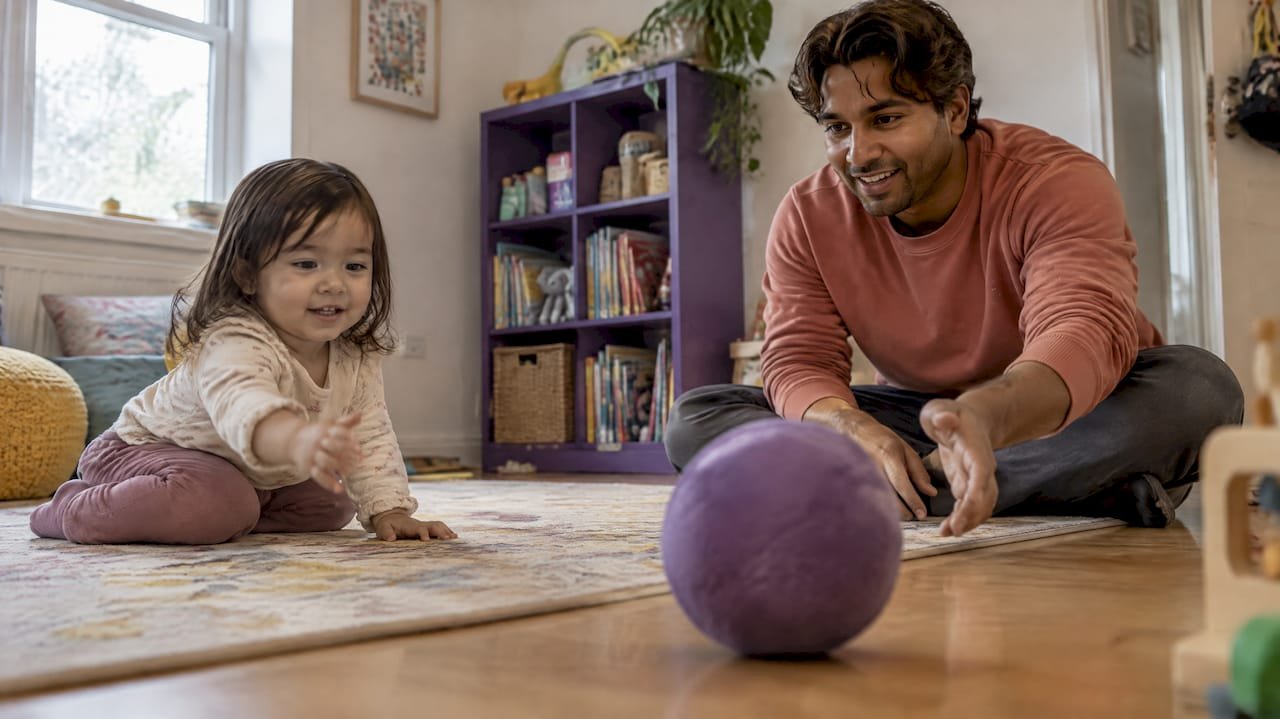
The best indoor games for toddlers are the simple ones: dancing, rolling a ball, a cushion obstacle course, a pretend car made from a box, and a basket of everyday objects to explore. They need no shopping and almost no setup. They work because a toddler wants you, playing along, far more than a new toy. Below you will find 14 games sorted by the kind of day you are having, plus how to adjust them by age and keep them safe.
Reading time: about 10 minutes.
TL;DR
- Pick the game by energy level: a movement game when everyone is restless, a pretend game when you want to chat, a quiet game when you are both tired.
- Every idea here uses household items such as cushions, pots, cardboard tubes, balloons and old clothes.
- Toddlers aged 1 to 2 need at least 180 minutes of physical activity a day, and light play like rolling and moving around counts.
- Always supervise, and keep anything smaller than a 2p coin out of reach of little mouths.
- Short and repeated beats long and elaborate: toddlers happily play the same game again and again.
Table of Contents
- What makes an indoor game a good one for a toddler
- Active games for restless days
- Pretend games for big imaginations
- Quiet games for tired parents
- Which game for which mood
- Adjusting games for age
- How much indoor play is enough
- What indoor games build
- Keeping indoor play safe
- Our perspective
- Never run out of ideas
- FAQ
- Sources
What makes an indoor game a good one for a toddler
Before the list, a quick filter. A good toddler game has four things going for it.
- It takes under two minutes to set up. If you are exhausted, a game that needs a trip to the shops or a craft cupboard will not happen.
- It works with what you have. Action for Children is clear that you don’t need lots of toys or equipment to set up fun activities at home.
- It lets your toddler lead. The goal is not to “win” or get it right. It is to copy, take turns and enjoy each other.
- It can stop at any moment. Toddler attention comes in bursts. A game that works in three minutes and in thirty is ideal.
The Playful Childhoods Wales guide adds a reassuring point: home is your child’s first and most familiar play space, and toddlers will usually enjoy repeating the same types of play, which is good for their development. You do not need a new game every day.
Active games for restless days
When the weather has trapped you inside and your toddler is bouncing off the sofa, start here. Movement also helps towards the daily activity target (more on that below).
1. Freeze dance
Put on a song, dance together, then pause the music and freeze. Toddlers love the surprise. For the youngest, skip the freezing and simply dance while holding them. The NHS Healthier Families page lists dancing to music among its free indoor ideas.
2. Cushion obstacle course
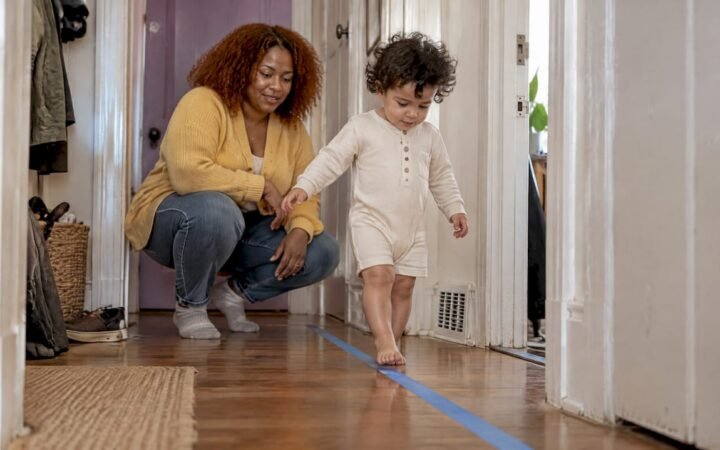
Lay pillows and cushions to climb over, a blanket to crawl under and a line of tape to walk along. Action for Children suggests a soft-play style obstacle course from pillows and cushions. If you want a full walk-through, our guide to a quick starter course you can set up today shows how to build one in about ten minutes.
3. Balloon catch
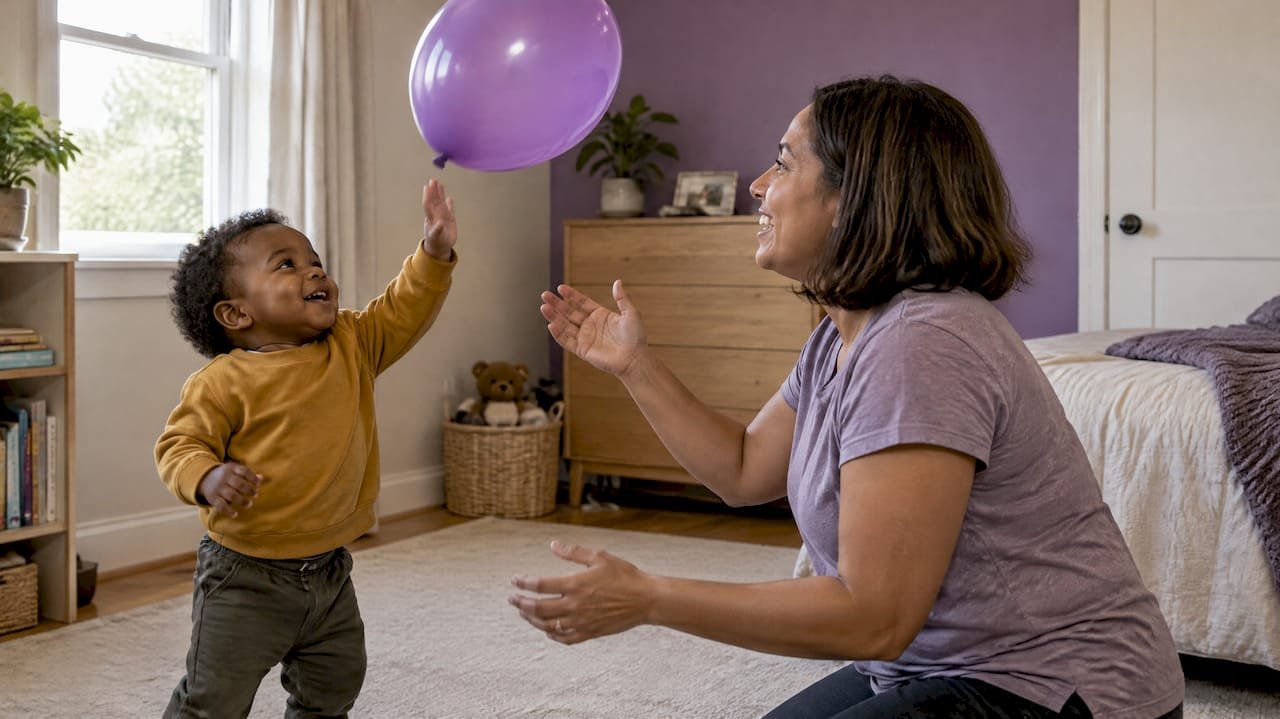
A balloon falls slowly, which gives small hands time to react. Bat it up, let it drift, and cheer every touch. It is a gentle first step towards throwing and catching. Keep burst balloon pieces away from toddlers, as they are a choking risk, and stop the game if one pops.
4. Cardboard-tube bowling
Stand up empty kitchen-roll tubes or plastic bottles and roll a soft ball at them. The NHS suggests cardboard-tube 10-pin bowling, bin-hoop basketball and frying-pan cricket as indoor sports that need nothing bought. For a toddler, make the bin hoop a laundry basket on the floor and let them drop the ball in from a step away.
5. Ball pass
Sit on the floor facing each other, legs apart, and roll a soft ball back and forth. UNICEF Parenting recommends this for 1 to 2 year olds. It is also the simplest turn-taking game there is, and a baby who can sit can join in.
6. Hide and seek
For toddlers, “hiding” means a blanket over the head or half behind a curtain. Say “Where is Mummy?” in a big voice and pop out. The NHS and Playful Childhoods Wales both include hide and seek as a game that needs very little room.
Looking for more movement ideas? Our page on gross motor activities for toddlers has plenty, indoors and out.
Pretend games for big imaginations
Pretend play usually starts around the second year and grows fast. The BBC Tiny Happy People guide to early pretend play says it helps language development, because children hear words they don’t always hear, and helps them make sense of the world by acting out things they have seen, like feeding a doll or brushing teeth.
7. The box car
Find an empty carton, add a soft blanket inside and let your toddler sit in it. You are the driver of the pushing, or they steer with a paper plate. UNICEF lists a box car game for 1 to 2 year olds, and the BBC uses a plate as a steering wheel as its example of a household prop.
8. Tea party or teddy care
Give a teddy a drink from an unbreakable cup, tuck it into a tea-towel bed, or “feed” it with a wooden spoon. Copy what your toddler does, then add one tiny twist. The BBC advice is to follow their lead, take turns and ask very simple questions, such as whether they want to speak to Nana while you describe what is happening.
9. Shop or kitchen play
Set out tins and boxes from the cupboard, give your toddler a bag and let them “buy” things from you. For real-life practice, they can also help unpack the shopping. The NHS suggests involving toddlers in tasks like unpacking shopping, tidying or sorting washing, and these household jobs turn into games very easily. We have more in our guide to no-prep shopping activities for toddlers.
If you want to see how pretend play fits into the bigger picture of early development, this piece on pretend play development in toddlers is a good next read.
Quiet games for tired parents
Some days neither of you has the energy to leap about. These games keep you close, with no screen in sight.
10. The basket of everyday treasures
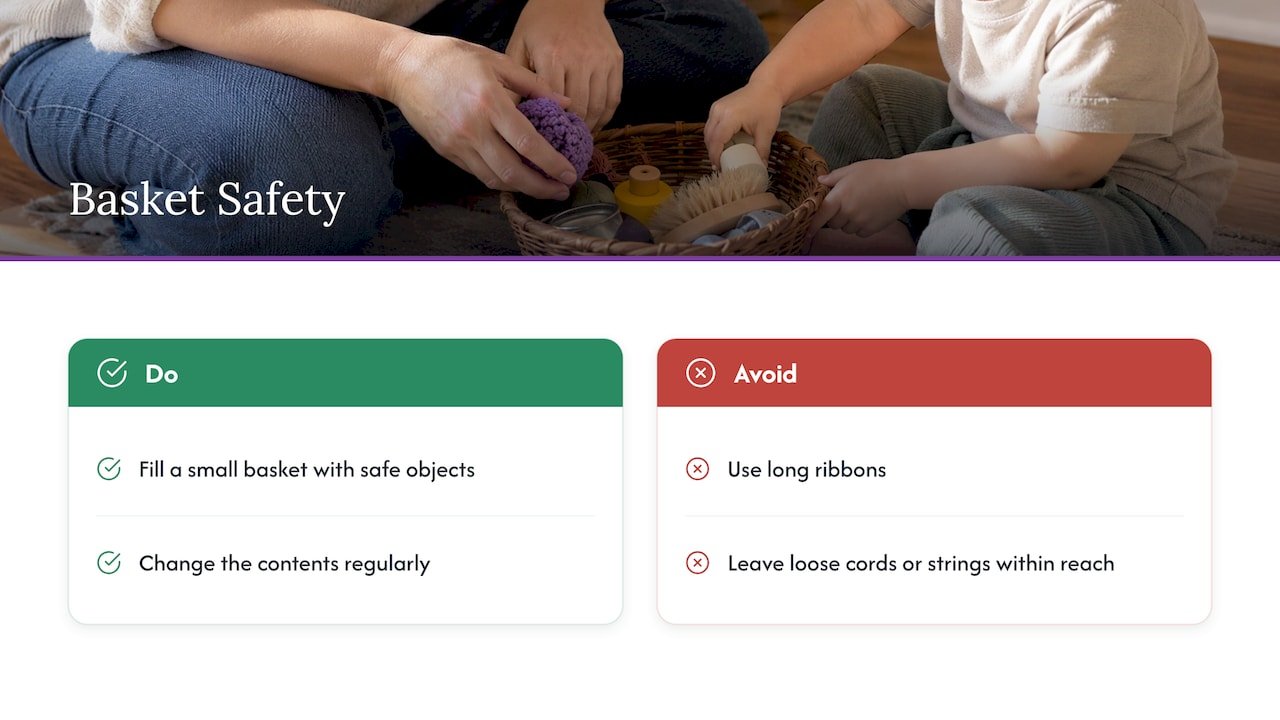
Fill a small box or basket with safe household objects. The NDNA parent guide suggests ribbons, containers, wooden spoons, crinkly paper, empty baby milk containers and clothes pegs, and says to change the contents regularly so your child stays interested. Skip long ribbons, though, as the NHS advises avoiding loose cords, strings or ribbons for young children. Swap in a fabric strip you hold the end of, or leave them out altogether.
11. Kitchen drummer
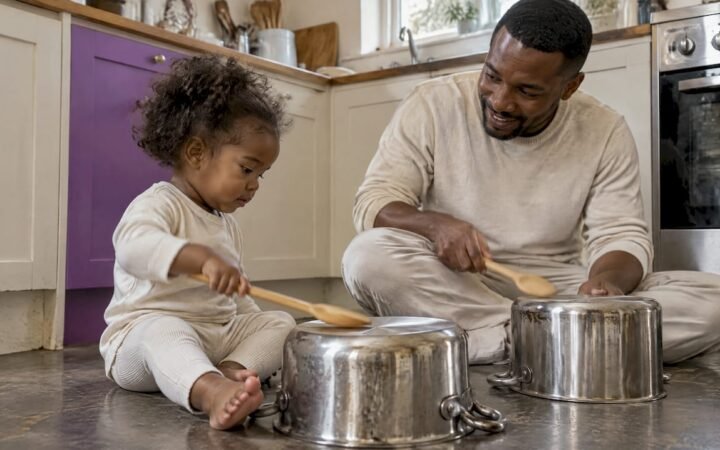
Give your toddler shatter-proof bowls, pots and pans with a wooden spoon. UNICEF includes this “kitchen drummer” game for 1 to 2 year olds. It is loud, so it suits the afternoon when you can cope with noise. For a quiet version, drum on a folded towel.
12. Songs with actions
Sing “Head, Shoulders, Knees and Toes” or any song with movements. The NDNA guide recommends songs that encourage movement, and also suggests quiet times with the TV off and noise kept low, so children can build concentration and listening skills. Even five minutes of this counts.
13. Tallest tower
Build with blocks, or stacked plastic cups, and ask your toddler to make the tallest tower they can in 10 seconds. The BBC Stay and Play block activity suggests extending to 20 seconds or a minute for older children, and asking them to count the blocks to make it harder. For more number play, try our toddler counting games.
14. Supervised water and ice play
A bowl of water on a towel with a sponge, funnel, spoons and a colander can fill half an hour. The NHS lists these items for water play. It also says never to leave a young child alone with water, since a baby or young child can drown in less than 5 centimetres (2 inches). On a cold day, our ice play ideas give a sensory twist.
Which game for which mood
| Mood | Try | Setup time | Mess level |
|---|---|---|---|
| Bouncing off the walls | Cushion obstacle course, freeze dance | 2 to 5 minutes | Low |
| Want to chat and giggle | Box car, teddy tea party | 1 to 2 minutes | Low |
| Both worn out | Treasure basket, songs, ball roll | Under 1 minute | Very low |
| Need ten minutes to cook | Kitchen drummer, supervised water bowl | 2 minutes | Medium |
| Building skills sneakily | Tallest tower, counting games | 1 minute | Low |
Adjusting games for age
The same game stretches across the toddler years with small changes.
- Babies (6 to 12 months). Babies can join in from the floor. The Playful Childhoods Wales guide says infants under one should be active several times each day, including floor-based play such as crawling, and have at least 30 minutes of tummy time while awake. Put a ball just out of reach, or place a treasure basket beside them.
- Younger toddlers (1 to 2 years). Keep rules close to zero. Rolling, banging, dancing, hiding and simple pretend are plenty.
- Older toddlers (2 to 4 years). Add steps. Ask them to run to the red cushion, count the blocks, or make up a story for the teddy tea party. Our speech and language activities fit neatly into pretend games like these.
- Mixed ages. Choose games where each child has a role, like ball pass, where the baby sits and the toddler rolls.
If your child has additional needs or limited mobility, you can adapt most of these seated or on the floor. See our pages on wheelchair-friendly and seated activities for ideas.
How much indoor play is enough
For toddlers aged 1 to 2, the NHS physical activity guidelines say at least 180 minutes (3 hours) a day, spread throughout the day, including outdoor play. That sounds like a lot, but it does not have to be vigorous. The NHS says it can include light activity like standing up, moving around, rolling and playing, as well as more energetic activity like skipping, hopping, running and jumping. GOV.UK’s summary of the UK Chief Medical Officers’ guidelines gives the same 180 minutes for children aged 1 to 5 and lists dancing, games, messy play, throwing and catching and object play as examples.
So a rainy-day plan might look like this:
- Morning: a dance, then a cushion course (10 to 15 minutes).
- Midday: tidy-up helping, then lunch.
- Afternoon: a treasure basket and ball roll while you rest.
- Before tea: a song with actions.
All of it counts, and you never have to do it in one go. Our morning activities for toddlers page has quick starters, and how often to run an obstacle course explains how repeat play helps.
The NHS also points out in its advice on keeping your baby or toddler active that long stretches of TV or tablet time, or being strapped into a buggy, car seat or highchair, are not good for young children. Playing a game together is an easy way to break that up.
What indoor games build
You don’t need to think about development while you play, but it helps to know it is happening. The BBC’s stages of play guide links play to social, emotional and physical development, as well as speech and language, and says active play supports motor skills and hand-eye coordination.
In practice:
- Rolling and catching builds hand-eye coordination. See our 5 minute hand-eye coordination ideas.
- Pretend play builds language and imagination.
- Climbing and crawling builds balance and strength.
- Songs and quiet time build listening and concentration.
For a skills-first view, our page on low-prep toddler activities by skill area sorts ideas by what they build.
Keeping indoor play safe
Household items make great toys, but they need a quick check first.
- Choking. Anything smaller than a 2p coin can choke a baby or young child, according to Cambridgeshire and Peterborough Children’s Health. The same page recommends regularly checking toys for cracks, sharp edges, rips in fabric, loose small parts and stuffing coming out.
- Cords and ribbons. The NHS baby and toddler play ideas page says to avoid loose cords, strings or ribbons, and to check for sharp edges or small parts a child could swallow.
- Water. Stay within arm’s reach, every time.
- Food-based play. If you use dried pasta for sensory play, Derbyshire Family Health Service advises supervising and being mindful of toddlers putting things in their mouths, and making sure nothing is hot, raw or a round size that could cause choking.
- Space. Move sharp-cornered furniture, and put rugs flat before you start a movement game. Our notes on getting the room ready and keeping play safe cover this in detail.
If someone other than you is looking after your toddler, such as a nanny or grandparent, share these checks. This guide to supervising toddler activities covers what to pack and how to keep an afternoon of play on track.
Our perspective
Most parents we talk to are not short of love or of ideas in theory. They are short of energy at 4pm on a wet Tuesday. That is the gap we built Mooshie to fill.
We think the best indoor game is the one you can start in the next thirty seconds, with what is already in the room. That is why every activity in the app uses household items, takes minutes and comes with a plain-language explanation of the developmental “why”, so you know what your toddler is practising while you roll a ball or build a tower.
We also think the grown-up deserves a break from the phone scroll. Our idea is simple: you open the app, choose your child’s age, how much time you have and how much energy is left, and we suggest something quick that gets you both playing for real. No screen for your toddler, no shopping, no prep.
Lists like this one are a great start. Having a fresh, age-matched idea ready every time you are stuck is what keeps play going week after week.
samit
Never run out of ideas
If you like these games but know you will forget them when you are tired, that is exactly what we made Mooshie for. It is a free-to-download app for parents and caregivers of children aged 6 months to 4 years, with quick, screen-free activities using things you already have, matched to your child’s age, your time and your energy. Each one comes with an expert-reviewed explanation and coaching tips.
Get Mooshie and have a play idea ready the next time the rain sets in. If you run a nursery, childminding setting or early years group, our Partnership Pack and home-learning resource lets you share activities with your families.
FAQ
What is the best indoor game for a one-year-old?
Ball rolling is hard to beat. Sit facing your child and roll a soft ball back and forth, as UNICEF suggests for 1 to 2 year olds. Add a kitchen drummer set or a basket of safe household objects when they want something different.
How do I keep a toddler busy indoors without screens?
Rotate short, simple games: dancing, a cushion course, a treasure basket and pretend play. Involving your toddler in household jobs, such as sorting washing or unpacking shopping, also works well. Change the contents of a play basket regularly to keep it fresh.
How long should a toddler play indoors?
There is no fixed game length, but toddlers aged 1 to 2 should reach at least 180 minutes of physical activity a day, spread through the day and including outdoor play. Short bursts of five to ten minutes add up, and light play counts.
Are household items safe to use as toys?
Many are, with supervision. Avoid anything smaller than a 2p coin, loose cords or ribbons, sharp edges and anything hot, raw or breakable. Never leave a toddler alone with water, even a shallow bowl. If you are unsure about a specific item, ask your health visitor or GP.
What games help toddlers talk?
Pretend play, songs with actions and simple turn-taking games all give your child words to hear and copy. Describe what is happening as you play and ask very simple questions. Our speech and language activities page has more ideas.
Sources
- Activity ideas for toddlers for fun and learning, Action for Children
- Indoor play ideas to stimulate young children at home, UNICEF Parenting
- Free indoor activities for kids, NHS Healthier Families
- Playing at home guide 2024, Playful Childhoods Wales
- Early pretend play with toddlers, BBC Tiny Happy People
- Parent guide: everyday activities to support 0-2 year olds, NDNA
- Stay and Play activity: Building blocks, BBC Tiny Happy People
- Stages of Play, BBC Tiny Happy People
- Physical activity guidelines for children under 5, NHS
- Physical activity for early years: birth to 5 years, GOV.UK
- How to keep your baby or toddler active, NHS
- Baby and toddler play ideas, NHS
- Toy safety, Cambridgeshire and Peterborough Children’s Health
- Play ideas for your toddler, Derbyshire Family Health Service
- The role of pretend play development in toddlers
- 10 nanny activities that fill an afternoon
Recommended
- Best Park Games for Toddlers: 12 Easy Ideas, No Gear Needed
- Ice Play Activities for Toddlers: 12 Easy, Safe Ideas
- 10 Minute Indoor Obstacle Course for Toddlers: NHS Backed, No New Toys
Want play ideas matched to your child's age?
Mooshie Moments gives you simple, guided play ideas for ages 6 months to 4 years. Try 3 free activities a week.
Download free on the App StoreMore like this
Small Space Toddler Activities: 15 Ideas for Any Room
Small space toddler activities that need no shopping and little setup: 15 ideas for flats and tiny living rooms, with safety tips…
Toddler Activity Schedule: A Realistic Day That Works
A simple toddler activity schedule for ages 1 to 4: sample days, short play blocks, nap timing, winter tweaks and screen-free ideas…
10 Minute Toddler Activities Using Things You Already Own
Ten quick, screen-free toddler activities for UK parents. Each takes about 10 minutes, uses household items, and comes with age tweaks and…