
10 Minute Toddler Activities Using Things You Already Own
You don’t need a craft cupboard or an hour to play well with a toddler. Ten minutes, one everyday object and your full attention is enough. Below are ten activities that fit that window, with notes on how to adjust each for a baby or an older toddler, and the safety checks that matter.
TL;DR
- Ten minutes of focused play with a bag, a bowl, a sock or a cushion beats a long, complicated setup. The NHS says play doesn’t need to be difficult or expensive.
- Pick one activity, gather items from around the house, and sit down with your child. Your involvement is the main ingredient.
- Adjust for age: simple turn-taking and naming for babies, sorting, pouring and pretend play for older toddlers.
- Supervise every activity, keep small objects and batteries out of reach, and never leave a child alone near water.
- Keep it screen-free where you can. Shared play is what young children learn from best.
Table of Contents
- Why ten minutes is enough
- Ten activities to try today
- Making each activity fit your child’s age
- Keeping quick play safe
- Keeping it screen-free
- When ten minutes feels like too much
- Our perspective
- Get ideas matched to your child
- FAQ
- Sources
Why ten minutes is enough
Most parents we hear from aren’t short of love. They’re short of energy, and of ideas at 4:30 in the afternoon. A ten-minute activity solves both. It is short enough to start when you’re tired and long enough for a toddler to get properly absorbed.
The NHS suggests using things already lying around the house, along with books, songs and nursery rhymes. It also says your child will learn more from you getting involved than from any toy. So the goal isn’t to produce a clever craft. It is to be with your child for a short stretch, doing one small thing together.
A few habits make ten minutes go further:
- Set up in under a minute. If an activity needs more than that, save it for another day.
- Sit at their level. Put the item on the floor and join in.
- Name what’s happening. Talk about what you both see, touch and do. It’s free language practice.
- Stop when they stop. If they’re done at six minutes, you’re done. If they’re still going at fifteen, keep going.
Ten activities to try today
Each idea uses things you almost certainly own. Ages are a guide, so judge by your own child and stay close throughout.
1. What’s in the bag?
Put a few safe, familiar items in a pillowcase or cloth bag: a spoon, a soft toy, a sponge, a hairbrush. Let your child reach in, pull one out and name it with you. The BBC’s Tiny Happy People lists this game among quick activities that take under 10 minutes, suitable from babies up to five-year-olds.
- Younger toddlers: Use three items and name each one as it comes out.
- Older toddlers: Ask them to find a specific item by touch, or describe it first: “Something soft.”
2. Kitchen drum kit
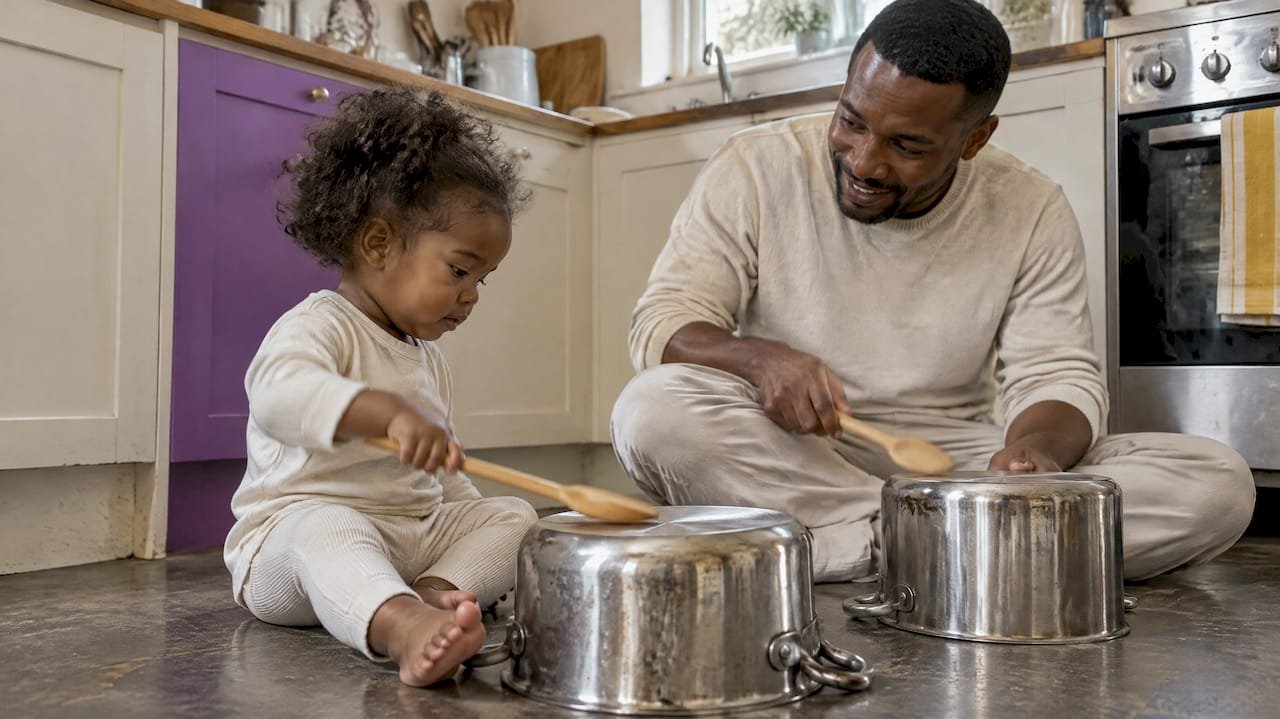
Turn a few pots, pans and wooden spoons upside down on the floor and start a band. The BBC includes pots and pans as a kitchen drum kit among its everyday sensory objects.
Try loud, then quiet, then fast, then slow. Copy their rhythm and let them copy yours. For more ideas on the same theme, our music and movement activities take about five minutes each.
3. Bowl of water play
A plastic bowl of water on a towel is one of the most absorbing setups there is. The NHS notes that children love water play in the bath, paddling pool, sink or a plastic bowl, and suggests plastic bottles, a sponge, a colander, straws, a funnel and spoons, as long as everything is unbreakable.
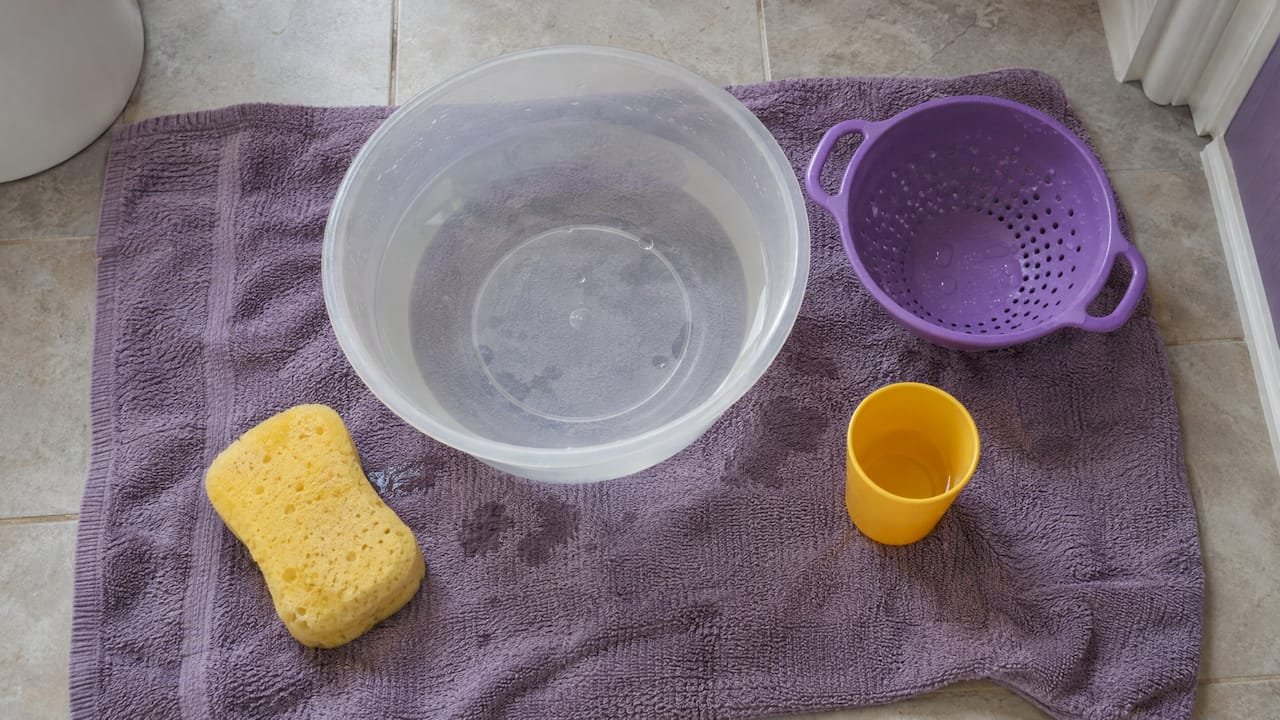
Pour, squeeze, scoop and splash. Talk about full and empty, wet and dry. We’ve collected more water play ideas for babies and toddlers if this one is a hit. Read the safety section below first: water needs your hands-on supervision every time.
4. Sock puppets and sock games
Odd socks are brilliant toys. Pull one over your hand and make it talk, hide a toy inside and ask your child to find it, or toss balled-up socks into a laundry basket. The BBC lists socks for making sock puppets among its everyday objects.
You’ll find plenty more in our sock games for toddlers, most of which take under five minutes.
5. Pom-pom drop
Tape a paper towel roll to a wall or the side of a box, and let your child drop pom-poms or cotton balls through it. Action for Children describes this as Pom-Pom Drop for ages 9 months to 3 years, and a related Pom-Pom Grasp using an ice cube tray, with tongs or tweezers for older toddlers.
- Younger toddlers: Use big pom-poms and their fingers only.
- Older toddlers: Add counting, or guess which container will hold the most.
- Safety: Pom-poms and cotton balls are small. Stay right beside your child, and skip this one if they still put everything in their mouth.
6. Color sorting
Grab sheets of colored paper, or just a few bowls and cups, and sort what you find: blocks, socks, plastic lids. Say the color names out loud as you go. It’s an easy way to build vocabulary without it feeling like a lesson. We have ten color sorting activities for toddlers built around this idea.
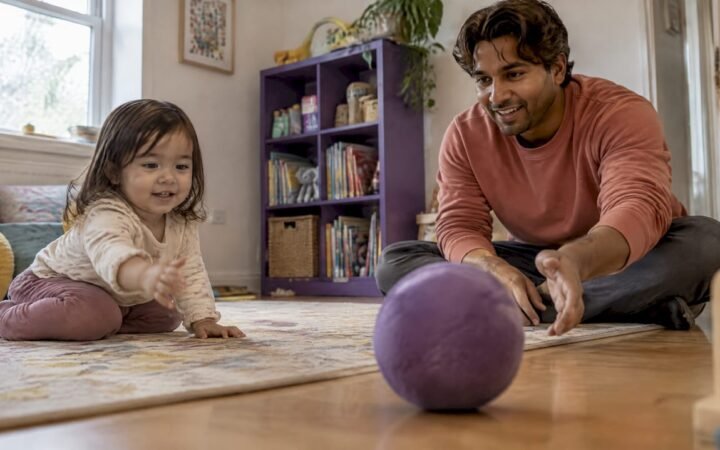
7. Roll the ball back and forth
Sit on the floor facing your child with your legs apart, and roll a soft ball to them. Wait. Cheer when they push it back. Royal Hospital for Children guidance suggests rolling a ball back and forth to help 9 to 12 month olds practise turn-taking.
As they grow, make the game bigger: roll it under a chair, through a tunnel of cushions, or knock over a tower of plastic cups.
8. Point and name
This one works anywhere: the kitchen, the sofa, the pushchair. Point at something and say its name, then wait for your child to point too. The BBC lists a point and name game for 9 to 12 months among its quick ideas.
For older toddlers, flip it. Ask them to point to “something red” or “something that goes in the fridge.”
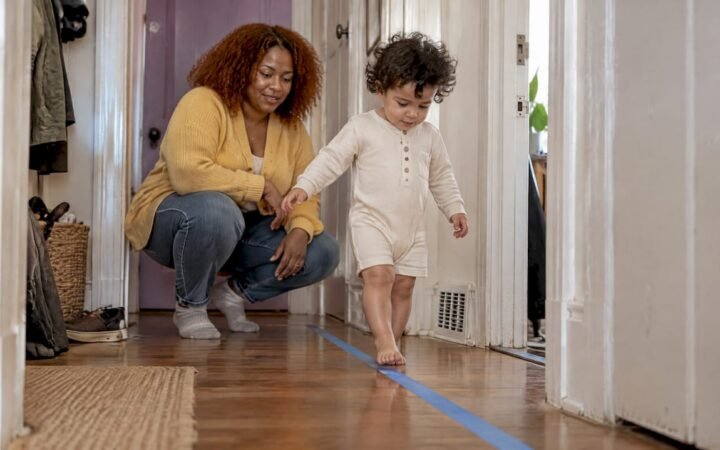
9. Cushion path
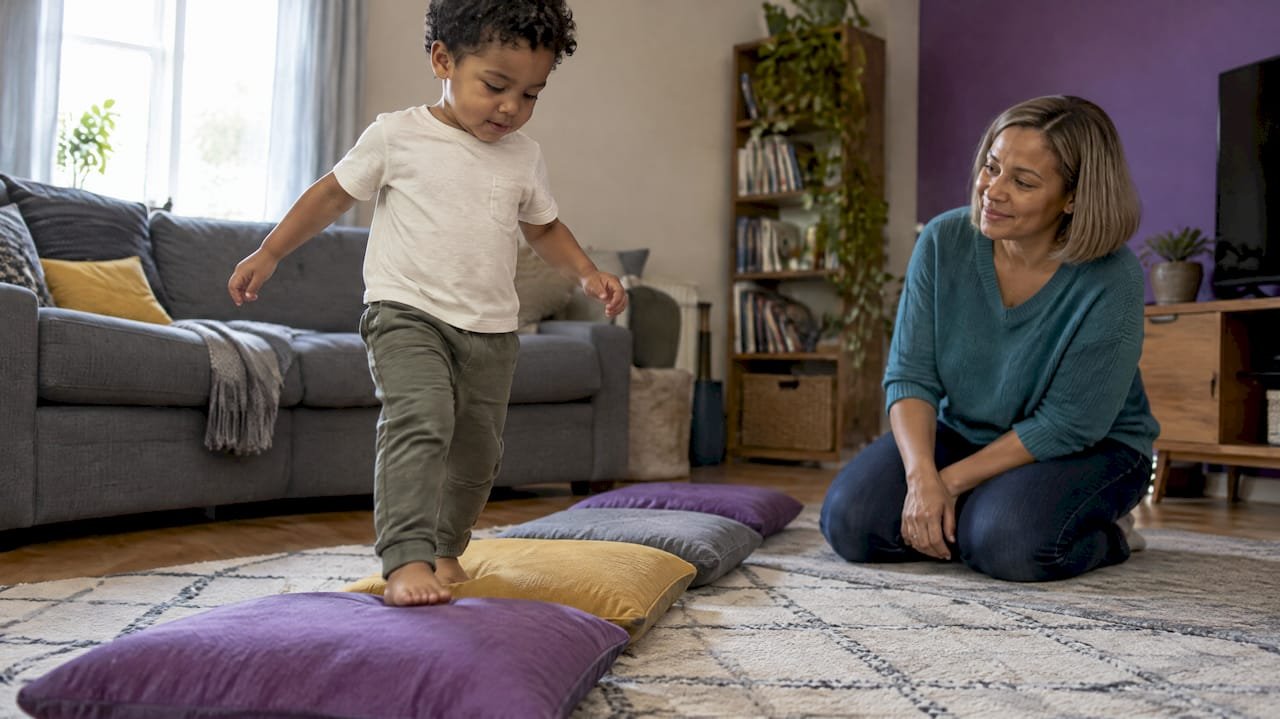
Lay cushions and pillows in a line on the floor and let your child step, hop or crawl along it. Add a rule: “The floor is lava,” or “Tiptoe like a mouse.” It uses up energy fast, which makes it a good choice before lunch or when the day feels long. Keep the path away from furniture edges and hard corners, and use flat cushions your child can balance on safely.
10. Egg box treasure hunt
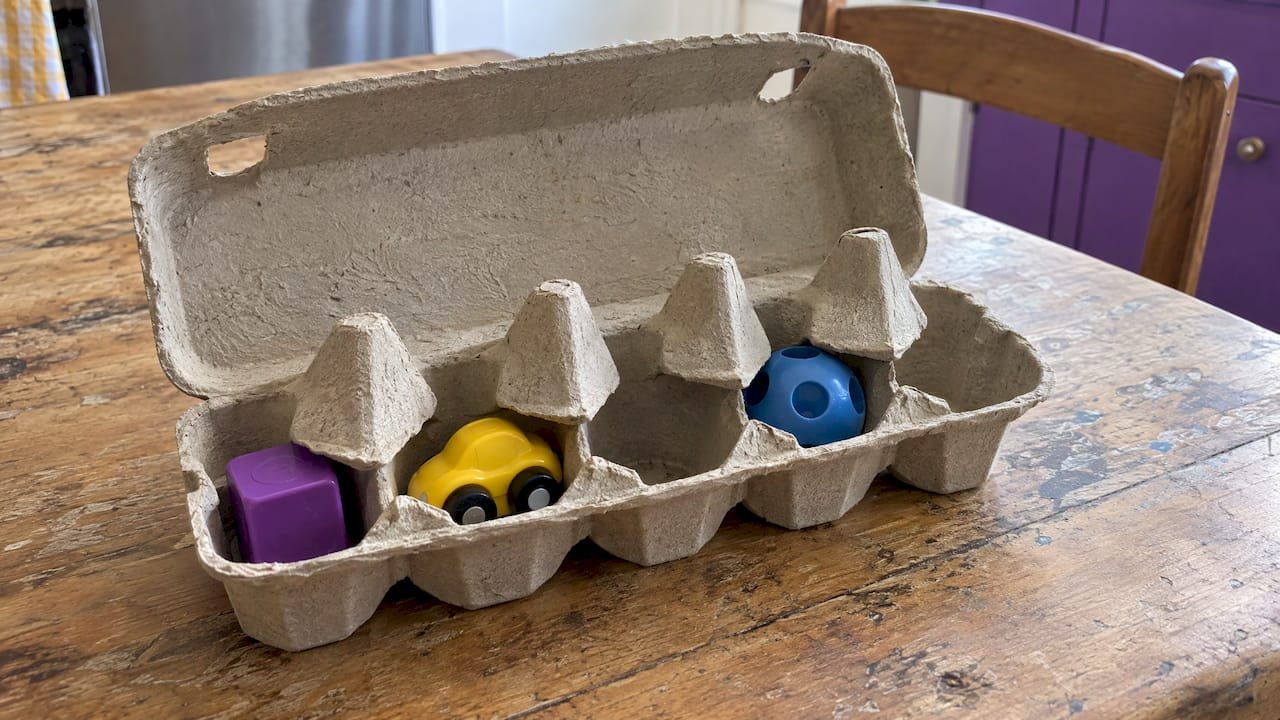
Hide a few small, safe toys under the cups of an egg box, close the lid and let your child open it to find them. The BBC lists an egg box for hiding small toys as one of its everyday sensory objects. Use toys that are too big to swallow, and swap them for different ones next time.
Making each activity fit your child’s age
The same bowl, bag or ball can work from the baby stage to age four. What changes is what you ask your child to do.
| Age | What they’re ready for | How to adapt |
|---|---|---|
| 6 to 12 months | Watching, grasping, mouthing, simple turn-taking | Keep it to one or two objects. Roll, wave, point and name. Stay within arm’s reach. |
| 12 to 24 months | Pouring, stacking, early pretend play, short instructions | Add a simple goal, such as “put it in the bowl.” Narrate what you’re doing. |
| 2 to 3 years | Sorting, counting, following two-step ideas | Add colors, numbers or a little challenge: “Find three red things.” |
| 3 to 4 years | Longer pretend play, rules, helping | Let them lead. Ask “what happens next?” and follow their story. |
For babies around 9 to 12 months, Royal Hospital for Children guidance also points to practising gestures such as waving, clapping, pointing and shaking the head for yes and no. Books work too. Let your baby turn the pages and touch the pictures, rather than reading straight through.
If you’re not sure what your child might be ready for, our guide to low-prep toddler activities by skill area sorts ideas by what they build, such as movement, language and fine motor skills. And if your child is two, our 2 year old activities are a good next stop.
Why joining in matters
When you sit down and respond to your toddler, even a simple game turns into practice in turn-taking, language and pretend play. If you’d like to read more about how that works, this piece on pretend play development in toddlers explains why sharing simple games can support growth.
Keeping quick play safe
Short activities still need the usual care. These are the points that matter most with household items.
- Water. The NHS warns that a baby or young child can drown in less than 5 centimetres (2 inches) of water and says never to leave a young child alone in the bath or playing with water. Stay within arm’s reach, and empty the bowl when you finish.
- Button batteries. The same NHS page warns that swallowed button batteries can cause severe internal burns, so keep them well away from children. Check remote controls, musical cards and small gadgets before you offer them as props.
- Small objects. Babies mouth everything they touch. The Hub at Lewisham advises being observant and removing unwanted objects, and notes that anything smaller than a D-size battery is a choking risk. Look over the play area before you start.
- Supervision. Islington Council’s activity pack says under-5s should be supervised throughout all activities, sharp tools should be used by adults only, and any paints should be non-toxic with the manufacturer’s age guidance followed.
- Bought toys. If you add shop-bought toys, the NHS advises looking for the British Standard kitemark, lion mark or CE mark, and not giving a baby or toddler under 3 anything marked “Not suitable for children under 36 months.” Our toy safety guidance for parents covers more on checking toys and small parts.
- Surfaces and heat. Keep babies off beds or other surfaces they could roll from. NCT advises not leaving a baby unattended on a bed or other surface they could roll off. Keep hot drinks and anything on the cooker well out of reach.
If you want to try messy play, Islington suggests taping down bin bags, old newspaper or a wipeable tablecloth to make a mess-proof area. It doesn’t need much space: the kitchen table will do if you don’t have a garden. If you have a specific worry about your child, such as a feeding difficulty or a habit of swallowing objects, talk to your health visitor or GP before trying new activities.
Keeping it screen-free
When you’re exhausted, a screen is the easy option. Short, hands-on play is a realistic alternative, because ten minutes is a small ask.
Official UK guidance from Best Start in Life says to avoid screen time for under-2s other than shared family activities that encourage bonding, interaction and conversation. For 2 to 5 year olds, it suggests keeping screen time to an hour a day or less. It also says young children learn best through warm, responsive interactions.
A few ways to make screen-free play easier:
- Keep one “play basket” of safe household items where you can grab it.
- Put your own phone out of reach for the ten minutes. Toddlers notice.
- Take play outside when you can. Inspiring Scotland’s guide suggests describing objects, sights, sounds, smells and textures out loud to support language. Our ten-minute outdoor activities give you ideas for the garden or the park.
When ten minutes feels like too much
Some days even ten minutes feels like a lot. Start smaller. Try one of the shorter ideas in our quick toddler activities, or fit play into moments that already exist: our morning activities for toddlers and shopping with toddlers activities turn routines into play. If you’re after something that builds closeness, try our bonding activities for toddlers.
Our perspective
We built Mooshie because we know the feeling of standing in the kitchen with a restless toddler and a blank mind. The problem usually isn’t a lack of love or effort. It’s the creativity block that comes with tired days.
That’s why we focus on activities that use only what’s already at home. No shopping trip, no prep, no extra clutter. We think the best play ideas should arrive when you need them, matched to your child’s age, the time you’ve got and the energy you have left.
We also explain the “why” behind every activity in plain language. When you know that rolling a ball back and forth is practice in turn-taking, or that naming colors builds vocabulary, a simple game feels more meaningful. Our approach is to bring child-development research into ordinary moments, and to get grown-ups off their phones and onto the floor with their child.
samit
Get ideas matched to your child
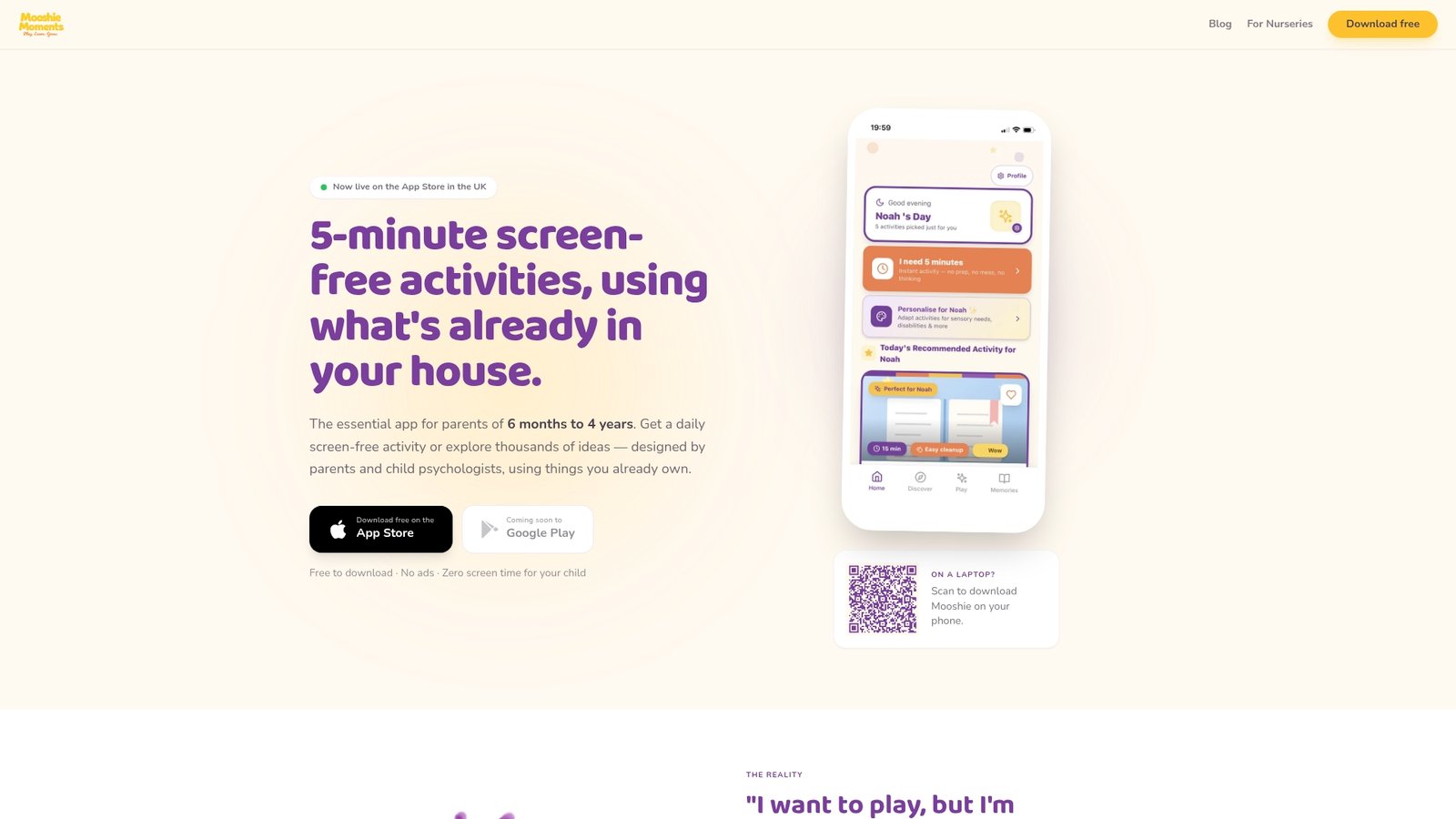
If you’d rather not hunt for ideas each day, Mooshie is a free-to-download app for parents and caregivers of children aged 6 months to 4 years. Tell it your child’s age, how much time you have and how much energy you’ve got, and it suggests screen-free activities using everyday household items. Each activity comes with a plain-language explanation of what it supports and coaching tips for playing along. Premium features are available by subscription through the App Store.
Run a nursery, childminding setting or early years group? Our Partnership Pack and home-learning resources help you share easy play ideas with the families you work with.
FAQ
What can I do with my toddler in 10 minutes without buying anything?
Use what’s already in the house: a bowl of water, a pillowcase of safe items, pots and wooden spoons, odd socks or a line of cushions. The NHS recommends using things lying around the house and getting involved yourself. Choose one item, sit down with your child and talk about what you’re doing.
Can I do these activities with a baby?
Many of them adapt well from around 9 to 12 months, such as rolling a ball, pointing and naming, and a simple bag game. Use fewer, larger objects, stay within arm’s reach and avoid anything small enough to choke on. The NHS notes that some activities may not suit children under 6 months, so check with your health visitor if you’re unsure.
How do I keep my toddler’s attention for the full ten minutes?
Keep the setup minimal and let your child lead. Follow what they do, add a small twist like a new color or a new sound, and stop when they’ve lost interest. Some days a toddler will play for four minutes and some days for twenty, and both are fine.
Is it okay for toddlers to use screens at all?
UK guidance from Best Start in Life says to avoid screens for under-2s except shared family activities that encourage interaction and conversation, and to keep screen time to an hour a day or less for 2 to 5 year olds. If you have worries about your own child’s screen use, your health visitor is the right person to ask.
What household items should I avoid during play?
Avoid anything small enough to swallow, button batteries, sharp tools and anything hot. Never leave a toddler alone with water, even a shallow bowl. Check that any bought toys carry a British Standard kitemark, lion mark or CE mark, and respect age warnings on packaging.
Sources
- Baby and toddler play ideas, NHS
- 15 Quick Activities for Babies That Take Less Than 10 Minutes, BBC Tiny Happy People
- Sensory play with babies: 18 magical everyday objects, BBC Tiny Happy People
- Infant Toddler Fine Motor Activities, Action for Children
- Exploring, interacting and imitating (9 to 12 months), Royal Hospital for Children NHS
- Taking your baby outside, The Hub at Lewisham
- Sensory Activities To Try At Home With Under 5s, Islington Council
- 3 to 6 months, Life with your baby, NCT
- Baby and toddler screen time guidance, Best Start in Life
- Connecting babies and young children to nature, Inspiring Scotland
- The Role of Pretend Play Development in Toddlers
- 3D Printed Toy Safety: What Parents Need to Know
Recommended
- Quick Toddler Activities for UK Parents
- UK Parents: Low Prep Toddler Activities by Skill Area in 2–15 Minutes
- Busy Parents: 12 No Prep Shopping Activities for Toddlers
- 10 Minute Indoor Obstacle Course for Toddlers: NHS Backed, No New Toys
Want play ideas matched to your child's age?
Mooshie Moments gives you simple, guided play ideas for ages 6 months to 4 years. Try 3 free activities a week.
Download free on the App StoreMore like this
Best Indoor Games for Toddlers: 14 Easy Ideas for Home
The best indoor games for toddlers, using things you already own: active, pretend and quiet ideas, age tweaks, safety checks and how…
Small Space Toddler Activities: 15 Ideas for Any Room
Small space toddler activities that need no shopping and little setup: 15 ideas for flats and tiny living rooms, with safety tips…
Toddler Activity Schedule: A Realistic Day That Works
A simple toddler activity schedule for ages 1 to 4: sample days, short play blocks, nap timing, winter tweaks and screen-free ideas…