
40 Fun 2 Year Old Activities to Start Right Now
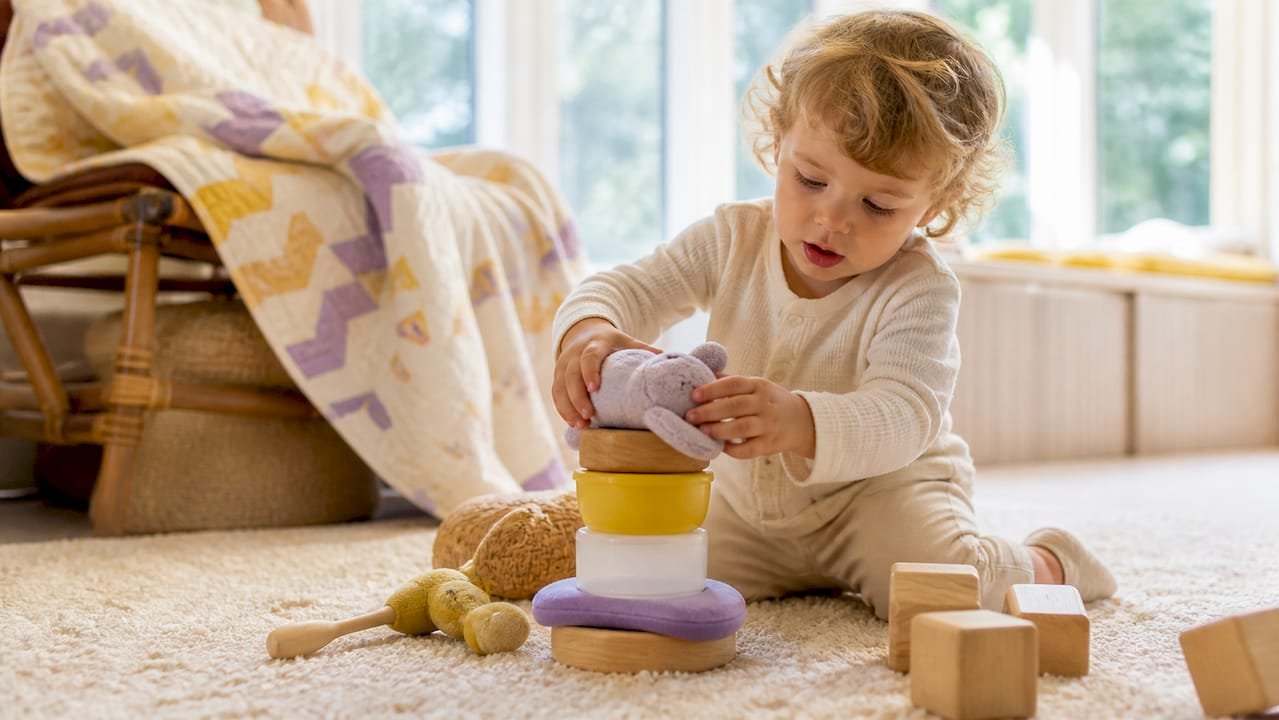
Here are five activities you can set up in under two minutes, no special supplies needed:
- Sock ball toss (5–8 min, gross motor): Roll socks into balls and toss them into a laundry basket. Move the basket closer or farther to adjust difficulty.
- Muffin tin sorting (6–10 min, fine motor): Drop pom-poms or dry pasta into muffin cups by color. Add toddler tongs to make it harder.
- Pot and spoon drumming (5 min, sensory/language): Hand over a wooden spoon and a pot. Name the sounds together: “loud,” “soft,” “bang.”
- Pillow obstacle course (8–10 min, gross motor): Line up couch cushions to step on, crawl over, or jump from. Simple narration (“over, under, around”) builds spatial language.
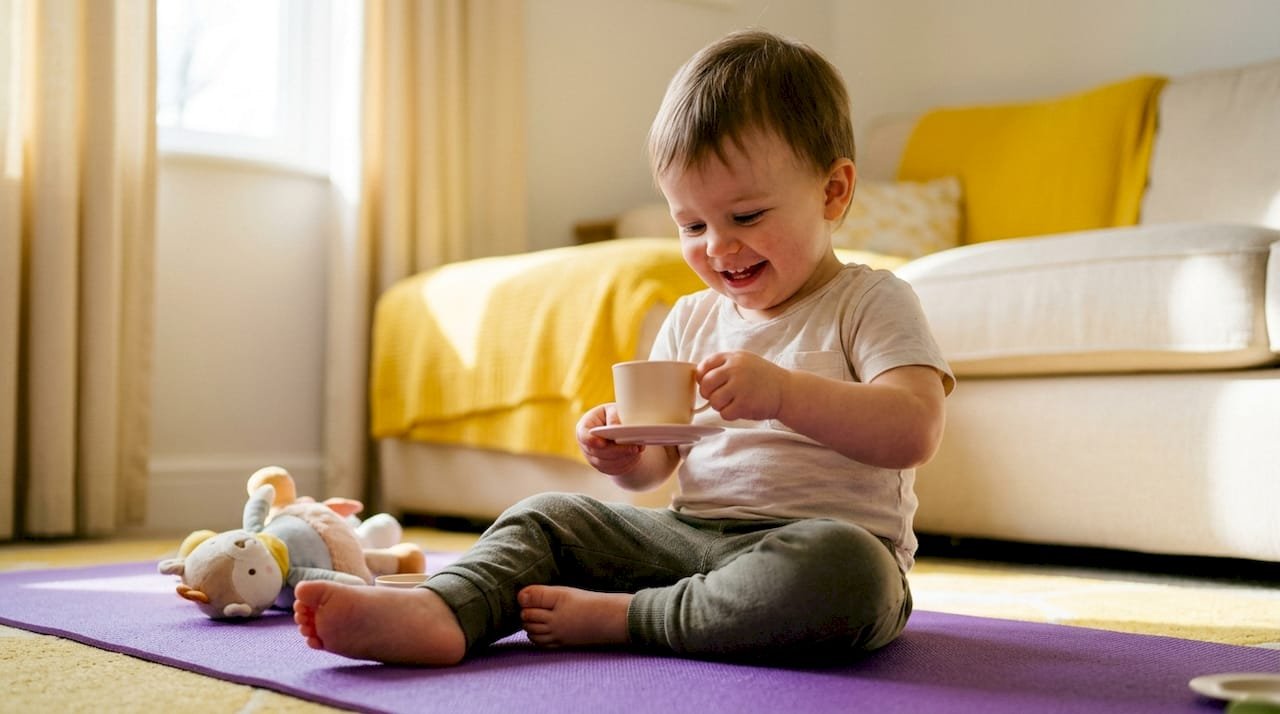
- Pretend tea party (open-ended, pretend/language): Cups, a small pitcher, and a stuffed animal. Let your child pour, serve, and narrate.
A quick starter sequence for the day: sock ball toss after breakfast (burns energy), muffin tin sorting before lunch (quiet focus), and a pretend tea party as a calm-down before nap. Each block runs 5–10 minutes, which fits neatly inside the attention span most 2-year-olds actually have.
Key Takeaways
Short, repeated play matched to your child’s interests is the most effective and lowest-effort approach to supporting development at age two.
| Point | Details |
|---|---|
| Start with 5-minute bursts | Most 2-year-olds focus for 4–6 minutes; short, frequent activities work better than long sessions. |
| Use what you already have | Household items like muffin tins, dry pasta, and painter’s tape cover most activity types. |
| Follow your child’s lead | Adapting play to their current obsession increases engagement and language use. |
| Safety first, always | Supervise water play and check that small objects pass the toilet paper roll tube test before play. |
| Mooshiemoments on demand | The app delivers age-matched, screen-free activity ideas in under a minute, with developmental coaching tips included. |
Table of Contents
- Why short, repeated play matters for your 2-year-old’s development
- 40 low-prep play ideas for 2-year-olds, organized by category
- A sample daily schedule that actually fits a 2-year-old’s attention span
- What to keep on hand and how to stay safe
- How to adapt any activity to your child’s interest and skill level
- What to do when an activity isn’t working
- What the research says about short, repeated play
- The honest truth about toddler play
- Mooshiemoments gives you tailored activity ideas in under a minute
- Sources
Why short, repeated play matters for your 2-year-old’s development
Short, repeated play builds language, motor skills, and problem-solving faster than any single long session. Age two is a period of rapid neural growth, and intentional, play-based activities help strengthen those domains in ways that carry forward into preschool readiness.
The table below maps the five main activity types to the specific skills they support, grounded in AAP guidance and early-childhood research.
| Activity type | Primary skill | What it builds | Example activity |
|---|---|---|---|
| Gross motor | Large muscle control | Balance, coordination, stamina | Obstacle courses, dancing, ball rolling |
| Fine motor | Hand and finger strength | Pincer grasp, tool use, pre-writing | Sorting, stacking, tearing paper |
| Sensory | Sensory processing | Tolerance, focus, cause-and-effect | Water play, sand, playdough |
| Language | Vocabulary and sentences | Word recall, two-word phrases, listening | Narration games, picture books, songs |
| Pretend play | Social-emotional skills | Empathy, sequencing, creativity | Tea parties, “cooking,” doll care |
The American Academy of Pediatrics recommends regular physical activity for toddlers and emphasizes that active play supports healthy development across all domains, not just physical fitness. Gross motor and fine motor activities also reinforce each other: a child who climbs and balances tends to develop better hand stability for fine-motor tasks.
Pretend play often gets underestimated. At age two, it is the primary way children practice sequencing (“first I pour, then I drink”), social roles, and early emotional regulation. A simple tea party does more developmental work than it looks like.
40 low-prep play ideas for 2-year-olds, organized by category
These household-item activities need no specialty purchases. Each entry includes a one-line setup, a typical run time, the primary skill, and one quick adaptation.
Indoor active
- Balloon tap: Blow up one balloon; keep it off the floor. 8–12 min. Gross motor. Adaptation: tap with a paper towel roll for a “bat.”
- Pillow hop: Line up three cushions; hop or step across. 6–10 min. Gross motor/balance. Adaptation: add a “lava” rule (floor = lava) for more engagement.
- Freeze dance: Play music, pause it, freeze. 5–8 min. Gross motor/language. Adaptation: call out a body part to freeze in a funny pose.
- Tunnel crawl: Drape a blanket over two chairs. 8–15 min. Gross motor. Adaptation: place a stuffed animal at the end as a “rescue” goal.
- Sock slide: Socks on a smooth floor, slide across a taped line. 5–10 min. Gross motor. Adaptation: add a basket to slide into.
Indoor quiet
- Muffin tin sort: Pom-poms or dry pasta sorted by color into cups. 6–10 min. Fine motor. Adaptation: add tongs to increase difficulty.
- Stacking cups: Plastic cups stacked and knocked down. 5–8 min. Fine motor/cause-and-effect. Adaptation: sort by size before stacking.
- Simple puzzles: 4–6 piece knob puzzles. 5–10 min. Fine motor/problem-solving. Adaptation: name each piece as it goes in.
- Book “reading”: Child narrates a wordless picture book. 5–8 min. Language. Adaptation: ask “what happens next?” to extend.
- Peg board play: Push golf tees into a foam block. 6–10 min. Fine motor. Adaptation: sort by color before inserting.
- Tape road: Tape a road on the floor for toy cars. 10–20 min. Pretend/language. Adaptation: add a “parking lot” square.
- Shape matching: Cut shapes from cardboard; match to outlines drawn on paper. 6–10 min. Cognitive. Adaptation: trace the shape before matching.
Sensory
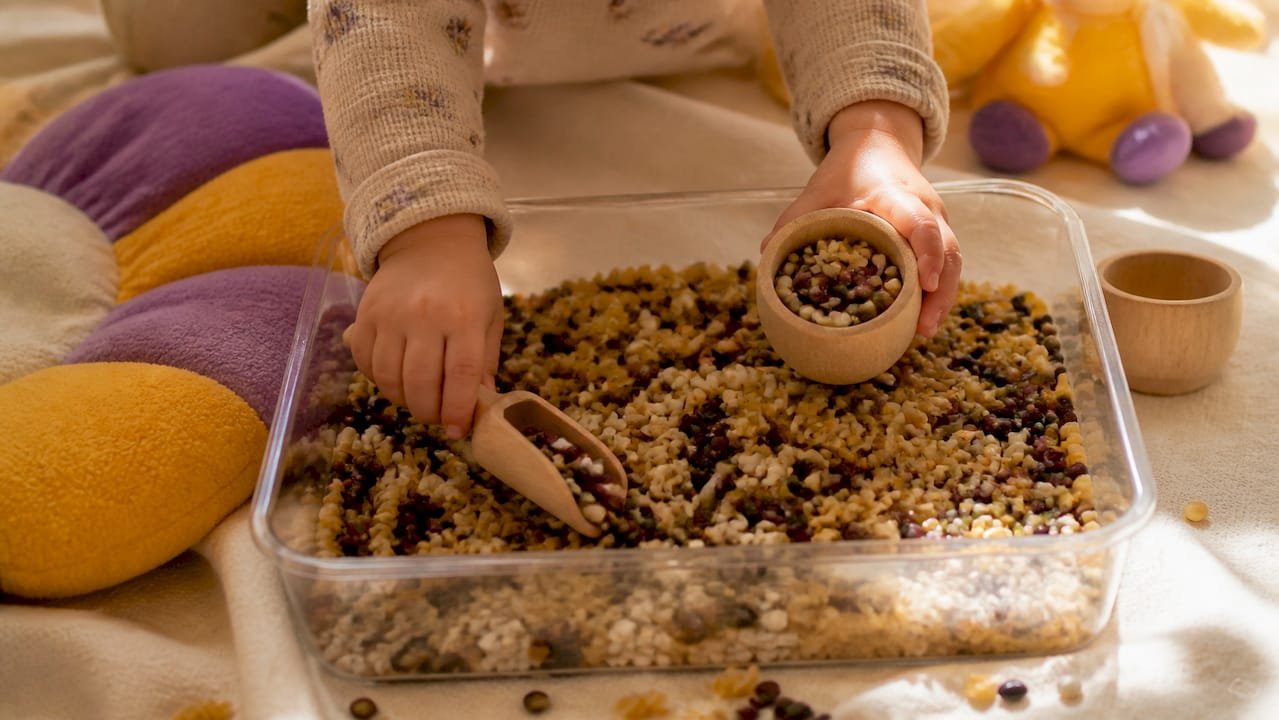
- Dry rice bin: Fill a bin with dry rice; add cups and spoons. 10–20 min. Sensory/fine motor. Adaptation: hide small toys to find.
- Playdough squeeze: Homemade or store-bought playdough, no tools needed. 10–20 min. Fine motor/sensory. Adaptation: add cookie cutters or a rolling pin.
- Water transfer: Two bowls, a sponge or turkey baster, transfer water between them. 8–12 min. Sensory/fine motor. Adaptation: add a few drops of food coloring.
- Shaving cream tray: Spread shaving cream on a tray; draw with a finger. 8–10 min. Sensory/fine motor. Adaptation: press a leaf or toy into it for prints.
- Ice cube exploration: Drop colored ice cubes into a bin of water; watch them melt. 10–15 min. Sensory/science. Adaptation: name the colors as they blend.
- Oobleck: Mix cornstarch and water; squeeze and release. 10–15 min. Sensory. Adaptation: add a spoon to scoop and pour.
Creative
- Sponge painting: Dip cut sponges in paint, press onto paper. 8–12 min. Fine motor/creative. Adaptation: use shaped sponges (star, circle).
- Sticker art: Peel and place stickers on paper. 6–10 min. Fine motor. Adaptation: place stickers on a drawn outline.
- Torn paper collage: Tear magazine pages; glue onto paper. 8–12 min. Fine motor/creative. Adaptation: sort by color before gluing.
- Crayon rubbings: Place a leaf or coin under paper; rub a crayon over it. 6–10 min. Fine motor/sensory. Adaptation: guess what the object is before lifting the paper.
- Dot painting: Use Q-tips dipped in paint to make dot patterns. 8–12 min. Fine motor. Adaptation: follow a simple dot-to-dot outline.
- Cardboard box build: Give a box, tape, and crayons; build anything. 15–30 min. Creative/pretend. Adaptation: suggest a theme (“make a car” or “make a house”).
Pretend play
- Tea party: Cups, a pitcher, and stuffed animals. Open-ended. Language/social-emotional. Adaptation: introduce “please” and “thank you” prompts.
- Doctor kit: Use a spoon as a thermometer, a sock as a bandage. 10–20 min. Pretend/language. Adaptation: add a “patient chart” (blank paper) for drawing.
- Grocery store: Line up food items or boxes; “shop” with a bag. 10–20 min. Pretend/language. Adaptation: add a handmade price tag for early number exposure.
- Cooking show: Pots, spoons, and dry pasta; “cook” a meal. 10–20 min. Pretend/language. Adaptation: narrate the steps together (“first we stir, then we pour”).
- Car wash: Toy cars, a bin of soapy water, and a cloth. 10–15 min. Pretend/sensory. Adaptation: sort clean vs. dirty cars.
Outdoor
- Chalk drawing: Sidewalk chalk on pavement. Open-ended. Fine motor/creative. Adaptation: trace the child’s shadow at different times of day.
- Leaf collection: Gather leaves in a bag; sort by size or color. 10–20 min. Gross motor/cognitive. Adaptation: press favorites between book pages.
- Water painting: Give a bucket of water and a paintbrush; “paint” the fence or sidewalk. 10–15 min. Fine motor/sensory. Adaptation: name colors or shapes being painted.
- Bubble chasing: Blow bubbles; child pops them. 8–12 min. Gross motor. Adaptation: count pops together.
- Nature scavenger hunt: Find something soft, something rough, something round. 15–20 min. Cognitive/language. Adaptation: draw the items found afterward.
- Puddle jumping: Rain boots and a puddle. 10–15 min. Gross motor/sensory. Adaptation: measure puddle depth with a stick.
- Sandbox scooping: Scoop and pour sand with cups and spoons. 15–20 min. Fine motor/sensory. Adaptation: hide small toys to dig up.
- Obstacle garden: Use garden stakes, hula hoops, or cones to weave through. 10–15 min. Gross motor. Adaptation: time each run with a clap count.
- Bird feeder watch: Hang a simple feeder; sit and name birds or colors. 10–15 min. Language/attention. Adaptation: keep a simple tally of visits.
- Pinecone roll: Roll pinecones down a slight slope into a target. 8–12 min. Gross motor/cause-and-effect. Adaptation: set up a “bowling” target with cups.
- Mud kitchen: A bin, water, dirt, and spoons. Open-ended. Sensory/pretend. Adaptation: add leaves and sticks as “ingredients.”
ZERO TO THREE notes that practical tasks like washing a toy or collecting leaves double as confidence-building “jobs” for toddlers while strengthening both fine and gross motor coordination.
A sample daily schedule that actually fits a 2-year-old’s attention span
Most 2-year-olds can sustain focused attention on a single activity for roughly 4–6 minutes before interest drifts. Build your day around that reality, not against it.
Attention span note: Child development resources consistently report that 2-year-olds focus on a single task for approximately 4–6 minutes. Open-ended play (sensory bins, pretend play) can stretch longer because the child self-directs the pace.
Weekday at-home rhythm
- 7:30 AM, after breakfast: Balloon tap or freeze dance (5–8 min, burns morning energy)
- 9:00 AM: Sensory bin or playdough (15–20 min, calm focus while you have coffee)
- 10:30 AM: Short outdoor time: chalk, bubbles, or leaf hunt (15–20 min)
- 11:30 AM: Book “reading” or simple puzzle before lunch (5–8 min, wind-down)
- 2:30 PM, post-nap: Pretend play: tea party or doctor kit (open-ended)
- 4:30 PM: Creative activity: sponge painting or sticker art (8–12 min)
Busy parent (short-block) rhythm
- Morning: One 5-minute fine-motor activity while you prep breakfast (muffin tin sort, stacking cups)
- Midday: One sensory activity during your work call (rice bin, playdough)
- Afternoon: One gross-motor burst before dinner (pillow hop, sock slide)
Outdoor-focused day
- Morning: Nature scavenger hunt or puddle jumping (20 min)
- Midday: Sandbox or mud kitchen (open-ended)
- Afternoon: Chalk drawing or bubble chasing (10–15 min)
Two transition phrases that reduce friction:
- “We’re going to finish in two minutes, then we’ll wash hands for lunch.” (Gives advance notice, reduces surprise.)
- “You can bring one toy with you to the next thing.” (Gives a sense of control, smooths the shift.)
What to keep on hand and how to stay safe
You need very little. A well-stocked “activity drawer” with everyday items covers most of the 40 ideas above.
Core supplies to keep accessible:
- Dry pasta, rice, or dried beans (sensory bins, sorting)
- Pom-poms in multiple colors (sorting, counting, fine motor)
- Painter’s tape (roads, targets, obstacle lines)
- Muffin tin and plastic cups (sorting, stacking, water transfer)
- Washable paint and Q-tips (dot painting, sponge art)
- Cardboard boxes and paper bags (building, pretend play)
- Wooden spoons and a small pitcher (pretend cooking, water transfer)
Safety checks before play:
- Supervise water play at all times, even shallow amounts.
- Check that sorting items (pom-poms, dry pasta) are larger than a toilet paper roll tube. Anything that fits through is a choking hazard.
- Use washable, non-toxic paint only. Check labels before opening.
- Keep shaving cream and oobleck away from children who mouth everything; substitute playdough instead.
- Outdoor activities near water (puddles, buckets) need direct adult presence.
ZERO TO THREE emphasizes that caregivers should supervise water play and small-parts activities closely at this age.
Pro Tip: Put a fitted sheet under the sensory bin before play. Cleanup takes 30 seconds: lift the sheet, funnel the rice or pasta back into the bin, and you’re done. No sweeping required.
How to adapt any activity to your child’s interest and skill level
Follow your child’s lead first. Speech-language specialists report that activities tied to a child’s current obsession hold attention longer and create natural language-learning opportunities. If they love trucks, the sorting activity becomes “loading cargo.” If they love animals, the tea party gets animal guests.
Concrete adaptation examples:
- Too easy: Add a tool (tongs instead of fingers, a spoon instead of hands), reduce the number of choices, or introduce a time element (“how fast can you fill the cup?”).
- Too hard: Remove steps (pre-sort colors before asking them to match), use larger objects, or do the first step together before stepping back.
- Lost interest: Change one variable. New container, new location, new “character” for the pretend element. You rarely need a whole new activity.
Four language prompts you can drop into any play moment:
- “What do you think will happen if…?” (builds prediction)
- “Can you find one that’s the same?” (builds comparison vocabulary)
- “Tell me about what you’re making.” (builds sentence length)
- “What should we do next?” (builds sequencing)
Narrating your own actions during play (“Now I’m pouring the water slowly… slowly… it’s going in the cup”) gives your child repeated exposure to new words without any extra prep. Expressable’s guidance on narration confirms this is one of the highest-yield, lowest-effort language strategies available to caregivers.
To extend an activity into a multi-step project, add one new element every few minutes rather than introducing everything at once. Start with playdough, then add a rolling pin, then add a cookie cutter. Each addition resets interest without requiring a new setup.
What to do when an activity isn’t working
The one-line fix: simplify the task, offer a choice, or change one thing about the environment.
Five root causes and their quick fixes:
- Hungry or tired: Stop the activity. Snack or rest first. No activity works well on an empty or exhausted toddler.
- Overstimulated: Move to a quieter space, reduce the number of materials, or switch to a calm sensory activity like playdough.
- Activity is too hard: Remove a step, use larger objects, or do it alongside them (“let’s do it together”).
- Not their interest: Swap the theme. Same activity, different character or topic.
- Needs movement first: If they can’t sit, start with a gross-motor burst (3–5 min of jumping or dancing) before the quieter task.
Three scripts for common moments:
- Refusal: “Do you want to do the rice bin or the playdough?” (Offer two options, both acceptable to you.)
- Meltdown mid-activity: “I can see you’re frustrated. Let’s take a break and come back.” (Acknowledge, don’t push.)
- Transition resistance: “You can do this again after lunch. Let’s go wash hands together.” (Confirm it will return, give a next step.)
Short attention and occasional refusal are normal at this age, not a sign that an activity failed. Rotate back to rejected activities after a few days; preferences shift quickly.
What the research says about short, repeated play
Start with short, varied play that follows your child’s interest. That single approach produces the strongest language and motor gains at age two.
Four research-backed tactics:
- Narration: Talk through what you and your child are doing in real time. Expressable’s guidance identifies narration of routine tasks as a high-yield, low-prep language strategy. No extra setup required.
- Scaffolding: Do the first step with your child, then step back. Add support only when they get stuck, not before.
- Repetition: Repeat the same activity across multiple days. Familiarity builds confidence and lets children focus on mastering the skill rather than figuring out the rules.
- Following the child’s lead: Wake Forest Pediatrics notes that the toddler years are marked by trial-and-error learning; activities framed around the child’s own curiosity strengthen neural connections more effectively than adult-directed drills.
Two 5-minute routines you can repeat daily:
Routine 1 (language + motor): Narrate while doing a transfer task together. “I’m scooping the rice. Now I pour it. Hear that sound?” Five minutes, no prep, high return.
Routine 2 (sensory + naming): Playdough or a sensory bin while you name textures, colors, and actions. “Soft. Squeeze. It’s getting flat.” Repetition across days builds vocabulary faster than single exposures.
The AAP’s physical activity guidance reinforces that regular, varied movement is as important as language-focused play. Mixing one gross-motor activity with one quiet or sensory activity each morning covers both priorities without overloading the day.
The honest truth about toddler play
The best 2 year old activities are the ones you actually do, not the ones that look perfect on a planning chart.
That’s not a failure. That’s a toddler doing exactly what toddlers do: following their own curiosity. The container became the activity.
The research backs this up. Short, repeated, interest-led play outperforms elaborate structured sessions for language and motor gains. A wooden spoon and a pot, used for five minutes every morning, builds more than a single hour of “educational” play once a week.
If you’re feeling stretched thin, pick one activity from the list above and do it today. Not five. One. The consistency matters far more than the variety.
Mooshiemoments gives you tailored activity ideas in under a minute
Knowing what to do is one thing. Having a ready list of ideas matched to your child’s exact age and your available time is another.
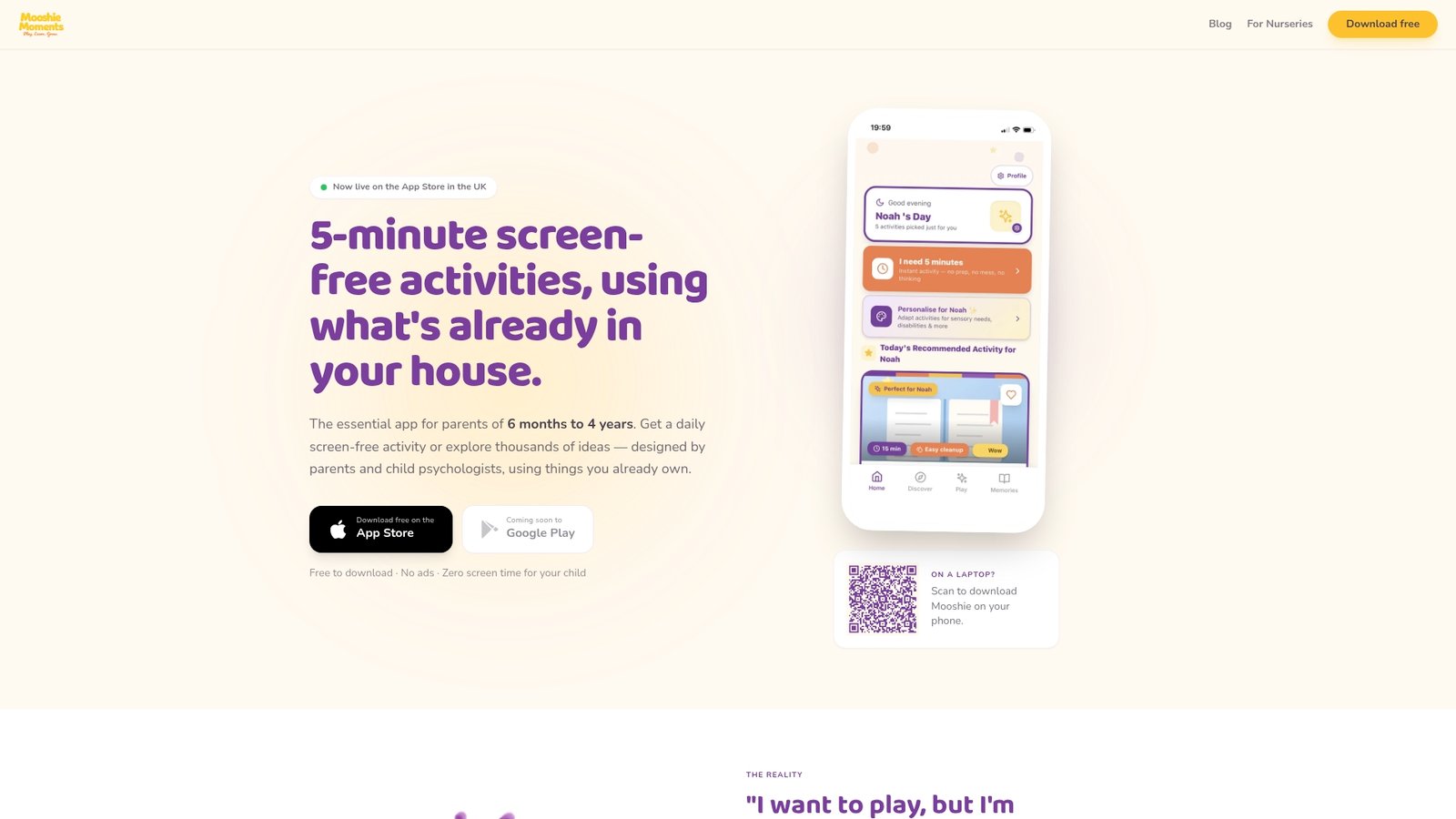
Mooshiemoments is a mobile app built for parents of children aged 6 months to 4 years. It gives you a library of quick, screen-free activities using items you already have at home, each with expert-reviewed developmental notes and coaching tips so you understand why the activity works, not just how to run it. You can filter by age, available time, and your energy level, which means you get a relevant idea in under a minute, even on the hardest days.
For nurseries and early years settings, Mooshiemoments also offers home learning partnership resources including ready-made packs and printable materials that connect what children do at nursery with what families can try at home.
Download Mooshiemoments and get your first set of tailored, screen-free activity ideas today.
Sources
- Toddler physical activity guidance – American Academy of Pediatrics
- Play Activities for 12 to 24 Months | ZERO TO THREE
- 20 Fun Activities for 2-Year-Olds – Good Housekeeping
- Learning Activities for Two-Year-Olds: Nurturing Development Through Play – Wake Forest Pediatrics
- 8 Fun and Educational Activities for 2-Year-Olds – Expressable
Recommended
More like this
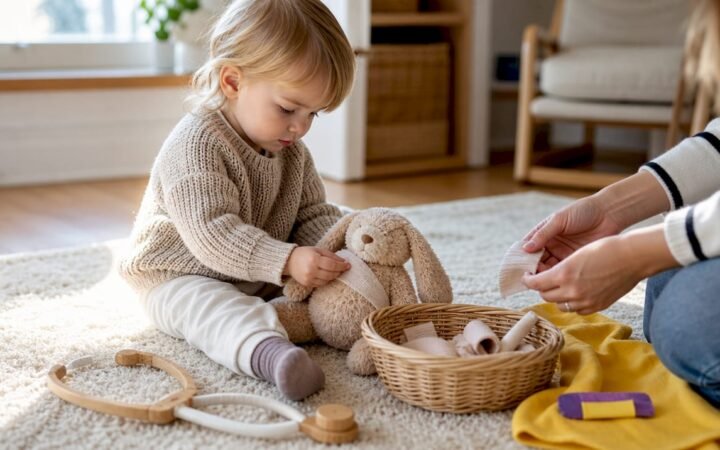
40+ Invitation to Play Ideas for Busy UK Parents and Educators
40+ low prep invitations to play using taste safe household items, age adapted setups, and a five minute staging method you can…
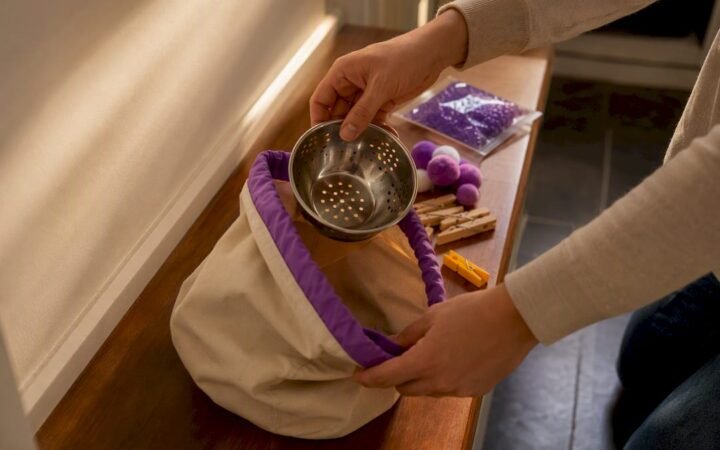
12 Budget Friendly Busy Bag Ideas for Toddlers: Pack in 15 Minutes
12 budget friendly, screen free busy bag ideas for toddlers. Pack a pouch in 15 minutes, rotate to keep interest, and build…
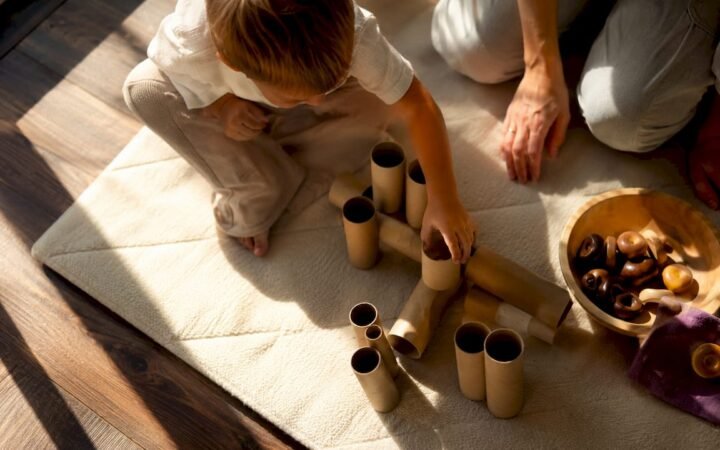
10-Minute Loose Parts Play for UK Toddlers: Toilet-Roll Safety
Start loose parts play in 10 minutes with household items. Follow the toilet-paper-roll safety check, rotate materials, and try quick, low-prep activities...