
10-Minute Loose Parts Play for UK Toddlers: Toilet-Roll Safety
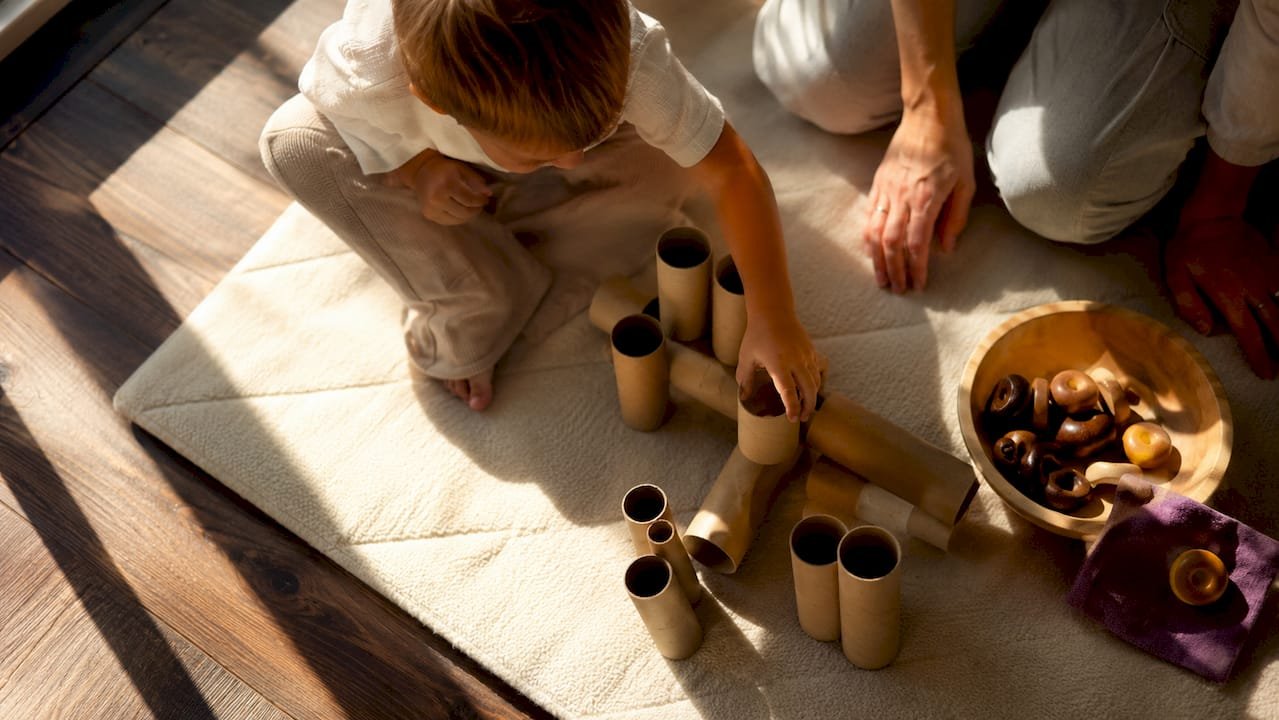
Yes, loose parts play is right for toddlers, and you can start in the next ten minutes. Grab a handful of large, washable household items (think wooden spoons, fabric scraps, big pinecones), set up a supervised, low-traffic spot on the floor, and rotate what’s in the basket every few days so it stays fresh. Before anything goes in that basket, run it through the toilet-paper-roll test: if it fits through the tube, it’s a choking risk and it stays out.
TL;DR:
- Use large, washable household items and natural materials that pass the toilet-paper-roll test to ensure toddler safety during loose parts play.
- Rotate the collection every few days to maintain interest and avoid clutter, emphasizing adult restraint over constant new purchases.
- Prioritize safety checks, including the non-negotiable toilet-paper-roll test and close supervision, before introducing any objects to the play area.
- Set up low, accessible storage solutions and guide toddlers to lead their play experiences without direct instruction, fostering independence.
- Incorporate simple, short activities involving loose parts, like treasure baskets or cardboard forts, to promote sensory, motor, and cognitive development.
Table of Contents
- What Is Loose Parts Play, Exactly?
- What the Research Actually Shows About the Benefits
- Safe Loose Parts for Toddlers Ages 1 to 3
- Safety Checks You Should Never Skip
- Setting Up Loose Parts Play at Home or in a Toddler Room
- Five-Minute Loose Parts Activities to Try Today
- When Loose Parts Play Stops Working, Try This
- How Mooshie Moments Supports Safer, Smarter Loose Parts Play
- Why the Loose Parts Conversation Misses the Point
- Sources
What Is Loose Parts Play, Exactly?
Loose parts are open-ended materials, natural or manmade, that toddlers can move, stack, sort, dump, and combine in whatever way their imagination decides on that day. There’s no instruction manual and no single “right” way to use them, which is the entire point.
The idea traces back to architect Simon Nicholson, who argued in the 1970s that creativity in children rises with the number of variables available to play with. Give a toddler one fixed toy and they’ll do one thing with it. Give them a basket of odds and ends, and they’ll invent ten.
A few everyday examples make this click fast:
- A wooden spoon becomes a drumstick, a digging tool, or a pretend microphone.
- Fabric scraps turn into capes, blankets for stuffed animals, or sorting piles by color.
- Cardboard tubes get stacked, rolled, or used as tunnels for small toys.
What the Research Actually Shows About the Benefits
A systematic review of 25 studies on indoor loose parts and cognitive development found mostly positive links to problem-solving, creativity, and early academic skills, though the researchers flagged real gaps in study design and mixed results across the group. That’s a meaningfully different claim than “loose parts guarantee smarter toddlers,” and it’s worth saying plainly: the evidence points in a good direction without being airtight.
Where the picture gets stronger is physical activity. School-based projects introducing loose parts reported increases in moderate-to-vigorous physical activity and greater play complexity that held up over months, not just on the first novelty-filled day.
What you’ll likely notice at home: longer stretches of focused play, more pretend scenarios popping up unprompted, and toddlers narrating their own play out loud, which is language development in action. Educators in one project also reported real benefits in confidence and problem-solving, alongside honest concerns about storage and sustaining the practice long term. Both things can be true at once.

Safe Loose Parts for Toddlers Ages 1 to 3
Building a toddler-safe collection means splitting your options into natural finds and household items, then applying one universal filter before anything joins the basket.
Natural materials:
- Large pinecones (rinsed and dried, avoid mold)
- Smooth, palm-sized stones (too big to swallow, easy to wipe clean)
- Fabric scraps and ribbons cut long enough they can’t be a strangling risk
- Big seashells with no sharp edges
Household items:
- Cardboard tubes from paper towels (great from 12 months up)
- Wooden curtain rings, sanded smooth (18 months and up)
- Jumbo pasta shapes like large shells, for toddlers past the mouthing stage
- Silicone muffin cups for sorting and stacking
The toilet-paper-roll test is your single non-negotiable rule for anyone under three: if an object can pass through the cardboard tube from a roll of toilet paper, it’s a choking hazard, full stop. Wash natural finds before use, and skip anything with mold, sharp edges, or splinters. For an easy source of ready-sorted materials, our guide to junk modelling for toddlers has more EYFS-aligned examples using items you already have at home.
Safety Checks You Should Never Skip
Loose parts play is safe for toddlers when a few habits become automatic, not occasional. Here’s the sequence to follow every time you introduce something new:
- Run the toilet-paper-roll test. Anything that fits through the tube goes in the “not yet” pile.
- Check for mouthing behavior. If your toddler still explores everything by mouth, stick to large, washable items and seal genuinely small pieces (beads, buttons) inside a sensory bottle so they’re visible but untouchable.
- Scan for hidden dangers. Button batteries, small magnets, and detachable parts have no place in a toddler’s loose parts basket, ever.
- Stay within arm’s reach. Loose parts play calls for close supervision, not a video baby monitor from another room.
- Wash and rotate. Wipe items down regularly, especially anything that’s been mouthed, and swap the collection every few days.
Pro Tip: Keep a small “quarantine” container by the loose parts basket. Anything you’re unsure about goes there until you’ve had a calm moment to test it properly, instead of making a rushed call mid-play.
For toddlers who are still very mouth-first in how they explore, our taste-safe sensory play ideas are built specifically around that stage.
Setting Up Loose Parts Play at Home or in a Toddler Room
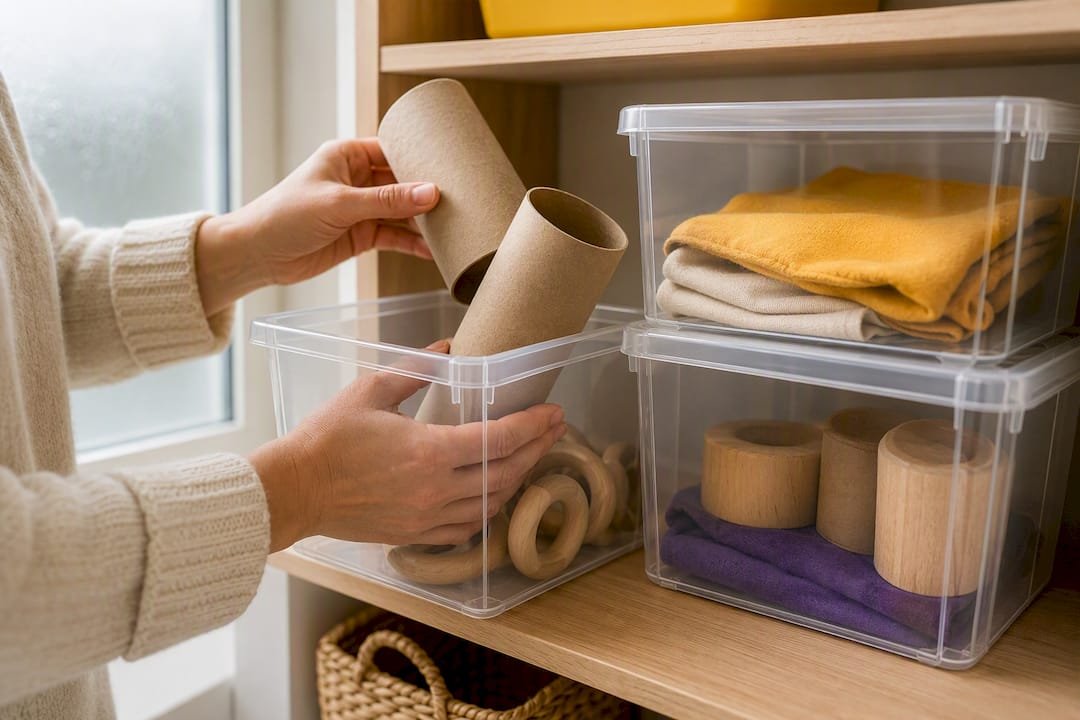
The setup matters almost as much as the materials themselves. Low, open baskets that a toddler can reach without help beat high shelves or lidded bins every time, because independence is part of the point.
- Use shallow trays or baskets sorted by type (fabric, wood, tubes) so toddlers can see options at a glance.
- Rotate the collection every few days rather than leaving the same items out for weeks; a fresh pinecone or new fabric scrap can revive interest instantly.
- Label containers with a picture or simple word if you’re setting this up in a nursery room, so tidying becomes part of the play.
Your job as the adult is to curate, not direct. Set the materials out, step back, and let your toddler lead, stepping in only to narrate what you see (“You stacked three tubes!”) or model an idea once if they seem stuck. Nurseries juggling this across a full day will find our nursery activity planning ideas useful for slotting loose parts into short daily windows.
Five-Minute Loose Parts Activities to Try Today
You don’t need a big setup to get real developmental value out of loose parts. Try any of these:
- Treasure basket. Fill a basket with five or six varied textures (fabric, wood, metal spoon) for sensory exploration. Targets: sensory processing. Cleanup: under a minute.
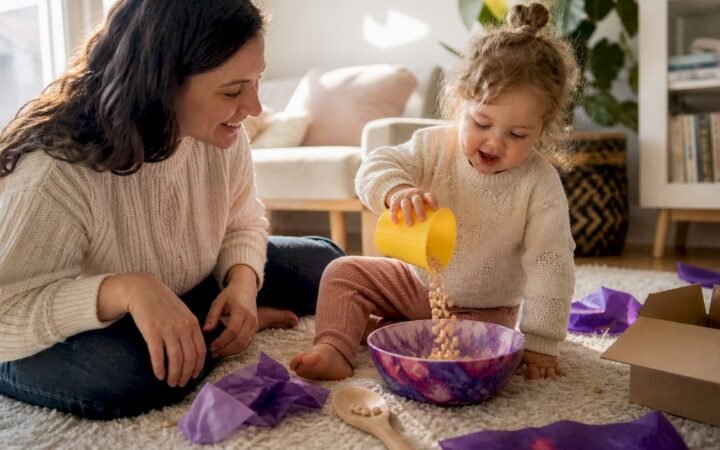
- Filling and emptying station. Give your toddler a jug, some cups, and dried pasta or rice to pour between containers. Targets: fine motor control. Cleanup: sweep and done.
- Scarf movement game. Hand over a few lightweight scarves for waving, hiding, and tossing. Targets: gross motor and imaginative play. Cleanup: none.
- Cardboard den-building. Stack a few large boxes or tubes into a mini fort. Targets: spatial reasoning and problem-solving. Cleanup: fold and store.
When Loose Parts Play Stops Working, Try This
If the novelty wears off fast, swap in one unusual item instead of replacing the whole basket. If storage feels impossible, stackable clear bins with simple labels solve most of it. And if you’re nervous about safety, shrink the selection to fewer, larger items and keep your household rules (wash hands, close supervision) consistent every session.
How Mooshie Moments Supports Safer, Smarter Loose Parts Play
Everything in this guide, age-appropriate materials, the toilet-paper-roll check, rotating instead of buying more, is baked into how Mooshie Moments builds its activity suggestions. The app matches loose parts prompts to your toddler’s exact age and your available time, flags mouthing-stage precautions automatically, and gives you a quick line to say out loud while your toddler plays, so narrating feels natural instead of forced.
If you want a ready library of screen-free ideas sorted by age rather than building your own basket from scratch, our activity pack for two-year-olds is a fast way to start today.
Why the Loose Parts Conversation Misses the Point
Most advice on loose parts play treats it as a materials list problem: buy the right pinecones, sort the right buttons, done. That misses what actually drives the benefit, which is adult restraint. The research on physical activity and play complexity keeps pointing back to settings where adults set materials out and then genuinely stepped back, not settings with the fanciest sensory bins.
The conventional wisdom oversells novelty and undersells rotation. Parents worry they need constant new stuff to keep a toddler engaged, when a basket of the same six items reshuffled weekly does the job just as well, if not better, because the toddler is doing the inventing, not you.
If you take one thing from all this, prioritize the safety check over the aesthetic. A gorgeous loose parts display with one overlooked small object is a worse outcome than a plain basket of oversized wooden spoons and cardboard tubes that passes the toilet-paper-roll test every time. Get the safety habit automatic first. The creativity part takes care of itself.
— samit
Sources
- Loose parts play — Outdoor Play and Learning
- Systematic review on indoor loose parts play and cognitive development — PMC12112344
- Thinking about loose parts in school — Play Wales (2023)
Recommended
More like this
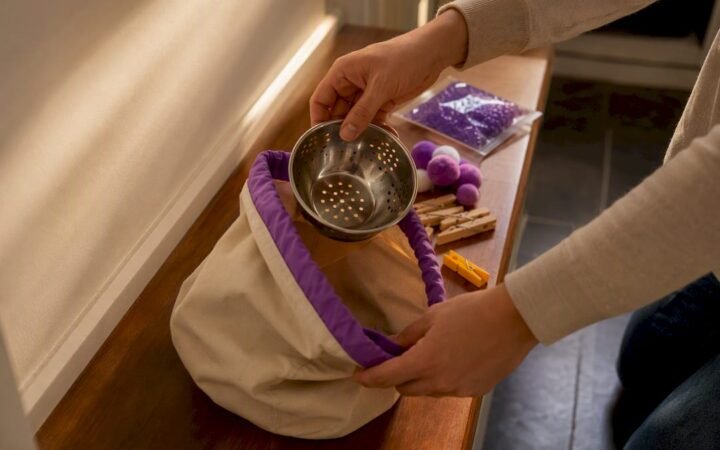
12 Budget Friendly Busy Bag Ideas for Toddlers: Pack in 15 Minutes
12 budget friendly, screen free busy bag ideas for toddlers. Pack a pouch in 15 minutes, rotate to keep interest, and build…
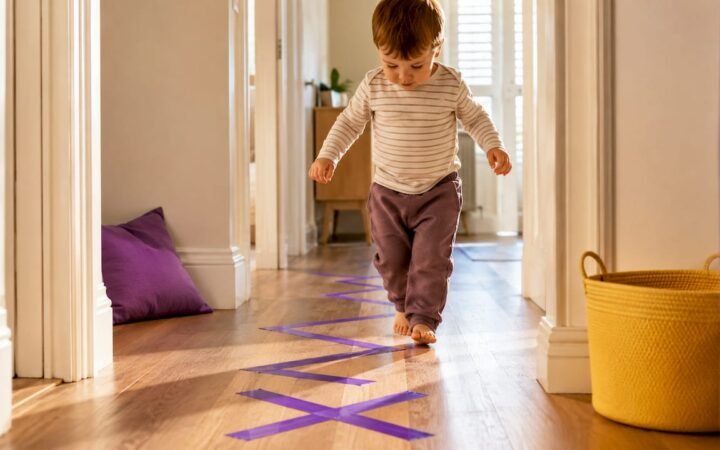
Start in 5 Minutes: Screen Free Rainy Day Activities for UK Toddlers
Quick, screen-free rainy day activities UK parents can start in five minutes. Age-matched, energy-level rotations, low-cost supplies and tidy cleanup tips.
Research Backed Nursery Activity Plans: 3 Daily 5 Minute Slots (UK)
Research backed nursery activity plans for UK parents: age matched, low prep household activities in 5–15 minutes, plus a one‑page weekly microplan…