
Research Backed Nursery Activity Plans: 3 Daily 5 Minute Slots (UK)

The best nursery activity planning ideas are short, age matched, and screen free: five to fifteen minutes with things already in your kitchen drawer or laundry basket. Done well, this kind of play builds motor skills, language, and social confidence without a shopping list or a Pinterest board. Mooshiemoments was built around exactly this idea, turning it into ready-made suggestions parents can use in seconds.
TL;DR:
- Activities should be kept short, engaging, and based on items already available at home to support motor, language, and social skills effectively.
- Matching activities to a child’s developmental stage rather than age milestones ensures better engagement and skill-building outcomes.
- Incorporating five-minute activities into existing routines like mealtime, bath time, and outings allows for consistent, manageable play without extra planning.
- Using loose, open-ended materials and simple scenarios promotes creativity and problem solving more than elaborate crafts or manufactured toys.
- Ready-made plans from apps like Mooshiemoments can simplify activity selection, offering developmentally appropriate suggestions that fit into busy daily schedules.
Table of Contents
- Nursery Activity Planning Ideas by Age Group
- How to Build a Simple Weekly Microplan
- Materials and Safety Checklist
- Fitting Activities Into Daily Routines
- A Month of Five-Minute Slots: What Actually Happened
- Let Mooshiemoments Handle the Planning Part
- Sources
Nursery Activity Planning Ideas by Age Group
Good planning starts with matching the activity to where your child actually is, not where a milestone chart says they should be. Here’s a bank of ideas sorted by age and time, each using things you already own.
6 to 12 months (5 to 10 minutes)
- Treasure basket exploring: Fill a basket with a wooden spoon, a soft scarf, a metal measuring cup, and a rubber jar lid. Let your baby handle each one while you name it out loud. This builds sensory awareness and early vocabulary.
- Tummy time mirror play: Prop an unbreakable mirror in front of your baby during tummy time. Watching their own face encourages neck and shoulder strength.
- Sock puppet chat: Slip a sock over your hand, give it a name, and have it “talk” to your baby. The NHS recommends exactly this kind of simple puppet play to support language development.
- Water splashing at bath time: Add plastic cups and a colander. Pouring and splashing strengthens hand control and cause-and-effect understanding.
- Crinkle box crawl: Place a few crumpled sheets of baking paper inside a shallow box and let your baby reach in. The sound and texture reward early crawling attempts.
12 to 24 months (10 to 15 minutes)
- Lid and pot sorting: Gather several pots with lids of different sizes. Mixing them up and matching them again builds fine motor skill and early problem solving.
- Cardboard box tunnel: Cut both ends off a large box and let your toddler crawl through. Add a favorite toy at the far end as motivation.
- Wooden spoon drum band: Upturned pots and a wooden spoon make an instant drum kit. Rhythm play at this age supports listening skills and coordination.
- Laundry basket ride: Pull your toddler gently around a soft floor in a laundry basket. It sounds silly, and that’s exactly why it works. Movement games like this build balance and trust.
- Sticker peeling: A sheet of stickers and a piece of paper keeps fine motor muscles busy for longer than you’d expect.
2 to 4 years (10 to 15 minutes)
- Pretend café (15 min): Set up cups, a teapot, and a tea towel “apron.” Role play like this supports language and social turn-taking, and a hand puppet from Omniprism’s imaginative play ideas can add a customer for your child to serve.
- Obstacle course from cushions: Line up sofa cushions, a broom handle balanced on two chairs, and a laundry basket to jump into. Gross motor confidence grows fast at this age.
- Kitchen roll telescope: Decorate a cardboard tube and go on a “spotting walk” around the house or garden. It’s a small prop that turns an ordinary walk into an adventure.
- Shape hunt with paper cutouts: Cut circles, squares, and triangles from spare card and hide them around a room. Finding and naming them builds early maths language.
- Story stones: A handful of smooth garden stones, some paint or marker, and simple pictures (sun, tree, dog) become storytelling prompts your child arranges into their own tale.
Loose, open-ended materials like these consistently outperform elaborate crafts for engagement, and a UCL review of loose parts play found that this kind of unstructured object play builds creativity and problem solving, especially when an adult joins in rather than just supervising.
How to Build a Simple Weekly Microplan
You don’t need a spreadsheet. You need three slots a day where a five-minute activity slots into a routine you’re already running.
- Morning slot (5 to 10 min): Right after breakfast, before the day gets away from you. Good for treasure baskets or sock puppets with younger babies, sticker play or shape hunts with older toddlers.
- After lunch or snack slot (5 to 10 min): Energy is usually decent here. Drum bands, lid sorting, or a quick obstacle course fit well.
- Bath or bedtime slot (5 to 10 min): Water play folds naturally into bath time; story stones work as a calm wind-down before bed.
- Weekend extension (15+ min): Pick one idea from the week and stretch it. The cardboard tunnel becomes a full den with blankets draped over dining chairs.
A sample week might run: Monday morning treasure basket, Tuesday after-lunch drum band, Wednesday bath splashing, Thursday morning shape hunt, Friday bedtime story stones, Saturday den building.
Keep a shoebox of “ready” materials, spoons, lids, scarves, cardboard scraps, so setup takes under a minute rather than ten. If a sibling wants in, give the older child the “helper” role: they choose the item or explain the rules to the younger one, which keeps both engaged without you running two activities at once. On low-energy days, shrink your ambition rather than skip the slot entirely; three minutes of sock puppet chat beats zero minutes of anything.
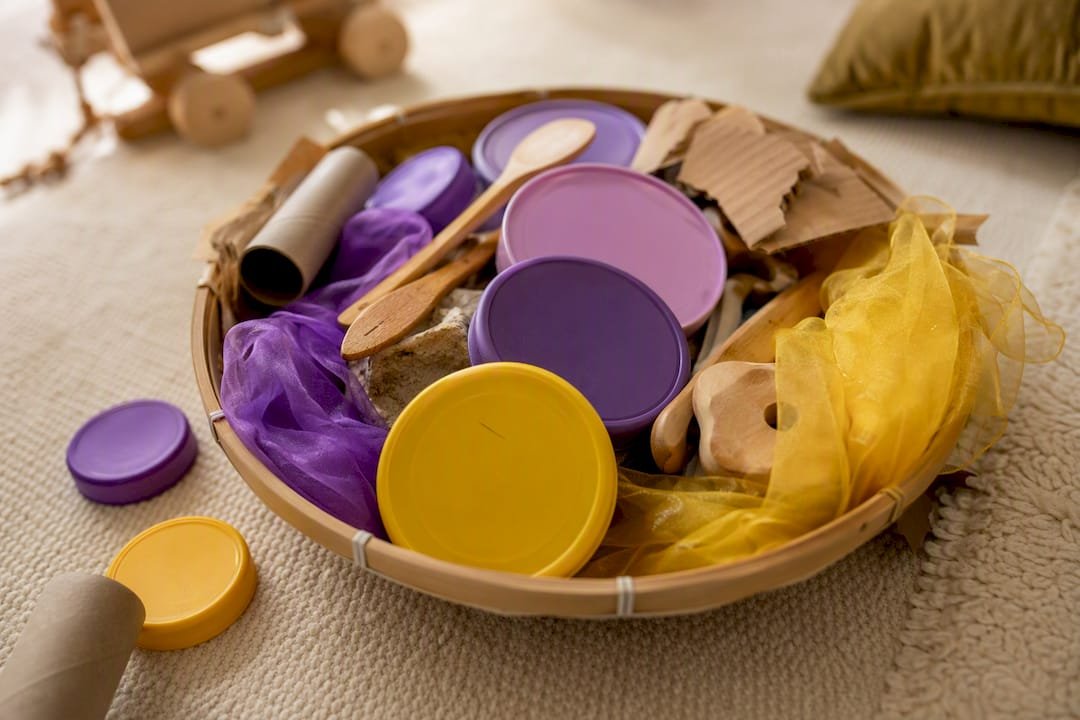
Pro Tip: Batch your prep on Sunday. Fill your ready box for the whole week in one ten-minute pass instead of scrambling each morning.
Materials and Safety Checklist
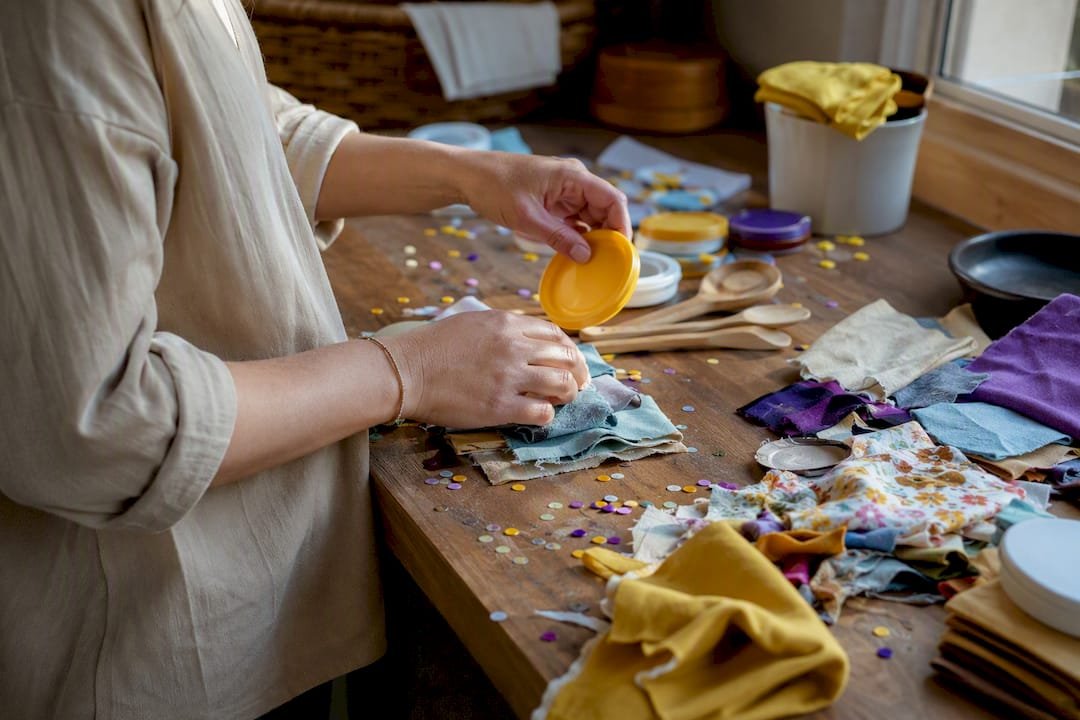
Most of what you need is already in a kitchen drawer: wooden spoons, plastic pots with lids, fabric scraps, cardboard, and paper. For under twos, swap anything smaller than a golf ball, so replace small bottle tops with large jar lids to keep the sorting and pouring skill intact while removing the choking risk.
- Supervise water play at all times, even a shallow bowl, for children under four.
- Check fabric and paper items for loose threads or small torn pieces before handing them over.
- Wash shared items like spoons and pots between uses if siblings of different ages are involved.
- Store loose parts in a lidded box out of reach between sessions to avoid unsupervised access.
The NHS’s baby and toddler play guidance points out that talking, singing, and narrating during these activities does more for language development than the toy itself, so don’t worry about running out of “proper” equipment.
Fitting Activities Into Daily Routines
The best planning ideas aren’t extra tasks bolted onto your day. They’re your existing routine with five more minutes of intention.
- Mealtime: Name colors and textures on the plate out loud as your child eats.
- Tidy-up time: Turn sorting toys into bins by color or size into a quick sorting game.
- Bath time: Add cups and a sieve for pouring practice.
- Getting dressed: Narrate each step (“arm through here, now the other arm”) to build sequencing language.
- Outdoor time: Collect leaves or stones on a walk, then sort them at home.
- Nap transition: A short, quiet story or song settles energy before sleep.
Development Matters guidance from the DfE points to adult modeling and narration as central to how young children pick up motor and language skills, which is exactly why folding play into routine moments works so well. For mixed-age households, give the older sibling the words and the younger one the actions, so the game adjusts itself without you writing two separate plans.
A Month of Five-Minute Slots: What Actually Happened
Starting small felt almost too easy to count as “proper” activity planning. The first week was just a treasure basket at breakfast and a sock puppet before bed, nothing more. By week two, the shift was obvious: more babbling during the puppet chats, longer stretches of independent play with the lid sorting game.
The honest part is that some days the five minutes didn’t happen at all, and that’s fine. The plan survives because it’s small enough to skip without guilt and easy enough to pick back up. Mooshiemoments became useful here as a backup on the days when creativity ran dry, pulling up an age-matched idea in seconds rather than staring at a cupboard hoping for inspiration.
— samit
Let Mooshiemoments Handle the Planning Part
Mooshiemoments turns everything above into something you don’t have to think about. Instead of building your own weekly microplan from scratch, the app hands you an activity matched to your child’s age, the time you actually have, and how much energy you’ve got left in the tank, five, ten, or fifteen minutes, using things already in your home.
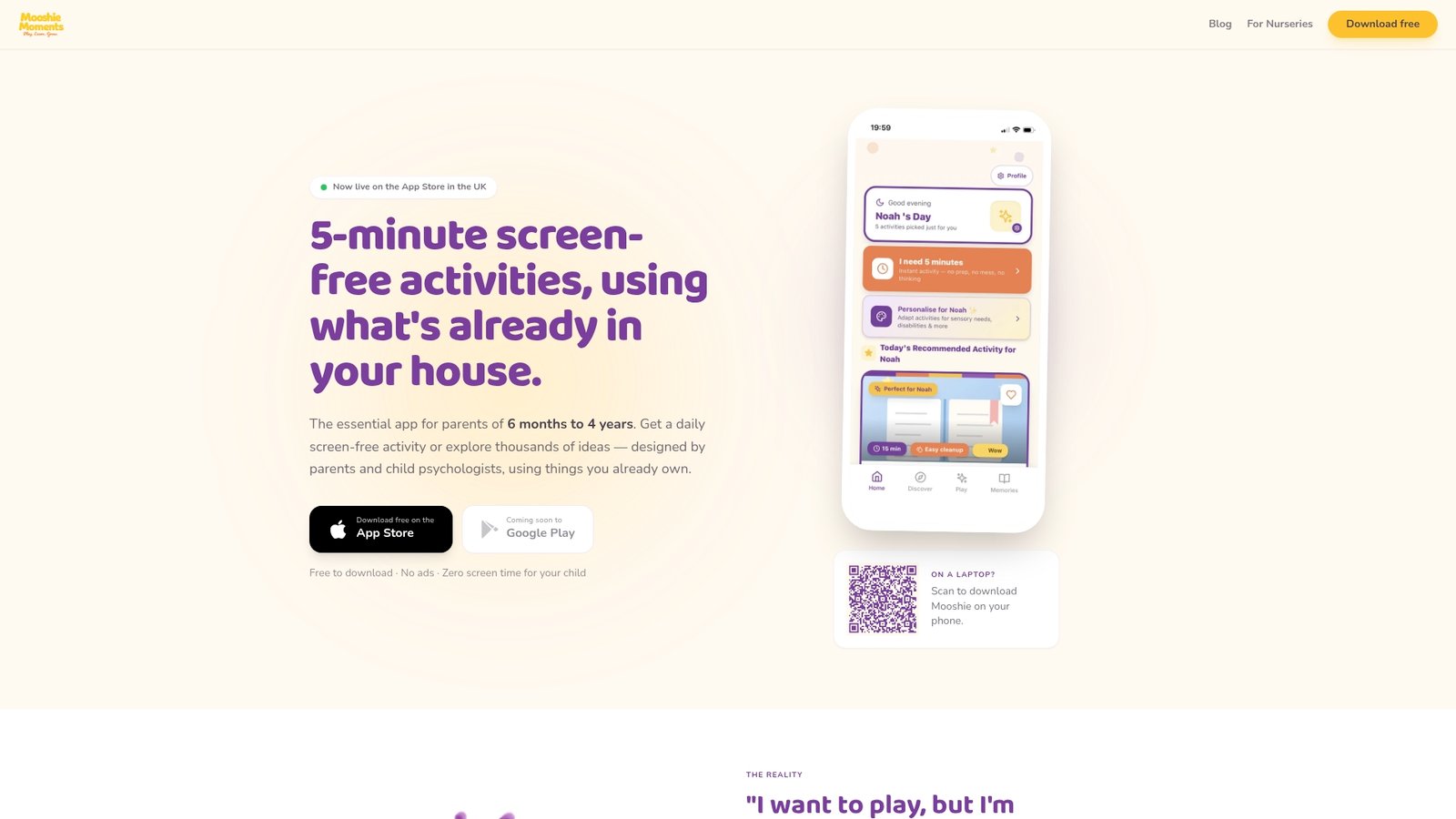
Every suggestion comes with a plain-English explanation of the developmental benefit, so you’re not just keeping a toddler busy, you’re making an informed choice. For UK parents juggling naps, nursery pickups, and dinner, that saved decision-making time is the real win. Nurseries and early years settings can also access ready-made partnership packs and printable resources aligned with EYFS, useful if you want your at-home play to echo what your child’s nursery is already doing. Download Mooshiemoments and set up your first age-matched activity in under a minute.
Sources
- Baby and toddler play ideas – NHS
- The power of play: review of loose parts and open‑ended play (UCL, 2025)
Recommended
More like this
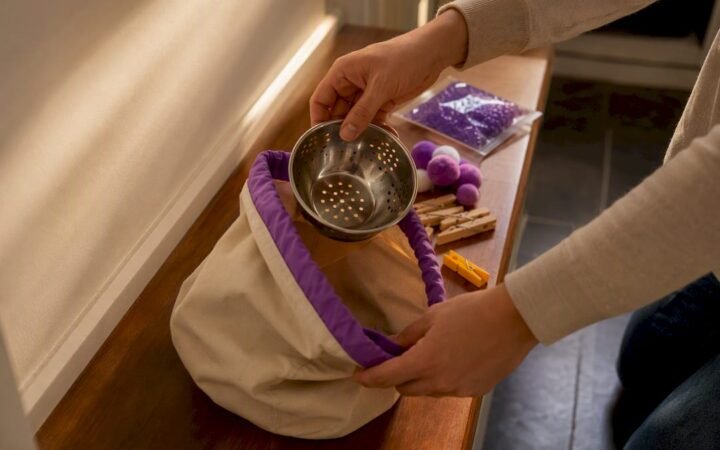
12 Budget Friendly Busy Bag Ideas for Toddlers: Pack in 15 Minutes
12 budget friendly, screen free busy bag ideas for toddlers. Pack a pouch in 15 minutes, rotate to keep interest, and build…
10-Minute Loose Parts Play for UK Toddlers: Toilet-Roll Safety
Start loose parts play in 10 minutes with household items. Follow the toilet-paper-roll safety check, rotate materials, and try quick, low-prep activities...
Start in 5 Minutes: Screen Free Rainy Day Activities for UK Toddlers
Quick, screen-free rainy day activities UK parents can start in five minutes. Age-matched, energy-level rotations, low-cost supplies and tidy cleanup tips.