
Start in 5 Minutes: Screen Free Rainy Day Activities for UK Toddlers
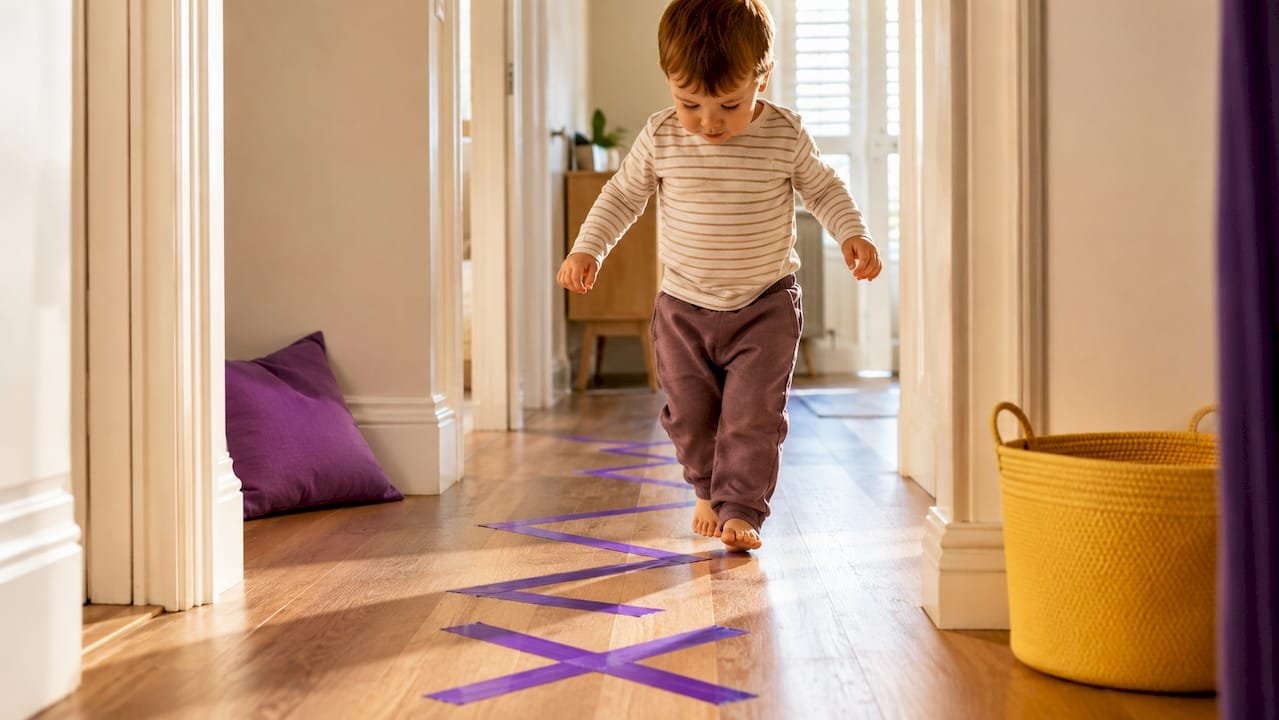
The fastest way to survive a rainy day with a toddler is to rotate short, screen-free activities every 30 to 45 minutes, mixing high-energy play, creative mess, and calm focus so nobody hits a wall. Start with whatever’s within reach: a painter’s-tape road on the floor, a dry sensory bin, a balloon batted across the living room, or a page of stickers. All of it works because it’s low-prep and matched to how long toddlers can actually stay interested. Mooshie Moments builds its entire activity library around that same rotation logic.
TL;DR:
- Short, rotating activities every 30 to 45 minutes help manage toddler attention spans and prevent meltdowns during rainy days.
- Activities should be adaptable by age, with simple, low-prep options like painter’s tape roads, sensory bins, and sticker stories suited for different developmental stages.
- High-energy games such as balloon hockey and obstacle courses effectively burn toddler wiggles but require careful space clearing and supervision.
- Messy activities like foil sculpting and junk modeling should be contained with trays or drop-sheets to minimize cleanup time.
- A flexible, age-appropriate schedule that transitions from energetic play to quiet focus optimizes engagement and smooths energy shifts.
Table of Contents
- The Best Rainy Day Toddler Activities to Try Right Now
- High-Energy Indoor Games to Burn Off Wiggles
- Creative and Messy Activities Worth the Cleanup
- Quiet Focus Activities for Winding Down
- Low-Cost Supplies to Keep on Hand
- A Sample Rainy-Day Schedule You Can Copy
- Adjusting Activities Across Toddler Ages
- Safety and Clean-Up Rules Worth Following
- How Mooshie Moments Builds These Activities In
- What I’d Actually Tell a Tired Parent
- Mooshie Moments: A Shortcut for Rainy Days That Keep Coming
- Sources
The Best Rainy Day Toddler Activities to Try Right Now
You don’t need a plan for the whole day. You need one good activity to start with, and a rough sense of what comes next once your toddler’s energy shifts. This shortlist is built for that moment when the rain starts and you need something that works in the next five minutes, not a pinned board you’ll read later.
- Painter’s-tape road — Stick strips of tape across the floor for cars or bare feet to follow. Works from 12 months up; no small parts, easy to reset.
- Dry sensory bin — Fill a bin with oats, rice, or pasta and add cups and spoons. Choose taste-safe fillers for toddlers who still mouth objects, and stay within arm’s reach the whole time.
- Balloon batting game — Keep a balloon off the floor with hands or a paper plate “racket.” Great for 18 months and up; skip it if your toddler still puts things in their mouth, since a popped balloon is a genuine choking risk.
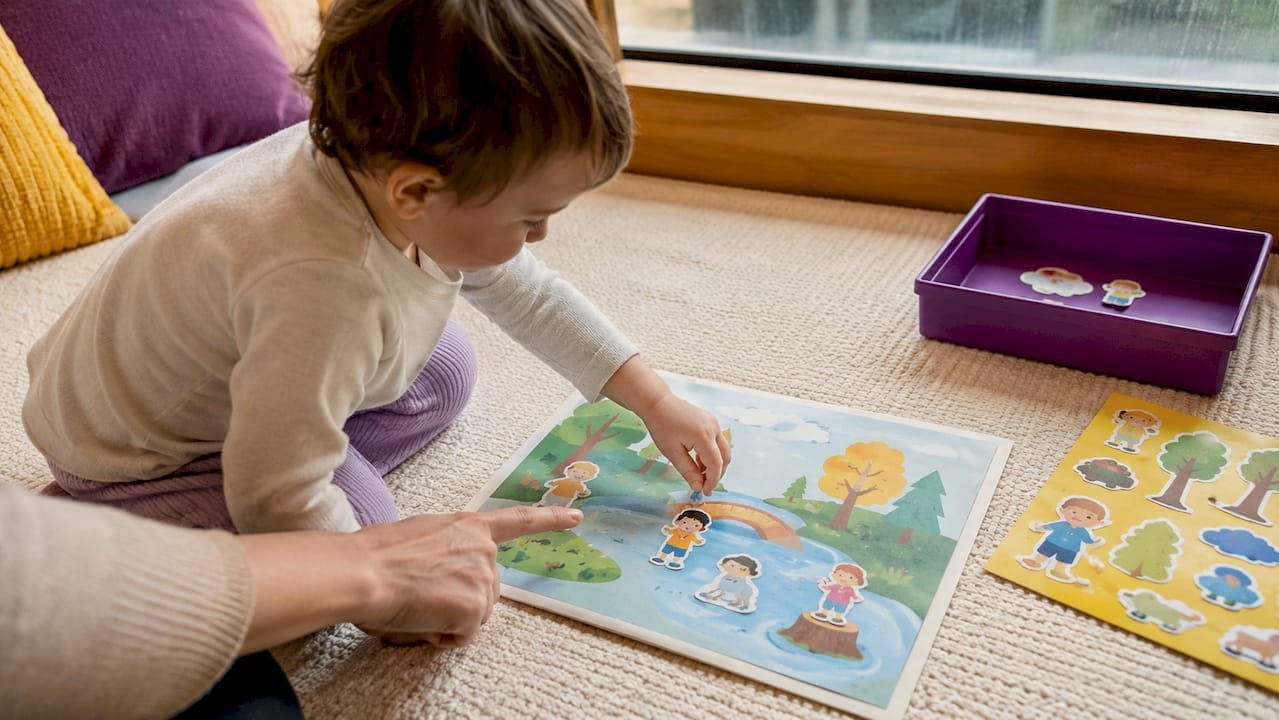
- Sticker story page — A blank sheet and a sheet of stickers turn into a full narrative activity. Works for almost any age and needs zero cleanup.
- Muffin-tin sort — Give your toddler a muffin tin and a handful of pom-poms, buttons, or spoons to sort by color. A reliable 20-to-30-minute engagement trick that needs almost no setup.
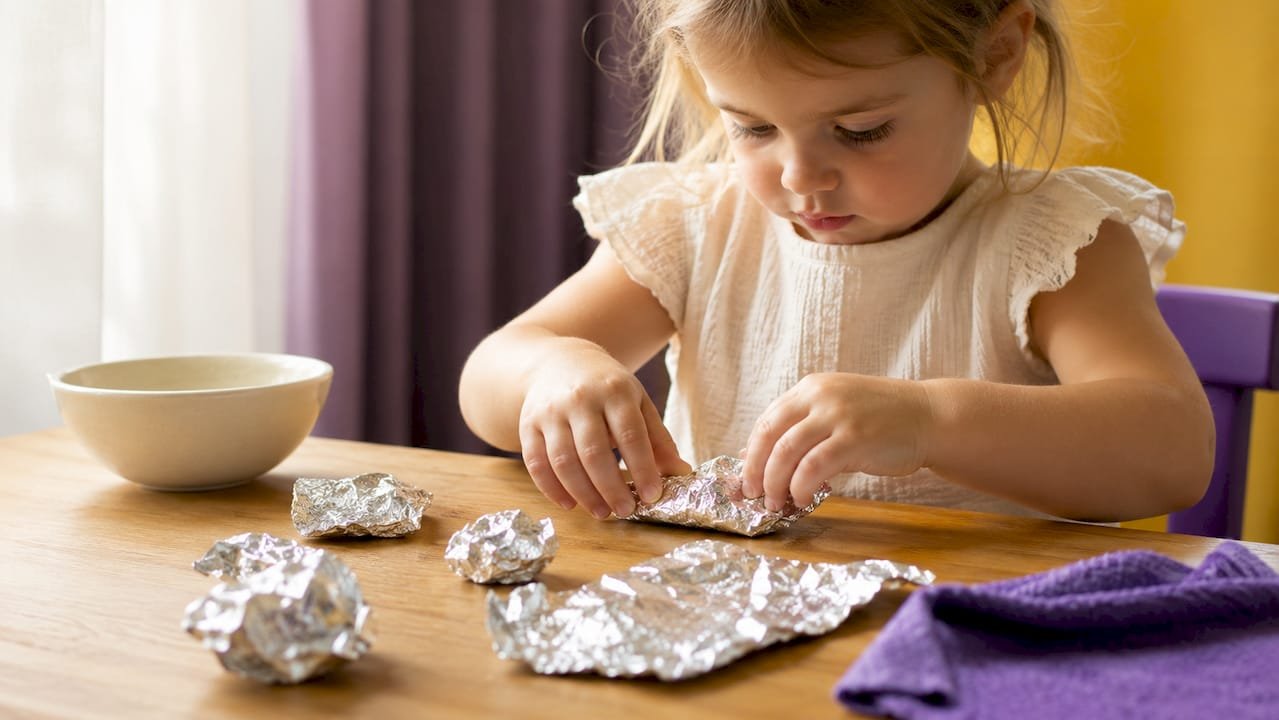
- Foil sculpting — Tear off sheets of kitchen foil and let little hands scrunch, fold, and press shapes. Builds hand strength; supervise if foil edges are sharp after tearing.
- Indoor bowling — Line up empty bottles or cups and roll a soft ball at them. Clear breakables first; this one gets loud and physical fast.
- Window drawing — Washable markers on a clean window make an easy, high-novelty art burst that wipes clean with a damp cloth.
- Book fort — Drape a blanket over chairs and fill the inside with board books for quiet, cozy reading time. Ideal for winding energy down before naps.
If the rain lasts long enough that you’re considering a trip out, an indoor family session at a local pool or attraction can be worth it, but check opening times and booking requirements before you load everyone into the car. Most rainy days don’t need it.
High-Energy Indoor Games to Burn Off Wiggles
Toddlers who’ve been cooped up need to move before they’ll settle into anything quieter. These games are loud, physical, and genuinely tire out little legs, which makes the rest of your rainy day easier to manage.
Balloon hockey turns a balloon and two wooden spoons into an instant living-room sport. For toddlers between 18 months and 3 years, skip the spoons and let them bat the balloon with open hands. Set up two “goals” using couch cushions and count how many times the balloon crosses the line. Toddlers under 2 who still mouth objects should only play this with a fully inflated balloon under direct supervision. Once it pops, it’s gone.
A painter’s-tape obstacle course scales with age better than almost anything else on this list. Start with a single straight line for younger toddlers to walk along. For 2 and 3-year-olds, add zigzags, a “jump here” X, and a hopping section. Three-year-olds can help design the course themselves, which adds a planning element on top of the physical one.
Indoor bowling and pillow obstacle courses round out the high-energy block. Stack sofa cushions into a low crawl-through tunnel, add a step-over pillow, and finish at a set of bowling “pins” made from empty bottles. This combination hits gross motor skills, balance, and a satisfying finish move all in one setup.
Before any of these games start, clear the space. Push furniture with sharp corners out of the play zone, put toddlers in non-slip socks or bare feet, and move anything breakable off low shelves. High-energy play and cluttered rooms don’t mix well.
- Balloon hockey: 18 months to 4 years, adjust equipment by age
- Painter’s-tape course: 12 months to 4 years, adjust complexity by age
- Pillow obstacle course: 12 months and up, always supervised
- Indoor bowling: 2 years and up, once throwing is reliable
Pro Tip: Keep a “high-energy corner” cleared permanently, even on sunny days. Having a no-think zone ready means you can start a game the second the rain hits, instead of spending your first ten minutes moving furniture.
Creative and Messy Activities Worth the Cleanup
Messy play earns its reputation because it works, not because parents enjoy scrubbing paint off tables. The trick is containing the mess before it starts, rather than chasing it after.
Foil sculpting is one of the lowest-cost creative activities you’ll find. Tear off a few sheets of kitchen foil, hand them to your toddler, and let them scrunch, fold, flatten, and shape. There’s no wrong outcome, which makes it genuinely low-pressure for both of you. It builds hand and finger strength that later supports pencil grip, even though it looks like nothing more than crumpling foil into balls.
A big-paper mural works well when you tape a length of paper (the back of wrapping paper or a flattened cardboard box both work) across a section of floor or wall. Hand over crayons or washable paint and let your toddler cover the whole surface. This scales easily: a 1-year-old scribbles, a 3-year-old might draw a story you can ask them about afterward.
Pom-pom sorting brings in color recognition and pincer-grip practice at the same time. A muffin tin, an ice cube tray, or even an egg carton works as the sorting container. Add small tongs or a spoon for toddlers over 2 to make the fine motor challenge harder.
Junk modelling turns recycling into a build session. Empty boxes, tubes, bottle caps, and yogurt pots taped or glued together become rockets, robots, or “just a thing,” and toddlers narrate their own creations without much prompting. Our junk modelling activity guide breaks this down by age with EYFS-aligned goals if you want the developmental reasoning behind it.
Containment matters more than the activity itself. A cheap plastic drop-sheet or an old shower curtain under the play area catches most spills. Trays keep loose materials from spreading across the whole room, and limiting how many art supplies are out at once (two colors, not twelve) keeps cleanup manageable without limiting the fun.
- Foil sculpting: builds hand strength, minimal mess
- Big-paper mural: scales from scribbling to storytelling
- Pom-pom sorting: fine motor plus color recognition
- Junk modelling: open-ended building, encourages narration
Pro Tip: Keep messy play to one designated tray or table rather than the whole floor. Toddlers rarely notice the boundary, but you’ll notice the difference at cleanup time.
Quiet Focus Activities for Winding Down
Every rainy day needs a gear-down phase, especially before naps or bedtime. These activities ask less of the body and more of attention span, which makes them a natural landing spot after the high-energy block.
Sticker story pages hold attention longer than you’d expect. Give your toddler a blank page and a sheet of stickers, then ask simple questions as they place them: “Where does the dog live?” or “Is the sun happy today?” That narration does real work. Talking through what your toddler is doing, rather than just watching quietly, is one of the simplest ways to support language growth, and our guide on narrating play for language development covers specific phrases that help.
A dry sensory bin with rice, oats, or dry pasta works just as well for quiet focus as it does earlier in the day. Add scoops and small cups, and let your toddler pour and fill without a defined goal.
Window drawing with washable markers is a five-minute novelty burst that also counts as quiet time once the initial excitement settles. And a book fort, built from a blanket over two chairs, gives your toddler a small enclosed space that naturally invites slower, calmer play.
- Sticker story pages: builds vocabulary through narrated play
- Dry sensory bin: open-ended, low mess if trays are used
- Window drawing: high novelty, wipes clean in seconds
- Book fort: cozy, naturally lowers energy before naps
Schedule these for the last stretch before a nap or bedtime wind-down. Trying to slot a calm activity into the middle of a high-energy streak usually fails. Toddlers need the physical block first to actually want to sit still after.
Low-Cost Supplies to Keep on Hand
You don’t need a craft cupboard to run any of this. A short list of cheap, reusable items covers nearly every activity above: painter’s tape, a bag of balloons, pom-poms, a spare muffin tin, dry rice or oats, kitchen foil, washable markers, and a sheet of stickers. Most of these come from the supermarket or pound shop, and many households already have half of them in a drawer.
Keep supplies in a labeled bin so you’re not hunting for tape at 7 a.m. with a fussy toddler underfoot. A little prep the night before, even just filling a sensory bin or setting out a muffin tin, cuts friction dramatically when mornings are already rushed. Restock the bin after each rainy stretch so it’s ready next time, rather than scrambling when the forecast turns.
- Painter’s tape, balloons, pom-poms
- Muffin tin, dry rice or oats, kitchen foil
- Washable markers, stickers, spare paper
A Sample Rainy-Day Schedule You Can Copy
Rotating activities by energy level, rather than by the clock, keeps toddlers engaged and cuts down on meltdowns. Shorten each window for toddlers under 2, since attention spans are naturally shorter at that age.
| Time Window | Activity Type | Example |
|---|---|---|
| 9:00 to 9:30 | High energy | Balloon hockey or tape obstacle course |
| 9:30 to 10:15 | Creative/messy | Foil sculpting or junk modelling |
| 10:15 to 10:45 | Free play | Toys of their choosing, no direction |
| 10:45 to 11:15 | Quiet focus | Sticker story page or book fort |
If a transition stalls, give a two-minute warning before switching activities, and let your toddler carry one item (a toy, a sticker sheet) from one activity into the next. That small continuity often smooths over the handoff better than a clean break does.
Adjusting Activities Across Toddler Ages
The same activity can work from 6 months to 4 years with small tweaks. For toddlers still mouthing objects, stick to taste-safe sensory fillers and skip anything with small, detachable parts like buttons or loose pom-poms. Our taste-safe sensory play guide lists fillers that are safe if a toddler puts a handful in their mouth.
- 6–12 months: Sensory exploration with supervision, no small parts, short bursts (5 to 10 minutes)
- 12–24 months: Simple sorting, tape roads, foil balls; caregiver-led with lots of narration
- 24–36 months: Add complexity (zigzag courses, sorting by color), more child-led choices
- 36–48 months: Multi-step activities, storytelling elements, and independent play stretches
Caregiver involvement should shrink as your toddler grows more capable. A 1-year-old needs you sitting right there narrating everything; a 3-year-old often plays better once you step back and let them direct it.
Safety and Clean-Up Rules Worth Following
A few consistent rules take most of the stress out of messy or physical play. Keep mouthing-safe fillers on hand for any toddler under 2, and avoid small parts entirely if there’s any doubt about whether an item could end up in a mouth. For taste-safe sensory play, that means picking fillers you’d be comfortable with your toddler swallowing a small amount of.
Water play always needs a hands-on adult within arm’s reach, even in an inch of water in a basin. Never step away, not even for a few seconds. For faster clean-up, keep a designated tray or drop-sheet under any messy activity so you’re wiping one surface instead of the whole room.
- Choose taste-safe fillers for any toddler who still mouths objects
- Stay within arm’s reach during all water play
- Use a tray or drop-sheet to contain mess before it starts
- Clear breakables before any high-energy game begins
Pro Tip: Set one “mess boundary” per activity, like a towel or a tray, instead of trying to control the mess itself. Toddlers respect a visible edge far more than a verbal reminder.
How Mooshie Moments Builds These Activities In
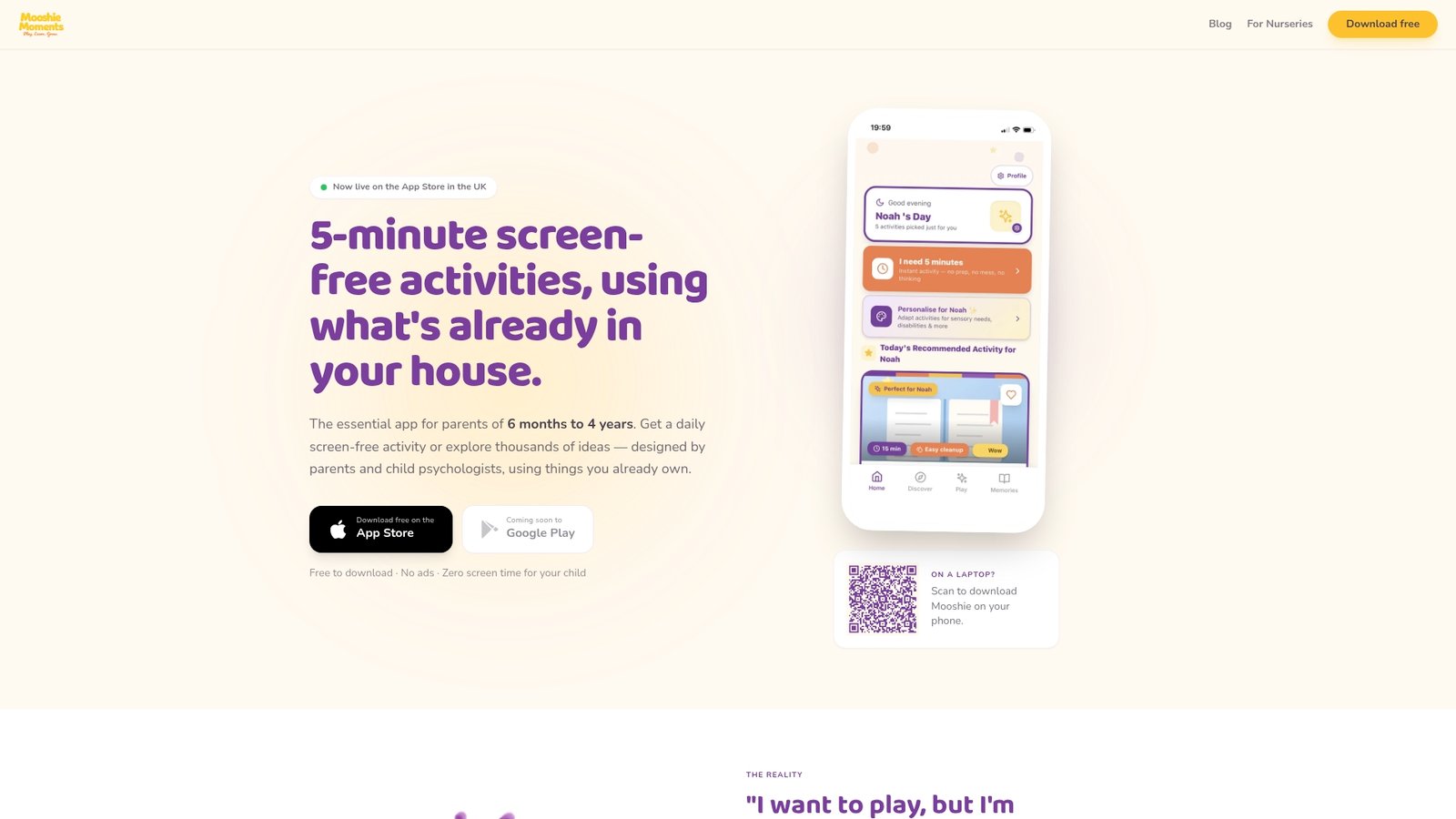
Everything on this list reflects the same approach behind the Mooshie Moments app: short, screen-free activities matched to a child’s exact age and built from things already in the house. The app covers ages 6 months through 4 years, with suggestions personalized by your toddler’s age and however much time you actually have, whether that’s five minutes or an hour.
A few examples show how this plays out in practice. The 40 fun 2-year-old activities collection gives ready-to-run ideas for that specific developmental stage. The taste-safe sensory play guide covers ten mouthing-safe ideas for younger toddlers. And the junk modelling activities page ties craft play to EYFS learning goals, so the “just a box tower” your toddler builds is quietly doing real developmental work.
- Activities personalized by age, from 6 months to 4 years
- Suggestions matched to available time, not just a fixed list
- Developmental reasoning included with every activity, not just instructions
What I’d Actually Tell a Tired Parent
Most rainy-day advice overcomplicates this. You don’t need a Pinterest-worthy setup or an hour of prep. You need one activity that starts in the next five minutes and a rough sense of what comes after it once energy shifts.
If you try nothing else from this piece, try the rotation itself: one high-energy game, followed by one creative activity, followed by free play, followed by something quiet. Thirty to forty-five minutes each. That structure does more for a long rainy day than any single “best” activity ever will, because it works with your toddler’s attention span instead of against it.
Pick two activities from this list today. Run them back to back with a short free-play gap between them, and notice whether the transition feels smoother than your usual rainy-day scramble. It usually does.
— samit
Mooshie Moments: A Shortcut for Rainy Days That Keep Coming
Building this rotation yourself works, but rainy days rarely give you the fifteen minutes needed to plan one on the spot. Mooshie Moments hands you the same age-matched, five-minute, screen-free activities from this article, already sorted by how much time you have and what’s in your cupboard, so you open the app instead of standing in front of a toy box wondering what’s left to try.
If you’ve got a toddler around the two-year mark, the 40 fun 2-year-old activities collection is the fastest place to start, packed with ideas built for exactly that stage. Parents of younger babies can start with the 9-month-old activity ideas instead. Download the app and pick your first activity for the next time the rain starts. That’s the whole ask.
Sources
- Indoor Toddler Activities for Rainy Days | DailyMomtivity
- Easy screen-free activities for toddlers | Motherly
- Atlantis family inflatable sessions | London Aquatics Centre
- Visit information | Westminster Abbey
Recommended
More like this
12 Budget Friendly Busy Bag Ideas for Toddlers: Pack in 15 Minutes
12 budget friendly, screen free busy bag ideas for toddlers. Pack a pouch in 15 minutes, rotate to keep interest, and build…
10-Minute Loose Parts Play for UK Toddlers: Toilet-Roll Safety
Start loose parts play in 10 minutes with household items. Follow the toilet-paper-roll safety check, rotate materials, and try quick, low-prep activities...

Research Backed Nursery Activity Plans: 3 Daily 5 Minute Slots (UK)
Research backed nursery activity plans for UK parents: age matched, low prep household activities in 5–15 minutes, plus a one‑page weekly microplan…