Sticker Activities for Toddlers: 9 Easy Ideas for Home
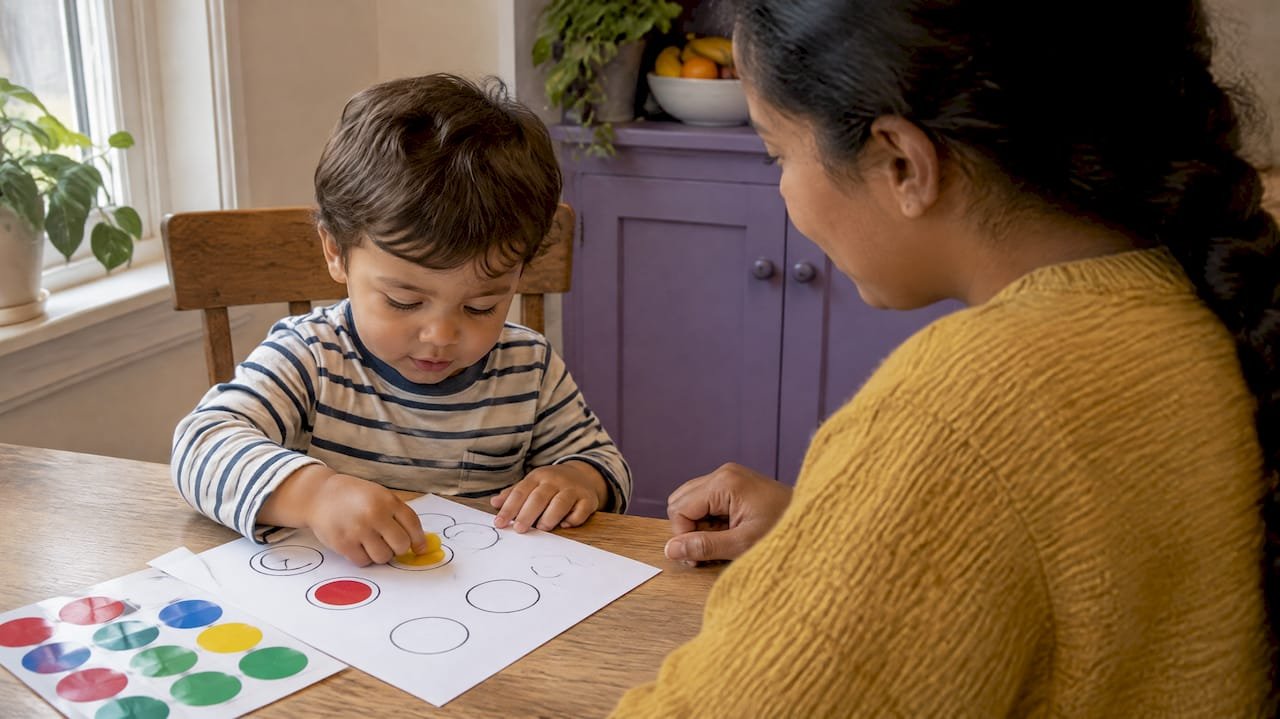
The best sticker activities for toddlers need a sheet of stickers, a piece of paper and a pen, and about a minute of set-up. Draw some circles, a road or a few shapes, hand over the stickers and let your child peel, stick and chat. We have put together nine ideas below, with notes on how to make each one easier or harder, how long to play and how to keep it safe.
TL;DR
- Sticker play needs almost no prep: paper, a marker and a sheet of stickers is enough for most of the ideas here.
- Peeling and placing stickers is a small-hand workout that supports the pincer grip your child will later use for holding a pencil, doing buttons and more.
- Match the sticker to the age: big, easy-peel stickers for younger toddlers, smaller and more detailed ones as they grow.
- Ten to twenty minutes is a realistic session. Two short sessions usually beat one long one.
- Always supervise, and keep stickers that could be swallowed out of reach of babies and young toddlers.
Table of Contents
- Why stickers work so well for toddlers
- Before you start: a one-minute set-up
- Nine sticker activities to try at home
- How to adapt sticker play by age
- How long should a sticker session last?
- Keeping sticker play safe
- Our take: why a sticker and a sheet of paper is enough
- Want a new idea every day? Try Mooshie
- FAQ
- Sources
Why stickers work so well for toddlers
Stickers look like a simple treat, but they ask quite a lot of small hands. A child has to find the edge, pinch it, peel it off the backing, aim and press. One company that writes about low-mess play describes peeling a sticker as a task that needs a precise pincer grip, and notes that peeling, placing and repositioning holds attention well once you have set it up.
That pinch is the same one children use later for everyday jobs. An occupational therapy practice explains that the grasp used to peel a sticker builds toward the pincer grasp needed for buttons, while placing a sticker inside a target builds the eye and hand coordination needed to push a button through a hole.
There is a longer-term link too. In England, the early learning goals for the end of Reception include holding a pencil effectively using a tripod grip in almost all cases and using a range of small tools, as set out in Lancashire County Council’s EYFS notes for parents. No one expects a toddler to be there yet. Sticker play is simply one gentle, enjoyable way to build up to it.
And it is not only about fingers. Creative play in general helps toddlers build vocabulary and language, try out ideas and express feelings, according to Raising Children Network. Stickers give you a reason to talk: “Where does the red one go?” “What is the cat doing?”
If you want more ideas that build the same skills, we have a full guide to fine motor activities for toddlers and preschoolers.

Before you start: a one-minute set-up
You do not need a special sticker kit. Here is what works for most of the activities below:
- Stickers. Dot stickers are chunky and simple to handle. Foam stickers and large shapes are good too. For a younger toddler, larger stickers with edges that lift easily are far kinder than tiny, fiddly ones.
- Paper. A big sheet, the back of a delivery box flap or even a roll of lining paper.
- A marker or crayon. For drawing circles, lines and shapes.
- Tape. Masking tape or washi tape holds the paper to the table or floor so it does not slide around. It can also make a road in seconds: two strips across a table and a few toy cars is often enough to get a game going.
One tip that saves a lot of frustration: peel a few stickers before you hand over the sheet. For younger toddlers, stick a few loosely along the edge of the table so they can practise picking them off instead of battling the full backing sheet.
Nine sticker activities to try at home
The first few are the simplest. Later ones add counting, patterns and stories. Pick whatever suits your child’s mood today.
1. Circle match
Draw large circles on a sheet of paper in the same colors as your dot stickers. Your child peels each dot and sticks it inside the matching circle. The Boston Children’s Museum suggests this for 2- to 3-year-olds, and says you can attach the paper to the floor or a wall if that suits your space.
Start with two or three colors. When that gets easy, add more colors or spread the circles further apart.
Want more color play afterwards? Try our color sorting activities for toddlers.
2. Sticker line-up
Draw a few zig-zag, curly and loopy lines down the middle of a page. Your child’s job is to follow each line with stickers, one after another. It is a lovely way to practise careful placing, and it needs no props at all.
For older toddlers and preschoolers, the Boston Children’s Museum suggests drawing lines, shapes, letters or numbers and challenging the child to trace them with dot stickers. You can add a twist by matching the sticker color to the line color.
3. Sticker sorting
Put a few bowls, or an egg carton, on the table. Mix up your stickers by color or shape, then ask your child to sort them. Because stickers stick, your child can press each one on the edge of the bowl or onto a card in front of it. It works on sorting and matching without needing anything new from the shops.
This is one of the seven sticker ideas listed by WhatTheMom, alongside matching, counting, scenes, patterns, faces and a sticker hunt.
4. Sticker counting
Draw numbered circles, 1 to 5, and ask your child to put that many stickers in each. Keep it light: count out loud together as each one goes on, and celebrate any attempt. If five feels like too much, stop at two or three.
For more number play that needs no kit, see our toddler counting games.
5. Sticker shapes
Draw or print a few big shapes: a circle, a square, a triangle. For younger toddlers, the goal is to fill in each shape with stickers. One parent blogger describes this as a one-minute set-up and clean-up activity that works on fine motor skills and independence. Once your child is ready, ask them to trace the outline of the shape with stickers instead, which helps with spatial awareness.
We have lots more in our guide to shape activities for 2 year olds.
6. Build-a-scene
Draw a simple background: a road, a pond, a night sky, a house. Then let your child add stickers to build the scene. Cars on the washi tape road. Ducks on the pond. Stars in the sky.
There are no right answers here, which is why it works so well for tired parents. You are simply the narrator: “Oh, the car is going up the hill!”
7. Sticker faces
Draw a big blank face, or a few of them, on a piece of paper. Your child adds eyes, a nose, a mouth and maybe some very odd hair. Ask: “Is this one happy or sleepy?” It is a gentle way to talk about feelings and body parts.
You can use the same idea on something other than paper. The NHS suggests that from 18 months, children can make hand puppets from socks and envelopes, drawing faces or sticking things on to make their own characters. Stickers are an easy way to decorate a sock puppet.
8. Sticker hunt
Stick a handful of stickers around a room at your child’s eye level: on the wall, a chair leg, the fridge door. Give them a sheet of paper and let them go and find them, peel them off and bring them back to stick on the page. This one burns off energy as well as building fine motor skills, which is handy on a rainy afternoon.

For more movement ideas, our music and movement activities are a good next step.
9. Sticker stories
Let your child choose a few stickers and place them on a page, then ask what is happening. The story might be about a cat on a bus or a dinosaur at the supermarket, and your child gets to make it up their own way without feeling they have to get it right.
Write down one line of what they say and read it back. Many toddlers love hearing their own words repeated.
How to adapt sticker play by age
The same sheet of stickers can work for a one-year-old and a four-year-old. What changes is the size of the sticker, the number of choices and how much you ask of your child.
| Age | What helps | Try this |
|---|---|---|
| 12 to 18 months | Large, easy-peel stickers, very close supervision | Stick a few loosely along a table edge and let your child pick them off |
| 18 months to 2 years | Big dot stickers, one clear target | Circle match with two or three colors |
| 2 to 3 years | A few choices, simple rules | Sorting, line-up, shapes, build-a-scene |
| 3 to 4 years | Smaller stickers, more detail | Number circles, tracing letters, sticker stories |
A few notes on the younger end. The Grid, an early learning assessment tool used in England, lists the ability to use a pincer grip to pick up objects among the fine motor skills that develop between 12 and 18 months. So a child at this stage may be more interested in picking and pulling than in putting stickers in the right place. That is fine. Let them peel and enjoy it.
As your child gets older, smaller and more detailed stickers make a nice challenge for developing precision. One parent blogger also describes a simple way to run the same activity for a 2-year-old and a 4-year-old together: draw circles in different colors for the younger one, and add letters for the older one.
A pincer grasp is also worth reading about in more detail if your baby is under one. This guide on when the pincer grasp appears and how to encourage it is a good place to start.
How long should a sticker session last?
Short. One parenting site suggests that a realistic span is ten to twenty minutes, and that two short sessions beat one long one. If your child is still working at the twenty-minute mark, let them carry on. If they wander off after five minutes, put the tray away and try again tomorrow with something different, such as a new scene or a new set of circles.
The prep time is just as short. Another source puts sticker play at zero minutes of prep, no mess and suitable from 18 months. In our experience, a minute with a marker is nearer the mark, but the point stands: this is an activity you can set up while the kettle boils.
A few ways to keep it fresh without more shopping:
- Change the surface: table, floor, wall, a baking tray or a cardboard box lid.
- Change the target: circles one day, a road the next, a face after that.
- Keep a small box of paper, a pen and stickers in a drawer, so it is ready when you need it. We like the idea of a DIY busy box that doubles as storage for your sticker collection.
Keeping sticker play safe
Stickers are small, and toddlers put things in their mouths. A few simple habits make sticker play safer:
- Stay close. Sit with your child, especially under three. Sticker play is not a time to leave them alone with the sheet.
- Watch the size. Raising Children Network warns that anything smaller than a 20-cent coin can be a choking risk. Choose larger stickers for babies and young toddlers, and avoid tiny ones or loose small parts.
- Peel the backing for them. Stickers peeled from a backing sheet and stuck on paper are less likely to end up in a mouth than a pile of loose, peeled stickers on the table.
- Put them away afterwards. Keep the sheets out of reach once you finish, and check the floor for any stickers that have fallen off.
- Check the age label. If a sticker pack carries a minimum age, follow it.
If you are ever worried that your child has swallowed something, contact your GP, call NHS 111 or, in an emergency, dial 999.
Our take: why a sticker and a sheet of paper is enough
We built Mooshie Moments for the days when you are tired, the clock is ticking and you cannot think of one more thing to do with a toddler. Sticker play is exactly the kind of activity we love: it uses what is already in the drawer, it takes a minute to set up and it gives your child real practice with small movements, looking, choosing and talking.
What we hear from parents is that the hard part is rarely the activity. It is deciding what to do, right now, with the energy you have left. That is why every activity in our app is matched to your child’s age and the time you have, and each one explains in plain language why it helps, so you know what your child is practising while they play.
Sticker play also fits our belief that the best play is real play, with you, away from a screen. A pile of stickers and five minutes of your attention can turn into a story, a counting game or a giggle. Those small moments add up.
samit
Want a new idea every day? Try Mooshie
If you enjoyed these ideas but do not have the energy to come up with the next one, that is what Mooshie is for. The app is free to download and gives you quick, screen-free activities using everyday items from around your home. You choose your child’s age and how much time you have, and we suggest something to try, with a short explanation of the development behind it and tips on how to play.
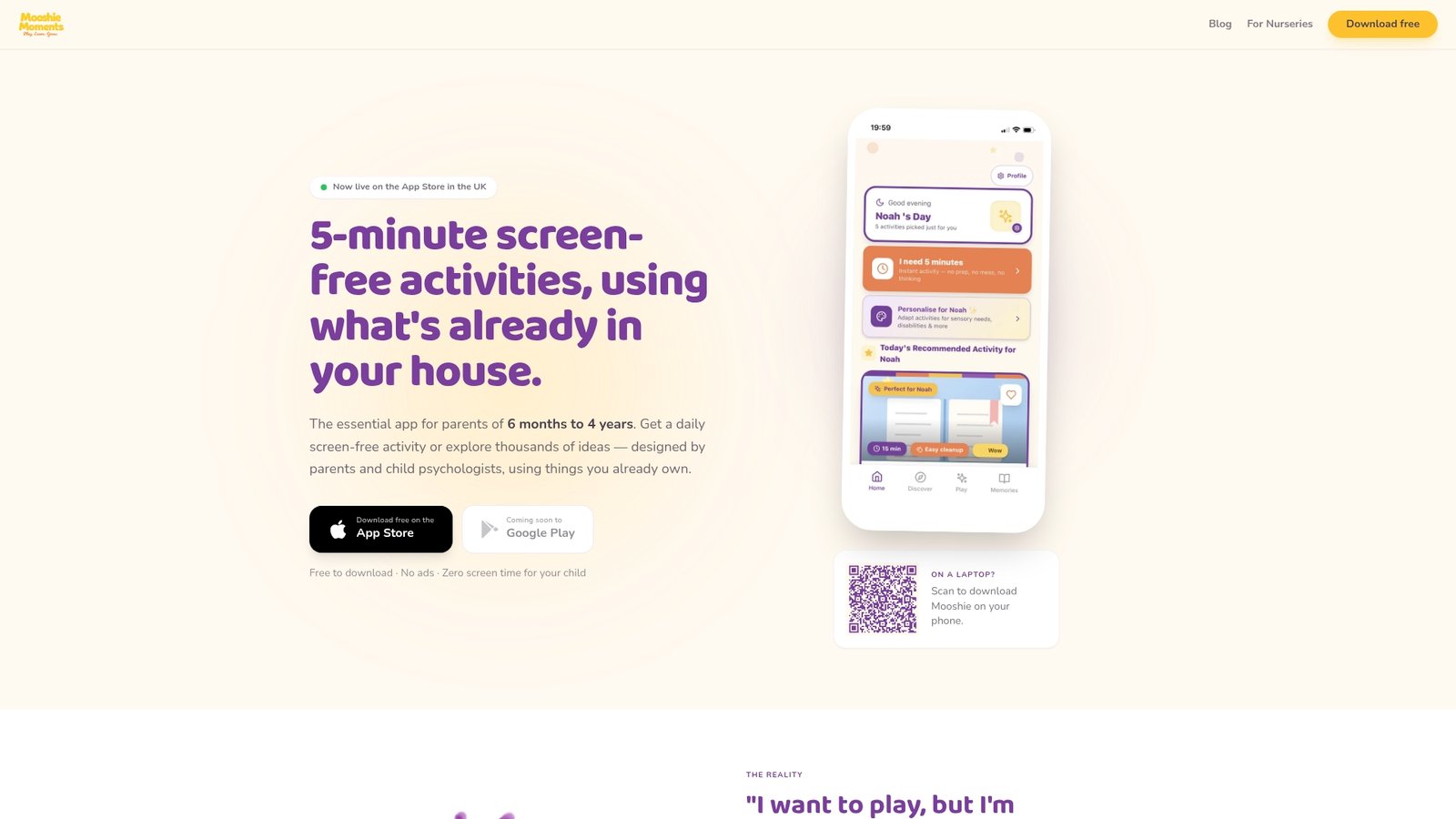
You can take a look at the Mooshie app and see how it fits into your day. Running a nursery, childminding setting or other early years group? Our Partnership Pack for nurseries gives you a ready-made home-learning resource to share with families.
If you want to see how sticker play fits into the wider picture, our guide to low prep toddler activities by skill area and our page on EYFS activities at home are good places to continue.
FAQ
What age can toddlers start doing sticker activities?
Many children start to enjoy stickers somewhere around 18 months, although some younger toddlers like picking at them too. At the youngest stage, use large stickers, stay right beside your child and expect more peeling than placing. As they get older, add targets such as circles, shapes and lines.
How do I stop my toddler putting stickers in their mouth?
Sit with your child and keep the activity short, so their attention stays on the task. Pick bigger stickers, and avoid anything small enough to be a choking risk. Stick the stickers onto paper straight away and put the sheet away once you are finished. If your child keeps mouthing them, try again in a few weeks.
Do sticker activities help with handwriting?
They help build some of the skills that sit behind it. Peeling and placing stickers practises the pincer grip and eye and hand coordination, which children later use to hold a pencil. Writing itself takes time and plenty of other play too, such as drawing, play dough and threading.
What can I do if my toddler just wants to peel stickers and not place them?
That is completely normal, and peeling is useful practice in itself. Let them peel to their heart’s content, then offer a simple, big target, like one large circle, to see if they want to stick a few. If they have wandered off after five minutes, put the tray away and try again another day with a different idea.
How many stickers should I give my toddler at once?
Start with a small number, around five to ten, so the choice does not feel overwhelming and so there is less to clear up. You can always add more. Fewer stickers also make it easier to see what your child is choosing and to talk about it.
Sources
- 7 Sticker Activities That Actually Hold a Toddler’s Attention
- Easy Low-Mess Sensory Activities for Toddlers
- Sticker Play for Toddlers: Easy Ideas and Safety Tips
- Sticker Activities for Fine Motor Skills
- Peel, Rip, and Stick, Boston Children’s Museum
- No Mess Fall Toddler Activity: Sticker Shapes
- Finding Activities Both My 2 and 4 Year Old Can Do
- Baby and toddler play ideas, NHS
- Creative play and activities for toddlers, Raising Children Network
- EYFS explanatory notes for parents, Lancashire County Council
- Individual Assessment of Early Learning and Development, The Grid
- 35 Fine Motor Skills Activities, NAPA Centre
- 24 Simple Sticker Activities for Sticky Play
- Pincer Grasp Age: 9 to 12 Months
Recommended
- Paper Plate Crafts for Toddlers: 9 Easy Ideas With Household Items
- Toilet Roll Crafts for Toddlers: 10 Easy Ideas by Age
- Busy Parents: 8 Easy, Research Based Storytelling Ideas for Toddlers
- Valentine’s Activities for Toddlers: Easy Ideas at Home
Want play ideas matched to your child's age?
Mooshie Moments gives you simple, guided play ideas for ages 6 months to 4 years. Try 3 free activities a week.
Download free on the App StorePart of our guide: Toddler activities by age · Compare toddler activity apps
More like this
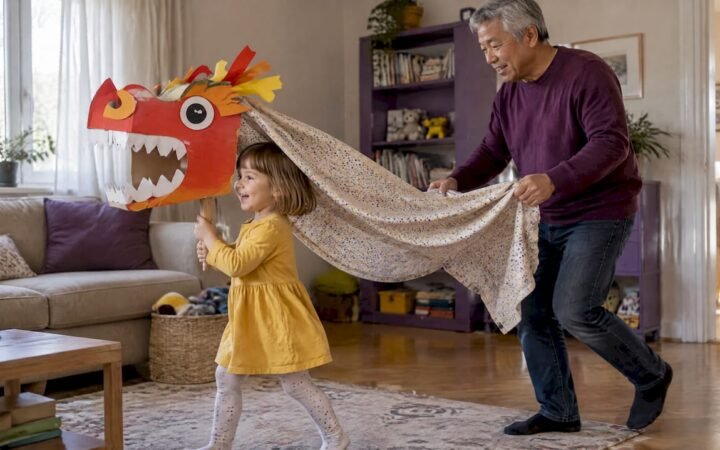
Best Chinese New Year Activities for Toddlers at Home
Simple, screen-free Chinese New Year activities for babies and toddlers, using things you already have at home, with safety tips and ideas…
Toddler Activity Schedule: A Realistic Day That Works
A simple toddler activity schedule for ages 1 to 4: sample days, short play blocks, nap timing, winter tweaks and screen-free ideas…

High Energy Toddler Activities to Try at Home Today
Quick, screen-free high energy toddler activities using household items, with safety tips and NHS activity guidance, so you can burn off energy…