
Five Minutes to Play: 10 Color Sorting Activities for UK Toddlers
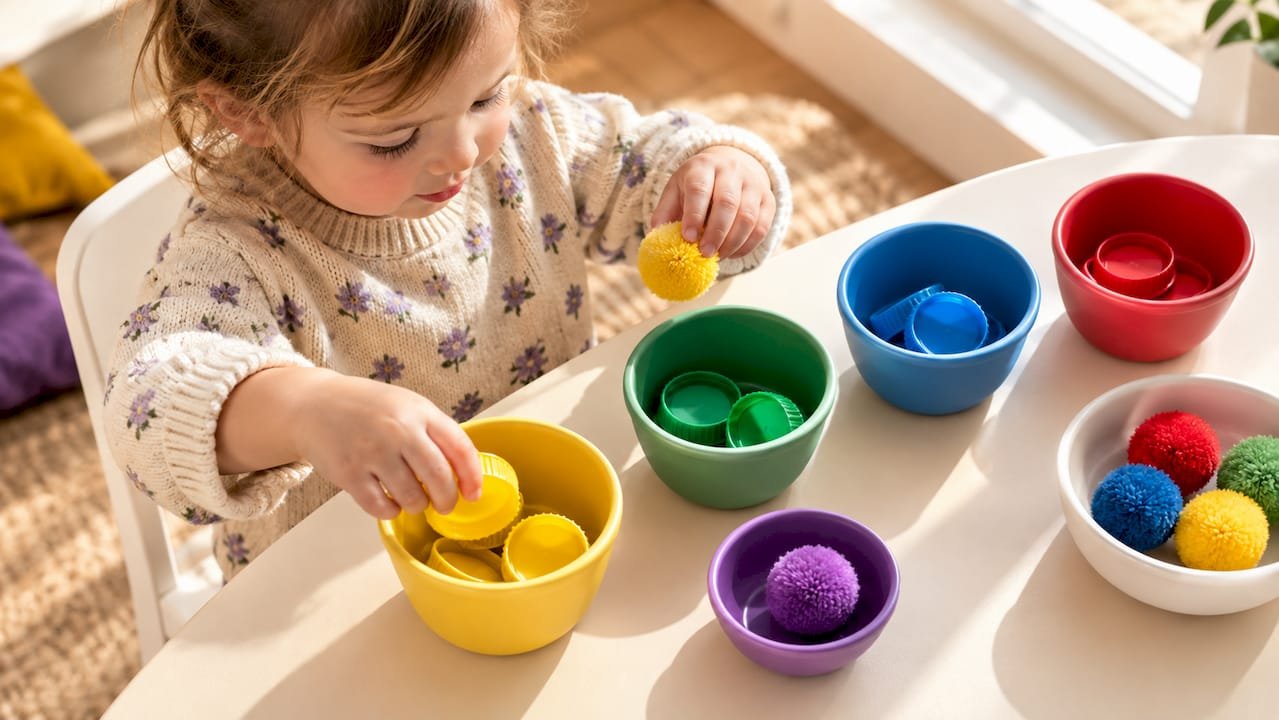
Here are ten quick, low-prep color sorting activities for toddlers that build color recognition, fine motor skills, and early sorting logic in about five minutes. Grab whatever’s already in your kitchen drawer, pick two colors to start, and let your toddler lead the pace. No screens, no shopping list, no pressure to get it “right.”
TL;DR:
- Using two to four large, colorful objects is ideal for toddlers under 18 months, while adding more colors or smaller items should wait until matching is consistent.
- Most activities can be set up in under five minutes with common household items like pom-poms, bottle caps, or dried pasta, making daily repetition easy and low-pressure.
- Incorporating movement into activities, such as tossing scarves into hoops or building with magnetic tiles, enhances engagement and matches active toddlers’ need to move.
- Supervision and safety precautions are essential, especially with small parts like beads or pasta, and activities should be adjusted based on the child’s mouthing and risk level.
- Repeating simple sorting routines regularly, rather than overcomplicating setups, supports early learning and maintains toddler attention without turning activities into elaborate projects.
Table of Contents
- Why Color Sorting Helps Toddler Development
- Quick Prep and Safe Materials
- 10 Ready-to-Run Color Sorting Activities
- Adapting Activities by Age and Ability
- Safety, Mouthing, and Storage Tips
- Why These Activities Match Early-Years Goals
- The Case Against Overcomplicating Color Play
- A Faster Way to Find Your Next Five Minutes of Play
- Sources
- FAQ
Why Color Sorting Helps Toddler Development
Sorting by color looks simple, but it’s doing a lot of quiet work in your toddler’s brain. It builds color recognition, matching, fine motor control, hand-eye coordination, early math classification, and language, all at once, through play they’d choose on their own.
- Color recognition and vocabulary (naming “red,” “blue,” “yellow” out loud)
- Matching and classification, the foundation of early math
- Fine motor control, especially when tongs or scoops get involved
- Hand-eye coordination and visual perception
- Focus and patience, built through repetition
The OT Toolbox links color sorting directly to fine motor development, visual perception, and mental flexibility, while Hackney Education’s colour sorting guidance ties the same activity to problem-solving and early maths skills. Neither source cares whether your toddler sorts every pom-pom correctly. Exposure and repeated play matter more than accuracy at this age, so let mistakes happen without correcting every one.
Quick Prep and Safe Materials
You don’t need a Pinterest board to pull this off. Most of what you need is already in a kitchen drawer or recycling bin.
Materials that work well:
Colored paper or card, small bowls or cups, pom-poms, large beads, kid-safe tongs, stickers, recycled bottle caps, and a printable sorting mat if you want something reusable.
- Pick two to four colors to start. More than that overwhelms a young toddler before they’ve even begun.
- Create your targets, a colored cup, a paper circle, or a sticker on a box.
- Demonstrate one match yourself, then hand your toddler the next piece and step back.
For toddlers under 3, skip small beads and buttons entirely. Swap in pom-poms, large wooden blocks, or soft scarves, anything too big to be a choking risk if it ends up in a mouth.
10 Ready-to-Run Color Sorting Activities
Each of these takes five minutes or less to set up, using things you already own. Rotate through a few each week so sorting never gets stale.
1. Pom-Pom and Milk-Cap Match
Drop a handful of colored pom-poms next to matching bottle caps or lids, then hand your toddler a pair of child-safe tongs. Montessori From The Heart notes that the repetitive motion of squeezing and placing builds hand strength while calming an antsy toddler. Prep time: two minutes. For a younger toddler, drop the tongs and let them use fingers; for an older one, add a third color.
2. Color Sorting Sensory Bin
Fill a shallow bin with colored rice, pasta, or fabric scraps and bury small colored objects inside. Give your toddler a scoop and a few labeled bowls. This one is whole-body play, arms digging, wrists twisting, and it holds attention longer than a tabletop activity. Line the bin with a towel first to make cleanup painless.
3. Sticker and Tissue-Box Color Cube
Cover a tissue box or small cardboard cube with colored paper on each face, then have your toddler toss beanbags or pom-poms to match. Busy Toddler built a version of this that turns a fine motor task into a gross motor one, great for toddlers who won’t sit still for tabletop sorting. Rotate the cube for a harder throw.
4. Cup Stack Sort
Line up four cups, each a different color, and hand over a pile of mixed pom-poms or blocks. Once your toddler sorts a full round, count the pieces in each cup out loud. This quietly introduces counting on top of sorting, no extra setup required.
5. Nature Color Hunt and Sort
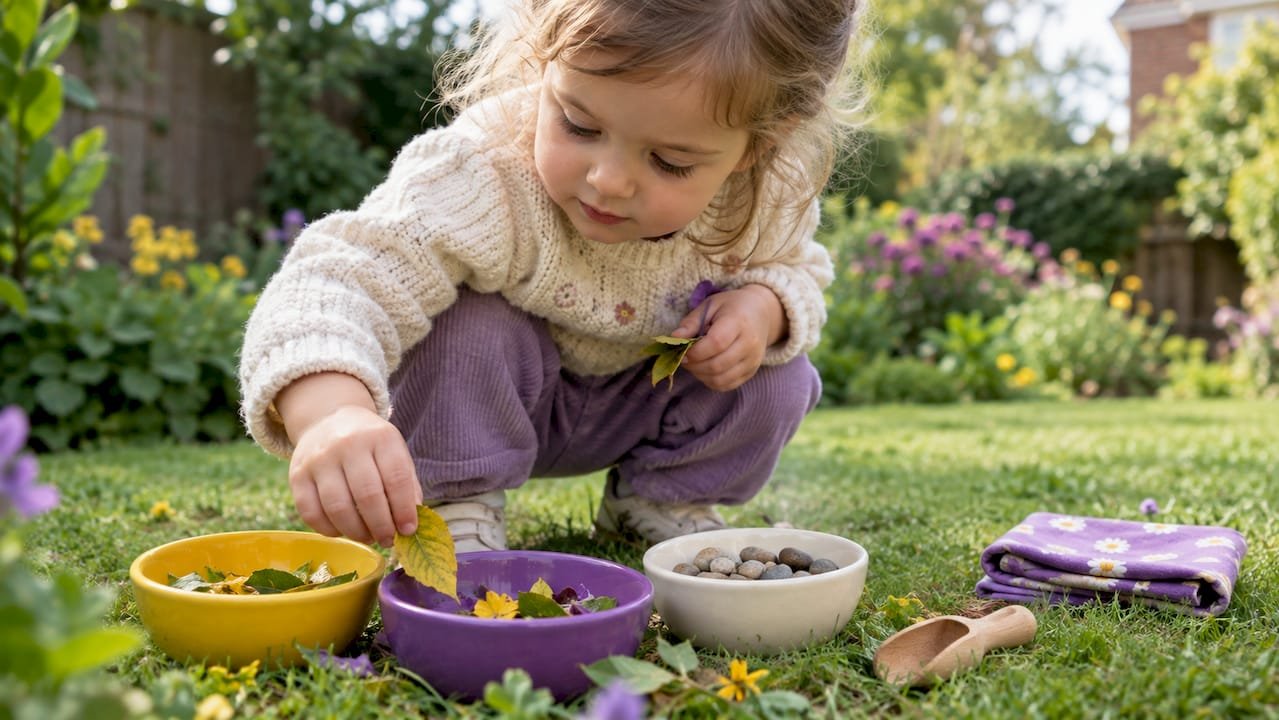
Head outside for five minutes and collect leaves, petals, or pebbles, then sort the haul into colored bowls once you’re back inside. OneHundredToys recommends narrating the hunt as you go, calling out colors before your toddler even picks the item up. This works especially well on a slow weekend morning.
6. Scarf Toss Into Matching Hoops
Lay out a few colored hoops, or just towels folded into circles, and toss lightweight scarves toward the matching one. It’s loud, active, and forgiving of bad aim, which makes it a strong pick for toddlers who need to move before they can focus.
7. Colored Pasta Sorting
Dye dry pasta shapes in a few colors ahead of time, then let your toddler sort them into bowls. Since pasta can end up in a mouth, keep this one seated and supervised the entire time, and swap in dry cereal if you’d rather skip the dye step.
8. Magnetic Tile Color Sort
If you already own magnetic building tiles, sort them by color into piles before building something with the result. This one doubles as cleanup time in disguise, since sorting the tiles is basically tidying the toy bin.
9. Printable Mat and Cut-Outs
Those Little Steps offers a free printable sorting mat, and laminating it (or adding Velcro dots) turns a one-time page into a reusable activity that survives sticky fingers. It’s the most portable option on this list, easy to toss in a bag for a restaurant table or a car ride.
10. Snack-Sort With Cheerios
During a seated snack, give your toddler a few colors of cereal and small bowls to sort before eating. Keep this one strictly seated and supervised, since it’s the only activity here designed around food your toddler will eventually put in their mouth on purpose.
Adapting Activities by Age and Ability
A 15-month-old and a 3-year-old shouldn’t be doing the exact same version of any of these. The activity stays the same; the difficulty dial is what moves.
- Start with two colors and large, chunky pieces for toddlers under 18 months.
- Move to three or four colors and smaller items once your toddler reliably matches without help.
- Add tongs or scoops to raise the fine motor demand, a scaffolding step the OT Toolbox recommends once basic matching is solid.
- Layer in counting (“you’ve got three blue ones!”) or descriptive language (“that’s a dark blue, almost purple”) to stretch vocabulary alongside sorting.
- For siblings or group play, turn any activity into a relay, one child runs the piece, the other places it.
- Hold off on pattern or shade sorting (light blue versus dark blue) until basic color sorting feels easy and fast.
Pro Tip: If your toddler starts naming colors before you ask, that’s your cue they’re ready for a third or fourth color, not a harder toy.
Safety, Mouthing, and Storage Tips
Small parts and toddlers are a genuinely risky combination, so match the activity to your child’s stage, not just their age on paper.
- Skip anything smaller than a ping-pong ball for toddlers under 3, and use pom-poms, large beads, or soft scarves instead.
- Keep edible sorting (cereal, pasta) strictly seated and supervised, never left out as independent play.
- Store loose pieces in a sealed box or bin between sessions, and use a tray to contain the mess during play.
- If your toddler loses interest fast, make it social by sorting together, shorten the session to two minutes, or swap in a gross motor version like the color cube toss.
For more on taste-safe alternatives, our guide to taste-safe sensory play covers safer substitutes for mouthing toddlers in detail.
Why These Activities Match Early-Years Goals
Every activity here uses items already in your home, which keeps the barrier to entry at zero, no shopping trip required before playtime can start.
- Color sorting supports Early Years Foundation Stage goals across communication, physical development, and early mathematics.
- Mooshiemoments builds its activity library around this same principle, quick, household-based play with a clear developmental purpose behind each idea.
- For more structured, EYFS-aligned ideas using recycled materials, see our guide to junk modelling for toddlers.
The Case Against Overcomplicating Color Play
The parenting internet has a habit of turning simple ideas into projects. Search “color sorting activities” and you’ll find laminated multistep stations, color-coded weekly themes, and printable trackers, most of which solve a problem toddlers don’t have.
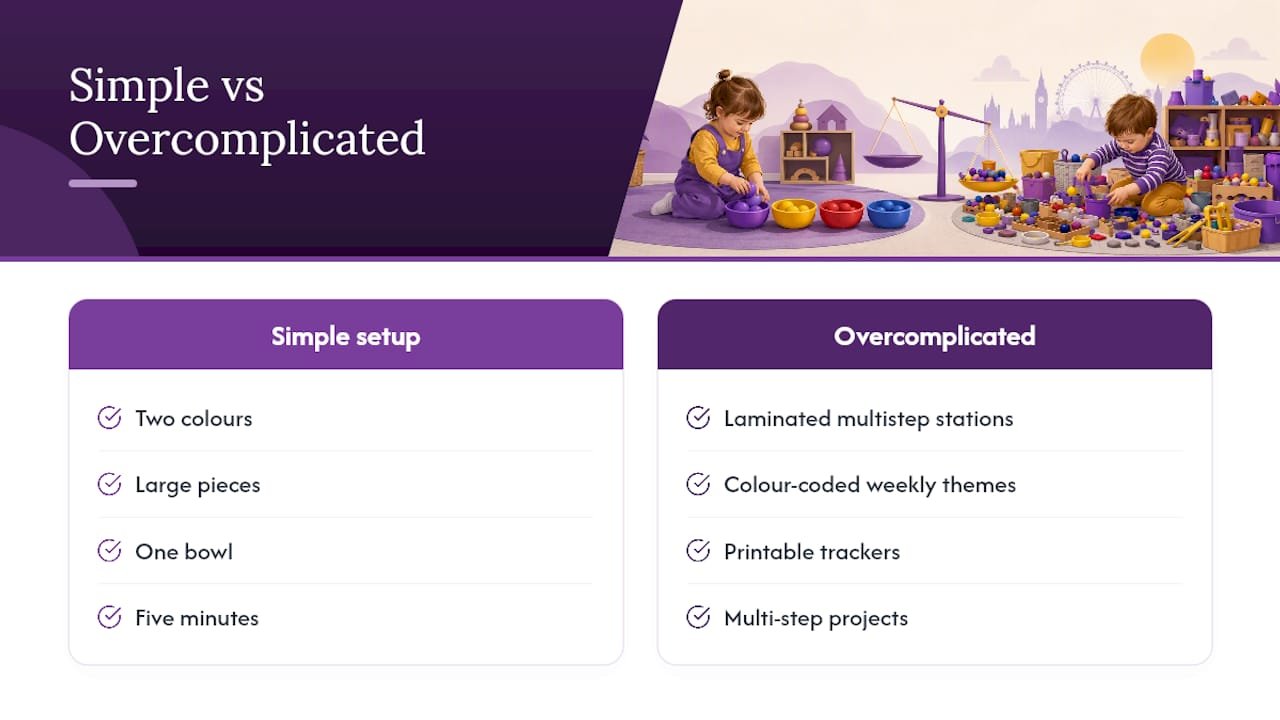
What the research actually supports is much simpler: two colors, large pieces, a bowl, and five minutes. Busy Toddler’s own advice is to keep first introductions basic and praise the attempt, not the accuracy. That’s the opposite of what most Pinterest boards suggest, and it’s the version that actually holds a toddler’s attention.
Where conventional advice falls short is treating sorting as a fixed skill to master rather than a rhythm to repeat. A toddler who sorts three pom-poms then wanders off hasn’t failed the activity. They’ve done exactly what a two-minute attention span is built to do. The parents who get the most out of color sorting aren’t the ones with the fanciest setup; they’re the ones who repeat a boring bowl-and-pom-pom match three times a week without turning it into a production.
If you take one thing from this: resist the urge to add a fourth color before your toddler asks for it.
— samit
A Faster Way to Find Your Next Five Minutes of Play
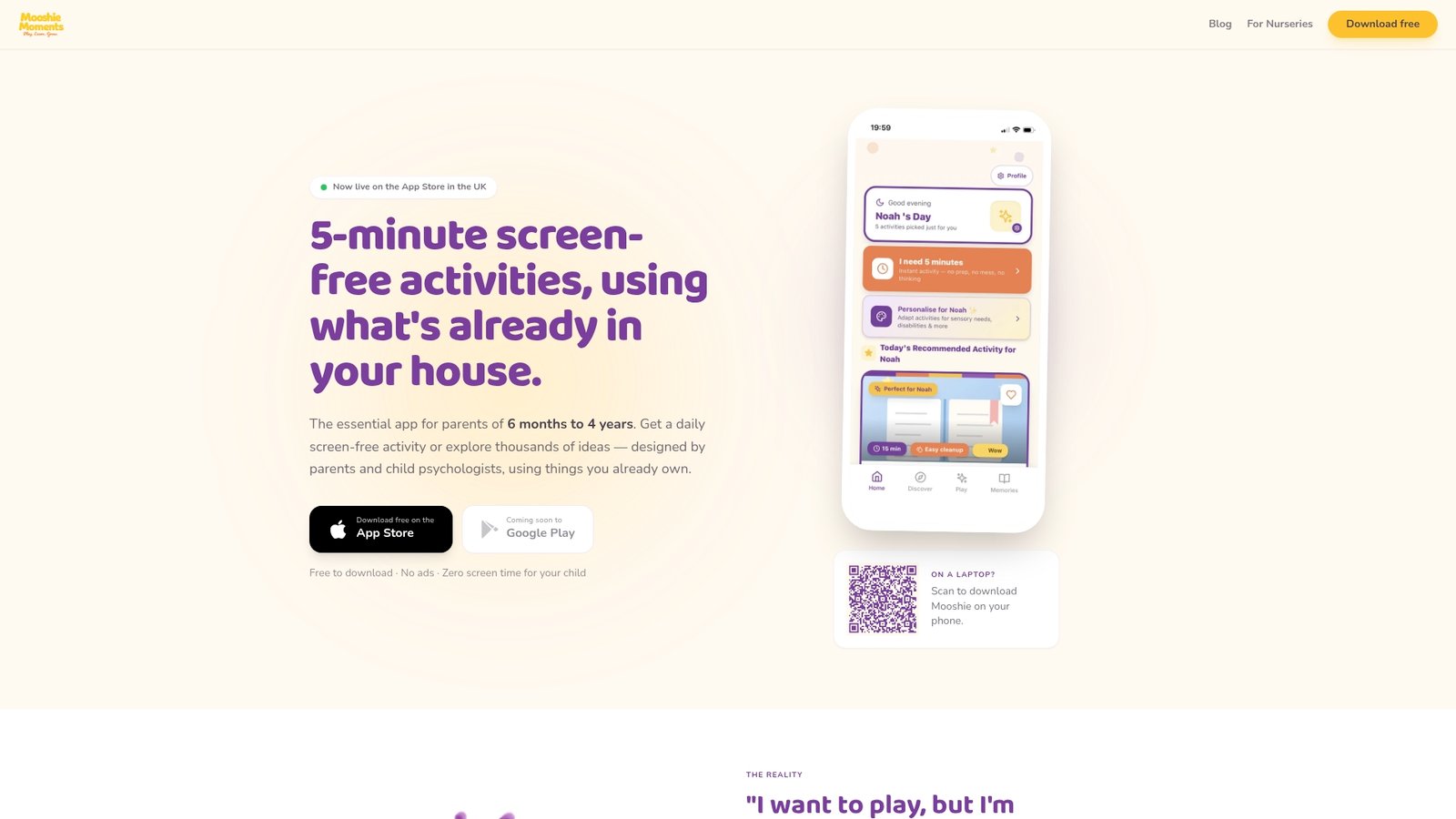
If pulling together a new activity every day sounds exhausting, you’re not alone, and that’s exactly the gap Mooshie was built to close. The app hands you a ready-to-run, age-personalized activity using items already in your home, no shopping list, no screen time, and no extra planning between naps and dinner.
Busy early-years settings get the same benefit at scale. The Partnership Pack gives nurseries printable resources and ready-made activity ideas that align with EYFS goals, without staff having to build materials from scratch. Families juggling multiple ages will find a similar shortcut in our 2-year-old activity ideas, matched to attention span rather than a generic age bracket. Visit the Mooshie landing page to see the free activities on offer and decide if premium access is worth it for your household.
Sources
For printable sheets and deeper guidance, the Hackney Education colour sorting sheet, OT Toolbox’s fine motor guide, Busy Toddler’s sorting introduction, Montessori From The Heart’s pom-pom activity, and Those Little Steps’ free printable mat each offer a slightly different angle worth bookmarking. For a broader look at how grouping objects builds early reasoning, Baby Bare Essentials’ guide to sensory play is worth a read too.
- Colour Sorting Game for Toddlers (Hackney Education)
- Sorting Colors Activities (The OT Toolbox)
- Introducing Sorting: Teaching Young Toddlers (Busy Toddler)
- Color Sorting Activity for Toddlers | Easy Fine Motor Play (Montessori From The Heart)
- Free Toddler Color Sorting Printable for Hands-On Learning (Those Little Steps)
FAQ
What Are Some Good Color Sorting Activities for Toddlers?
Pom-pom and cap matching, a color-sorting sensory bin, cup stack sorting, and outdoor color hunts are strong starting points because they use items already at home. Each one takes under five minutes to set up and can be adjusted by adding more colors or smaller pieces as your toddler’s skills grow.
At What Age Should a Toddler Be Able to Sort Colors?
Most toddlers begin basic two-color matching around 18 months, though this varies widely by child. Hackney Education recommends starting with just two colors regardless of exact age, then adding more once matching feels easy.
What Are Some Fun Activities for Sorting Colors?
Turning sorting into movement, like tossing scarves into matching hoops or rotating a color-sorting cube, keeps active toddlers engaged longer than tabletop versions. There are activity libraries that include several household-based variations like these, personalized by child’s age and available time.
What Household Items Work Best for Sorting by Color?
Bottle caps, pom-poms, cereal, colored paper, and cups or bowls all work well and cost nothing extra. The OT Toolbox suggests adding tongs or scoops once your toddler reliably matches colors, to build fine motor strength alongside the sorting skill.
Recommended
- 40 Fun 2 Year Old Activities to Start Right Now
- 12 Low Prep Toddler Activities for Grandparents With Seated Options
- Junk Modelling for Toddlers: Easy EYFS-Aligned Activities
- Taste Safe Sensory Play: Top 10 Ideas for Mouthing Toddlers
Want a new idea every day, matched to your child's age?
Mooshie Moments gives you simple, guided play ideas for ages 6 months to 4 years.
Download free on the App StoreMore like this
Babysitting Toddlers: 12 Low Prep Ideas and Why They Help
Explore 12 low prep toddler activities for babysitters, with developmental benefits, age adaptations, UK safety advice, and optional activity coaching.
10 EYFS Backed Sock Games for Toddlers Under Five Minutes
Ten EYFS aligned sock games to start in under five minutes, each with a one line developmental benefit, simple adaptations, and two…
Busy Parents: 12 No Prep Shopping Activities for Toddlers
Busy parents: keep toddlers learning and calm at the store with 12 no prep, screen free activities that take under five minutes…