
12 Low Prep Toddler Activities for Grandparents With Seated Options
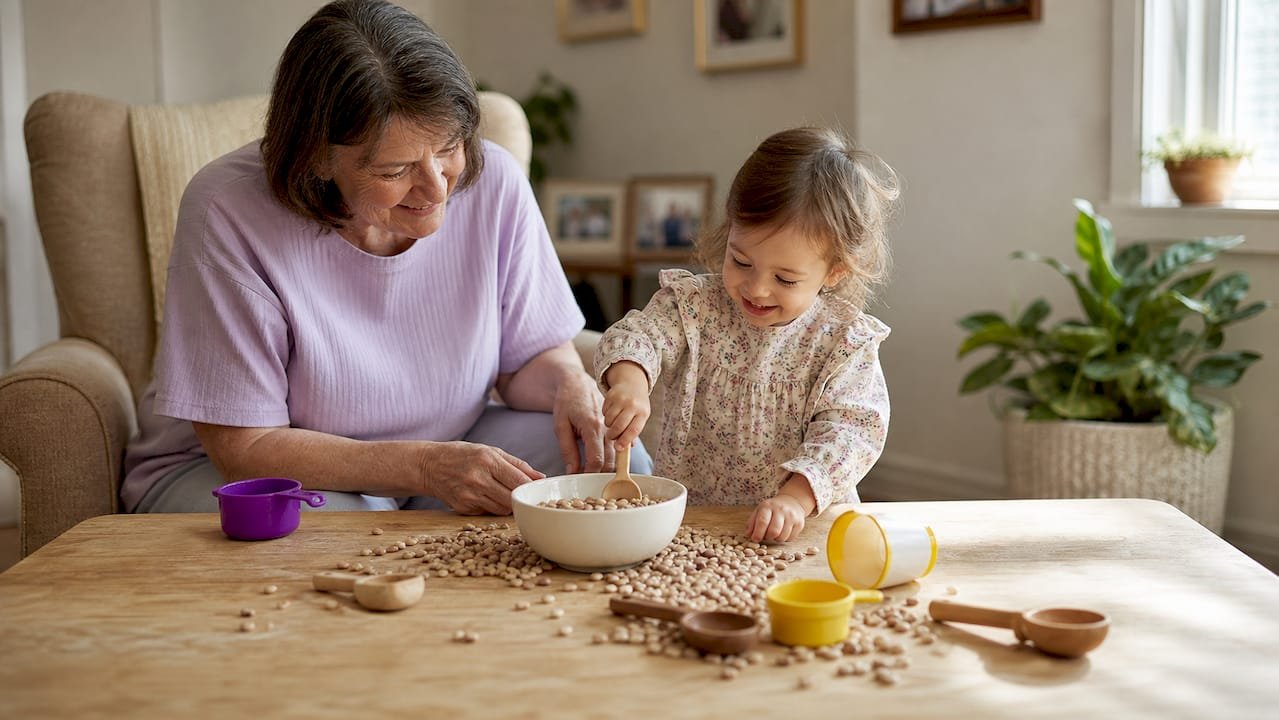
Start with a sensory bin. Fill a shallow tub with dry pasta or rice, add a few kitchen scoops and cups, and let your grandchild pour, dig, and explore for ten minutes while you narrate what they’re doing. Pair it with a short story or a silly song afterward. This combination builds fine motor skills, language, and focus, and it takes about two minutes to set up. For more five-minute ideas sorted by age and energy level, Mooshie Moments keeps a running library on hand.
TL;DR:
- Repetitive, simple activities like sensory bins and storytime provide most developmental benefits and can be easily repeated with minimal setup.
- Short, themed routines with outdoor or seated options help manage energy levels and mobility limitations while maintaining engagement.
- Using household items for activities, such as colanders, pipe cleaners, and playdough, is more effective than elaborate, single-use craft kits.
- Keeping a small rotation of toys and predictable activity structures fosters comfort and skill-building over constant novelty.
- Planning visits around brief blocks of active, quiet, and creative time ensures attention spans are met without overexertion.
Table of Contents
- Grandparent Activities With Toddlers: 12 Quick Ideas To Try Today
- Easy Indoor Activities Using Things You Already Own
- Outdoor Play Ideas For Grandparents That Don’t Require A Long Walk
- Seated Activities For Grandparents With Limited Mobility
- Sensory And Fine-Motor Activities That Build Real Skills
- Craft And Storytelling Ideas For Deeper Bonding
- How To Structure A Grandma Or Grandpa Camp Day
- Prep, Safety, And Cleanup Shortcuts
- Who’s Behind This Guide
- Our Take: What Actually Matters In Grandparent Play
- Find More Screen-Free Ideas With Mooshie Moments
- Sources
Grandparent Activities With Toddlers: 12 Quick Ideas To Try Today
You don’t need a craft cupboard or a garden the size of a park to keep a toddler happy. Most of the best grandparent toddler activities use things already sitting in your kitchen or hallway. Here are twelve you can start within minutes, with seated and outdoor variants marked where they apply.
-
Pasta or rice sensory bin. Toddlers love the texture and sound of dry pasta running through their fingers. Set the bin on a table so you can sit while supervising. Safety note: skip this one if your grandchild still puts everything in their mouth.
-
Sock puppet chat. Pull an old sock over your hand, draw a face with marker, and have a conversation with your grandchild. Works seated, no prep beyond finding a sock.
-
Colander and pipe cleaners. Poking pipe cleaners through the holes of a kitchen colander builds hand strength and concentration. Sit at the table and do it together.
-
Bubble chase. A bottle of bubbles from the pound shop turns any patch of garden or living room into ten minutes of giggling. Blow from a chair if standing is hard.
-
Blanket fort. Drape a sheet over two chairs for an instant hideout. Toddlers love climbing in and out; you can supervise from a nearby seat.
-
Playdough pizza. Roll, flatten, and “top” playdough with pom poms or buttons. Great for a table setup, minimal mess if you use a tray underneath.
-
Duck feeding at the local pond. A short, flat walk with a purpose. Bring stale bread or specialist duck feed and let your grandchild toss it.
-
Backyard scavenger hunt. Write or draw three simple items (a leaf, a stone, something yellow) and let them search a small, fenced area.
-
Water painting on the patio. A paintbrush and a cup of water on concrete or a fence panel creates “paintings” that vanish as they dry. Zero mess, endless repeats.
-
Snack assembly. Let your grandchild place banana slices or crackers onto a plate. It doubles as a fine motor task and gets snack time done at once.
-
Picture book with voices. Choose a board book and give each character a different voice. Works anywhere you can both sit comfortably.
-
Soft-play or toddler group visit. When you want company and someone else’s floor to clean, a local soft-play centre or toddler group gives you a seat, a coffee, and a safe space for them to run.
Easy Indoor Activities Using Things You Already Own
Indoor play is where most grandparents live and die on prep time, so the goal is always the same: minimum setup, maximum engagement. Household items like colanders, spoons, and measuring cups can be repurposed into genuine developmental tools without a trip to the shops.
Sensory bins are the workhorse of indoor play, and the trick is height. Put the bin on a kitchen table or a raised tray table instead of the floor, so you can sit in a chair and supervise without bending or kneeling. Fill it with dry rice, dried beans, or even ice cubes in summer, then add cups and spoons for scooping.
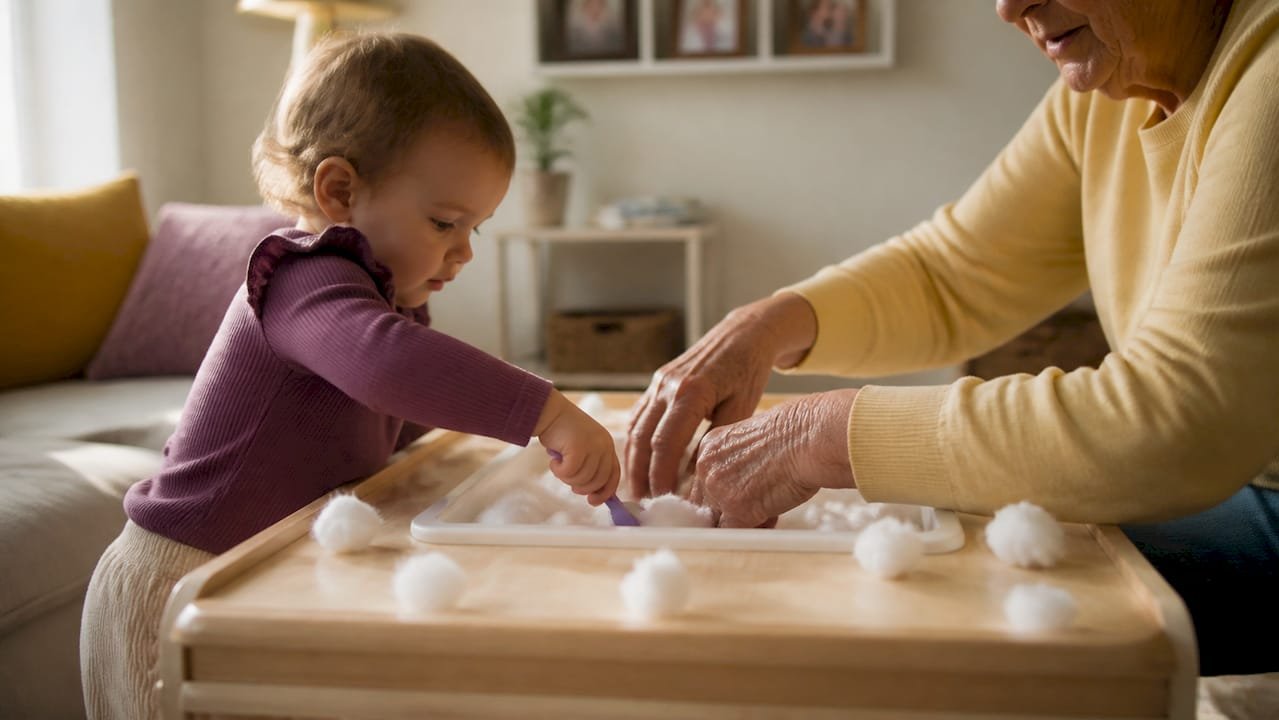
Playdough pizza is another reliable option. Roll out a ball of playdough, then let your grandchild press on “toppings” made from pom poms, buttons, or bits of felt. If you’re up for a little more mess, simple baking tasks like stirring batter or pressing cookie cutters into dough give toddlers a real job to do alongside you, which they take seriously.
Indoor forts don’t need to be elaborate. A sheet over two dining chairs, weighted down with cushions, creates a den that keeps a toddler occupied for twenty minutes while you read nearby.
Pro Tip: Keep a small basket of “grandparent house only” toys that stay packed away between visits. Novelty does more work than quantity, and rotating just three or four items keeps every visit feeling fresh.
A short materials list makes cleanup painless:
- A towel or shower curtain liner under any sensory bin
- A dustpan kept within reach, not in a cupboard
- Wet wipes on the table before you start, not after the mess happens
Outdoor Play Ideas For Grandparents That Don’t Require A Long Walk
Fresh air doesn’t have to mean a hike. The goal with toddlers is short bursts of outdoor time in a contained, low-risk space, not covering distance.
Fenced parks and flat-path gardens work best because you can relax instead of chasing. If walking any distance is difficult, a local soft-play centre solves the problem differently: these venues are built with seating and separated toddler zones, so you get a chair and a coffee while your grandchild runs.
Nature doesn’t need a nature reserve. Simple prompts like cloud watching, birding from a bench, or a mini backyard campout give toddlers rich sensory input without demanding much from you physically. A magnifying glass and a small drawstring bag turn any patch of grass into a treasure hunt for leaves, stones, and bugs.
Before heading out, run through a short checklist:
- Snacks that won’t melt or crumble everywhere
- A spare set of clothes, because puddles are magnetic
- Wet wipes, always more than you think you’ll need
- Sun hat or extra layer, depending on season
Morning outings between roughly 9:30 and 10:30 tend to go more smoothly than afternoon ones, since toddlers are usually rested and fed before nap time takes over.
Seated Activities For Grandparents With Limited Mobility
Limited mobility doesn’t limit the amount of fun you can have. It just changes how you set the space up. The real solve is bringing the activity to your level instead of getting down to the floor.
A sensory tray at table height is the easiest fix. Raising materials onto a table or stable lap tray lets you scoop, sort, and chat without bending or kneeling at all. Puppet shows work the same way. You can perform an entire show from a chair using socks or paper bag puppets, and toddlers rarely notice or care that you haven’t moved.
Other seated-friendly options worth keeping in rotation:
- Tabletop art: crayons, chunky markers, or finger paint on a tray
- Snack assembly games: sorting crackers by color or building a plate together
- Threading large beads or pasta onto string, seated at the table
- Reading with character voices, no physical movement required at all
A few small adjustments make a real difference over the course of an afternoon. Use a chair with armrests for getting up and down more easily, keep a grabber tool nearby for dropped toys, and don’t hesitate to ask a parent to handle the floor-level parts of play, like chasing a rolling ball. Splitting the physical and the verbal roles of play is not a compromise, it’s a smart division of labor.
Pro Tip: Keep a lightweight cushion in the car or by the front door. A few extra minutes of comfort in a seat means you can stay engaged for the whole visit instead of cutting it short.
Soft-play centres and local baby and toddler groups also tend to provide seating built in, which is exactly why so many grandparents rely on them when energy is limited but company isn’t.
If mobility is a bigger daily concern beyond visits with grandchildren, activity ideas designed for housebound adults can offer useful crossover inspiration, since many were built around exactly this kind of seated, low-effort engagement.
Sensory And Fine-Motor Activities That Build Real Skills
These small, repetitive tasks matter more than they look. Fine motor practice at this age lays the groundwork for holding a pencil, using scissors, and eventually writing, and it happens through play, not drills.
Age-appropriate structured tasks for toddlers between 24 and 36 months include simple matching games, basic puzzles, and following two-step directions, all of which strengthen problem solving alongside hand control.
Try these with minimal setup:
- Q-tip drop: Poke holes in a container lid and let your grandchild drop cotton swabs through. Builds pincer grip.
- Threading: Large beads or dry penne on a shoelace, knotted at one end.
- Scooping and pouring: Dry rice or water between two cups, endlessly repeatable.
- Pom-pom transfer: Tongs or a spoon to move pom poms from one bowl to another.
- Sticker peeling: Peeling and placing stickers on paper is harder than it looks and great for grip strength.
- Simple puzzles: Four to six large pieces, chunky knobs if available.
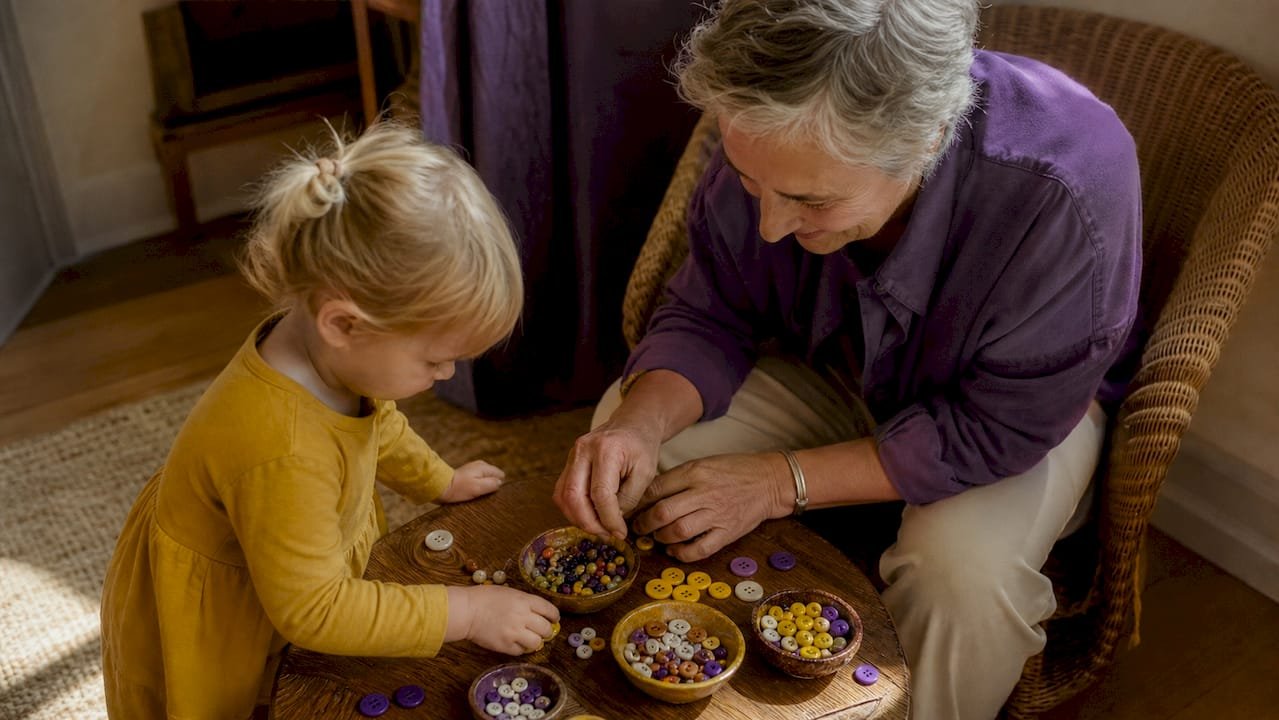
Small parts always carry a choking risk for children under three, so stick to age-appropriate sizes and supervise closely during any activity involving beads, buttons, or pom poms. Toddlers develop these fine motor skills at wildly different paces, so don’t measure progress against a sibling or a milestone chart; measure it against last month.
Craft And Storytelling Ideas For Deeper Bonding
Pretend play and storytelling cost nothing and ask nothing of you except a little willingness to be silly. That’s often the part grandparents underestimate most.
Sticker books, paint-with-water pads, and sidewalk chalk all deliver big engagement for almost no cleanup. Puppet play works well as a bridge into storytelling: hand your grandchild a sock puppet and ask what it wants to say next, then follow their lead.
When reading together, a few small techniques go a long way. Give each character a distinct voice, however exaggerated. Pause after a page and ask what might happen next, rather than reading straight through. Try a picture walk first, flipping through the illustrations before reading a single word, so your grandchild builds their own version of the story.
For keepsakes, keep it simple: a handprint pressed into a slab of air-dry clay, or a scribble drawing dated and tucked into a memory box. The value isn’t in the craftsmanship, it’s in having a small, physical proof of a visit years later.
How To Structure A Grandma Or Grandpa Camp Day
Recurring visits go more smoothly with a loose structure, not a rigid one. A short themed “Grandma Camp” format removes the pressure to invent something new every time and gives both of you a rhythm to settle into.
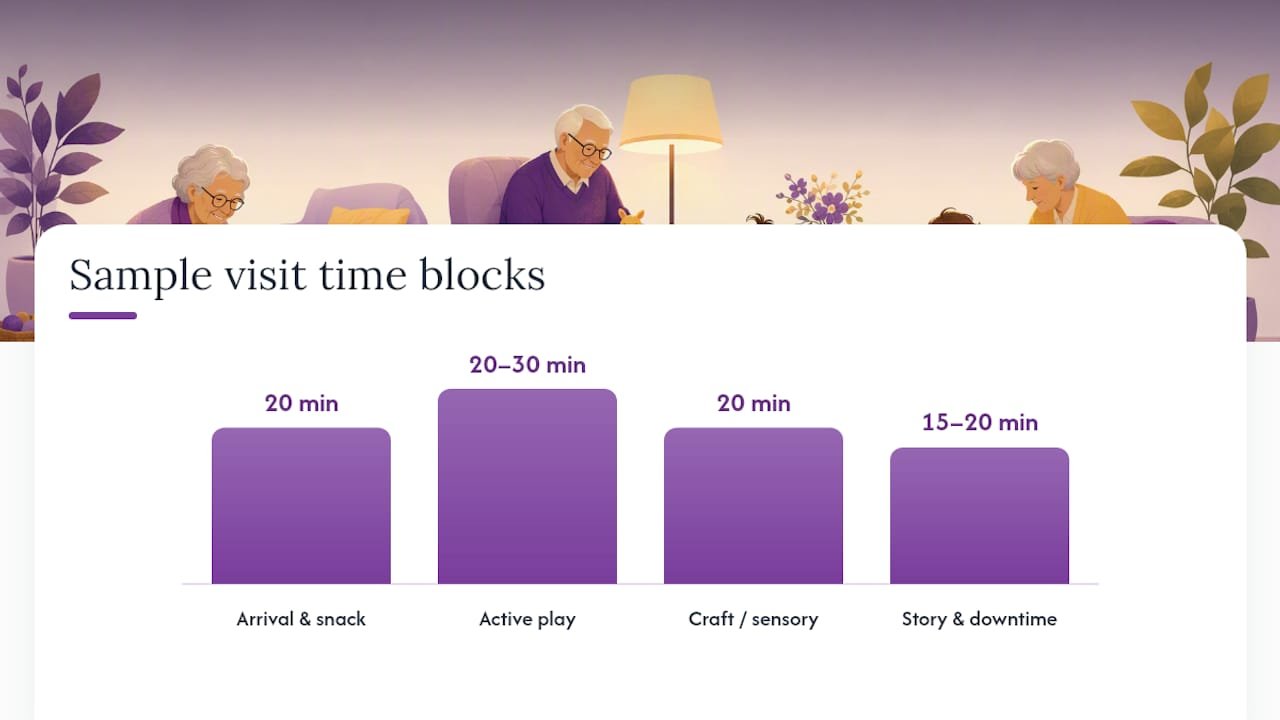
A sample two to three hour visit might look like this:
- Arrival and snack (20 minutes). Something calm to settle in, plus a quick chat with the parent about naps or allergies.
- Active block (20 to 30 minutes). Outdoor play, a scavenger hunt, or bubbles if energy is high.
- Craft or sensory block (20 minutes). Playdough, painting, or a sensory bin at the table.
- Story and downtime (15 to 20 minutes). Books, puppets, or quiet chat while snacks settle.
- Free play or repeat a favorite (remaining time). Let the day end on whatever activity got the biggest reaction earlier.
Mixing short active bursts with calm downtime matches toddler attention spans far better than one long unstructured stretch, and it protects your own energy too.
Themed days help keep things fresh across multiple visits: a baking day, a nature day, a craft day, rotating week to week. Always confirm allergies and nap windows with parents before you plan food or timing, since a missed nap can undo an otherwise perfect afternoon in about ninety seconds.
Prep, Safety, And Cleanup Shortcuts
A few rules cover almost every scenario. Never leave a toddler unsupervised near water, even a shallow sensory bin. Check with parents about food allergies before offering any snack, especially nuts, dairy, or anything new. Keep small parts (beads, buttons, pom poms) away from children who still mouth objects.
A simple “go bag” kept by the door saves you from scrambling before every visit:
- Spare clothes and a plastic bag for wet or dirty ones
- Wet wipes and a small towel
- A couple of familiar snacks
- One or two rotating toys, swapped out between visits
For cleanup, put a towel or shower curtain liner under any sensory bin before you start, not after. Rotate toys in and out of storage so nothing overstays its welcome, and keep a small basket by the door specifically for “toys that live here,” so nothing goes home in a coat pocket by accident.
Who’s Behind This Guide
This guide comes from samit, who works with Mooshie Moments on activity content for parents, grandparents, and early years settings. Every idea here is built to work without special skills, extra purchases, or long setup times.
- Mooshie Moments filters its full activity library by a child’s age, your available time, and their current energy level, so a five-minute idea is always one tap away
- The app’s activity explanations draw on child development research, giving grandparents the “why” behind each suggestion, not just the “what”
- Its content aligns with EYFS early years principles, which several nurseries already use in partnership packs
- Activities are designed to work with items already in a typical home, not a shopping list
Grandparents looking for a steady stream of new ideas without repeating the same five activities every visit can browse the Mooshie Moments blog for fresh inspiration between app sessions.
Our Take: What Actually Matters In Grandparent Play
Most advice on grandparent activities with toddlers focuses on novelty, as if the goal is to out-entertain a tablet. It isn’t. The research on toddler development points somewhere else entirely: repetition, predictability, and a calm adult who’s fully present beat a constant stream of new ideas almost every time.
The conventional wisdom oversells complexity. A colander and some pipe cleaners does more for a toddler’s hand strength than an elaborate craft kit gathering dust after one use. What the reader should prioritize first isn’t a longer activity list, it’s a repeatable rhythm: the same sensory bin, the same story time, the same fifteen minutes of calm before you both call it a day.
Mobility limitations change the mechanics of play, not its value. A seated grandparent running a puppet show or a tabletop sensory tray gives a toddler exactly the same bonding and skill-building as one crawling around on the floor. The floor was never the point. Your attention was.
— samit
Find More Screen-Free Ideas With Mooshie Moments
Mooshiemoments puts a full library of five-minute, screen-free activities in your pocket, filtered by your grandchild’s age, how much time you’ve got, and how much energy is left in the tank that day. Instead of trying to remember which of the ideas above worked last time, you open the app, tell it what you’re working with, and get a suggestion built on child development research, not guesswork.
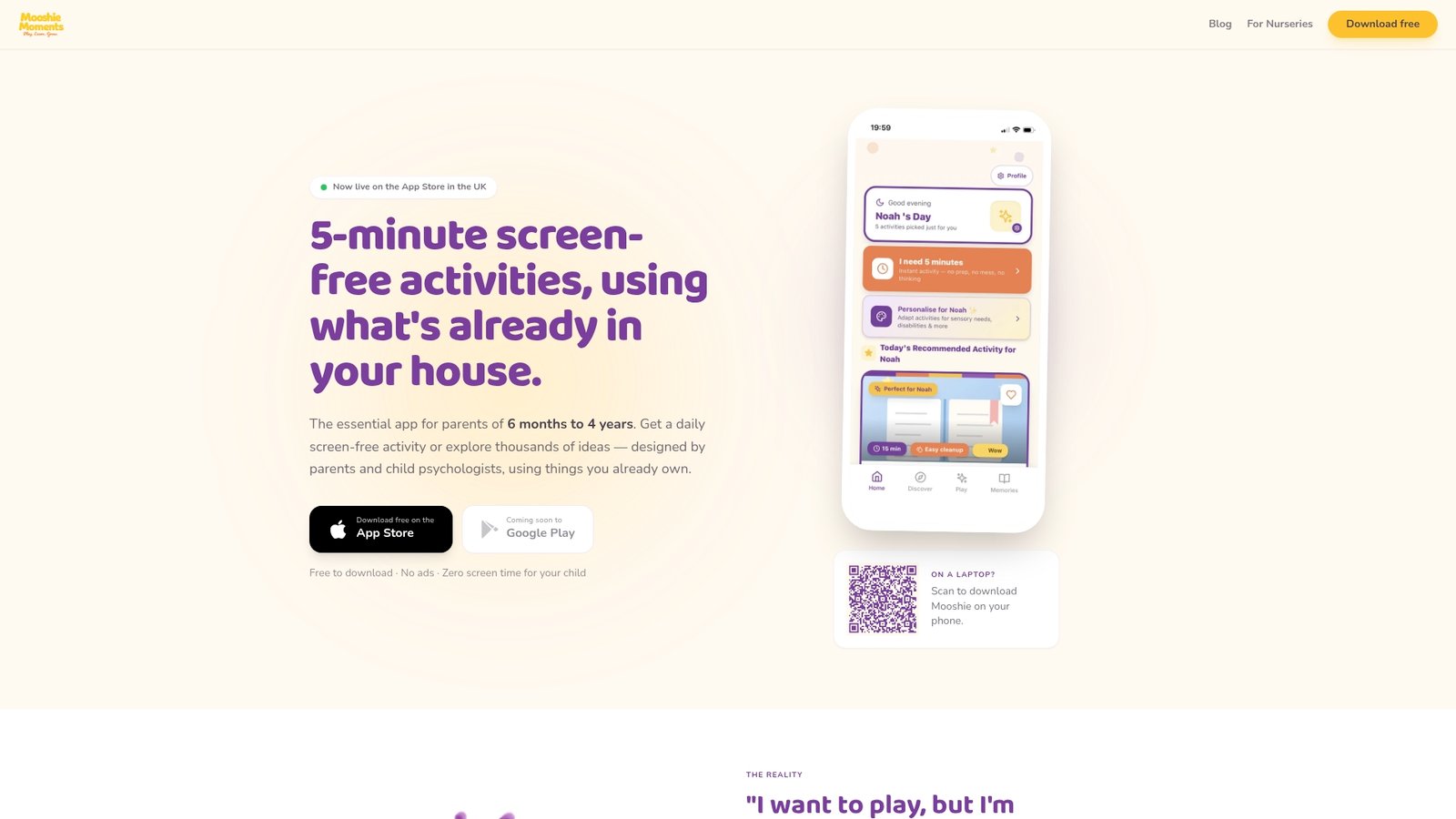
It’s built for exactly the moments this guide covers: a rainy afternoon with a two-year-old, a seated visit where bending down isn’t an option, or a Sunday when you’ve simply run out of ideas. Nurseries and early years settings also use Mooshie Moments through its EYFS-aligned partnership packs, so the activities carry the same grounding whether you’re a grandparent, a childminder, or a nursery practitioner.
If you want a steady supply of age-appropriate, low-prep activities without reinventing the wheel before every visit, download Mooshie Moments and set your grandchild’s age and your available time to get your first suggestion today.
Sources
A handful of resources are worth bookmarking alongside this guide. SunLife’s rundown of Grandparents Day in the UK confirms the date falls on the first Sunday in October, useful for planning a special visit. ZERO TO THREE’s Play-With-Me guide breaks activities down by developmental stage for toddlers 24 to 36 months. For outdoor inspiration beyond the park, Omniprism’s resources for children offer simple observation tools worth adapting for a backyard scavenger hunt.
- 10 household items you can use for play with toddlers — Michigan State University Extension
- The Ultimate Guide to Hosting Grandma Camp — Mommy Poppins
- Toddler activities for grandparents — Bubbles World of Play (blog)
- Grandparenting: Play-With-Me activities that make learning fun (24–36 months) — ZERO TO THREE
Recommended
More like this

Research Backed Nursery Activity Plans: 3 Daily 5 Minute Slots (UK)
Research backed nursery activity plans for UK parents: age matched, low prep household activities in 5–15 minutes, plus a one‑page weekly microplan…
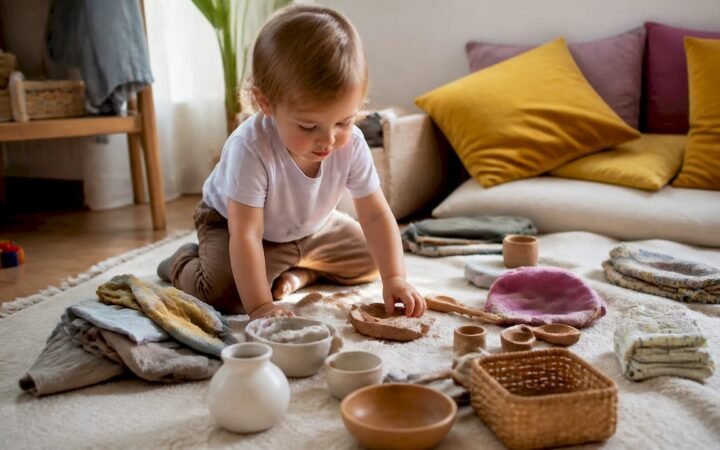
Play Schema Activities: 9 Easy, Household-Based Ideas
Discover 9 easy play schema activities using everyday household items. Support your child's development through fun, engaging play patterns.
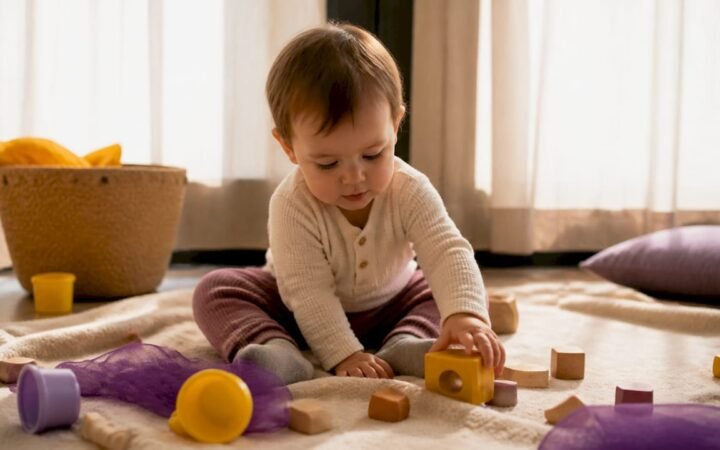
After Nursery Activities Toddler Can Enjoy in 5 Minutes
Discover fun, screen-free activities to enjoy with your toddler after nursery. Strengthen bonds and boost learning in just five minutes!