Play Schema Activities: 9 Easy, Household-Based Ideas

Play schemas are repeated patterns of play, like dropping, wrapping, or lining things up, that show you exactly what a child is working on developmentally. This guide breaks down all nine common schemas researchers and educators recognize, with quick activities you can set up using things already in your kitchen drawer. We’ll pull in real guidance from practitioner resources like Teachwire and Famly, plus a nudge concept from early years specialist Lynnette Brock, to help you spot and support this play.
TL;DR:
- Most play schemas are recognizable through repeated actions like lining up, dropping, or wrapping, which develop specific cognitive and motor skills.
- Watching a child’s play over a few days reveals their preferred schemas, such as transporting or rotation, which can be supported with simple household activities.
- Supporting schema development involves offering adequate materials and stepping back, rather than redirecting or over-structuring play.
- The Mooshie Moments app personalizes quick activity ideas based on observed patterns, helping parents and educators extend learning in five-minute play sessions.
- Excessive adult intervention often interrupts natural schema rehearsal, so minimal guidance with household items is more effective for early development.
Table of Contents
- Why play schema activities matter for early development
- How to spot a child’s schema in everyday play
- Trajectory schema activities for movement and prediction
- Positioning schema activities for early math skills
- Enveloping schema activities for comfort and spatial learning
- Enclosing and containing schema activities for boundary concepts
- Transporting schema activities for planning and sequencing
- Connecting schema activities for fine motor skills
- Transforming schema activities for scientific thinking
- Rotation schema activities for balance and pattern recognition
- Orientation schema activities for spatial awareness
- How adults scaffold play schema activities without taking over
- How Mooshie Moments turns schema spotting into five-minute activities
- An editorial take on why less intervention works better
- Turn what you spot into a five-minute activity today
- Sources
Why play schema activities matter for early development
Every time your toddler dumps a basket of toys for the tenth time or insists on wrapping every toy in a blanket, they’re not being difficult. They’re practicing a schema, a repeated action pattern their brain uses to test how the world works. Spotting these patterns lets you offer the right materials instead of generic toys that miss the point.
Researchers and early years practitioners generally agree there are nine common play schemas: trajectory, positioning, enveloping, enclosing or containing, transporting, connecting, transforming, rotation, and orientation. Each one builds a different skill. Trajectory play sharpens prediction and gross motor control. Positioning builds early math through sorting and sequencing. Transporting supports early understanding of measurement and comparative concepts like weight and distance. These aren’t random habits. They’re the early groundwork for reading, writing, and arithmetic later on.
How to spot a child’s schema in everyday play
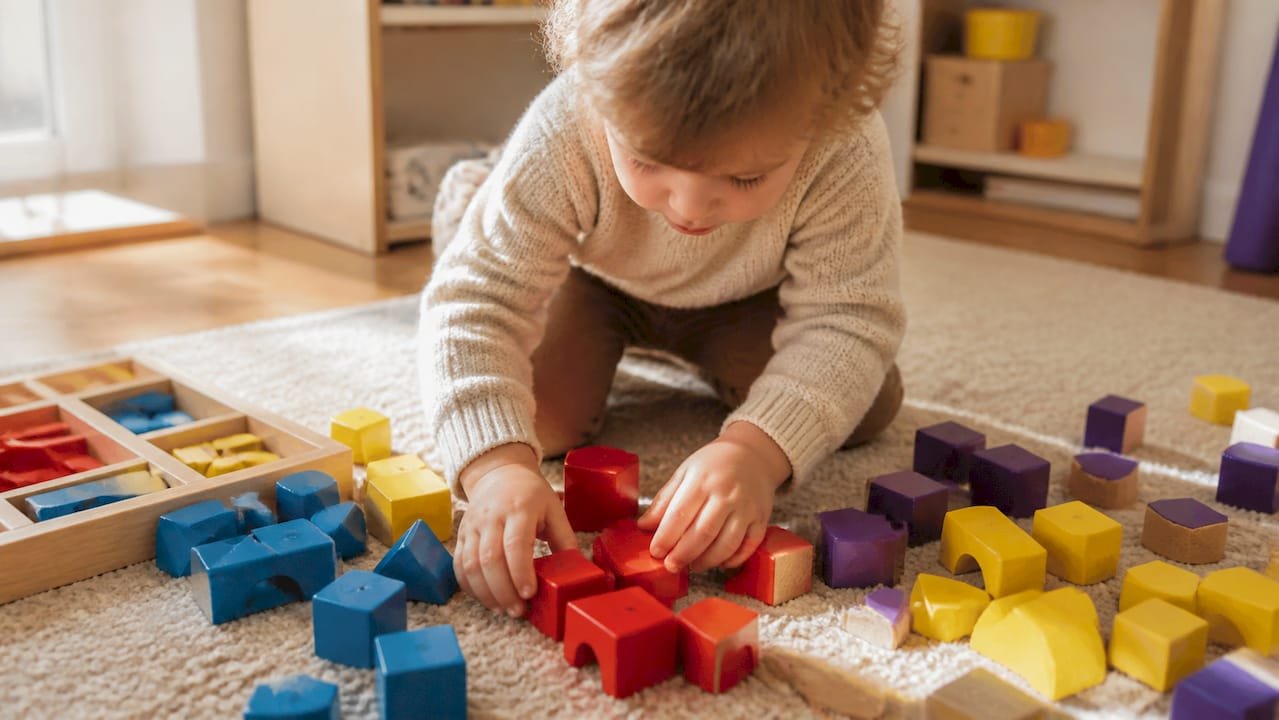
You don’t need a clipboard or a formal study to figure out what your child is drawn to. You just need to watch for a few days.
- Look for repetition. If the same action shows up three or more times in a session (stacking, pouring, hiding), that’s your clue.
- Note the time of day. Some children gravitate toward rotation play after nap, or transporting play right before dinner.
- Snap a quick photo or jot one line. A five to ten minute observation window, logged with a single note, reliably reveals the pattern without any formal tracking.
- Resist correcting. If they’re lining up cars instead of “playing properly” with them, that lining up is the play.
Watch more than you direct, and the schema usually reveals itself within a week.
Trajectory schema activities for movement and prediction
Trajectory play shows up as throwing, dropping, or watching things move through space. It builds prediction skills and gross motor coordination fast.
- Build a ramp from a cardboard box lid and roll balls or toy cars down it.
- Fold paper planes and launch them from a low step, then measure whose flew farthest.
- Set up a “drop and watch” station: a laundry basket at the bottom of the stairs for safe dropping.
- Try ball runs using cardboard tubes taped to a wall.
Keep drops low and supervised for younger toddlers, and scale up to outdoor throwing games like beanbag tossing as they get older.
Positioning schema activities for early math skills
Positioning schema shows up when a child lines up shoes by size or arranges crayons in a row before drawing. It’s an early, informal introduction to sequencing and pattern recognition.
- Set out a tinker tray of loose parts (buttons, bottle caps, pasta shapes) for open sorting.
- Sort by color first, then size, then function, and narrate what you see: “You put all the round ones together.”
- Build simple repeating patterns with cardboard scraps: red, blue, red, blue.
- Use muffin tins or egg cartons as built-in sorting compartments.
Buttons, jar lids, and cardboard are the whole material list. No specialty toys required.
Enveloping schema activities for comfort and spatial learning
Enveloping schema is about covering and wrapping, whether that’s a toy burrito-rolled in a towel or a child hiding under a blanket fort. It supports spatial awareness and, often, emotional comfort.
- Build a den using sheets draped over chairs or a table.
- Wrap small toys in paper or fabric scraps like presents to unwrap.
- Cover a finished painting or collage with tissue paper, then peek underneath together.
- Use words like “hidden,” “under,” and “covered” while playing to build the language around the action.
Check that draped fabric can’t slip and cover a child’s face unsupervised, especially with toddlers under two.
Enclosing and containing schema activities for boundary concepts
This schema shows up as building walls around toys, posting objects through slots, or nesting cups inside each other. It’s a hands-on way of practicing inside, outside, and border concepts.
- Cut a slot in a shoebox lid for a homemade posting box using coins, buttons, or small blocks.
- Nest measuring cups or stacking bowls from the kitchen.
- Build a sand or block “wall” around a toy figure, then knock it down and rebuild.
- Use enclosure language on purpose: “The dog is inside the fence now.”
Tidy-up time counts as part of the activity here. Sorting things back into containers reinforces the exact concept you just practiced.
Transporting schema activities for planning and sequencing
Transporting schema is the child who carries toys from room to room in a bucket, or insists on pushing a trolley loaded with random objects. It builds early measurement and sequencing concepts, especially when adults add comparative words like “heavier” or “further.”
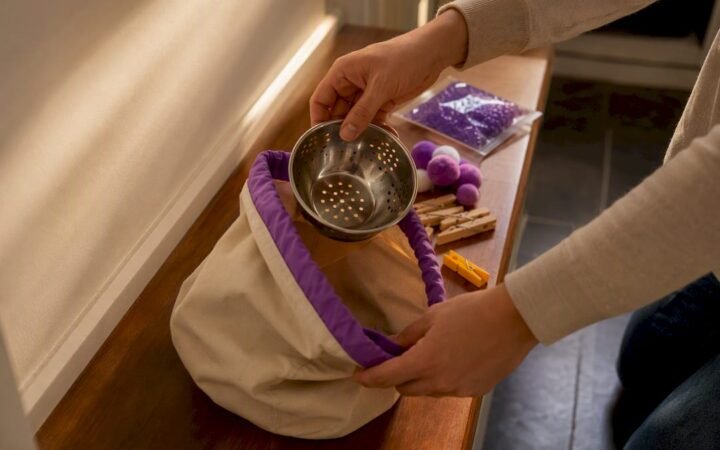
- Give them a basket, bag, or toy trolley and let them move objects between rooms.
- Set up a mini scavenger hunt: collect five red things and bring them back to a basket.
- Practice pouring and transferring water or dry rice between containers at bath time or the kitchen sink.
- Take it outdoors with a wheelbarrow or wagon for leaves, stones, or sticks.
Indoors, a laundry basket works fine. Outdoors, a wagon adds distance and a bit more physical effort.
Connecting schema activities for fine motor skills
Connecting schema shows up as linking things together, whether that’s threading beads, snapping train tracks end to end, or taping boxes into towers. It sharpens fine motor control and early cause-and-effect reasoning.
- Thread large buttons or pasta shapes onto string or shoelaces.
- Build paper chain links with tape or a stapler for older toddlers.
- Construct towers from cardboard boxes and masking tape.
- Practice zips, buttons, and snaps on real clothing as a practical-life connecting task.
Swap store-bought threading kits for cereal box cardboard and yarn. It costs nothing and works just as well.
Transforming schema activities for scientific thinking
Transforming schema is the fascination with changing states, mixing “potions,” melting ice, or mashing bananas into mush. It builds early scientific observation and a surprising amount of new vocabulary.
- Make mud or grass “potions” in old containers with a wooden spoon for stirring.
- Watch ice cubes melt on a warm plate and talk through what’s happening.
- Let them mash a banana or stir pancake batter and describe the change out loud.
- Keep a simple one-line observation log: “The ice got smaller and turned to water.”
Always supervise closely around food-based transforming play and check for allergies before offering anything edible as a play material.
Rotation schema activities for balance and pattern recognition
Rotation schema covers spinning, twirling, and turning: a child who spins in circles, twists a scarf overhead, or is obsessed with wheels. It links directly to balance and helps with recognizing circular patterns.
- Give them a lightweight scarf to twirl overhead or spin like a pinwheel.
- Set out toy cars or a bicycle wheel for close, repetitive observation of spinning parts.
- Try salad-spinner art: drip paint onto paper inside a salad spinner and crank the handle.
- Paint or draw circular patterns like spirals and swirls on large paper.
Spinning in place tends to be stimulating, while scarf twirling or spinner art is calmer, so pick based on the mood you’re working with.
Orientation schema activities for spatial awareness
Orientation schema is about seeing the world from different angles, hanging upside down off the sofa, peering through their legs, or climbing to a new vantage point. It builds body awareness and an early sense of perspective.
- Set up a simple obstacle course with cushions to crawl under and over.
- Ask them to draw the same toy from standing, then from lying on the floor.
- Offer safe, supervised climbing routes on soft play equipment or a low step stool.
- Try hanging upside down over the edge of a sofa cushion, with a spotter nearby.
Keep any climbing or upside-down play within arm’s reach and on a soft surface until you’re confident in their balance.
How adults scaffold play schema activities without taking over
The biggest mistake adults make with schema play is redirecting it toward something that looks more productive. Early years specialist Lynnette Brock describes the better approach as a “spinning plate” nudge: observe first, offer a resource, then step back and let the child decide what to do with it.
In practice, that means:
- Watch for a minute or two before jumping in with a suggestion.
- Offer one extra material (a bigger container, a second ramp, a longer string) rather than a finished activity.
- Use narrating language instead of instructions: “You’re putting those all inside the box” instead of “put those in the box.”
- Step back once they’re absorbed. The nudge is meant to restart flow, not manage it.
Watch for signs a child is frustrated rather than focused, like repeated failed attempts with visible upset, since that’s a cue to simplify the setup, not add more.
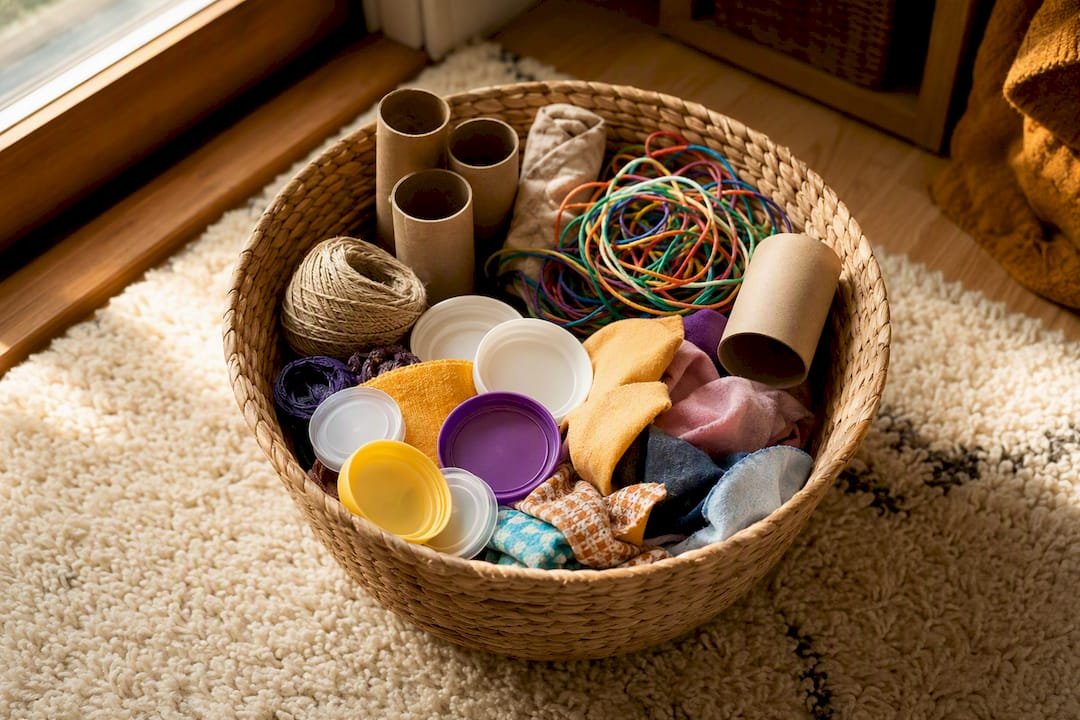
Pro Tip: Keep a small basket of “schema extras” like string, tubes, and lids on hand so you can offer a quick resource the moment you spot a pattern, without leaving the room to hunt for supplies.
One more thing worth knowing: schemas rarely stay in their own lane. A child stacking blocks and then wheeling them across the room in a truck is combining transporting, positioning, and transforming in a single stretch of play. Don’t force single-schema setups. Let the overlap happen.
How Mooshie Moments turns schema spotting into five-minute activities
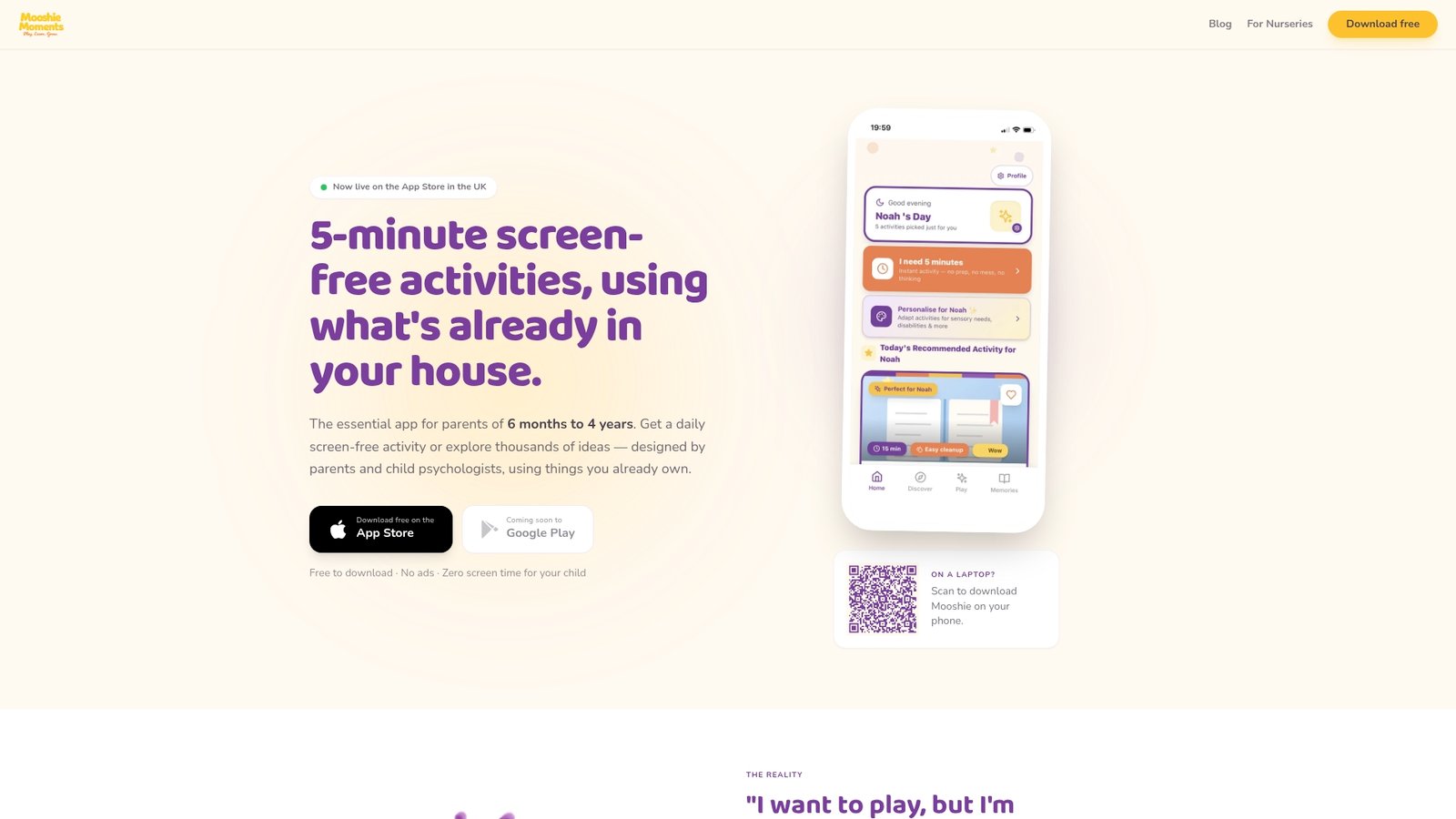
Once you’ve spotted a schema, the next question is always “now what do I actually do with five minutes and no plan?” That’s the exact gap Mooshie Moments was built to close. The app takes your child’s age and your available time, then surfaces a screen-free activity that matches what you’ve observed, without you having to design anything from scratch.
Say you notice your two-year-old has been hauling toy bins from the living room to the hallway for two days straight. That’s a transporting fixation. Open the app, and it can suggest a five-minute transporting activity, like a basket scavenger hunt, along with a short coaching tip on the language to use while they play.
Mooshie Moments maps child-development research into quick activities and partners with nurseries to extend that same support into early years settings.
An editorial take on why less intervention works better
The instinct to “enrich” every moment of play is strong, and it’s usually the wrong instinct. A child repeating the same dumping-and-refilling action for the fifteenth time isn’t stuck. They’re rehearsing something their brain needs rehearsed, and every well-meaning redirection toward a “better” activity interrupts that rehearsal before it finishes.
What gets underestimated is how little a parent actually needs to add. Not a lesson plan, not a themed activity box, just a longer piece of string, a second container, or five quiet minutes of watching before saying anything at all. The research on schemas backs this up consistently: the resource matters more than the instruction.
If you take one thing from this guide, let it be permission to do less. Grab whatever household item fits the pattern you’re seeing, put it within reach, and watch what happens.
— samit
Turn what you spot into a five-minute activity today
Mooshie Moments is built for exactly the moment this guide leaves you at: you’ve spotted a pattern, you’ve got five minutes, and you need an idea that doesn’t involve a screen or a trip to the shop. Unlike generic activity lists, the app personalizes suggestions by your child’s age and how much energy or time you actually have that day, with a coaching tip attached to each one so you know why it works.
Every activity draws on child-development research, so a transporting fixation gets a transporting activity, not a random craft project. For nurseries and early years settings, Mooshie Moments also offers partnership packs and printable resources that extend the same schema-matched approach into the classroom. Download the app and set your child’s age to see what it suggests for the pattern you’re noticing right now.
Sources
- Play schemas and why they matter | Famly
- Schemas of play – Common observations and 20 activity ideas | Teachwire
- Seeing the world through play: understanding schemas — Lynnette Brock
- Schemas booklet (practitioner resource) – NCN Ltd (PDF)
Recommended
More like this
12 Budget Friendly Busy Bag Ideas for Toddlers: Pack in 15 Minutes
12 budget friendly, screen free busy bag ideas for toddlers. Pack a pouch in 15 minutes, rotate to keep interest, and build…

10-Minute Loose Parts Play for UK Toddlers: Toilet-Roll Safety
Start loose parts play in 10 minutes with household items. Follow the toilet-paper-roll safety check, rotate materials, and try quick, low-prep activities...

Start in 5 Minutes: Screen Free Rainy Day Activities for UK Toddlers
Quick, screen-free rainy day activities UK parents can start in five minutes. Age-matched, energy-level rotations, low-cost supplies and tidy cleanup tips.