
After Nursery Activities Toddler Can Enjoy in 5 Minutes
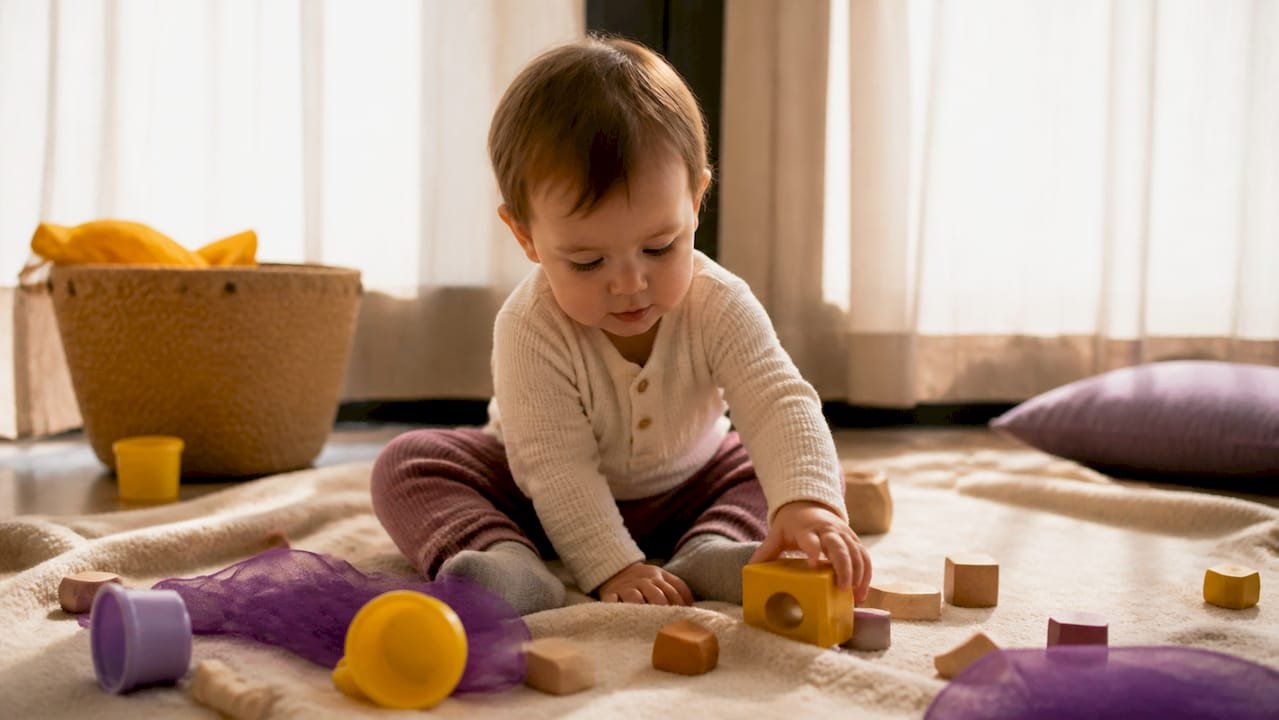
Pick one short, screen-free activity or a calming ritual that matches your toddler’s energy the moment you walk through the door. That single decision does more for the rest of your evening than any elaborate plan.
The NHS points out that toddlers learn more from interacting with you than from any toy on the shelf. A few minutes of singing, reading, or simple back-and-forth play strengthens language skills and your bond at the same time. Mooshie Moments builds its whole app around this idea, offering age-tailored, screen-free activities you can start in under five minutes with things already in your kitchen drawer.
Try one of these tonight:
- A two-minute cuddle and “how was nursery” chat before anything else
- A muffin tin and a handful of pom-poms for sorting
- A slow, sleepy stroll around the garden if energy is low
TL;DR:
- Prioritizing quick, screen-free activities tailored to your toddler’s energy level can build stronger bonds and support development more effectively than complex setups.
- Rotating activity categories such as quiet, creative, sensory, active, and chores helps keep daily play fresh and aligned with your child’s mood and energy.
- Preparing a busy box with simple items like muffin tins and stickers reduces decision fatigue and enables spontaneous play when time is limited.
- Matching activities to your toddler’s energy signals, like low energy for quiet play and high energy for active fun, prevents overstimulation and frustration.
- Consistent transition rituals, such as sing-alongs or unpacking routines, provide security and ease the switch from nursery to home without requiring elaborate planning.
Table of Contents
- Fun Activities for Toddlers After Nursery: Which Category Fits Today?
- Quick Toddler Activities You Can Set Up in 1–10 Minutes
- Matching Activities to Your Toddler’s Energy After Nursery
- Simple Transition Rituals From Nursery to Home
- Adjusting Activities for Your Toddler’s Age and Stage
- Setup Hacks and Safety Reminders That Save Your Evening
- How Mooshie Moments Fits Into Your After-Nursery Routine
- Getting the Play-First Approach Right
- A Faster Way to Fill the After-Nursery Gap
- Key Takeaways
- Sources
Fun Activities for Toddlers After Nursery: Which Category Fits Today?
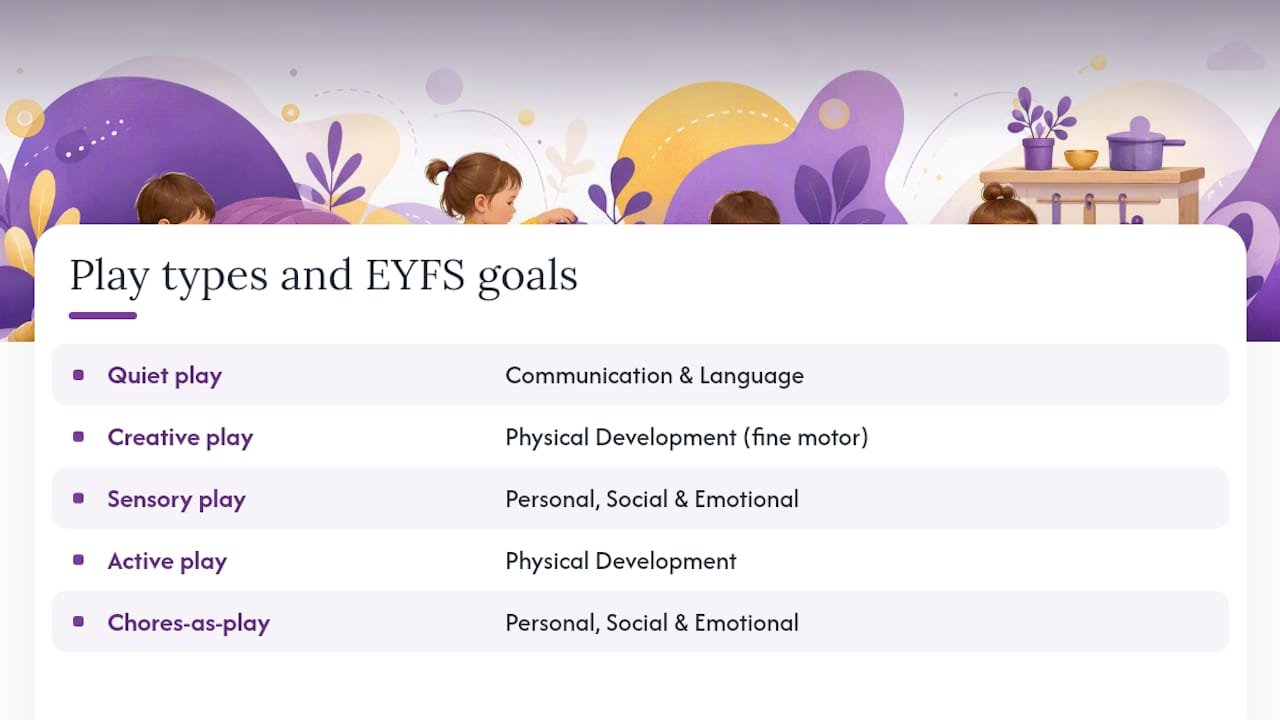
Not every afternoon calls for the same kind of play. Rotating through five categories keeps things fresh without requiring you to plan ahead.
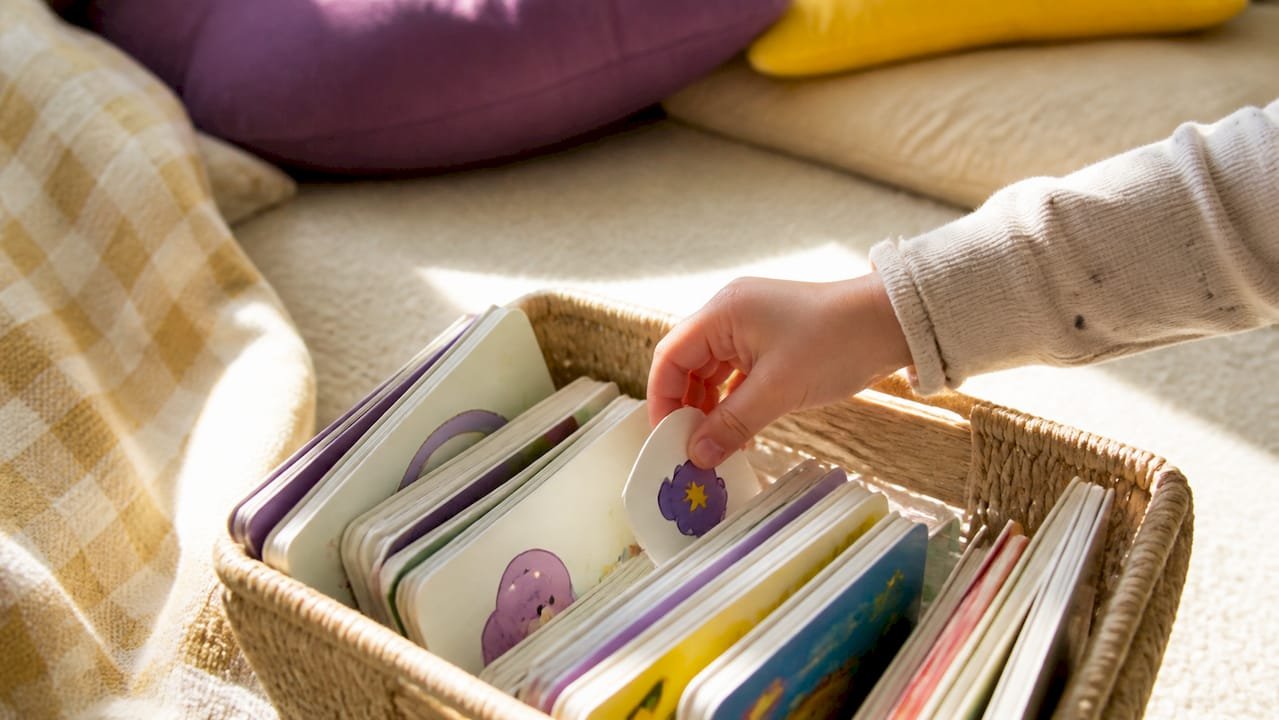
Quiet play works when your toddler needs to decompress. A sticker page or a stack of board books does the job in minutes. Creative play suits days with a bit more patience left in the tank. Handing over crayons and paper, or letting your toddler squish paint inside a sealed zip bag, supports fine motor skills without demanding your full attention. Raising Children Network recommends keeping materials simple and letting the toddler lead, since the process matters more than the finished picture.
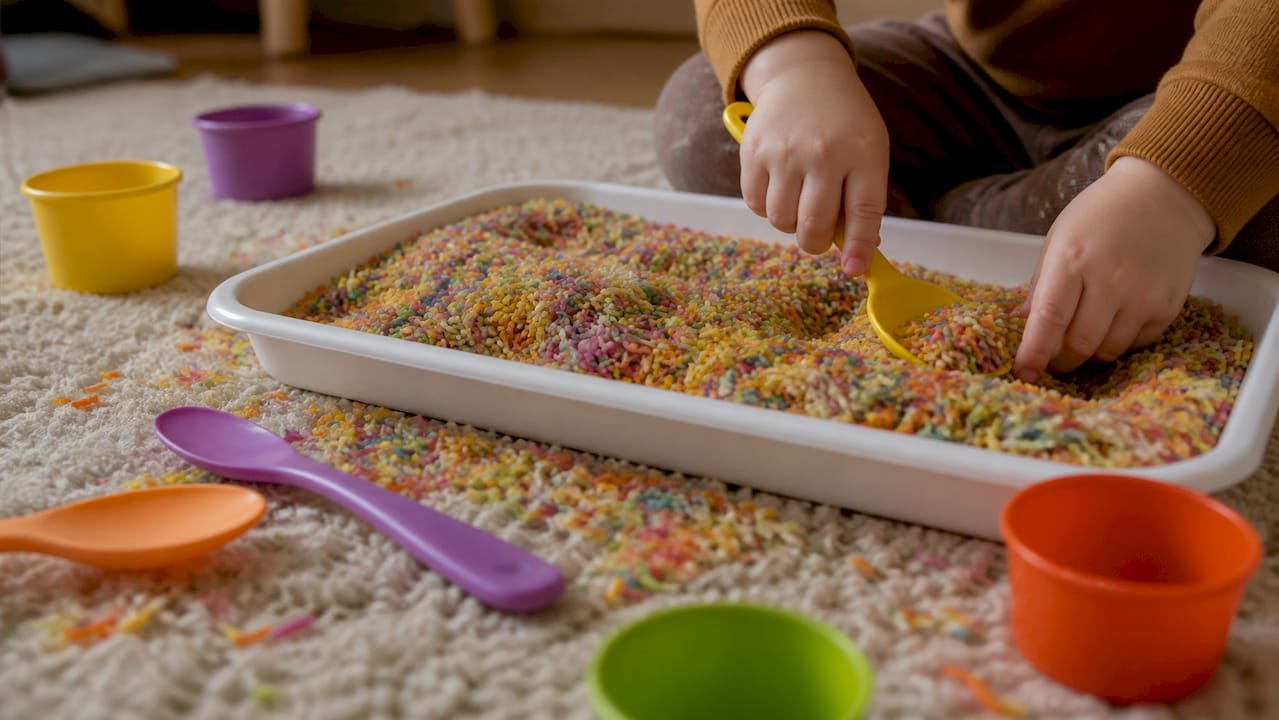
Sensory play is the category to reach for after a stimulating day at nursery. A tray of dry rice with spoons and cups, or a “treasure dump” of safe household objects, gives busy hands something to explore. Active play burns off pent-up energy fast: a pillow obstacle course or five minutes of dancing in the living room. Chores-as-play is the most underused category. Toddlers love “helping” wipe the table or match socks, and this kind of pretend responsibility builds independence.
Several of these map directly onto EYFS learning goals, including Communication and Language, Physical Development, and Personal, Social and Emotional Development, which is worth knowing if your nursery sends home a learning journal. Pathways notes that pretend play in particular supports social-emotional growth and executive-function skills in toddlers between roughly one and three years old.
Quick Toddler Activities You Can Set Up in 1–10 Minutes
Keep this list handy for the days when patience is thin and the clock is ticking toward dinner.
- Muffin-tin sort (18 months+, 1 minute setup): sort buttons or pom-poms by color into a muffin tin. Builds fine motor skills and early math thinking.
- Window drawing (2 years+, 2 minutes): washable markers on a clean window. Wipes off with a damp cloth.
- Washing station (18 months+, 3 minutes): a bowl of soapy water, a sponge, and some plastic toys. Builds focus and cause-and-effect understanding.
- Sticker pages (12 months+, instant): peeling and placing stickers strengthens the pincer grip.
- Cardboard box play (any age, instant): a box becomes a car, a house, or a boat. Pure imagination, zero setup.
- Treasure dump (12 months+, 1 minute): a basket of safe kitchen items to tip out and sort.
- Spray-bottle sidewalk painting (2 years+, outdoors, 2 minutes): water in a spray bottle “paints” the pavement.
- Sensory bag (12 months+, 2 minutes): hair gel and glitter sealed inside a freezer bag, taped shut and reinforced.
Keep small items away from toddlers under three who still mouth objects, and always supervise water play closely, per NHS safety guidance.
Pro Tip: Ask one open-ended question while your toddler plays, like “What should the teddy do next?” It pulls far more language out of a five-minute activity than silent observation does.
Matching Activities to Your Toddler’s Energy After Nursery
A toddler who is rubbing their eyes and whining needs something different than one who is bouncing off the walls. Read the signals first: yawning and clinginess mean low energy, while fidgeting and loud chatter mean high energy.
- Low energy: a sensory bag, sticker page, or a few books read on the sofa. Save these for the 30 minutes before dinner or bedtime.
- High energy: a pillow obstacle course, a two-song dance party, or a lap around the garden. Avoid starting these within an hour of bedtime.
- If your toddler’s mood shifts mid-activity, follow it. Swapping from a dance party to quiet coloring is a sign of good instincts, not a failed plan.
Simple Transition Rituals From Nursery to Home
Predictability does more for toddler behavior after nursery than any single activity. Bright Horizons notes that routines like packing the bag together or a short car chat reduce anxiety during the nursery-to-home switch.
- Car sing-along: the same two or three songs every pickup, so the drive itself signals “home time.”
- Unpack together: hand your toddler their bag and let them help put lunchboxes and water bottles away.
- Two-minute check-in: a cuddle on the doorstep with one simple question, “What made you smile today?”
If you’re running on empty, a one-minute “welcome home” wind-down, just sitting together with a snack and no talking required, counts too.
Pro Tip: Consistency beats a perfect setup every time. A scrappy two-minute ritual repeated daily does more for your toddler’s sense of security than an elaborate activity you only manage once.
Adjusting Activities for Your Toddler’s Age and Stage
A 14-month-old and a 3-year-old need very different versions of the same idea, even when the goal, like building vocabulary, stays the same.
- 12 to 18 months: simplify everything. One-step tasks like dropping pom-poms into a cup, plus naming objects aloud as your toddler touches them, build early vocabulary.
- 18 to 30 months: add language prompts. Ask “What color is that?” during sorting games to stretch word choice and turn-taking.
- 30 to 48 months: increase choice and complexity. Offer two or three activity options and let your toddler pick, which builds independence and decision-making.
One prompt scales across all three stages: “What should we do next?” A younger toddler points, an older one answers in full sentences.
Setup Hacks and Safety Reminders That Save Your Evening
A ready-to-go kit removes the biggest barrier to after-nursery play: decision fatigue when you’re exhausted.
- Stock a busy box with a muffin tin, pom-poms, painter’s tape, stickers, and a washable marker for instant options.
- Try paint-in-a-bag or paint sticks instead of open paint pots to cut cleanup time to almost nothing.
- Lay down a towel or tray under messy activities so cleanup takes seconds, not minutes.
- Rotate toys every few weeks. Novelty holds attention longer than buying anything new, a point Motherly’s screen-free activity guide makes well.
- Check for choking hazards before handing over small items, and never leave water play unsupervised.
Pro Tip: Keep the busy box in the car or by the front door. Half the battle is having supplies within arm’s reach before your toddler even asks.
How Mooshie Moments Fits Into Your After-Nursery Routine
Mooshie Moments was built around exactly this window of the day: tired parent, wired toddler, no time to plan.
- Activities filtered by age, from 6 months to 4 years, so suggestions match your toddler’s actual stage
- Time filters from 1 to 5 minutes, matching the quick-activity list above
- Every idea uses household items already in your home, no shopping required
- A screen-free promise built into every suggestion in the library
- Printable partnership packs for nurseries that want to extend EYFS learning goals into the home
These features cut the setup time that usually kills good intentions at 5 p.m. Nurseries can request the EYFS parent partnership resources to hand out at pickup, giving parents a direct link between classroom learning goals and evening play.
| Feature | Why it helps |
|---|---|
| Age-tailored suggestions | Matches activities to your toddler’s real developmental stage |
| 1 to 5 minute filters | Fits the exact window most parents have after nursery |
| Household-item focus | No extra shopping or prep required |
| Nursery partnership packs | Extends EYFS goals from classroom to home |
Getting the Play-First Approach Right
Most advice on toddler activities overcomplicates the problem. Pinterest boards full of themed sensory bins and color-coded activity trays are lovely in theory, but they solve a problem tired parents don’t actually have. The real barrier after nursery isn’t a lack of ideas. It’s decision fatigue at the exact moment you have the least capacity to make decisions.
What the research actually supports is unglamorous: a muffin tin, two minutes of your undivided attention, and a repeated ritual beat an elaborate setup nearly every time. The NHS guidance on caregiver interaction backs this up directly, and the Bright Horizons point about consistency over perfection should be printed on every parenting app’s homepage.
Where I’d push back on conventional wisdom: stop feeling guilty about repetition. If your toddler wants the same washing-up bowl activity for the fourteenth day running, that’s not a failure of creativity on your part. It’s a toddler doing exactly what toddlers do, which is master something through repetition before moving on. Prioritize the ritual and the five-minute win over the Pinterest-worthy setup, every single time.
— samit
A Faster Way to Fill the After-Nursery Gap
Mooshiemoments solves the exact problem this article has been walking through: you’re tired, your toddler has energy to burn or needs to wind down, and you have five minutes to make a decision. Instead of scrolling for ideas or reaching for a screen, the app hands you an activity already matched to your toddler’s age and how much time you actually have.
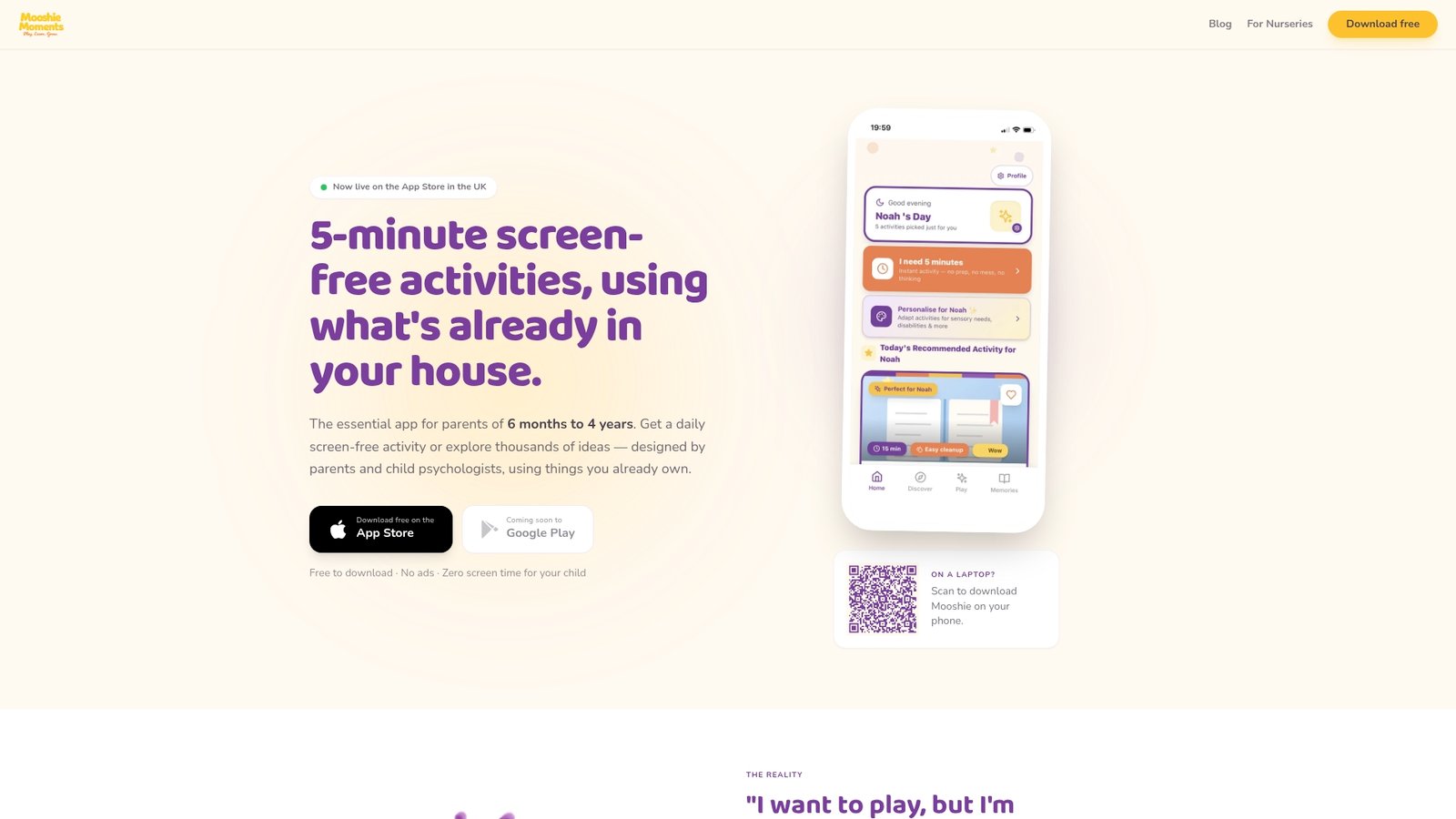
Parents open the app, tap in their available minutes, and get a screen-free suggestion built from things already in the kitchen or toy box. Nurseries can also request the EYFS-aligned home learning partnership to send activity ideas home that reinforce what your toddler is already learning in the classroom. Download Mooshie Moments and set up your first activity filter before your next pickup.
Key Takeaways
Short, screen-free, energy-matched activities paired with a predictable transition ritual reduce meltdowns and support language, motor, and social development after nursery.
| Point | Details |
|---|---|
| Lead with connection | A two-minute check-in or cuddle does more for behavior than any toy. |
| Match energy first | Read whether your toddler is sleepy, hungry, or restless before choosing an activity. |
| Keep a busy box ready | A muffin tin, tape, and stickers remove decision fatigue on tired days. |
| Repeat rituals daily | Consistency in car sing-alongs or unpacking routines builds security faster than variety does. |
| Use Mooshie Moments for instant matches | The app filters age-tailored, screen-free activities by the exact minutes you have free. |
Sources
- 30 creative pretend play ideas for toddlers and kids – Pathways
- Easy screen-free activities for toddlers – Motherly
- Creating quality time after nursery – Bright Horizons
Recommended
More like this
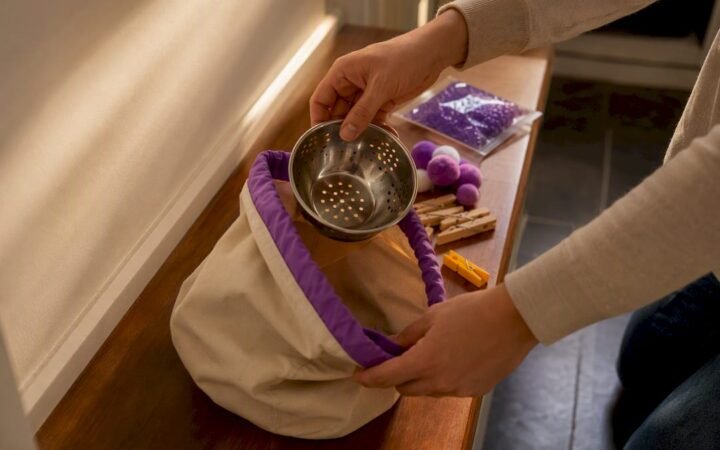
12 Budget Friendly Busy Bag Ideas for Toddlers: Pack in 15 Minutes
12 budget friendly, screen free busy bag ideas for toddlers. Pack a pouch in 15 minutes, rotate to keep interest, and build…
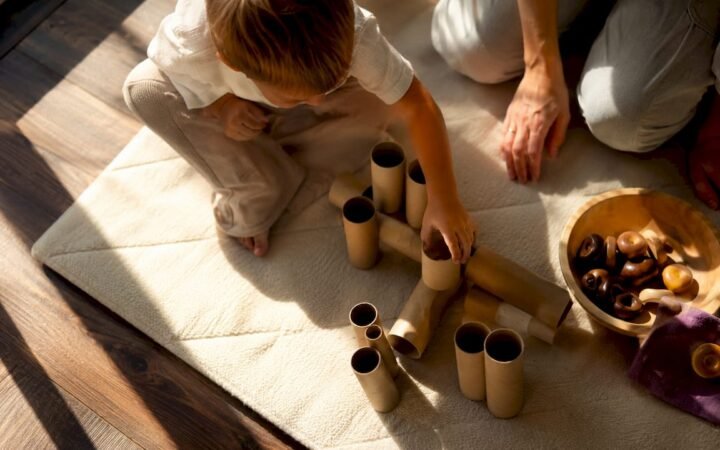
10-Minute Loose Parts Play for UK Toddlers: Toilet-Roll Safety
Start loose parts play in 10 minutes with household items. Follow the toilet-paper-roll safety check, rotate materials, and try quick, low-prep activities...
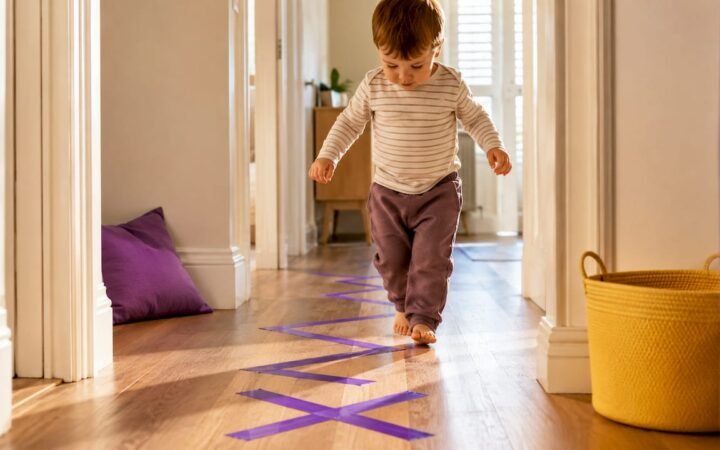
Start in 5 Minutes: Screen Free Rainy Day Activities for UK Toddlers
Quick, screen-free rainy day activities UK parents can start in five minutes. Age-matched, energy-level rotations, low-cost supplies and tidy cleanup tips.