Maths and Counting Activities for Toddlers

SKILLS AND LEARNING · 6 MONTHS TO 4 YEARS

Maths and Counting Activities for Toddlers

Maths activities for toddlers covering sorting, comparing and counting, taken from the Mooshie Moments app. Simple home ideas that build number sense.

  • Free to download
  • No account needed
  • No screen time for your child
QR code to download Mooshie MomentsOn a laptop?
Scan to get Mooshie on your iPhone.
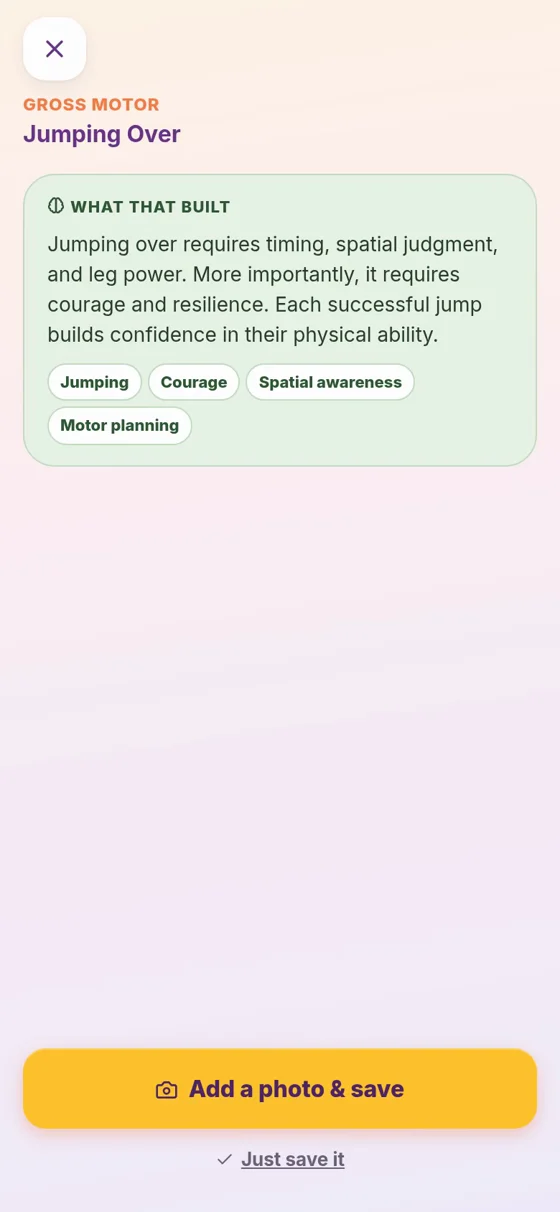
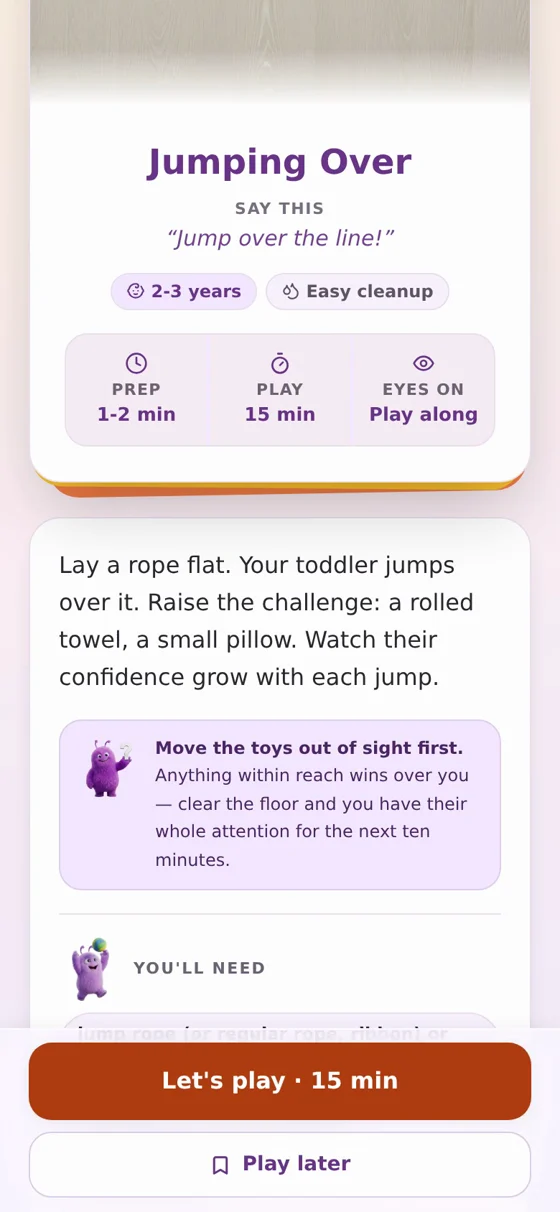
What that built screen showing the skills an activity practisedMooshie activity screen with Say this words to use
11free ideas on this page
5,918activities for 6 months to 4 years
Say thisthe exact words on every activity
0child details uploaded, ever

Maths activities for toddlers start long before numbers, with words like more, big and same. Sorting socks, stacking towers and pouring rice between cups are all maths, and your toddler is already doing plenty of it without either of you calling it that.

Below are eleven maths activities from the Mooshie Moments app for children aged 6 months to 4 years, grouped by the early maths skill they build: sorting, comparing, spatial thinking, and number sense. Each one uses things you already have, takes 10 to 15 minutes, and comes with the exact words to use while you play.

Sorting and matching

1 to 210 minutes

1. Tupperware Lid Match

Mix five containers and their lids together on the floor and let your toddler work out which lid clicks onto which pot. It’s size and shape matching without needing either word. Choose containers and lids too big to fit in a mouth, and check for rough edges first.

You’ll need: five plastic containers and their lids

How to play
  1. Show them one lid clicking into place, saying “Does it fit? Click!”
  2. Pull it off and hand it back for their turn.
  3. Let them try the wrong lid first and feel the mismatch.
  4. Cheer every successful click as they work through the rest.
1 to 210 minutes

2. Lid Finds Home

Line up four containers and scatter the lids nearby. A lid that’s too big wobbles, one that’s too small drops straight through, and your toddler learns the difference through their own hands, with no verdict needed from you.

You’ll need: four plastic containers with matching lids

Say this: “This one fits!” · “Find the lids that fit.” · “It clicked!”
6 to 12 months10 minutes

3. Container Colour Exploration

Line up three coloured containers on a mat and point to each one, naming the colour as you touch it: “Red! Blue! Yellow!” Repeat the same order a few times, then hand one to your baby and swap for another colour once they’ve explored it.

You’ll need: three containers in different colours, a mat

1 to 210 minutes

4. Sock Pair Hunt in Closet

Pull socks from the drawer in clear pairs, mix them in a pile, and ask your toddler to find the sock that matches the one you’re holding up. It’s genuinely useful too, since you get a folded sock drawer out of it.

You’ll need: five to ten pairs of clean socks

Say this: “Can you find the sock that matches this one?” · “Same! Same!”

Comparing: more, less, tall, short

1 to 215 minutes

5. Tall and Short Towers

Build two towers side by side, one short with two blocks and one tall with five or more, and name them as you go. Knock the short one down and rebuild it taller, then ask which one is bigger now.

You’ll need: blocks or stacking cups

How to play
  1. Build a short tower first and say “Short.”
  2. Build a tall one next to it and say “Tall.”
  3. Point between the two and ask “Which is bigger?”
  4. Let your toddler build their own and knock it down.
3 to 415 minutes

6. Measuring Cups

Pour rice or water between measuring cups and count how many small ones it takes to fill the big one. Watching it overflow is half the fun, and half the maths, since “full” turns out to have a limit.

Use unbreakable cups and put a tray underneath to catch any mess, and stay close if you’re using water.

You’ll need: measuring cups in different sizes, rice or water, a tray

Say this: “How many tiny cups fill the big cup?” · “Four little cups make one big cup!” · “Oops, overflow!”
3 to 410 minutes

7. Shoe vs. Hat Survey

Go on a hunt for every shoe and every hat in the house, piling them separately, then draw two columns on paper and mark a tally for each item you found. Compare which pile has more marks without needing to force an exact number.

You’ll need: paper, a pencil, shoes and hats from around the house

How to play
  1. Ask “Do we have more shoes or more hats?” and start the hunt.
  2. Count each pile out loud as you collect: “One shoe, two shoes, three shoes.”
  3. Draw a shoe and a hat at the top of two columns and tally each item.
  4. Compare the columns together: “Which pile has more marks?”

Spatial thinking: in, out, under, hidden

6 to 12 months10 minutes

8. In and Out Tupperware Game

Drop soft items into a container while saying “In it goes!”, then pull them back out with “Out it comes!” Hand your baby a soft item and guide their hand towards the container for their own turn. Every item needs to be bigger than a toilet roll tube, and take the lid off if your baby tries to chew it.

You’ll need: a plastic container, five to six soft items

2 to 310 minutes

9. Which Cup Hides It?

Hide a small toy under one of three cups, shuffle them slowly while your toddler watches, then ask them to choose the right one. The treasure must be too big to fit inside a toilet roll tube, so no buttons, beads, coins or batteries under the cups.

You’ll need: three opaque cups, a treasure too big for a toilet roll tube

Say this: “Watch where the treasure goes.” · “Which cup has the treasure?”
6 to 12 months10 minutes

10. Jug Pour and Refill

Pour water slowly into a cup while your baby watches, show them the full cup, then pour it back into the jug. Repeat the same sequence four or five times, since the predictable pattern is exactly what they’re learning from. Stay within arm’s reach whenever water is out and tip it away as soon as you’re done.

You’ll need: a small jug, two cups, water, a towel

Say this: “Pour, pour, pour.” · “Cup’s full now.” · “And back it goes.”

Getting to know numbers

2 to 315 minutes

11. Number Writing

Draw a large numeral and say it out loud, then draw the matching number of dots next to it and count them together. Work through one to four this way, then ask your toddler to point to a number you name. There’s no need for them to write anything themselves yet, recognising and saying the number is the whole point.

You’ll need: paper, a crayon

Say this: “This is one.” · “One dot, one number.” · “Where’s the number three?”

Maths words to use every day

  • more, less, enough
  • big, small, tall, short
  • full, empty, half
  • same, different, another
  • first, next, last

Hundreds more ideas like these are waiting in the app.

Plus one picked for your child every day, matched to their age and how today is going.

LOVED BY FAMILIES

Parents and experts on Mooshie

“I used to spend 30 minutes looking for an activity on Pinterest, get overwhelmed, and just turn on the TV. Mooshie takes 5 seconds.”
Sarah J.Mum of a 2-year-old
“Finally, an app that tells me to put my phone away. The activities are actually doable with stuff I have in my junk drawer.”
Mark D.Dad of two
“As a pediatric OT, I love that these activities build core developmental skills without feeling like ‘homework’ for parents.”
Dr Emily R.Paediatric occupational therapist
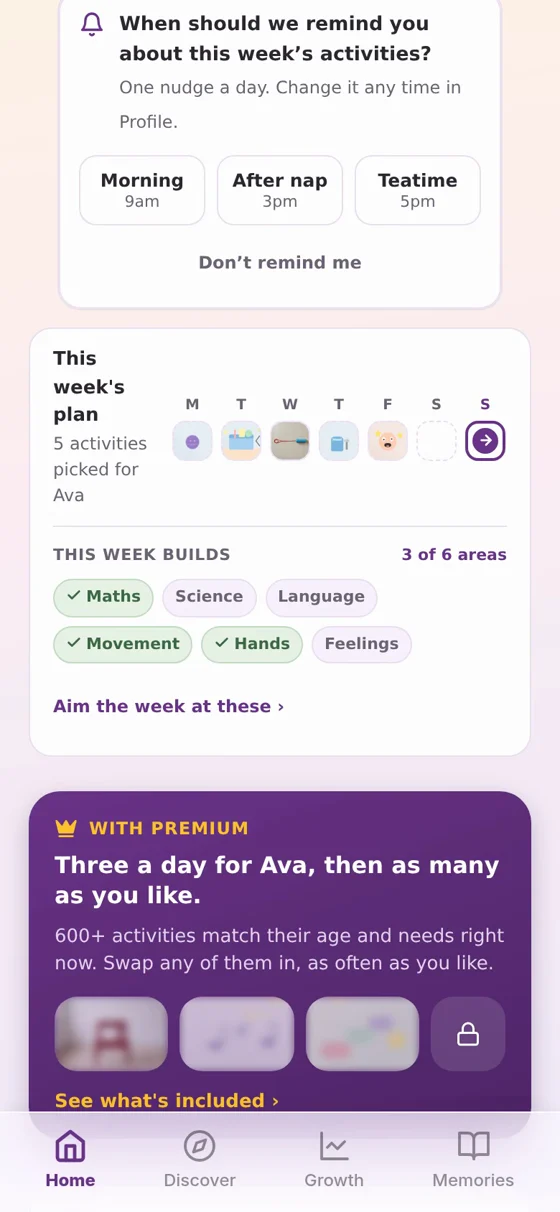
This week's plan showing five activities and the areas they build
HOW MOOSHIE HELPS

How Mooshie builds maths into everyday play

Mooshie’s weekly plan covers six areas, including maths, alongside science, language, movement, hands and feelings, so your child gets a real spread across the week rather than the same kind of play on repeat. Every activity comes with prep, play and “eyes on” times, plus a parent tip and the exact words to say.

  • 5,918 activities for ages 6 months to 4 years, all using things already in the house.
  • Tap “We’re done” after playing to see what skills the activity actually built, then add a photo to save it to Memories.
  • Reminders land at morning, after nap or teatime, whichever suits your day.
  • Try it free: there’s a new idea every day and you never have to sign up.

Your toddler gets you, not the screen. Check the idea in 30 seconds, put the phone down and go and count some socks.

Questions parents ask

What is early years maths at home meant to look like?

It looks like ordinary life: sorting the washing, comparing who has more grapes, or stacking cups until they fall over. Formal counting and number recognition can build on top of this once your child has plenty of hands-on sorting and comparing behind them.

When should my toddler start counting?

Many toddlers start copying number words from around 18 months to 2 years, though understanding what the numbers actually mean often comes later. Counting alongside real objects, one shoe at a time, helps that meaning click into place.

What are good number activities for preschoolers?

Writing and naming numerals, matching a numeral to a set of dots, and simple tallies like the shoe and hat survey above all work well for 3 and 4 year olds, since they connect the symbol to something real they can count.

Do shape activities count as maths?

Yes, matching lids to containers, fitting shapes and noticing that a tower is tall or short are all early geometry and comparison, which sit just as firmly under maths as counting does.

How much maths should a 2 year old be doing?

There’s no set amount. A few minutes of sorting, pouring or stacking scattered through the day, using words like more, less and same, gives plenty of early maths grounding without ever feeling like a lesson.

Mooshie is a play app, not medical advice. If you’re worried about your child’s development, speak to your health visitor or GP.
Make memories. Build skills. Play together.

Your first moment is ready as soon as you tell us their age.

Mooshie MomentsFree on iPhone
Get it free