EYFS Activities at Home: Ideas for All 7 Areas of Learning

SKILLS AND LEARNING · 6 MONTHS TO 4 YEARS

EYFS Activities at Home: Ideas for All 7 Areas of Learning

Confused by EYFS activities from nursery? See simple home play ideas for all 7 areas of learning from the Mooshie Moments app, and start playing today.

  • Free to download
  • No account needed
  • No screen time for your child
QR code to download Mooshie MomentsOn a laptop?
Scan to get Mooshie on your iPhone.
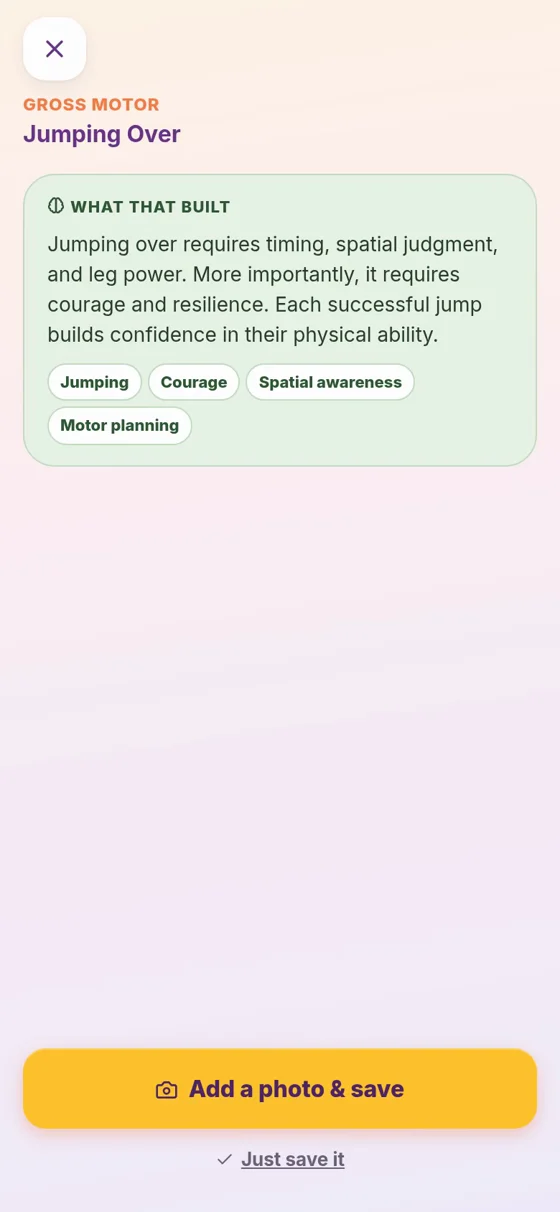
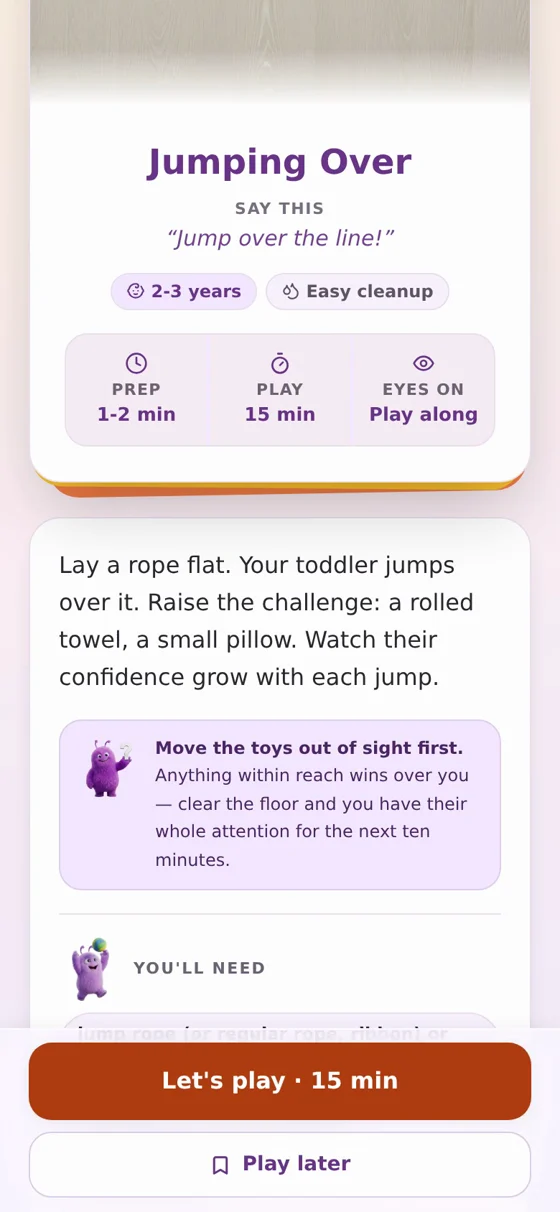
What that built screen showing the skills an activity practisedMooshie activity screen with Say this words to use
14free ideas on this page
5,918activities for 6 months to 4 years
Say thisthe exact words on every activity
0child details uploaded, ever

EYFS activities sound like something that belongs in a nursery classroom, but most of them are already happening on your kitchen floor. If a key worker has mentioned “the seven areas” or you’ve spotted EYFS on a nursery newsletter, this is for you. The Early Years Foundation Stage is simply the framework English nurseries and reception classes use to describe how under-5s learn, and nearly all of it is just play with a label on it.

Below, each of the seven areas is explained in plain English with two activities from the Mooshie Moments app. Every activity uses things you already have, takes 10 to 20 minutes, and comes with the words to say while you play. Written for parents, but useful for childminders and nursery practitioners too.

What EYFS actually means

EYFS is the curriculum used in England for children from birth to age 5. It splits learning into three “prime” areas that everything else builds on, and four “specific” areas that grow out of them.

Communication and Language.

Listening, understanding and talking.

Physical Development.

Moving, balancing and using hands and fingers.

Personal, Social and Emotional Development (PSED).

Feelings, relationships and self-confidence.

Literacy.

Enjoying stories, mark-making and early reading.

Mathematics.

Numbers, counting, shape and pattern.

Understanding the World.

People, places, nature and how things work.

Expressive Arts and Design.

Art, music, imagination and making things.

Nurseries plan for all seven every week, often on a tuff tray. You don’t need to plan anything: a normal day at home usually touches most of them without you trying, and the ideas below show why.

Communication and Language

This is about your child hearing rich language, having conversations and finding their own words, whether or not they’re talking yet.

6 to 12 months5 minutes

1. Sing it with me

Sit facing your baby and sing pat-a-cake, gently clapping their hands together as you go. Add the hand motions and repeat several times. Babies watch your face intently during singing, which is rich early language input.

You’ll need: just your hands

Say this: “Sing it with me!” · “Again!” · “Clap along!”
3 to 4 years10 minutes

2. Roll the magic dice

Make simple story dice by drawing a person, an animal, an object, a place, an action and a silly word on the six faces of a folded paper cube. Roll together and build a story out of whatever lands.

You’ll need: a small box or folded paper, markers, scissors

How to play
  1. Roll the dice and see what comes up: “We got the cat and the house! What does that cat do?”
  2. Build the story from there: “The cat jumps on the house! Then it says purple!”
  3. Do two or three rolls, adding a new line each time.
  4. Finish with “What an adventure! Our dice told an amazing story!”

Physical Development

Gross motor (whole body) and fine motor (hands and fingers) both live here, so a good climbing frame session and a bit of dough rolling count equally.

1 to 2 yearsA few minutes

3. Jump and cheer

Clear a safe space and stand nearby. Every time your toddler takes a step, jump and cheer as if they’ve won an Olympic medal. Give every attempt the same big reaction and help them up if they fall.

You’ll need: open space

Say this: “You did it!” · “You’re walking!” · “So strong!”
3 to 4 years10 minutes

4. Flamingo hop

Show your child hopping on one foot while counting to three, then hand over. Most 3 year olds wobble, and most 4 year olds manage two or three hops.

You’ll need: open space, carpet or grass

How to play
  1. Demonstrate a few hops on your own foot, counting out loud.
  2. Lift their leg for them and say “hop on this one”.
  3. If they fall, say “that means you’re trying” and go again.
  4. Switch feet and celebrate every wobble as much as every landing.

Personal, Social and Emotional Development

PSED covers self-confidence, managing feelings and getting along with others: arguably the area home life practises the most, all day, without anyone calling it learning.

1 to 2 years5 minutes

5. Everybody loves you

At bedtime, sing through the people who love your child, one line at a time, to any gentle tune: “Papa loves Noah, Mummy loves Noah, Nana loves Noah.” Finish by turning the song onto who they are: “Noah is loved, Noah is brave.” End on a whisper and a kiss.

You’ll need: nothing, just a sleepy child

Say this: “Who loves you the most?” · “Noah is loved, Noah is brave.” · “And everybody loves Noah.”
1 to 2 years5 minutes

6. Teddy has breakfast

Sit teddy up with an empty bowl and let your toddler feed him, wipe his mouth and give him a cuddle. Feeding someone else is often a toddler’s very first piece of pretend play.

You’ll need: a soft toy, a bowl and spoon

How to play
  1. Say “Teddy is hungry, give him a spoonful.”
  2. Let them scoop and feed, saying “yum, more please” for teddy.
  3. Wipe teddy’s mouth and finish with a cuddle and “all gone”.

Literacy

Real literacy at this age is mostly about a love of stories and getting hands ready for writing, long before any actual letters appear.

3 to 4 years10 minutes

7. Roll and build a story

The same story dice used for communication and language double as a literacy activity: building a narrative with a beginning, middle and end is early reading comprehension. Ask “what happens next?” to stretch the story further.

You’ll need: the story dice from earlier, or paper cubes

2 to 3 years20 minutes

8. Rolling for writing hands

Roll dough flat together with a rolling pin, then press a cutter down firmly and lift it straight up to check the shape underneath. Repeat with a new cutter. The pinch, press and pull here builds the hand strength that holding a pencil will need later.

You’ll need: playdough, a rolling pin, cutters

Mathematics

Maths in the early years is spatial reasoning, counting and noticing patterns, not sums on paper. For more ideas along these lines, see our maths activities at home page.

3 to 4 years15 minutes

9. Treasure map quest

Draw a winding map of your house with landmarks (sofa as tree, cupboard as treasure chest) and walk the route together, checking the map at each stop, until they find hidden treasure at the end. Matching a symbol on paper to a real object in the room is genuine spatial reasoning.

You’ll need: paper and markers, a small toy or snack, stickers

1 to 2 years15 minutes

10. Walk the line

Lay a straight line of tape about three metres long on the floor and let your toddler walk along it, one foot in front of the other. Counting their steps out loud and noticing when they wobble off and step back on builds an early sense of sequence and position, both maths skills in disguise.

You’ll need: masking tape

Understanding the World

This covers people, communities, nature and the wider world: anything your child notices outside their own body.

3 to 4 years20 minutes

11. Upside-down light

Poke a tiny hole in the base of an empty canister, cover the open end tightly with wax paper and tape, then point the hole at a bright window. A small, upside-down image appears on the paper, a real camera obscura made from your recycling. Ask “why do you think it flipped upside down?”

You’ll need: an oatmeal canister, a pin, wax paper, tape

6 to 12 months10 minutes

12. Grass under their hands

Sit your baby on a blanket outside and brush a blade of grass across their palm, watching their face as the texture registers. Simple as it sounds, this kind of outdoor texture exposure is early nature learning and helps babies feel comfortable at parks and beaches later.

You’ll need: a blanket, a patch of grass

Say this: “Tickly grass!” · “Soft on your hand.” · “Outside is busy.”

Expressive Arts and Design

Art, music, dance and imaginative play sit here, so the least “educational-looking” play often belongs in this box.

2 to 3 years15 minutes

13. Rainbow spray art

Add a few drops of food colouring to water in a spray bottle, show them a test spray on paper laid on a tray, then hand it over: “you try, squeeze the trigger.” The trigger squeeze builds hand strength, and the splatter pattern is entirely theirs.

You’ll need: a spray bottle, water, food colouring, paper

2 to 3 years15 minutes

14. Tape road town

Lay a masking tape road across the floor with a shoebox garage at one end, then hand over the cars and stop directing. What starts as a road quickly turns into an invented story of crashes, parking and traffic jams, all led by your child.

You’ll need: masking tape, toy cars, a shoebox

Say this: “You drive!” · “Park it in the garage!” · “Crash! Now fix it.”

A week that touches all seven areas

Monday:

tape road town (Expressive Arts) plus jump and cheer (Physical).

Tuesday:

everybody loves you at bedtime (PSED) plus grass texture (Understanding the World).

Wednesday:

pat-a-cake (Communication) plus dough rolling (Literacy).

Thursday:

treasure map (Maths) plus flamingo hop (Physical).

Friday:

pinhole camera (Understanding the World) plus story dice (Communication and Literacy).

You don’t have to plan it this precisely. A week of ordinary play, some outdoors, some with dough, some at bedtime, usually covers most of the seven areas on its own.

Hundreds more ideas like these are waiting in the app.

Plus one picked for your child every day, matched to their age and how today is going.

LOVED BY FAMILIES

Parents and experts on Mooshie

“I used to spend 30 minutes looking for an activity on Pinterest, get overwhelmed, and just turn on the TV. Mooshie takes 5 seconds.”
Sarah J.Mum of a 2-year-old
“Finally, an app that tells me to put my phone away. The activities are actually doable with stuff I have in my junk drawer.”
Mark D.Dad of two
“As a pediatric OT, I love that these activities build core developmental skills without feeling like ‘homework’ for parents.”
Dr Emily R.Paediatric occupational therapist
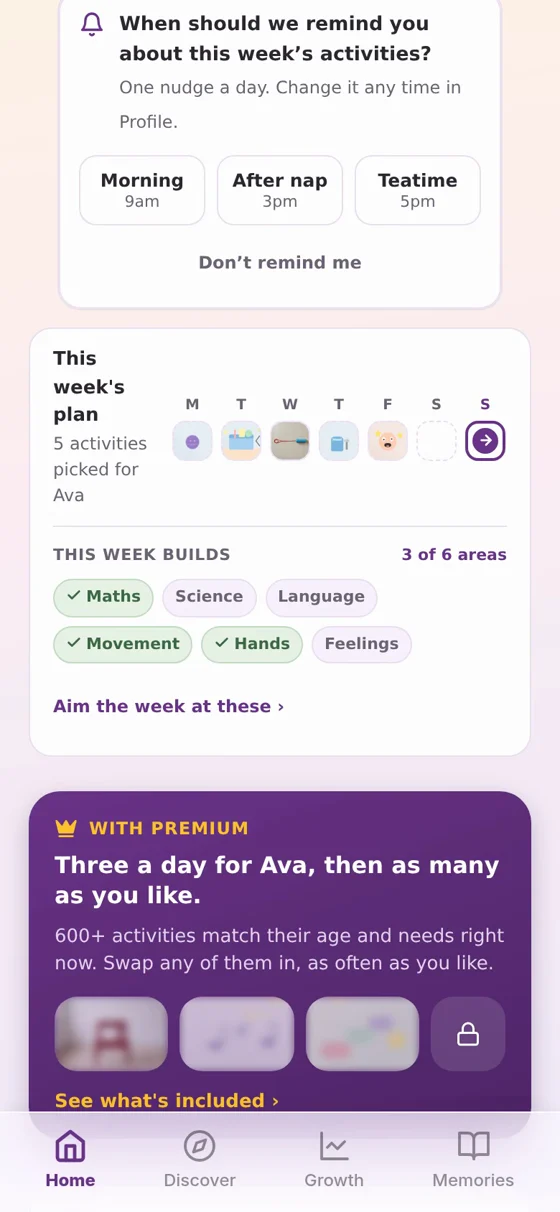
This week's plan showing five activities and the areas they build
HOW MOOSHIE HELPS

How Mooshie helps you cover the seven areas without planning

Mooshie Moments has 5,918 activities for children aged 6 months to 4 years, all using things already at home, and picks one for your child’s age and stage each day. Its weekly plan tracks five activities across six areas (maths, science, language, movement, hands and feelings), which map loosely onto EYFS without being an identical copy of it.

  • Say this phrases and timings for every activity, including prep, play and “eyes on” time, so you know what you’re signing up for before you start.
  • Tap “We’re done” and see “What that built”, showing the skills practised in language a health visitor or key worker would recognise.
  • Add a photo to save the moment to Memories.
  • Download it free and get one new idea each day without creating an account.

The app is built for you, the adult in the room. Check the idea in 30 seconds, put the phone away and play. Your child’s details never leave your phone.

Questions parents ask

Do I need to follow the EYFS areas at home?

No. Nurseries and reception classes plan against EYFS to track progress across a class. At home, you’re simply playing, and ordinary play naturally covers several areas at once.

What are the 7 areas of learning in EYFS?

Communication and Language, Physical Development and PSED are the three prime areas. Literacy, Mathematics, Understanding the World and Expressive Arts and Design are the four specific areas built on them.

Are these activities suitable for 2 year olds as well as preschoolers?

Yes. Each activity is labelled with an age range from 6 months to 4 years, and most can be simplified or stretched further as needed.

My nursery mentioned “areas of learning” on a report. What should I do at home?

Very little needs to change. If an area is flagged, lean slightly more towards activities that support it, but ordinary daily play already contributes to all seven.

Is this useful for childminders and nursery staff too?

Yes. Several of these are simple, resource-light ideas used in settings, and translate well into “home learning” suggestions for families.

Mooshie is a play app, not medical advice. If you’re worried about your child’s development, speak to your health visitor or GP.


Make memories. Build skills. Play together.

Your first moment is ready as soon as you tell us their age.

Mooshie MomentsFree on iPhone
Get it free