Fine Motor Activities for Toddlers and Preschoolers

SKILLS AND LEARNING · 6 MONTHS TO 4 YEARS

Fine Motor Activities for Toddlers and Preschoolers

Fine motor activities for toddlers, grouped by skill from squeezing to pre-writing, with a simple grip timeline. From the Mooshie Moments app, free to try.

  • Free to download
  • No account needed
  • No screen time for your child
QR code to download Mooshie MomentsOn a laptop?
Scan to get Mooshie on your iPhone.
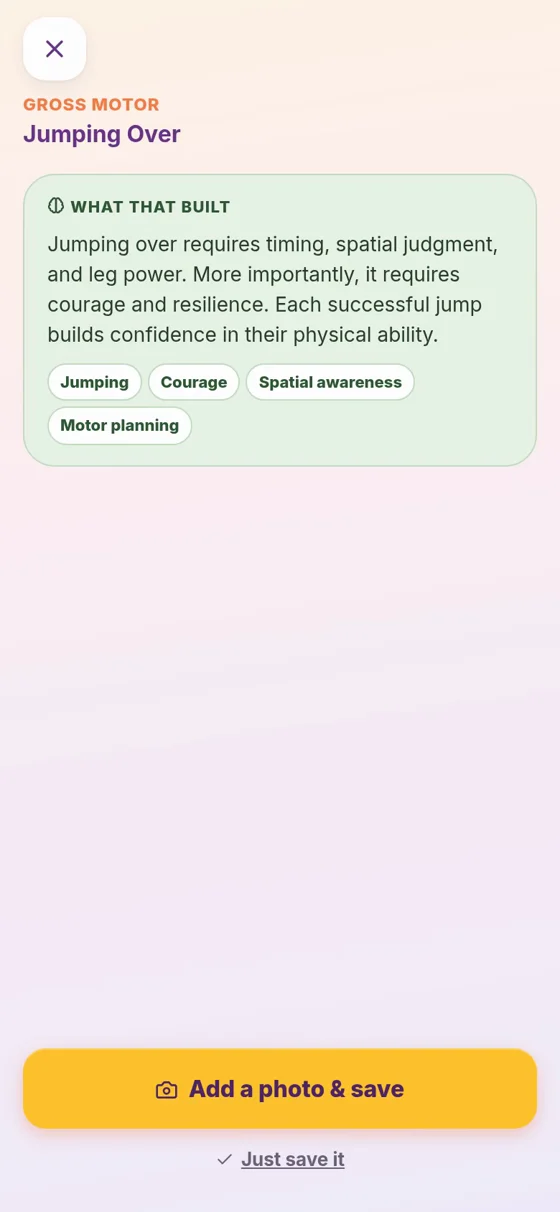
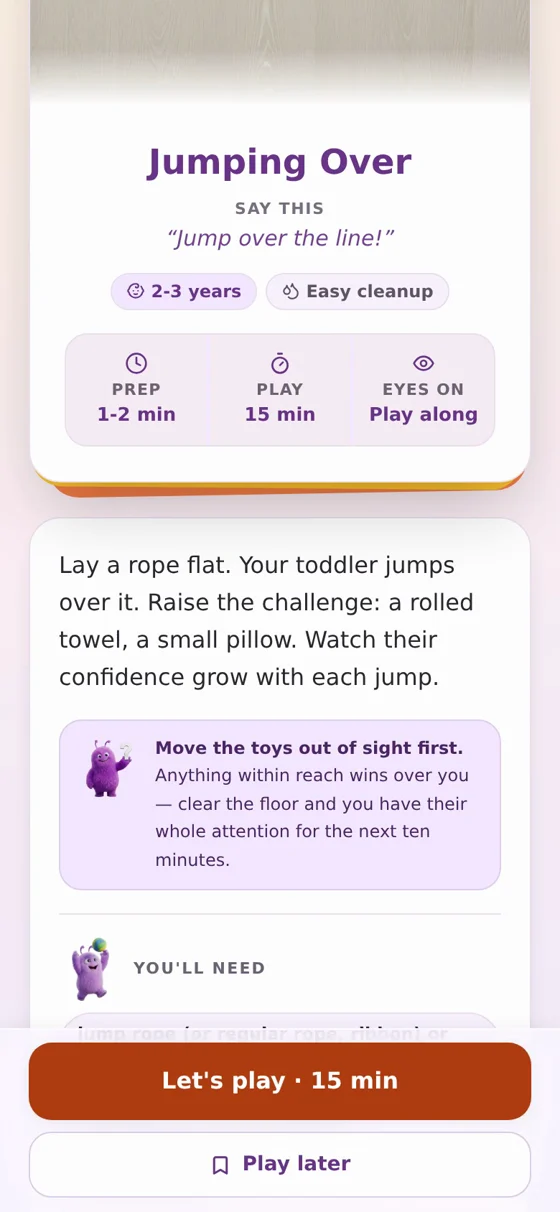
What that built screen showing the skills an activity practisedMooshie activity screen with Say this words to use
12free ideas on this page
5,918activities for 6 months to 4 years
Say thisthe exact words on every activity
0child details uploaded, ever

Fine motor activities build the small, precise hand movements your child will eventually use to hold a pencil, and they start years before any writing happens. Long before school, there’s a whole progression going on in tiny hands: from clumsy whole-hand grabbing to the fine, controlled pinch that will one day hold a crayon steady. You can support every stage of it with things already in your kitchen drawer.

Below, activities from the Mooshie Moments app are grouped by the skill they build, from strengthening to the pincer grip to the movements that lead straight into pre-writing, which pairs well with our phonics and early literacy page. Each one uses ordinary household items, takes 10 to 25 minutes, and comes with the exact words to say while you play.

The grip progression, in plain terms

Hands don’t go from “can’t hold anything” to “can write” in one leap. Roughly speaking:

Palmar grasp (from birth).

The whole hand closes around an object, like gripping a rattle in a fist.

Raking grasp (around 6 to 9 months).

Fingers rake small objects towards the palm rather than picking them up individually.

Pincer grasp (around 9 to 12 months).

Thumb and first finger work together to pick up small items, like a piece of food or a button.

Tripod grip (around 2 to 4 years, developing further after).

Thumb, first and middle finger hold a tool, such as a crayon, with the other two fingers curled in support.

Several nurseries track this under Physical Development, one of the seven EYFS areas of learning. This is a loose guide, not a schedule. Children move through it at their own pace, and plenty of ordinary play, not just “fine motor activities” labelled as such, builds towards it.

Squeeze and strengthen

Skill it builds: hand and grip strength, the foundation every later stage relies on. Many of these pair well with a bit of playdough squeezing too.

1 to 2 years15 minutes

1. Tupperware tower

Tip a pile of containers and lids onto the floor and let your toddler stack, nest and match them. Real kitchen sorting, disguised as chaos.

You’ll need: assorted plastic containers and lids

How to play
  1. Dump the containers and lids on the floor together.
  2. Model matching a lid to its container: “this lid fits this one!”
  3. Build a tower, then knock it down.
  4. Try nesting small inside medium inside large.
1 to 2 years15 minutes

2. Toy tool bench

Show your toddler how to tap pegs with a toy hammer, then swap to a screwdriver for a different sound and the same satisfaction. Gripping and controlling a tool, even a toy one, builds real hand strength.

You’ll need: toy tools and a bench with pegs

Say this: “Give that peg a tap.” · “Steady hammer, right on top.” · “Hold the handle end, not the middle.”
2 to 3 years15 minutes

3. Spray bottle clean-up

Hand over a spray bottle for real cleaning. The trigger squeeze is genuinely hard work for small hands at first, and that resistance is exactly what builds strength.

You’ll need: a small spray bottle with water, a cloth

How to play
  1. Show how the trigger works once yourself.
  2. Hand it over: “you twist this.”
  3. Let them try, fail and try again without stepping in too quickly.
  4. Wipe together once the surface is sprayed.

Pinch and pick

Skill it builds: the pincer grip, thumb and finger working together on small items.

2 to 3 years20 minutes

4. Big bead threading

Show your child how the lace goes through the hole and the bead slides down, then let them thread at their own pace. Their aim will be off at first, and that’s the whole point of practising.

Use beads too big to fit inside a toilet-roll tube and a lace under 25cm, never tied into a necklace, and hang the finished string out of reach when you’re done.

You’ll need: chunky beads at least 5cm across, a lace no longer than 25cm

Say this: “Thread the bead!” · “The string goes through!” · “You threaded it!”
2 to 3 years10 minutes

5. Sticky note mending

Tear sticky notes in half, jumble the pieces, and challenge your toddler to match and press the halves back together on a door. Finding and pinching two small halves together is precise, satisfying pincer work.

You’ll need: sticky notes in a few colours, a flat surface

How to play
  1. Tear several notes in half and mix up the pieces.
  2. Say “these are all broken, let’s mend them.”
  3. Hold up one half and ask “can you see its other half?”
  4. Press each matched pair onto the door together.
3 to 4 years15 minutes

6. Spaghetti excavation

Bury small toys in cooled cooked spaghetti and let your child dig them out by hand. Pulling noodles apart strand by strand uses exactly the same finger isolation that later helps with buttons and zips.

You’ll need: cooked and cooled spaghetti or pasta, a tray, small toys to hide

Say this: “Your hands are digging tools.” · “You found a dinosaur, what’s next?”

Twist and turn

Skill it builds: wrist rotation and two hands working together, doing different jobs at once.

1 to 2 years15 minutes

7. Zipper practice

Show your toddler the slider at the bottom of a big zip and let them pull it all the way up, then all the way down, again and again. Simple, repetitive, and hugely satisfying at this age.

You’ll need: a large zippered jacket or pouch

How to play
  1. Start the zip at the bottom.
  2. Pull it up slowly together.
  3. Pull it back down.
  4. Repeat, letting them take over fully once they’ve got the idea.
6 to 12 months10 minutes

8. String pulling puzzle

Lay a string-tied toy in front of your baby and let them work out that pulling brings the toy closer. It’s a genuine puzzle the first time it clicks.

Keep the string well under 30cm, never looped, and stay within arm’s reach throughout.

You’ll need: a soft toy tied to a string 30 to 45cm long

Say this: “Look, the toy is on a string.” · “What happens if you pull?” · “It’s coming closer!”
2 to 3 years15 minutes

9. Hide and hunt, their turn

Let your child do the hiding this time, tucking toys into a sock, a zip-up purse or a pot with a lid while you cover your eyes. Working the fiddly opening and closing of each hiding place is real twist-and-turn practice, wrapped in a game they control.

You’ll need: small toys, fiddly hiding places like a sock, a zipped purse, a lidded pot

3 to 4 years20 minutes

10. First tying steps

Before bows come wraps: winding a lace round a chair leg and pulling it tight teaches the grip a knot needs, before adding a single crossover knot with the same three words every time.

Keep laces off the floor and away from necks at all times.

You’ll need: a long lace, a chair leg, a rolled tea towel

How to play
  1. Wrap the lace twice round a chair leg and pull both ends tight.
  2. Hand it over: “your turn, wrap it round, then pull hard.”
  3. Show one crossover knot, saying “over, under, pull” every time.
  4. Practise on a rolled tea towel and count how many knots they manage.

Pre-writing

Skill it builds: the tripod grip and controlled hand movement that later holds a pencil.

3 to 4 years15 minutes

11. Paper weaving

Cut slits across a sheet of paper and let your child weave coloured strips over and under, pushing each one into place before adding the next. The over-under rhythm and the pinch-and-pull needed to feed the strip through both feed directly into pencil control.

You’ll need: paper with slits cut, coloured paper strips

Say this: “Turn it slowly…” · “Hold it steady!” · “Pinch and pull!”
3 to 4 years15 minutes

12. Scissor cutting practice

Show your child how to hold child-safe scissors and open and close the blades before attempting a straight line. Progress to curves once straight lines feel comfortable.

Use blunt-tip, child-safe scissors only and supervise every cut.

You’ll need: child-safe scissors, paper with lines drawn on

How to play
  1. Show the grip: thumb up, fingers through the other hole.
  2. Practise opening and closing the blades without paper first.
  3. Cut along a thick, straight line.
  4. Move on to gentle curves once straight lines are steady.

Hundreds more ideas like these are waiting in the app.

Plus one picked for your child every day, matched to their age and how today is going.

LOVED BY FAMILIES

Parents and experts on Mooshie

“I used to spend 30 minutes looking for an activity on Pinterest, get overwhelmed, and just turn on the TV. Mooshie takes 5 seconds.”
Sarah J.Mum of a 2-year-old
“Finally, an app that tells me to put my phone away. The activities are actually doable with stuff I have in my junk drawer.”
Mark D.Dad of two
“As a pediatric OT, I love that these activities build core developmental skills without feeling like ‘homework’ for parents.”
Dr Emily R.Paediatric occupational therapist
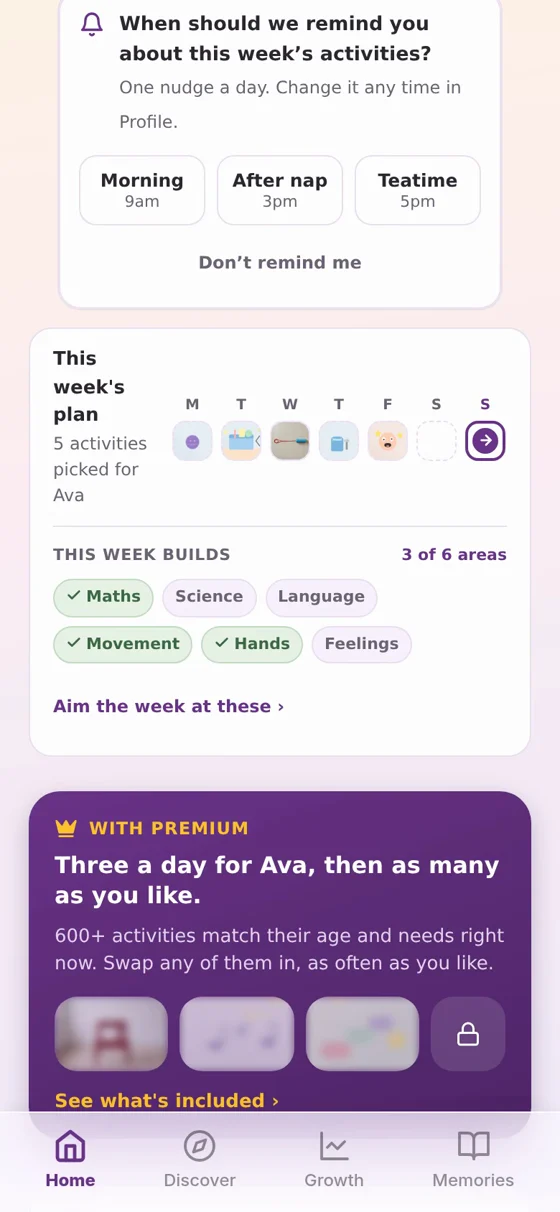
This week's plan showing five activities and the areas they build
HOW MOOSHIE HELPS

How Mooshie helps build fine motor skills

Mooshie Moments has 5,918 activities for children aged 6 months to 4 years, all using things already at home, and picks one for your child’s age and stage each day. Every activity shows the “say this” phrases and prep, play and eyes-on times upfront, so you know exactly what you’re setting up for.

  • Tap “We’re done” and the app shows “What that built”: the skills your child just practised, hands included.
  • A weekly plan of five activities tracks six areas including hands, so fine motor practice sits inside a wider week of play, not on its own.
  • Additional needs can be added, including motor delay, and activities your child can’t yet do are filtered out with adaptation tips added where relevant.
  • It costs nothing to begin: a daily activity, no login, and Android coming soon.

It’s a parent’s tool that gets out of the way quickly. Check the idea in 30 seconds and put the phone away before you start.

Questions parents ask

At what age should fine motor activities start?

You can start from birth with reaching and grasping, though most of the deliberate pinching, threading and tool-holding activities become achievable from around 12 to 18 months onwards.

What are fine motor skills examples for a 2 year old?

Threading large beads, stacking and nesting containers, using a spray bottle trigger, and pulling a zip up and down are all realistic examples for this age. None of them need to look like “learning” to count.

My 3 year old still holds a crayon in a fist. Should I worry?

Grip development varies a lot between children, and many 3 year olds are still moving towards a tripod grip. Activities that strengthen hands and build pinching, like the ones above, help this along naturally. If you have ongoing concerns, mention it to your health visitor.

Are pre-writing activities different from fine motor activities?

Pre-writing activities are a subset of fine motor skills, specifically the ones that build the grip and control needed for holding a pencil, like weaving and cutting. Broader fine motor work, like threading or squeezing, supports pre-writing without being writing practice itself.

How much fine motor practice does a toddler need each day?

There’s no fixed amount. A single 10 to 20 minute activity most days is a reasonable target, and plenty of everyday tasks like doing up a zip or helping with a spray bottle count just as much as a dedicated activity.

Mooshie is a play app, not medical advice. If you’re worried about your child’s development, speak to your health visitor or GP.

Make memories. Build skills. Play together.

Your first moment is ready as soon as you tell us their age.

Mooshie MomentsFree on iPhone
Get it free