Preschool Activities at Home for 3 to 4 Year Olds

SCREEN-FREE PLAY · AGES 3 TO 4

Preschool Activities at Home for 3 to 4 Year Olds

Preschool activities at home shaped around a real day: movement, learning games, quiet time and helping. Ten ideas with scripts, free to try today.

  • Free to download
  • No account needed
  • No screen time for your child
QR code to download Mooshie MomentsOn a laptop?
Scan to get Mooshie on your iPhone.
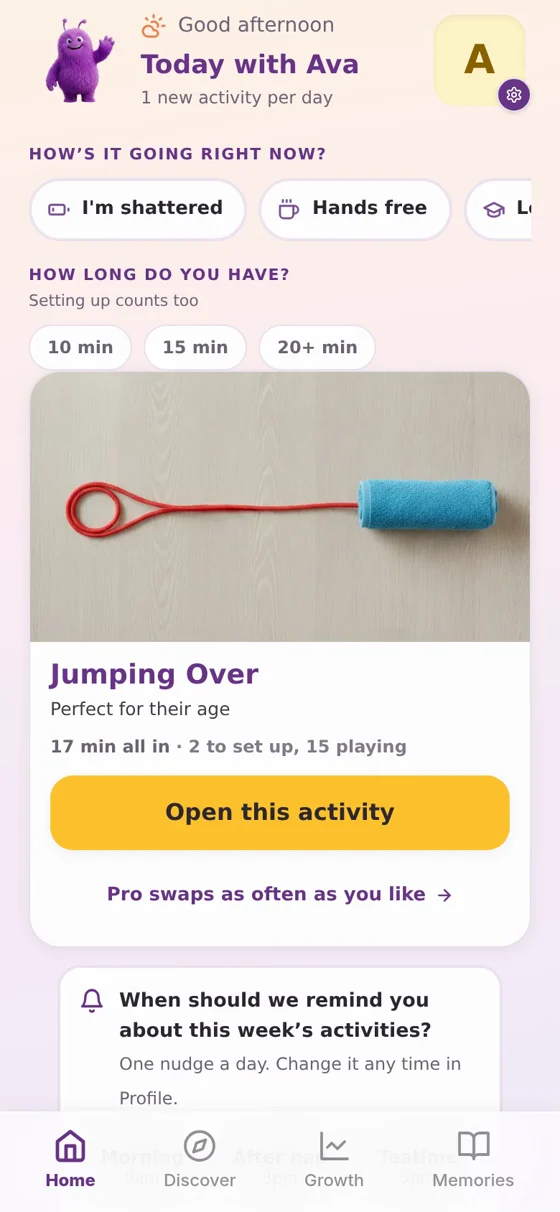
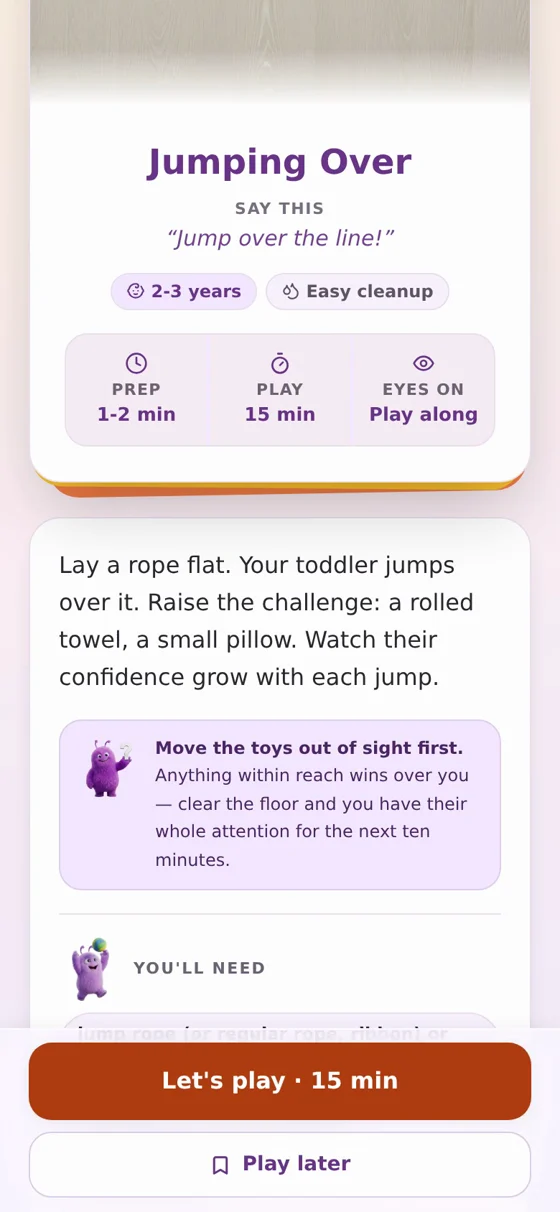
Mooshie Today screen with mood and time options and today's activityMooshie activity screen with Say this words to use
10free ideas on this page
5,918activities for 6 months to 4 years
Say thisthe exact words on every activity
0child details uploaded, ever

Preschool activities at home work best when they follow the shape of a real day, not a worksheet. Your 3 to 4 year old is bursting with big questions, bigger imagination, and a growing need to feel useful. Give that energy somewhere to go and the day runs smoother for both of you.

Below is a preschool day at home built around ten activities from the Mooshie Moments app, for children aged 3 to 4. Each one uses things you already have in the house, takes 5 to 20 minutes, and comes with the exact words to say, so you never have to plan from scratch.

What a 3 to 4 year old is actually working on

This is the age of “why” asked on a loop, pretend worlds that last all afternoon, and a fierce need to do things themselves. Underneath the noise, your child is practising real skills: holding a pencil grip, waiting a turn, naming a feeling, working out what’s fair. A preschool day at home does not need a timetable pinned to the wall. It needs a loose rhythm: move first, think in the middle, create after lunch, help at teatime. Here is what that looks like.

Morning: move first

Preschoolers wake up with a full tank. Spending it on big movement before anything quieter makes the rest of the day calmer.

3 to 420 minutes

1. Living Room Concert

Lay a blanket down as the stage and sit on the sofa as the entire audience. Your child picks a song and performs, dancing, twirling or freestyling however they like.

You’ll need: any music, a blanket for a stage

How to play
  1. Lay the blanket flat and say “This is your stage, and I’m the whole crowd.”
  2. Let them choose the song and play it.
  3. Clap on the beat, gasp at the moves and cheer loudly at the end.
  4. Shout for an encore. Repeat with a new song if they want one.
Say this: “You’re the headliner tonight, pick a song” · “Step onto your stage!” · “One more, one more!”
3 to 415 minutes

2. Fast and Slow Speed Feels

Moving fast, then moving as slowly as possible, teaches your child to feel speed in their own body, not just hear the word for it.

You’ll need: open space

How to play
  1. Say “Let’s move FAST” and walk or run together.
  2. Stop and ask how that felt.
  3. Say “Now SLOW” and move as slowly as you can, exaggerating every step.
  4. Ask which was faster and which was slower. Try it with claps or a song if they want more.
3 to 410 minutes

3. Wind Speed Tester

Tape a streamer to a stick to build a “wind detector” and take it outside to see how wind strength changes from spot to spot.

You’ll need: a paper streamer or ribbon, tape, a stick, outdoor space

How to play
  1. Tape the streamer to the stick and ask what they think will happen outside.
  2. Go outdoors and hold it up somewhere open.
  3. Move to a sheltered corner, then near a tree, comparing how much the streamer moves each time.
  4. Ask whether the wind feels gentle or wild in each spot.

Mid-morning: learning games

Once the fidgets have burned off, this is a good window for activities that ask for a bit of focus. These work well alongside the ideas on STEM activities for toddlers and preschoolers and maths and counting activities if you want more for this slot.

3 to 415 minutes

4. Binoculars Builder

Taping two cardboard tubes together and decorating them turns into real binoculars for a “safari” around the garden or living room.

You’ll need: two toilet roll tubes, tape, string, markers, stickers

How to play
  1. Tape the two tubes together side by side.
  2. Decorate with markers and stickers.
  3. Punch a hole either side and thread string through for a neck strap.
  4. Head off on safari, spotting birds, cats or “animals” out of the window.
3 to 410 minutes

5. Mud Painting Outside

Mixing dirt and water in a tub and using sticks as brushes is full-body sensory play. It works well as a calming outlet if the morning has been a bit wild.

You’ll need: dirt, water, sticks, a tub

How to play
  1. Mix dirt and water together in a tub outside.
  2. Paint a fence, tree or stone with hands or sticks.
  3. Let them decide what to decorate next.
  4. Hose down hands and tools when finished.
3 to 415 minutes

6. Fair Division Practice

Splitting something between two plates and checking whether it’s fair is real maths, practised by hand rather than being told the answer.

You’ll need: playdough or snacks to divide

How to play
  1. Say “We need to share this out fairly” and give them the job.
  2. Ask “Is that the same on both sides?”
  3. Let them move a piece across if it isn’t, and check again.
  4. Once it’s even, enjoy the result together.

After lunch: quiet and creative

Energy naturally dips after lunch. This is the slot for anything messy, reflective or slow.

3 to 415 minutes

7. Cornstarch Dry Painting

Spread cornflour on a tray, add a few drops of food colouring, and let your child “paint” with fingers straight into the powder. There’s no wrong way to do it, which makes it a genuinely calm activity.

Let them explore freely, follow their lead, and step in only if you need to top up the powder or colour.

You’ll need: cornflour, food colouring, a shallow tray

3 to 43 minutes

8. Feelings In The Mirror

Standing at the mirror together and moving slowly from one feeling face to another helps your child connect a word to what their body is doing.

You’ll need: a mirror

How to play
  1. Start on your happiest face and hold it.
  2. Count slowly to five while moving to a sad face together.
  3. Stop halfway and ask what that in-between face is.
  4. Hand the counting over to them for the next pair of faces.
3 to 45 minutes daily

9. Thankful Jar Slips

A small jar that fills up over a month with one good thing a day gives your child a simple way to notice what went well, not just what went wrong.

You’ll need: a jar, paper slips, a marker

How to play
  1. Pick a jar together and call it “our thankful jar”.
  2. Each evening, ask what made them happy today.
  3. Write it on a slip, read it back, then drop it in.
  4. Once a month, tip them all out and read them together.
Say this: “What made you happy today?” · “Look how full it’s getting” · “Nothing good today? We can write that too.”

Teatime: real jobs, real hands

Preschoolers want to help. Give them a genuine task with a clear start and end, and it does double duty as fine motor practice, which also feeds into early literacy and phonics activities later on.

3 to 45 minutes

10. Peg The Tea Towel

Squeezing a peg open uses the same grip strength needed to hold a pencil, and pegging along an edge takes both hands working together.

You’ll need: clothes pegs, a tea towel

How to play
  1. Hang the towel over a chair and say “Peg them along the edge.”
  2. Count each peg out loud as it goes on.
  3. Ask them to try one with their other hand.
  4. Once it’s full, race to pull them all off again.

Hundreds more ideas like these are waiting in the app.

Plus one picked for your child every day, matched to their age and how today is going.

LOVED BY FAMILIES

Parents and experts on Mooshie

“I used to spend 30 minutes looking for an activity on Pinterest, get overwhelmed, and just turn on the TV. Mooshie takes 5 seconds.”
Sarah J.Mum of a 2-year-old
“Finally, an app that tells me to put my phone away. The activities are actually doable with stuff I have in my junk drawer.”
Mark D.Dad of two
“As a pediatric OT, I love that these activities build core developmental skills without feeling like ‘homework’ for parents.”
Dr Emily R.Paediatric occupational therapist
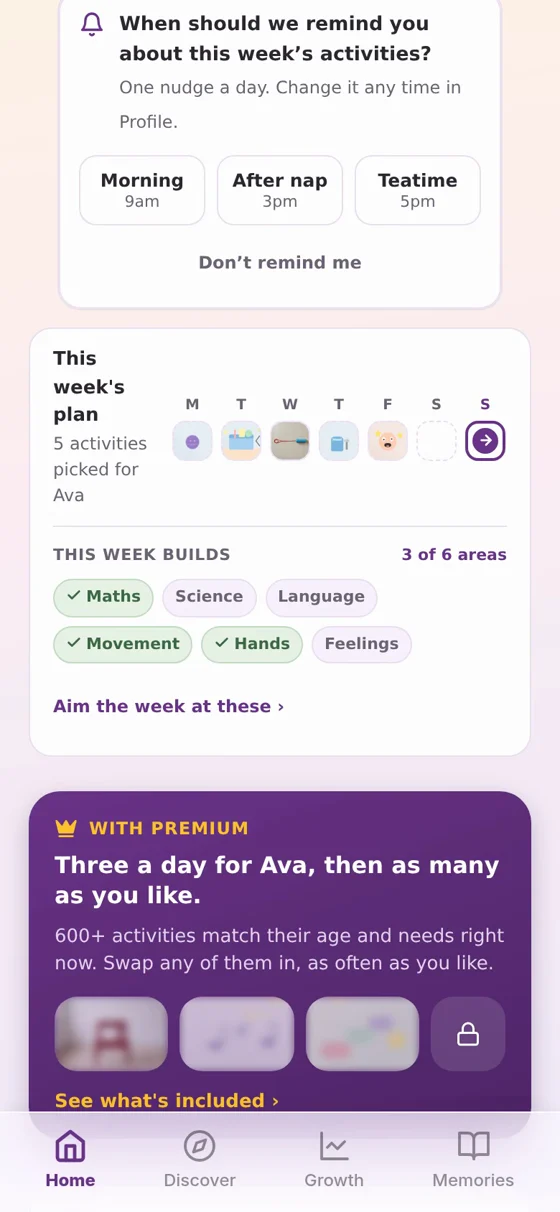
This week's plan showing five activities and the areas they build
HOW MOOSHIE HELPS

How Mooshie helps with a preschool day

Mooshie picks one activity a day suited to your child’s age and stage, and asks how much time you’ve got: 10, 15 or 20 minutes plus setting up. Every activity comes with “Say this” phrases so you’re never guessing what to say next, and a parent tip alongside it.

  • A weekly plan across six areas. The app builds five activities a week spanning maths, science, language, movement, hands and feelings, with reminders at morning, after nap or teatime, so a full preschool week happens without you planning it.
  • Tap “We’re done” and see what it built. After each activity, Mooshie shows the skills your child just practised, and you can add a photo to save it to Memories.
  • 5,918 activities from 6 months to 4 years, all using things already at home.
  • No account needed: download free and get one new activity a day.

Once you’ve read it, the phone has done its job. You check the idea in thirty seconds and put the phone away to play.

Questions parents ask

How long should a preschool activity at home last?

Most of these run 5 to 20 minutes, which suits a preschooler’s attention span better than a long block of time. Follow their lead: if they want to keep going, let them, and if they’ve had enough, stop while it’s still fun.

What preschool learning activities matter most at this age?

Pretend play, real conversation, movement and hands-on tasks like pouring, cutting and building all matter more than worksheets at 3 to 4. Formal letters and numbers come later; the groundwork is language, fine motor strength and confidence.

My preschooler won’t sit still for anything. Is that normal?

Very much so. Many 3 to 4 year olds need to move before they can settle. Starting the day with big movement, as above, often makes quieter activities easier later on.

Do I need to buy resources for preschool activities at home?

No. Everything above uses things most homes already have: cardboard tubes, a tea towel, playdough, pegs. Mooshie’s activities are built the same way, always using things already in the house.

Are these activities suitable for nursery-aged children too?

Yes. Nurseries and preschool settings often build their day around the same ideas: movement, small group games, creative time and helping with real jobs. Practitioners can find group-friendly versions of many of these ideas on our nursery, daycare and childminder activities page.

Mooshie is a play app, not medical advice. If you’re worried about your child’s development, speak to your health visitor or GP.


Make memories. Build skills. Play together.

Your first moment is ready as soon as you tell us their age.

Mooshie MomentsFree on iPhone
Get it free