10 Simple STEM Activities Toddlers Will Actually Love
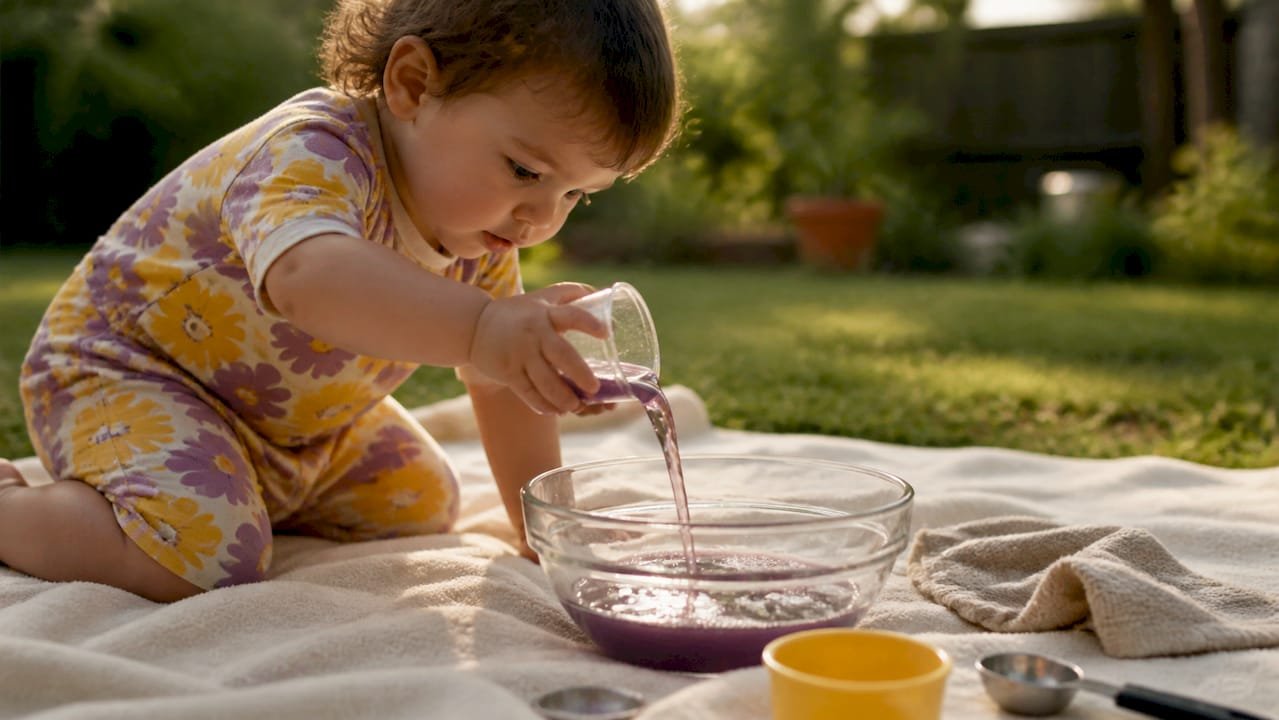
Here are 10 simple, low-prep STEM activities for toddlers you can run at home today with items already in your kitchen or recycling bin. Try oobleck, a ramp race, a bubble investigation, or a magnet hunt to cover science, engineering, and early math in one afternoon. Grab a bowl, a few cups, and five minutes, and you’re ready to start.
- Oobleck (non-Newtonian fluid play)
- Ramp races with toy cars
- Sink-or-float boat building
- Magnet exploration
Quick stat: Zero to Three’s Problem Solvers curriculum packs 22 math activities and 22 science and engineering activities into one free download built for toddlers aged 30 to 48 months.
Key Takeaways
Simple household-item STEM activities work best when caregivers act as co-explorers and adapt materials and questions to a toddler’s exact age.
| Point | Details |
|---|---|
| Start with what you own | Cornstarch, foil, pipe cleaners, and magnets cover science, engineering, and math without a single purchase. |
| Adjust by age, not by activity | Strip activities down for 12 to 18 months and add prediction questions by age 3 to 4. |
| Ask questions, don’t lecture | Open questions like “what do you think will happen?” build stronger problem-solving than giving answers. |
| Safety scales with mess | Food-safe ingredients, large parts only, and constant supervision apply to every wet or small-object activity. |
| Mooshie Moments personalizes it | The app matches activities like these to your toddler’s age and your available time, screen-free. |
Table of Contents
- Simple STEM Activities Toddlers Can Try Today
- How Do You Run Toddler STEM Play Without the Stress?
- Why Does Play-Based STEM Work So Well for Toddlers?
- Frequently Asked Questions
- Sources
Simple STEM Activities Toddlers Can Try Today
Each of these activities uses things you already own. Set them up on a towel or tray, expect some mess, and let your toddler lead the exploration while you ask a question or two along the way.
-
Oobleck (cornstarch and water). Mix 2 cups cornstarch with 1 cup water in a shallow tub, following the ratio Famly uses for its toddler recipe. Let your child squeeze it, punch it, and watch it turn liquid then solid again. Ask: “What happens when you hit it fast versus slow?” Learning outcome: cause and effect, sensory processing. Age tips: 1 year olds explore with fingers only under supervision; 2 year olds add spoons; 3 to 4 year olds predict outcomes before testing. Safety: cornstarch is food safe, but keep it away from mouths and off slippery floors.
-
Ramp races. Prop a cardboard box lid or baking tray against a cushion to make a ramp. Roll different toy cars, balls, or bottle caps down it. Learning outcome: force, motion, and comparison. Age tips: toddlers under 2 just push and watch; older toddlers race two objects and guess the winner. Safety: check for small parts that are choking hazards before you start.
-
Sink-or-float boat building. Fold aluminum foil into small boat shapes and test them in a basin of water, using the same testing approach Science Buddies recommends for buoyancy experiments. Add pennies or pebbles one at a time until the boat sinks. Learning outcome: buoyancy and weight capacity. Age tips: younger toddlers float pre-made shapes; 3 to 4 year olds design and rebuild their own. Safety: supervise near any water, even a shallow bowl.
-
Shadow play. Shine a torch or use sunlight against a wall and let your toddler move objects or their own hands to make shadows. Learning outcome: light, opacity, and spatial awareness. Age tips: babies watch and reach; older toddlers try to guess what shape makes which shadow. Safety: none beyond normal supervision.
-
Bubble experiments. Dip pipe cleaners bent into squares, triangles, or stars into a bubble mix and blow. Learning outcome: surface tension and shape exploration. Age tips: toddlers under 2 watch you blow; older ones try shaping the wands themselves. Safety: supervise closely if using small bubble wands near younger toddlers.
-
Beads on pipe cleaners. Thread large beads onto pipe cleaners, sorting by color or counting aloud as you go. Learning outcome: early math, sorting, and fine motor control, the same small-tool skill practitioners tie to later technology use, as noted in Zero to Three’s coaching guidance. Age tips: 1 year olds use jumbo beads only; 3 to 4 year olds sort by two categories at once. Safety: beads are a choking hazard for children under 3, so use oversized beads or swap in cereal loops.
-
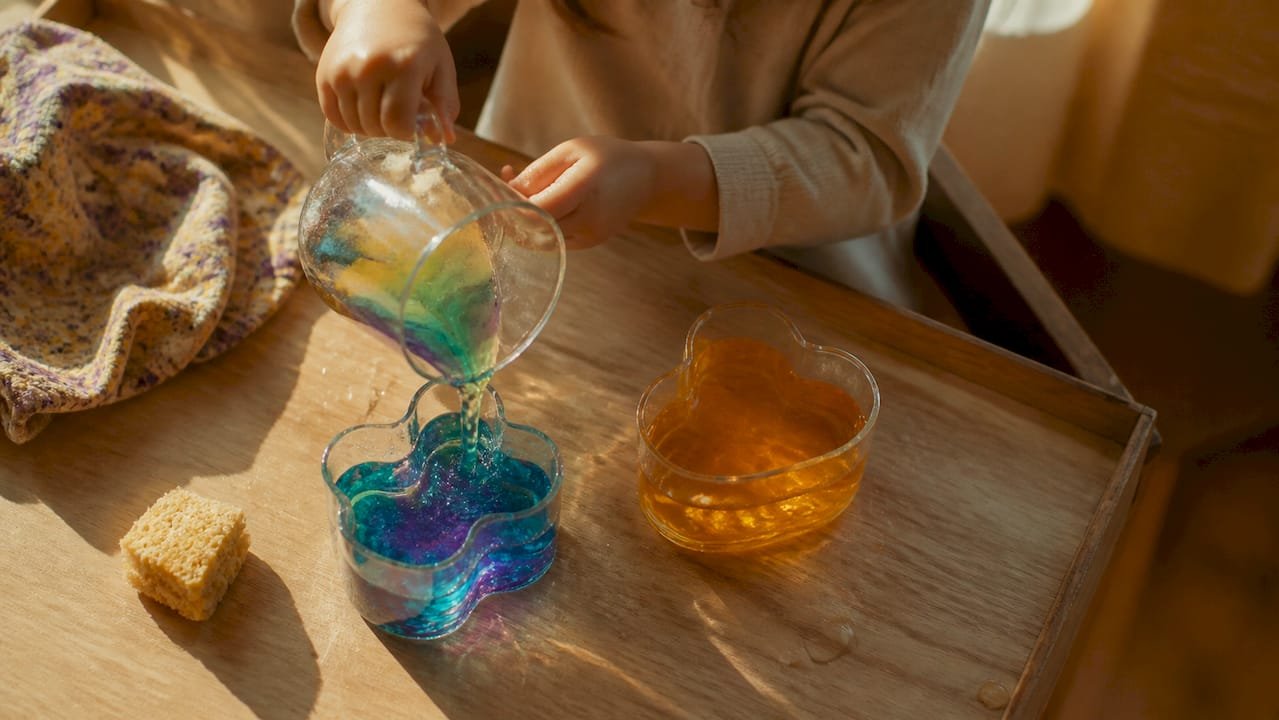
Walking water. Fill alternating cups with colored water and plain water, then bridge them with folded paper towels, mirroring the setup Famly describes for color diffusion. Watch color travel between cups over an hour. Learning outcome: capillary action and patience. Age tips: younger toddlers watch; older ones predict which color will appear next. Safety: food coloring can stain, so use old clothes or an apron.
-
Building with blocks. Stack blocks, cups, or empty boxes into towers and knock them down together. Learning outcome: balance, gravity, and engineering basics. Age tips: 1 year olds stack two or three items; 3 to 4 year olds build bridges or enclosures. Safety: avoid heavy or glass items in a toppling tower.
-
Magnet exploration. Give your toddler a magnet and a tray of mixed objects, some magnetic and some not, and let them sort by what sticks. Learning outcome: early scientific classification. Age tips: supervise 1 and 2 year olds closely since small magnets are a swallowing risk; 3 to 4 year olds can test predictions independently. Safety: use large magnets only, never small or pellet-style ones.
-
Nature walks and planting seeds. Plant a bean in a cup or head outside for a short bug hunt, counting what you find — some of the best things to do with family near me that extend toddler STEM learning into the outdoors. Learning outcome: observation, life cycles, and early counting. Age tips: younger toddlers touch soil and leaves; older toddlers track plant growth over days. Safety: wash hands after handling soil or bugs.
Pro Tip: Keep a small “STEM tray” of pipe cleaners, cups, and a magnet ready in a kitchen drawer, so any five minutes of downtime can turn into a science moment without a fresh trip to the cupboard.
How Do You Run Toddler STEM Play Without the Stress?
The adult’s job is to be a co-explorer, not a lecturer. Sit at your toddler’s level, ask open questions like “What do you think will happen?”, and resist the urge to jump in with the answer, an approach Zero to Three’s research links to stronger problem-solving skills.
A prepared environment does most of the heavy lifting. Before you start, gather:
- A low table or tray to contain mess
- Damp cloths within reach for spills
- Small containers, plastic pipettes, and scoops sized for little hands
- Larger substitutes for any choking-risk items (jumbo beads, big magnets)
Adjust by age rather than by activity. For 12 to 18 months, strip activities down to pure sensory exploration and skip small parts entirely. At 2 years, add simple sorting or one-step instructions. By 3 to 4 years, introduce prediction questions and let your child attempt setup themselves.
Cleanup can be part of the lesson. Hand your toddler a cloth and count the items you put away together; sequencing tidy-up steps builds the same early classification skills as the activity itself, a point echoed in SCRIPT-NC’s family STEM guidance.
Pro Tip: Turning off your phone for these ten minutes matters more than any material on the list. Toddlers notice a distracted co-explorer fast.
For messy, food-based experiments, stick to food-safe ingredients like cornstarch, flour, or dyed water, and never leave a toddler unattended near even shallow water.
Why Does Play-Based STEM Work So Well for Toddlers?
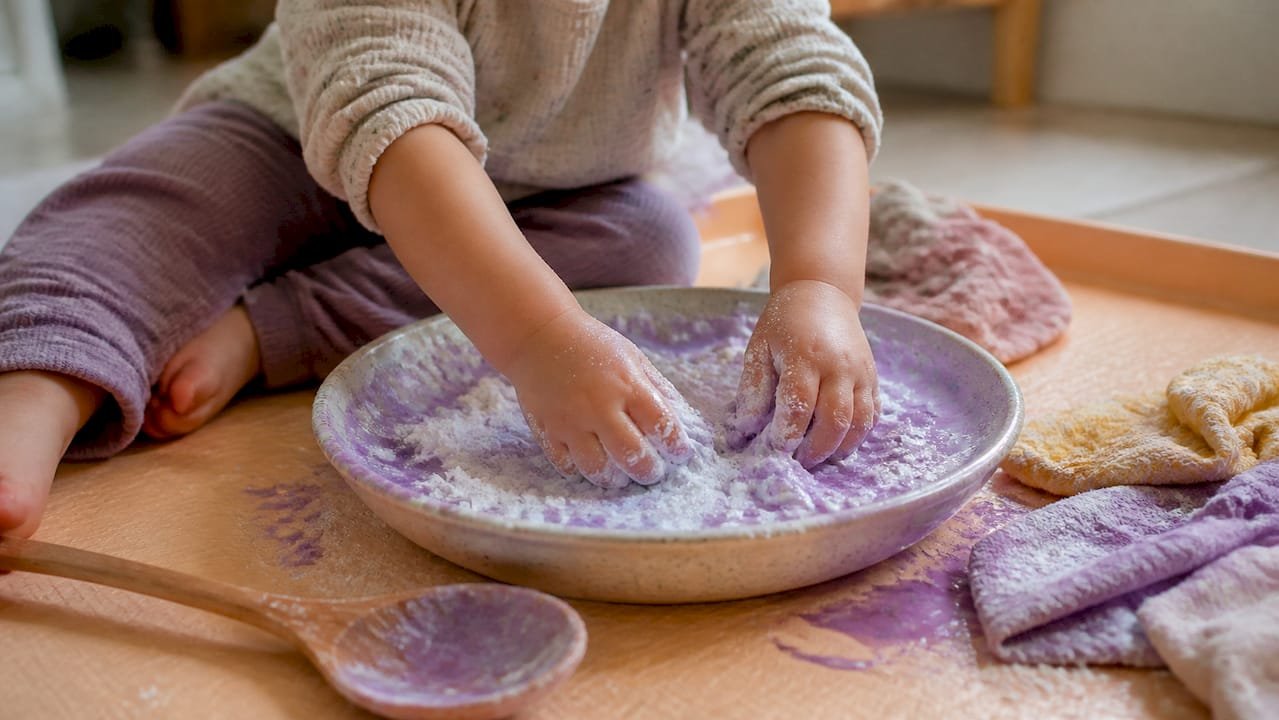
Play-based STEM builds early math and problem-solving skills more reliably than worksheets, according to Zero to Three’s guidance, which favors movement-rich learning over paper-and-pencil instruction. Museum-based research backs this up too.
- Everyday materials like blocks, cups, and magnifiers work as well as specialist kits, per the Boston Children’s Museum STEM guide.
- Repetition and failure are part of the process. Toddlers build spatial reasoning by testing the same ramp or boat shape over and over.
- Framing activities around real life, like sink-or-float in the bath or counting steps to the garden, helps abstract ideas stick.
During any activity, focus on three things: what your toddler observes, what they predict will happen next, and how many times they want to repeat it. Zero to Three’s free Problem Solvers curriculum is a solid next download if you want a structured set of 44 activities to pull from.
What surprised me most about toddler STEM play
Toddlers don’t need a lesson plan. They need a willing adult, a few household items, and permission to repeat the same experiment ten times in a row without being rushed to the “next” thing. That repetition is the actual learning, not a delay of it. Mooshie Moments builds its activity suggestions around exactly that idea: short, screen-free play that respects how toddlers actually learn.
How Mooshie Moments makes this even easier
Mooshie Moments turns lists like this one into activity suggestions matched to your toddler’s exact age and however many minutes you have free, whether that’s two or twenty. Instead of guessing which of the ten ideas above suits an 18 month old versus a 3 year old, the app hands you one that fits right now, with a simple coaching tip attached.
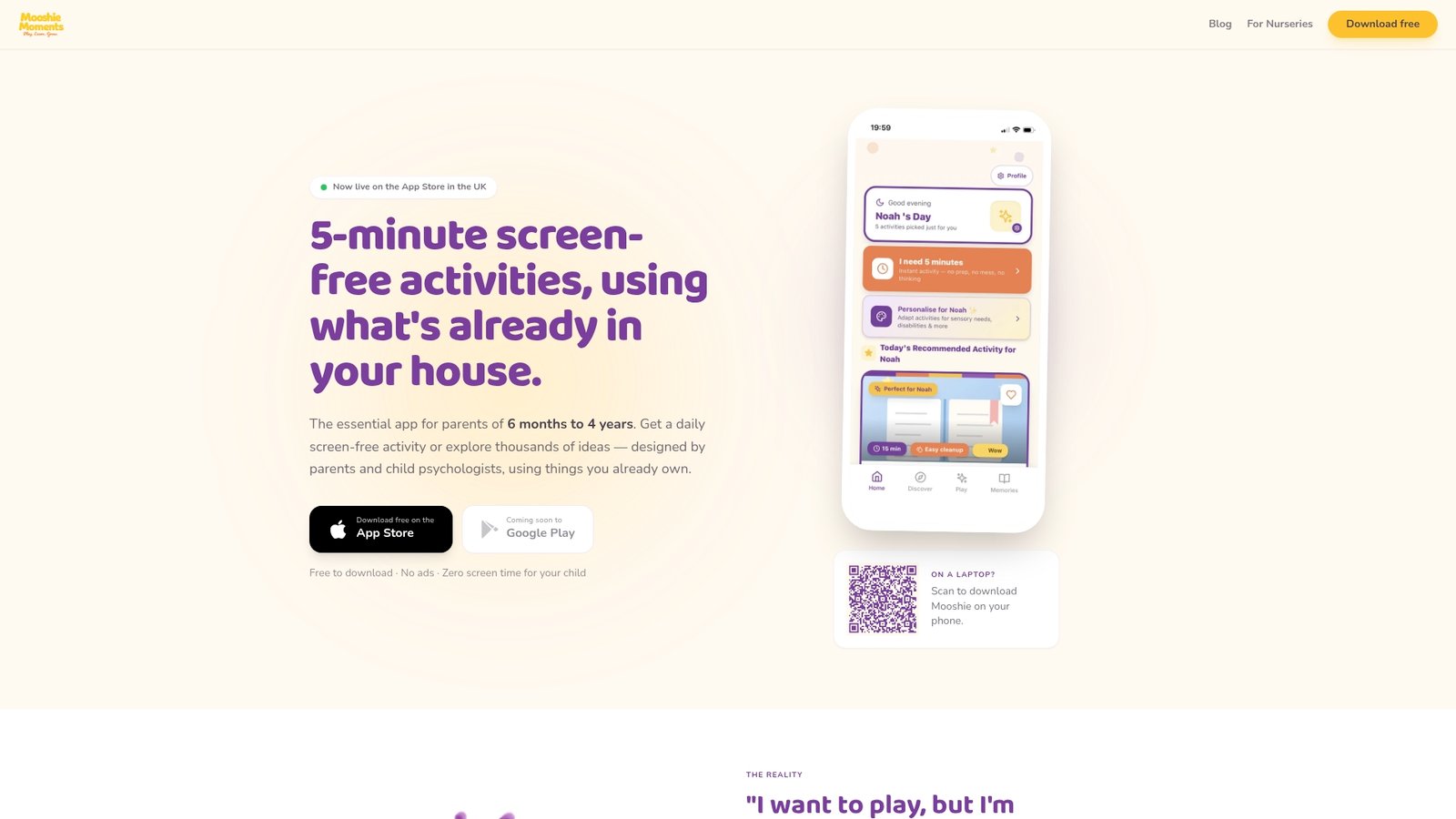
Nurseries and early years settings can access the same activity library through the Home Learning Partnership, which includes printable resources aligned with EYFS goals and ready-made packs for parent engagement. Parents at home can start with the free Mooshie Moments app and get a tailored activity in under a minute.
Frequently Asked Questions
What age should toddlers start STEM activities?
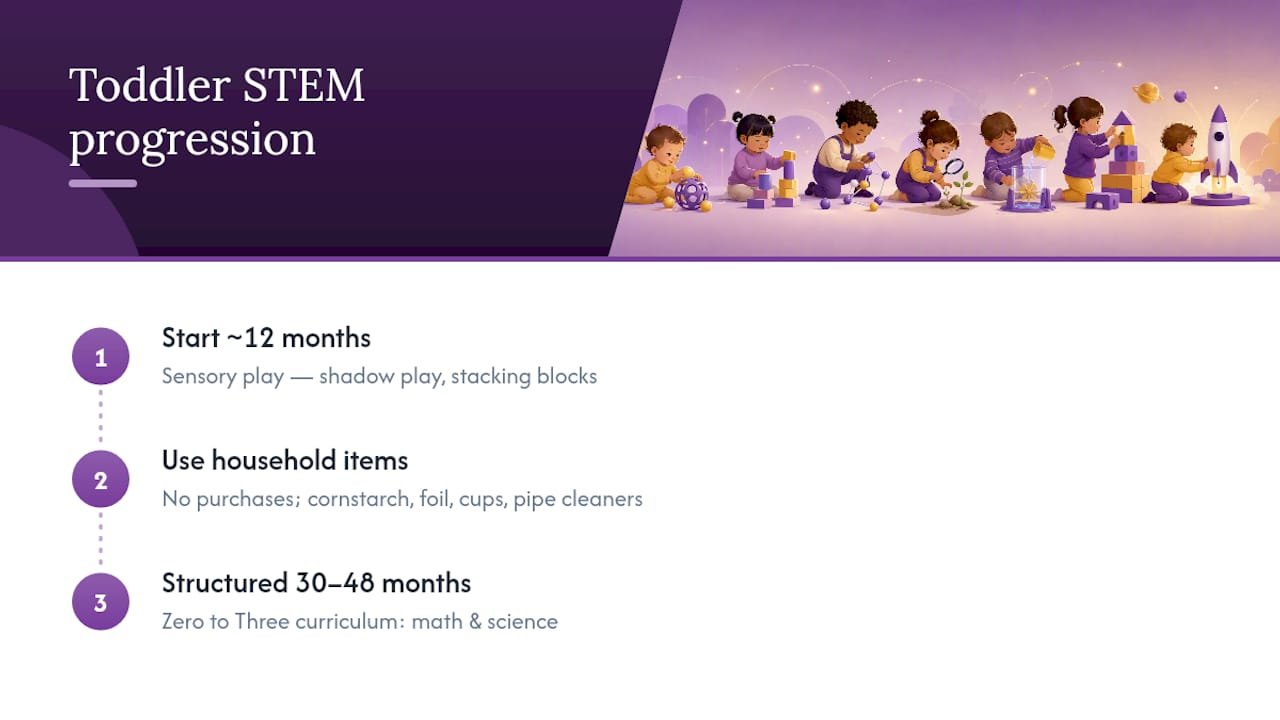
Toddlers can start simple sensory-based STEM play from around 12 months, with activities like shadow play or stacking blocks. Zero to Three’s Problem Solvers curriculum targets 30 to 48 months specifically for structured math and science activities.
Do I need to buy anything for toddler STEM activities?
No. Every activity in this list uses household items like cornstarch, foil, cups, and pipe cleaners. Museum-based research confirms everyday materials work as well as specialist kits for early STEM learning.
How long should a STEM activity last for a toddler?
Follow your toddler’s lead. Some activities hold attention for two minutes, others for twenty, especially when a toddler wants to repeat the same test several times, which is part of how they learn.
Are messy STEM activities safe for toddlers?
Yes, when you stick to food-safe ingredients like cornstarch and dyed water, supervise constantly near any liquid, and swap small parts for larger, choking-safe alternatives.
Where can I find more free toddler STEM activities?
Zero to Three’s Problem Solvers curriculum is a free download with 44 activities, and the Mooshie Moments app offers age-matched, screen-free suggestions based on how much time you have available.
Sources
Recommended
More like this

Five Minute Routine Activities to Help Speech Delay in UK Toddlers
Quick, routine based activities UK parents can use in 5–15 minutes to support a toddler with speech delay. Evidence backed techniques and…
Three Minute Mess Free Sensory Play For UK Parents
Quick, reusable sensory activities UK parents can set up in minutes. Sealed bags, sticky wall art, safety checks, storage tips, and Mooshie…
10 Quiet Bin Ideas UK Parents Can Build in 5 Minutes
Practical, EYFS-aligned quiet-bin ideas UK parents can assemble in five minutes. Includes 10 ready bins, a five-bin rotation, safety checks, and quick...