Getting Ready for Nursery: Pre-Nursery Activities

HELP FOR HARD MOMENTS · AGES 1 TO 4

Getting Ready for Nursery: Pre-Nursery Activities

Pre nursery activities to settle your toddler in weeks before day one: goodbyes, waiting turns, routines. Ten play ideas with scripts, ready to try today.

  • Free to download
  • No account needed
  • No screen time for your child
QR code to download Mooshie MomentsOn a laptop?
Scan to get Mooshie on your iPhone.
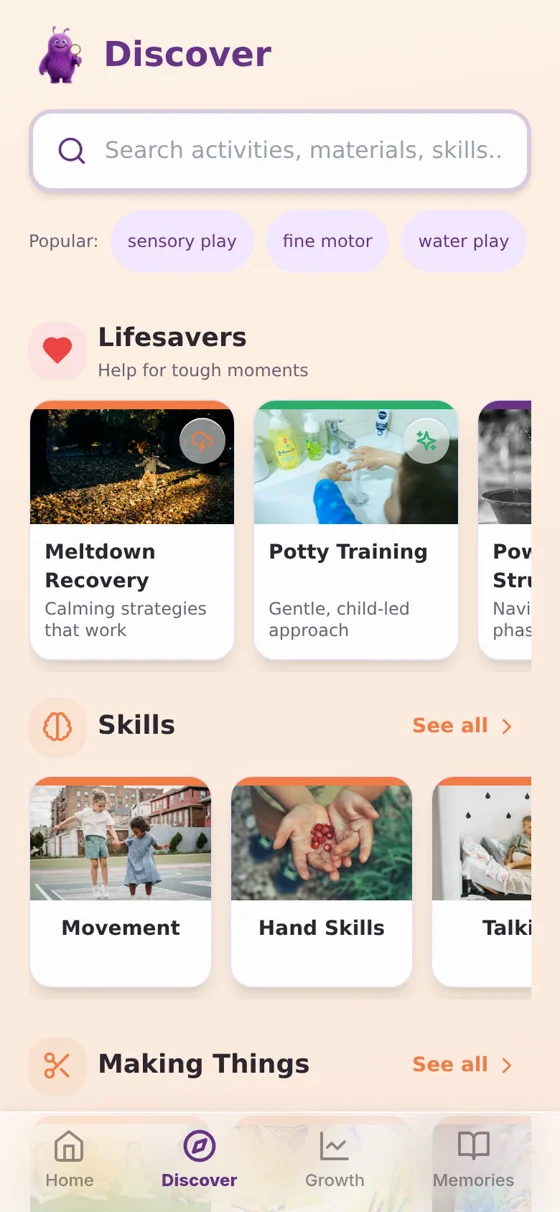
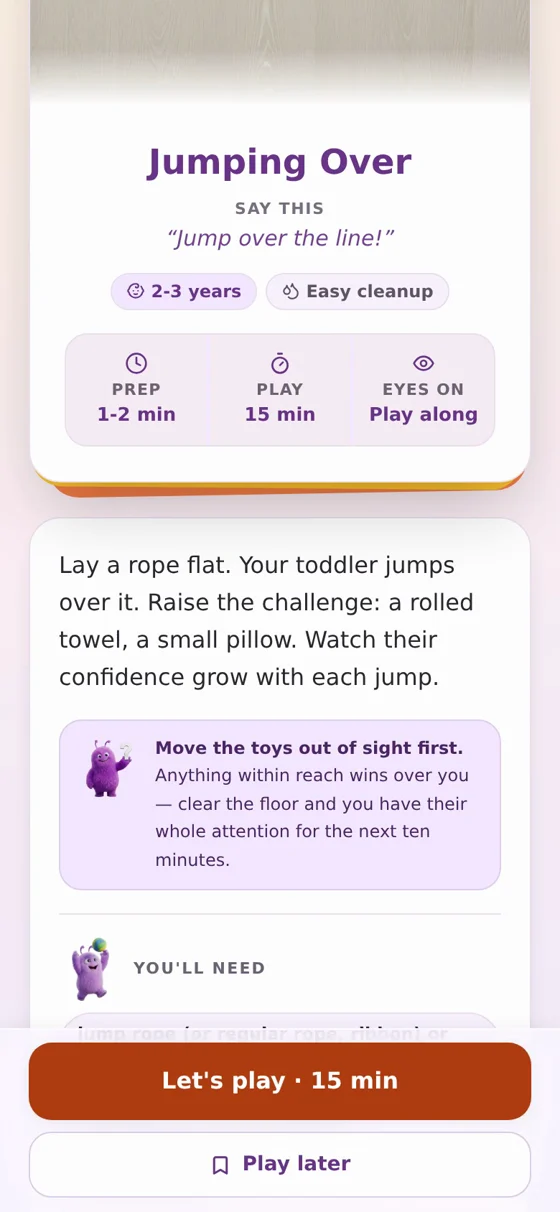
Mooshie Discover screen with Lifesavers for meltdowns and potty trainingMooshie activity screen with Say this words to use
10free ideas on this page
5,918activities for 6 months to 4 years
Say thisthe exact words on every activity
0child details uploaded, ever

Pre-nursery activities work best when you start weeks before the first day, not the night before. Settling in isn’t only about the drop-off itself. It’s built from small, repeated practice at home: waiting a turn, saying goodbye, managing the toilet, following a simple routine.

Below is a four-week countdown with ten activities from the Mooshie Moments app, for children aged 1 to 4. Each one uses things you already have at home, takes 5 to 15 minutes, and comes with the words to say, so the run-up to nursery feels manageable rather than daunting.

What actually helps a child settle

Nurseries are used to new starters and are gentle about it. What helps most from your end is practising the small mechanics in advance: sitting for a few minutes, waiting while someone else has a turn, saying goodbye and trusting you’ll be back, using the toilet somewhere unfamiliar. None of this needs to be serious. It works better as play.

Four weeks before: build the small skills

Start early and keep it light. This is groundwork, not a test.

2 to 310 minutes

1. Sitting Still Practice

Stillness is a skill, and it’s easier to practise now, when nothing is at stake, than to expect it cold on the first day.

You’ll need: a timer

How to play
  1. Sit together and just be, no talking or doing, for two minutes.
  2. Use a timer so the end is clear and predictable.
  3. Stretch it to three or four minutes over the following days.
  4. Chat afterwards about what nursery might be like, without pushing for answers.
2 to 315 minutes

2. Waiting Turn Game

Nursery involves a lot of waiting. Rolling a die or picking a card, one go each, makes waiting feel like part of the fun rather than a punishment.

You’ll need: any simple game, cards or blocks

How to play
  1. Set up a very short turn-based game.
  2. Keep rounds fast at first so the wait is brief.
  3. Use the phrase a nursery key worker might use, such as “my turn, then your turn”.
  4. Add a silly voice or a race to keep it playful.
3 to 415 minutes

3. Celebrate Trying

Confidence at nursery comes from believing you can attempt things yourself. Praise the attempt, not just the finished result.

You’ll need: nothing

How to play
  1. Ask if they’d like to try something themselves or have you do it.
  2. If they choose to try, hand it over fully and wait.
  3. Offer only the smallest help if they ask for it.
  4. Point out exactly what they managed: “Look what you did.”
Say this: “You’ve got this” · “Great effort” · “Look what you did”

Two weeks before: preview the day

Once the basics are practised, start describing what an actual nursery day looks like, in order.

2 to 315 minutes

4. Preschool Schedule Preview

Draw or print a simple picture sequence: morning circle, snack, playground, goodbye. Each picture is a small promise that nothing about the day will be a surprise.

You’ll need: pictures or drawings, a board or the fridge

How to play
  1. Draw or find four or five pictures for the main parts of the day.
  2. Stick them somewhere visible, like the fridge.
  3. Walk through the sequence together each morning.
  4. Mention that this is roughly what nursery will look like too.
2 to 315 minutes

5. First Day Story Making

Build a simple, true story together: wake up, eat breakfast, get dressed, go to nursery, come home. Keep it real rather than magical, so the actual day feels familiar when it arrives.

You’ll need: paper, crayons

How to play
  1. Draw or narrate the morning routine step by step.
  2. Add the nursery part in the middle, kept plain and calm.
  3. Finish with coming home, so the story has a clear end.
  4. Retell it once a day in the run-up.
3 to 415 minutes

6. Backpack: Load and Unload

Packing and unpacking a bag makes the physical motion familiar before the real school morning arrives.

You’ll need: a small backpack, water bottle, snack, a toy

How to play
  1. Lay out the water bottle, snack and a small toy.
  2. Ask them to find the right pocket for each item and zip it closed.
  3. Once it’s packed, “arrive home” and unpack everything again.
  4. Name each item as they pull it back out.

The week before: practise the hard bits

In the final week, focus on the moments that tend to wobble: frustration, asking for help, and being brave about something new.

3 to 415 minutes

7. Hard Thing Staying

Choose something they’ll find properly hard, and stay with them through the frustration rather than stepping in immediately.

You’ll need: a genuinely tricky task, like lacing shoes or opening a jar

How to play
  1. Warn them the task might feel hard, and ask if they want to try.
  2. Let them struggle a bit. Acknowledge the frustration when it shows.
  3. Encourage one more attempt rather than taking over.
  4. Tell them clearly: “You stayed with something hard.”
3 to 415 minutes

8. Your Brave Try

Telling your child about something you found hard as a child, and how messy learning it was, makes trying new things at nursery feel less frightening.

You’ll need: nothing

How to play
  1. Tell a short, honest story about something you struggled with when little.
  2. Say that you can try hard things today too if they want.
  3. Let them pick something to attempt, and step back while they try.
  4. Tell them: “You’re brave with hard stuff.”
3 to 415 minutes

9. When To Help Decision

Nursery staff can’t hover the way you do at home, so this practises the gap between “properly stuck” and “trying, and it’s hard”.

You’ll need: nothing

How to play
  1. Tell them you’ll wait for them to ask before helping today.
  2. Let them work through a small struggle without jumping in.
  3. When they do ask, help with the smallest possible part.
  4. Hand the rest back: “Now you finish.”

The goodbye ritual

A short, consistent goodbye matters more than a long one. Long goodbyes tend to stretch the worry out rather than shorten it.

1 to 210 minutes

10. Peek-a-Boo: Trust Builder

Even for older toddlers, longer and longer peekaboo games rehearse the exact lesson a goodbye needs to teach: people who leave, come back.

At the nursery door, keep this same shape: say goodbye clearly, once, and go. Sneaking off without saying goodbye can feel quicker in the moment but tends to make the next goodbye harder, because it teaches your child to watch for you leaving rather than trust that you’ll say when you go.

You’ll need: a blanket or just your hands

How to play
  1. Start with very quick peeks, disappearing for one second.
  2. Build up to two or three seconds, then try hiding behind a blanket.
  3. Always return with warmth and a bit of celebration.
  4. Stop if they seem genuinely upset rather than playfully excited.

Hundreds more ideas like these are waiting in the app.

Plus one picked for your child every day, matched to their age and how today is going.

LOVED BY FAMILIES

Parents and experts on Mooshie

“I used to spend 30 minutes looking for an activity on Pinterest, get overwhelmed, and just turn on the TV. Mooshie takes 5 seconds.”
Sarah J.Mum of a 2-year-old
“Finally, an app that tells me to put my phone away. The activities are actually doable with stuff I have in my junk drawer.”
Mark D.Dad of two
“As a pediatric OT, I love that these activities build core developmental skills without feeling like ‘homework’ for parents.”
Dr Emily R.Paediatric occupational therapist
Mooshie Discover screen with Lifesavers for meltdowns and potty training
HOW MOOSHIE HELPS

How Mooshie helps in the run-up to nursery

Mooshie has lifesavers built in for exactly this stretch, including settling in, potty training and hard goodbyes, alongside the everyday activities.

  • Picks one activity a day for your child’s age and stage, and asks how the day is going and how long you’ve got, from 10 minutes upwards.
  • Every activity has “Say this” phrases and a parent tip, so you always know what to say at the door.
  • All 5,918 activities use what’s already in your cupboards.
  • Free, with a daily idea and no registration. iPhone now, Android coming.

You get the idea; they get your full attention. Thirty seconds of reading, then it’s all play.

Questions parents ask

How long before nursery should we start getting ready?

Four weeks gives plenty of time to build small skills without turning it into a big event. If nursery starts sooner than that, even a few days of the goodbye ritual and a schedule preview helps.

My toddler cries every time I leave. Is this normal starting nursery settling in?

Yes, this is one of the most common parts of starting nursery, and it usually settles within a few weeks as your child learns the routine and trusts the key worker. Keep goodbyes short and consistent rather than avoiding them.

Should I sneak out when they’re distracted?

It’s best not to. It can feel easier in the moment but tends to make your child more anxious about you disappearing without warning. A short, clear goodbye is kinder in the long run.

What preschool readiness skills matter most before starting?

Being able to sit briefly, wait a turn, manage a simple goodbye and attempt a task before asking for help all matter more than knowing letters or numbers. Toileting readiness helps too, though many nurseries support children still in nappies.

My toddler seems too worried to settle. Should I speak to someone?

If the worry feels severe, doesn’t ease after a few weeks, or your child stops eating or sleeping well, it’s worth a chat with your health visitor or GP. They can rule out anything else going on and suggest extra support.

Mooshie is a play app, not medical advice. If you’re worried about your child’s development, speak to your health visitor or GP.


Make memories. Build skills. Play together.

Your first moment is ready as soon as you tell us their age.

Mooshie MomentsFree on iPhone
Get it free