Potty Training Tips That Use Play, Not Pressure

HELP FOR HARD MOMENTS · AGES 1 TO 4

Potty Training Tips That Use Play, Not Pressure

Potty training tips using play, not pressure: readiness signs, twelve activities and scripts for each phase. Free in the Mooshie app, try today.

  • Free to download
  • No account needed
  • No screen time for your child
QR code to download Mooshie MomentsOn a laptop?
Scan to get Mooshie on your iPhone.
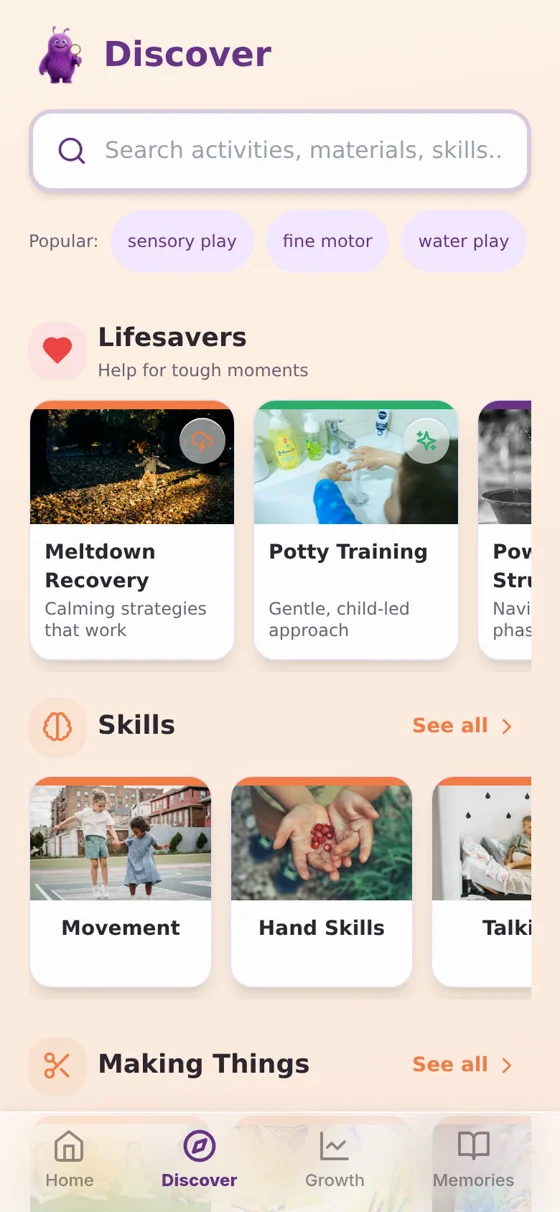
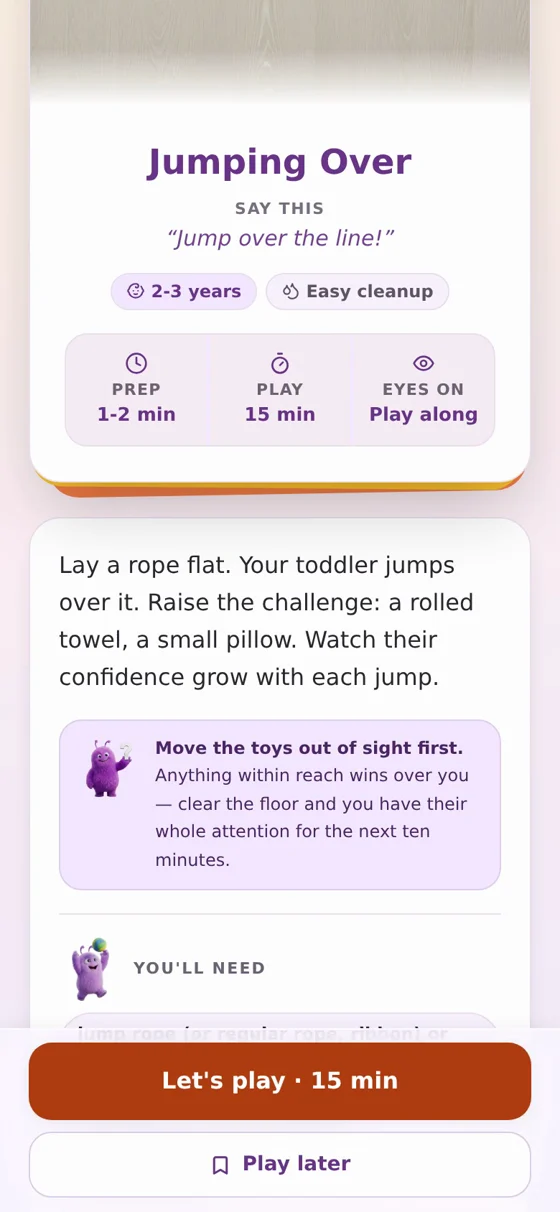
Mooshie Discover screen with Lifesavers for meltdowns and potty trainingMooshie activity screen with Say this words to use
12free ideas on this page
5,918activities for 6 months to 4 years
Say thisthe exact words on every activity
0child details uploaded, ever

Potty training tips work best when the pressure comes off and the play starts. Readiness happens on its own timeline, driven by your child’s body and brain catching up with each other, so a chart of rewards or a strict three-day plan can push against something that simply isn’t ready yet.

Below are twelve potty training activities from the Mooshie Moments app, for children aged 1 to 4, grouped into the order most families move through. Each uses things you already have at home, takes 5 to 15 minutes, and comes with the exact words to say, so you’re never guessing what to say mid-accident.

Signs your child might be ready

There’s no single test, but these are worth watching for together, not any one on its own:

  • Staying dry for an hour or two at a time, or waking up dry from a nap.
  • Noticing they’ve gone, or telling you afterwards.
  • Showing interest in the toilet or copying a sibling or parent.
  • Being able to pull trousers up and down mostly by themselves.
  • Following a couple of simple instructions in a row.

Many children show some of these signs between two and three, though it varies a great deal, and there’s no need to rush. If your child is showing real distress around the potty, seems to be in pain, or you’re worried about constipation, it’s worth mentioning to your health visitor or GP rather than pushing through.

Phase one: getting familiar

Before any actual training starts, let the potty become a normal, unthreatening object in the house.

1 to 210 minutes

1. Potty Sign Hand

Before they have the words, teach a simple hand sign for “potty” or “wet”, and use it every single time you change them, so the gesture starts to carry meaning.

You’ll need: nothing but consistency

How to play
  1. Choose one simple gesture, such as tapping two fingers together, and stick with it.
  2. Say the word and make the sign at every nappy change.
  3. If you notice they’re wet, ask “Potty?” and make the sign with them.
  4. Celebrate warmly the first time they attempt the sign themselves.
1 to 210 minutes

2. Flush Fascination

If your child isn’t scared of the noise, let them push the flush handle and watch the water swirl away. Curiosity about the toilet is a good sign, not something to redirect.

You’ll need: the toilet

How to play
  1. Sit them nearby and ask if they’d like to push the handle.
  2. Watch the water swirl together.
  3. Say a cheerful goodbye as it disappears.
  4. Stand back if the noise startles them, and try again another day.
1 to 210 minutes

3. Potty Song Celebration

A short, silly song for sitting, and a bigger one for actually going, keeps the whole thing low pressure and positive.

You’ll need: a potty chair or toilet step

How to play
  1. Make up a simple tune for sitting on the potty.
  2. Sing it every time they sit, whatever happens.
  3. If they go, switch to a bigger, celebratory version.
  4. Use the exact same songs every time so the pattern becomes familiar.
1 to 210 minutes

4. Potty Sticker Collect

Stick a handful of stickers on or near the potty seat. Each time your child sits, nappy on or off, they peel one off and add it to a collection sheet.

You’ll need: big stickers, paper

How to play
  1. Stick five stickers around the potty seat.
  2. When they sit, let them peel one off.
  3. Add it to a paper or their hand, and name it as a win.
  4. Celebrate once all five are collected.

Phase two: practising

Once the potty feels familiar, this is where actual practice begins, usually with more time at home and fewer nappies during the day.

2 to 315 minutes

5. No Nappy Time

Short spells without a nappy at home, on a waterproof surface, help your child start to notice the physical feeling of needing to go before it happens.

You’ll need: a waterproof mat

How to play
  1. Pick a relaxed afternoon at home for underwear instead of nappies.
  2. Sit on the potty after meals and before bed.
  3. Read a favourite book together while they sit.
  4. Praise the sitting itself, whether or not anything happens.
2 to 35 minutes

6. Flush and Wave Goodbye

Turning the flush into a small goodbye ritual, such as waving and saying a silly line, takes the mystery out of the toilet and makes the whole routine feel friendly.

You’ll need: the toilet

How to play
  1. Use the same phrase every time, such as “bye bye, going home.”
  2. Wave together as it flushes.
  3. Keep the tone light and consistent.
  4. Treat any accident along the way as information, not a failure.
2 to 310 minutes

7. Big Kid Talk

Mentioning, casually and without pressure, that an older sibling or a grown-up uses the potty plants the idea without making it a big deal.

You’ll need: nothing

How to play
  1. Drop it into ordinary conversation, not as a lecture.
  2. Let them watch a sibling or parent if that’s comfortable for everyone.
  3. Keep spare clothes handy and expect some mess.
  4. Stay neutral about accidents: “bodies are still learning.”
2 to 35 minutes

8. Handwashing Hero

Make handwashing part of the routine feel like play rather than a chore tacked on the end, with warm water and a proper scrub.

You’ll need: child-friendly soap, a step stool

How to play
  1. Set up a step stool so they can reach the sink easily.
  2. Turn scrubbing into a mini “hero” ritual with a made-up phrase.
  3. Let them control the tap and soap themselves where safe.
  4. Keep it as the same final step every time.

Phase three: accidents and setbacks

Accidents and the occasional refusal are a completely normal part of potty training, right up to and past the age of four. What helps most here is staying calm and treating a wet moment as useful information rather than a failure.

3 to 415 minutes

9. Wet vs Dry Feelings

Checking in a few times a day, “are you wet or dry right now?”, builds body awareness without any shame attached to the answer.

You’ll need: nothing

How to play
  1. Ask them to check, or check together.
  2. If dry, celebrate that their body did the job.
  3. If wet, say plainly “that’s information, next time we go when you feel it.”
  4. Repeat through the day, treating every answer the same way.
3 to 415 minutes

10. Timer Reminders

A timer set 15 minutes after meals or drinks becomes the one giving the instruction, not you, which sidesteps a lot of nagging.

You’ll need: a kitchen or phone timer

How to play
  1. Set a timer straight after a meal or big drink.
  2. When it beeps, say “timer says potty” and head there together.
  3. Sit for a minute or two without pressure either way.
  4. Let the rhythm build over several days.
3 to 415 minutes

11. Potty Relaxation

Reading a calm story while your child sits takes the tension out of waiting, and things often happen naturally once the body relaxes.

You’ll need: a picture book

How to play
  1. Choose a short, familiar picture book.
  2. Read slowly in a calm voice while they sit.
  3. If nothing happens, say it’s fine and try again later.
  4. Use the same book each time to build the association.
3 to 415 minutes

12. Travel Bathroom Planning

Before a trip, prepare your child for unfamiliar bathrooms in advance, so a different-looking toilet doesn’t throw off progress made at home.

You’ll need: nothing

How to play
  1. Explain a few days ahead that bathrooms away from home look different but work the same way.
  2. Visit an unfamiliar bathroom, such as at a shop or library, to practise.
  3. Remind them their body will tell them when to go and you’ll find somewhere.
  4. Stay calm and matter-of-fact once you’re actually travelling.

Language that helps, and language to drop

  • Say “your body is still learning” rather than “you had an accident again.”
  • Say “bodies work differently, that’s fine” rather than comparing to siblings or friends.
  • Avoid bribery tied to results; praise the trying, the sitting, the noticing, not just a dry outcome.
  • If a week feels like a battle, it’s fine to pause entirely and try again in a few weeks. That isn’t a step backwards.

Hundreds more ideas like these are waiting in the app.

Plus one picked for your child every day, matched to their age and how today is going.

LOVED BY FAMILIES

Parents and experts on Mooshie

“I used to spend 30 minutes looking for an activity on Pinterest, get overwhelmed, and just turn on the TV. Mooshie takes 5 seconds.”
Sarah J.Mum of a 2-year-old
“Finally, an app that tells me to put my phone away. The activities are actually doable with stuff I have in my junk drawer.”
Mark D.Dad of two
“As a pediatric OT, I love that these activities build core developmental skills without feeling like ‘homework’ for parents.”
Dr Emily R.Paediatric occupational therapist
Mooshie Discover screen with Lifesavers for meltdowns and potty training
HOW MOOSHIE HELPS

How Mooshie helps with potty training

Potty training is one of Mooshie’s built-in lifesavers, alongside meltdown recovery and power struggles, for exactly the moments a parent needs something quickly.

  • Offers one activity a day fitted to your child’s stage and your free minutes.
  • Every activity has “Say this” phrases, prep and play times, and a parent tip, so you always know what to say next.
  • 5,918 everyday-item activities, so you never need special kit.
  • A new activity every day, free, and you don’t need an account.

It’s a prompt for you, not a screen for them. A quick glance at the steps, then the phone goes on the shelf.

Questions parents ask

What are the signs of potty readiness?

Staying dry for longer stretches, noticing or telling you they’ve gone, showing interest in the toilet, and being able to manage some of their own clothing are the main signs. Most children show a mix of these somewhere between two and three, though timing varies widely.

What’s the best way to potty train, rewards or no rewards?

There’s no single best method that suits every child. Play-based approaches that build familiarity and body awareness, without pressure or big reward systems, tend to cause less resistance and fewer power struggles.

How do I handle repeated accidents without losing my patience?

Try to treat each accident as information rather than a failure, and keep your own tone calm even when it’s frustrating. If accidents are frequent after weeks of trying, a short pause of a few weeks before trying again often helps more than pushing on.

My toddler is scared of pooing in the potty. What should I do?

This is common and usually settles with patience rather than pressure. Keep the routine calm, avoid making a fuss about it, and if the fear seems linked to pain or constipation, speak to your health visitor or GP.

What potty training methods work for nursery drop-off days?

Talk to your child’s nursery about their approach so home and nursery are consistent. Practising in different bathrooms, as in the travel activity above, also helps toileting away from home feel less unfamiliar.

Mooshie is a play app, not medical advice. If you’re worried about your child’s development, speak to your health visitor or GP.


Make memories. Build skills. Play together.

Your first moment is ready as soon as you tell us their age.

Mooshie MomentsFree on iPhone
Get it free