Independent Play: How to Help Your Toddler Play on Their Own

SKILLS AND LEARNING · AGES 1 TO 2

Independent Play: How to Help Your Toddler Play on Their Own

Independent play for toddlers starts small: connect first, then step back. Eleven activities and a simple set-up to help your child play alone longer.

  • Free to download
  • No account needed
  • No screen time for your child
QR code to download Mooshie MomentsOn a laptop?
Scan to get Mooshie on your iPhone.
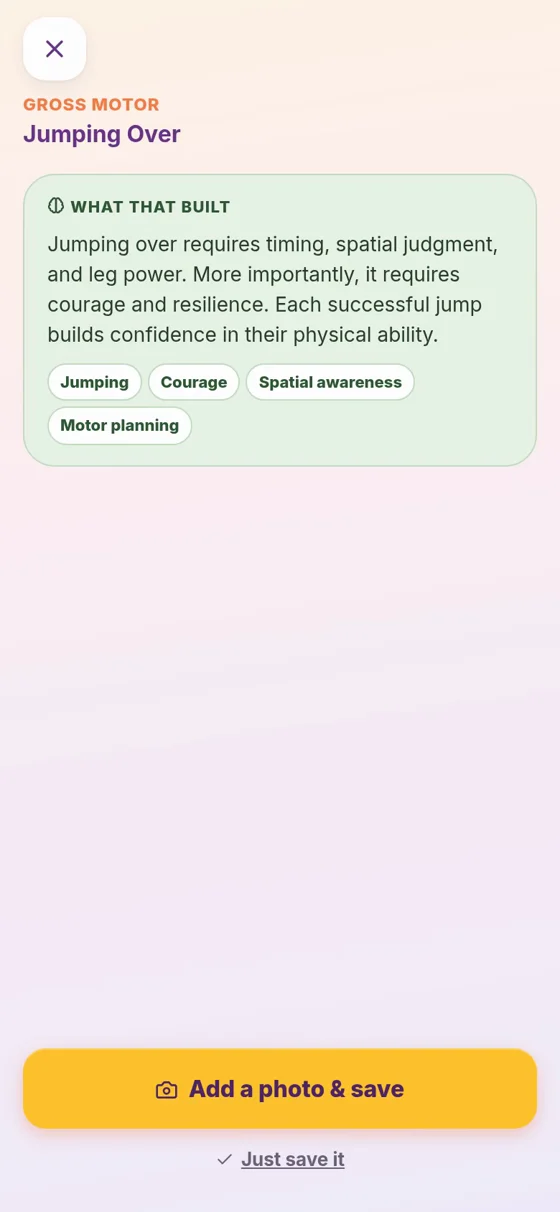
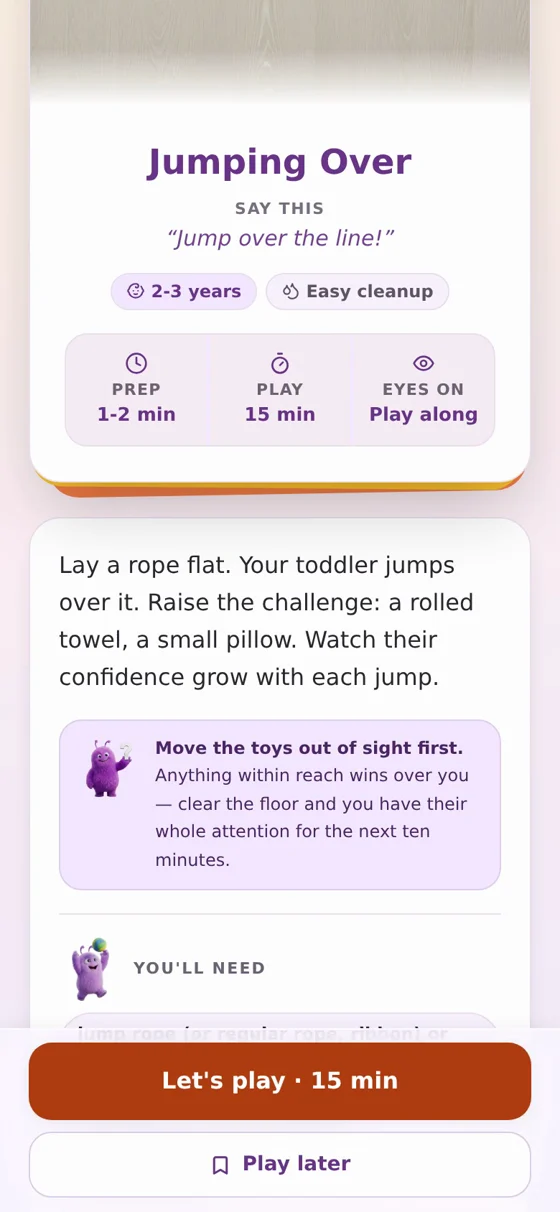
What that built screen showing the skills an activity practisedMooshie activity screen with Say this words to use
11free ideas on this page
5,918activities for 6 months to 4 years
Say thisthe exact words on every activity
0child details uploaded, ever

Independent play rarely starts with simply walking away; it starts with connecting first, then stepping back a little at a time. A toddler who feels sure you are close by is far more willing to get lost in a basket of objects or a pile of blocks than one who is wondering where you have gone.

Below are eleven activities from the Mooshie Moments app for children aged 1 to 2, chosen because they hold attention well without you needing to join in. Each uses things you already have at home, takes about 10 minutes to set up, and comes with the words to say as you start it off.

Connect first, then step back

Rather than handing your toddler a toy and disappearing, spend a minute or two setting the activity up together and getting them started. Once they are absorbed, narrate what you are doing and move a little further away, rather than vanishing without warning.

1 to 210 minutes

1. Narrate and Leave

Say out loud what you are setting up, “Here are the blocks, you can build a tower,” then step back and stop talking. Your toddler already knows what to do, and your silence gives them room to think without feeling watched.

You’ll need: any activity already set up

Say this: “Here are the blocks for you.” · “You did all that on your own.”
1 to 210 minutes

2. Check-In Pattern

Rather than disappearing for long stretches, pop back every five to ten minutes for a brief peek and a smile, then leave again. Knowing you will return, and seeing that you do, is often what allows a toddler to settle into playing alone for longer next time.

You’ll need: a rough routine or timer

Say this: “I am popping out a minute.” · “Still busy, I will leave you to it.”

Start with five minutes nearby

1 to 210 minutes

3. Treasure Basket

Fill a basket with everyday items of different textures and weights, a wooden spoon, a scrap of fabric, a plastic bottle. Let your toddler explore however they like: banging, mouthing, turning things over. There is no right way to go through it, which is exactly what makes it easy to sit with alone.

You’ll need: a basket, a mix of safe household objects

1 to 210 minutes

4. Sticker Play

Tape a big sheet of paper down and scatter stickers nearby. Peeling and sticking can hold a toddler’s focus for a surprisingly long stretch, with no pattern required and nothing that can go wrong.

You’ll need: stickers, a large sheet of paper, tape

1 to 210 minutes

5. Posting Game

You’ll need: a box with a wide slot, large soft objects to post

How to play
  1. Cut a slot roughly 10cm wide in a box, or use a posting toy with big pieces.
  2. Set out a few objects to post, rolled socks or large felt squares work well, all too big to be a choking risk.
  3. Show them once, “Watch, it goes in,” then post one yourself.
  4. Say “Your turn” and step back to let the repetition run on its own.
Say this: “Watch. It goes in.” · “Your turn.” · “Again?”

Lengthening the stretch

1 to 210 minutes

6. Magnet Board Solo Play

Show your toddler how the magnets snap onto the board, then say “Now you try” and move away. The sticking and pulling off is a satisfying, repeatable loop they can run through entirely on their own once they have seen it done.

You’ll need: a magnetic board or metal baking sheet, large magnetic toys

1 to 210 minutes

7. Block Building

Tip all the blocks onto the floor and say nothing about what to build. Let your toddler stack, knock down and start again however they like. Staying quiet here genuinely helps: it leaves room for their own ideas rather than yours.

You’ll need: blocks

1 to 210 minutes

8. Window Watching Time

Set up a cosy spot by a window and sit your child there. Cars, birds, people and clouds passing by can hold attention for a surprising length of time, no toy required. Sit alongside them at first, saying little, then let them settle into watching on their own.

You’ll need: a window, a cushion or low seat

Hundreds more ideas like these are waiting in the app.

Plus one picked for your child every day, matched to their age and how today is going.

1 to 210 minutes

9. Water Play Station

Fill a bin or bowl with a few centimetres of water, add a couple of tools, and let your toddler take over. Water play tends to hold attention like little else, but it must always stay within arm’s reach: even a small amount of water is a drowning risk for a toddler, so never leave them with it unattended.

You’ll need: a bowl or bin of water, cups, sponges

1 to 210 minutes

10. Open Art Station

Set out crayons and paper on a low table and sit nearby drawing your own picture, quietly, without commenting on theirs. If they show you something, a simple “You made that” is enough. No “beautiful”, no questions about what it is meant to be, just quiet, parallel company.

You’ll need: crayons, blank paper

1 to 210 minutes

11. Safe Space Setup

Set up one area where nothing is off-limits: everything can be touched, opened or knocked over safely. Removing the need to say “no” constantly means your toddler can stay absorbed in one thing for far longer, because nobody is interrupting them.

You’ll need: one baby-proofed room or corner

Setting up for longer, calmer play

A few small changes to how toys are stored make solo play noticeably easier to sustain.

Rotate toys rather than leaving everything out.

A smaller, changing selection is usually more engaging than a toy box tipped out all at once. Our guide to toy rotation for toddlers covers how to set this up.

Create a “yes space”.

One room or corner where everything is safe and allowed removes the need for constant supervision and redirection.

Keep a busy bag on hand.

A small, ready-made bag of quiet activities is useful for moments you need five minutes fast; see our busy bag ideas for inspiration.

LOVED BY FAMILIES

Parents and experts on Mooshie

“I used to spend 30 minutes looking for an activity on Pinterest, get overwhelmed, and just turn on the TV. Mooshie takes 5 seconds.”
Sarah J.Mum of a 2-year-old
“Finally, an app that tells me to put my phone away. The activities are actually doable with stuff I have in my junk drawer.”
Mark D.Dad of two
“As a pediatric OT, I love that these activities build core developmental skills without feeling like ‘homework’ for parents.”
Dr Emily R.Paediatric occupational therapist
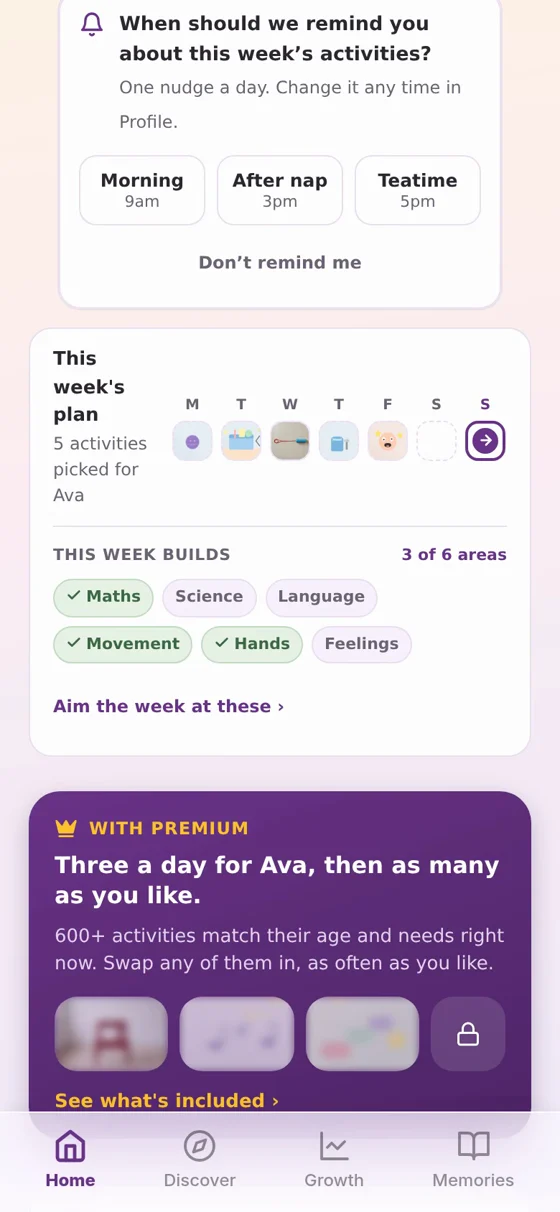
This week's plan showing five activities and the areas they build
HOW MOOSHIE HELPS

How Mooshie helps with solo play

Mooshie Moments picks one activity a day suited to your child’s age and stage, drawn from a library of 5,918 ideas for ages 6 months to 4 years, all using things already at home.

  • You tell it how much time you have, from 10 minutes up to 20 or more, and it suggests something that fits, including quieter, more independent options.
  • Every activity has a parent tip and “eyes on” time, so you know roughly how closely to watch, and when you can safely step back.
  • Tapping “We’re done” shows what the activity built, and you can add a photo to save it to Memories, even for the quiet, unglamorous solo sessions.
  • Start free today on iPhone, with a new activity every morning and no registration.

Mooshie is for the grown-up in the room. Check the idea in under 30 seconds, then put the phone away and let them get on with it.

Questions parents ask

My toddler won’t play alone at all. Where do I start?

Start very small, two or three minutes of you sitting nearby while they play, then quietly stepping a little further away. Lengthen it gradually rather than expecting a big jump straight away.

At what age can toddlers start playing independently?

Short stretches of solo play are possible from around 12 to 18 months for many children, though it varies a great deal. It tends to build steadily through the second and third year rather than arriving all at once.

Is screen time the same as independent play?

Not really. A screen holds attention for you, whereas independent play asks your toddler to generate their own ideas and entertain themselves, which is a different and valuable skill. Our page on screen-free activities has more on what to reach for instead.

How long should independent play sessions last?

However long your toddler is genuinely engaged for, even if that is only five minutes to start with. Longer stretches tend to come with practice rather than by pushing for them too soon.

Should I always stay in the room?

At 1 to 2 years old, staying close by is sensible, both for safety and reassurance. As your child gets older and more confident, you can gradually increase the distance and time apart.

Mooshie is a play app, not medical advice. If you’re worried about your child’s development, speak to your health visitor or GP.


Make memories. Build skills. Play together.

Your first moment is ready as soon as you tell us their age.

Mooshie MomentsFree on iPhone
Get it free