Screen-Free Activities for Toddlers (That Buy You Real Time)

SCREEN-FREE PLAY · AGES 1 TO 2

Screen-Free Activities for Toddlers (That Buy You Real Time)

Screen-free activities for toddlers, sorted by the moment you need one: cooking dinner, five minutes for you, the car, or winding down at bedtime.

  • Free to download
  • No account needed
  • No screen time for your child
QR code to download Mooshie MomentsOn a laptop?
Scan to get Mooshie on your iPhone.
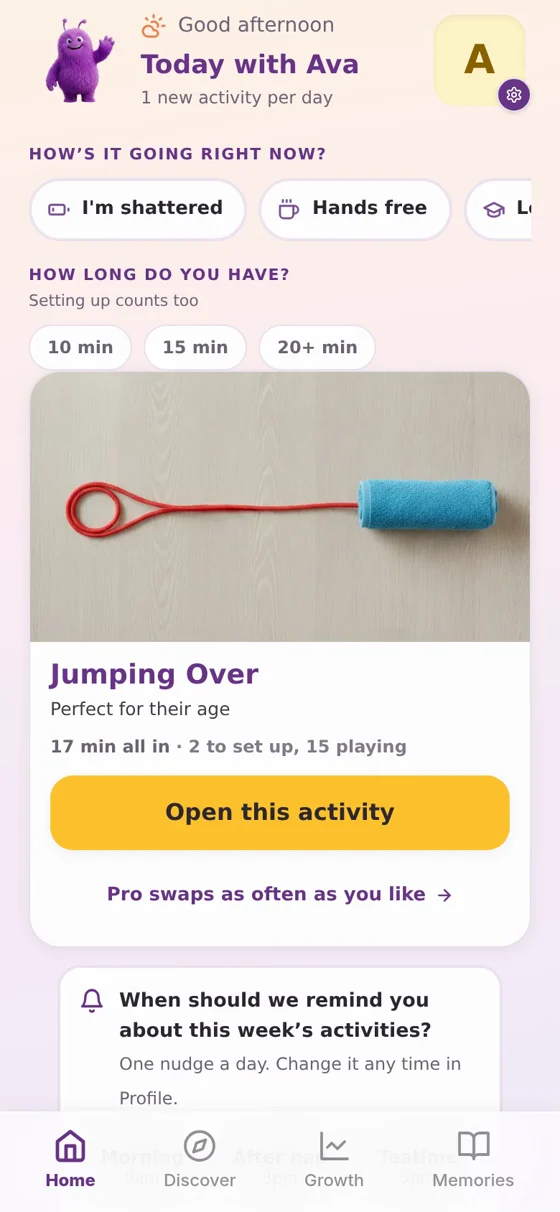
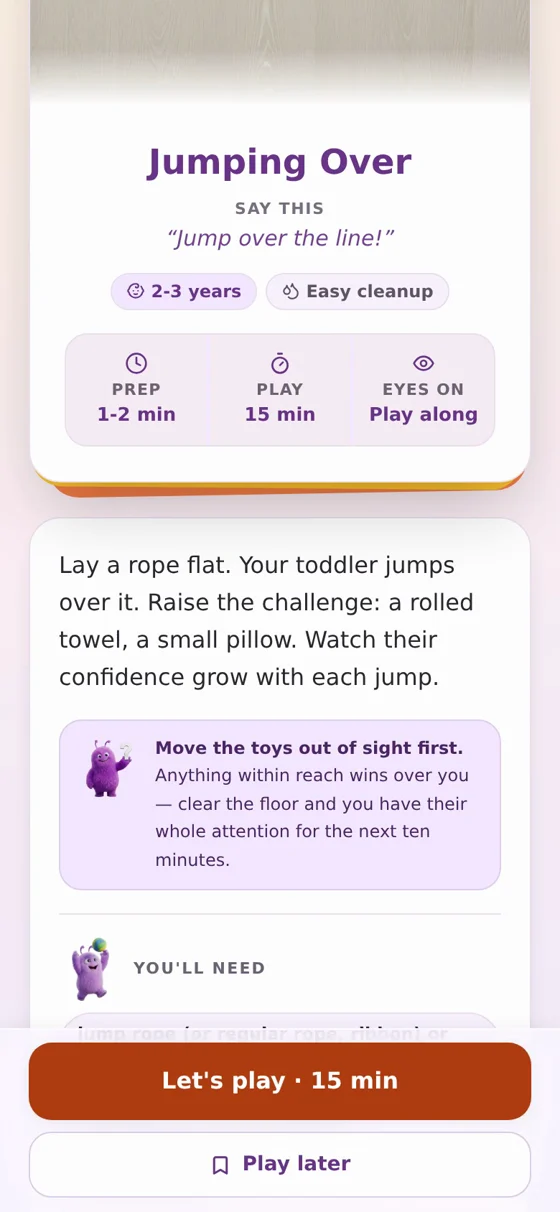
Mooshie Today screen with mood and time options and today's activityMooshie activity screen with Say this words to use
8free ideas on this page
5,918activities for 6 months to 4 years
Say thisthe exact words on every activity
0child details uploaded, ever

Screen-free activities for toddlers don’t need to fill a whole day, just the ten minutes you’re actually stuck for. Nobody needs a plan for every waking hour. What helps is having something ready for the exact moments a screen usually gets handed over: dinner needs cooking, the kettle needs boiling, the car journey is dragging, or bedtime needs winding down.

Below are eleven activities from the Mooshie Moments app, sorted by the moment you’d reach for them rather than by age. Each uses things already in the house, takes about 10 minutes, and comes with the words to say while you’re doing something else at the same time.

An honest word about screens

Screens happen. Most parents aren’t trying to remove them entirely, just to have a real option for the moments they’d otherwise reach for one out of habit rather than choice. The World Health Organization recommends no sedentary screen time for children under 2 and no more than an hour a day for children aged 2 to 4, though many families find that a rough guide rather than a rule to hit exactly. The activities here are about swapping specific moments, not the whole day.

When you need to cook dinner

1 to 210 minutes

1. Busy Box Build

You’ll need: a low box or basket, 3 to 4 familiar toys

How to play
  1. Fill a box with things they already like: stacking rings, wooden spoons, soft blocks, a shaker.
  2. Take each one out and show quickly how it works before handing it over.
  3. Say “it’s all in the box, off you go” and step back to the hob or worktop, staying nearby.
  4. Swap one toy for a new one the next day so the box stays interesting.
Say this: “Look what’s in the box.” · “It’s yours, take your time.” · “The box is here whenever you want it.”
1 to 210 minutes

2. The Timer Game

Set a timer for two minutes and tell them they play until it beeps, then you’ll come straight back. When it goes off, give a proper thirty seconds of attention, a cuddle or a “well done”, then reset for a little longer. Building the time up over weeks teaches waiting without a battle over it.

You’ll need: a visual timer and some toys

1 to 210 minutes

3. Chair by Chair

Sit knee to knee with them while they play, then after a few minutes shift your chair back a foot. Stay in sight the whole time. Each small move away, repeated over a session, builds confidence that you’re still there even when you’re not touching distance. Good for edging towards being able to stir a pot without a child attached to your leg.

You’ll need: nothing but the same room

When you need five minutes and a coffee

1 to 210 minutes

4. Peel and Stick

Show them how to pinch a corner and peel a sticker off the sheet, then press it anywhere on the paper. Some will crumple, some will land upside down; none of that matters. The pinching motion is good practice for small fingers, and a full sheet of stickers can occupy a toddler for longer than you’d expect, especially with a running commentary of “that one’s at the top, that one’s in the middle”.

You’ll need: child-safe stickers and a sheet of paper

1 to 210 minutes

5. Spot the Wrong One

Make two small piles on a blanket, one colour in each, while they watch, then slip one item into the wrong pile on purpose. Say “something’s not right in this pile” and wait for them to spot and fix it. It’s a genuinely quiet activity once it gets going, because the looking takes concentration.

You’ll need: household items in 3 to 4 colours, a blanket or tray

When you’re out and about

1 to 210 minutes

6. Bubbles

Bubbles fit in a bag and work anywhere there’s a bit of space: a waiting room floor, a garden, a pavement outside a shop while you wait. Blow a few, let them chase and pop, and count how many they catch. There’s very little to it, which is exactly why it travels so well.

You’ll need: a small bottle of bubbles

1 to 210 minutes

7. Sponge Squeeze

Put a little water in one bowl and let them dunk the sponge, lift it dripping, and squeeze it into the second bowl. Ask “is the first bowl empty yet?” as it slowly moves across. This one needs a towel underneath, so it suits a bathroom or a garden more than a car, but it’s ready in under a minute if you’re stuck at home before you head out.

You’ll need: two small bowls, a sponge, warm water, a towel

When you’re winding down before bed

1 to 210 minutes

8. Roll It Back

A slow, repeated roll back and forth is one of the calmest games there is. Keep your voice low, the pace unhurried, and let a missed catch be funny rather than corrected. Ten rolls each way is usually enough to settle a busy body before the bath and books start.

You’ll need: a soft ball

When a screen does go on

Some moments genuinely call for one, a long car trip, an ill day, a parent who needs fifteen uninterrupted minutes, and there’s no need to feel guilty about that. A few habits make the screen time itself feel less all-or-nothing:

Watch alongside them sometimes.

Sitting close and asking “what do you think happens next?” turns a show into a shared moment rather than solo babysitting, at least for part of the time.

Have something real ready for straight after.

Baking, building or outside play right when the screen goes off gives the day a clear “and now this” rather than a flat ending.

Keep it to one place.

A screen that lives on one chair or in one room, never at the table or in bed, is easier for a toddler to accept as a rule because it’s consistent.

Hundreds more ideas like these are waiting in the app.

Plus one picked for your child every day, matched to their age and how today is going.

LOVED BY FAMILIES

Parents and experts on Mooshie

“I used to spend 30 minutes looking for an activity on Pinterest, get overwhelmed, and just turn on the TV. Mooshie takes 5 seconds.”
Sarah J.Mum of a 2-year-old
“Finally, an app that tells me to put my phone away. The activities are actually doable with stuff I have in my junk drawer.”
Mark D.Dad of two
“As a pediatric OT, I love that these activities build core developmental skills without feeling like ‘homework’ for parents.”
Dr Emily R.Paediatric occupational therapist
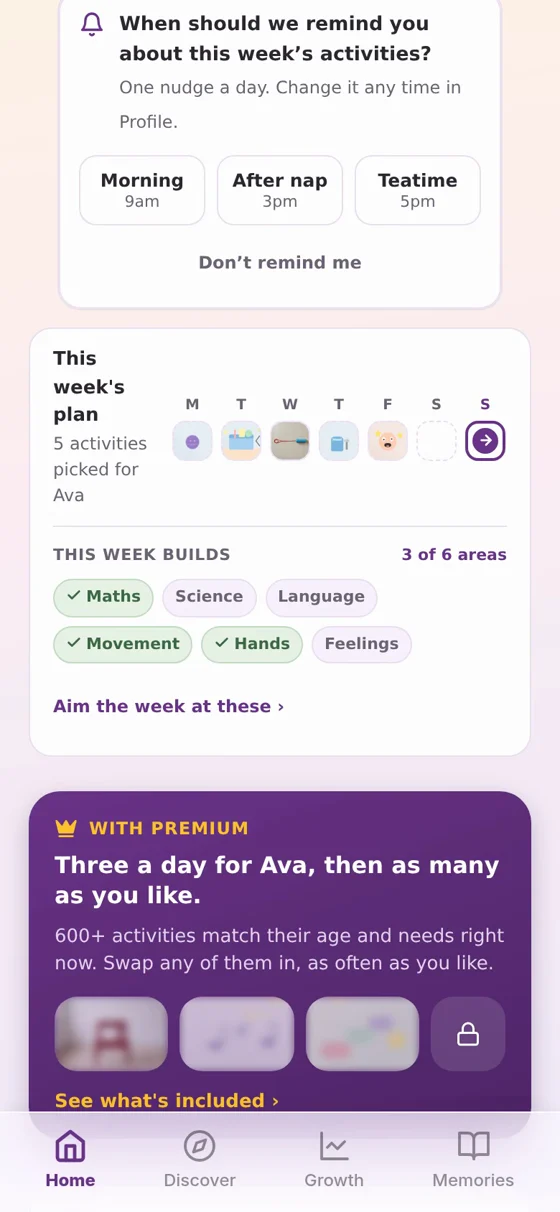
This week's plan showing five activities and the areas they build
HOW MOOSHIE HELPS

How Mooshie helps you reach for something else

Mooshie is, honestly, a screen too, just for you rather than your child. You open it, check an idea in about 30 seconds, and put the phone away to play. Beyond that:

  • It picks one activity a day matched to your child’s age and how much time you actually have, from 10 minutes to setting-up-counts-as-playing.
  • You can say how the day is going, “hands free” or “I’m shattered”, and it adjusts what it suggests.
  • Every activity comes with “say this” phrases, so you’re not thinking up what to say while also trying to cook dinner.
  • It’s free to download, with one new activity a day at no cost and no account needed to start.

Questions parents ask

How much screen time is actually okay for toddlers?

The World Health Organization suggests none for under 2s and up to an hour a day for 2 to 4 year olds, though it’s a general guide rather than a rule to hit precisely every day. What matters more day to day is whether screens are filling every gap or just some of them.

What if my toddler melts down when the screen goes off?

A warning before the change helps, “two more minutes, then it’s off”, along with something specific to move to straight away. A flat “screen’s off now, go and play” gives them nothing to land on, which is often what triggers the protest.

Are there screen-free activities for a car journey?

Yes, though a moving car limits what’s practical. Simple sensory toys, a sticker sheet on a lap tray, or singing games without any equipment tend to work best. See our travel activities for toddlers for more.

Is it bad to use a screen while I make dinner?

No single moment does any harm. The activities here are simply other options for that slot, useful on days when your child isn’t in the mood for a show, or when you’d rather they weren’t watching one.

What can I do when I have absolutely no energy?

Look for low-effort, low-mess options rather than nothing at all. See our low-energy toddler activities for ideas that ask very little of you.

Mooshie is a play app, not medical advice. If you’re worried about your child’s development, speak to your health visitor or GP.

Make memories. Build skills. Play together.

Your first moment is ready as soon as you tell us their age.

Mooshie MomentsFree on iPhone
Get it free