
10 Quiet Bin Ideas UK Parents Can Build in 5 Minutes
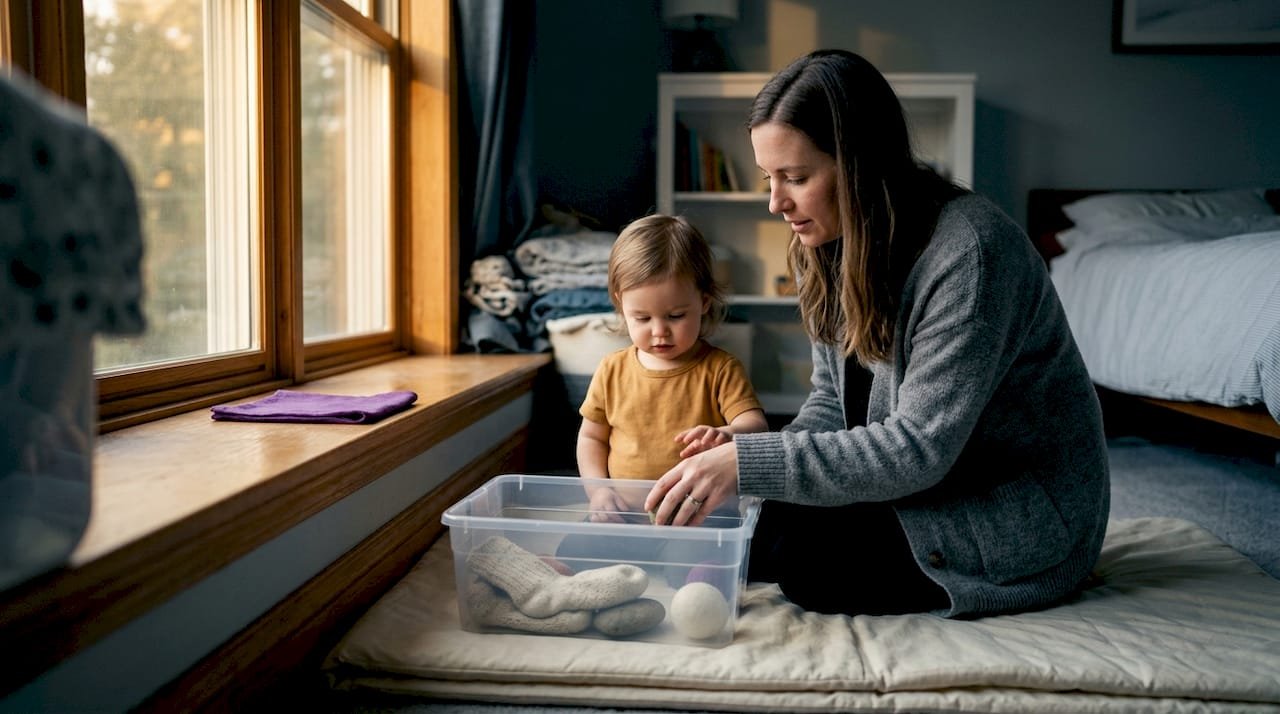
A quiet bin is a small container of hands on materials kept just for nap or rest time, and you can build one in under five minutes using things already in your kitchen or craft drawer. It works because low stimulation plus one clear job (explore this box) gives toddlers and preschoolers a way to settle themselves without a screen. Keep it out of sight except during quiet time, swap the contents every week or two, and most kids will happily occupy themselves for a period ranging from about a third of an hour to an hour.
TL;DR:
- A quiet bin should include a mix of sensory, art, and storytelling elements to keep children engaged without overstimulation.
- Introducing and modeling the quiet bin routine with consistent timing, simple rules, and rotation increases independence and minimizes boredom.
- Safety and cleanliness depend on choosing age-appropriate, size-safe materials and washing textiles regularly or replacing items with edible options for mouthing children.
- Tailoring quiet bin complexity to the child’s age involves using larger, simpler materials for younger children and more challenging items for preschoolers.
- Relying on routine, modeling, and rotation sustains engagement more than the contents’ novelty, making steady habits crucial for effective quiet time.
Table of Contents
- Quiet Bin Ideas for Calm, Independent Play
- How to Introduce a Quiet Bin So It Actually Works
- Matching Quiet Bins to Your Child’s Age
- Keeping Quiet Bins Safe and Clean
- How Mooshie Moments Applies This to Everyday Play
- When a Bin Falls Flat, Try This
- Why Most Quiet-Bin Advice Misses the Point
- Get Ready-Made Quiet-Bin Ideas Without the Prep Work
- Sources
Quiet Bin Ideas for Calm, Independent Play
The strongest quiet bins mix categories rather than repeating the same type of material bin after bin. Blending sensory play, art, books, and puzzles keeps small hands and developing brains engaged in different ways, which is exactly what Twinkl recommends for structured quiet time. Here are ten that work well for nap and rest windows.
- Calm sensory scoop bin. Dried rice or oats, a small scoop, and two plastic cups. The repetitive scooping motion is soothing rather than exciting, and it packs flat into a fabric pouch so there’s nothing to rattle.
- Felt storytelling board. A piece of felt and a handful of felt shapes or animals. Kids narrate their own stories with zero rules attached, which matters because open-ended materials keep children exploring longer than a bin built around one “correct” use.
- Sticker scene book. A blank notebook and a sheet of reusable stickers. Silent, mess-free, and endlessly repeatable since the stickers peel off and go back on.
- Chunky puzzle and sorting tray. A wooden puzzle plus a muffin tin for sorting pom-poms or buttons by color. Great for building focus without any moving parts that click or clatter.
- Lacing and fine-motor cards. Large wooden beads or laminated lacing cards with yarn. This one quietly builds the pincer grip toddlers need for later writing.
- Soft building bricks. Foam blocks or fabric-covered blocks instead of hard plastic ones. Building and knocking down stays quiet, and there’s no clatter to wake a sleeping sibling.
- Book and puppet pairing. One familiar picture book plus a finger puppet that matches a character. Pairing the two extends “reading” time well past what the book alone would hold.
- Themed nature bin. Pinecones, smooth stones, and a magnifying glass in a shallow tray. Rotate the theme by season and you get a whole year of variety from things you already have outside.
- Kinetic sand tub. A small tub of kinetic sand with a few cookie cutters. It holds shape quietly, which regular sand does not, and cleanup takes seconds.
- Fabric texture basket. Squares of felt, silk, and corduroy in a lined basket. This one leans calming rather than stimulating, ideal for a child who gets overexcited easily.
For each bin, line the container in soft fabric or felt rather than hard plastic. A padded pouch or a repurposed pillowcase muffles the clink of pieces shifting around, which matters more than people expect. A hard bin on a hard floor is often the actual noise problem, not the toys inside it.
How to Introduce a Quiet Bin So It Actually Works
Kids don’t intuit what a quiet bin is for. You have to show them once or twice before you can expect independent use.
- Model it together first. Sit down, open the bin, and play alongside your child for a few minutes before you ever expect solo use.
- Set one simple rule. Something like “quiet bin toys stay on the mat” is enough; too many rules turn rest time into a negotiation.
- Pick a consistent window. Same time, same signal (a mat unrolled, a lamp switched on) trains the routine faster than changing it daily.
- Rotate the bins. Keep five bins in rotation, or label one per weekday, so nothing gets stale enough to be ignored.
- Stretch the time gradually. Start with ten minutes of expected independent play and add a few minutes each week.
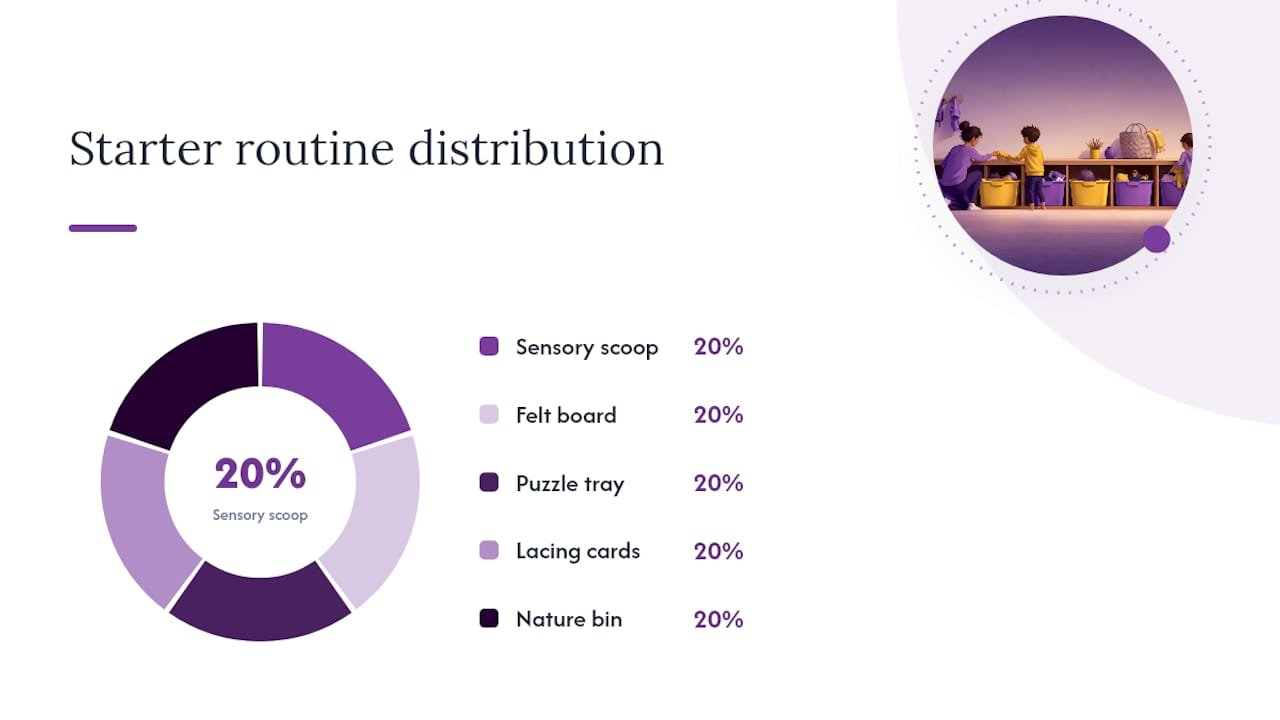
A one-week starter routine looks like this: Monday sensory scoop, Tuesday felt board, Wednesday puzzle tray, Thursday lacing cards, Friday nature bin, then repeat with fresh contents the following week.
Pro Tip: Store bins somewhere your child can’t see them outside of quiet time. Novelty fades fast when a bin sits in view all day, and hiding it makes the moment of opening it feel like a small event.
Matching Quiet Bins to Your Child’s Age
Piece size and complexity need to shift as your child grows, but you rarely need to buy anything new to do it.
- Around age 1: Fabric books, large soft blocks, and stacking cups. Nothing smaller than a golf ball, since mouthing is still common.
- Around age 2: Chunky puzzles, large lacing beads, and simple shape sorters.
- Around age 3: Felt boards, basic sorting trays, and early pattern puzzles.
- Around age 4: Multi-piece puzzles and loose parts like buttons or pebbles, used with occasional check-ins rather than constant supervision.
To raise the challenge without spending anything, add a second step to the same materials, sorting by color one week and by size the next. To lower it, simplify back to open scooping or stacking until confidence returns.
Keeping Quiet Bins Safe and Clean
Safety comes down to piece size and material choice more than anything else. Anything smaller than a toilet paper tube is a mouthing risk for children under three, so save loose beads and small buttons for kids past that stage.
- Check every item against a choke-hazard size guide before it goes in the bin.
- Choose fabric pouches or lined trays over hard plastic containers to cut down on noise.
- Wash textiles and wipeable pieces weekly, or after any illness in the house.
- Swap in taste-safe options like edible dough for children who still mouth objects during play, following guidance on taste-safe sensory play built for that stage.
How Mooshie Moments Applies This to Everyday Play
Some apps build their libraries around short, age-tailored activity slots using things already in the house, which is the same logic behind a good quiet bin. The nursery activity planning framework breaks activities into daily five-minute slots, a structure that maps neatly onto rotating quiet bins.
Three Mooshie-style bins built on that model:
- 5-minute sensory slot: dried pasta, a spoon, two bowls.
- 5-minute fine-motor slot: clothespins and a small basket for pinching practice.
- 5-minute story slot: one board book and a soft animal to act out a page together.
Try a sample five-minute activity list from the Mooshie Moments collection to see how the same rotation logic plays out across a full week.
When a Bin Falls Flat, Try This
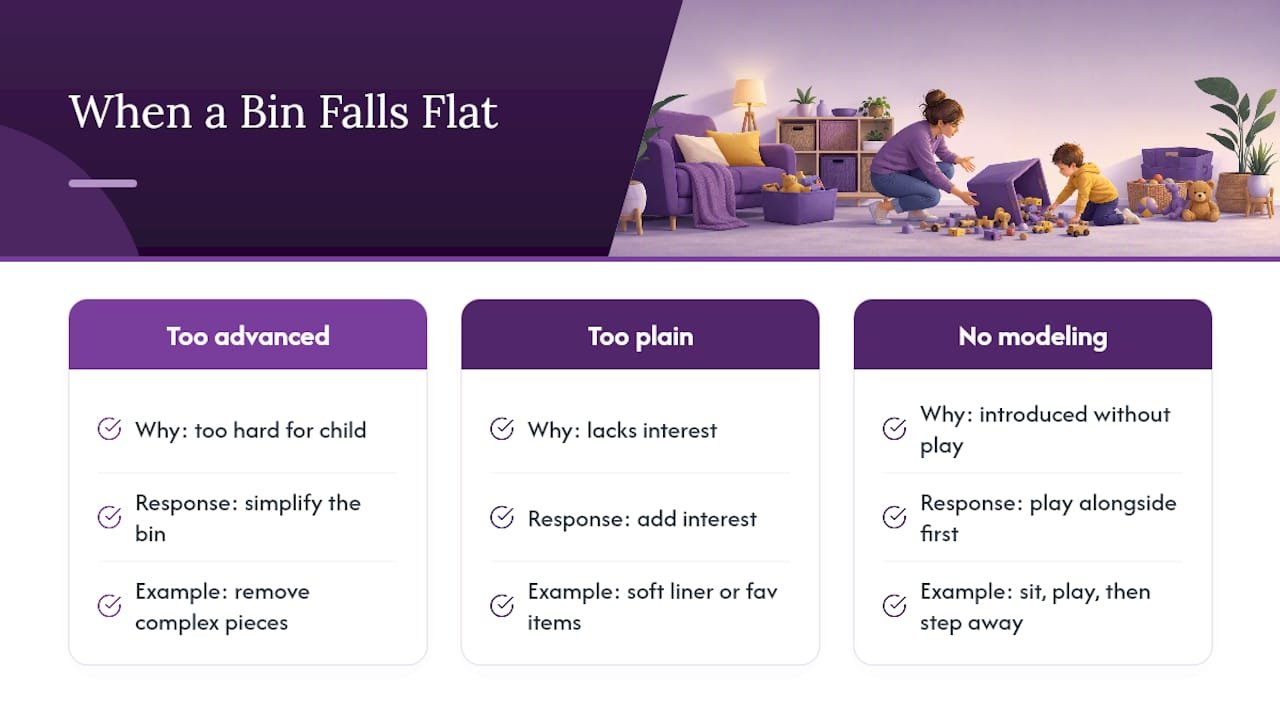
Refusal usually means one of three things: the bin is too advanced, too plain, or introduced without enough modeling. Sit back down and play alongside your child for a few minutes before pulling away again.
If noise is the issue, swap hard items for soft ones on the spot. A rattly bin of blocks becomes quiet the moment you drop in a fabric liner. If attention drifts fast, shorten the expected quiet-time window rather than abandoning the bin altogether. Add a calming cue like dimmed lighting or a specific mat, but use it sparingly. If a cue is attached to every single activity, it stops signaling anything special and just becomes background noise.
Pro Tip: Keep one “emergency” bin stocked with your child’s current favorite items and reserve it only for the days when nothing else is landing. Predictability is often what rescues a rough rest time, not novelty.
Why Most Quiet-Bin Advice Misses the Point
Most quiet-bin lists online are just inventory: forty things to put in a box. That’s not the hard part. The hard part is that a new bin, dropped in front of a toddler with zero introduction, gets ignored or dumped out in ninety seconds. What actually determines whether a bin works is the habit around it, the modeling, the consistent timing, the rotation, not the cleverness of what’s inside.
The other overrated idea is variety for its own sake. Five well-chosen bins in steady rotation beat fifteen bins nobody bothers to swap. Novelty fades fast on any object; what sustains engagement is the predictable ritual of quiet time itself.
If you’re starting from zero, prioritize the routine before the contents: same time, same signal, one bin, modeled together twice before you expect independent use. Get that right and almost any reasonable set of household objects will hold a toddler’s attention. Get it wrong and even the most elaborate sensory bin ends up on the floor in under a minute.
— samit
Get Ready-Made Quiet-Bin Ideas Without the Prep Work
Building a good quiet bin rotation from scratch takes trial and error most parents don’t have spare energy for during nap time. Some apps offer age-personalized, screen-free activity ideas that are ready in five minutes, no shopping trip or Pinterest rabbit hole required.
Instead of guessing which puzzle or sensory idea suits your two-year-old this week, use apps that provide suggestions matched to their age and the time you actually have. Browse the 2-year-old activity ideas for a ready list of quiet-time material swaps you can build a rotation around today.
Recommended
More like this

Five Minute Routine Activities to Help Speech Delay in UK Toddlers
Quick, routine based activities UK parents can use in 5–15 minutes to support a toddler with speech delay. Evidence backed techniques and…

Three Minute Mess Free Sensory Play For UK Parents
Quick, reusable sensory activities UK parents can set up in minutes. Sealed bags, sticky wall art, safety checks, storage tips, and Mooshie…
4–8 Toys: Montessori, Behavior Led Toy Rotation for Toddlers
Montessori inspired, behavior led toy rotation for toddlers. Start with 4–8 toys, set up in under 20 minutes, and refresh play without…