
10 EYFS Backed Sock Games for Toddlers Under Five Minutes
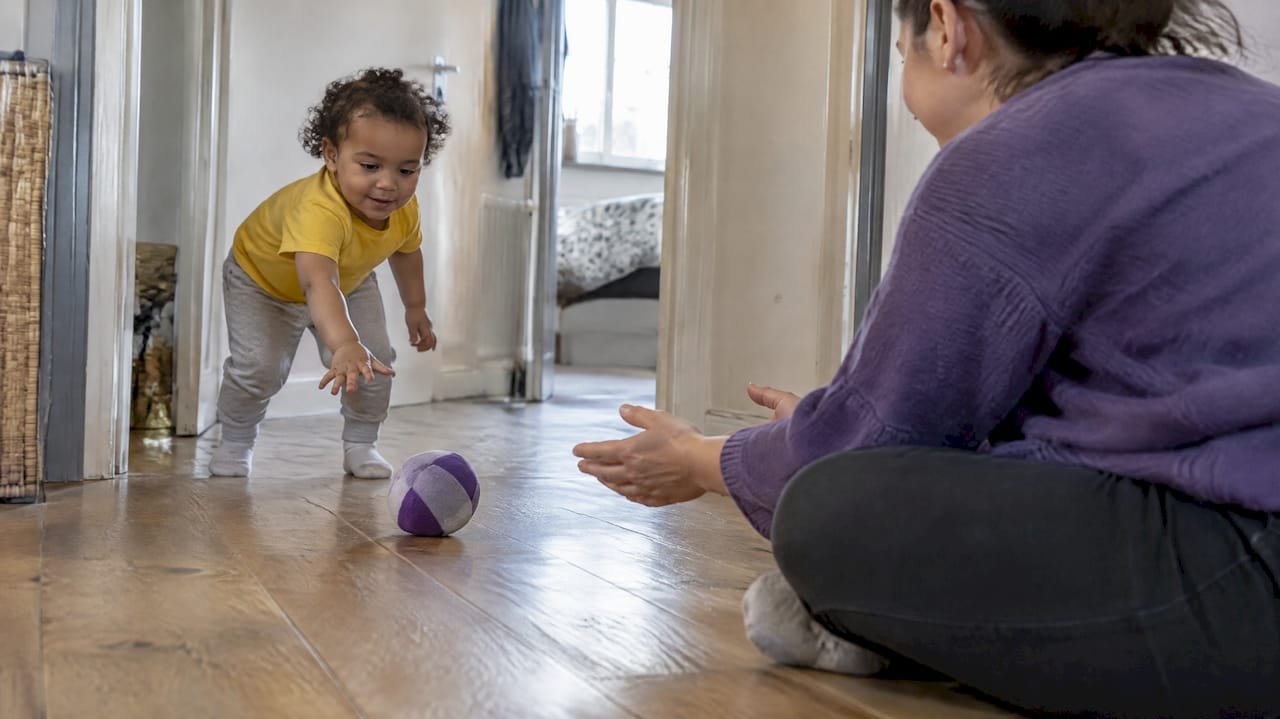
You can turn spare socks into ten easy, developmentally useful games your toddler can play in under five minutes. Start with two or three now and see what sticks. These low-prep activities draw on the early years foundation stage framework and a practice-based approach, so the fun carries real developmental payoff.
TL;DR:
- For toddlers under two, use only four socks for matching and two colors for sorting; move the basket closer if tossing remains difficult.
- Roll one sock toe to cuff for a soft beginner ball; put a smaller sock inside a knotted larger one for heavier play.
- Supervise play, remove choking hazards, discard frayed socks, and avoid buttons, sequins, or loose threads; toddlers who mouth objects need larger, soft props.
- For seated play, sort socks on a tray; if your toddler is sensitive to textures, choose smooth socks, calm lighting, and close, larger targets.
- Try matching, sock ball tossing, and puppet talk for 60 seconds each, narrating actions or asking a simple question during play.
Table of Contents
- 1. Top sock games that take under five minutes to start
- 2. How to make sock balls and other no-sew props
- 3. Materials, setup and safety checklist for sock play
- 4. Why these sock games support early development
- 5. Adapting sock games for different abilities and moods
- 6. Mooshie Moments coaching: two scripts and a micro-routine
- 7. Why I recommend keeping a sock play kit ready
- Try Mooshie Moments for more quick, age-tailored play ideas
- FAQ
- Sources
1. Top sock games that take under five minutes to start
Grab a basket of mismatched socks and pick one to try right now.
- Match pairs. Spread socks on the floor and ask your toddler to find two that look alike. This builds visual discrimination and early sorting skills. For toddlers under two, reduce the pile to four socks.
- Make sock balls. Roll a sock into a tight ball and knot the end. This strengthens hand muscles used for later pencil grip. Let older toddlers help roll their own.
- Find the dinosaur eggs. Hide rolled sock balls (the “eggs”) around a room for your toddler to discover, an idea borrowed from ZERO TO THREE’s sock play guide. This supports gross motor movement and object permanence. Add a toy dinosaur nearby for pretend play.
- Guessing in the sock. Hide a small toy inside a sock and ask your child to guess what it is by touch. This builds sensory discrimination and vocabulary. Swap in textured objects like a hairbrush or a spoon for variety.
- Toss to basket. Set a laundry basket a short distance away and toss sock balls in. This develops hand-eye coordination and distance judgment. Move the basket closer for toddlers still building aim.
- Sort the rainbow. Group socks by color into piles or boxes. This reinforces early color recognition and categorization. Use just two colors for younger toddlers.
- Sock ball bowling. Line up empty plastic cups and roll sock balls to knock them down. This practices rolling motion, balance, and cause and effect. Swap cups for larger targets like boxes if knocking things over feels tricky.
- Sock puppet role-play. Draw a face on a sock or add stick-on eyes, then act out a short story together. This builds language and imaginative play. Let your toddler invent the puppet’s name and voice.
- Tidy-up race. Turn sock sorting into a quick race against a timer or a song. This builds routine, responsibility, and quick decision-making. Sing the countdown instead of using a timer for younger toddlers.
- Texture hunt. Rub different socks (fuzzy, smooth, ribbed) against your toddler’s hands or feet and name the textures. This develops sensory vocabulary and tactile awareness. Pair each texture with an animal sound for extra engagement.
Pro Tip: Keep a small basket of clean socks by the sofa so you can start a game the moment boredom strikes.
Try this next: once match pairs feels easy, add a timer or hide one sock to turn it into a mini treasure hunt.
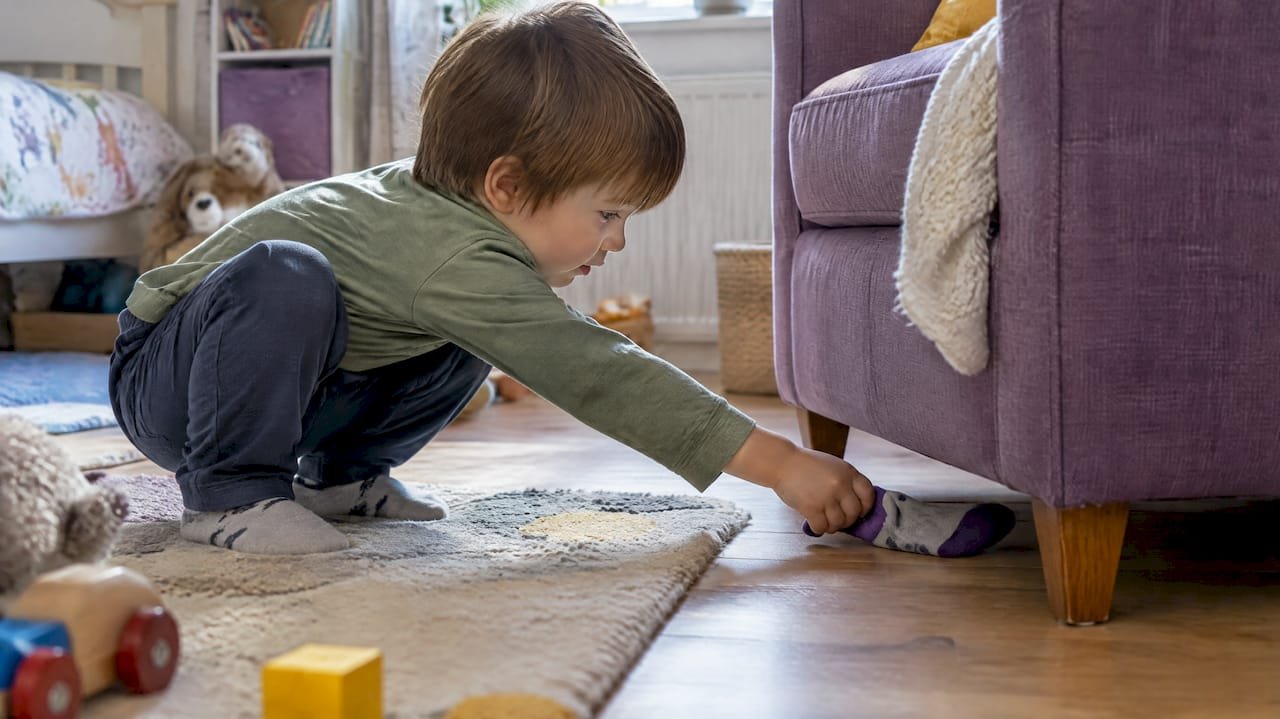
2. How to make sock balls and other no-sew props
Two simple methods work well, both pulled from practical sock play guidance:
- Method A, single sock: Roll one sock tightly from toe to cuff, then tuck the cuff over itself to hold the shape. This makes a very soft, light ball suited to beginners.
- Method B, double sock: Roll a smaller sock into a ball, place it inside a slightly larger “casing” sock, and knot the open end. This adds weight and durability for more active throwing and rolling games.
- Sizing tip: Use adult socks for casings and baby socks for stuffing if you want a firmer, heavier ball.
- Finishing tip: Trim any loose threads, skip decorative buttons or sequins, and check knots before each play session.
3. Materials, setup and safety checklist for sock play
You need almost nothing to start: a handful of clean socks, a box or basket, and a clear patch of floor.
- Minimal kit: Clean socks, a laundry basket or box, paper plates or tape for targets, and a soft rug or mat.
- Setup steps: Clear the play area of furniture corners, lay down a non-slip mat, and remove anything small enough to be a choking hazard.
- Safety rules: Supervise every session, replace any sock that’s torn or fraying, and avoid socks with buttons, sequins, or loose threads.
- For mouthing toddlers: Swap sock balls for larger, soft textured props, or try a taste-safe sensory activity instead.
Repeated, varied movement opportunities support balance and coordination over time, according to the EYFS statutory framework for childminders, which is exactly what tossing, rolling, and bowling games offer in small daily doses.
4. Why these sock games support early development
Sock play isn’t just filler between naps and meals. It lines up with how early years guidance describes meaningful, low-cost play.
Fine motor work, like rolling a sock into a ball or pinching it to find a hidden toy, mirrors the kind of hand control highlighted in guidance on fine motor skills, which links small, repeated manipulation tasks to later independence and pencil grip. Gross motor games like tossing and bowling build balance and spatial awareness, a focus named in the EYFS framework for school-based and group providers. Sock puppet role-play and guessing games support turn-taking and early vocabulary.
Play helps toddlers build motor skills, language, and social understanding, and everyday objects can carry just as much developmental value as store-bought toys.
ZERO TO THREE, Let’s Play: How Your Child Learns and Grows Through Play From Birth to Three
5. Adapting sock games for different abilities and moods
Every toddler plays at a different pace, so build in flexibility from the start.
- Short attention spans: Cap rounds at 30 to 60 seconds and switch games before interest fades.
- Mobility or seated needs: Play match pairs or sorting games on a tray, as in our seated activity ideas for grandparents.
- Sensory sensitivity: Choose smoother socks, keep lighting calm, and use larger, closer targets to cut frustration.
- Scaffolding: Model the action first, offer one instruction at a time, and praise the attempt rather than the result.
Pro Tip: If your toddler walks away mid-game, that’s your cue to stop, not a sign the game failed.
6. Mooshie Moments coaching: two scripts and a micro-routine
A little narration turns simple tossing into language practice. Try: “You rolled the sock ball so far!” or “Which sock matches this one?” Both scripts mirror the approach in our guide to narrating play.
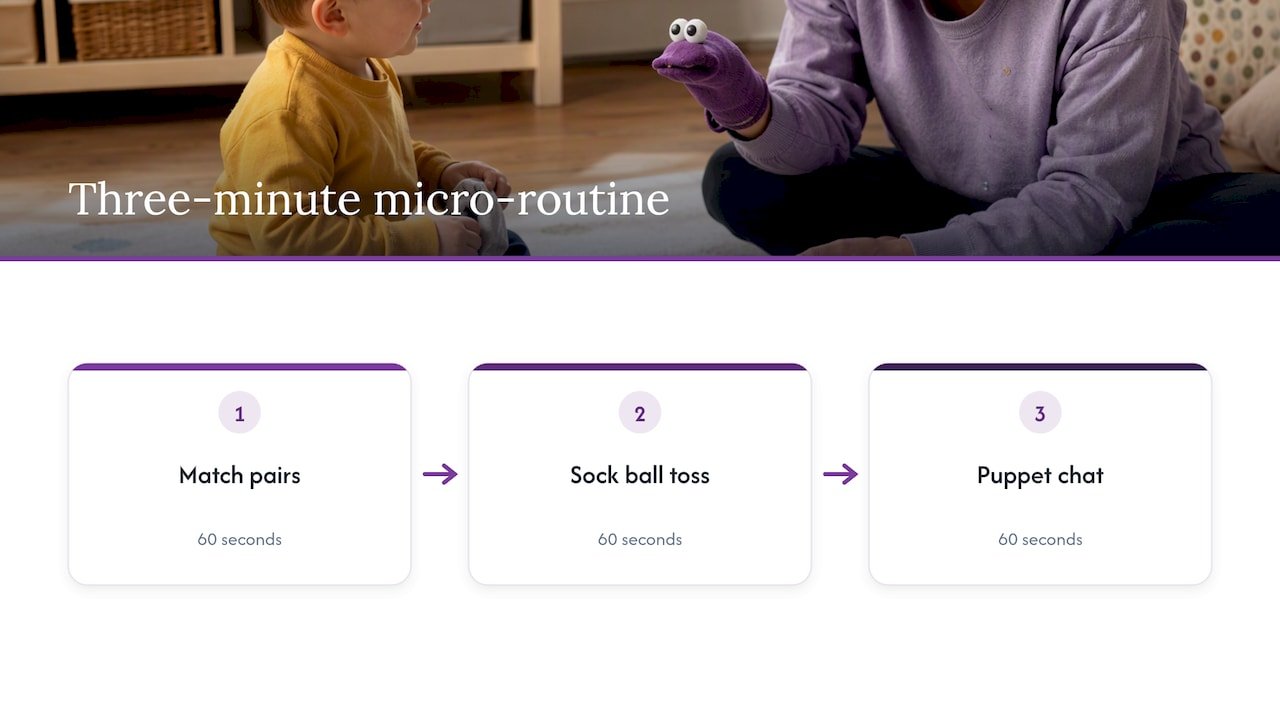
For a fast daily routine, run three games back to back: 60 seconds of match pairs, 60 seconds of sock ball toss, and 60 seconds of puppet chat. We built Mooshie around exactly this kind of short, age-tailored prompt, paired with printable cues for repeat play.
7. Why I recommend keeping a sock play kit ready
We’ve found the biggest barrier to play isn’t ideas, it’s momentum. Keep a small basket of clean socks near your main living area so a game is always thirty seconds away.
Follow your toddler’s lead, and stop the moment interest fades rather than pushing for one more round. Adjust, repeat, and let each session look a little different.
— samit
Try Mooshie Moments for more quick, age-tailored play ideas
This app provides a fresh, age-matched activity the moment you open it, requiring no planning, no extra shopping, and no screen time for your toddler. Every suggestion comes with a plain-language explanation of what it’s building and a quick prompt you can say out loud while you play.
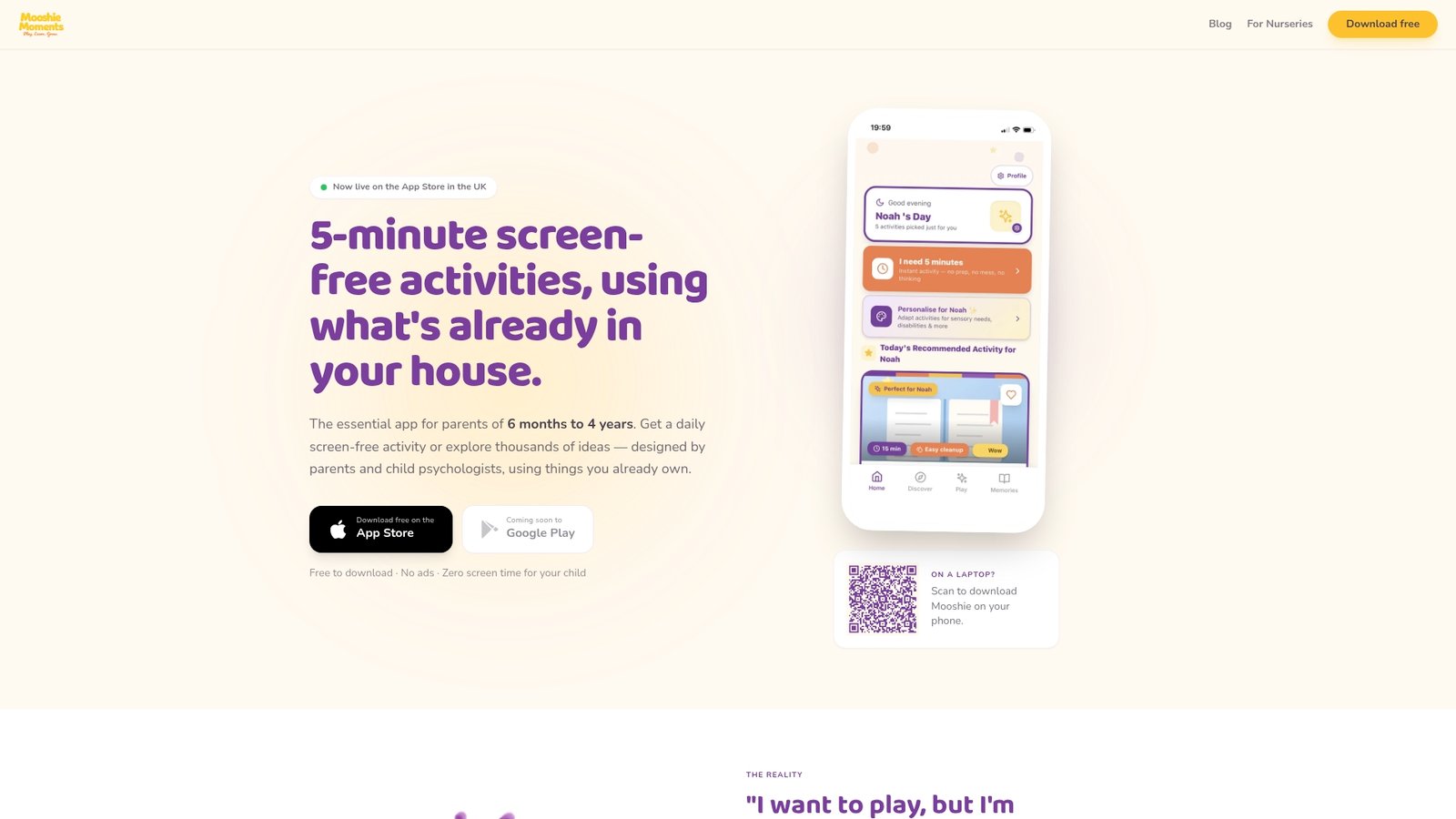
- Age-tailored suggestions for children 6 months to 4 years
- Quick, timed activities that fit a 5-minute window
- Narration prompts built into each activity card
For more ideas suited to toddlers around this age, visit our 2-year-old activity collection, or head to the Mooshie landing page to see what’s inside the app.
FAQ
What are some fun games I can play with socks?
Matching pairs, rolling sock balls, hiding “dinosaur eggs” for a hunt, guessing a hidden object by touch, and sorting socks by color are all fast, low-prep options. Each one can be adapted for younger or older toddlers by adjusting the number of socks or the distance involved.
How do you play the sock game?
Most sock games start the same way: roll, hide, sort, or toss a sock, then add a simple instruction like “find the matching one” or “throw it in the basket.” The ZERO TO THREE sock play guide outlines five variations that work well for toddlers.
What are some simple games I can play with my toddler?
Beyond sock games, simple options include stacking cups, hiding toys under a blanket, or sorting household objects by color or size. The goal is short, repeatable activities using things you already have at home.
What are some activities for Silly Sock Day?
Mismatched sock parades, sock puppet shows, and a sock-sorting relay race all fit a themed day well. Pairing a game with a bit of dress-up, like wearing two different socks, adds extra fun without any extra prep.
Sources
- Early years foundation stage statutory framework – childminders (2026)
- Help for early years providers: Fine motor skills
- 5 Ways to Play With Socks | ZERO TO THREE
Recommended
- Research Backed Nursery Activity Plans: 3 Daily 5 Minute Slots (UK)
- 40 Fun 2 Year Old Activities to Start Right Now
- 12 Low Prep Toddler Activities for Grandparents With Seated Options
- Junk Modelling for Toddlers: Easy EYFS-Aligned Activities
Want a new idea every day, matched to your child's age?
Mooshie Moments gives you simple, guided play ideas for ages 6 months to 4 years.
Download free on the App StoreMore like this
Babysitting Toddlers: 12 Low Prep Ideas and Why They Help
Explore 12 low prep toddler activities for babysitters, with developmental benefits, age adaptations, UK safety advice, and optional activity coaching.
Busy Parents: 12 No Prep Shopping Activities for Toddlers
Busy parents: keep toddlers learning and calm at the store with 12 no prep, screen free activities that take under five minutes…

Low Prep Music and Movement for Busy Parents That Works in 5 Minutes
Start low prep music and movement with your toddler in five minutes. Research backed, age tailored activities and hearing safety tips for…