
Rainy-Day Fixes: Easy Indoor Activities Toddlers Love
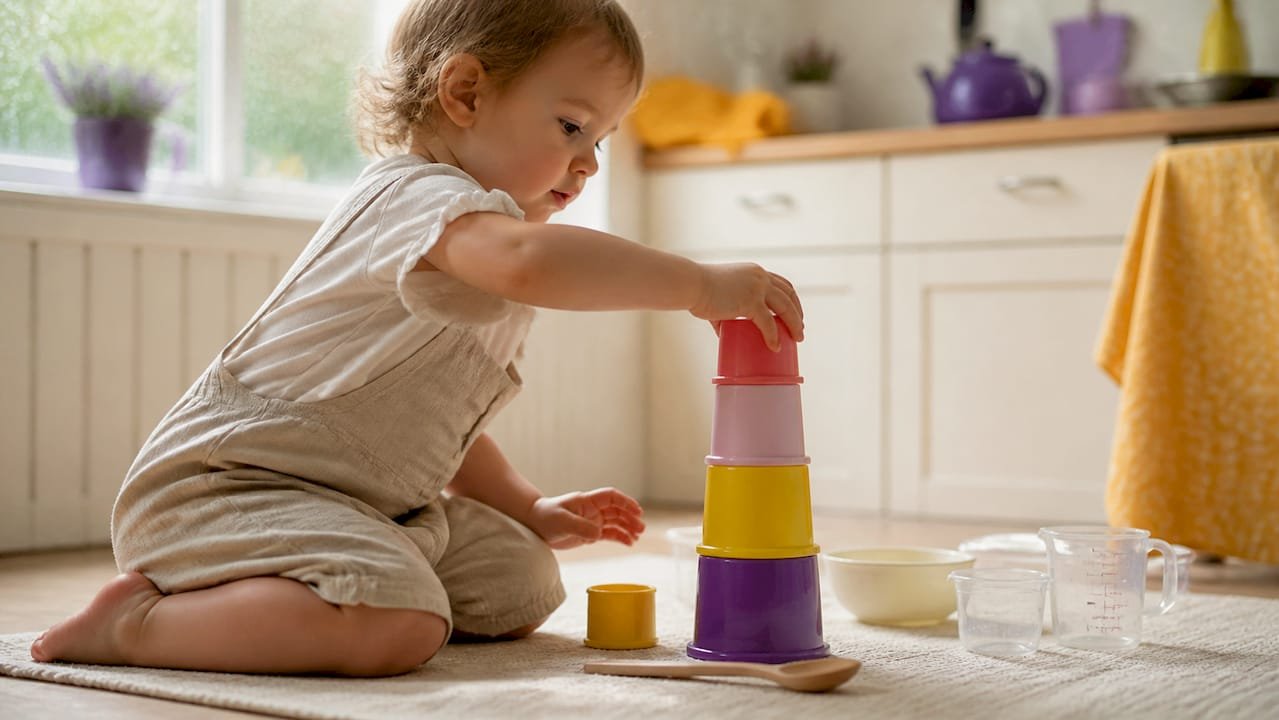
Try an obstacle course, a rice bin, balloon play, playdough, a puppet story, and a five-minute craft. Rotate active play for 30 minutes, then a snack, then 20 minutes of fine motor work, and you’ve covered most of what a toddler needs from an afternoon stuck indoors. These indoor activities for toddlers work because they mix movement, touch, and talk, which is exactly what small bodies and brains ask for when the weather keeps everyone inside.
Here’s your go-to list, each one ready in under two minutes:
- Pillow obstacle course — builds balance and jumping. Line up cushions in a hallway.
- Rice or pasta sensory bin — builds fine motor control. Pour dry rice into a shallow tray with cups.
- Balloon volleyball — builds hand-eye coordination. Blow one up and bat it back and forth.
- Playdough station — builds hand strength. Set a lump on a tray with a rolling pin.
- Puppet story time — builds language and imagination. Use a sock and two button eyes.
- Paper-plate craft — builds creativity. Offer crayons, stickers, and one plain plate.
- Quiet book corner — builds attention. Pile three favorite books on a cushion.
Pro Tip: Keep a small basket with these seven setups already gathered. When the rain starts, you grab and go instead of hunting for supplies.
Key Takeaways
Rotating three to four low-prep, screen-free activities across active, fine motor, and quiet play reduces meltdowns and builds real developmental skills.
| Point | Details |
|---|---|
| Pick a short list | Choose a few go-to activities rather than chasing new ideas every day. |
| Use the 90-minute rotation | Alternate active play, snack, fine motor, and quiet time to prevent overstimulation. |
| Match mess to energy | Sort activities as low, medium, or high mess and plan trays for the messy ones. |
| Build independence gradually | Start with 2 to 3 minutes of solo play at one station and extend slowly. |
| Let an app do the planning | Mooshiemoments suggests age-matched, screen-free activities based on the time you have. |
Table of Contents
- Active Indoor Activities That Burn Off Toddler Energy
- Sensory Bins and Fine Motor Play for Little Hands
- Craft and Pretend Play That Builds Language
- Quiet Indoor Games for Calm, Focused Play
- Setup, Mess Control, and Safety Basics
- A 90-Minute Rotation Template for a Stuck-Indoors Day
- Helping Toddlers Play Independently, at Any Age
- Why Play-Based Learning Matters More Than It Looks
- Our Take on What Actually Works Indoors
- Let Mooshiemoments Handle the “What Now?” Moments
- Frequently Asked Questions
- Sources
Active Indoor Activities That Burn Off Toddler Energy
Toddlers need to move, and a rainy day doesn’t change that. Building simple indoor obstacle courses from pillows, blankets, or cushions supports jumping and balance while helping burn off pent-up energy, according to Active For Life. Here’s how to run five that work in almost any living room, including small flats.
- Pillow obstacle course. Line cushions in a path to crawl over, then finish with a low jump onto a folded blanket. Keep it against a wall, away from furniture edges.
- Blanket tunnel. Drape a sheet between two chairs and let your toddler crawl through, then rebuild it as a den for round two.
- Balloon games. Bat a balloon back and forth or set up a laundry basket for balloon “bowling.” Balloons pop, so supervise closely with children under three.
- Stepping stones. Space out paper plates or cushions across the floor and hop from one to the next.
- Dance freeze. Play music, dance, then pause it and freeze in place. This one needs zero setup and works anywhere.
Ten to fifteen minutes per game is plenty before switching things up.
Sensory Bins and Fine Motor Play for Little Hands
Sensory and fine-motor activities give toddlers a job for their hands, which is exactly what builds the pincer grip needed for holding crayons and spoons later. A shallow tray, some dry rice, and a couple of scoops turn into twenty minutes of focused play.
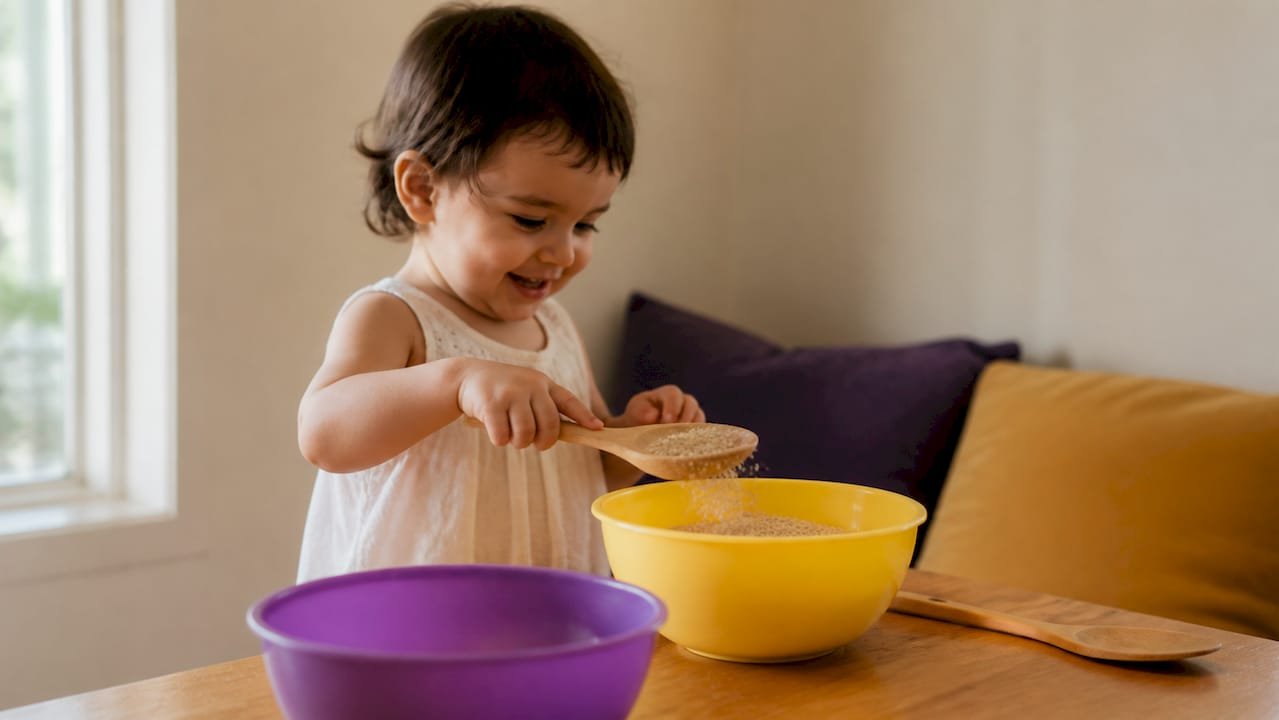
- Rice or dry pasta scooping bin. Fill a tray, add cups and spoons, and let your toddler transfer rice between containers.
- Playdough tray. Give a rolling pin, a blunt knife, and a few cookie cutters. Ten minutes is often enough before interest fades.
- Pom-pom transfer. Use tongs or a small scoop to move pom-poms between two bowls, which sharpens hand control.
- Threading practice. Large wooden beads on a shoelace work well for toddlers over two; skip small beads under that age, since choking risk rises with anything smaller than a golf ball.
- Low-mess swap. Dry oats or shredded paper clean up faster than rice if you’re short on time.
Lay a towel underneath any bin. It catches spills and doubles as the cleanup tool.
Craft and Pretend Play That Builds Language
Creative play gives toddlers a reason to talk, and talking is the whole point. BBC’s Tiny Happy People recommends simple scaffolding and parent-led prompts for two and three year olds, and these ideas build on that approach.
- Blanket fort with puppet story. Build a den, grab a sock puppet, and ask “what happens next?” to keep the story going.
- Stamp painting. Dip a potato half or a cork into paint and press it onto paper. Washable paint on a wipeable surface keeps mess contained.
- Pretend tea party. Pour “tea” from an empty pot and ask, “Is it hot? Should we blow on it?” Simple questions like this stretch vocabulary fast.
- Kitchen role-play. Hand over a wooden spoon and a mixing bowl, and narrate what you’re both doing.
- Age adjustment. For 18 to 24 months, keep crafts to one step, like sticking pre-cut shapes. By 30 to 36 months, add a second step, like coloring then cutting.
Quiet Indoor Games for Calm, Focused Play
Not every moment needs to be loud. Quiet activities matter just as much for building attention and giving both of you a breather between bursts of energy.
- Dialogic reading. Instead of just reading the words, pause and ask, “What do you think the bear will do?” This kind of back-and-forth is exactly what the NHS points to when it comes to following your toddler’s lead and describing what they notice.
- Simple puzzles. A four to six piece wooden puzzle is right for most two year olds; add pieces gradually as they master it.
- Matching and sorting. Sort socks by color or match lids to containers. Household objects work as well as bought toys.
- Sensory bottles. Fill a clear bottle with water, glitter, and a drop of dish soap. Shake and watch it settle for a calm five minutes.
A good rule of thumb: expect roughly one minute of focused attention per year of age, so a two year old manages about two minutes before needing a change.
Setup, Mess Control, and Safety Basics
A little planning up front means less stress mid-play. Run through three quick checks before any activity starts: clear the floor of trip hazards, confirm nothing includes pieces small enough to choke on, and never leave a toddler unattended near water, even a shallow tray.
- Low mess: books, puzzles, dance freeze, puppet stories.
- Medium mess: playdough, stamp painting, threading beads.
- High mess: rice bins, ice-melt trays, anything with loose glitter.
Trays are your best friend here. Confining sensory play to a tray or a shower curtain on the floor turns a potential disaster into a two-minute wipe-down. For water play specifically, keep the water level shallow, under an inch, and stay within arm’s reach the entire time.
Pro Tip: Turn cleanup into a game by challenging your toddler to put everything away before a two-minute song ends. Most toddlers race the clock happily, and you skip the meltdown that comes with an abrupt “playtime’s over.”
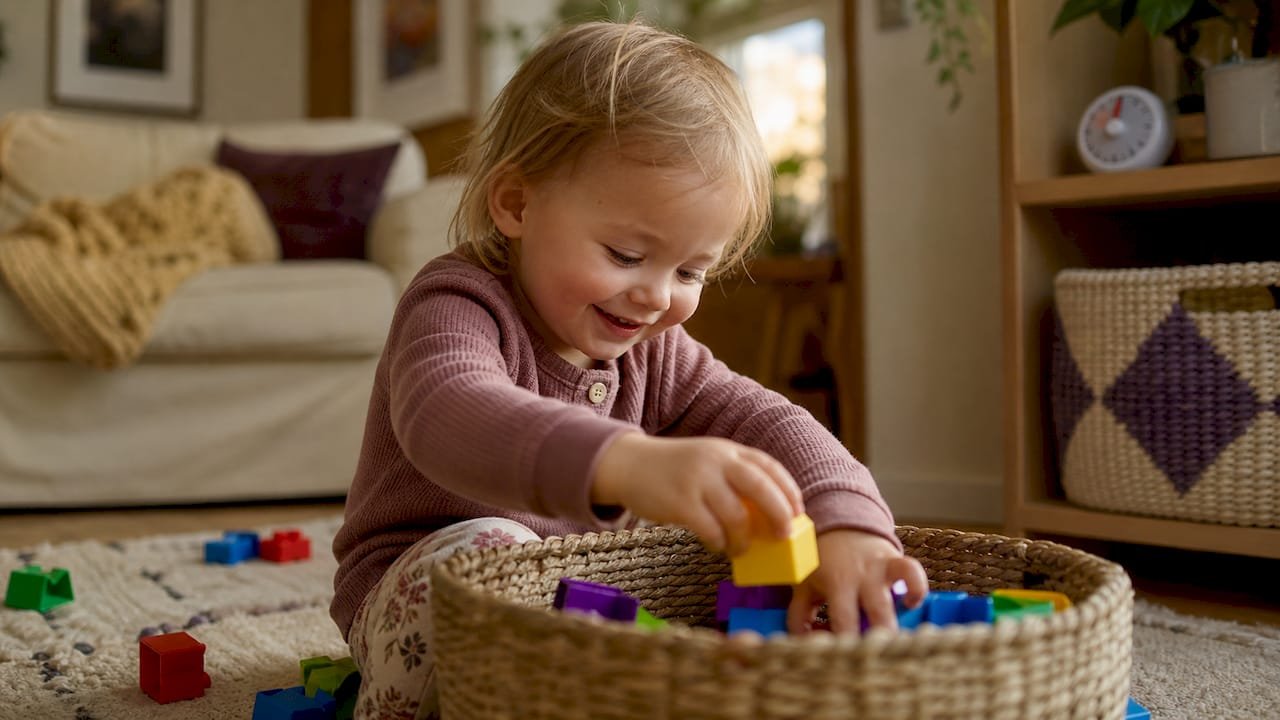
A 90-Minute Rotation Template for a Stuck-Indoors Day
You don’t need a new idea every hour. A repeatable structure works better than fresh inspiration. MiniMinors recommends a 90-minute style rotation that alternates energy levels to avoid overwhelm.
- 0 to 30 minutes: active play. Obstacle course, balloon games, or dance freeze.
- 30 to 40 minutes: snack. A built-in reset before the next activity.
- 40 to 60 minutes: fine motor. Sensory bin, playdough, or threading.
- 60 to 75 minutes: lunch or nap prep. A natural wind-down point.
- 75 to 90 minutes: pretend or quiet play. Puppet story, tea party, or a picture book.
For toddlers under two, shrink each block to 10 or 15 minutes and repeat favorites rather than introducing something new. Mixing active and calm activities like this reduces the meltdowns that come from either too much stimulation or too little.
Helping Toddlers Play Independently, at Any Age
Independent play is a skill, not something toddlers arrive with. Build it gradually by setting up one contained station, like a sensory bin or a puzzle tray, and staying nearby without jumping in immediately.
- Start with two or three minutes of independent play, then extend by a minute or two each week.
- Simplify an activity by removing steps (fewer puzzle pieces, bigger pom-poms); increase challenge by adding steps (a second craft layer, more threading beads).
- Watch your toddler’s cues. Fussing usually means the activity is too hard or too long, not that something’s wrong with them.
Pro Tip: If you’re running on empty, pick the lowest-effort option on this list and let it run longer than usual. A rainy day covered by three solid activities beats five rushed ones.
Why Play-Based Learning Matters More Than It Looks
Play isn’t just a way to pass a wet afternoon. It builds spatial awareness, pattern recognition, and sensory processing, all of which develop through the kind of hands-on activities covered above, according to guidance from the NHS. Obstacle courses built from household items do double duty: they develop balance and motor planning while giving a toddler a sensory-rich space to explore, a point Active For Life also makes about supervised, scaffolded movement play.
The catch for most parents isn’t knowing that play matters. It’s knowing which activity fits today, right now, with the energy and time they actually have. That’s the gap Mooshiemoments was built to close. The app suggests screen-free activities matched to your toddler’s age and however many minutes you’ve got, each one built around real child-development research rather than guesswork. Nurseries and early years settings can also tap into ready-made partnership resources for group activities and printable packs.
Short, repeatable activity cycles with low-prep materials make it far more likely a parent reaches for the same idea again next week, and that repetition is where the developmental payoff compounds.
Pro Tip: Save your three best low-mess activities somewhere visible, like a fridge magnet list, so tired-brain moments don’t turn into a 20-minute supply hunt.
Our Take on What Actually Works Indoors
Most rainy-day activity lists treat every idea as equally valuable, as if 40 crafts on a page mean 40 good options. They don’t. The research behind this list points to something narrower and more useful: three or four activities, rotated with intention, beat a sprawling list every time. MiniMinors makes this point directly, and it matches what most parents already sense but rarely act on.
The conventional advice oversells novelty and undersells repetition. A toddler doesn’t need a new craft every day. They need the same five or six reliable options, offered consistently enough to build mastery and confidence. That’s harder for tired parents to accept than it sounds, because Pinterest boards make repetition look like a failure of imagination rather than good practice.
If you take one thing from this list, prioritize the rotation over the activity count. Pick your four favorites, alternate active and quiet, and stop hunting for new ideas. An app that already sorts activities by age and time removes exactly the friction that helps that habit stick.
Let Mooshiemoments Handle the “What Now?” Moments
Mooshiemoments is the shortcut for the moment you’re standing in the living room with a bored toddler and no plan. Instead of scrolling for ideas or rebuilding the same mental checklist every rainy afternoon, the app hands you a screen-free activity matched to your toddler’s exact age and however many minutes you actually have, whether that’s two or twenty.
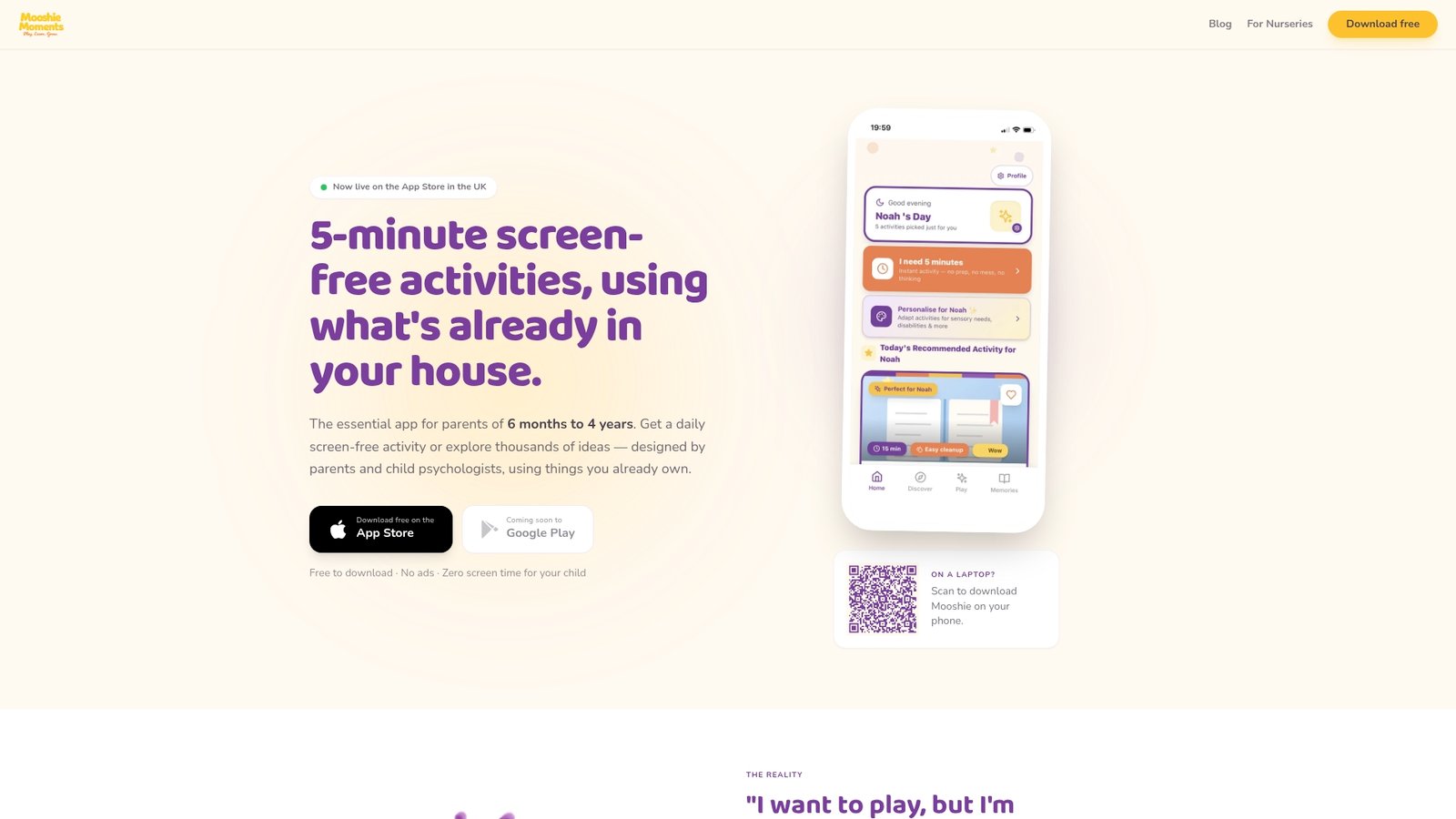
Every suggestion draws on child-development research and comes with a plain-English explanation of what it’s building, so you’re not just filling time, you’re doing it with a reason behind it. Nurseries and early years practitioners get their own set of tools too, through the nursery partnership resources built for group settings. For parents, the next step is simple: download the Mooshiemoments app and let it suggest tonight’s activity for you.
Frequently Asked Questions
What are the easiest indoor activities for toddlers with zero setup time?
Dance freeze, a puppet made from a sock, and a pillow obstacle course all take under two minutes to start and need nothing you don’t already own.
How long should an indoor activity last for a two year old?
Plan for roughly two minutes of focused attention per year of age, so a two year old typically manages 10 to 15 minutes before needing a change of activity.
What’s a good rainy-day schedule for toddlers?
Try the 90-minute rotation: 30 minutes active play, a snack break, 20 minutes of fine motor play, lunch or nap prep, then 15 minutes of pretend or quiet play.
How do I keep sensory bins from becoming a huge mess?
Confine any rice, pasta, or water play to a tray or a shower curtain laid on the floor. It contains the spill and turns cleanup into a two-minute wipe-down.
How much independent play can a toddler realistically manage?
Start with 2 to 3 minutes at one contained station, like a sensory bin, and add a minute or two each week as they get comfortable.
Sources
- Playtime activities and bonding with your toddler — NHS
- Energy-busting indoor activities for 2 year olds – Active For Life
- 50 Indoor Activities for 2-Year-Olds (Rainy Day Edition) | MiniMinors
- Activities for 2-3 year olds — Tiny Happy People (BBC)
Recommended
Want a new idea every day, matched to your child's age?
Mooshie Moments gives you simple, guided play ideas for ages 6 months to 4 years.
Download free on the App StoreMore like this
Babysitting Toddlers: 12 Low Prep Ideas and Why They Help
Explore 12 low prep toddler activities for babysitters, with developmental benefits, age adaptations, UK safety advice, and optional activity coaching.
10 EYFS Backed Sock Games for Toddlers Under Five Minutes
Ten EYFS aligned sock games to start in under five minutes, each with a one line developmental benefit, simple adaptations, and two…
Busy Parents: 12 No Prep Shopping Activities for Toddlers
Busy parents: keep toddlers learning and calm at the store with 12 no prep, screen free activities that take under five minutes…