
Household Items Toddler Activities Parents Can Set Up Fast
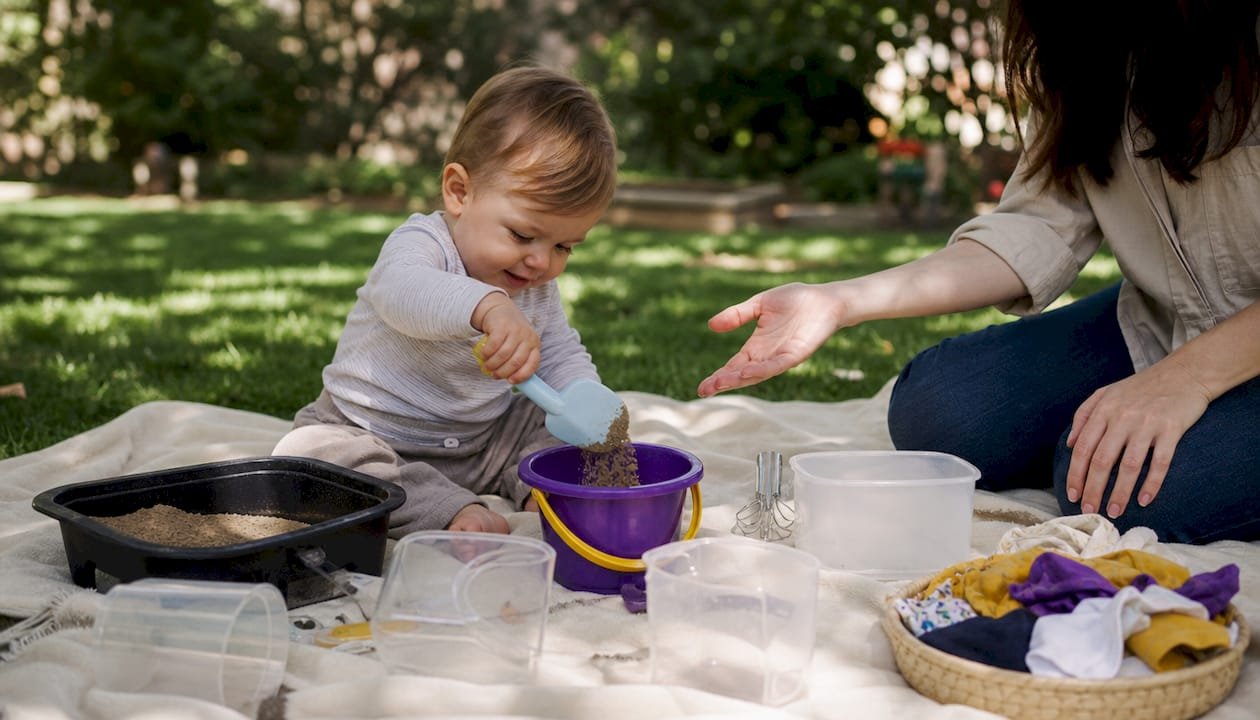
Grab a muffin tin, a stack of plastic cups, or an empty cardboard box and you already have everything you need. That is the whole idea behind household items toddler activities: quick, screen-free play that uses what is already in your kitchen drawers instead of a new toy or a Pinterest-worthy setup.
Here are three you can start right now:
- Muffin tin sort (6 months–2 years): Hand your toddler a muffin tin and a bowl of pom-poms, buttons, or dry pasta to drop into each cup. Setup time: 30 seconds.
- Painter’s tape road (1–3 years): Stick strips of painter’s tape on the floor to make a road, then send a toy car cruising along it. Setup time: 1 minute.
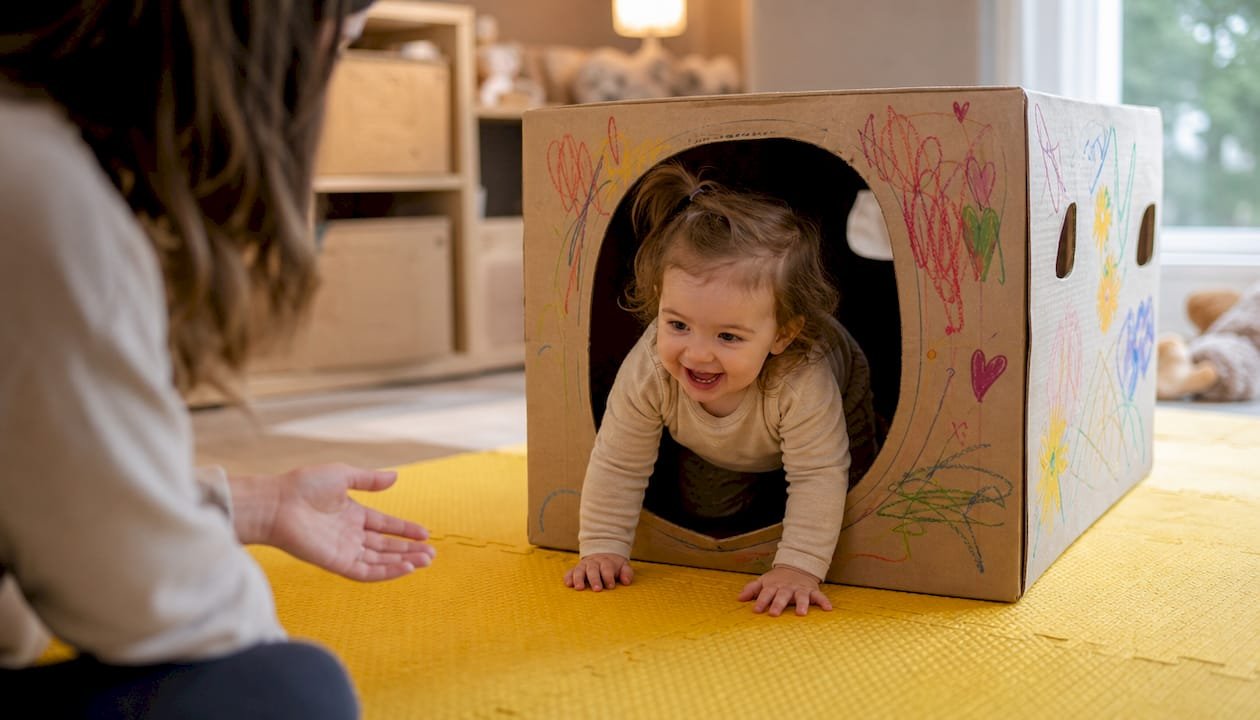
- Cardboard box tunnel (1–4 years): Cut both ends off a large box and let your toddler crawl through, push cars through, or decorate it. Setup time: 2 minutes.
Most of these hold attention for several minutes, sometimes longer if a sibling joins in. Keep supervision close for anything small enough to swallow, and you are good to go.
Key Takeaways
Low-prep household-item activities work because they lean on repetition and open-ended materials, not elaborate setups, to hold a toddler’s attention and build real skills.
| Point | Details |
|---|---|
| Start with what’s on hand | A muffin tin, cardboard box, or bottle caps set up play in under two minutes. |
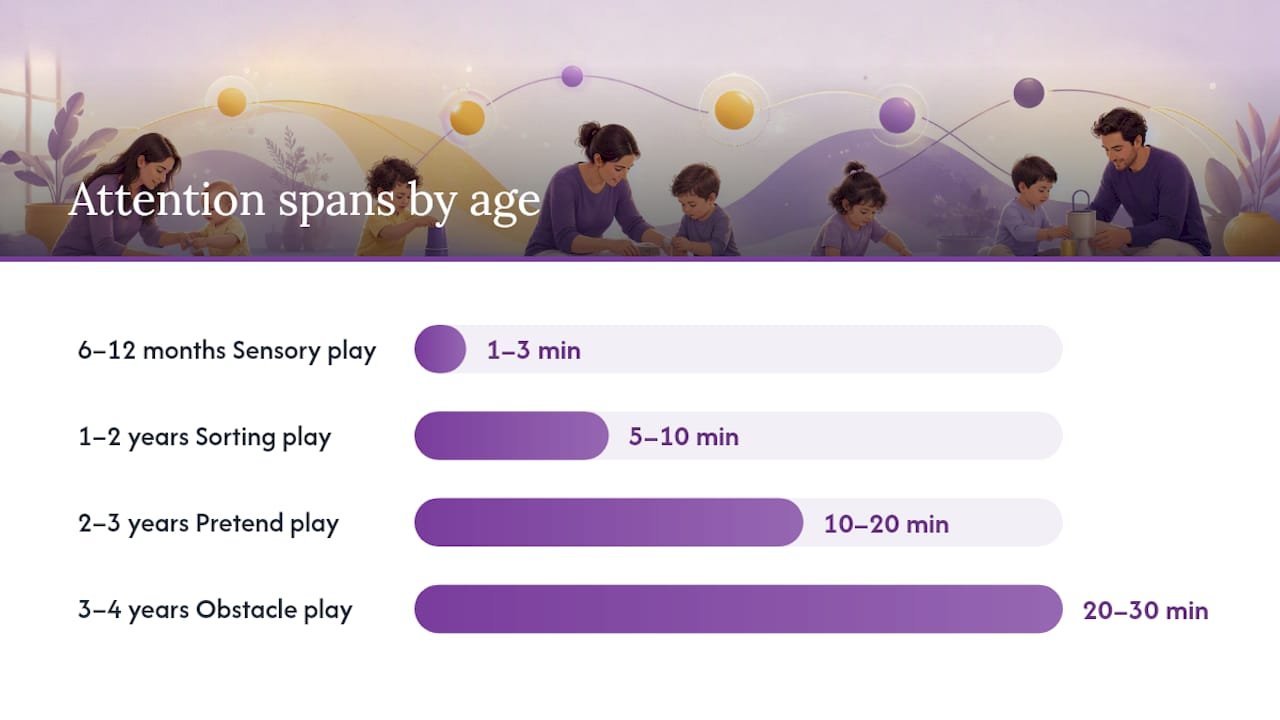
| Match activity to age | Attention spans run from 1–3 minutes at 6–12 months up to 20–30 minutes by age 3–4. |
| Contain the mess before you start | A tray or tablecloth under sensory play turns cleanup into a single sweep. |
| Rotate instead of repurchasing | Swap one or two items in a “surprise bin” every week to keep novelty without new spending. |
| Let an app do the picking | Mooshie Moments filters activities by your toddler’s age and your available time. |
Table of Contents
- Best Household Toddler Activities by Play Type
- How Do You Set Up Play Fast and Keep It Safe?
- What Attention Spans Look Like at Each Age
- How Do You Keep Toddlers Engaged Without Burning Out?
- Why Do These Simple Activities Actually Help Development?
- What I’ve Learned Watching These Activities Play Out
- Let Mooshie Moments Pick the Activity for You
- Sources
Best Household Toddler Activities by Play Type
This bank covers seven categories of play, each built entirely from things already sitting in your cupboards, recycling bin, or junk drawer. Pick one or two, keep the rest in your back pocket for the next rainy afternoon.
Sensory play
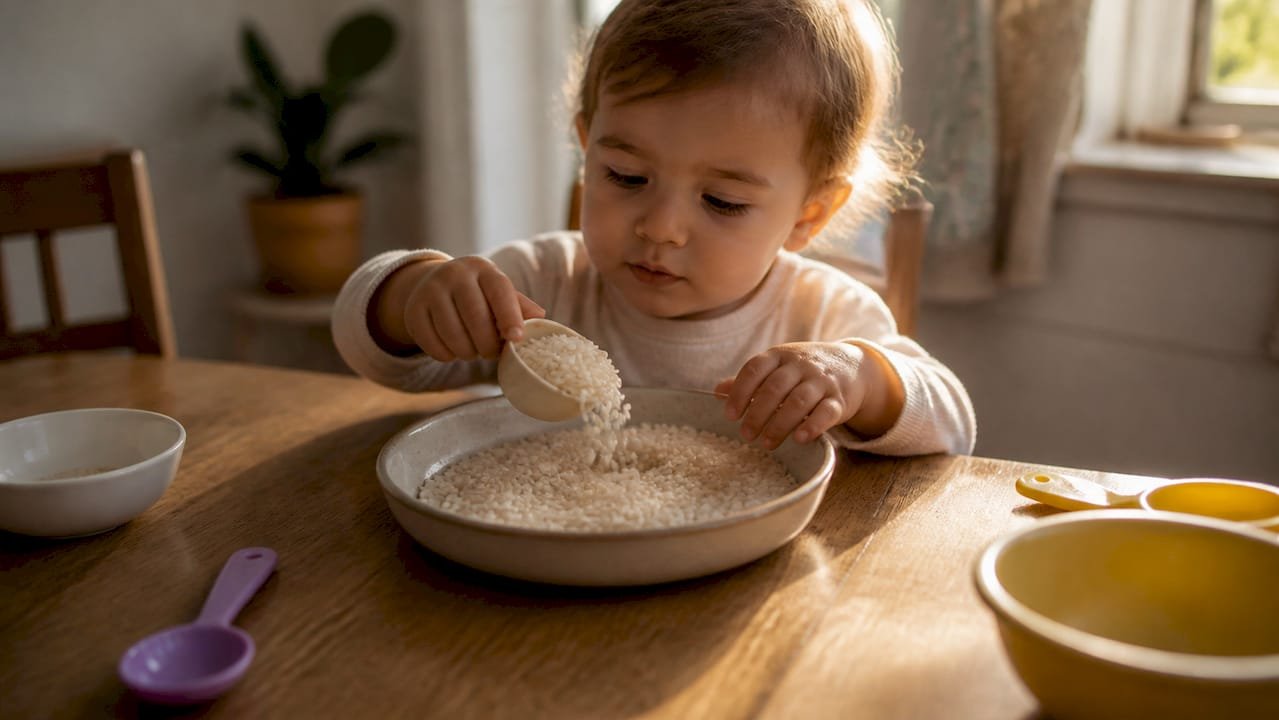
1. Rice or pasta scoop bin. Fill a shallow container with dry rice or pasta, add measuring cups and spoons, and let your toddler scoop and pour. Builds fine motor control and cause-and-effect thinking. Supervise closely with children under 3 who still mouth objects. Variation: hide small toys inside for a “dig and find” twist. Time: 15–20 minutes.
2. Shaving cream table. Spray a thin layer of shaving cream directly on a clean table or tray and let little hands draw shapes. Supports tactile tolerance and early mark-making skills. Wipe hands immediately if any redness appears, and keep it away from the mouth and eyes. Variation: add a few drops of food coloring for a color-mixing lesson. Time: 10–15 minutes.
3. Frozen toy dig. Freeze small plastic animals or toys in a container of water overnight, then give your toddler a spoon and warm water to melt them free. Builds patience and problem-solving. Keep an eye on slippery, wet surfaces nearby. Variation: add salt to speed up the melt for older toddlers. Time: 20–30 minutes.
4. Texture basket. Fill a basket with a sponge, a cotton ball, a piece of foil, and a wooden spoon for open comparison. Encourages vocabulary around textures like “soft” and “bumpy.” Check for choking-sized pieces before handing it over. Variation: blindfold-free guessing game for 2 to 3 year olds (“close your eyes, what does this feel like?”). Time: 10 minutes.
5. Water bead alternative: ice cube color melt. Freeze colored water in an ice cube tray, then let your toddler transfer melting cubes between bowls with tongs or a spoon. Builds hand strength and color recognition. Keep towels handy since it drips fast. Variation: race two cubes to see which melts first. Time: 15 minutes.
Fine motor play
6. Pom-pom tong transfer. Use kitchen tongs or a clothespin to move pom-poms from one bowl to another. Strengthens the pincer grip toddlers need later for writing. Watch for pom-poms near the mouth with children under 18 months. Variation: sort by color into separate cups. Time: 10 minutes.
7. Bottle cap sorting. Collect mismatched bottle caps and a few empty jars, then match caps to jar mouths. Develops spatial reasoning and problem-solving. Wash caps thoroughly before use. Variation: add numbers or stickers to caps for toddlers closer to 3. Time: 10–15 minutes.
8. Sticker peel and stick. A cheap sheet of stickers on a piece of paper is a surprisingly reliable engagement tool, according to Motherly’s list of reliable low-prep favorites. Builds finger strength and concentration. No major safety concern beyond keeping small stickers off the floor. Variation: draw simple shapes and have your toddler fill them in with stickers. Time: 10–20 minutes.
9. Clothespin clip drill. Clip clothespins around the rim of a bowl or a shoebox lid, then have your toddler pull them off one by one. Builds hand strength for future scissor use. Fine for most ages but watch fingers pinching skin on younger toddlers. Variation: color-code clothespins for a matching game. Time: 10 minutes.
10. Spoon and cotton ball scoop. A regular spoon and a bowl of cotton balls make an easy transfer game. Refines the wrist motion needed for self-feeding. No real hazard here beyond normal supervision. Variation: race against a kitchen timer for older toddlers. Time: 10 minutes.
Gross motor play
11. Cardboard box tunnel or car. Beyond the tunnel from the intro, flip a box upside down, cut a hole, and it becomes a “car” your toddler can sit in and scoot. Builds core strength and balance. Check for staples or sharp edges before handing it over. Variation: decorate with markers first for an art tie-in. Time: 15–20 minutes.
12. Painter’s tape balance beam. Lay a long strip of tape on the floor and have your toddler walk heel to toe along it. Improves balance and gross motor planning. Clear the surrounding floor of trip hazards. Variation: add hopping spots with paper plates for older toddlers. Time: 10 minutes.
13. Laundry basket obstacle. Set out laundry baskets, couch cushions, and pillows as a mini obstacle course to climb over and crawl through. Builds coordination and confidence. Keep furniture stable so nothing tips. Variation: add a “finish line” with a favorite toy as the reward. Time: 15 minutes.
14. Balloon volleyball. Bat a balloon back and forth over a string or just across the room. Sharpens hand eye coordination. Supervise closely since popped balloons are a choking hazard, and store unused ones out of reach. Variation: use a wooden spoon as a “racket” for a bit more challenge. Time: 15 minutes.
Art and mark-making
15. Contact paper collage. Tape a sheet of contact paper sticky-side out to a window or the floor, then let your toddler stick on cotton balls, leaves, or torn paper. Encourages creativity and fine motor pinching. No major hazard beyond keeping small torn pieces away from the mouth. Variation: sort by color for a matching lesson. Time: 15–20 minutes.
16. Cookie sheet chalk art. A metal cookie sheet works as a portable chalkboard with sidewalk chalk or dry-erase markers. Supports early writing and drawing skills. Wipe hands after use if using chalk near younger toddlers who mouth their fingers. Variation: use magnetic letters on the same sheet for an alphabet twist. Time: 10–15 minutes.
17. Bubble wrap stomp painting. Tape bubble wrap to the floor, dab on washable paint, then lay paper over the top and stomp. Builds gross motor coordination alongside a sensory art payoff. Keep floors from getting slippery with spilled paint. Variation: use bare feet dipped lightly in paint for a footprint keepsake. Time: 15 minutes.
18. Yogurt tub drum kit. Clean, empty yogurt tubs turned upside down make instant drums with a wooden spoon. Builds rhythm awareness and gross motor control. Wash tubs well and check for cracked edges. Variation: line up different-sized containers for varied pitches. Time: 10 minutes.
Water and ice play
19. Sink or tub pour station. Set your toddler at the sink (with a stool and close supervision) with cups and a small pitcher for pouring practice. Builds hand-eye coordination and early measurement concepts. Never leave a toddler unattended near water, even a few inches. Variation: add a few drops of dish soap for bubbles. Time: 15–20 minutes.
20. Spray bottle plant misting. A spray bottle filled with water lets your toddler “water” houseplants or draw on a fence outside. Motherly names spray bottles among the most dependable outdoor attention-holders for this age group. Builds hand strength from the trigger squeeze. Keep the bottle water-only. Variation: add washable paint to spray-paint paper outside. Time: 15 minutes.
21. Ice cube melt race. Two ice cubes, two bowls of warm and cool water, and a stopwatch turn into a simple science lesson on temperature. Builds early cause-and-effect reasoning. Watch for slippery wet floors. Variation: freeze small toys inside the cubes for extra motivation. Time: 15 minutes.
Pretend and role play
22. Kitchen pot and pan band. Pots, pans, and a wooden spoon become instant instruments for marching around the living room. Builds rhythm and gross motor coordination. Keep it to soft-bottomed pans if noise sensitivity is a concern. Variation: march to different tempos (“slow like a turtle, fast like a bunny”). Time: 10–15 minutes.
23. Grocery store pretend play. Empty food containers (cereal boxes, yogurt tubs, egg cartons) become “groceries” for a pretend shop using a basket or box as the cart. Builds language and imaginative sequencing. Rinse containers well beforehand. Variation: add play money or bottle caps as coins for older toddlers. Time: 20 minutes.
24. Laundry basket boat. An empty laundry basket becomes a boat, car, or spaceship for imaginative travel. Builds narrative language and gross motor balance. Keep it on carpet, not hard flooring, in case of tipping. Variation: add stuffed animal “passengers” for a storytelling angle. Time: 15–20 minutes.
Low-mess exploration
25. Magnet fridge hunt. Give your toddler a small magnet wand and let them find which kitchen items stick to the fridge. Builds early scientific reasoning. Keep magnets large enough to avoid choking risk. Variation: sort found items into “sticks” and “doesn’t stick” piles. Time: 10 minutes.
26. Flashlight shadow play. Dim the lights and use a flashlight to make shadow shapes on the wall with hands or toys. Builds observational language and cause-and-effect thinking. No real hazard, just keep the flashlight beam out of eyes. Variation: trace shadow outlines with chalk on paper. Time: 10–15 minutes.
For siblings playing together, most of these scale up easily. Turn the muffin tin sort into a race, split a sensory bin into two matching stations, or hand each child a spray bottle for a joint plant-watering mission.
Pro Tip: Keep a small “activity basket” stocked with tongs, a muffin tin, painter’s tape, and a few clean containers so you never start from zero. Grabbing the basket takes less time than deciding what to do.
How Do You Set Up Play Fast and Keep It Safe?
Speed and safety work together once you build a quick habit around each activity. Run through this before anything goes on the floor:
- Scan for choking hazards. Anything smaller than a toilet paper tube is off-limits for toddlers under 3.
- Check for allergens. Shaving cream, food dyes, and certain play materials can irritate sensitive skin, so patch-test new items first.
- Clear the floor. Remove trip hazards and make sure furniture nearby is stable before gross motor play begins.
- Stay within arm’s reach. Water, small parts, and anything involving tools like tongs or spoons need active adult supervision, not just a glance from across the room.
Containment does most of the heavy lifting for cleanup. A tray, an old tablecloth, or a towel under a sensory bin turns a ten-minute scrub session into a single sweep or shake-out, a tactic recommended repeatedly by ThriftSmart’s Montessori-style activity guides. After play, gather loose pieces into a labeled container, wipe surfaces with a damp cloth, and shake tablecloths outside rather than over your kitchen floor.
Anything that touches your toddler’s mouth (spoons, tongs, yogurt tubs) should get a quick wash in warm soapy water before it goes back in rotation.
Pro Tip: Keep one “go bag” of reusable materials (tongs, tray, tablecloth) instead of buying new supplies for each activity. Rotating the same small kit through different setups saves both money and decision fatigue.
What Attention Spans Look Like at Each Age
Matching the activity to your toddler’s stage matters more than the activity itself. A muffin tin sort that fascinates a 10-month-old for two minutes might hold a 3-year-old’s attention for twenty once you add color-sorting rules.
| Age Band | Typical Attention Span | Activity Match |
|---|---|---|
| 6–12 months | 1–3 minutes | Sensory basket, texture exploration |
| 1–2 years | 5–10 minutes | Muffin tin sort, tape road, pom-pom transfer |
| 2–3 years | 10–20 minutes | Sensory bins, pretend play, art projects |
| 3–4 years | 20–30 minutes | Obstacle courses, science experiments, role play |
To scale one activity across ages, simplify the materials for younger toddlers (fewer pieces, larger objects) and add rules or challenges for older ones (sorting by color, racing against time, following multi-step instructions).
Most defiance, mess-making, and short attention spans at this age are completely typical. Genuine red flags, like a toddler losing skills they previously had, not responding to their name, or showing no interest in social interaction, are different from normal testing behavior and worth raising with a pediatrician, according to guidance from Let’s Talk Scotland (NHS Scotland).
How Do You Keep Toddlers Engaged Without Burning Out?
The pressure to constantly entertain is often what wears parents down faster than the activities themselves. Easing that pressure starts with a few small shifts:
- Keep one “low-prep zone” stocked and ready (a drawer with tongs, containers, and paper) so you never start from a blank slate.
- Choose open-ended materials like boxes and containers over single-purpose toys, since they can be reused a dozen different ways.
- Rotate a “surprise bin” every week or two, swapping in just one or two new items to refresh interest without buying anything new.
- Let your toddler lead the play instead of narrating every step, which takes pressure off you to perform and often stretches engagement time.
When attention starts to wander, a countdown (“five more scoops, then we clean up”), a silly voice, or a kitchen timer can buy a few extra minutes without a meltdown. Pairing supervised play with a nearby chore, like folding laundry while your toddler sorts pom-poms three feet away, lets you get something done while staying close enough to step in.
Pro Tip: If a session isn’t landing, swap the activity rather than pushing through. A five-minute flop is normal, not a sign you did something wrong.
Why Do These Simple Activities Actually Help Development?
Simple, repeatable, screen-free play builds real developmental skills, and the evidence backs a low-key approach over rigid scheduling. There is no universally recognized structured formula, sometimes called a “333 rule,” for how toddlers should play. Guidance from the NHS instead points to consistent, unstructured, screen-free engagement as the more reliable driver of growth.
Two things matter most here. First, repetition builds mastery: a toddler who sorts pom-poms into a muffin tin for the fifth time is refining the same pincer grip they will later use to hold a pencil. Second, language exposure happens naturally during play when you narrate what your toddler is doing (“you’re scooping the rice, it’s falling so fast”).
Simple, repetitive, screen-free activities support toddler engagement and skill-building better than strict scheduling or structured routines.
For parents who want these ideas pre-organized by age and available time, Mooshie Moments builds its activity library around exactly this kind of research-informed, low-prep approach, pairing each suggestion with a plain-language explanation of the skill it builds.
What I’ve Learned Watching These Activities Play Out
The activities that work best are rarely the ones that took the most planning. A muffin tin and dry pasta once bought me twenty uninterrupted minutes while I answered three emails, longer than any toy I’d spent money on that month.
What surprised me most was how quickly a toddler’s own curiosity took over once I stopped narrating every step. Some days a “surefire” activity flops in ninety seconds, and that’s fine. Keep two or three options ready, hold expectations loose, and let the good sessions balance out the short ones.
Let Mooshie Moments Pick the Activity for You
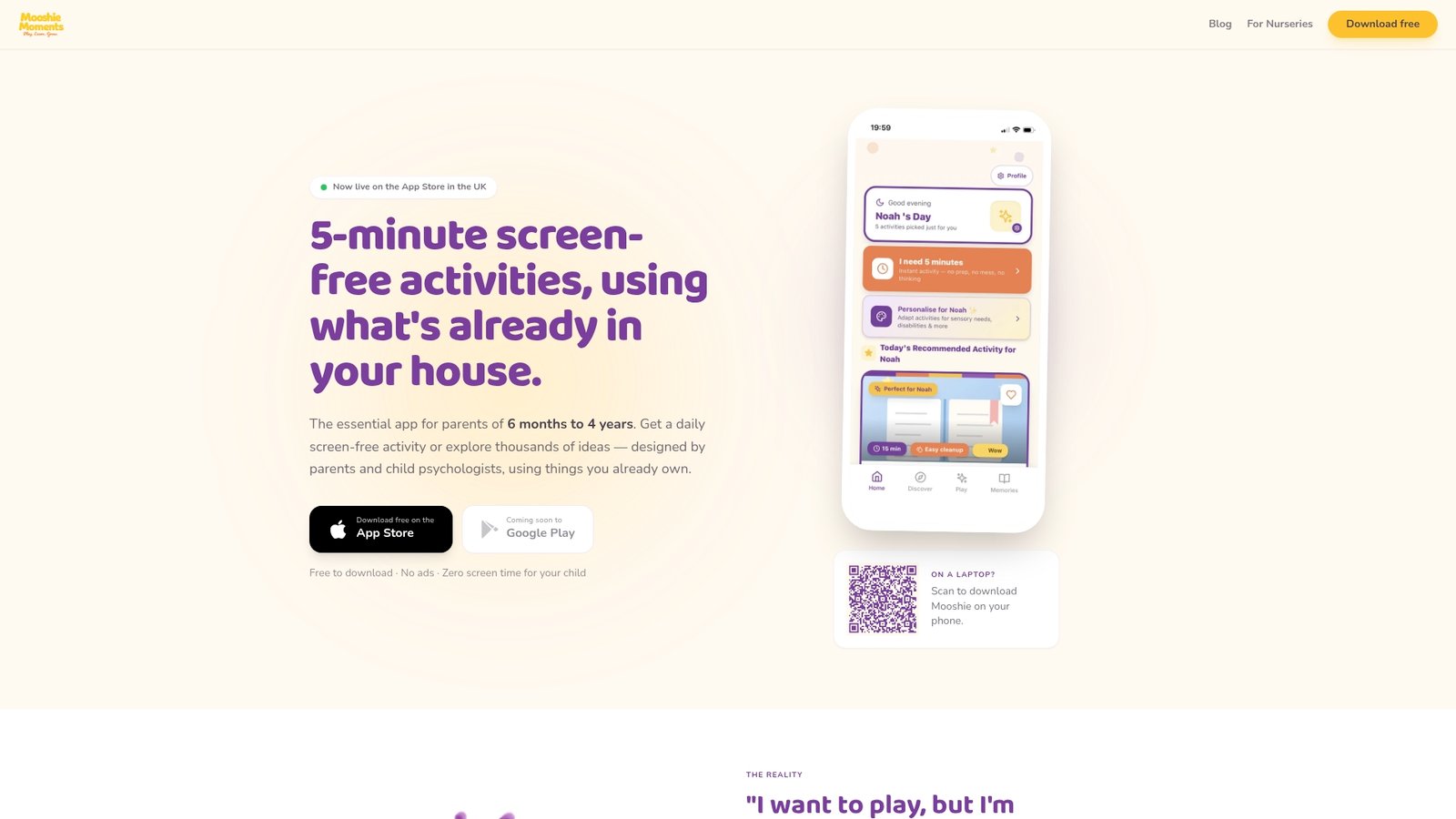
Mooshie Moments turns the activity bank above into something even faster: an app that already knows your toddler’s age and how many minutes you actually have, so you never scroll through a list wondering what will work. Every suggestion pulls from research-informed developmental guidance, not a random Pinterest board, and comes with a plain-language note on what skill it builds.
Two things caregivers lean on most:
- Age and time filters that match activities to your toddler’s stage and the exact number of minutes you have free.
- Printable instructions and nursery partnership resources, useful for both home and early years settings that want ready-made activity packs.
If you’re ready to stop guessing which household item to grab next, download Mooshie Moments and let the app hand you a screen-free activity built for your toddler’s age, right when you need it.
Sources
Recommended
More like this

Five Minute Routine Activities to Help Speech Delay in UK Toddlers
Quick, routine based activities UK parents can use in 5–15 minutes to support a toddler with speech delay. Evidence backed techniques and…
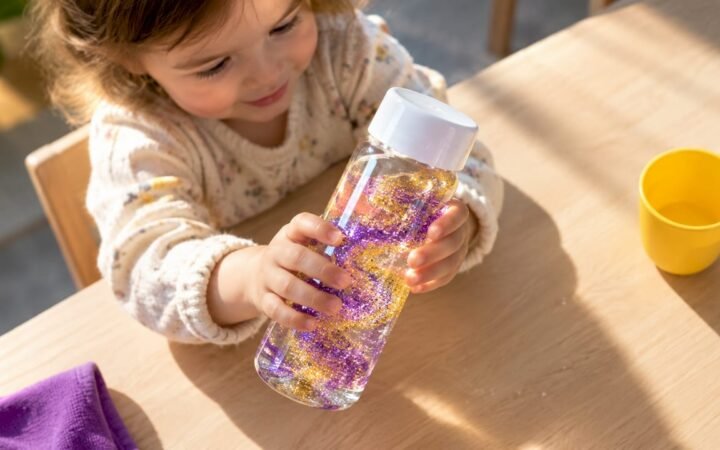
Three Minute Mess Free Sensory Play For UK Parents
Quick, reusable sensory activities UK parents can set up in minutes. Sealed bags, sticky wall art, safety checks, storage tips, and Mooshie…
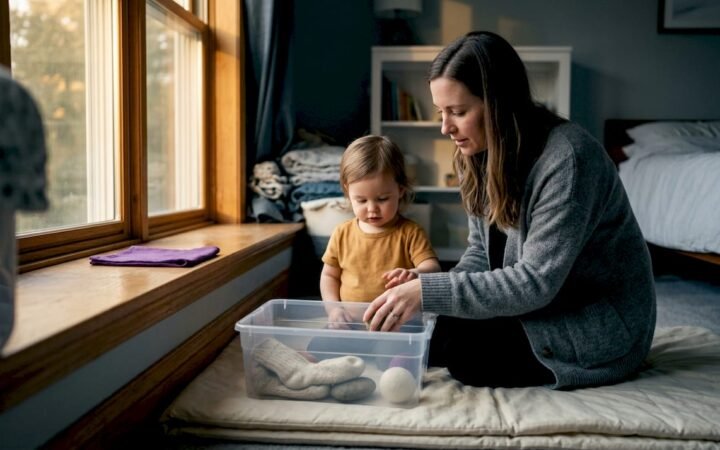
10 Quiet Bin Ideas UK Parents Can Build in 5 Minutes
Practical, EYFS-aligned quiet-bin ideas UK parents can assemble in five minutes. Includes 10 ready bins, a five-bin rotation, safety checks, and quick...