
Pack a 3 Item Screen Free Restaurant Kit to Calm Toddlers
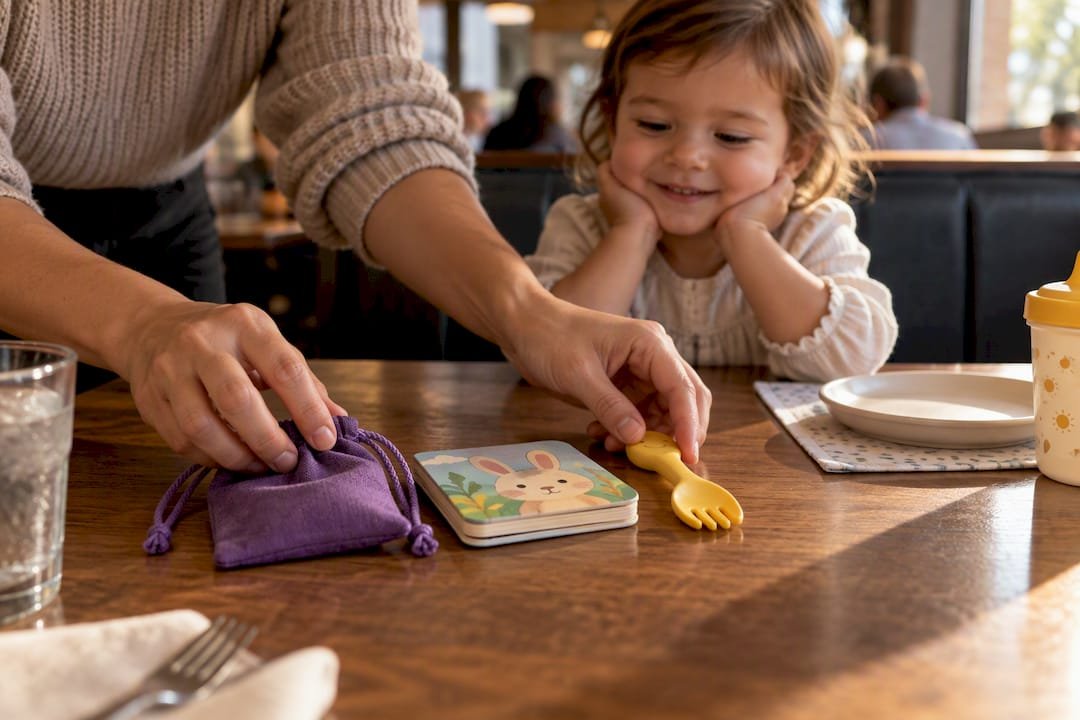
Pack three things: a reusable sticker book, a magnetic drawing board, and a soft felt quiet book, kept in a bag that never leaves the house except for meals out. Rotate them so nothing gets stale. Then narrate what’s happening at the table in a calm, steady voice and give your toddler one small choice, like which napkin color goes on their lap. That combination, screen-free toys plus calm connection, does more for a restaurant outing than any tablet ever will.
TL;DR:
- Reusable sticker books, magnetic drawing boards, and felt quiet books are durable, contained, and promote fine motor skills without creating mess or noise.
- Gentle table games like I Spy, counting, or guessing sounds help keep toddlers engaged and can be easily adapted to their attention span and development level.
- Conduct quick safety checks on toys by pulling seams and inspecting for small parts, magnets, or damaged areas to prevent choking risks at the restaurant.
- Pre-pack a dedicated restaurant bag with a few toys, snacks, and clothing changes, rotating toys mid-meal to maintain interest and avoid boredom.
- Using apps like Mooshie Moments provides quick, developmentally appropriate activity ideas to refresh entertainment options if toys lose their novelty.
Table of Contents
- Screen-Free Restaurant Activities Toddlers Actually Enjoy
- Restaurant Games and Talking Prompts You Can Play at the Table
- Toy Safety Checklist for Restaurant Play
- Building Your Restaurant Kit: Timing, Ordering, and the Rotation Rule
- The Research Behind Screen-Free, Narrated Play at Mealtimes
- A Realistic Parent Perspective on Restaurant Outings
- Try Mooshie Moments for Instant Restaurant-Ready Ideas
- Sources
- FAQ
Screen-Free Restaurant Activities Toddlers Actually Enjoy
The best toddler entertainment restaurant items share three traits: they’re quiet, they’re contained, and they reward small hands without much setup. A toy that rolls off the table or pings when dropped works against you before the appetizers arrive.
Here’s what earns a permanent spot in a restaurant kit, and why each one holds up under real dining-table pressure:
- Reusable sticker books. No mess, no loose pieces, and the peeling motion itself is great for fine motor practice.
- Magnetic drawing boards. Nothing to lose, nothing to chase off the table, and toddlers can erase and start over endlessly.
- Felt or fabric quiet books. Soft pages with zippers, buttons, and flaps give little fingers something to explore without noise.
- Chunky lacing cards. Big enough to avoid choking risk for toddlers past the heaviest mouthing stage, and genuinely absorbing.
- Silicone suction toys. They stick to the table itself, which solves the dropping problem before it starts.
- Small texture pouches or fidget mats. Good for younger toddlers who are still exploring mostly with their mouths and hands.
- Soft board books. Familiar, calming, and useful as a bridge activity between courses.
- A dedicated “busy bag” of dried pasta or pom-poms in a sealed container. Great for sorting games, though best reserved for toddlers past the mouthing stage.
Avoid anything noisy (musical buttons, chimes), anything that rolls (marbles, small balls), liquid-filled toys, and items with small detachable parts like beads or magnets that can separate. For toddlers under two who still mouth objects frequently, stick to single-piece, soft, or oversized items rather than anything with joints or seams.
Restaurant Games and Talking Prompts You Can Play at the Table
You don’t need props to hold a toddler’s attention for a few minutes. These low-effort games work with whatever’s already on the table.
- I Spy, toddler edition. One-minute version: point at a color and name it together. Three-minute version: take turns spotting colors around the room and count how many you find.
- Napkin peekaboo. One minute for younger toddlers who just want the surprise. Stretch it to three by adding silly voices or hiding a small toy underneath each time.
- Counting the table. Count forks, count napkins, count how many people are wearing blue. Simple for a two-year-old, and you can add addition (“one more fork makes how many?”) for a three- or four-year-old.
- Sound guessing. Close your eyes and guess what sound comes next: a cup being set down, ice clinking, a chair scraping. This one scales naturally with age since older toddlers can guess more specific sounds.
- Story building. Start a sentence about the meal (“The pizza went on an adventure…”) and take turns adding one word each.
Pro Tip: Turn ordinary table items into teaching moments by narrating out loud as you go: “That’s a red napkin, soft and square,” or “Two forks, one for you, one for me.” This kind of running commentary does double duty as both entertainment and language-building.
Toy Safety Checklist for Restaurant Play
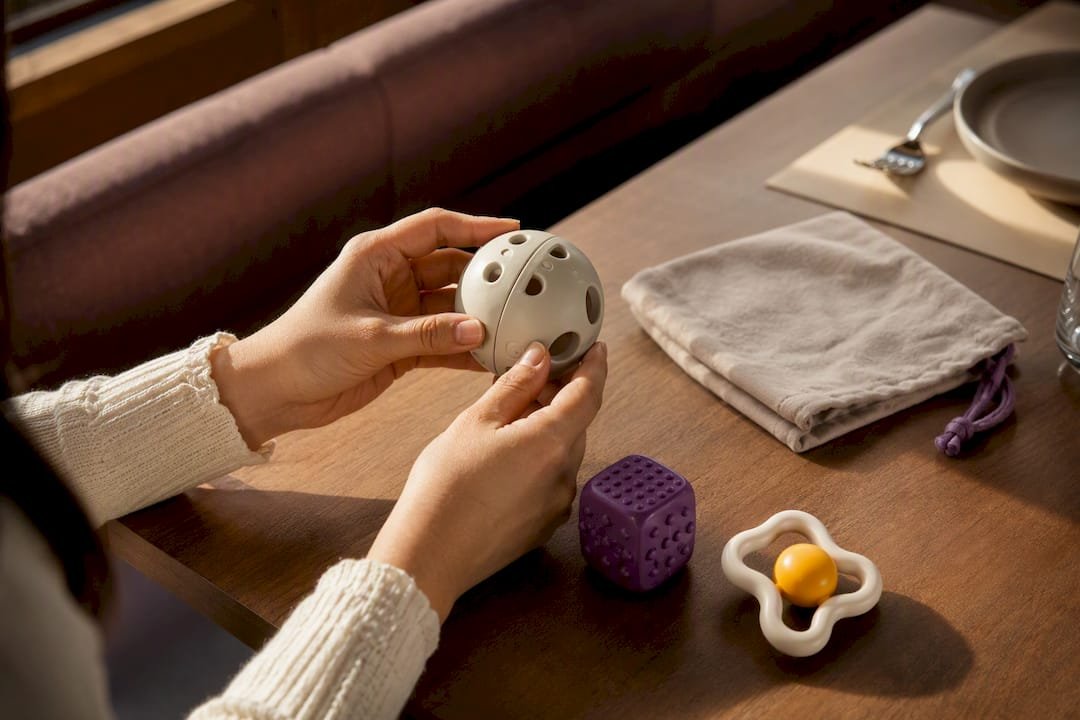
Restaurant lighting is dim, table surfaces are crowded, and you’re distracted by ordering. That’s exactly when a toy with a hidden weakness becomes dangerous. Government product-safety case studies have documented toys that shed small parts during normal play, including one musical toy that failed a basic tug test and released pieces small enough to choke a child under three.
Run this quick check before handing anything to your toddler:
- Give seams and attached decorations a gentle pull. If anything moves or peels, leave it in the bag.
- Check for missing safety labels or age warnings, which often signal a non-compliant product.
- Skip anything with magnets, small beads, or liquid-filled centers. Recent recalls flagged water-bead squishy toys as a serious choking risk after they broke apart during play.
- Remove any toy immediately if a piece comes loose, even slightly, rather than waiting to see if it holds.
Toddlers still mouth objects far more than most parents realize, which is exactly why the seam-and-part inspection matters more at a restaurant table than it does at home, where you can watch more closely.
Building Your Restaurant Kit: Timing, Ordering, and the Rotation Rule
A little preparation before you walk in the door prevents most of the meltdowns that happen once you’re seated.
Keep a small, dedicated bag that only comes out for restaurants. Pack two or three toys, a bib, a couple of favorite snacks in a spill-proof container, and a change of clothes if you’re still in the thick of toddlerhood. Nothing from home’s regular toy bin belongs in this bag. That separation is what makes the items feel new every time.
- Ask the server to put in your toddler’s order first, and request a small starter like bread or fruit to bridge the wait.
- Book earlier or later than peak dinner hours when restaurants are quieter and service moves faster.
- Ask for a table near an exit or a walkable area in case you need a short reset walk.
- Swap out one toy for a different one halfway through the meal instead of handing over everything at once. That’s the rotation rule, and it’s what keeps a toddler engaged instead of bored by minute fifteen.
The Research Behind Screen-Free, Narrated Play at Mealtimes
NHS guidance recommends no screen time for children under two, aside from video calls with family, and identifies screen-free mealtimes as a specific way to protect family connection and reduce distracted overeating. That guidance isn’t just about avoiding harm. It’s a pointer toward what actually works better.
The Five to Thrive framework names five daily building blocks for healthy development: respond, cuddle or engage, relax, play, and talk. A restaurant table turns out to be a surprisingly good place to hit several of these at once.
Narrating a meal out loud, asking a toddler to count napkins, or playing a quick guessing game touches on “respond,” “play,” and “talk” simultaneously, all without a single screen or purchase.
An app approach builds around this same idea: quick, screen-free activities using items already on hand, filtered by a child’s age and how much time you actually have.
A Realistic Parent Perspective on Restaurant Outings
No toddler sits perfectly through a meal, and expecting that sets you up to feel like you’re failing. Progress looks like five extra calm minutes this month compared to last month, not a flawless dinner. Keeping the same restaurant-only bag and the same handful of phrases (“quiet hands, quiet voice,” “one more bite, then a game”) gives your toddler something predictable to hold onto. One family noticed their toddler stopped needing the sticker book by dessert after a few repeat visits to the same diner. That’s the small win worth chasing.
— samit
Try Mooshie Moments for Instant Restaurant-Ready Ideas
Packing a great kit only gets you halfway. The other half is having fresh ideas on hand when the sticker book stops working and dessert hasn’t arrived yet. There are apps built for exactly that gap: generating quick, screen-free activity ideas using ordinary items, filtered by your toddler’s age and however many minutes you actually have.
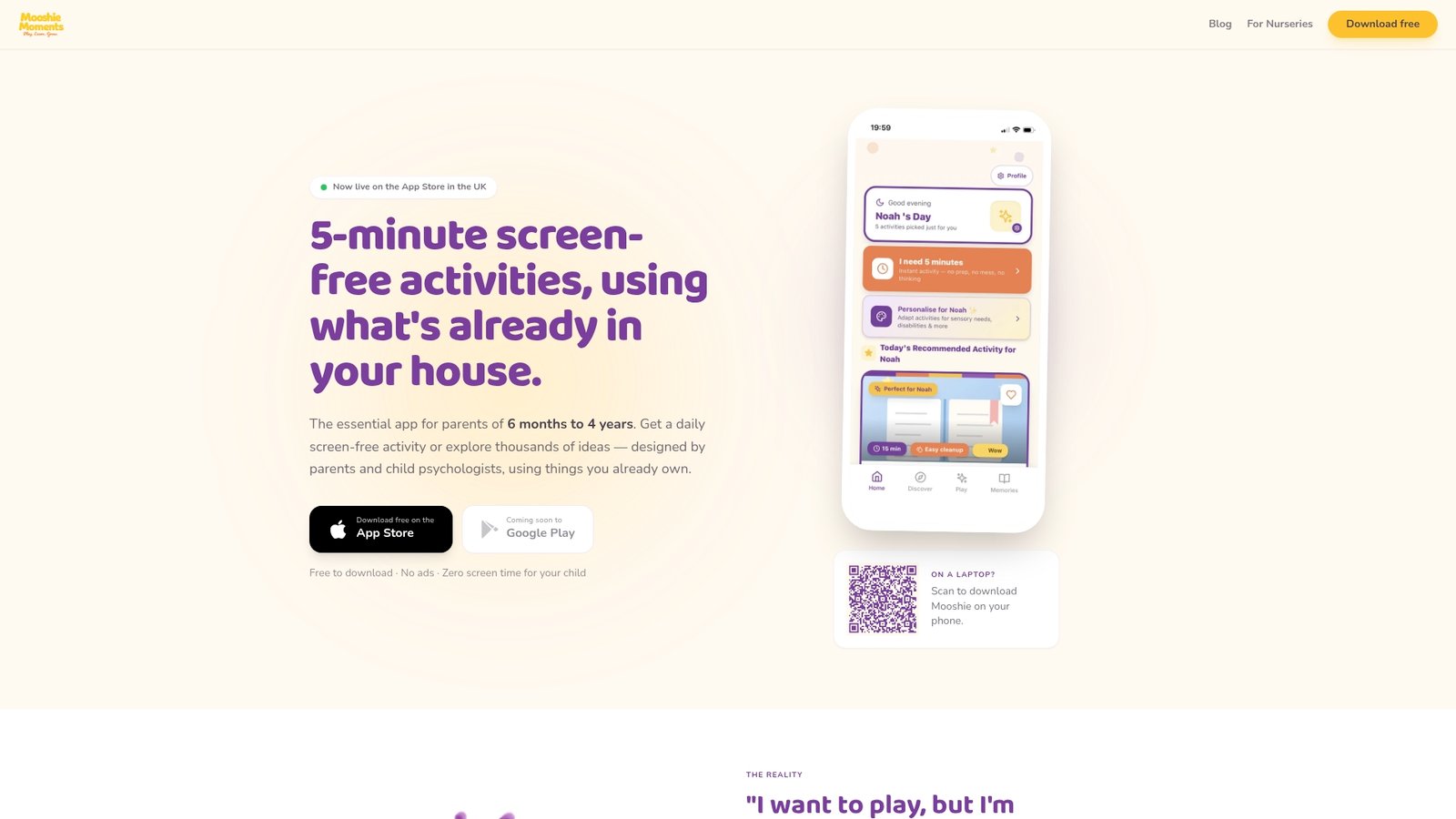
Instead of scrolling for inspiration mid-meal, you open the app and get an age-matched idea backed by a plain-language explanation of the developmental benefit behind it. Nurseries and early years settings can also access the Partnership Pack for printable resources and ready-made activity plans. For families wanting a broader library beyond restaurant outings, the 40 Fun 2 Year Old Activities guide is a solid next stop. Download Mooshie Moments and check the full activity library before your next meal out.
Sources
- New advice for parents on screen time for young children — Education Hub (NHS/Government)
- How to support your child’s development — Healthier Together (NHS)
- Gov
FAQ
How do I entertain a two-year-old in a restaurant?
Bring two or three quiet, contained toys like a magnetic drawing board or felt quiet book, and rotate them partway through the meal to keep things feeling new. Pair that with simple narration (“that’s a blue plate”) and quick games like counting napkins, which keep a toddler engaged without any screen.
What is the 3-3-3 rule for toddlers?
Definitions of this rule vary across parenting sources, and it isn’t tied to a specific clinical guideline, so treat any version you see as a general rule of thumb rather than a fixed standard. The core idea most versions share is breaking a wait into short, structured chunks of activity to match a toddler’s attention span.
What games can I play with my toddler at a restaurant?
Try I Spy with colors, counting objects on the table, or a sound-guessing game using cups and cutlery. Each one can run as short as one minute or stretch to three by adding rounds, which makes them flexible for however long the wait actually is.
How do I get a two-year-old to behave in a restaurant?
Consistency helps more than any single toy: the same restaurant-only kit, the same calm phrases, and a small choice offered to your toddler (like picking their cup color) all support better regulation. Ordering your child’s meal first and requesting a small starter also cuts down on the hardest part, the empty-table wait.
Can an app really help with restaurant activities for toddlers?
Yes. Mooshie Moments generates screen-free activity ideas filtered by your toddler’s age and the time you have, which is useful for restocking ideas mid-meal when your packed toys have run their course. Current pricing and features are listed on the Mooshie Moments site.
Recommended
- 12 Low Prep Toddler Activities for Grandparents With Seated Options
- Taste Safe Sensory Play: Top 10 Ideas for Mouthing Toddlers
- Fun 9-Month-Old Activities for Busy Parents
- 40 Fun 2 Year Old Activities to Start Right Now
Want a new idea every day, matched to your child's age?
Mooshie Moments gives you simple, guided play ideas for ages 6 months to 4 years.
Download free on the App StoreMore like this
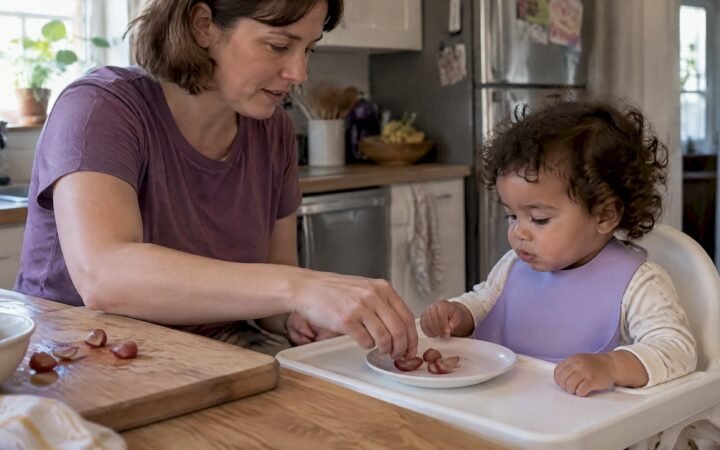
Babysitting Toddlers: 12 Low Prep Ideas and Why They Help
Explore 12 low prep toddler activities for babysitters, with developmental benefits, age adaptations, UK safety advice, and optional activity coaching.
10 EYFS Backed Sock Games for Toddlers Under Five Minutes
Ten EYFS aligned sock games to start in under five minutes, each with a one line developmental benefit, simple adaptations, and two…
Busy Parents: 12 No Prep Shopping Activities for Toddlers
Busy parents: keep toddlers learning and calm at the store with 12 no prep, screen free activities that take under five minutes…