Toddler Boredom Busters: 20 Screen-Free Ideas for Home
Updated November 2026 · 10 min read
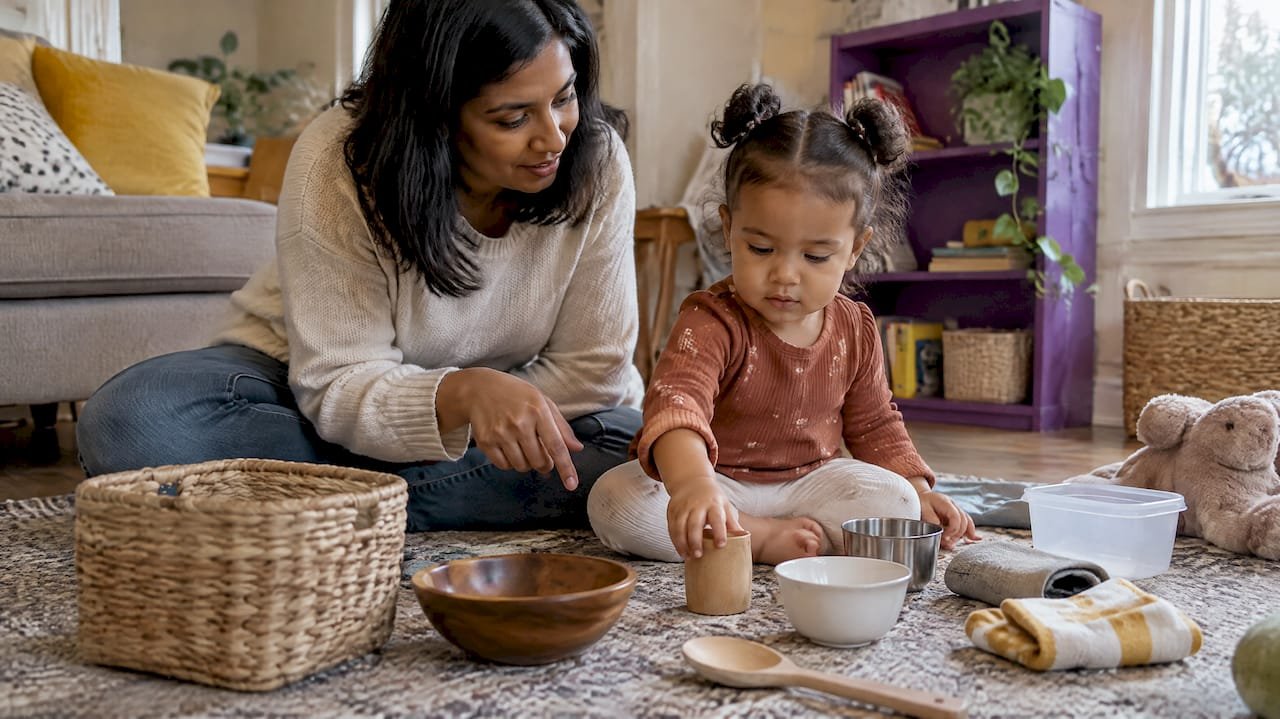
When your toddler is bored, the fastest fix is a small starting point, not a full activity. A bowl of water and a sponge, a pillowcase of mystery objects or a cardboard box can fill 5 to 15 minutes, and you don’t need to buy anything. Below are 20 boredom busters sorted by mood, plus how to tell what kind of bored your toddler is and when it’s fine to step back.
TL;DR
- Toddlers have short attention spans, so plan for about 5 to 6 minutes at age two, up to 8 at three and about 10 at four, then swap or extend.
- Match the bust to the mood: big movement for high energy, quiet hands-on play for low energy, and a few minutes on the floor with you for attention-seeking boredom.
- Everyday items work well. The NHS says play does not need to be difficult or expensive and that you matter more than any toy.
- Boredom isn’t a problem to fix every time. A little of it can lead to creative play.
- Always supervise, and watch for small parts, water and button batteries.
Table of Contents
- How to tell your toddler is bored
- Is it normal for toddlers to be bored?
- Match the boredom buster to the mood
- High energy: 5 movement boredom busters
- Low energy: 5 quiet, hands-on boredom busters
- Wants you: 5 together-time boredom busters
- Pretend play: 5 ideas that use what’s in the drawer
- How long to expect each activity to last
- Keep it safe
- Our view: why a spark beats a screen
- Get ideas without the scrolling
- FAQ
- Sources
How to tell your toddler is bored
Bored toddlers don’t say “I’m bored”. They show it. According to Catherine Hershey Schools, boredom in a young child often means they don’t know what to do next, so they may complain, wander about or ask what they should do.
The NHS also notes that difficult behavior in young children is often down to being tired, hungry, overexcited, frustrated or bored. Its advice is to move on to something you can both enjoy as soon as you can. Kent Community Health adds that tantrums peak at around two years old, and that heading off tired, hungry or bored moments helps.
So before you reach for an activity, run a quick check:
- Are they hungry or tired? Snack or rest first.
- Have they been doing the same thing for a while? Texas Health says toddlers get bored with the same task or activity for a long stretch, and do best with a mix of physical and thinking play each day.
- Do they want you? Sometimes “I’m bored” means “look at me”.
Is it normal for toddlers to be bored?
Yes, and it’s not a sign you’re doing anything wrong. Toddlers move quickly through things, and their world is full of new stuff, so many experts say it’s less about boredom and more about needing a nudge. One therapist told Romper that toddlers’ lives are full of mystery and wonder, and that it’s often the parents who run out of steam.
There’s an upside to the odd bored moment. PBS KIDS for Parents describes boredom as the bridge to creativity, imagination and new ways to play. The Child Mind Institute explains that boredom can help children build planning and problem-solving skills. Its educational specialist points out that it’s what children do with the boredom that matters, such as making a plan and gathering their materials for a project.

And you don’t have to fill every gap. Catherine Hershey Schools suggests looking for small moments to step back and offer a simple suggestion without taking over. That’s the approach in this article: a spark, then let your toddler run with it.
Match the boredom buster to the mood
A good idea at the wrong moment flops. Think about what your toddler needs right now.
| Mood | What it looks like | What helps |
|---|---|---|
| High energy | Climbing the sofa, running laps, throwing things | Big movement: obstacle course, freeze dance, balloon bop |
| Low energy | Whiny, clingy, flopping about | Quiet, focused play: sensory tray, sorting, drawing |
| Wants you | Following you, asking you to look | Five minutes together on the floor, then a simple solo setup |
This idea of matching the activity to your toddler’s energy comes from a screen-free play guide, which describes bored toddlers as having stimulation that doesn’t match their readiness and energy. It fits what many parents see day to day: a child who needs to move won’t settle for colouring, and a tired child won’t enjoy a race.
High energy: 5 movement boredom busters
- Cushion obstacle course. Line up cushions to climb over, a blanket to crawl under and a laundry basket to step into. The BBC’s Tiny Happy People team lists building an obstacle course among open-ended ideas where the child leads.
- Build a den. Drape a sheet over two chairs and add a torch and a couple of books. It’s the same open-ended idea, and it can last longer than you’d expect.
- Freeze dance. Put on a song, stop it and everyone freezes. Short rounds suit short attention spans.
- Balloon bop. Keep a balloon off the floor. Do it with your toddler sitting down if they’re younger, and supervise closely, as a burst balloon is a choking hazard.
- Sock ball toss. Roll up pairs of socks and throw them into a laundry basket. Move the basket back as they improve.
For more movement-based ideas, our guide to no toy activities for toddlers has plenty that take 2 to 15 minutes.
Low energy: 5 quiet, hands-on boredom busters
- Kitchen water play. The NHS suggests water play with plastic bottles, a sponge, a colander, straws, a funnel, spoons and anything unbreakable. Use a shallow tray on a towel. More ideas are in our water play ideas guide.
- Draw on cereal boxes. From 18 months, the NHS suggests drawing or painting on opened cereal boxes or old envelopes. It’s free and there’s no guilt about wasting paper.
- Sensory tray. Islington Council suggests filling a tray or bowl with materials such as dried pulses, shredded paper, pompoms or cotton wool balls, then adding spoons and cups. It also advises avoiding anything that’s a choking risk. See our sensory play ideas for more.
- Mystery touch box. Action for Children suggests a box filled with different textured items from around the house. Your toddler reaches in and says what they feel.
- Toilet roll crafts. Cardboard tubes become binoculars, rockets or drums. We’ve collected toilet roll crafts by age to save you thinking.
Wants you: 5 together-time boredom busters
Sometimes your toddler isn’t bored of the toys. They’re bored of playing alone. A few minutes of your full attention often does more than any activity.
- What’s in the bag? The BBC suggests this game for ages 0 to 5: put random items such as a spoon, a bowl or a piece of fruit in a pillowcase and build suspense before pulling each one out and naming it. With older toddlers, try sorting items from big to small or light to heavy.
- Point and name. For 9 to 12 months, encourage your baby to point at things and talk about the name, parts, colour and feel. The BBC says this helps new words and communication.
- Sing and read. The NHS recommends looking at books and singing songs and nursery rhymes. Pick three favorites and let your toddler choose the order.
- Narrate their play. Say what they’re doing in simple words: “You’re pouring. The water is going down.” We explain how in narrating play for language growth.
- Shopping trip games. A trolley run can be a boredom buster too: ask them to find something red or count the apples. Our no-prep shopping activities have a dozen ideas.
Pretend play: 5 ideas that use what’s in the drawer
Pretend play is great for a bored toddler because it needs only a prop and a bit of encouragement. If you’d like to know why it matters, there’s a good read on pretend play in toddlers.
- Sock puppets. The NHS suggests making sock puppets from socks and envelopes from 18 months. Action for Children suggests buttons for eyes or drawn-on whiskers.
- Cardboard box theatre. Cut a window in a box and put on a puppet show. Action for Children suggests exactly this.
- Pots and pans band. The BBC lists pots and pans, boxes, cardboard tubes and dressing-up clothes among basic objects to offer a bored child. Wooden spoons make drumsticks.
- Teddy’s picnic. Lay out a blanket with a few plastic plates and cups, and invite the toys.
- Paper plate faces. Draw on a plate, add a stick or let your toddler hold it as a mask. See paper plate crafts for more.
How long to expect each activity to last
Don’t judge an idea by how long it keeps your toddler busy. PBS KIDS for Parents says attention spans are roughly 5 to 6 minutes at age two, up to 8 minutes at three and about 10 minutes at four. It recommends starting with 5 minutes of independent play and building up as your child gets used to it.
Texas Health says toddlers can focus for 10 to 15 minutes on one thing, so you may see a range. A realistic plan for a long afternoon:
- Start with five minutes together.
- Move to a simple solo setup (water tray, sensory bowl).
- Change to something physical when they get restless.
- Come back to a favorite for a quiet wind-down.
That’s four small activities, not one big one, and nothing needs to be bought.
Keep it safe
Household items are great, but toddlers put things in their mouths. A few rules:
- Water: the NHS warns that a young child can drown in less than 5 centimetres (2 inches) of water, so never leave them alone with water play, even for a moment.
- Small parts: check toys and craft items for sharp edges or pieces a child could swallow. That includes pulses, buttons and pompoms in sensory trays.
- Button batteries: keep them well away from children. If you think your child has swallowed one, take them to A&E straight away or call 999, says the NHS.
- Supervision: Islington Council says under-5s should be supervised throughout all activities, and that some sensory activities may be unsuitable under 6 months. Action for Children asks you to watch craft activities for sharp items too.
For mess, Islington suggests taping down bin bags, old newspaper or a wipeable tablecloth before you start.
Our view: why a spark beats a screen
We built Mooshie Moments because we know the feeling of being tired, holding a toddler who’s bored, and not being able to think of one more idea. That’s not a failing. It’s creativity block, and it happens to every parent.
Our view is simple. The best boredom buster is small, uses what’s in your home and gives your child something to do with their own hands and imagination. A screen does the work for them. A cardboard box and a sock don’t.
That’s why every activity in Mooshie is screen-free, uses everyday household items and is suggested by your child’s age, how much time you have and how much energy everyone has left. We explain the developmental “why” in plain language, so you can see why a water tray or a pillowcase game matters. Our aim is to help grown-ups put their phones down and enjoy the moment.
samit
Get ideas without the scrolling
If you’d like boredom busters picked for you, Mooshie is a mobile app for parents and caregivers of children aged 6 months to 4 years. You tell it your child’s age, how much time you have and your energy level, and it suggests a quick screen-free activity using household items, with an expert-reviewed explanation and coaching tips.
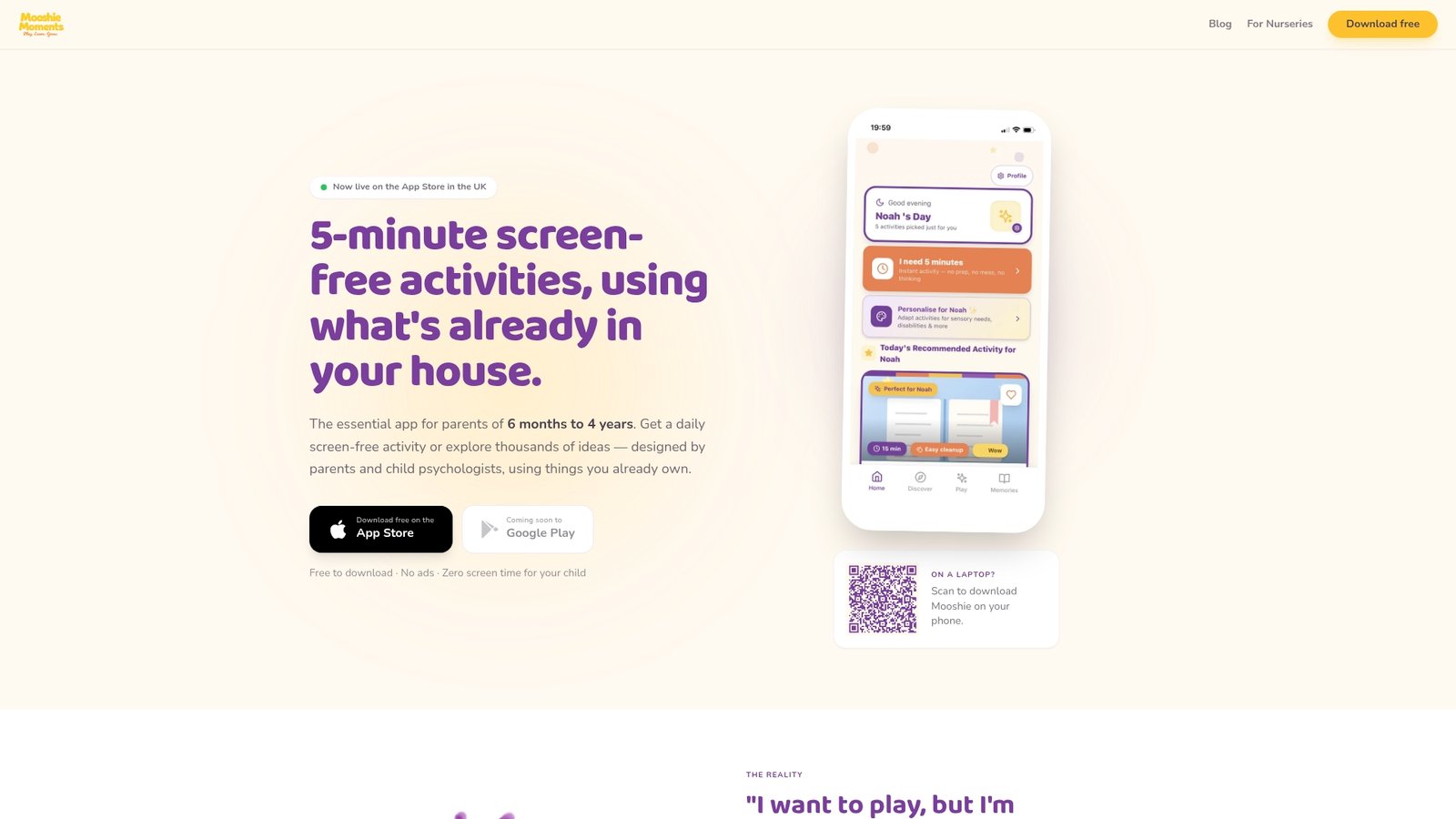
It’s free to download, with a subscription for premium features. Grandparents, aunties and uncles can use it too, which helps when someone else is minding your toddler. If you run a nursery, daycare or childminding setting, take a look at our activities for nurseries. For a wider set of ideas by developmental area, see our low prep toddler activities by skill area.
FAQ
What to do when your toddler is bored?
Start with a small spark, not a full activity: a tray of water, a box, a pillowcase of objects. The BBC advises offering basic objects like boxes, cardboard tubes and dressing-up clothes and letting your child take the lead. If they want you, give them five minutes on the floor first.
How do I keep a 2-year-old entertained at home?
Use things you already have. The NHS suggests water play with bottles, sponges and spoons, drawing on cereal boxes and making sock puppets. Rotate every 5 to 10 minutes, since attention at this age is short, and stay close.
Is it bad if my toddler is sometimes bored?
No. A little boredom can lead to imaginative play, and experts at the Child Mind Institute link it with problem-solving and planning. You don’t need to fill every gap. Offer a simple suggestion when they’re stuck.
How can I tell if my toddler is bored or something else?
Boredom can look like wandering, complaining or asking what to do. But tiredness, hunger, overexcitement and frustration cause similar behavior, according to the NHS. Check those first, then try a change of activity.
Sources
- BBC Tiny Happy People: What to do when your child is bored
- BBC Tiny Happy People: 15 quick activities for babies
- PBS KIDS for Parents: Encouraging independent play
- NHS: Baby and toddler play ideas
- NHS: Dealing with child behaviour problems
- Kent Community Health: Your older toddler’s behaviour
- Texas Health: Preventing toddler boredom
- Romper: Do toddlers get bored?
- Child Mind Institute: The benefits of boredom
- Catherine Hershey Schools: Why boredom isn’t always bad
- Islington Council: Sensory activities to try at home
- Action for Children: Activity ideas for toddlers
- Baby Bare Essentials: Pretend play development in toddlers
Recommended
- Best Boredom Busters for Toddlers: Easy, Screen-Free Ideas
- Toddler Activities With No Supplies: 25 Ideas to Try Now
- Morning Activities for Toddlers: Quick, Screen-Free Ideas
- UK Parents: 8 Low Energy Toddler Activities for Sofa Days
Want play ideas matched to your child's age?
Mooshie Moments gives you simple, guided play ideas for ages 6 months to 4 years. Try 3 free activities a week.
Download free on the App StorePart of our guide: Screen-free activities · Compare toddler activity apps
More like this

Best Indoor Games for Toddlers: 14 Easy Ideas for Home
The best indoor games for toddlers, using things you already own: active, pretend and quiet ideas, age tweaks, safety checks and how…
Small Space Toddler Activities: 15 Ideas for Any Room
Small space toddler activities that need no shopping and little setup: 15 ideas for flats and tiny living rooms, with safety tips…

10 Minute Toddler Activities Using Things You Already Own
Ten quick, screen-free toddler activities for UK parents. Each takes about 10 minutes, uses household items, and comes with age tweaks and…