
Morning Activities for Toddlers: Quick, Screen-Free Ideas
The best morning activities for toddlers are short, need no shopping and fit around breakfast and getting dressed. Think a book on the sofa, a tape line to balance on, a pan and a sponge for water play, or a basket of kitchen bits to explore. Below we share ideas you can start in under a minute, plus ways to adapt them for different ages, early wakers and a baby who wants to join in.
TL;DR
- Keep morning play to 5 to 15 minutes and use what is already in your kitchen, living room or recycling bin.
- Mix one calm idea (books, songs, sorting) with one active idea (dancing, obstacle course, animal walks) so your toddler can burn off energy and settle.
- For early wakers, a small basket of safe household items that you change now and then keeps things fresh.
- Match the idea to your child’s stage: babies look, listen and reach, while toddlers carry, sort, pretend and help.
- Sit with your toddler for the first few minutes. Your attention does more than any toy.
Table of Contents
- Why mornings are a good time to play
- Let play sit inside your routine
- Quick activities using things you already have
- Get the wriggles out: movement ideas
- Early waker? Ideas for the quiet hours
- Adapting ideas for different ages
- What your toddler is learning
- Three ready-to-go morning plans
- Our perspective
- Take the guesswork out of mornings
- FAQ
- Sources
Why mornings are a good time to play
Mornings can feel like a race. Wake up, breakfast, teeth, clothes, shoes. Yet a toddler often has plenty of energy and curiosity at this time, and a few minutes of play can make everything after it go more smoothly.
You do not need a perfect plan, and you do not need a cupboard full of toys. The NHS says play does not have to be difficult or expensive. Household items, books, songs and nursery rhymes all count, and children learn more when a grown-up joins in. Action for Children makes the same point: toddlers can enjoy home activities without lots of toys or equipment, and still build skills and imagination.
So the goal for the morning is small and doable. A few minutes of real attention, one simple idea, no screen.
Let play sit inside your routine
The easiest morning activity is one that is already happening. Toddlers love to help, and helping is play.
One early-years routine from Upham Primary School starts the day with dressing, washing, brushing teeth, making the bed and preparing breakfast together. You can borrow that idea and turn each step into a tiny job:
- Getting dressed: let your toddler choose between two tops, or push their own arm through a sleeve.
- Making the bed: pull the duvet up together and tuck a favorite soft toy in.
- Breakfast: stirring, tearing a banana in half, or carrying a plastic bowl to the table.
- Washing: a flannel, a bit of bubbly water and a song.
A nursery timetable from Ealing places waking up, breakfast, washing and dressing between 7am and 8.30am, then a block of movement from 8.30am to 9am. Later, story, snack, favorite books and rhymes come in a slot of their own. You do not need to copy a nursery clock. The useful idea is the order: care tasks first, then something active, then something calmer. Children like knowing what comes next.
If your mornings are tight, try a simple pattern:
- Connect for two minutes: a cuddle, a sing-song, a look at a book.
- Do the essentials together, with your toddler helping.
- Play for five to ten minutes before you leave or start your own tasks.
Quick activities using things you already have
These all take almost no set-up. The NHS list of play ideas includes looking at books, singing songs and rhymes, using household items, drawing or painting, making sock puppets, walking together, dressing up and junk modelling. Here is how those ideas can look in a real kitchen or living room.
Books and songs on the sofa
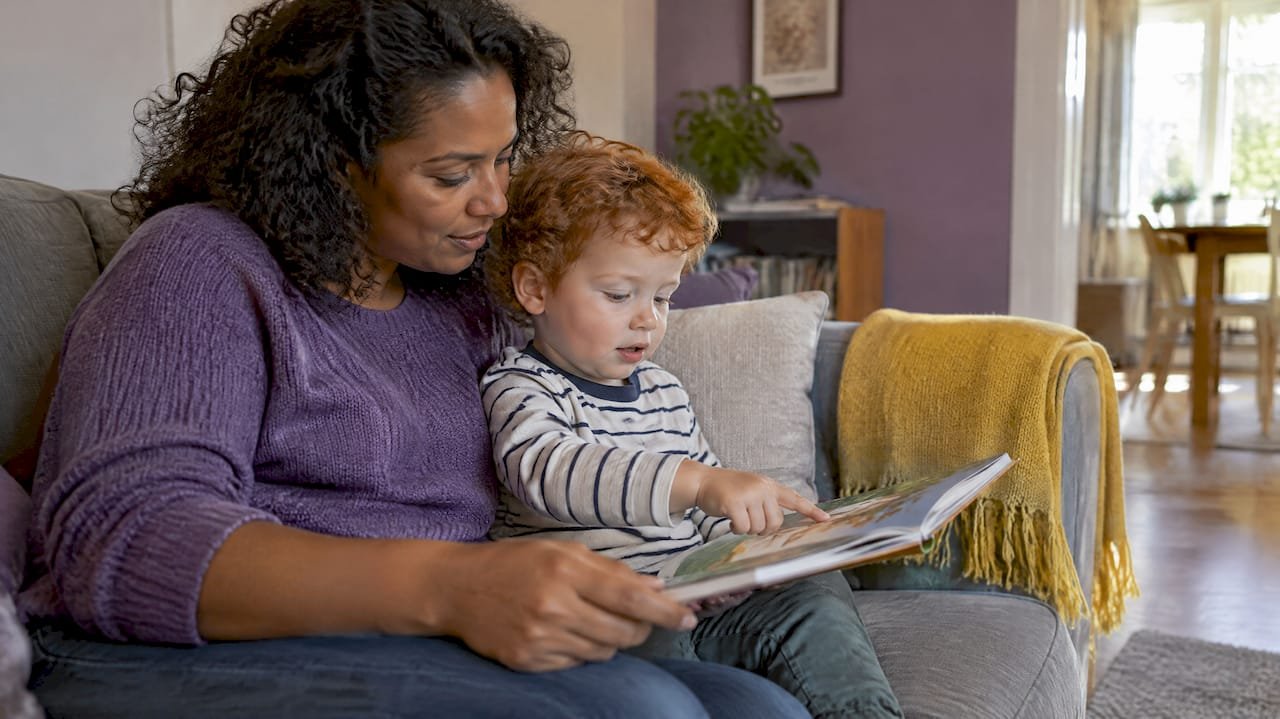
This is the simplest idea, and one of the best. The NHS says books, songs and nursery rhymes can support language and communication, and sharing books can also support bonding, emotional wellbeing and an interest in reading. It adds that even 10 minutes of looking at books together each day can help build important skills.
Try this:
- Let your toddler pick the book, even if it is the same one again.
- Point, name, and pause so they can fill in a word or a sound.
- Finish with a movement song such as “Head, Shoulders, Knees and Toes”, which the National Day Nurseries Association recommends.
If you want more ideas for sounds, rhymes and early reading, we have a guide to early literacy and phonics activities for toddlers. For a story you make up together, see our storytelling ideas for busy parents.
Sock puppets and finger puppets
Socks are free, and there is always an odd one. Slip one on your hand, give it a voice and let it say good morning. Your toddler may want to talk to it, feed it or put it to bed. It works as a calm start for a child who wakes up grumpy. We collected more in our sock games for toddlers.
Hide and find
Hide a toy under a tea towel, behind a cushion or in a box, and let your toddler find it. The National Day Nurseries Association suggests hiding a toy for a toddler to find, and rolling a ball back and forth. Both take seconds to set up, and both work in pyjamas.
Water play at the sink or on a tray
The Ealing routine lists water play with sponges, bottles and pans for pouring and filling. Put a towel on the floor, add a baking tray with an inch of water and a few plastic cups and bottles, and let your toddler pour. Stay close, as toddlers can slip or tip a tray over quickly. Our water play ideas page has more.
Flour dough from the cupboard
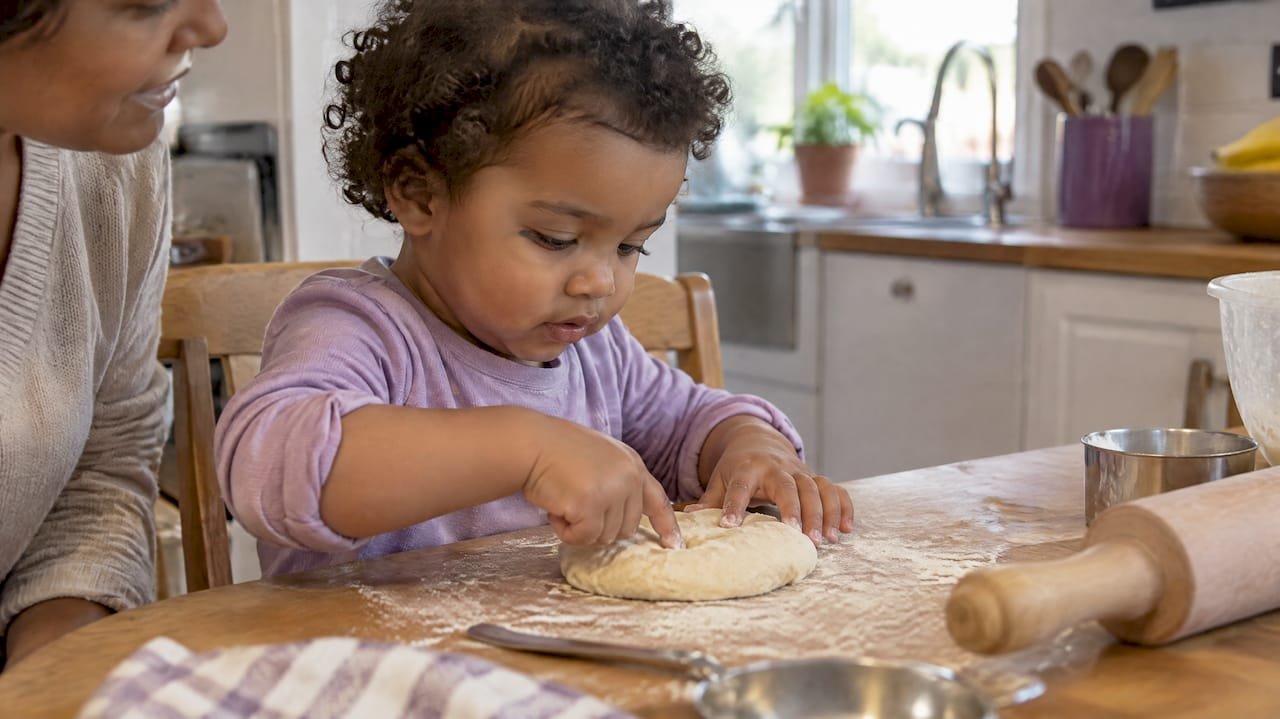
No playdough? The National Day Nurseries Association says flour mixed with water can be a low-cost dough alternative. Add rollers, cutters and kitchen utensils for poking, prodding and making patterns. Keep it simple and clear up together afterward, which is another small job for your toddler.
Drawing and painting
A piece of paper, a few crayons and a clear spot at the table is enough. Drawing and painting appear on the NHS list and on the Ealing timetable alongside playdough and sand. Let your toddler scribble freely. Talk about the marks rather than asking “what is it?”.
Sorting and counting
Upham Primary School suggests sorting household objects by material or texture, and ordering objects by length. It also suggests counting toys or building bricks on a tray, moving them, then counting again to see whether the number changes. At breakfast time this could be sorting spoons from forks, or lining up three bananas from smallest to biggest.
For more of this, try our toddler counting games.
Get the wriggles out: movement ideas
Many toddlers need to move before they can sit still for breakfast or a book. Short, active play first thing often makes the calm parts easier.
Upham suggests jogging on the spot, stretching while naming body parts, animal movements and simple yoga poses. The Ealing routine lists yoga, ball play, an obstacle course, a tape “tightrope” for balancing, stepping stones and dancing.
Here is a five-minute movement round:
- Stretch and name: reach up high, touch toes, wiggle fingers. Name each body part as you go.
- Animal walk: hop like a frog to the kitchen, stomp like an elephant back.
- Tape line: stick a strip of masking tape on the floor and walk along it, arms out. Michigan State University Extension recommends masking-tape balance lines for toddlers, along with laundry-basket throwing and pretend vehicles.
- Cushion stepping stones: lay cushions in a path across the room.
- Dance: put on one song and dance until it ends.
The National Day Nurseries Association links exploring objects actively with physical development, small-muscle development and wellbeing, so even a simple pass-the-ball game counts as more than just burning energy. For a wider set of options, see our gross motor activities, and for little hands, our hand-eye coordination ideas.
Early waker? Ideas for the quiet hours
Some toddlers wake at 6am or earlier, and the grown-up is not always ready. You cannot always change the wake-up time, but you can make those early minutes easier.
The idea that works for many families is a small, ready-made basket. The National Day Nurseries Association recommends a basket of safe household resources, such as ribbons, containers, wooden spoons, crinkly paper, a natural sponge, empty baby-milk containers and clothes pegs. It also says regularly changing what is in the basket can keep interest high and encourage children to explore new objects.
A few ways to use that idea:
- Keep it out of sight until the early morning, so it feels special.
- Swap two or three items every few days rather than refilling everything.
- Pair it with a snuggle: sit on the sofa with a blanket and a hot drink while your toddler explores. Stay within reach and keep an eye on small items.
- Add one calm sensory idea, such as a tray of dry pasta shapes with a spoon and cup, or a few cotton balls to drop into a bowl. The cotton-ball dropping idea comes from Michigan State University Extension, which also suggests cup towers, blanket forts, cardboard-tube binoculars, flashlight shadows, boxes and measuring-cup scooping.
A blanket fort and a torch is a good one for dark mornings in autumn and winter. Our sensory play ideas and no-toy activities guides have more calm options, and the cardboard box activities are handy if a delivery has just arrived.
If you are exhausted, give yourself permission to keep it small. One basket, one blanket, one drink. That is a good morning.
Adapting ideas for different ages
A 10-month-old and a 3-year-old can both enjoy a basket of kitchen items, but they will do very different things with it. UNICEF suggests matching play to what a child can do now. Babies can look, listen, reach, imitate and explore safe materials. Toddlers can walk, carry, sort, pretend, follow directions and play simple cooperative games.
Here is how one idea can stretch across ages:
| Idea | Baby (6 to 12 months) | Young toddler (1 to 2 years) | Older toddler (2 to 4 years) |
|---|---|---|---|
| Basket of household items | Hold, mouth and shake safe items | Take items out and put them back in | Sort by color or size, then pretend to cook |
| Water play | Splash hands in a shallow tray, with you right beside them | Pour and fill cups | Move water between bottles with a sponge or spoon |
| Songs | Listen, watch your face, bounce | Copy actions | Sing along and choose the next song |
| Hide and find | Peek-a-boo with a cloth | Find a toy under a cushion | Hide a toy for you to find |
| Books | Look at pictures, touch pages | Point and name | Retell the story in their own words |
When a baby joins in
If you have a baby and a toddler, keep the baby close and use the same activity at two levels. While your toddler sorts spoons, your baby can hold a wooden spoon. While your toddler dances, your baby can watch from your lap. Always stay near and check items are big enough not to be a choking risk. Our babysitting activities guide has more low-prep ideas for mixed ages, and if a new baby is on the way, see preparing your toddler for a new baby sibling.
If your toddler needs more predictability
Some children feel safer when play follows the same pattern each day. If that sounds like your child, our guides to autism activities for toddlers and activities for toddlers with Down syndrome offer calm, simple ideas.
What your toddler is learning
It can feel like “just play”, but a lot is going on. Michigan State University Extension explains that everyday play supports maths, science, literacy, language, social skills, imagination, coordination and motor development.
Here is what that looks like in a morning:
- Language: naming body parts, singing, chatting about a book.
- Early maths: counting bricks, comparing lengths, sorting spoons.
- Physical skills: balancing on tape, throwing into a basket, pinching cotton balls.
- Social and emotional skills: taking turns, having a cuddle, feeling heard.
- Imagination: a sock puppet that talks, a box that becomes a bus.
You do not need to teach any of this. Join in, follow your toddler’s lead and let them repeat what they like. If you want to see ideas grouped by skill, our page on low-prep activities by skill area is a good place to start, and our EYFS activities at home guide covers all seven areas of learning.
Three ready-to-go morning plans
If choosing is the hard part, pick a plan.
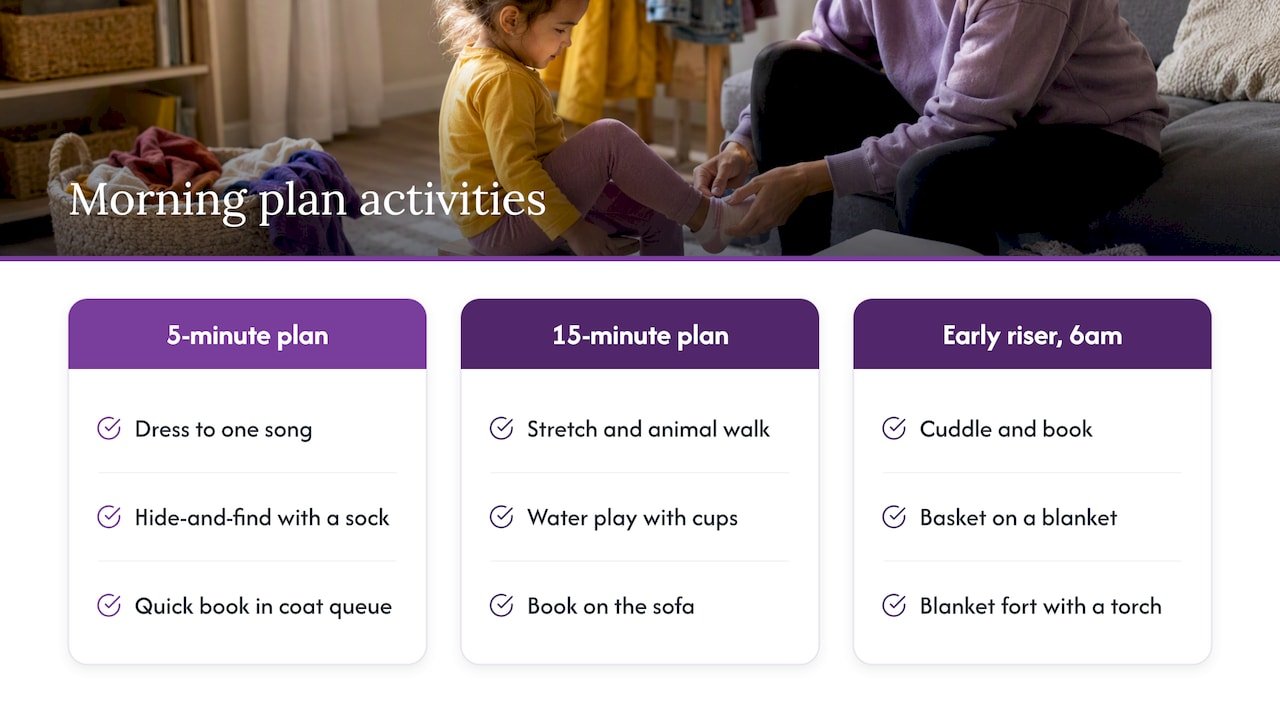
The 5-minute plan (rushed school or nursery run)
One song while getting dressed, hide-and-find with a sock, then a quick book in the coat queue.
The 15-minute plan (a slower weekday)
Stretch and animal walk, water play on a tray with cups, then a book on the sofa.
The early riser plan (6am wake-up)
Cuddle and book, then the basket on a blanket, then a blanket fort with a torch once everyone is a little more awake.
If it is autumn and you want something seasonal, our autumn activities for toddlers page has ideas to try before you head out. Heading to nursery soon? See getting ready for nursery.
Our perspective
We built Mooshie Moments because we know how it feels to look at a toddler at 6.30am and have no idea what to do. It is not that you do not care. Your head is just full.
Our view is simple. Morning play should not need a shopping trip, a screen or a half-hour set-up. It should use what is in your home and fit the time and energy you have today. A good five minutes of attention beats a complicated activity you never start.
We also think parents deserve to know why an activity helps. When you know that a tape line builds balance, or that a sock puppet gets your toddler talking, it is easier to say yes to the small stuff. That is why every idea in our app comes with a plain-language explanation of the developmental “why”, reviewed by experts, plus coaching tips so you can make it easier or harder as your child grows.
And for the grown-up: put your phone down for the first few minutes. Your toddler will notice.
— samit
Take the guesswork out of mornings
If you would like fresh ideas without searching each day, Mooshie is a free-to-download app for parents and caregivers of children aged 6 months to 4 years. You tell it your child’s age and how much time and energy you have, and it suggests a quick, screen-free activity using things you already own. Grandparents, aunties, uncles and childminders can use it too. Nurseries and early years settings can look at our Partnership Pack for home-learning resources to share with families.
FAQ
What are some good morning activities for toddlers?
Short, simple ones work best: sharing a book, singing movement songs, water play with cups and sponges, hiding and finding a toy, or walking along a masking-tape line. The NHS suggests books, songs, household items, drawing, sock puppets and walks as easy starting points. Pick one calm and one active idea, and stop when your toddler loses interest.
What can I do with my toddler when they wake up early?
Have a cuddle first, then offer a basket of safe household items on a blanket while you wake up. The National Day Nurseries Association says changing the basket contents regularly keeps children interested. Keep the basket for early mornings only so it stays special, and stay close while your toddler explores.
How long should morning play last?
There is no set time. Five to fifteen minutes is realistic for most busy mornings, and a toddler’s attention may be shorter than that for any one idea. The NHS says even 10 minutes of looking at books together each day can help build important skills, so small slots do count.
What are good morning routines for toddlers?
A predictable order helps: wake up, breakfast, washing and dressing, then movement, then calmer play such as books and rhymes. Early-years routines in Hampshire and Ealing follow a similar flow. Let your toddler help with each step, and keep the order the same most days so they know what comes next.
How do I include a baby in morning play?
Use the same activity at two levels. A baby can look, listen, reach and explore safe items, while a toddler can sort, carry and pretend, as UNICEF describes. Keep your baby close, supervise at all times, and choose items too large to swallow.
Sources
- Baby and toddler play ideas, NHS
- Activity ideas for toddlers for fun and learning, Action for Children
- Early Years Daily Routine and Activity Ideas, Upham Primary School
- My Daily Timetable, Ealing early-years routine
- Parent guide: everyday activities to support 0 to 2 year olds, National Day Nurseries Association
- 10 household items you can use for play with toddlers, Michigan State University Extension
- 21 learning activities for babies and toddlers, UNICEF
Recommended
- Buy 5 to 30 Minutes Now: Quick Toddler Activities for UK Parents
- Best Boredom Busters for Toddlers: Easy, Screen-Free Ideas
- UK Parents: 8 Low Energy Toddler Activities for Sofa Days
- 5 Minute Calming Activities for UK Toddlers, Screen Free & Low Prep
Want a new idea every day, matched to your child's age?
Mooshie Moments gives you simple, guided play ideas for ages 6 months to 4 years.
Download free on the App StoreMore like this
Toddler Scavenger Hunt: Easy Ideas for Home and Garden
Easy toddler scavenger hunt ideas using things you already have: indoor, garden and nature walk hunts, by age, with safety tips and…
Camping With Toddlers: Activities That Work at the Campsite
Easy camping activities for toddlers using what you already have: nature play, campfire-free games, rainy-day ideas and safe-play tips for UK campsites.
Eco-Friendly Toddler Activities Using Things You Already Have
Simple eco-friendly toddler activities using things you already have: water play, nature hunts, junk modelling and garden play, with safety tips for…