Eco-Friendly Toddler Activities Using Things You Already Have
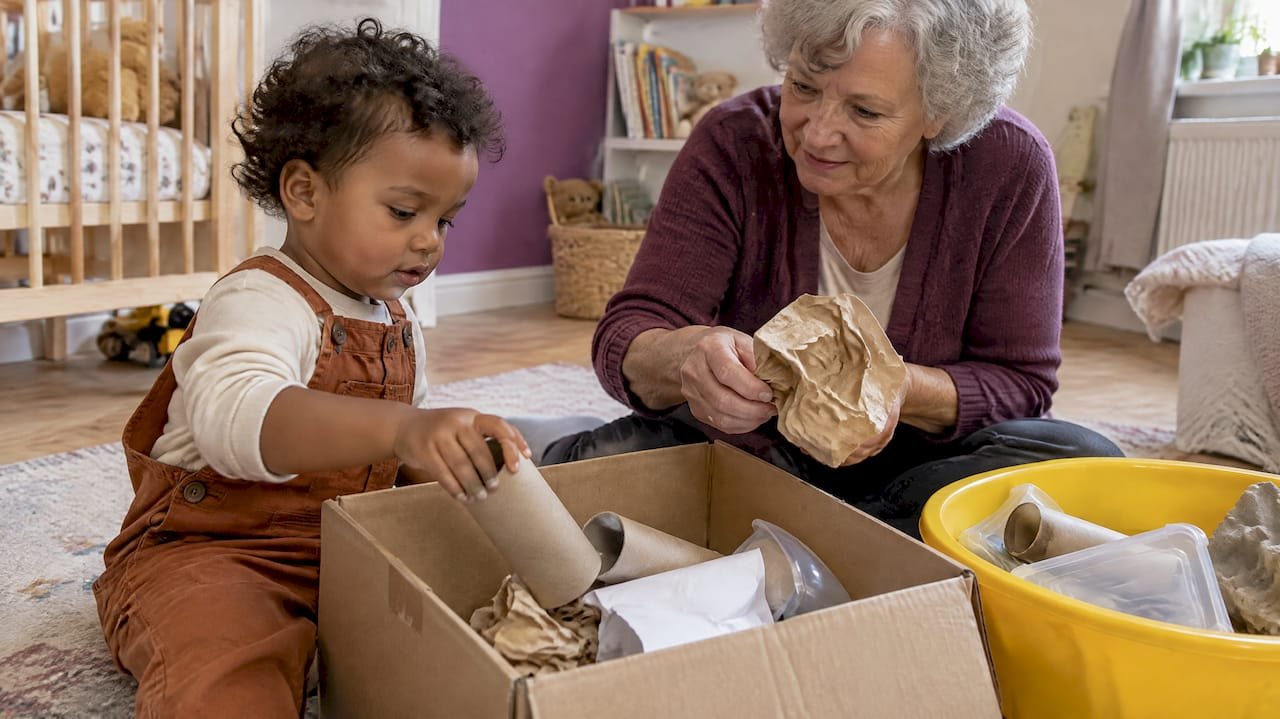
The most eco-friendly toddler activities are the ones that need nothing new: a bowl of water, a cardboard box, a walk to the park, a pot of soil. You do not need to buy a green-labelled kit. You need a few minutes, some things from the recycling bin and a child who is curious about everything. Below you will find ideas for water play, nature play, reuse and gardening, plus the safety checks that matter for babies and toddlers.
TL;DR
- Eco-friendly play for toddlers mostly means reusing what you have: boxes, tubes, containers, jugs, spoons and outdoor space.
- Water play, nature hunts, junk modelling and simple gardening all work from around 6 months to 4 years, with the right adjustments for age.
- Stay within arm’s reach of any water. The NHS warns that a young child can drown in less than 5 centimetres of it.
- Keep a small “materials bin” so play ideas are ready when you are tired.
- Each idea here takes 2 to 15 minutes to set up, and none needs a screen.
Table of Contents
- What “eco-friendly” really means for a toddler
- Water play with things from the kitchen
- Nature play without a trip to the countryside
- Reuse and junk modelling: the recycling bin as a toy box
- Gardening with babies and toddlers
- Cold and seasonal play
- Adapting for different ages
- Safety checks that take two minutes
- Why simple play is enough
- Our view: why we built Mooshie around household things
- Get an idea in seconds with Mooshie
- Quick start: a week of eco-friendly play
- FAQ
- Sources
What “eco-friendly” really means for a toddler
For a toddler, eco-friendly play is not about lessons on climate change. It is about three simple habits: using what is already in the house, going outside, and reusing things before they are thrown away. The learning about the planet comes later. At this age the main point is that your child touches, pours, digs, sorts and notices.
That approach also happens to be easy on your wallet and your energy. WWF UK says play spaces do not need to be complicated or full of toys for play to be fun, engaging and creative. Play Scotland takes a similar line in its Summer on a Shoestring pack: play can happen anywhere, with bits and pieces or with nothing at all.
So when we say eco-friendly, we mean:
- Reused, not bought. Cardboard, containers, kitchen tools.
- Natural, not plastic. Leaves, soil, water, sticks, stones.
- Hands-on, not on a screen. Movement, mess and conversation.
That last one matters to a lot of parents. These activities replace passive screen time with movement, sensory investigation, conversation, problem-solving and shared attention with you.
Water play with things from the kitchen
Water play is the easiest place to start, and it can be done in a sink, a bath, a paddling pool or a plastic bowl. The NHS suggests using unbreakable items such as plastic bottles, tubing, a sponge, a colander, straws, a funnel or spoons. Inspiring Scotland’s guidance suggests a tub or bowl outside with plastic jugs, spoons, sieves, pots and pans.
Try these:
- Pour and scoop. Give two containers and a spoon. Your toddler moves water from one to the other. You talk: “full”, “empty”, “splash”.
- Sponge squeeze. A clean kitchen sponge is a great squeeze-and-release toy for small hands.
- Washing station. Let your toddler wash plastic cups or a doll with a cloth. It feels like a real job, and they love that.
- Rain collecting. Put a bowl outside on a wet day. Check it later and see what happened.
Water can be reused, too. Tip the bowl onto a thirsty plant when you finish, and your toddler gets a second activity for free. For more ideas, see our guide to water play for babies and toddlers.
Water safety, every time
Never leave a young child alone with water. A baby or young child can drown in less than 5 centimetres, so keep the bowl shallow, stay within reach, and empty it when you are done.
Nature play without a trip to the countryside
You do not need a forest. WWF UK says a garden, patio, balcony, local outdoor space or even an indoor space can support nature-based play. Its prompts are simple: ask what your child can see, hear or smell, try a scavenger hunt, make art with natural materials, or look for minibeasts.
A five-minute nature hunt
Grab a bag or an old egg box. Walk to the end of the street, the park or your own back step. Look for:
- something soft
- something rough
- something that makes a noise when you shake it
- something smaller than your thumb
- something green
For under-twos, just name things as you spot them. Two-year-olds can match, collect and sort. Three- and four-year-olds can follow the whole list. Your own words do a lot of work here: every time you name a leaf or say “crunchy”, you are building your child’s vocabulary.
Sensory play in natural materials
Inspiring Scotland recommends outdoor sensory play in grass, leaves, moss, soil or sand, touching natural objects, naming sights, sounds, smells and textures, singing nature songs, and taking small-world toys outside. A toy dinosaur in a patch of leaves is a whole jungle to a three-year-old.
Want more? We have collected 12 simple nature play ideas for toddlers, plus a set of ten-minute screen-free outdoor activities for days when time is short.
If you are also tracking what your little one can do at each stage, a month-by-month baby development guide can help you match outdoor ideas to what they are ready for.
Minibeast spotting
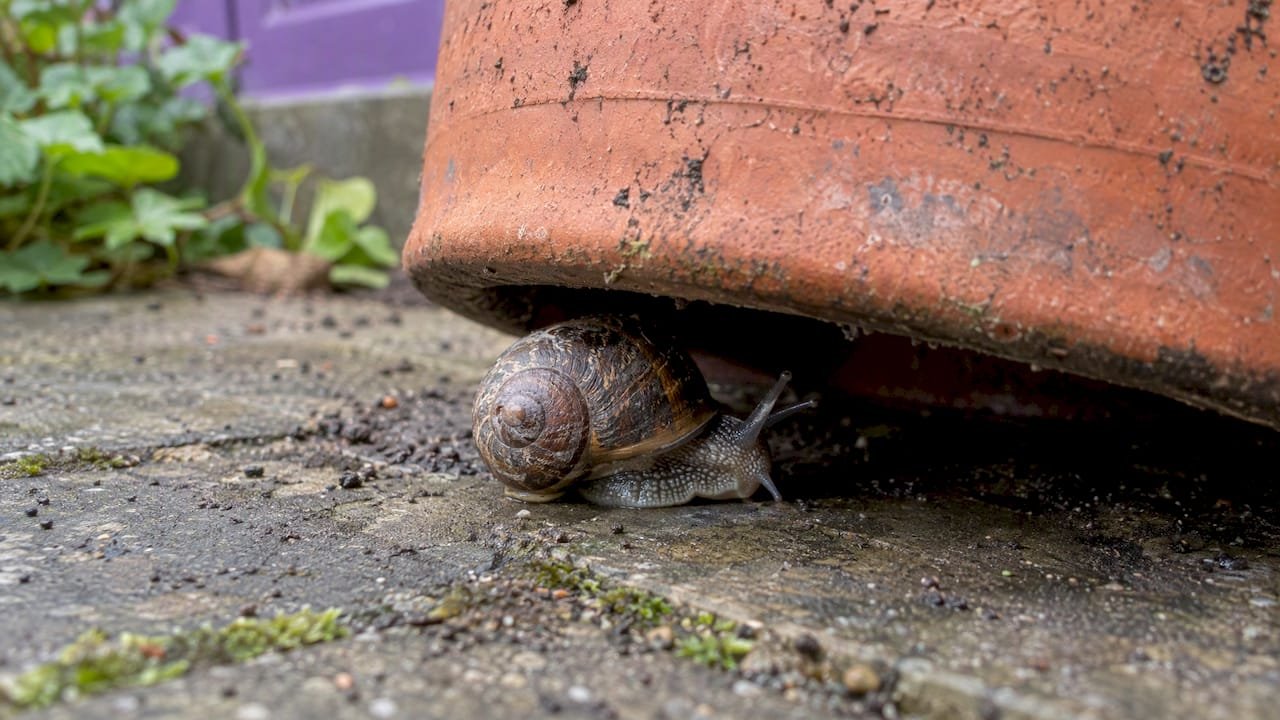
Lift a flowerpot, check under a log, look at a wall. Watch an ant or a snail for a full minute. Then put everything back where you found it. That small habit teaches care for living things better than any speech.
Reuse and junk modelling: the recycling bin as a toy box
This is where eco-friendly play and no-shopping play meet. Think Earth suggests keeping a project materials bin with cardboard tubes and boxes, cleaned plastic food containers, paper and packing materials. Those items can become art, toys, games, vehicles, tracks, ramps or miniature buildings. The same activities connect household materials with reducing waste, reusing products and recycling.
Set up a materials bin
Use one box in a cupboard. Add things as they come through the house:
- kitchen roll and toilet roll tubes
- cereal boxes and delivery boxes
- clean yoghurt pots and tubs with no sharp edges
- scrap paper and old cards
- bottle tops are best left out for children under three because of choking risk
When the bin is full, you always have something to hand. No planning is needed.
Ten-minute reuse ideas
| Activity | What you need | Good for |
|---|---|---|
| Tube ramp | Cardboard tube, a small ball or toy car | Cause and effect, 1 to 3 years |
| Box garage | Large box, toy cars | Pretend play, 2 to 4 years |
| Posting box | Shoebox with a slot, large cards | Hand-eye coordination, 12 months and up |
| Tube telescope | Kitchen roll tube | Looking, language, 2 to 4 years |
| Tub sorting | Clean tubs, leaves or large pasta shapes | Sorting and counting, 2 to 4 years |
See our guide to junk modelling for toddlers for more EYFS-aligned ideas, and no-toy activities for busy days when even the box feels like too much.
What to reuse and what to skip
UNICEF Parenting encourages reusing household items creatively, for example glass jars as pencil holders, cardboard boxes for craft storage and old T-shirts as cleaning rags. It also advises avoiding reuse of single-use plastic items, because they may harm health. For toddlers, that means this: reuse cardboard, paper and sturdy, cleaned containers, and skip anything cracked, brittle or likely to be chewed into pieces. Keep glass for grown-up projects and out of toddler hands.
Gardening with babies and toddlers
A garden is not required. A windowsill, a balcony pot or a bucket by the door works.
Inspiring Scotland’s advice by age is helpful:
- Babies: put a blanket or towel outdoors and let them feel grass, leaves or moss safely.
- Toddlers: offer supervised soil, sand, water, pots, sieves and spoons. Let them touch soil, plant or investigate plants, water them, and notice changes in weather or growth.
Easy starter projects
- Plant in a reused container. An old tub with drainage holes made by an adult is fine. Add soil and a few seeds. Toddlers love the digging more than the planting.
- Water with a jug. One small jug, one plant. Count the pours.
- Check daily. Take 30 seconds each morning to see if anything changed. That is a lesson in patience.
- Mud kitchen. Old pots, spoons and a patch of dirt.
On wet days, go out anyway in waterproof clothes and boots. Puddles count as science. Our list of low-prep garden activities for UK toddlers, rain or shine has more ideas.
Cold and seasonal play
Winter and autumn can be full of eco-friendly play too. Collect leaves and conkers on a walk (supervise closely, because small items can be put in the mouth), make leaf rubbings with scrap paper, or freeze water outside and see what happens. We have ice play ideas for toddlers and a page of autumn activities for toddlers and EYFS that use things you can find outside.
Adapting for different ages
The same bowl or box can work from 6 months to 4 years. What changes is what you ask your child to do.
| Age | What it looks like | Your role |
|---|---|---|
| 6 to 12 months | Feeling grass or leaves on a blanket, splashing in shallow water, banging a tub | Stay close, and stop anything going in the mouth that should not |
| 1 to 2 years | Pouring, posting, digging, naming things | Name what they do, copy their actions |
| 2 to 3 years | Sorting, simple hunts, pretend play with boxes | Ask “what can you see?” and wait for an answer |
| 3 to 4 years | Following a list, planting seeds, building with tubes | Let them lead and add small challenges |
Inspiring Scotland says mobile babies and young children can move around and investigate while adults stop them putting unsafe items in their mouths, and that you should support their changing interests and needs. Play Scotland also notes that activities can be adapted for younger or older children.
If you have a two-year-old, start with our 2 year old activities. If you have a child with additional needs, we have gentler guides for autism and Down syndrome.
Safety checks that take two minutes
Eco-friendly play is low-cost, but it is not zero-risk. A quick scan helps.
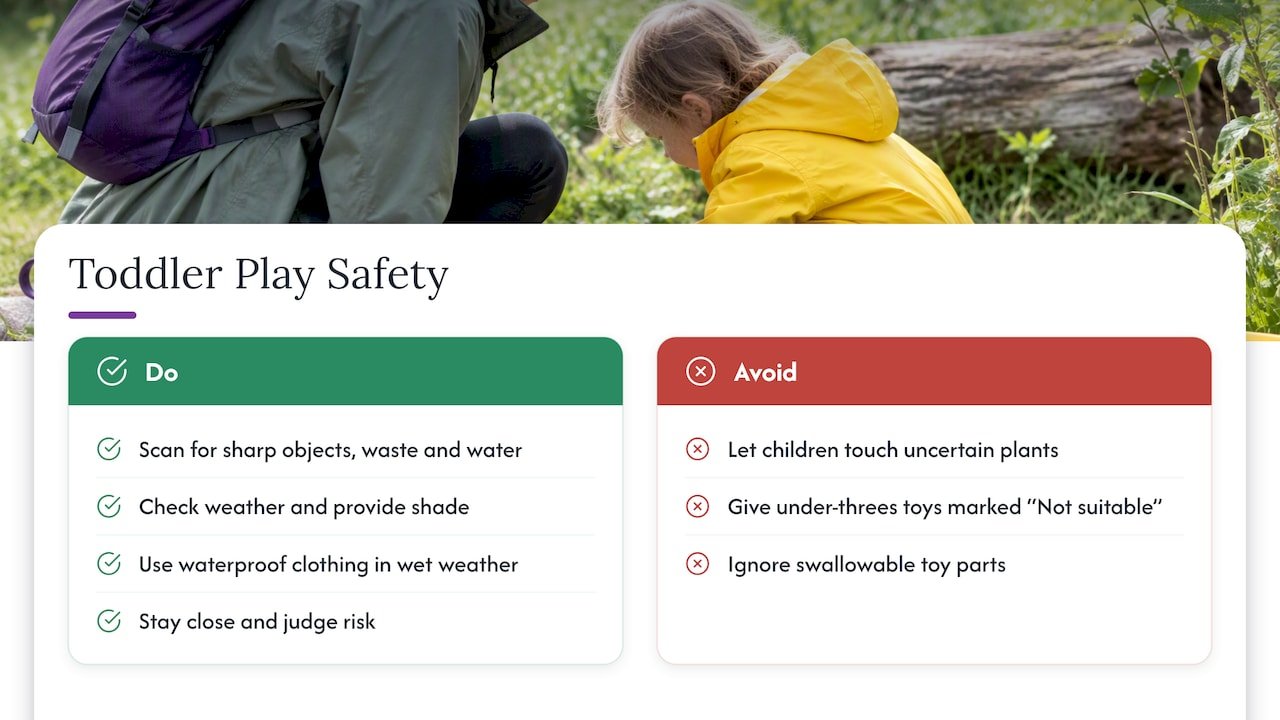
Outdoors. WWF UK advises checking for sharp objects, animal waste and contaminated water, watching for ticks, stings and poisonous plants, and using suitable clothing and shoes, sun protection and hydration. Wash hands before eating. If you are unsure whether a plant is safe, do not let your child touch it, and ask a pharmacist or your GP if your child has handled or eaten something you are worried about.
Weather. Inspiring Scotland recommends checking the weather, providing shade in strong sun, and using waterproof clothing or shelter when it is wet.
Toys and small parts. The NHS says to check toys for sharp edges and swallowable small parts and not to give children under three anything marked “Not suitable for children under 36 months”. Apply the same eye to your recycling: torn cardboard edges, tiny lids and loose bits of tape are the usual culprits.
A little risk is normal. WWF UK notes that natural spaces have changing hazards such as bumps, holes, sticks and branches, and that proportionate challenge can help children try new skills and learn to handle risk safely. Your job is to stay close and judge what is right for your child on that day.
For babies and children who still mouth everything, our page on taste-safe sensory play is a good next stop.
Why simple play is enough
It is easy to feel that “good” play has to be impressive. It does not. Inspiring Scotland describes nature connection for babies and young children as supporting health, wellbeing, learning and a lifelong relationship with the natural environment. Play Scotland links low-cost play with skills that help children starting or returning to school or nursery.
In practice, ten minutes with a bowl of water or a box can include:
- Movement: pouring, carrying, digging, climbing in and out
- Language: naming, asking, singing
- Early maths: full and empty, more and less, big and small, sorting
- Problem-solving: will the ball fit down the tube?
- Closeness: your full attention, even for a short time
There is no special equipment for any of those. If you want to see how everyday play lines up with learning goals, our guide to EYFS activities at home covers all seven areas.
Our view: why we built Mooshie around household things
We started Mooshie Moments because we kept hearing the same thing from parents: “I want to play with my toddler, but I am tired and I have run out of ideas.” The problem is rarely love or effort. It is that ideas take energy to come up with, and shopping for them takes money.
That is why everything we suggest uses things you already have. A toddler gets as much from a cardboard tube and a spoon as from a shop-bought set, and the household version is better for your budget and for the planet. We think reuse should be the default way families play, not a special project.
We also think the “why” matters. When you know that pouring water builds hand control, or that naming a leaf builds language, you play with more confidence. So each activity in our app explains the developmental reason in plain language, and every suggestion is matched to your child’s age and the time you have.
And we want you off your phone, too. Mooshie is designed to give you an idea fast, so you can put the screen down and get back to your child.
samit
Get an idea in seconds with Mooshie
If you read a list like this and still freeze when your toddler says “play with me”, that is normal. Mooshie is our app for parents and caregivers of children aged 6 months to 4 years. You tell it your child’s age and how much time and energy you have, and it suggests a screen-free activity using things from around your home, with a short explanation of what your child is learning.
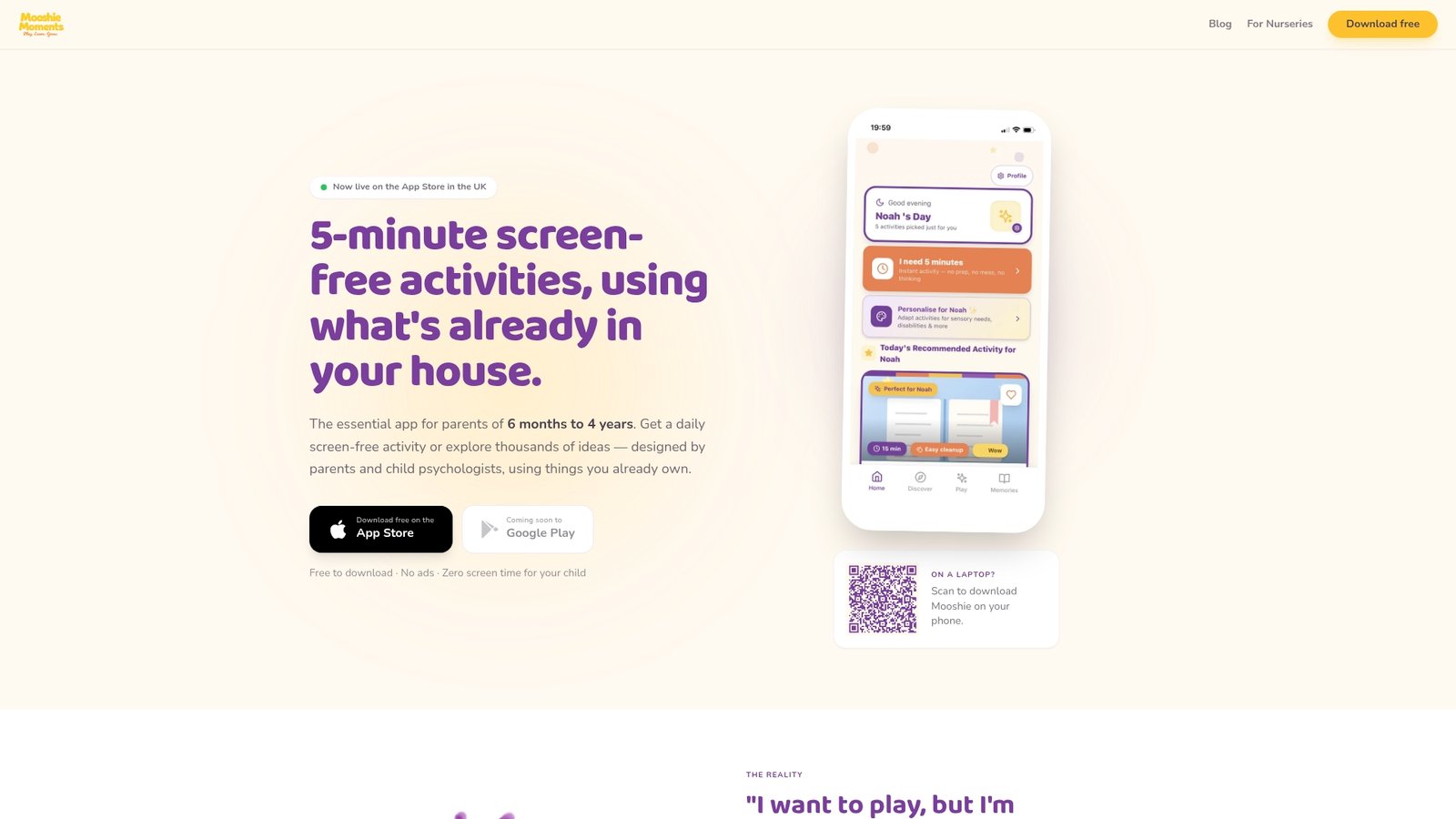
Try Mooshie the next time you are standing in the kitchen wondering what to do with ten minutes. If you work in a nursery, childminding setting or early years group, take a look at our Partnership Pack for nurseries, which offers a home-learning resource for your families.
Quick start: a week of eco-friendly play
If you want a plan, here is a gentle one. Each takes 5 to 15 minutes.
- Monday: Water pouring in a bowl with two cups. Tip the water on a plant.
- Tuesday: A five-minute nature hunt on the way home.
- Wednesday: Tube ramp with a small ball or car.
- Thursday: Plant a seed in a reused tub.
- Friday: Box garage or den. Then recycle the box together.
- Weekend: A puddle walk, a park visit, or minibeast spotting.
Nothing is compulsory. If it is raining and everyone is cross, put a towel on the floor and give your toddler a bowl and a sponge. That counts.
FAQ
What are the best eco-friendly activities for a one-year-old?
Keep it sensory and close to you. Try a blanket outside with grass or leaves to feel, shallow water play in a bowl, or banging and posting with clean tubs and cardboard. Stay within reach all the time, and watch what goes in the mouth. Choose objects that are too big to be swallowed.
Do I need to buy anything for eco-friendly play?
No. Cardboard tubes and boxes, cleaned containers, kitchen spoons, jugs and a bowl are enough for most ideas here. A materials bin in a cupboard means you always have something ready. If you want to buy something, choose a durable item that will last through several children or can be passed on.
Is it safe to give toddlers recycled materials?
Yes, with a few checks. Use cardboard, paper and clean, sturdy containers, and check for sharp edges and small parts. UNICEF Parenting advises against reusing single-use plastics because of possible health concerns. Always supervise, especially with children under three.
How do I do nature play if I live in a flat?
Use a windowsill, balcony pot, local park or even a tray of leaves and soil indoors. WWF UK lists balconies and indoor spaces among the places that can support nature-based play. A short walk to the nearest green space with a collecting bag is often all it takes.
How long should an activity last?
As long as your toddler is interested, which is often only a few minutes. Two to fifteen minutes is a realistic range for most toddlers. Follow their lead, and stop when they walk away.
Sources
- Baby and toddler play ideas, NHS
- Taking nature-based play home, WWF UK
- Connecting babies and young children to nature, Inspiring Scotland
- Play Well Pack: Summer on a Shoestring, Play Scotland
- Climate action for families, UNICEF Parenting
- Think Earth at Home: indoor activities
Recommended
- Montessori Toddler Activities for UK Homes: 16 Ideas, No Shopping
- UK Parents: Low Prep Toddler Activities by Skill Area in 2–15 Minutes
- No New Toys Needed: Sensory Play Ideas Parents Can Use With Toddlers
- Ten Minutes: Screen Free Outdoor Activities for UK Toddlers
Want a new idea every day, matched to your child's age?
Mooshie Moments gives you simple, guided play ideas for ages 6 months to 4 years.
Download free on the App StoreMore like this
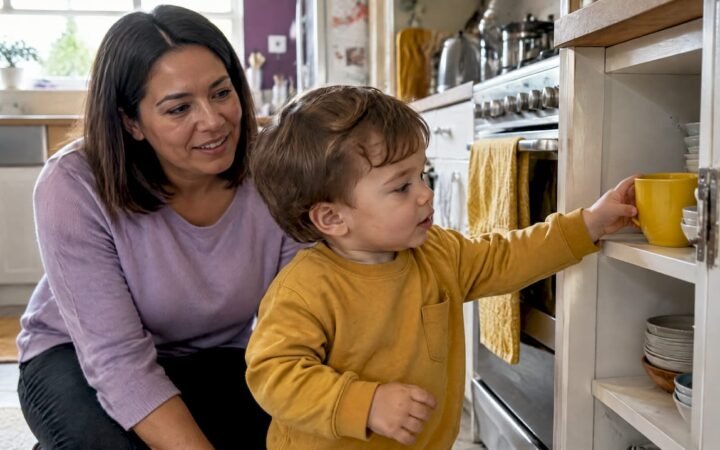
Toddler Scavenger Hunt: Easy Ideas for Home and Garden
Easy toddler scavenger hunt ideas using things you already have: indoor, garden and nature walk hunts, by age, with safety tips and…
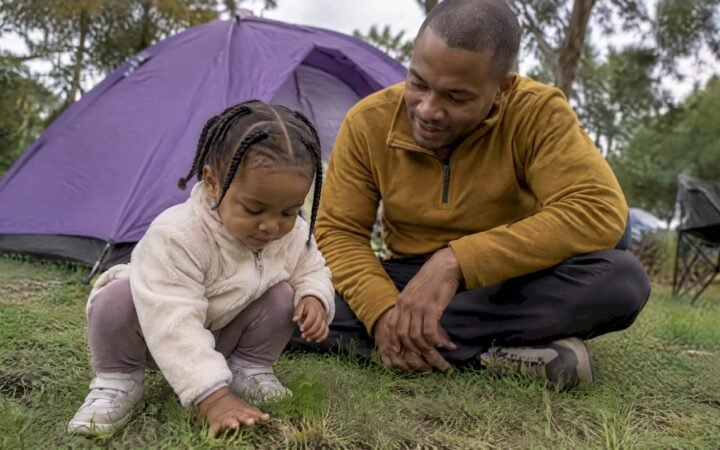
Camping With Toddlers: Activities That Work at the Campsite
Easy camping activities for toddlers using what you already have: nature play, campfire-free games, rainy-day ideas and safe-play tips for UK campsites.
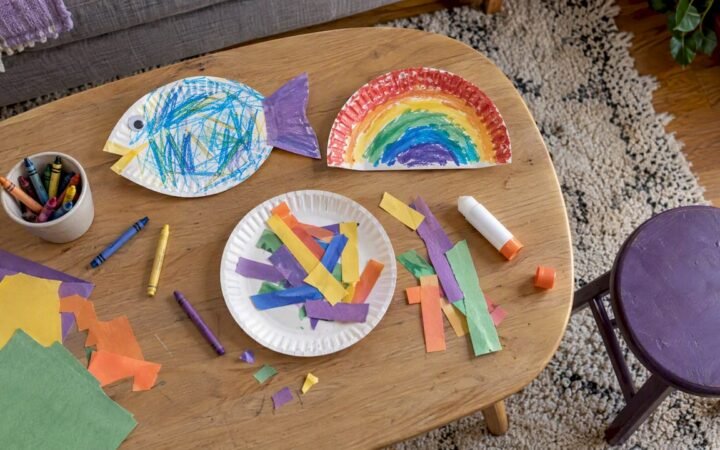
Paper Plate Crafts for Toddlers: 9 Easy Ideas With Household Items
Nine quick paper plate crafts for toddlers using things you already have, with age adaptations, prep times and safety tips for parents…