15 Low Prep Garden Activities for UK Toddlers, Rain or Shine
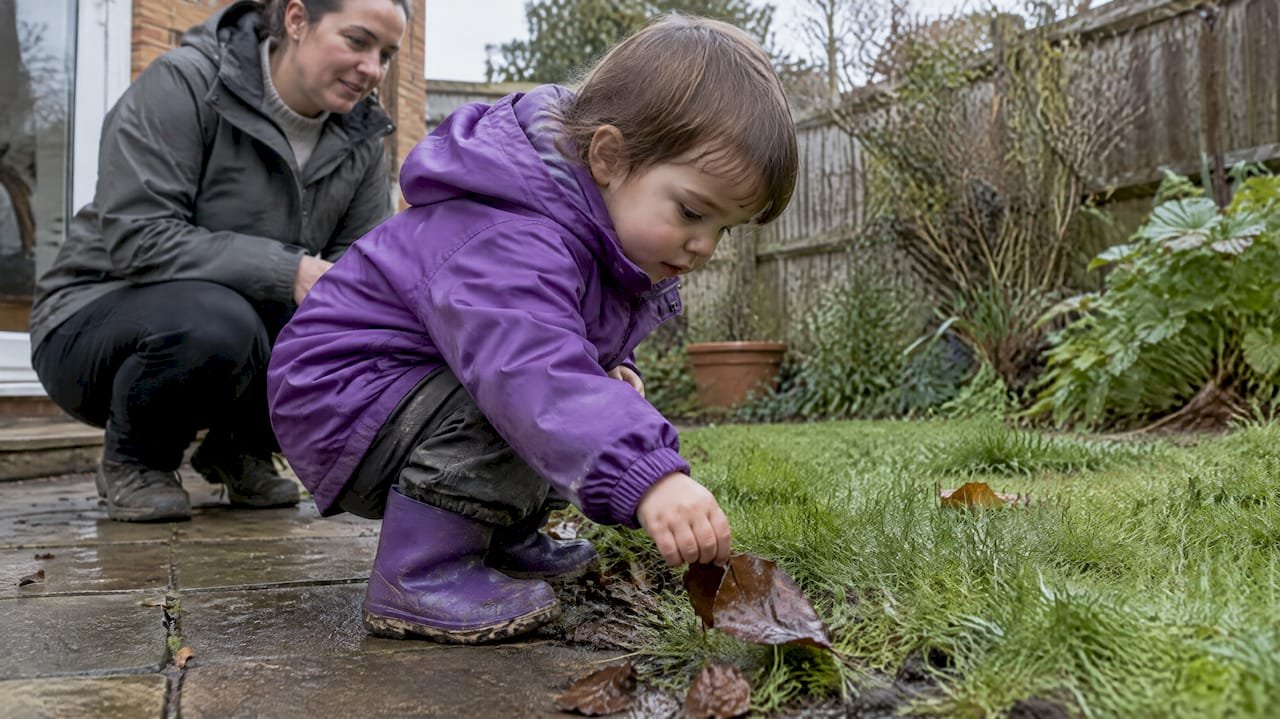
Short, low-prep activities using things you already have at home are the best way to keep toddlers happy and busy in the garden. Think sensory play, supervised water fun, digging and planting, movement games, and pretend play. We’ll walk through easy ideas for each, plus the safety rules and seasonal swaps that make garden play work all year round.
TL;DR:
- Most activities take 2 to 20 minutes and use household items; try bubble chasing, leaf sorting, or planting beans in recycled yogurt pots.
- Adult involvement drives learning: narrate what toddlers notice during watering, balance practice, or scavenger hunts to build language, motor skills, and confidence.
- Keep toddlers within arm’s reach around any water, including puddles and buckets, then empty and invert containers as soon as play ends.
- On cold or windy days, replace water play with a dry tray of rice, lentils, or sand; keep spare clothes and towels near the door.
Table of Contents
- 1. Fifteen easy garden activities you can start today
- 2. Why garden play matters for toddlers’ development
- 3. Garden safety basics parents must use now
- 4. All-year activity swaps for UK gardens
- 5. Fast setup and cleanup routines that save you time
- 6. How Mooshie Moments supports garden play in practice
- 7. What actually matters in toddler garden play
- Getting started with ready-made garden session plans
- FAQ
- Sources
1. Fifteen easy garden activities you can start today
Garden play doesn’t need a shopping trip. Most of these use things already sitting in your kitchen or recycling bin, and we’ve grouped them by how much time you’ve got.
Quick wins (2 to 5 minutes):
- Bubble trails: dip a straw or wand in washing-up liquid and water, then let your toddler chase and pop the bubbles across the lawn.
- Pot-and-spoon music: hand over a wooden spoon and a few pots or saucepans for a backyard drumming session.
- Puddle jumping: after rain, wellies on and let them stomp. Watch for slippery patches near paving.
- Leaf rubbings: place a leaf under paper and rub a crayon over it to reveal the shape and veins.
- Spray-bottle painting: fill a spray bottle with diluted paint or just water and let them “paint” the paving slabs.
Short sessions (5 to 10 minutes):
- Nature scavenger hunt: list or draw five things to find (a stick, a stone, a yellow leaf) and go hunting together. A photo scavenger hunt format works well if you want printable prompts.
- Bug hotel: stack sticks, leaves, and bark in a pile to make a home for minibeasts, then check on visitors over the following days.
- Simple balance beam: lay a plank or a line of bricks flat on the grass for toddlers to walk along, arms out for balance.
- Mark-making with big brushes: give them a decorator’s brush and a bucket of water to “paint” the fence or patio.
- Sensory mud kitchen: an old saucepan, some spoons, and a patch of mud turn into a full cooking show.
Longer play (10 to 20 minutes):
- Seed planting in recycled pots: yogurt pots with drainage holes poked in the bottom make ideal starter planters.
- Planting broad beans: push a bean into damp soil with a toddler-sized finger and check on it together over the following weeks.
- Washing-up-bowl water play: fill a bowl with water and add cups, sieves, and funnels for pouring practice, always within arm’s reach.
- Leaf and petal sorting: collect fallen leaves and petals and sort them by color or size into an old egg box.
- Obstacle course: combine the balance beam with a hoop to jump through and a cushion to crawl over.
Each one works as a stand-alone activity or can be chained together for a longer outdoor stretch. For more screen-free outdoor ideas, our guide to quick outdoor activities has further variations by age and energy level.
2. Why garden play matters for toddlers’ development
Garden play isn’t just a way to pass the time. The EYFS statutory framework treats regular outdoor play as central to toddlers’ gross and fine motor development, and NHS play guidance notes that children learn more from adult involvement than from any toy.
A few examples of how specific activities map to specific skills:
- Watering plants builds fine motor control through pouring, plus language as you name what grows.
- Balance beam walking develops gross motor skills and confidence as toddlers learn to trust their own footing.
- Scavenger hunts sharpen observation and expand vocabulary as children name and describe what they find.
The common thread across the EYFS prime areas, physical development, communication and language, and personal, social and emotional development, is that narrating what’s happening turns ordinary play into learning. Our EYFS activities guide breaks down all seven areas if you want to match activities more deliberately.
3. Garden safety basics parents must use now
Water is the single biggest risk in garden play, and the rule is simple: never leave a toddler unattended around water, even shallow water.
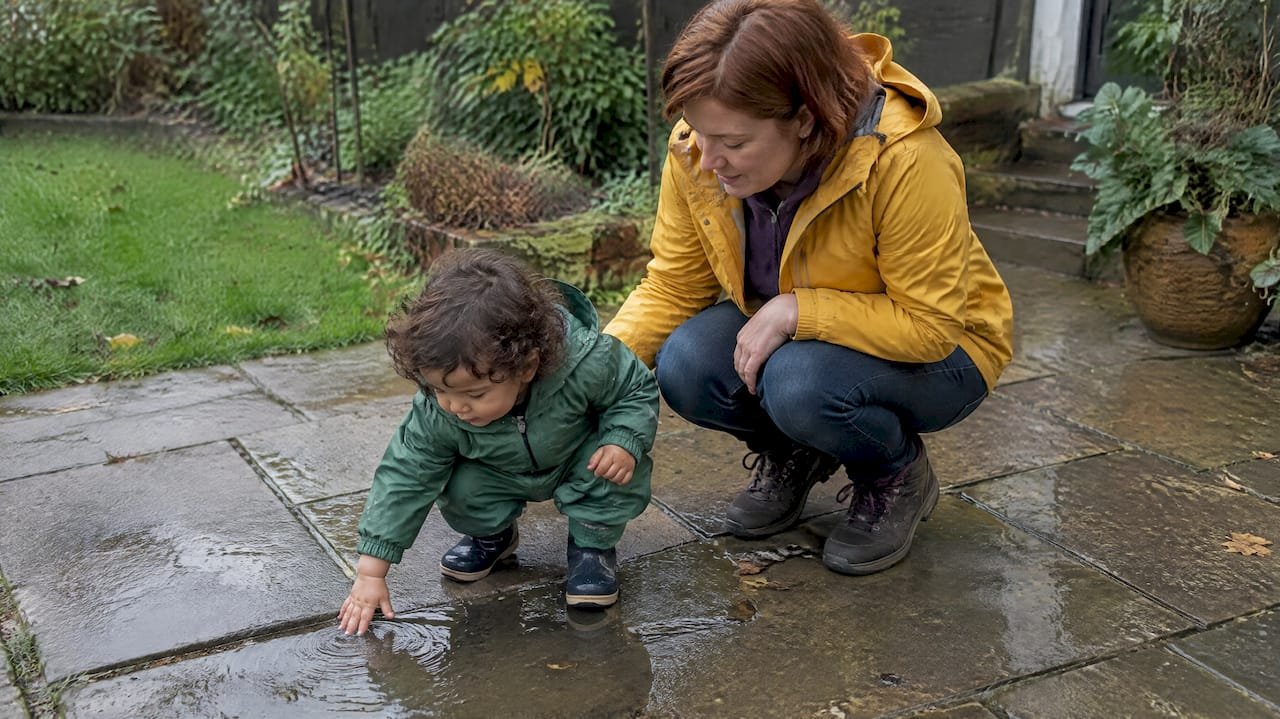
Toddlers can drown in very shallow water; according to NHS children’s services guidance, this means a puddle, a bucket, or a small amount of water in a paddling pool all carry real risk without supervision.
To stay safe outdoors:
- Empty and invert paddling pools, buckets, and water trays the moment play finishes.
- Fence off or cover garden ponds completely.
- Stay within arm’s reach any time water is involved, no exceptions.
- Use child-sized tools for digging and keep an eye on anything that goes near the mouth.
- Dress in layers with waterproofs, apply sun protection in warmer months, and wash hands after mud or water play.
4. All-year activity swaps for UK gardens
UK weather rarely cooperates for long, so having a backup plan keeps garden play going through every season.
- Autumn: leaf piles for jumping, conker sorting by size, hedgerow walks for texture and smell, and using collected seeds for simple crafts.
- Winter: a sheltered mud kitchen under an overhang, short outdoor bursts in waterproof layers, or swapping water play for an indoor sensory tray on the coldest days.
- Spring and summer: seed sowing, watching for minibeasts and birds, and brief supervised water play when the weather allows.
Swapping water play for a dry sensory tray (rice, lentils, or sand) on cold or windy days keeps the sensory benefits without the chill.
5. Fast setup and cleanup routines that save you time
A few repeatable habits make garden play something you can say yes to more often, not something that needs an hour of prep.
- Keep an outdoor “box of tricks”: pots, spoons, brushes, and a few recycled containers ready to grab.
- Store a spare clothes bin by the back door for muddy swaps.
- Lay down a wipeable mat for messier activities like painting or mud play.
- Hang a towel near the door for quick dry-offs after water play.
- Set up a hand-wash station or keep wipes nearby for after soil and water activities.
Pre-agree a garden zone and use a visual timer for session length, and staying within arm’s reach near any water stays non-negotiable.
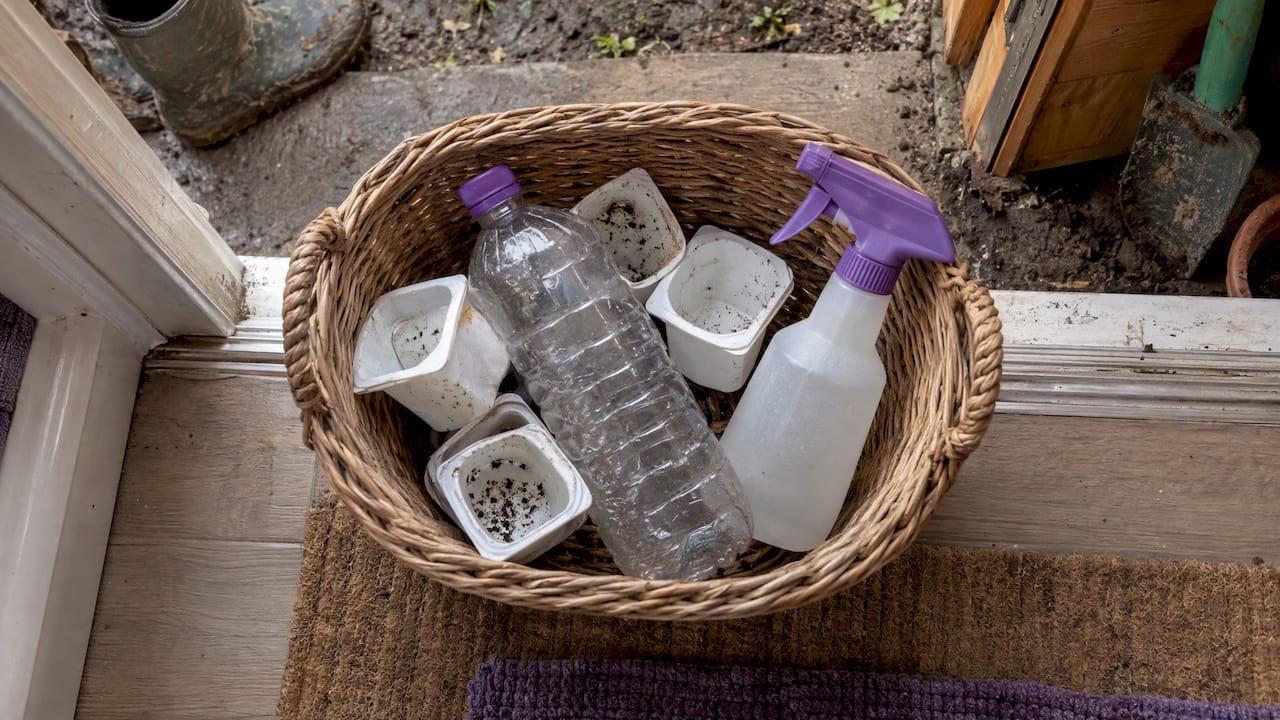
Pro Tip: Repurpose yogurt pots, old bottles, and spray bottles as a dedicated toddler tool basket so nothing needs buying twice.
6. How Mooshie Moments supports garden play in practice
Running through fifteen activity ideas is one thing. Doing it on a tired Tuesday afternoon with ten minutes free is another, which is why we built Mooshie around exactly that gap.
- Our activity suggestions are tailored by your child’s age and however much time and energy you have, from two minutes to twenty.
- Every idea uses household items already in your kitchen or recycling, with no extra purchases needed.
- Each activity comes with a plain-language explanation of the developmental “why” behind it, so you’re not just filling time.
- We include seasonal and low-mobility variations, useful for grandparents or seated play, alongside our grandparent-friendly activities.
7. What actually matters in toddler garden play
Most advice on toddler garden play focuses on buying the right equipment: a sandpit, a water table, a set of gardening tools sized for small hands. We think that’s backward. The research points somewhere else entirely: adult involvement, not equipment, is what makes an activity work.
A cardboard box and a wooden spoon with an engaged adult beats an expensive play kitchen left to run itself. The EYFS framework and NHS guidance both lean the same direction: narrate what’s happening, ask questions, follow the child’s curiosity instead of a script. That’s harder to sell than a product, but it’s the part that actually moves development forward.
Our honest take is that parents overthink the activity and underthink the five minutes of attention around it. Start with what’s already in your kitchen drawer before you start with what’s in a shop, and let the child lead more often than not.
— samit
Getting started with ready-made garden session plans
If you’d rather open an app than plan from scratch, we built Mooshie for exactly that. Every session is screen-free and built from household items, matched to toddler’s age and available time.

- Visit the Mooshie homepage to try a tailored session today.
- Running a nursery or early years setting? Our Partnership Pack offers home-learning resources for the families you work with.
FAQ
Where can you take a toddler outdoors in the UK?
Local parks, nature reserves, and family-friendly gardens all work well, and venues like Kew Gardens run dedicated early-years and family sessions with age-appropriate activities. Your own back garden covers the same developmental ground without the travel.
What is sensory gardening for toddlers?
Sensory gardening means using textures, smells, and natural materials, soil, leaves, petals, and water, to engage a toddler’s senses directly rather than through toys. NHS play guidance notes that household items and natural materials are just as effective for this kind of play as bought resources.
What are some fun outdoor activities for toddlers?
Bubble trails, puddle jumping, a simple balance beam, and a mud kitchen with old pots and spoons are all quick, low-prep options. Our outdoor activities guide has further ideas grouped by how much time you have.
What can toddlers do in the garden?
Toddlers can dig, plant seeds in recycled pots, sort leaves and petals, splash in a supervised water bowl, or build a small bug hotel from sticks and leaves. Most of these need under ten minutes of setup and only household items.
How does garden play support a toddler’s development?
Garden play supports physical development, language, and confidence, which are three of the prime areas in the EYFS framework. Narrating what a child is doing, rather than the activity itself, tends to be what drives the learning.
Sources
- Water safety — Staying safe and accident prevention (Cambridge & Peterborough Children’s Services NHS)
- Early years foundation stage statutory framework — childminders (DfE 2026)
- Baby and toddler play ideas — NHS
- Family and Early Years community programme — Kew
Recommended
- Ten Minutes: Screen Free Outdoor Activities for UK Toddlers
- Buy 5 to 30 Minutes Now: Quick Toddler Activities for UK Parents
- UK Parents: Low Prep Toddler Activities by Skill Area in 2–15 Minutes
- 5 Minute Calming Activities for UK Toddlers, Screen Free & Low Prep
Want a new idea every day, matched to your child's age?
Mooshie Moments gives you simple, guided play ideas for ages 6 months to 4 years.
Download free on the App StoreMore like this
Ice Play Activities for Toddlers: 12 Easy, Safe Ideas
Simple ice play activities for toddlers using things you already have at home, with safety tips for choking and cold, plus ideas…
Cardboard Box Toddler Activities: 12 Ideas by Age
Twelve cardboard box activities for babies and toddlers, sorted by age, with safe prep tips and ideas for tubes too. No shopping,…
Best Boredom Busters for Toddlers: Easy, Screen-Free Ideas
Screen-free boredom busters for toddlers using things you already own: quick ideas by time and energy, set-up tips and honest advice for…