
Best Boredom Busters for Toddlers: Easy, Screen-Free Ideas
Updated 17 October 2026 · 10 min read
The best boredom busters for toddlers are the ones you can start in under a minute, with things already in your kitchen, and that let your child lead. Think pouring, sorting, hiding, stacking, moving and pretending. Below you’ll find ideas sorted by how much time and energy you have, a few set-up habits that make them work, and what to do when your toddler says no to everything.
TL;DR
- The best busters need no shopping: dry rice, jugs, tubs, socks, cardboard and a bit of floor space beat most toys.
- Match the idea to your energy, not just your child’s age. Low-energy parents need low-effort play.
- Set out one or two things the night before. Toys that need setup at 6 a.m. rarely get set up.
- Short bursts count. NHS guidance says toddlers need at least 180 minutes of activity a day, and 10 or 20 minutes at a time all adds up.
- Your attention matters more than the activity. Answering your toddler’s babbles and pointing is the real magic.
Table of Contents
- What a good boredom buster actually does
- Choose by time and energy
- Boredom busters for when you have almost nothing left
- Sensory and “practical life” busters
- Busters that burn off energy
- Busters when everyone needs to calm down
- Busters for when you’re out and about
- Set-up habits that make boredom busters work
- How much screen time is too much?
- Our perspective: what we’ve learned about boredom
- Try Mooshie when you run out of ideas
- More ideas for different children and moments
- FAQ
- Sources
What a good boredom buster actually does
A toddler who says “I’m bored” (or shows it by whining, throwing things or following you from room to room) usually isn’t short of toys. They’re short of something to do with their body and their hands, and often short of you for a few minutes.
So a good boredom buster has four things going for it:
- Quick to start. If it takes more than a minute or two, it won’t happen on a hard day.
- Open-ended. There is no right way to do it, so your toddler can’t fail and can repeat it ten times.
- Uses what you have. No trip to the shops, no special kit.
- Leaves room for you. Even five minutes of joining in changes how long your child stays with it.
That last point has research behind it. The Center on the Developing Child at Harvard describes serve and return play, where you respond to your child’s babbles, points and gestures with eye contact, words or a smile. UNICEF explains the same idea as a game of ping-pong between adult and child. No toy needed.
Choose by time and energy
Most lists give you 50 ideas and no way to choose. We find it easier to start with two questions: how long do I have, and how much have I got left in the tank?
| Your situation | Try this | What you need |
|---|---|---|
| 2 minutes, no energy | Sock matching, or “find the spoon” | Socks, a wooden spoon |
| 5 minutes, low energy | Pouring station | Dry rice, jug, tub, tray |
| 10 minutes, medium energy | Cushion obstacle course | Sofa cushions, a blanket |
| 10 to 15 minutes, high energy | Dance-off or hide-and-seek | Music, a floor |
| 15 minutes, need to cook | Kitchen cupboard “shop” | Tins, boxes, a bag |
Treat the table as a menu, not a rulebook. The ideas below go into more detail.
Boredom busters for when you have almost nothing left
These are the ones for 4 p.m. on a day when everything has gone sideways. You can start them from the sofa.
Sock sorting and “find the…”
Tip a basket of clean washing onto the floor. Ask your toddler to find all the socks, or the “big” ones, or the red one. Toddlers love matching and carrying things. If they run off with a sock on their head, that counts too.
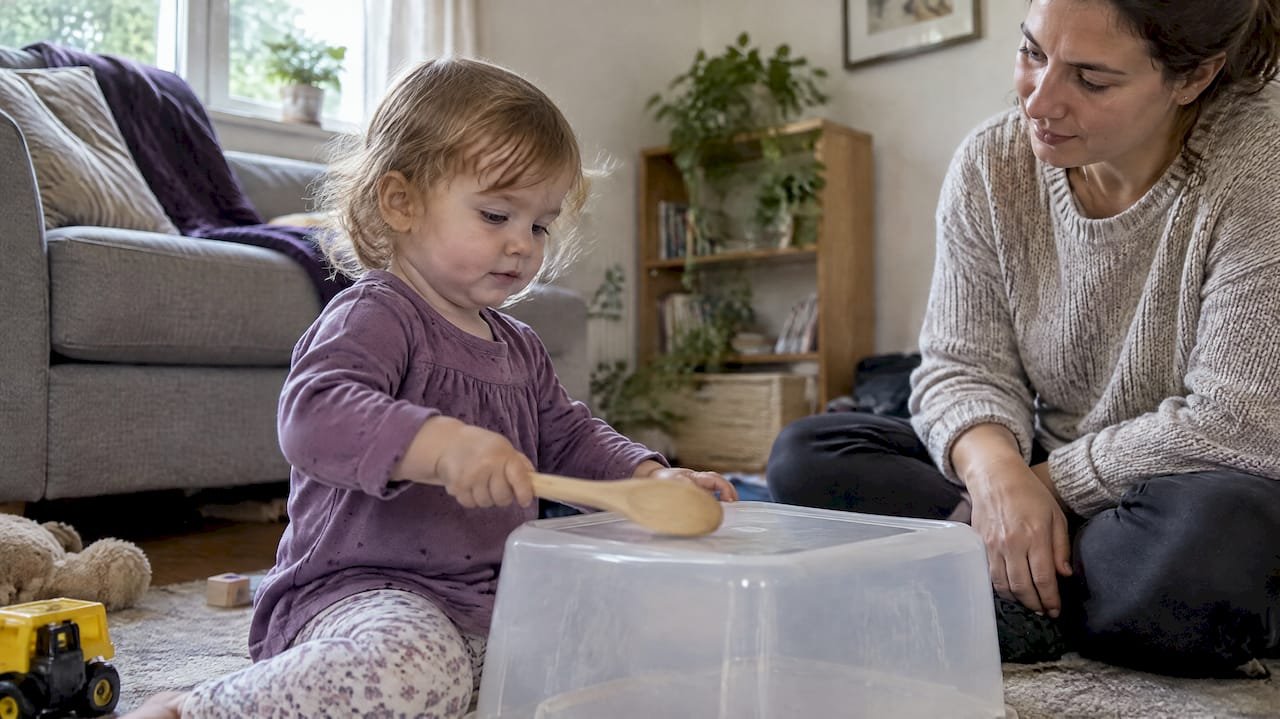
The tub and the spoons
Give your child a plastic tub, a wooden spoon and a few lids. Banging, stirring, putting lids on and taking them off is real work for a toddler. You can narrate quietly (“bang, bang, big sound”) and that’s your serve and return done.
Hide a toy under a blanket
Hide a favorite teddy under a tea towel and ask where it went. Then swap: you hide your eyes and your toddler hides it. It takes seconds to set up and can run for ten minutes of giggling.
For more ideas with zero equipment, our guide to no toy activities for toddlers breaks things down into 2 to 15 minute chunks.
Sensory and “practical life” busters
This is where household objects shine. Parenting writers who work with several toddlers at once often say the same thing: avoid the Pinterest-perfect setup. According to Motherly, simple things like dry rice, plastic jugs and storage containers can hold a toddler’s attention better than pricey toys, because they allow repeated pouring, sorting and transferring.
A pouring and scooping tray
Put a baking tray on the floor (or on a towel). Add a cup of dry rice or oats, a plastic jug, a small cup and a spoon. Show once how to scoop and pour, then step back. Expect rice on the floor. A dustpan and brush are part of the game, and toddlers like helping with that too.
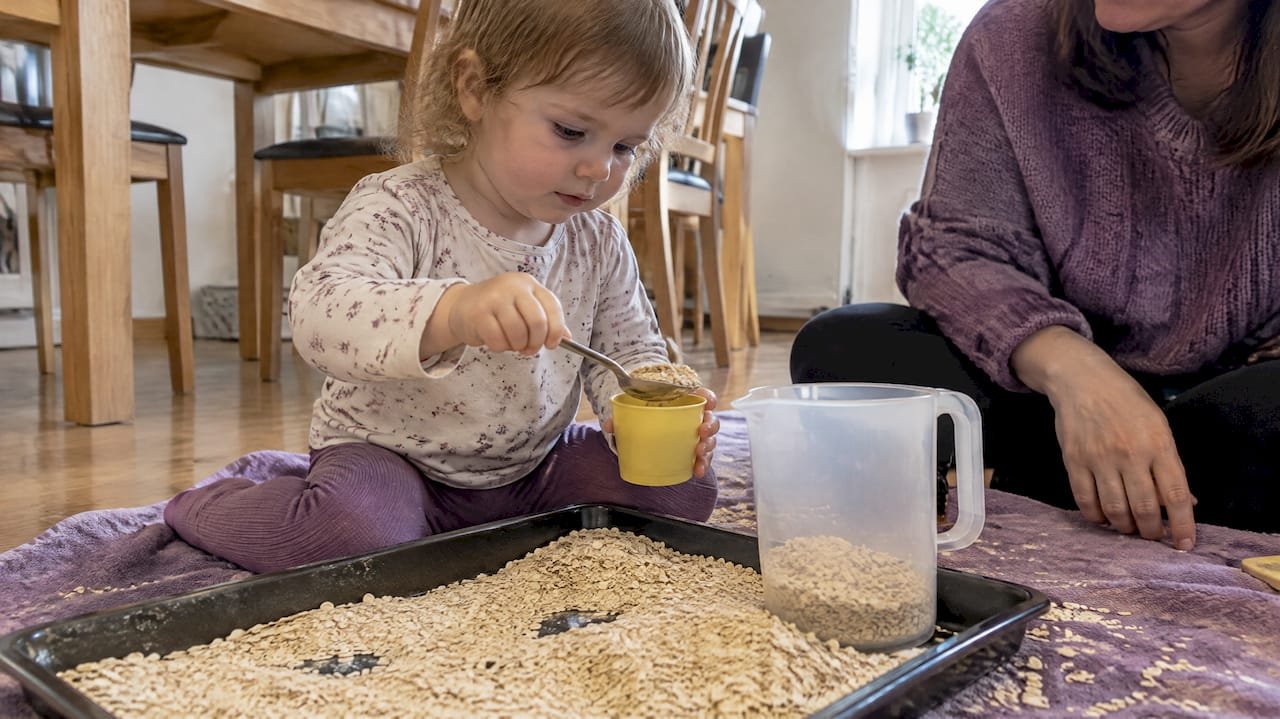
Safety: stay in the room for any small-item play, and skip loose small objects if your child still mouths things. Sit nearby, not at the other end of the house.
Water play at the sink
Stand your toddler on a sturdy step at the sink with a few cups, a sponge and a whisk. Add a drop of washing-up liquid for bubbles. Ten minutes here can feel like an hour for a toddler and you can load the dishwasher beside them. Stay close and never leave a toddler alone near water.
Posting games
Cut a slot in a cardboard box or use an empty tissue box. Post pom-poms, large pasta tubes or lolly sticks (anything bigger than a choking hazard) and then empty it out and start again. The “again” is the whole point.
Muffin tin sorting
Use a muffin tin and a bowl of large buttons-free items: bath toys, pegs, fruit from the bowl or different-colored lids. Your toddler sorts them into the holes. Sorting builds early counting and color sense without anyone calling it a lesson. If your child loves this, try our toddler counting games.
Busters that burn off energy
A bored toddler is often a toddler with too much energy. The NHS says there are lots of ways to get your child moving at home, from hide-and-seek to star jumps, obstacle courses and a dance-off.
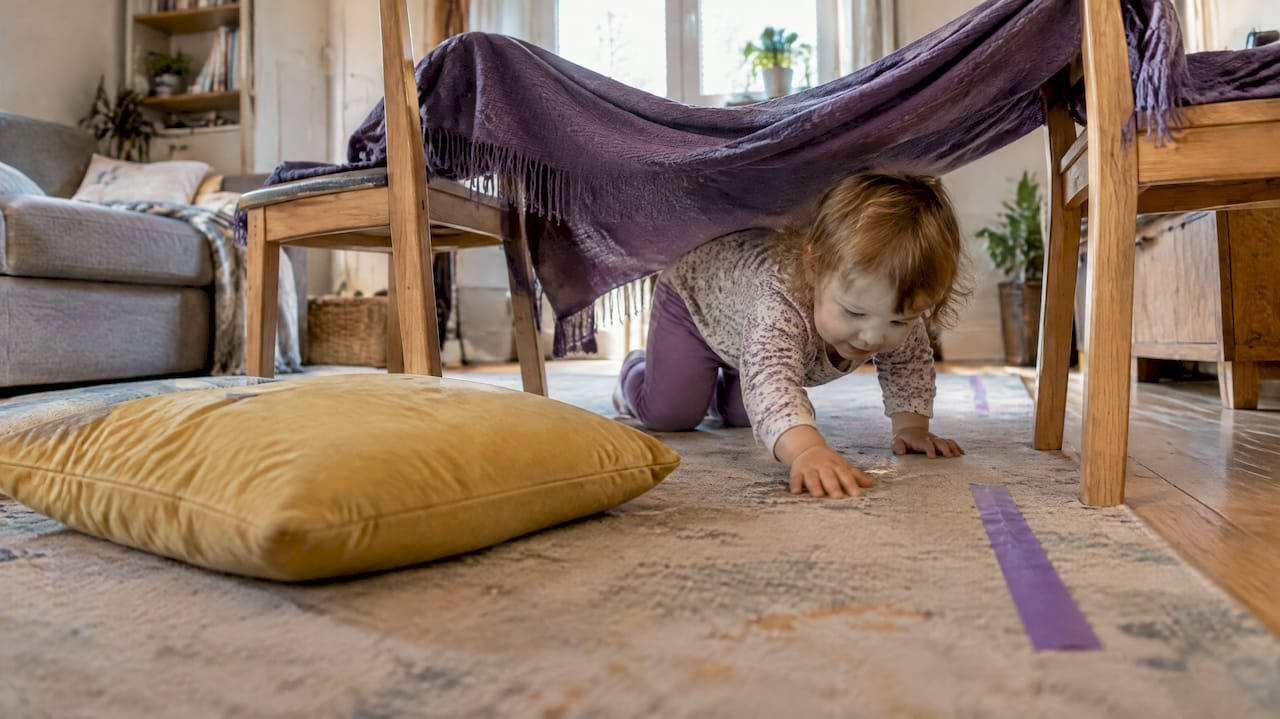
Living room obstacle course
Lay cushions to climb over, a blanket tunnel to crawl under (two chairs and a sheet), and a line of tape to walk along. Finish with a “prize” such as a high five. Change the order every few rounds and you’ve got a fresh game.
Dance, freeze, repeat
Put on three songs. Dance until the music stops, then freeze. Switch to slow-motion dancing, then tiptoe dancing. It takes no prep and burns energy fast.
Animal walks
Bear crawl to the kitchen, hop like a frog to the door, waddle like a penguin back. It works as a transition between activities too, which is when many toddlers fall apart.
If you want more of these, see our guides to gross motor activities for toddlers and screen-free outdoor activities. Even a ten-minute walk to post a letter or splash in a puddle changes the mood of a long day.
Busters when everyone needs to calm down
Sometimes the issue is too much stimulation, not too little. Whining, clinginess and tears can be a sign that your toddler needs to slow down, not speed up.
One technique you might see mentioned is the “3-3-3 rule”. As Churchich Recreation describes it, you ask your child to name three things they can see, listen for three sounds, and move three parts of their body. It’s a gentle way to bring a child back to the moment. With a two-year-old, you’ll do most of the naming yourself, and that’s fine.
Other calm-down options:
- Tent time. A blanket over a table, a torch and two books.
- Slow bubbles. Blow them and let your toddler pop them one at a time, quietly.
- Heavy work. Ask your child to help carry the (light) shopping, push a laundry basket or squash play dough.
We’ve collected more in our 5 minute calming activities guide, and for children who thrive on predictability, our autism activities page has calm, predictable ideas.
Busters for when you’re out and about
Boredom doesn’t only strike at home. Queues, supermarkets and waiting rooms are where toddlers lose patience.
- “I spy” with colors. “I spy something red” works from about two.
- Shopping helper jobs. Ask your toddler to find the bananas or hold the bread. Our no prep shopping activities has 12 more.
- Finger games. Songs with actions need nothing in your hands.
Set-up habits that make boredom busters work
The activity matters less than how you offer it. A few habits make a big difference.
Set out one thing the night before
Jaques of London’s guide to a screen-free morning routine says the most important principle is preparing the night before: toys that need setting up at 6 a.m. won’t get set up, but toys already out and inviting will be picked up. A tray with a jug and a scoop by the sofa is enough.
Rotate, don’t add
Keep a box of everyday items (lids, wooden spoons, scarves, cardboard tubes) and swap what’s out every few days. Novelty comes from rotation, not new purchases.
Stay for the first two minutes
Sit with your toddler at the start, say what they’re doing, then drift away. Many toddlers will then play alone for longer.
Let it be messy, but contained
A tray, a towel or a baking sheet gives mess a boundary. Toddlers seem to understand “this is where we pour”.
Expect the first weeks to be bumpy
If you’re cutting back on screens, the same Jaques of London guide says the first one to three weeks are usually the hardest, and that the resistance is a sign of adjustment, not failure. Stick with a few predictable busters and keep them short.
How much screen time is too much?
Screens aren’t banned in our house or anyone else’s, and one rough afternoon doesn’t undo anything. But it helps to know the guidance. A local NHS children’s health service says screen time for 2 to 4 year olds should be limited to about an hour a day, with less being better, and that screens are not recommended for under 1s. It also suggests agreeing clear boundaries together as a family.
If your household shares one phone for everything, tracking sleep, feeds and milestones in one place can cut the number of times you pick it up for “just a quick check”. A shared baby tracking app lets both parents and carers log things together, so you’re not the only one holding the information.
Our perspective: what we’ve learned about boredom
We built Mooshie Moments for the moment you’re standing in the kitchen, tired, with a toddler pulling at your leg and nothing in your head. That moment isn’t a failing. It’s what the toddler years are like.
Here is what we believe:
- Creativity block is normal. Parents don’t run out of love. They run out of ideas at 4 p.m. A quick suggestion matched to your child’s age and the time you have is often all you need.
- You don’t need a shopping list. Everything we suggest uses things you already have at home.
- The “why” helps. When you know that sorting socks builds early math skills, or that pouring builds hand control, a messy ten minutes feels worth it. That’s why each activity in the app comes with a plain-language explanation of the development behind it.
- Good enough is good enough. Health guidance says you don’t have to be a perfect parent, just a present and responsive one. Pennine Care NHS also notes that feeling exhausted is normal in the toddler years, and that you should talk to your health visitor or a local support network if it starts to affect your well-being.
- The hard phases are developmental. Around age three, the wish for independence arrives well before the ability to manage big feelings. Jo Frost explains this gap as the root of most meltdowns. A toddler who is “bored” at that age may really be asking for some control, so offer two choices: “Pouring or dancing?”
— samit
Try Mooshie when you run out of ideas
If you’d like a fresh idea without scrolling, Mooshie gives you quick, screen-free activities for children from 6 months to 4 years. You choose your child’s age, how much time you have and how much energy you’ve got, and the app suggests something using things in your house. Each idea explains the “why” behind it, so you can see what your toddler is learning while they play.
Running a nursery, childminding or other early years setting? Our Partnership Pack gives you a home-learning resource to share with families.
More ideas for different children and moments
Every toddler is different, and boredom looks different in each. Some starting points:
- Preparing for nursery: pre-nursery activities
- A baby on the way: preparing your toddler for a new sibling
- Wanting to link play with development: low prep activities by skill area
- Talking and listening: speech and language activities
- Seated play: wheelchair-friendly and seated activities
- Grandparents and carers: bonding activities and babysitting ideas
- Calm, simple setups: Montessori-style activities
- Wet-weather days: autumn activities
FAQ
What should I do when my toddler is bored?
First, check the basics: hunger, tiredness and a need to move. Then offer a short, open-ended activity such as pouring, sorting or an obstacle course, and join in for the first couple of minutes. If that fails, change the setting. A walk outside or a splash at the sink often resets the mood.
How do I keep my 2 year old entertained?
Two-year-olds like repetition, big movements and helping with real jobs. Try a pouring tray, sock matching, hiding games and dancing. Keep each activity short, and rotate a few household items rather than buying new toys.
What is the 3-3-3 rule for toddlers?
It’s a grounding exercise. Your child names three things they can see, listens for three sounds and moves three body parts, which helps redirect attention when they’re overwhelmed, according to Churchich Recreation. With younger toddlers, you model it and they copy what they can.
How much physical activity does a toddler need each day?
The NHS says toddlers need at least 180 minutes of activity a day. It doesn’t have to happen all at once, and 10 or 20 minute bursts indoors or outdoors all count.
Sources
- Playtime and bonding with your toddler, NHS Best Start in Life
- Screen time, NHS children’s health service
- Brain building through play, Center on the Developing Child at Harvard University
- Playtime, anytime, UNICEF Parenting
- How to start a screen-free morning routine with your toddler, Jaques of London
- Easy screen-free activities for toddlers, Motherly
- Mindful playground exercises for toddlers, Churchich Recreation & Design
- Toddler support, Pennine Care NHS
- Threenagers explained by Jo Frost, Mother & Baby
Recommended
- Ten Minutes: Screen Free Outdoor Activities for UK Toddlers
- UK Parents: 8 Low Energy Toddler Activities for Sofa Days
- Buy 5 to 30 Minutes Now: Quick Toddler Activities for UK Parents
- Toddler Bonding Activities Busy Parents Can Do in 2–15 Minutes
Want a new idea every day, matched to your child's age?
Mooshie Moments gives you simple, guided play ideas for ages 6 months to 4 years.
Download free on the App StoreMore like this

Ice Play Activities for Toddlers: 12 Easy, Safe Ideas
Simple ice play activities for toddlers using things you already have at home, with safety tips for choking and cold, plus ideas…
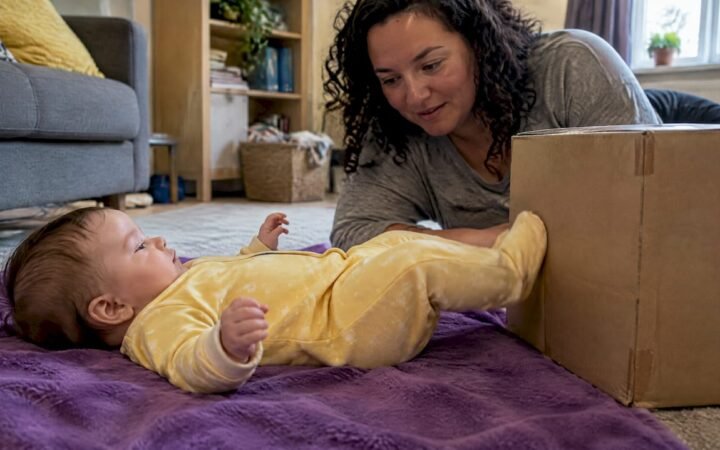
Cardboard Box Toddler Activities: 12 Ideas by Age
Twelve cardboard box activities for babies and toddlers, sorted by age, with safe prep tips and ideas for tubes too. No shopping,…
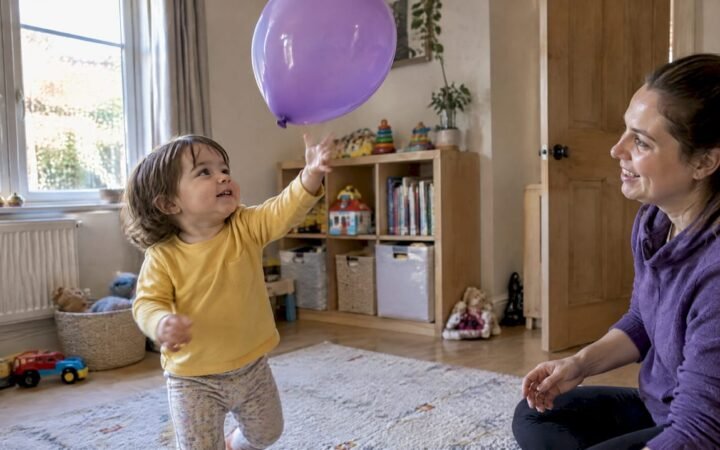
12 Low Prep Balloon Activities for UK Toddlers That Build Skills
Explore 12 low prep balloon activities for UK toddlers, with quick games, easy crafts, age adaptations, and safety advice to build movement…