
Babysitting Toddlers: 12 Low Prep Ideas and Why They Help
Here’s the good news: you can get started immediately with quick, safe, developmentally useful toddler activities using items already in the house. This guide covers age adaptations, choking and supervision guidance, and plenty of ideas you can run with in minutes. We also point to an app when you want a quick activity coach on hand.
TL;DR:
- Children aged 18 to 30 months often manage simple pretend play or sorting for five to ten minutes, with an adult checking in occasionally.
- Cut grapes and cherry tomatoes into quarters, slice sausages lengthwise, and grate or mash hard foods; avoid whole nuts and popcorn for children under five.
- Supervise water play closely, keep small objects away from young toddlers, and remove pasta, buttons, or beads as soon as crafts end.
- When babysitting several toddlers, rotate activities every few minutes and offer only two choices at any one time, not ten.
Table of Contents
- 1. Twelve Low-Prep Activities With Household Items
- 2. Outdoor Games That Burn Energy and Build Gross Motor Skills
- 3. Crafts, Playdough and Simple Kitchen Science
- 4. Music, Movement and Quiet Games for Transitions
- 5. Snack Safety: What to Avoid and How to Prepare Food
- 6. Adapting Activities by Age, Attention Span and Group Size
- 7. How Mooshie Moments’ Activity Coaching Helps in the Moment
- 8. Three Habits That Make Babysitting Toddlers Easier
- Try Mooshie Moments as Your Quick Activity Coach
- FAQ
- Sources
1. Twelve Low-Prep Activities With Household Items
A toddler’s attention moves fast, so the best babysitting activities need almost no setup. Each idea below pairs a simple material with a one-line reason it helps development, drawing on the play-based approach that Development Matters recommends for building physical, language and social skills.
- Threading pasta or large buttons onto string or pipe cleaners builds fine motor control (avoid small buttons with very young children to reduce choking risk).
- Sticker sorting onto paper by color strengthens matching skills and concentration.
- A sensory tub of dry rice or pasta with cups and spoons supports tactile exploration and early math language like “full” and “empty.”
- Playdough rolled, squashed and shaped builds hand strength for later writing.
- An indoor obstacle course made from cushions and chairs develops balance and gross motor planning.
- Animal walks, such as crawling like a bear or hopping like a frog, build core strength and body awareness.
- A pretend tea party with real cups and spoons encourages imaginative play and turn-taking language.
- Sink or float with cups of water introduces early scientific thinking (always supervise closely around water).
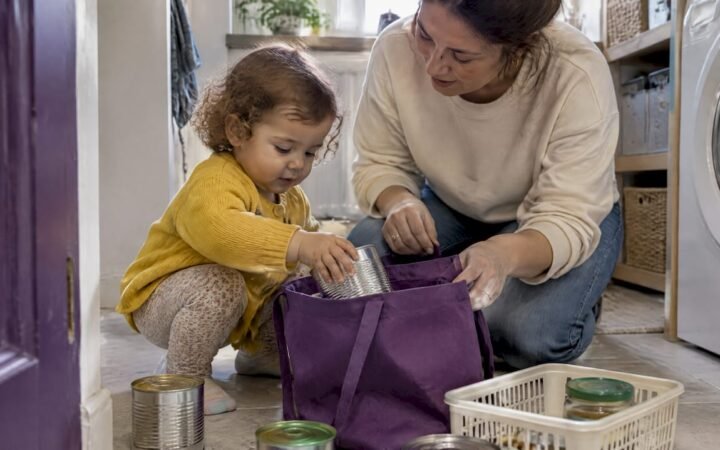
- Stacking cans or boxes then knocking them down builds spatial awareness and cause-and-effect understanding (always supervise to avoid small parts ingestion).
- Sorting laundry by color turns a chore into a matching game that supports categorization skills.
- A simple puppet show using socks encourages storytelling and vocabulary.
- Bubble wrap popping (supervised and kept away from children who might chew it) offers sensory feedback and fine motor practice.
For more quick, skill-sorted ideas, our low-prep toddler activities by skill area page groups options by the time you actually have.
2. Outdoor Games That Burn Energy and Build Gross Motor Skills
Fresh air works wonders before nap time or a quiet activity. A short outdoor session also gives toddlers room to move their whole bodies, something indoor play rarely allows.
- A chalk hopscotch grid on the pavement builds balance and number recognition (ensure safe outdoor environment).
- A nature scavenger hunt (find something red, something round, something soft) builds vocabulary and observation skills.
- Rolling a ball back and forth develops coordination and turn-taking.
- A cushion-and-chalk obstacle course in the garden combines climbing, stepping and crawling for full-body movement.
Scale the course up for a confident four-year-old or keep it to three simple stations for a younger toddler who tires quickly. Always do a quick safety check of the space first, looking for trip hazards, sharp edges or open gates, in line with the NHS baby and toddler safety guidance.
Pro Tip: Save active games for right before a meal or nap. A tired toddler settles into quiet play far more easily than one bursting with energy.
See our outdoor activity ideas for toddlers for more setups that work in small gardens or on a quick walk.
3. Crafts, Playdough and Simple Kitchen Science
Tactile play keeps toddlers engaged while building fine motor skills and early language, and none of it needs to be complicated or messy.
- Quick playdough from flour, salt, oil and water (or a ready-made tub) gives you instant squeezing, rolling and shaping play.
- Edible paint made from yogurt and food coloring offers a safer option for toddlers who still mouth their hands.
- A sensory tub with water, fabric scraps or dry rice offers texture exploration with simple vocabulary like “wet,” “soft” and “rough.”
- Pasta collage painting combines sticking and color mixing for a creative, low-mess craft.
- A color-mixing experiment, dropping food coloring into cups of water, introduces cause and effect in a visual, exciting way.
Always remove small pasta pieces, buttons or beads from reach once the activity is done, and supervise closely throughout, following the NHS guidance on choking prevention. For more structured STEM ideas, our science activities for toddlers page has a few that use nothing but kitchen items. A helpful outside perspective on why this kind of tactile play matters so much comes from this guide to sensory play and child development.
4. Music, Movement and Quiet Games for Transitions
Songs and simple rhymes give toddlers a predictable rhythm to follow, which makes transitions between activities (or into nap time) much smoother. Repetition and naming body parts or actions also build language and attention, something Development Matters points to as a key driver of early communication skills.
- Start with an action rhyme like “Head, Shoulders, Knees and Toes” to get wiggles out.
- Move into a freeze dance: play music, then pause it and call “freeze.”
- Try animal walks for one more minute of movement, bear crawls or frog jumps work well.
- Slow things down with a one-minute “balloon breathing” game: hands on tummy, breathe in big, breathe out slow.
- Finish with a quiet song or a whispered counting game to settle into calm.
For more ready-to-use routines, our music and movement ideas page has a few that work in under five minutes.
5. Snack Safety: What to Avoid and How to Prepare Food
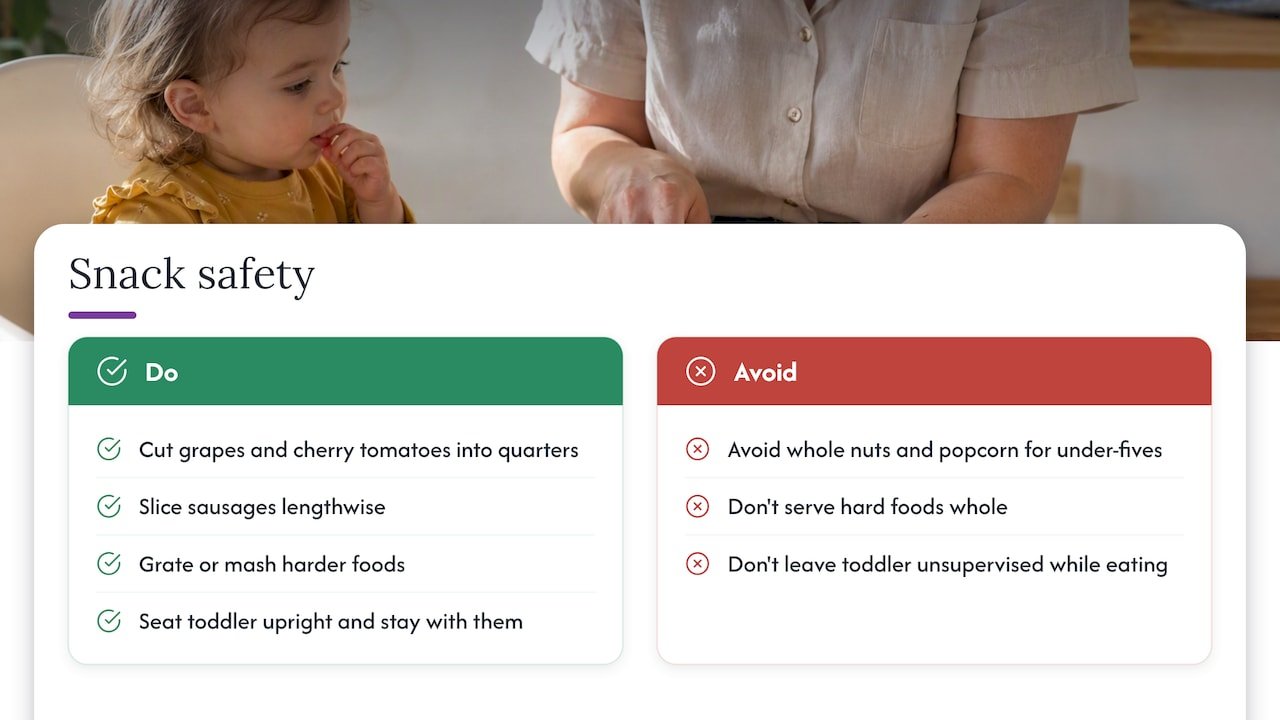
Snack time carries real risk if food isn’t prepared with a toddler’s chewing ability in mind. The NHS guidance on preparing food safely recommends cutting grapes and cherry tomatoes into quarters, slicing sausages lengthwise, and grating or mashing harder foods rather than serving them whole. Whole nuts and popcorn should be avoided for children under five.
Always seat a toddler upright in a highchair or at a table before eating, and stay with them the whole time. If choking does happen, the NHS first-aid steps for a choking child walk through exactly what to do, including when back blows and abdominal thrusts are appropriate and when to call for emergency help.
6. Adapting Activities by Age, Attention Span and Group Size
A toddler’s age shapes how long an activity holds their interest and how much help they’ll need. Rough guides help, but every child moves at their own pace.
- 12 to 18 months: short sensory play, two to three minutes, with lots of your involvement.
- 18 to 30 months: simple pretend play and sorting games, five to ten minutes with occasional check-ins.
- 30 to 48 months: short challenges like obstacle courses or simple crafts, ten to fifteen minutes with more independence.
The NHS notes that independent play can start at around five minutes for a two-year-old and stretch gradually from there, as long as you stay within earshot. When babysitting more than one child, rotate activities every few minutes and keep choices simple: two options, not ten. Our age-specific activity ideas for two-year-olds break this down further if you want more examples.
7. How Mooshie Moments’ Activity Coaching Helps in the Moment
Some apps give quick, age-filtered activity prompts when creativity runs dry mid-shift, each one paired with a short explanation of the developmental “why” behind it. A cardboard box, for instance, becomes both a pretend car and a stacking target, two different activities from one item. These suggestions line up with the play-based principles set out in Development Matters, and this piece draws on input from samit at Mooshie Moments.
8. Three Habits That Make Babysitting Toddlers Easier
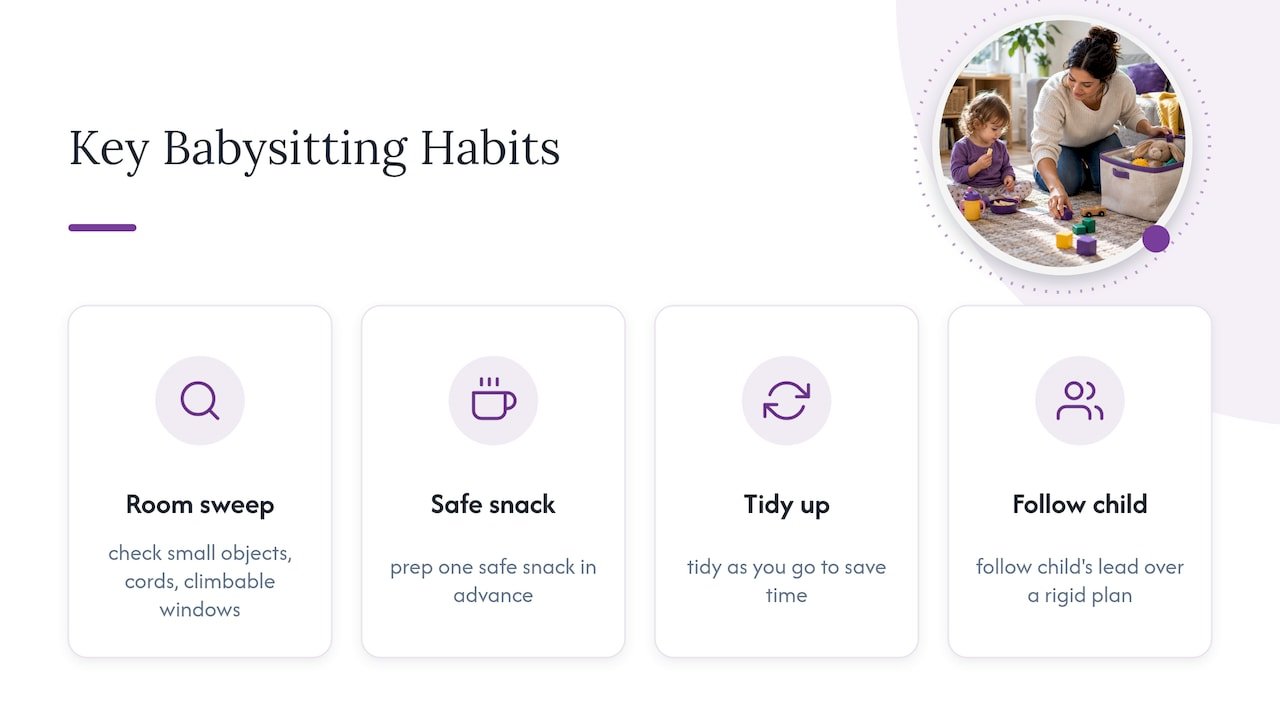
A quick room safety sweep before you start saves headaches later: check for small objects, loose cords and anything climbable near windows. Prepping one safe snack in advance means you’re not improvising with a hungry toddler. And tidying as you go keeps the next activity from getting lost under the last one. Following the child’s lead, rather than sticking rigidly to a plan, usually gets you further than any checklist.
Try Mooshie Moments as Your Quick Activity Coach
Some apps are designed for exactly the moments this guide covers: when a toddler’s bored, the toy box feels tired, and you need an idea in the next thirty seconds, not after a search session. Open the app between activities or when a snack break turns restless, pick an age filter, and get a fresh prompt using whatever’s already around you. Start exploring activity ideas at Mooshie Moments.

FAQ
How do you entertain a two-year-old while babysitting?
Short, hands-on activities work best: a sensory tub of rice, a sticker sorting game, or a quick round of animal walks. Keep sessions to a few minutes at a time and switch activities often, since attention spans at this age are naturally brief.
What activities work well for a three-year-old while babysitting?
A three-year-old can handle slightly longer, more structured play, like a simple obstacle course, a pretend tea party, or a short craft such as pasta collage painting. Offer two choices rather than an open-ended question, since this age group often engages better with a clear decision to make.
What’s the best approach to babysitting a two-year-old?
Keep a steady routine of short activities, snacks and rest, and always keep small objects out of reach to reduce choking risk. Stay close during play and meals, and follow the child’s lead rather than forcing a strict schedule.
Which toddler age is considered the hardest to babysit?
Many caregivers find the period around 18 to 30 months most demanding, since toddlers at this age have strong opinions and limited language to express them. Short, varied activities and simple choices tend to ease frustration on both sides during this stage.
Sources
- Baby and toddler safety – NHS
- Development Matters – Non-statutory curriculum guidance for the early years foundation stage
Recommended
- 12 Low Prep Toddler Activities for Grandparents With Seated Options
- Low Prep Music and Movement for Busy Parents That Works in 5 Minutes
- UK Parents: 8 Low Energy Toddler Activities for Sofa Days
- Busy Parents: 8 Easy, Research Based Storytelling Ideas for Toddlers
Want a new idea every day, matched to your child's age?
Mooshie Moments gives you simple, guided play ideas for ages 6 months to 4 years.
Download free on the App StoreMore like this
10 EYFS Backed Sock Games for Toddlers Under Five Minutes
Ten EYFS aligned sock games to start in under five minutes, each with a one line developmental benefit, simple adaptations, and two…
Busy Parents: 12 No Prep Shopping Activities for Toddlers
Busy parents: keep toddlers learning and calm at the store with 12 no prep, screen free activities that take under five minutes…

Low Prep Music and Movement for Busy Parents That Works in 5 Minutes
Start low prep music and movement with your toddler in five minutes. Research backed, age tailored activities and hearing safety tips for…