
Focus Activities for Toddlers: Short Games That Work at Home
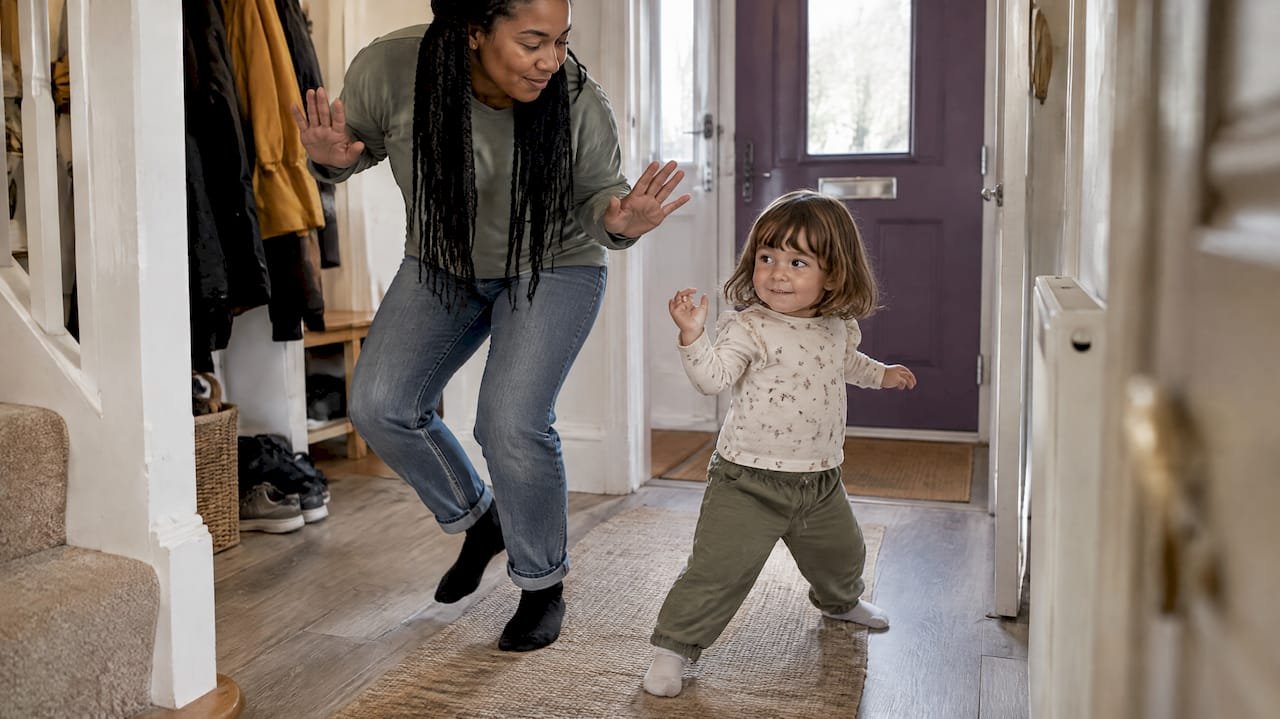
The best focus activities for toddlers are short, physical, screen-free games you play together, using things already in your house. Think a tower of blocks, a freeze dance or a hunt for a hidden noisy toy. A toddler’s attention is brief by nature, so a few minutes of shared play, repeated daily, does more than one long session. Every day, Mooshie gives you one game like this, chosen for your child’s age and stage, with the exact words to say and what it builds in their brain.
TL;DR
- At toddler age, attention is short: NHS guidance from Devon says under 5 minutes, so keep every activity brief.
- Join in. Toddlers focus best when you are close, following their lead and naming what they are looking at.
- Move first, sit second. A little running, hugging or heavy carrying before a seated game helps settle a toddler.
- Practice matters more than success. Short, repeated attempts are what build focus.
- Two to five minutes a day is a real start. You do not need special toys or a long play session.
Table of Contents
- What focus looks like in a toddler
- How long can a toddler really focus?
- Focus activities that work, by type
- Match the game to your child’s age
- Fitting focus play into a busy day
- Set up the space so focus is easier
- When your toddler loses interest or melts down
- What we think about toddler focus
- One game a day, with the words to say
- FAQ
- Sources
What focus looks like in a toddler
Focus in a toddler is not sitting still. It is staying with one thing, noticing a sound, waiting for a turn, or switching from one thing to another when you ask. These skills grow slowly, and they grow through play with a caring adult.
The UK government’s early years guidance on listening and attention describes the stages well:
| Age | What attention looks like | What helps |
|---|---|---|
| 0 to 1 | Easily distracted | Your full attention, peek-a-boo and wait-and-see games |
| 1 to 2 | Can focus, but cannot shift focus alone | Simple instructions, gestures and prompts |
| 2 to 3 | Shifts between tasks more easily, still needs support | Light touch and using their name |
| 3 to 4 | Can attend to different things at once | Clear prompts like “please stop and listen” |
So if your two-year-old drifts off mid-game, nothing is wrong. They are doing what two-year-olds do.
How long can a toddler really focus?
Plan for minutes, not half hours. The NHS service Children and Family Health Devon states that toddler attention spans are shorter than 5 minutes, and advises keeping activities short and engaging.
That is a useful number for busy parents. A game that takes three minutes is not a failed game. It is the right size.
The Harvard Center on the Developing Child makes a point that takes the pressure off. For 18 to 36 months, toddlers may not always succeed, but the practice is very important, and activities need frequent reminders and may not last long. Short, repeated tries are the whole point.
Two practical rules follow from this:
- Stop while they are still enjoying it. Ending a game early leaves them wanting it again tomorrow.
- Repeat favorites. Doing the same game five days running is not boring for a toddler. It is how the skill settles.
Focus activities that work, by type
You do not need to buy anything. Here are games from NHS, government and Harvard sources, with how to run each in a few minutes.
Listening games
NHS Borders lists listening and attention activities for the home, including:
- Action songs. Sing a song your child knows, with the actions.
- Missing word. Sing a familiar song and leave out a word for your child to fill in.
- Clap the rhythm. Clap a beat and let them copy it.
- Copy me. Do an action and wait for them to copy it.
- Find the sound. Hide a noisy toy and let your child find it by listening.
The missing-word game is a good one to start with. It asks your toddler to hold the tune in mind and wait for the gap. Say “Listen…” in a quiet voice, pause, and give them time.
Turn-taking games
Turn-taking teaches waiting, which is a big part of focus. The same NHS Borders guide suggests building a tower in turns or posting items into a box one at a time. You place one block, then they place one. Say “My turn… your turn” and keep it light.
The BBC’s Stay and Play blocks activity adds some good twists you can do with any set of blocks or even stacked plastic cups:
- A 10-second “tallest tower” challenge, stretched to 20 seconds or a minute as they get used to it.
- Block bowling with a “ready, steady… go” cue, which turns waiting into a listening game.
- A block treasure hunt with simple clues.
BBC Tiny Happy People says this kind of play can support patience, resilience, vocabulary and motor skills.
Movement games
Movement is where many toddlers focus best. For 18 to 36 months, Harvard recommends throwing and catching a ball, walking along a line or balance beam, Follow the Leader, freeze dance, and start-stop songs such as Jack in the Box and Popcorn, as well as fingerplays.
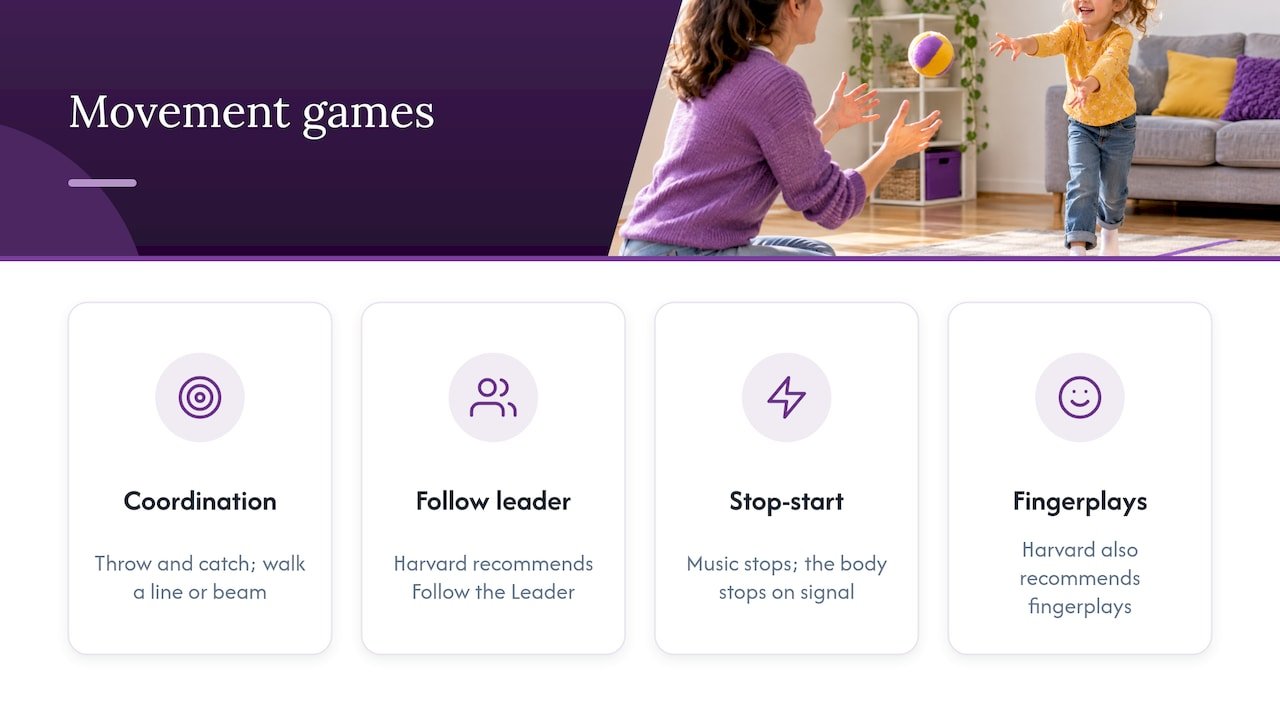
Freeze dance is the classic for a reason. The music stops, the body stops. Your toddler is practicing listening and stopping on a signal, and they think it is just a laugh. If you want more ideas, our guide to music and movement for busy parents works in five minutes, and our gross motor activities cover indoors and out.
The NHS Best Start in Life pages also suggest hide-and-seek, star-jump contests, an obstacle course and a dance-off at home. A cushion path with a tunnel made from a blanket over two chairs is an obstacle course your toddler will happily repeat.
Quiet seated games
Blocks, simple puzzles, books and sensory play suit the calmer part of the day. The ECE Resource Hub suggests small twists on familiar tasks, such as doing a puzzle upside down, letting your child choose the book and talking about the story, and pointing out sights and sounds on a walk as “mindful moments”.
For ideas on sensory play and how it supports development, this guide to sensory play and child development is a good companion for quieter sessions. Our own guide to storytelling activities for toddlers works well for the end of the day.
Match the game to your child’s age
Babies, 6 to 18 months
At this age you follow the baby, not the other way round. Harvard’s guide for 6 to 18 months advises following the baby’s attention and naming aloud what holds it, which helps them stay with it a little longer and practice focusing.
So if your baby is staring at a spoon, say “Spoon. A shiny spoon.” Peek-a-boo and hiding a toy under a cloth are great too.

One-year-olds
One-year-olds can stay with something but find it hard to shift. Give them one clear instruction with a gesture: “Give me the ball” while you hold out your hand. Keep the words few.
Two-year-olds
Shropshire Council’s guide to working with two-year-olds notes that they can pay attention to details, love to try again and again, and enjoy trial and error. It advises giving them time to explore what fascinates them.
That means repetition is welcome. Stacking, knocking down and stacking again is focus practice. If you want a full list for this age, try our 40 activities for two-year-olds.
Three- and four-year-olds
Older toddlers can handle clearer prompts. Say “Please stop and listen” before a game, and add small rules: freeze when the music stops, and find three red things before the timer ends.
Fitting focus play into a busy day
You do not need a play session on top of everything else. You need a few minutes you protect.
Hounslow Council’s Early Intervention Service describes “Special Time”: the same time each day, starting with 2 to 3 minutes in a quiet, calm space with electronics put away, and building up to 5 to 10 minutes. Your child chooses the toys, a timer signals the end, and you follow their lead with simple comments rather than questions.
That last bit is worth trying. Instead of “What colour is that?”, say “You’ve made a tall tower.” Questions can feel like a test. Comments keep the game going.
Other ways to fit it in:
- Turn chores into games. The ECE Resource Hub suggests ideas like “let’s see who can get the red toys first” at tidy-up time.
- Use “First… Then”. “First shoes, then park” gives a toddler a clear order for multi-step tasks.
- Play in the pockets. A kettle wait, a bath, a walk to the shops. Our list of no-prep shopping activities shows how.
- Keep screens out of it. The NHS says children aged 2 to 5 should have no more than an hour of screen time a day, and that toddlers ideally get 180 minutes of activity a day, which can be built up in 10- or 20-minute sessions.
If you are short on time, our 10-minute toddler activities and quick toddler activities pages are designed for exactly those gaps. Nannies and childminders can use the same games as part of a daily routine.
Set up the space so focus is easier
Small changes make a big difference, and the NHS guidance from Devon covers them. It advises preparing a distraction-free space and using topics your child finds motivating, such as favorite characters.
In practice:
- Switch off the TV and put your phone face down, unless you are using it to read the game.
- Clear the floor of everything except what you need for the game.
- Pick a time when your toddler is fed and rested, not just before nap.
- Sit at their level, close enough to touch.
The same Devon NHS page suggests movement and deep-pressure input before adult-led activities: a big hug, crashing into a bean bag, or pushing or carrying something heavy. A toddler who has just carried the laundry basket to the bedroom, or squashed into a cushion pile, often finds it easier to sit for a puzzle afterwards.
When your toddler loses interest or melts down
It will happen. A toddler gets restless, throws the blocks and walks off. This is normal for the age, not a sign you are doing it wrong.
Here is what helps, using the guidance above:
- Check the length. If attention under 5 minutes is typical, the game may simply have run on. End it with a smile and try again later.
- Add movement. Swap the puzzle for a freeze dance, or ask them to carry something heavy across the room.
- Follow their lead. Join whatever they have chosen. Self-chosen play is where toddlers tend to stay longest.
- Make it a game, not a request. Start playing yourself and let them come over, rather than calling “Come and do this.”
- Stay calm and close. Use a quiet voice, get down low, and offer a hug or a calming game. Our 5-minute calming activities are made for these moments.
If you are worried about your child’s attention, listening or speech, speak to your health visitor or GP. They can check how your child is doing and point you to local support.
What we think about toddler focus
Parents often ask us how to make a toddler concentrate. We think the better question is how to make focus feel like fun.
Toddlers do not build focus from instructions. They build it from small, joyful moments with someone who is paying attention to them. That is why Mooshie gives you one short game a day, for your child’s age and stage. You get the exact words to say, so you are never stuck wondering what to do, and a plain explanation of what the game is building. The games use things already in the house, so there is nothing to buy and no prep.
The parent holds the phone and the child never touches it. Your child’s eyes stay on you, the game and the world around them. That is where focus grows.
We also believe focus is only one part of the picture. The same few minutes of play can help a child think well, create freely, feel secure, pitch in and treat others kindly. Focus is a good place to start, because the rest follows when a child feels you are really there with them.
samit
One game a day, with the words to say
If you would like the thinking done for you, Mooshie is a free-to-download app for parents and caregivers of children aged 6 months to 4 years. Each day you get one short game chosen for your child’s age and stage, using things you already own, with how to play, what to say and what it builds in their brain.
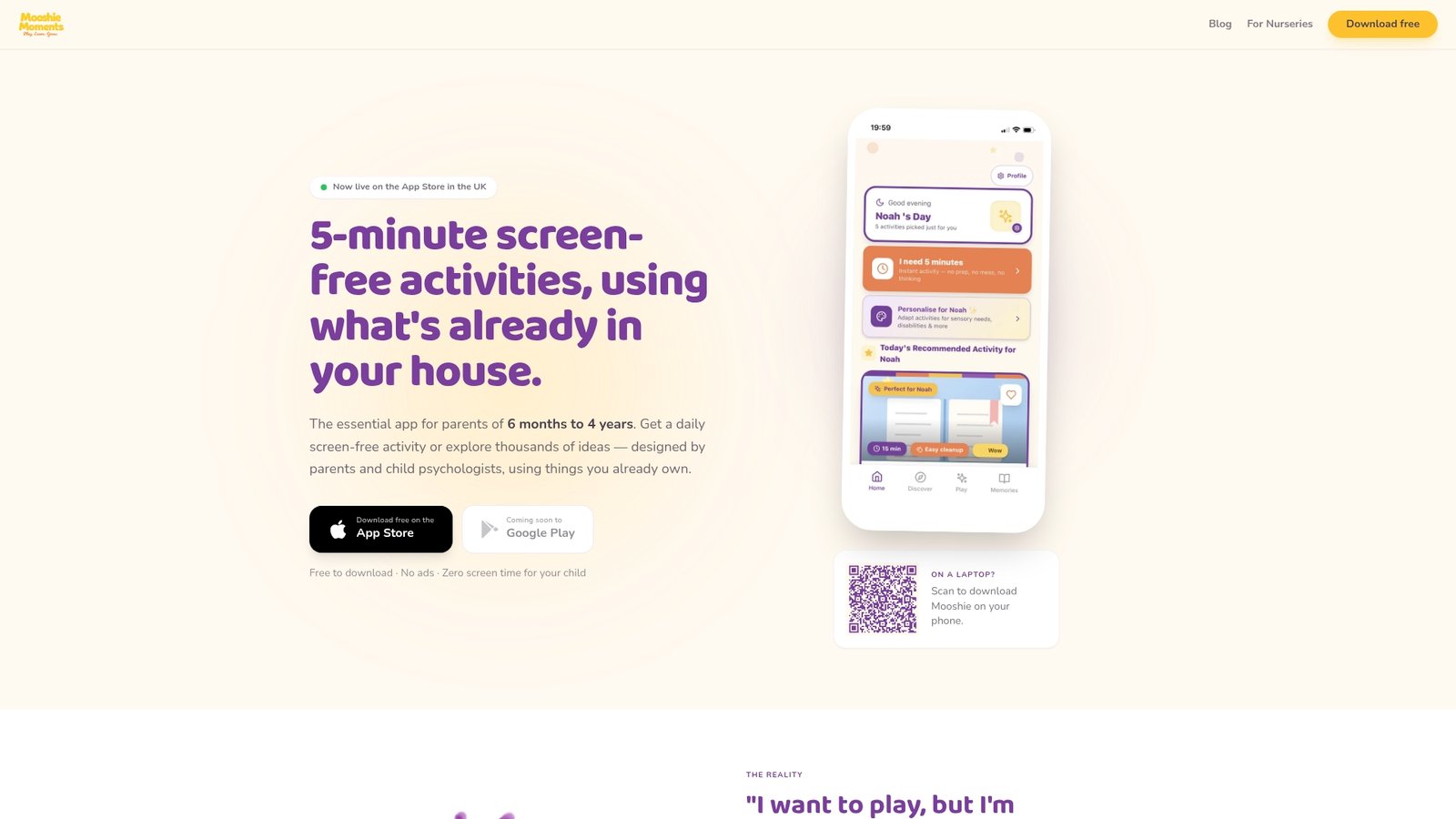
It is a simple way to turn a spare few minutes into focus practice, without searching for ideas or buying anything. If you run a nursery, preschool or childminding setting, our Partnership Pack gives you a home-learning resource to share with your families.
FAQ
How can I help my toddler focus?
Keep games short, play alongside them and follow what they are already interested in. Cut distractions like the TV, and add movement before a seated game. Naming what your child is looking at helps too, especially for babies and younger toddlers.
What is the 3-3-3 rule for toddlers?
There is no single official rule by that name in the NHS or government guidance we used. What the guidance does support is keeping activities short, with sessions of a few minutes at a time. If you want a simple routine, start with 2 to 3 minutes of calm play at the same time each day, as Hounslow Council suggests.
What cognitive activities suit a 2-year-old?
Stacking and knocking down blocks, posting items into a box, simple puzzles, singing songs with a missing word, and hiding and finding a noisy toy all work. Two-year-olds enjoy trying things again and again, so repeating the same game is a good thing. Our developmental toddler activities page sorts ideas by skill area.
How many minutes should a toddler focus on one activity?
Expect under 5 minutes for an adult-led game, according to NHS guidance from Devon. Toddlers often stay longer on something they chose, so let them lead when you can. Build up slowly, from 2 to 3 minutes towards 5 to 10.
Sources
- Paying attention: hints and tips, Children and Family Health Devon (NHS)
- Listening and understanding, Help for early years providers (GOV.UK)
- Executive Function Activities for 18- to 36-month-olds, Harvard Center on the Developing Child
- Executive Function Activities for 6- to 18-month-olds, Harvard Center on the Developing Child
- Listening and attention activities in the home, NHS Borders
- Stay and Play activity: Building blocks, BBC Tiny Happy People
- Playtime and bonding with your toddler, NHS Best Start in Life
- A Know How Guide: working with two-year-olds, Shropshire Council
- Special Time in the home, Hounslow Council Early Intervention Service
- Take-Home: Supporting Focus and Attention at Home, ECE Resource Hub
- Sensory Play and Child Development: A Parent’s Guide
Recommended
- Best Indoor Games for Toddlers: 14 Easy Ideas for Home
- UK Parents: Low Prep Toddler Activities by Skill Area in 2–15 Minutes
- Buy 5 to 30 Minutes Now: Quick Toddler Activities for UK Parents
- 10 Minute Toddler Activities Using Things You Already Own
Want play ideas matched to your child's age?
Mooshie Moments gives you simple, guided play ideas for ages 6 months to 4 years. Try 3 free activities a week.
Download free on the App StorePart of our guide: Toddler activities by age · Compare toddler activity apps
More like this
Brain Development in Babies and Toddlers: Birth to Age 4
How a baby's and toddler's brain develops from birth to age 4, what the NHS and researchers say helps, and how to…

Praise vs Encouragement for Toddlers: What to Say
Praise vs encouragement for toddlers: the real difference, what to say in play and tantrums, and simple swaps you can use today,…
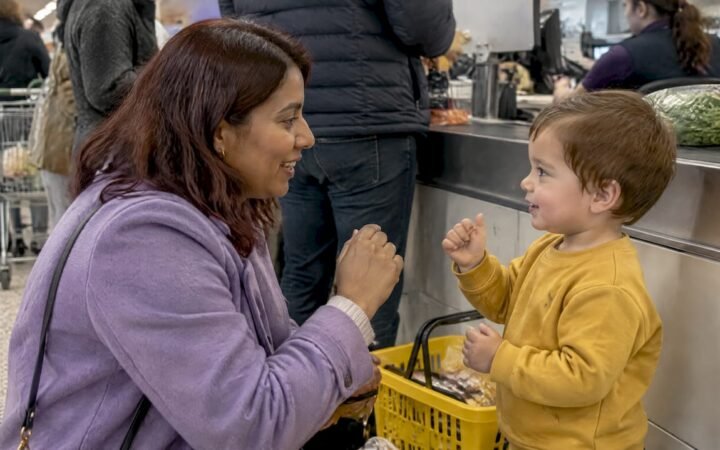
Queue Games for Toddlers: 12 Screen-Free Ideas
Easy queue games for toddlers that need no kit and no screen: ideas by age, how to keep them short, and how…