Busy Parents: 12 No Prep Shopping Activities for Toddlers
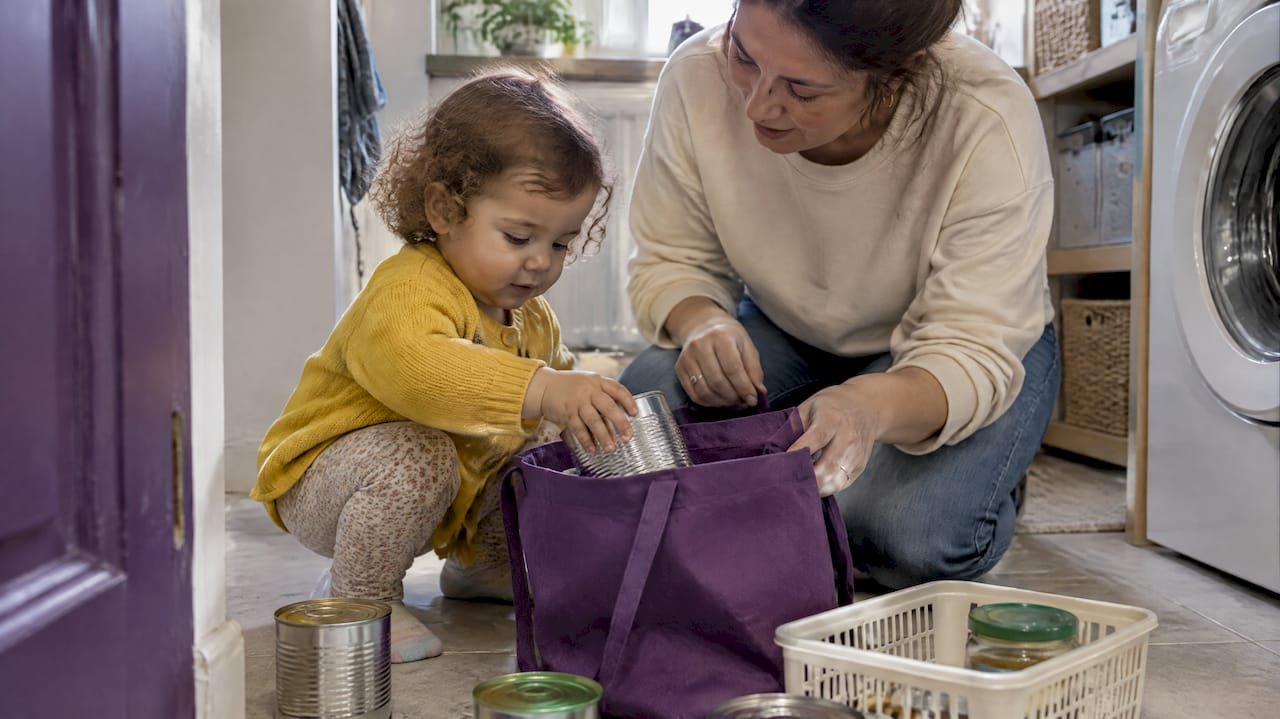
Yes, with one or two tiny games you can keep a toddler engaged and support language, memory and social skills while shopping. Try a picture-list fetch, a quick game of “I Spy,” or hand over the trolley helper job. Each takes a minute or two, works with items you already have, and stays safe when you keep your toddler within reach and skip any unplanned tasting.
TL;DR:
- Using one or two simple, quick games during shopping can meaningfully support toddlers’ language, memory, and social development.
- Activities such as picture-list fetch, pretend cashier, or size sorting can be tailored to a child’s age, gradually increasing in complexity.
- Planning the trip in advance, including packing a small kit and choosing quiet times to start, improves engagement and reduces stress.
- Safety measures like keeping toddlers within reach, avoiding breakable items, and delaying food tasting until at home are essential for safe play.
- Digital apps can offer instant, age-appropriate activity suggestions, using household items to keep the trip educational and engaging.
Table of Contents
- 1. Ready-to-use shopping activities you can start today
- 2. How to plan the trip so activities actually happen
- 3. Keeping it safe: hygiene, allergies and public-space rules
- 4. Matching activities to your toddler’s age and stage
- 5. Unpacking and follow-up activities that stretch the learning further
- 6. Why these activities work, according to early-years guidance
- 7. A note on why small, repeatable games matter
- 8. A faster way to find the right activity, every time
- FAQ
- Sources
1. Ready-to-use shopping activities you can start today
These games need no prep beyond a scrap of paper or your phone, and most run in under five minutes. Pick one or two per trip rather than trying to pack in all of them.
- Picture-list fetch: Draw or print two or three pictures of items you need and ask your toddler to spot them on the shelf. Best for toddlers around two years old, takes about 3 to 5 minutes.
- Trolley helper: Hand your toddler one light, unbreakable item to place in the trolley. Best for younger toddlers learning one-step tasks, takes 30 seconds.
- I Spy colors: Ask “I spy something red” and let your toddler point or name it. Works for most ages, 1 to 2 minutes per round.
- Counting the apples: Count items together as you bag them, up to two or three. Best for toddlers around two, under a minute.
- Sound hunt: Ask your toddler to find something that crinkles, rattles or feels cold. Great sensory check-in, 2 minutes.
- Pretend cashier: Let your older toddler “scan” items or hand over pretend money at checkout. Best for three- and four-year-olds, 2 to 3 minutes.
- Memory game: Name one item, then ask your toddler to remember it a minute later; build up to two items as they get better at it. Best for toddlers over two.
- Matching game: Show a picture of a fruit and ask your toddler to find the matching one. Good for younger toddlers still learning to match.
- Sticker reward chart: Give a sticker after each finished task to mark progress. Works at any age, instant.
- Naming game: Point at items and ask “what’s this called?” then repeat and add a describing word back. Good for language-building at any stage.
- Texture check: Let your toddler gently touch a few safe produce items (like a smooth apple or a bumpy orange) and describe how they feel. Best for toddlers over 18 months, 1 minute.
- Size sorting: Ask your toddler to find the “big” and “small” version of an item, like two boxes of cereal. Good for twos and up, 1 to 2 minutes.
A small kit makes these easier to pull off: a laminated picture list, a sheet of stickers, and a few coins or play money kept in your bag.
2. How to plan the trip so activities actually happen
A smooth shopping trip starts before you leave the house, and a few minutes of planning means less scrambling once you’re in the aisles.
- Decide on one or two activities in advance rather than trying to run through the whole list.
- Make a picture list for non-readers using drawings, stickers or printed photos of the items you need.
- Pack a short checklist: the picture list, a few stickers, wipes, a small snack and a spare set of clothes.
- Time the trip around your toddler’s best window, usually after a meal or nap, and keep it under 30 minutes where possible.
- Start in quieter aisles first, saving busier sections like checkout for when your toddler still has patience left.
3. Keeping it safe: hygiene, allergies and public-space rules
Shopping activities work best when safety sits in the background, not as an afterthought.
- Keep your toddler within arm’s reach near trolleys, shelving and other shoppers.
- Stick to non-breakable items for any hands-on task, and skip glass jars or heavy tins.
- Never let your toddler taste unpackaged food in the store. Save any tasting for home, where you can wash and prepare it properly.
- Check for known allergies before offering any food-related activity, even a simple smell or texture check.
- Official early-years guidance on planning food activities with children notes real benefits for language and fine motor skills, alongside the need for supervision and a basic hygiene check before any child-involved food task.
Pro Tip: Wait until you’re home to let your toddler taste new produce, and always rinse it first under running water.
4. Matching activities to your toddler’s age and stage
Shopping games work better when they match what your toddler can actually do, and the same idea can grow with them over several visits.
- Younger toddlers (around 12 to 18 months): Stick to one-step tasks, like handing over an item, pointing at a named object, or matching a simple picture.
- Around two years old: Move to two-item picture lists, counting to two or three, and letting your toddler choose between two options (“red apple or green apple?”).
- Older toddlers (three to four years): Try short memory tasks, pretend cashier role-play, or asking them to help sort items once you’re home.
Progressing this way keeps the challenge just slightly ahead of what your toddler can already do, which is where most of the learning happens.
5. Unpacking and follow-up activities that stretch the learning further
The trip doesn’t have to end at the checkout. Unpacking groceries gives you a second, calmer chance to reinforce what your toddler just practiced.
- Memory recall: Ask what one item you bought was, then build up to naming two or three as your toddler gets better at it.
- Sorting game: Hand your toddler items one at a time and ask whether each goes in the fridge, the cupboard or on the table, building categorization and new vocabulary.
- Quick taste test: Offer a small, washed piece of a new fruit or vegetable under supervision, checking first for any known allergy.
These short follow-ups turn one shopping trip into two separate learning moments, without adding much time to your day.
6. Why these activities work, according to early-years guidance
None of this is guesswork. BBC Tiny Happy People points out that pretend shop play with ordinary household items helps toddlers build vocabulary, practice turn-taking and start early counting, and recommends starting with one requested object before adding more. A short pretend-shop game at home, using tins and a paper list, can help your toddler understand their role before the real trip even starts.
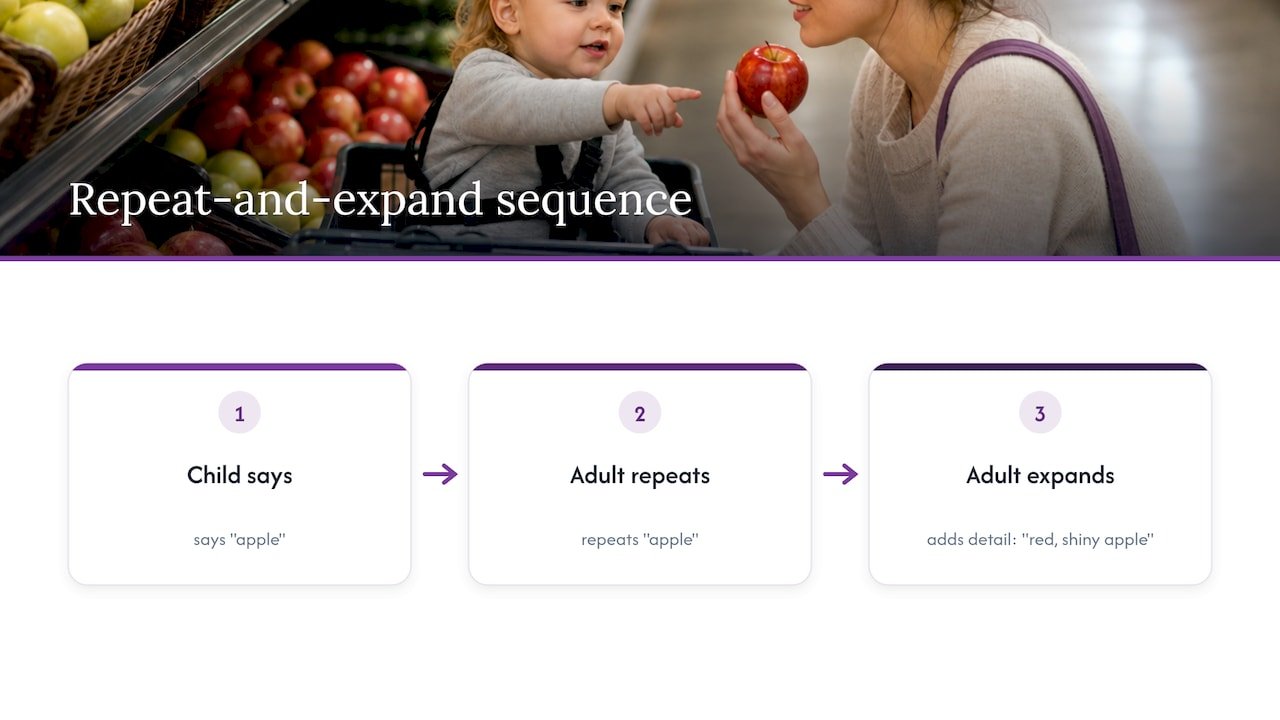
Practitioners often use a “repeat and expand” technique, where you take whatever word your toddler offers and hand it back with one extra detail. If your toddler points and says “apple,” you might say “yes, a red, shiny apple.” It is a small habit that raises the language challenge without turning the moment into a quiz, a method we cover in more depth in our piece on narrating play for language growth.
Local councils back this up with printable tools. Lancashire County Council’s “At the shops” resources offer downloadable bingo sheets and activity cards built around naming items like the till, the trolley and the receipt, ready to print and bring along.
7. A note on why small, repeatable games matter
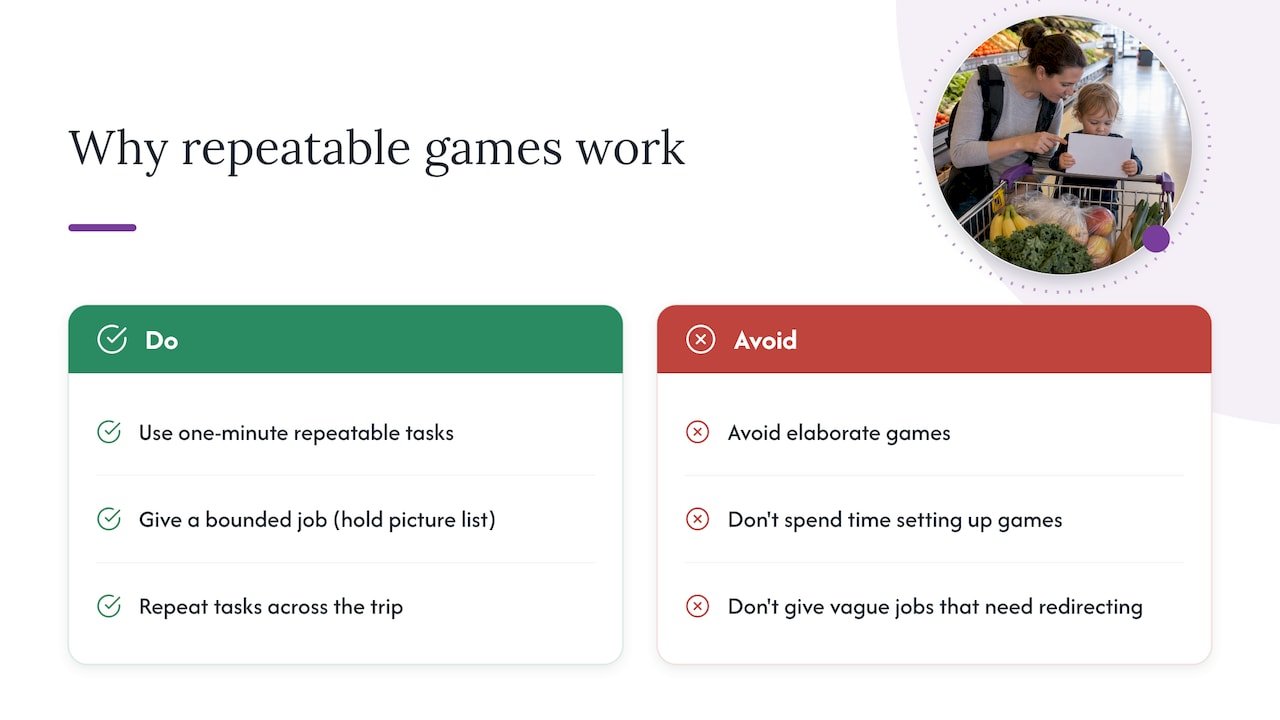
We’ve found that the games that stick aren’t the elaborate ones. They’re the one-minute tasks you can repeat without thinking twice: naming an item, counting two apples, handing over a trolley job. Repetition is what turns a game into a skill, and a shopping trip gives you a dozen small chances to repeat it without setting anything up.
What surprises most parents is how little this costs them in energy. A toddler who has a real, bounded job, like holding the picture list, tends to need less redirecting, not more.
— samit
8. A faster way to find the right activity, every time
There are apps designed for moments like this: standing in an aisle, tired, with a toddler who needs something to do right now. Such apps suggest screen-free activities matched to your child’s age and available time and energy, each accompanied by plain-language explanations of their benefits.
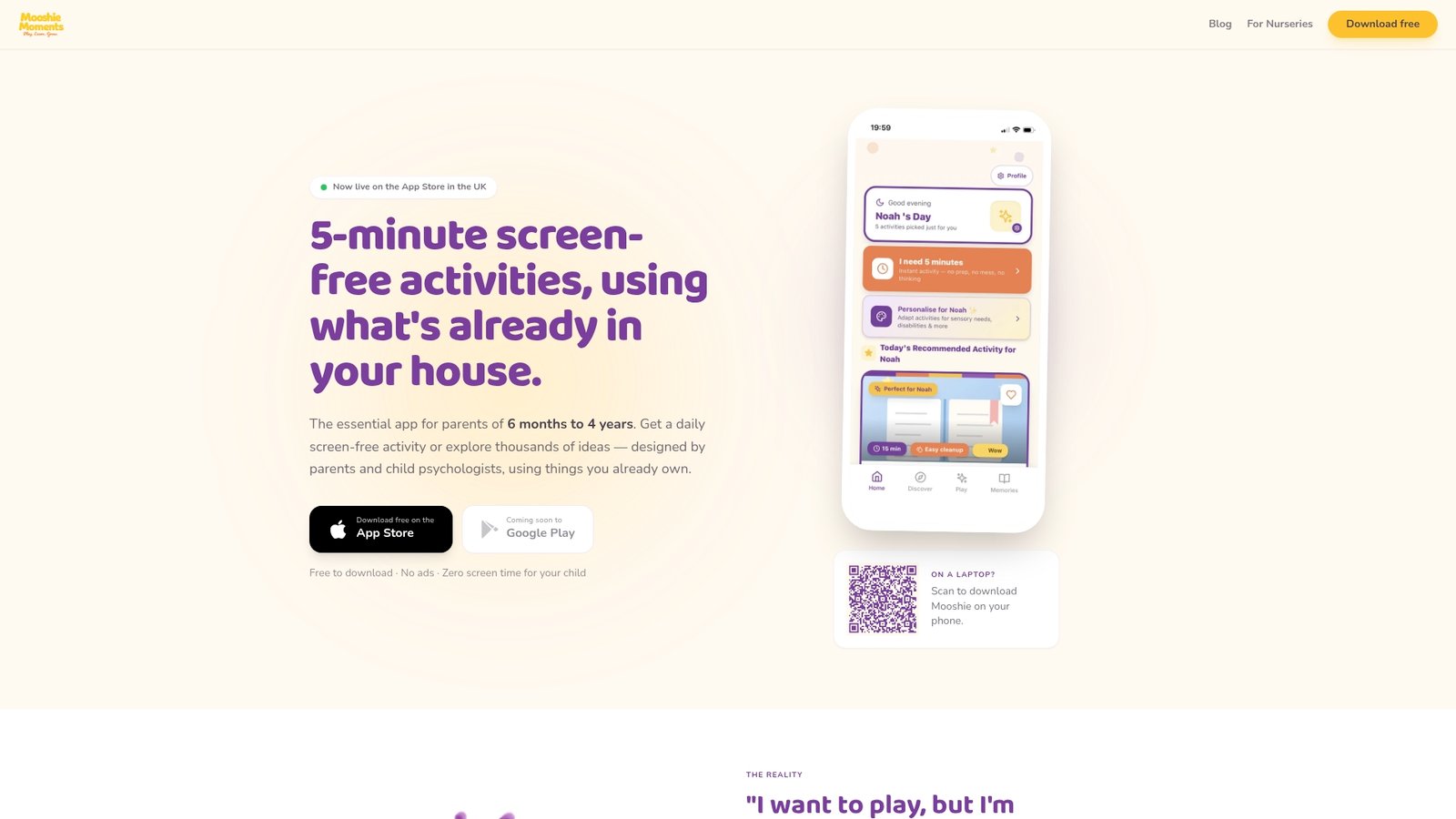
- Get instant activity ideas sorted by your toddler’s age, from 6 months to 4 years.
- Every suggestion uses household items you already have, no shopping list required.
- Each activity comes with a short note on the developmental skill it builds.
If you run a nursery or early-years setting, our Partnership Pack and home-learning resources extend the same approach to the families you work with. Visit Mooshie to see the full activity library for yourself.
FAQ
What is the 3-3-3 rule for toddlers?
The 3-3-3 rule is a general approach some parents use to limit screen time or structure routines in three blocks, though definitions vary depending on who you ask. It isn’t a formal child-development guideline, so treat it as one informal option rather than a fixed rule.
What is the 5-4-3-2-1 rule for grocery shopping?
This is typically a sensory grounding technique adapted for shopping trips, where you ask a child to notice five things they see, four they hear, and so on. It works best as a calming or attention game for slightly older toddlers who can follow multi-step prompts.
What activities can I do with my toddler using household items?
Simple pretend-shop setups work well: use tins, empty boxes and a paper list to practice naming, counting and handing over items. BBC Tiny Happy People suggests starting with one item before building up to two or three as your toddler gets more confident.
What are fun activities for 2 year olds?
Two-year-olds tend to enjoy short counting games, picture matching, and simple sorting tasks, whether at home or while out shopping. For a longer list of ideas beyond the shopping aisle, see our fun activities for 2 year olds.
Is it safe to let my toddler taste food while shopping?
It’s best to avoid letting your toddler taste unpackaged food in the store and save any tasting for home, where you can wash it properly and check for allergies first. Official early-years guidance stresses supervision and hygiene for any food activity involving children.
Sources
For ready-to-print tools and official guidance mentioned above, these are worth bookmarking:
- The benefits of playing shop with toddlers & children – BBC Tiny Happy People
- Planning food activities with children – Help for early years providers (GOV.UK)
Recommended
- 12 Low Prep Toddler Activities for Grandparents With Seated Options
- 40 Fun 2 Year Old Activities to Start Right Now
- Taste Safe Sensory Play: Top 10 Ideas for Mouthing Toddlers
Want a new idea every day, matched to your child's age?
Mooshie Moments gives you simple, guided play ideas for ages 6 months to 4 years.
Download free on the App StoreMore like this
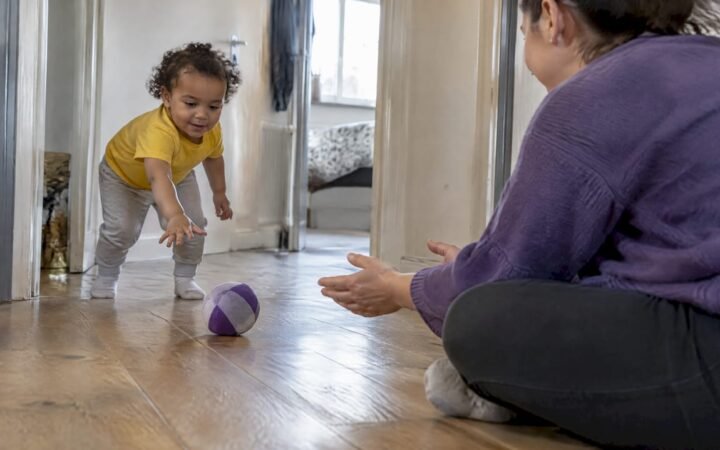
10 EYFS Backed Sock Games for Toddlers Under Five Minutes
Ten EYFS aligned sock games to start in under five minutes, each with a one line developmental benefit, simple adaptations, and two…

Low Prep Music and Movement for Busy Parents That Works in 5 Minutes
Start low prep music and movement with your toddler in five minutes. Research backed, age tailored activities and hearing safety tips for…
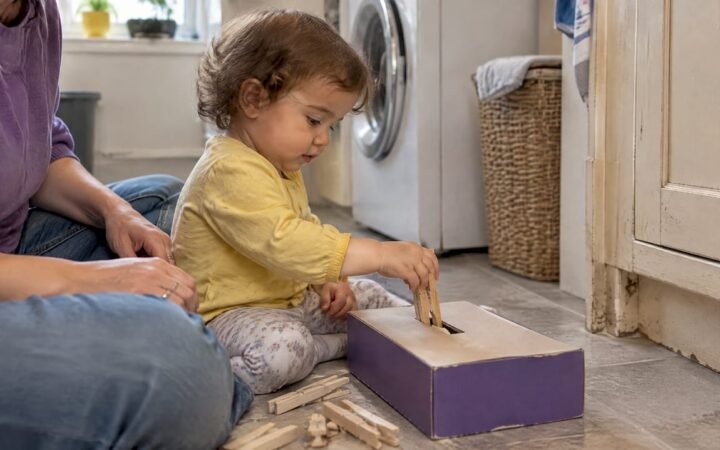
5 Minute Daily Slot Builds Toddlers’ Hand Eye Coordination, EYFS
EYFS backed, low prep activities for busy parents. Do one five minute daily slot. See what each game builds and how to…