
UK Parents: Low Prep Toddler Activities by Skill Area in 2–15 Minutes

You can build language, motor, sensory, social, and thinking skills in five minutes using things you already own. Cups, cardboard tubes, sponges, and spoons work just as well as fancy toys for teaching a toddler to pour, stack, sort, and talk. These developmental toddler activities flex from six months to four years, take between two and fifteen minutes, and cost nothing beyond what’s in your kitchen drawer.
TL;DR:
- Toddlers benefit from simple household items like cups and spoons more than elaborate toys, with activities lasting between two and fifteen minutes.
- Activities should be tailored to the child’s interests and developmental stage, focusing on repetition and responsiveness rather than complexity.
- Safety precautions include supervising water play, removing small choking hazards, and clearing the activity area of tripping risks.
- Most effective activities for early motor and language skills involve engaging, unstructured play such as pouring, sorting, and back-and-forth conversations.
- Using apps that filter activities by age and available time helps maintain variety without the need for extensive prep or elaborate setups.
Table of Contents
- Developmentally Appropriate Toddler Activities By Skill Area
- Setup and Safety Ground Rules for Household-Item Play
- How to Adapt One Activity Across Ages
- Why Short Play Sessions Actually Work
- What This Article Gets Right (And What Most Advice Gets Wrong)
- Get More Timed, Age-Matched Activities Without the Guesswork
- Sources
- FAQ
Developmentally Appropriate Toddler Activities By Skill Area
The best educational play for toddlers doesn’t come from a curriculum. It comes from watching what your child already reaches for and building a tiny activity around it. That’s the core idea behind developmentally appropriate practice, or DAP, a framework from the National Association for the Education of Young Children that says caregivers should respond to a child’s actual interests and stage rather than push a rigid script. Here’s a bank of interactive toddler activities sorted by what they build.
Language
- Narrate a laundry basket. Fold towels together and name each item as you go. Two minutes, builds vocabulary and listening skills. Skip small items a young toddler might mouth.
- Sock puppet chat. Slip an old sock over your hand and have a “conversation” with your toddler. Five minutes, encourages back-and-forth talk and turn-taking.
- Cardboard tube phone. Talk through a paper towel tube like a megaphone. Toddlers love the changed sound of their own voice. Three minutes, supports early speech play.
Fine motor
- Spoon transfer game. Move dry cereal or cotton balls from one bowl to another with a spoon. Ten minutes, strengthens the pincer grip needed for later writing. Supervise closely if using small cereal pieces with a child under two.
- Sponge squeeze. Fill a container with water, let your toddler squeeze a sponge to move water into a second bowl. Ten minutes, builds hand strength and cause-and-effect thinking. Always supervise water play directly.
- Sorting socks by color. Dump a basket of clean socks and sort into piles. Five minutes, teaches categorization and finger dexterity.
Gross motor
- Shoebox wagon pull. Tie a shoelace or ribbon to a shoebox and let your toddler pull it around a room, loaded with soft toys. Ten minutes, builds leg strength and balance. Clear the path of tripping hazards first.
- Pillow obstacle course. Line up couch cushions to crawl over or step around. Ten minutes, develops coordination and spatial awareness.
Sensory
- Scarf toss and catch. Toss a lightweight scarf in the air and watch it float down. Five minutes, supports visual tracking and calm sensory input.
- Texture basket. Fill a shoebox with a sponge, a wooden spoon, and a soft cloth for hands-on exploration. Ten minutes, builds tactile awareness. Remove anything small enough to fit in a toilet paper tube if your child still mouths objects.
Social and emotional
- Mirror faces. Make faces together in a hand mirror and name each emotion. Five minutes, builds emotional vocabulary and connection.
- Peekaboo with a towel. A classic for a reason. Two minutes, teaches object permanence and turn-taking, and it works from six months onward.
Thinking and problem-solving
- Cup hide-and-seek. Hide a small toy under one of three plastic cups and let your toddler find it. Five minutes, builds memory and early logic, drawn from the kind of hiding games ZERO TO THREE recommends for one and two-year-olds.
- Stack and knock. Stack plastic containers into a tower, then let your toddler knock it down. Five minutes, teaches balance concepts and delivers a satisfying dose of cause and effect.
Following your child’s lead matters more than following this list in order. If your toddler ignores the cups and just wants to bang the spoon on the bowl, let the spoon banging be the activity. That’s developmentally appropriate practice in action, and it’s also just easier on you.
Setup and Safety Ground Rules for Household-Item Play
None of these activities need special equipment, but a few safety habits keep playtime relaxed instead of nerve-wracking.
- Mouthing toddlers (under 18 months roughly): remove anything smaller than a toilet paper tube opening, and skip loose cereal or cotton balls unless you’re sitting right there.
- Water play: never leave a toddler alone near even an inch of water, and keep water activities to shallow bowls on a towel, not buckets.
- Choking hazards: check secondhand toys and household items for loose parts, peeling paint, or small pieces that could snap off.
- Toy condition: a quick glance before each session catches cracked plastic or fraying string before it becomes a problem.
- Activity spot: clear a small patch of floor away from stairs or hard corners, and keep a basket nearby for fast cleanup.
Pro Tip: Keep a “yes bag” packed with five or six safe household items already sorted by age, so you’re never standing in the kitchen trying to invent an activity while your toddler melts down.
For toddlers who still explore with their mouths, our guide to taste safe sensory play walks through textures and materials that are fine to chew.
How to Adapt One Activity Across Ages
The same idea can stretch from a six-month-old to a four-year-old if you adjust three things: your involvement, the challenge level, and the language you use.
- 6 to 12 months: you do most of the work. For water pouring, hold the cup and let your baby feel the water flow over their hands while you narrate (“splash, splash”). For hiding games, hide a toy under one cloth and celebrate loudly when they find it.
- 12 to 24 months: hand over more control. Let your toddler pour water between two cups themselves, spilling included. Hide the toy under one of two cups now, and ask, “Where did it go?” to build early questioning skills.
- 2 to 4 years: add complexity and choice. Let your child pour and measure with multiple containers, or hide the toy under one of three cups and let them narrate the search themselves. Stacking becomes building a specific tower height, then predicting how many blocks before it falls.
Watch for readiness cues rather than sticking to the calendar. If a two-year-old is already asking “why,” they’re ready for a slightly harder version of whatever you’re doing. Our piece on narrating play for language growth has more detail on adjusting your words as skills grow.
Why Short Play Sessions Actually Work
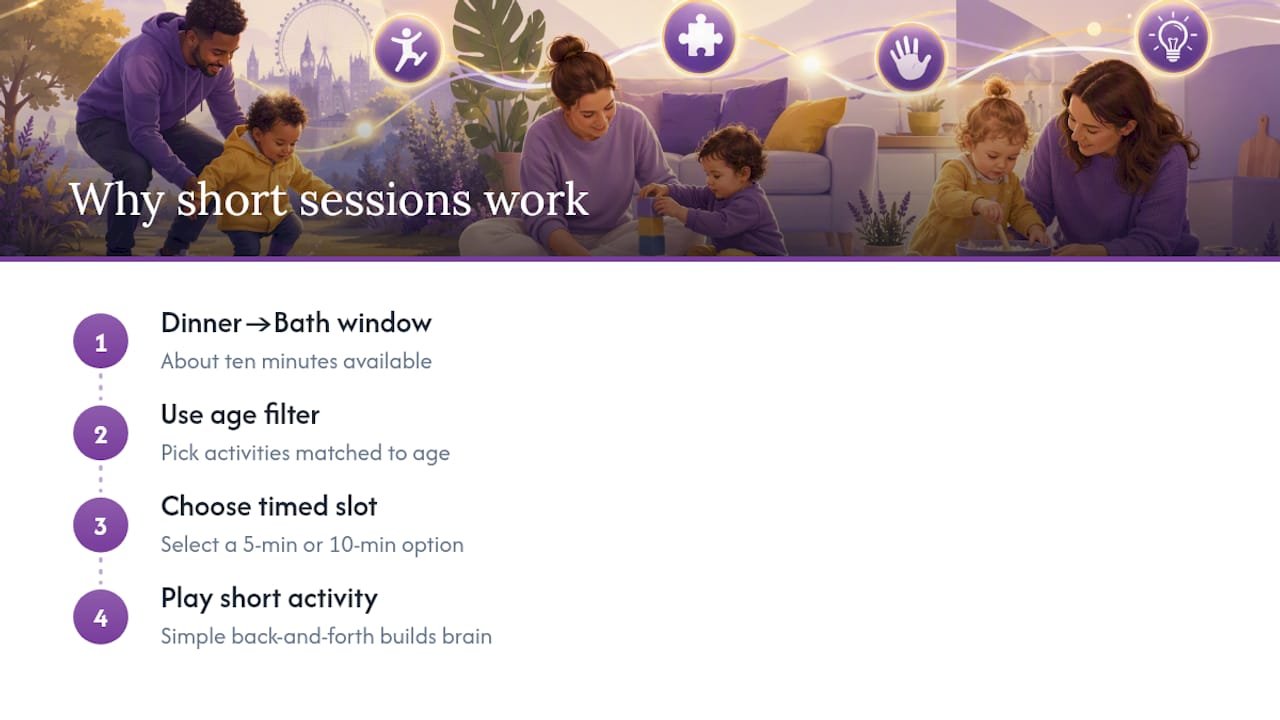
Five minutes of pouring water or stacking cups doesn’t look like much, but the Center on the Developing Child at Harvard University has shown that simple, playful back-and-forth interactions are what actually build brain architecture and early self-control, not expensive toys or long structured lessons.
Some apps use age filters and timed slots so a tired parent can pick a five-minute activity instead of spending time searching for one. The goal isn’t more activities. It’s activities that fit the ten minutes you actually have between dinner and bath time.
What This Article Gets Right (And What Most Advice Gets Wrong)
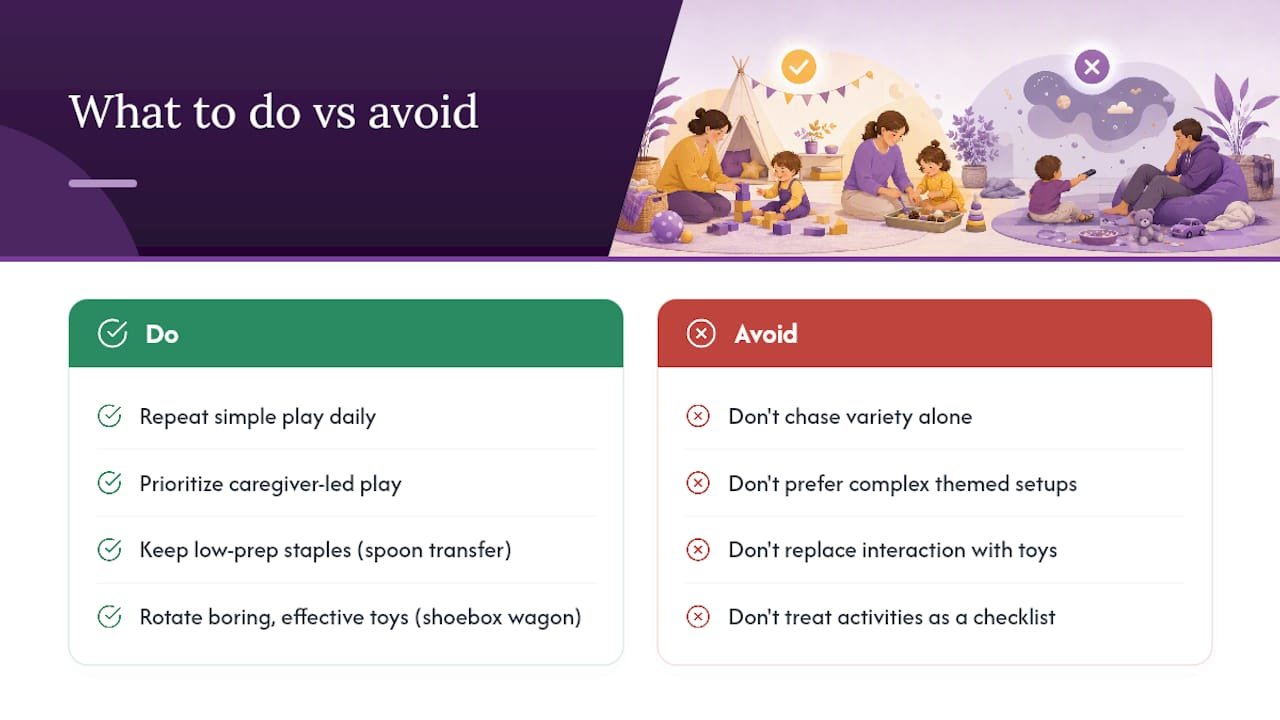
Most parenting content treats “developmental activities” like a checklist to complete, as if skipping a day of stacking cups sets your toddler behind. That framing is backwards. What actually builds skills is repetition of simple, responsive play, not variety for its own sake. A toddler who pours water into cups for two straight weeks is building the same fine motor pathways as one doing ten different “Pinterest-worthy” sensory bins, minus your prep time.
The conventional advice also overweights complexity. Themed sensory bins and elaborate setups photograph well, but a sock puppet conversation does more for language development than a store-bought talking toy, because it forces real back-and-forth interaction. Prioritize the activities that need your presence over the ones that need your prep. If you take one thing from this list, take the shoebox wagon and the spoon transfer game. They’re boring to describe and genuinely effective. This is usually the sign a household activity is worth keeping in rotation.
— samit
Get More Timed, Age-Matched Activities Without the Guesswork
Every activity above works without an app, but building a fresh one from scratch every single day gets old fast. Some apps offer a large library of screen-free activities filtered by toddler’s age and available time, whether that’s two or fifteen minutes.
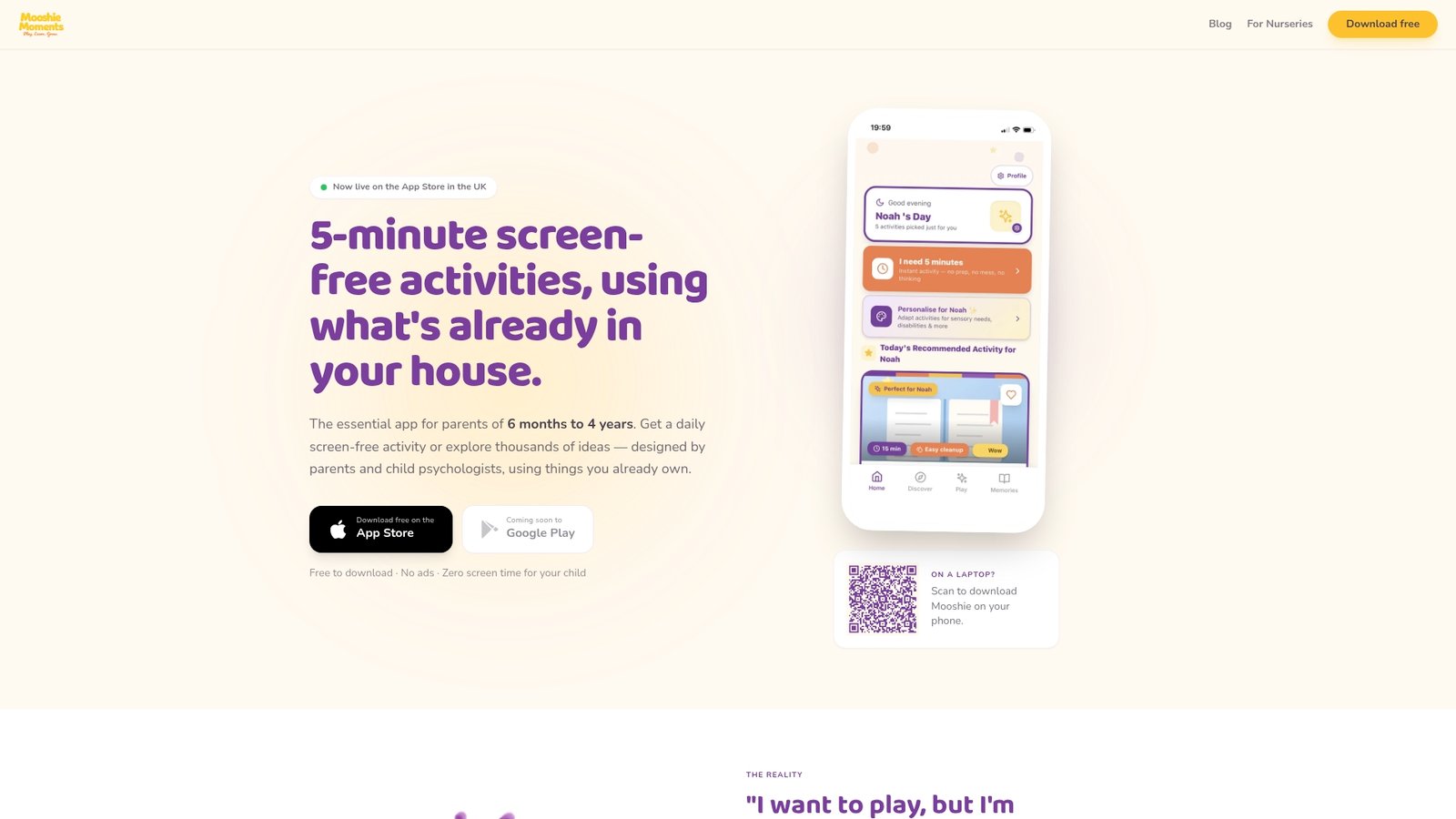
Instead of scrolling for ideas at 5 p.m. with a cranky toddler underfoot, you open the app, tell it how much time and energy you have, and get a household-item activity with the development benefit already explained. If your toddler just turned two, our collection of 40 fun activities for two-year-olds is a good place to see what the app offers in practice. Download Mooshie Moments and try a free activity suggestion tonight.
Sources
- Definition of Developmentally Appropriate Practice (NAEYC)
- Brain Building Through Play (Center on the Developing Child at Harvard University)
- Play activities for 12 to 24 months (ZERO TO THREE)
FAQ
What are the best developmental toddler activities for beginners?
Start with activities requiring almost no setup, like sock puppet talking, spoon-and-bowl transfers, or peekaboo with a towel, since these need no prep and build language and motor skills right away.
How long should a toddler activity last?
Most effective sessions run between two and fifteen minutes; toddlers under two typically stay engaged for shorter windows, while two to four-year-olds can sustain focus closer to fifteen minutes.
Are household items safe for toddler play?
Yes, with checks: remove anything smaller than a toilet paper tube for mouthing-stage toddlers, supervise all water play directly, and inspect items for loose or breakable parts before each session.
How do I know if an activity is developmentally appropriate for my toddler’s age?
Follow developmentally appropriate practice by watching your child’s interest and skill level rather than a strict age chart, and adjust the challenge up or down based on how they respond.
Can an app really help with toddler activities?
Apps like Mooshie Moments filter activities by your child’s age and the time you have available, which cuts down the daily task of inventing screen-free play from scratch.
Recommended
- 40 Fun 2 Year Old Activities to Start Right Now
- 12 Low Prep Toddler Activities for Grandparents With Seated Options
- Junk Modelling for Toddlers: Easy EYFS-Aligned Activities
- Taste Safe Sensory Play: Top 10 Ideas for Mouthing Toddlers
Want a new idea every day, matched to your child's age?
Mooshie Moments gives you simple, guided play ideas for ages 6 months to 4 years.
Download free on the App StoreMore like this
Babysitting Toddlers: 12 Low Prep Ideas and Why They Help
Explore 12 low prep toddler activities for babysitters, with developmental benefits, age adaptations, UK safety advice, and optional activity coaching.
10 EYFS Backed Sock Games for Toddlers Under Five Minutes
Ten EYFS aligned sock games to start in under five minutes, each with a one line developmental benefit, simple adaptations, and two…
Busy Parents: 12 No Prep Shopping Activities for Toddlers
Busy parents: keep toddlers learning and calm at the store with 12 no prep, screen free activities that take under five minutes…