
Buy 5 to 30 Minutes Now: Quick Toddler Activities for UK Parents
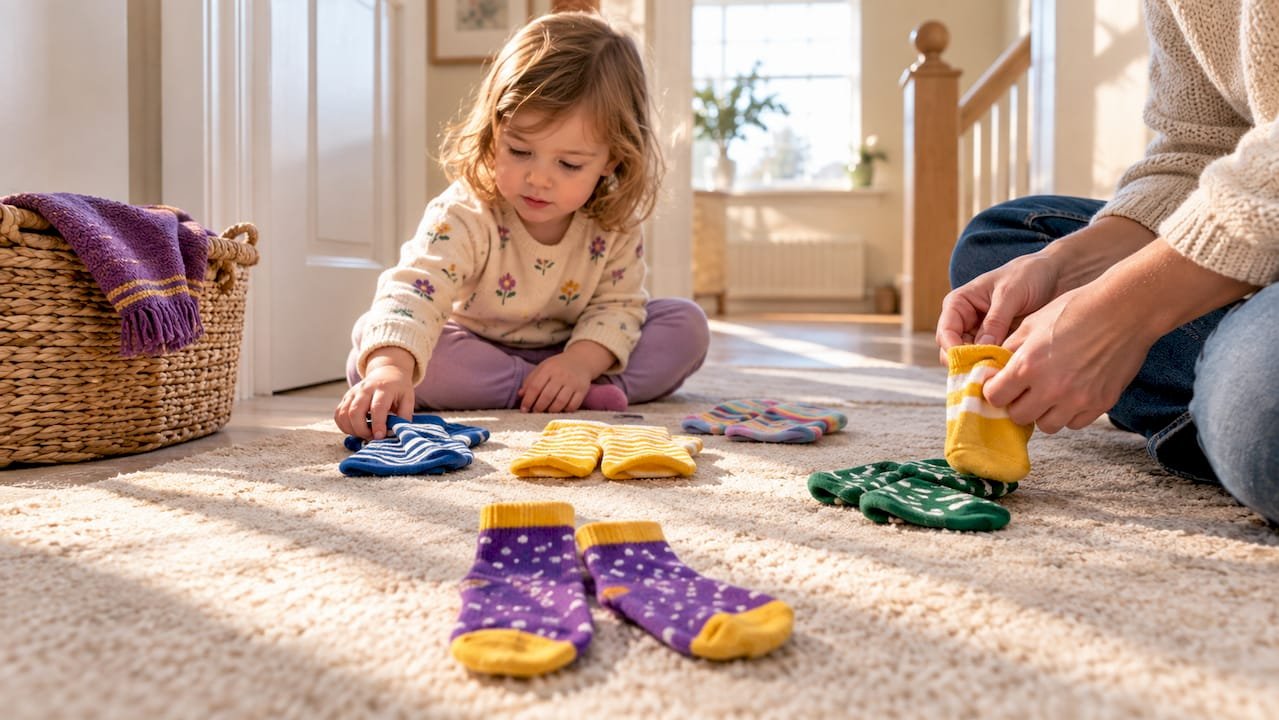
When your toddler is fussy and you have zero prep time, hand them a treasure dump, a strip of tape for a road, or a simple washing station at the sink. Each of these buys 5 to 30 minutes with almost no setup. They work because they give your child one clear, novel thing to explore, not because they’re complicated. The rest comes down to matching the activity to your child’s age, energy, and how much attention you actually have to give.
TL;DR:
- Activities that require less than a minute of prep, such as tape roads or mirror faces, are effective for engaging toddlers with minimal effort.
- Simple activities involving household objects or safe household items can hold a toddler’s attention for 20 to 30 minutes, especially when involving novelty.
- Sensory and movement games, like water stations or bubble play, are easy to set up and support motor skills while being quick to clean up.
- Tailoring activities to the child’s age, energy level, and mouthing stage helps optimize engagement and safety during quick play sessions.
- Using apps that filter activity ideas by available time and energy level can help parents and caregivers find developmentally appropriate options instantly.
Table of Contents
- Quick Toddler Activities Sorted by Prep Time
- No-Setup, Screen-Free Ideas That Hold Attention for 10 to 30 Minutes
- Sensory and Movement Play That’s Still Easy Indoors
- Getting Safe Minutes of Independent Play
- Matching the Activity to Age, Energy, and Your Own Bandwidth
- A Quick Note From the Trenches
- Get Quick Activity Ideas Without the Mental Load
- Sources
- FAQ
Quick Toddler Activities Sorted by Prep Time
Not every hectic moment calls for the same fix. Sometimes you have thirty seconds and a drawer of random objects. Sometimes you have five minutes and access to the kitchen cupboard. Sorting activities by prep time means you’re never standing there wondering what to grab.
No-prep activities (30 seconds or less)
- Treasure dump — Tip a small basket of safe household objects (measuring cups, wooden spoons, a shoe) onto a towel. Builds fine-motor skills and independent exploration.
- Tape roads — Stick a strip of painter’s tape on the floor for toy cars to follow. Supports gross-motor coordination and imaginative play.
- Mirror faces — Sit your toddler in front of a mirror and make faces together. Builds language and social-emotional awareness.
- Sock puppets — Pull an old sock over your hand and give it a name. Encourages language and turn-taking.
- Pillow pile — Stack couch cushions on the floor for climbing. Builds gross-motor strength and body awareness.
- Empty box exploration — Hand over any cardboard box, no toys required. Sparks imaginative and sensory play.
Very low-prep activities (1 to 3 minutes)
- Washing station — Fill a shallow tub with water and a sponge for “washing” toys. Builds fine-motor control and cause-and-effect learning.
- Sticker wall — Stick a sheet of stickers to a low wall or table for peeling and placing. Strengthens pincer grip.
- Muffin tin sort — Fill a muffin tin with pom poms, buttons, or pasta shapes to sort by color. Builds early math and fine-motor skills. Skip small parts if your child still mouths objects.
- Spray bottle painting — Give a toddler a spray bottle of water to “paint” the patio or bath tiles. Builds hand strength and cause-and-effect thinking.
- Window drawing — Washable markers on a glass door or window. Encourages creativity and fine-motor practice.
- Sensory bag — Fill a sealed freezer bag with hair gel and glitter, taped shut, for squishing. Safe for mouthing-stage toddlers since nothing escapes the bag.
- Balloon volleyball — Bat a balloon back and forth over a “net” (string, couch arm). Builds gross-motor and hand-eye coordination.
Low-prep activities (5 to 10 minutes)
- Playdough smash and roll — Homemade or store-bought dough with a rolling pin. Strengthens hand muscles used later for writing.
- Baking-soda fizz — Baking soda in a tray, vinegar in a dropper bottle, and watch the bubbles. Introduces early science and cause-and-effect.
- Pasta necklace threading — String dry penne onto yarn or a shoelace. Builds fine-motor precision.
- Obstacle course — Line up pillows, a laundry basket “tunnel,” and a chair to climb over. Builds gross-motor planning and confidence.
- Frozen pom pom rescue — Freeze small toys or pom poms in ice cubes, then use warm water and spoons to “rescue” them. Builds patience and problem solving.
- Cereal bin scoop — A bin of dry cereal with cups and spoons for scooping. Builds fine-motor skills and sensory tolerance.
- Indoor basket toss — Crumple paper balls and toss them into a laundry basket. Builds gross-motor aim and counting.
Toddler Approved’s quick, low-prep activity list backs up several of these as reliable, repeatable go-tos, and Treehouse Schoolhouse’s collection of low-mess ideas offers more variations if you want to rotate options weekly.
No-Setup, Screen-Free Ideas That Hold Attention for 10 to 30 Minutes
Some activities need genuinely nothing beyond what’s already in your house, and they still manage to hold a toddler’s focus far longer than you’d expect. Motherly’s roundup of screen-free activities reports that several of these low-effort ideas can buy 20 to 30 minutes of engagement, which is long enough to make a phone call or finish dinner prep.
- Treasure dump with novel items — Rotate in objects your toddler hasn’t seen in a week (a whisk, a funnel, a tin). Novelty, not quantity, is what extends the play.
- Tape roads with toy cars — Add a second strip that crosses the first to create an “intersection” and watch the play get more complex on its own.
- Cardboard box free play — One box becomes a car, a hat, a boat. Toddlers layer their own ideas onto it without prompting.
- Spray bottle outside — Give them a patch of dirt, a fence, or plant leaves to spray. It’s mess-free cleanup since it’s outdoors.
- Window drawing with washable markers — The vertical surface itself seems to keep toddlers interested longer than paper on a table.
- Washing station for toys — Add a few plastic animals and a towel for “drying,” and the sequence of steps stretches the play out.
Pro Tip: Swap in one new object to an existing station rather than building a whole new activity. A single unfamiliar item, like a turkey baster in the washing station, resets your toddler’s curiosity without adding a single minute of prep.
Sensory and Movement Play That’s Still Easy Indoors
Sensory bins and simple movement games tend to hold attention longer than passive toys, and most of them clean up in under a minute if you plan the container first.
- Water or washing station — Contain it in a shallow tray with a towel underneath so spills stay off the floor.
- Baking-soda and vinegar fizz — Do this one in the bathtub or over a baking sheet for instant containment.
- Frozen pom poms — Great for a warm afternoon since melting water goes straight down the sink after.
- Cereal or snack bin — Use a bin with high sides so scooped pieces mostly stay inside.
- Sensory bags — Seal them well with packing tape around the edges; these are ideal when you want zero mess at all.
- Pillow obstacle course — Scale it up for older toddlers by adding a “jump” at the end, or keep it simple for younger ones with just a crawl-through tunnel.
- Indoor basket toss — Move the basket farther away as your toddler’s aim improves.
- Bubble play — Chase-and-pop bubbles work indoors in a room with hard flooring and no breakables nearby.
The NHS’s guidance on baby and toddler safety stresses supervised play and checking for choking or mouthing risks before you hand over any small object, which matters most with bins full of pom poms or cereal pieces. The NHS Start4Life movement guidance also points out that short bursts of active play support motor development, so an obstacle course isn’t just a way to burn energy. It’s doing real developmental work in those five minutes.
Getting Safe Minutes of Independent Play
Short bursts of independent play don’t require a big system, just a few smart defaults that stack the odds in your favor.
- Rotate the treasure dump contents every few days so the bin still feels new. Repetition with slight variation is what keeps toddlers engaged without your involvement.
- Use high-sided bins for sensory or scoop-based play so pieces stay contained and you’re not chasing pom poms across the kitchen.
- Pre-check every item against a simple rule: if it can fit through a toilet paper tube or has small removable parts, it’s not safe for a mouthing-stage toddler to have unsupervised.
- Introduce a visual timer for toddlers over two, so they can see how much play time is left without asking you every thirty seconds.
- Narrate for 30 to 60 seconds before you step away. Naming what they’re doing (“You’re pouring the water into the cup!”) builds language input even when you’re not staying to play.
Matching the Activity to Age, Energy, and Your Own Bandwidth
The fastest way to pick well is to stop thinking about the “best” activity and start thinking about the constraint you’re actually working with.
- If you’re exhausted: go for seated options like stickers or playdough. Nothing requires you to move.
- If your toddler is wound up: an obstacle course or bubble chase burns energy fast and safely.
- If your toddler is in the mouthing stage: stick to sensory bags, taste-safe bins, or anything too large to swallow.
- For a 9 to 12 month old: simple cause-and-effect toys and a seated treasure dump work best. Our 9-month-old activity guide has more seated, low-mouthing-risk ideas.
- For a 1 to 2 year old: tape roads, washing stations, and pillow climbs fit their new mobility.
- For a 2 to 3 year old: muffin-tin sorting and pasta threading start to matter more, since fine-motor control has caught up. Our 2-year-old activities list has 40 more ideas sorted this way.
- Switch from adult-led to child-led the moment your toddler starts adding their own twist to the activity. That’s your cue to step back and let them run with it.
A Quick Note From the Trenches
One afternoon that stands out: a toddler meltdown right as dinner needed stirring, a phone ringing, and zero patience left in the tank. A washing station at the sink bought seven minutes. A tape road bought another five while the pasta finished. Neither took longer to set up than it took to read this sentence.
Small, repeated pockets of play like this add up developmentally more than people expect, even when they feel too small to matter.
— samit
Get Quick Activity Ideas Without the Mental Load
There are apps built for exactly the moment this article is about: the point where you need a good activity idea right now and have no spare brainpower to invent one. Some apps filter activities by your toddler’s age, the time you have, and even your energy level, so you’re never scrolling through ideas that need supplies you don’t own or an hour you don’t have.
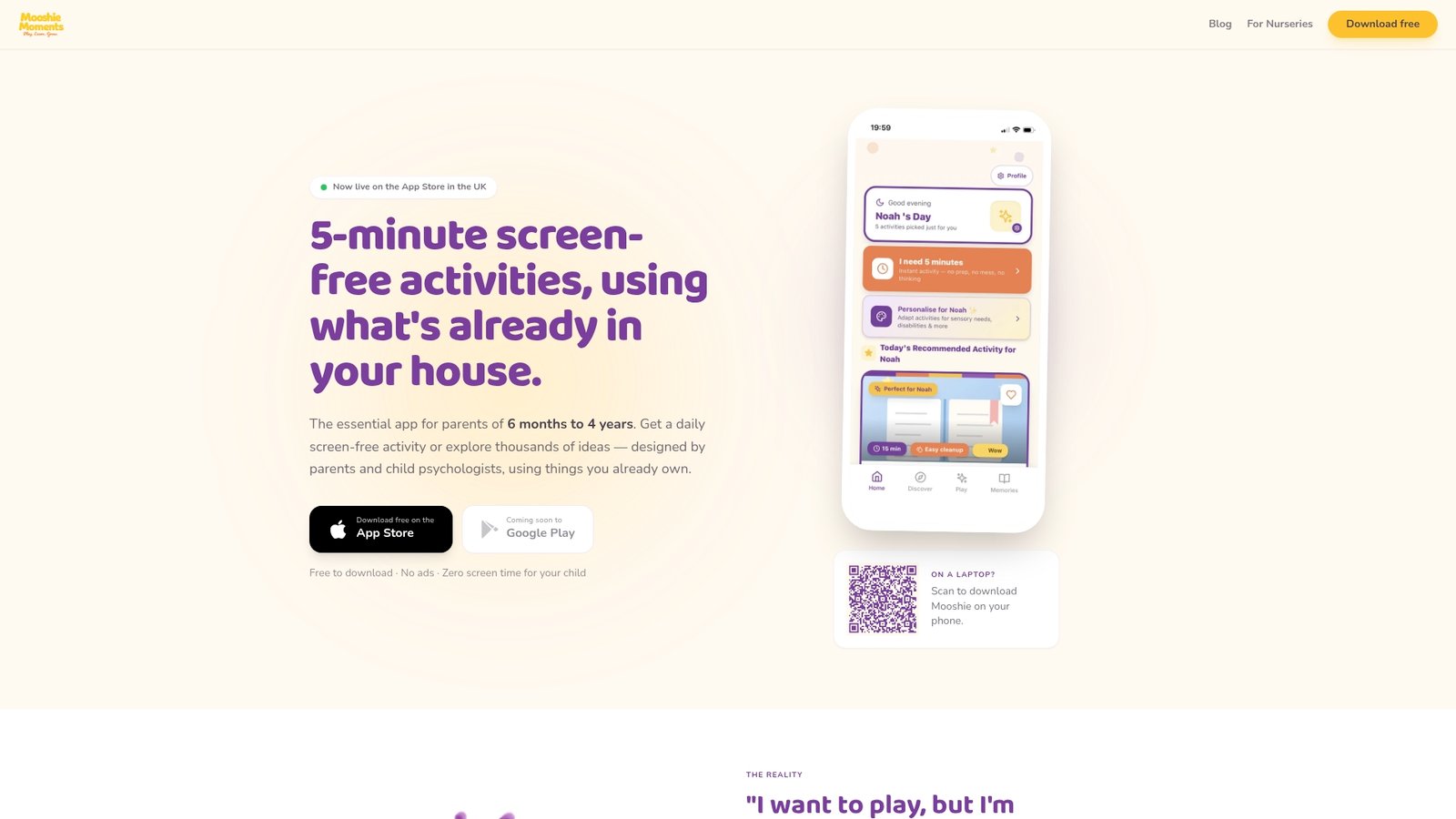
Some apps provide plain-language explanations of what each activity develops, so you’re not just occupying your toddler, you’re doing something with real developmental value in those minutes. There are seated, low-effort options built specifically for tired parents and grandparents, and nurseries can access ready-made partnership packs with printable resources for group settings. Open the Mooshie Moments app and pick your child’s age and your available time. You’ll have an activity in front of you before the kettle boils.
Sources
- Baby and toddler safety – NHS
- Easy screen-free activities for toddlers: Low-effort ideas that buy you 30 minutes – Motherly
FAQ
What is the 3-3-3 rule for toddlers?
There’s no single official definition of this rule, and versions vary by source. A common interpretation splits play into three short segments, roughly ten minutes each, covering sensory, active, and quiet activities to keep a toddler engaged without overloading them.
How do you entertain a 2 year old for hours?
You don’t rely on one activity. You chain several 5 to 30 minute activities together, alternating sensory, movement, and quiet options so attention resets instead of fading. Mooshiemoments’s 2-year-old activity list gives 40 options specifically for this age to rotate through.
What can a toddler do in 30 minutes?
A toddler can complete a full sensory bin session, an obstacle course, a round of playdough play, or several rounds of tape-road car play, all activities Motherly’s screen-free activity roundup notes can hold attention for 20 to 30 minutes with low prep.
What are simple activities for toddlers that need no supplies?
Treasure dump, mirror faces, sock puppets, and cardboard box play need nothing you don’t already have. All four take under a minute to set up and rely on novelty rather than materials.
How much does Mooshiemoments cost?
Current pricing is listed on the Mooshie Moments site, since the app offers a free download alongside premium subscription features.
Recommended
- Research Backed Nursery Activity Plans: 3 Daily 5 Minute Slots (UK)
- 40 Fun 2 Year Old Activities to Start Right Now
- 12 Low Prep Toddler Activities for Grandparents With Seated Options
- Junk Modelling for Toddlers: Easy EYFS-Aligned Activities
Want a new idea every day, matched to your child's age?
Mooshie Moments gives you simple, guided play ideas for ages 6 months to 4 years.
Download free on the App StoreMore like this
Babysitting Toddlers: 12 Low Prep Ideas and Why They Help
Explore 12 low prep toddler activities for babysitters, with developmental benefits, age adaptations, UK safety advice, and optional activity coaching.
10 EYFS Backed Sock Games for Toddlers Under Five Minutes
Ten EYFS aligned sock games to start in under five minutes, each with a one line developmental benefit, simple adaptations, and two…
Busy Parents: 12 No Prep Shopping Activities for Toddlers
Busy parents: keep toddlers learning and calm at the store with 12 no prep, screen free activities that take under five minutes…