
12 Low Prep Balloon Activities for UK Toddlers That Build Skills
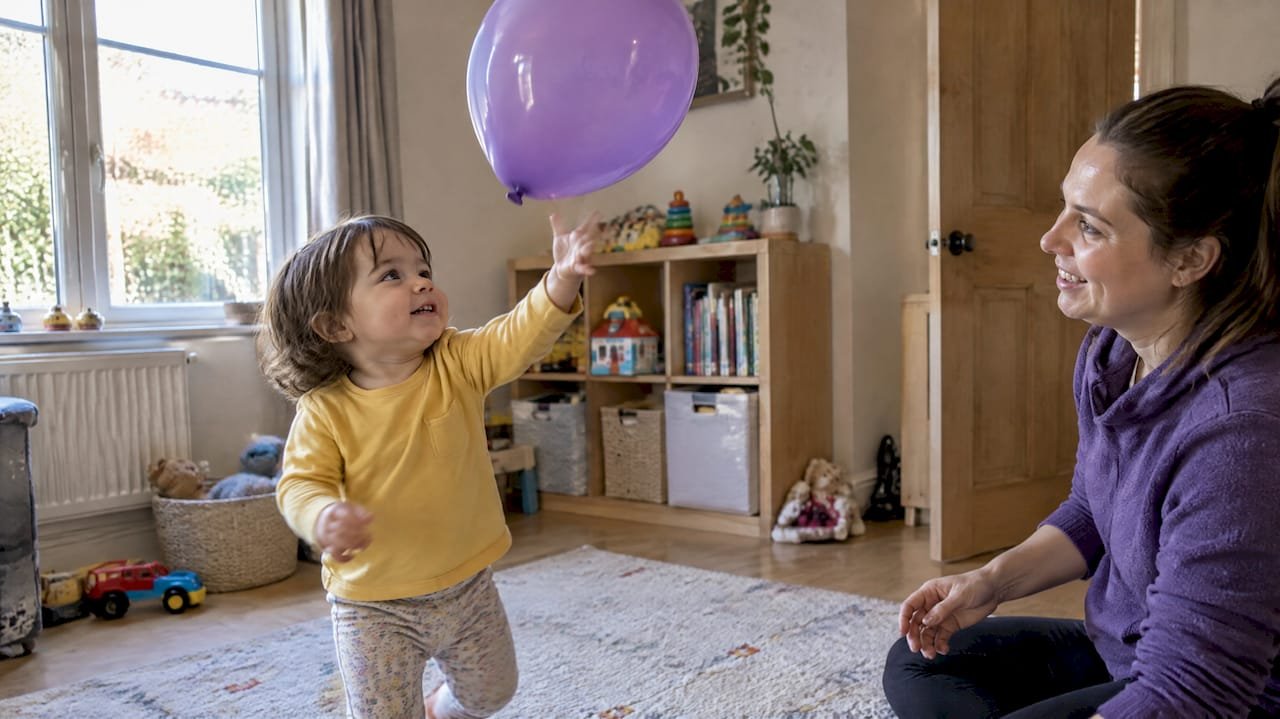
Simple balloon games, sensory play and easy crafts are safe, low-prep ways to get toddlers moving and learning. Start with short bursts of keep-it-up, gentle chasing and soft sensory play, using Move to Improve guidance as your frame. Keep an adult close by, because close supervision is the one non-negotiable. We share more low-prep ideas like these in Mooshie Moments.
TL;DR:
- Choose large balloons and inflate them with a hand pump to medium firmness; their slower movement gives small hands more time to react.
- Keep each game brief, then switch when interest fades; use gentle passing to settle high energy or chasing and tapping for active play.
- Match difficulty to ability: younger toddlers can catch, roll, or push a balloon, while seated versions support children who use wheelchairs.
- Stay within arm’s reach, remove popped pieces immediately, and never let children chew or suck balloons; choose sensory play without balloons if they mouth objects.
Table of Contents
- 1. Which balloon games and crafts work best for toddlers?
- 2. What do you need and how do you set up in a minute?
- 3. How does balloon play help your toddler develop?
- 4. How do you keep balloon play safe?
- 5. How can you adapt balloon games for every toddler?
- 6. What do we tell parents to try first?
- 7. How can Mooshie Moments help you find more quick activities?
- FAQ
- Sources
1. Which balloon games and crafts work best for toddlers?
Each idea below needs very little setup. We’ve grouped them by the skill they build, so you can pick what suits your toddler’s mood today.
Gross motor games
- Keep-it-up. You need one large balloon. Tap the balloon upward and call out “up, up, up” as your toddler tries to do the same. Younger toddlers: let them catch it and toss it back.
- Gentle balloon chase. You need a balloon and a clear floor. Tap it away slowly and let your toddler toddle after it. Younger toddlers: crawl instead of walk.
- Balloon stomp. You need an uninflated-then-inflated balloon on a soft rug. Tip the balloon along the floor and let your child step over or around it. Younger toddlers: sit and push it with a foot.
- Balloon obstacle weave. You need a balloon and a few cushions. Guide the balloon around the cushions together. Younger toddlers: use only two cushions.
- Dance and freeze. You need a balloon and some music. Bat the balloon while the music plays, then freeze when it stops. Younger toddlers: hold the balloon and sway.
Hand-eye coordination games
- Balloon bat. You need a balloon and a cardboard tube or wooden spoon. Show your toddler how to tap the balloon with the “bat”. Younger toddlers: use their hand.
- Target tap. You need a balloon and a taped-up paper circle on the wall. Hold the balloon near the target and let your child tap it. Younger toddlers: make the target bigger.
- Pass the balloon. You need a balloon and a partner. Sit facing each other and pass it back and forth. Younger toddlers: roll it instead.
Sensory and creative play
- Balloon painting. You need a balloon, washable paint and paper. Dip the balloon in paint and stamp it on paper to make round prints. Younger toddlers: use one color and keep the balloon in your hand.
- Balloon rub. You need a clean, dry balloon. Rub it on your child’s arm or a soft sock and talk about how it feels. Younger toddlers: keep it light and brief.
- Balloon drum. You need a balloon and a wooden spoon. Tap lightly to hear the thump. Younger toddlers: use fingers only.
- Balloon animals, kid style. You need a marker and a balloon. Draw a face on the balloon and make it “talk”. Younger toddlers: let them hold it and give it a hug.
For more ways to build these skills, try our guide to gross motor activities for toddlers and our ideas for hand-eye coordination.
Pro Tip: Run each activity for a short burst, then switch. Toddlers lose interest fast, and a fresh game beats a long one every time.
2. What do you need and how do you set up in a minute?
You probably own everything already. Here is what we gather before we start:
- A few large balloons, plus spares
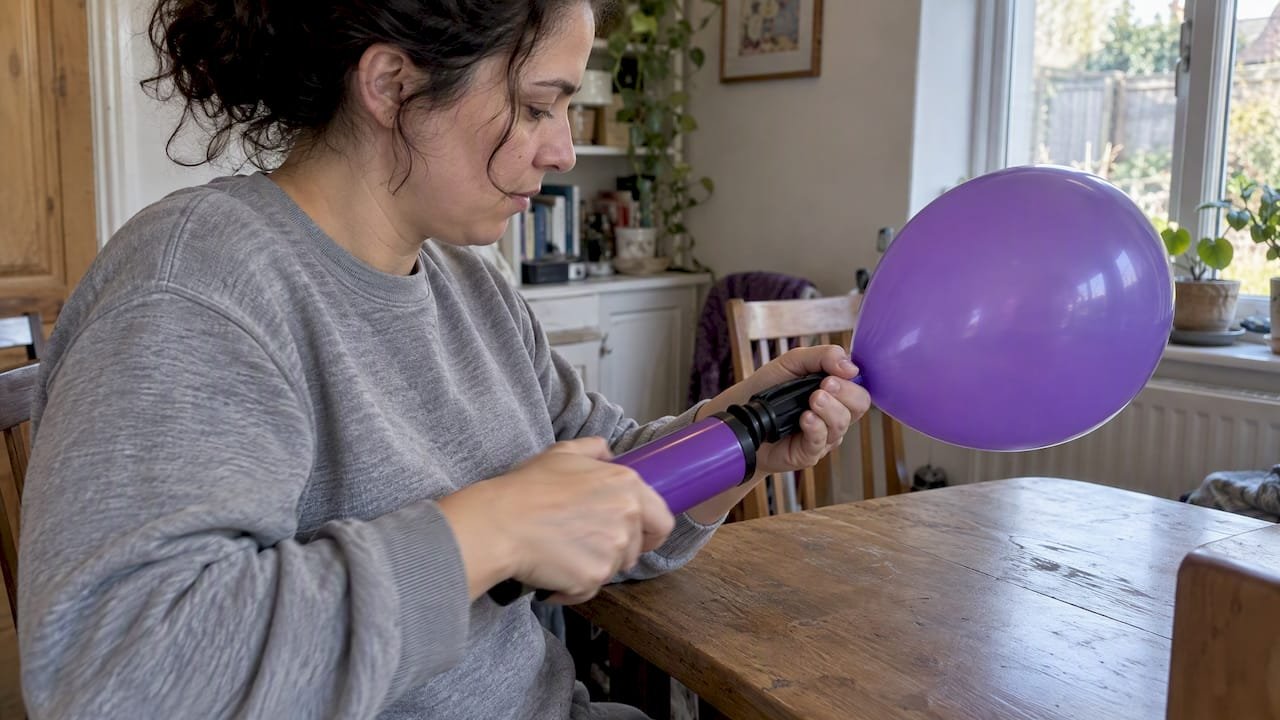
- A hand pump, so every balloon is the same firmness
- A bedsheet for a mini parachute game
- Washable, non-toxic markers or paint
- A cardboard tube or wooden spoon for batting
Then take a moment to childproof the space:
- Move breakables and sharp corners out of the way
- Clear toys and cords from the floor
- Pick a soft surface such as a rug or play mat
Use a large balloon and a pump. Bigger balloons float more slowly, which gives small hands time to react, and a pump gives you a consistent size every time.
3. How does balloon play help your toddler develop?
Balloons turn everyday movement into a game. Here is how our activities map to skills:
- Gross motor: keep-it-up and chase games get your toddler stretching, stepping and balancing.
- Hand-eye coordination: balloon bat and target tap teach tracking and timing.
- Bilateral coordination: passing and two-handed batting get both sides of the body working together.
- Sensory exploration: painting and rubbing introduce new textures and sounds.
- Imaginative play: drawing faces and making balloons “talk” sparks pretend play.
Move to Improve offers age-appropriate balloon game ideas, including “Chase it” and “Keepie Up” for children aged 3–5, with ways to make each game easier or harder.
Move to Improve suggests games like “Chase it” and “Keepie Up” for 3–5-year-olds, with built-in ways to raise or lower the challenge. That flexibility is why we scale each game to your child’s stage.
4. How do you keep balloon play safe?
Balloons are fun, but they need care. Here are the rules we follow:
- Stay within arm’s reach and watch closely at all times
- Remove any popped balloon pieces right away
- Never let a toddler chew or suck on a balloon, and don’t offer inflated balloons as teethers
- Offer a safe alternative for mouthing toddlers, such as a clean teething toy
If a balloon pops, stay calm. Pick up every fragment, check your child’s mouth and hands, offer a cuddle, then bin the pieces where little hands can’t reach them.
Pro Tip: Choose thicker, good-quality balloons and don’t overinflate them. Using a pump to reach a steady, medium firmness cuts down on sudden pops.
5. How can you adapt balloon games for every toddler?
Small tweaks make a big difference, so each activity can fit different ages and abilities.
- Slow things down: gentle taps, and plenty of pauses
- Use larger balloons, which move more slowly and are easier to track
- Let younger toddlers catch and bounce the balloon instead of batting it
- Offer seated versions of keep-it-up and pass the balloon, which also work well for wheelchair users (see our wheelchair-friendly activities)
- For children who mouth objects, lean on balloon-free sensory ideas and our taste-safe sensory play guide
- Bring in simple partner turns or “count the taps” scoring once your toddler is ready
For wider background on how sensory play supports development, this parent’s guide to sensory play is a helpful read. Sensory ideas like these pair well with our no-new-toys sensory play ideas.
6. What do we tell parents to try first?
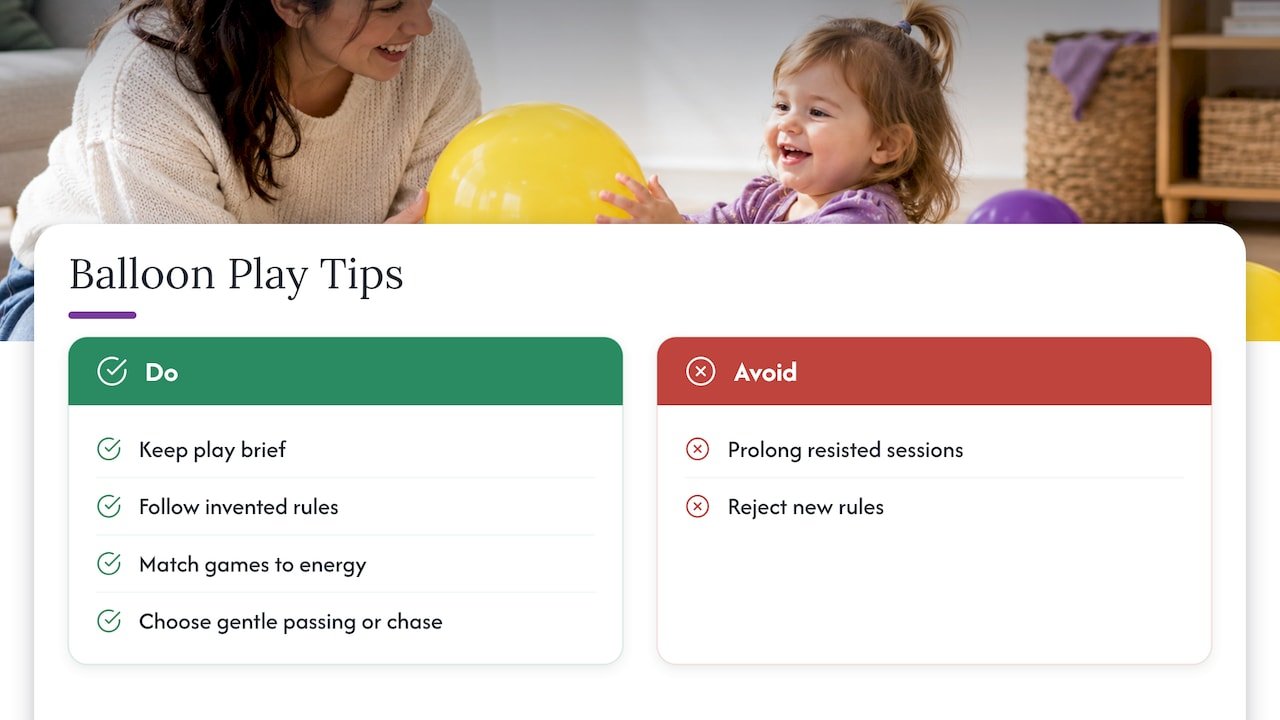
Keep it short. A brief burst of balloon play beats a long session your toddler resists. Follow their lead, too: if they invent a new rule, such as “only tap with elbows”, say yes. That is where the creativity lives.
Manage energy on purpose. When your toddler is wound up, pick a calm game like gentle passing. When they need to burn off steam, use an active burst of chase or keep-it-up. Either way, you can cut setup to almost nothing. We collect plenty of low-prep ideas like these in Mooshie Moments, so you’re never starting from a blank page.
— samit
7. How can Mooshie Moments help you find more quick activities?
If balloons are a hit, you’ll want more ideas that take minutes, not hours. Mooshie is our app for parents, and it suggests expert-reviewed activities based on your child’s age and how much time you have, all using things you already own.
- Quick, screen-free play built around household items
- Plain-language notes on why each activity helps development
- Ideas matched to your toddler’s age and attention span
![Mooshie app]
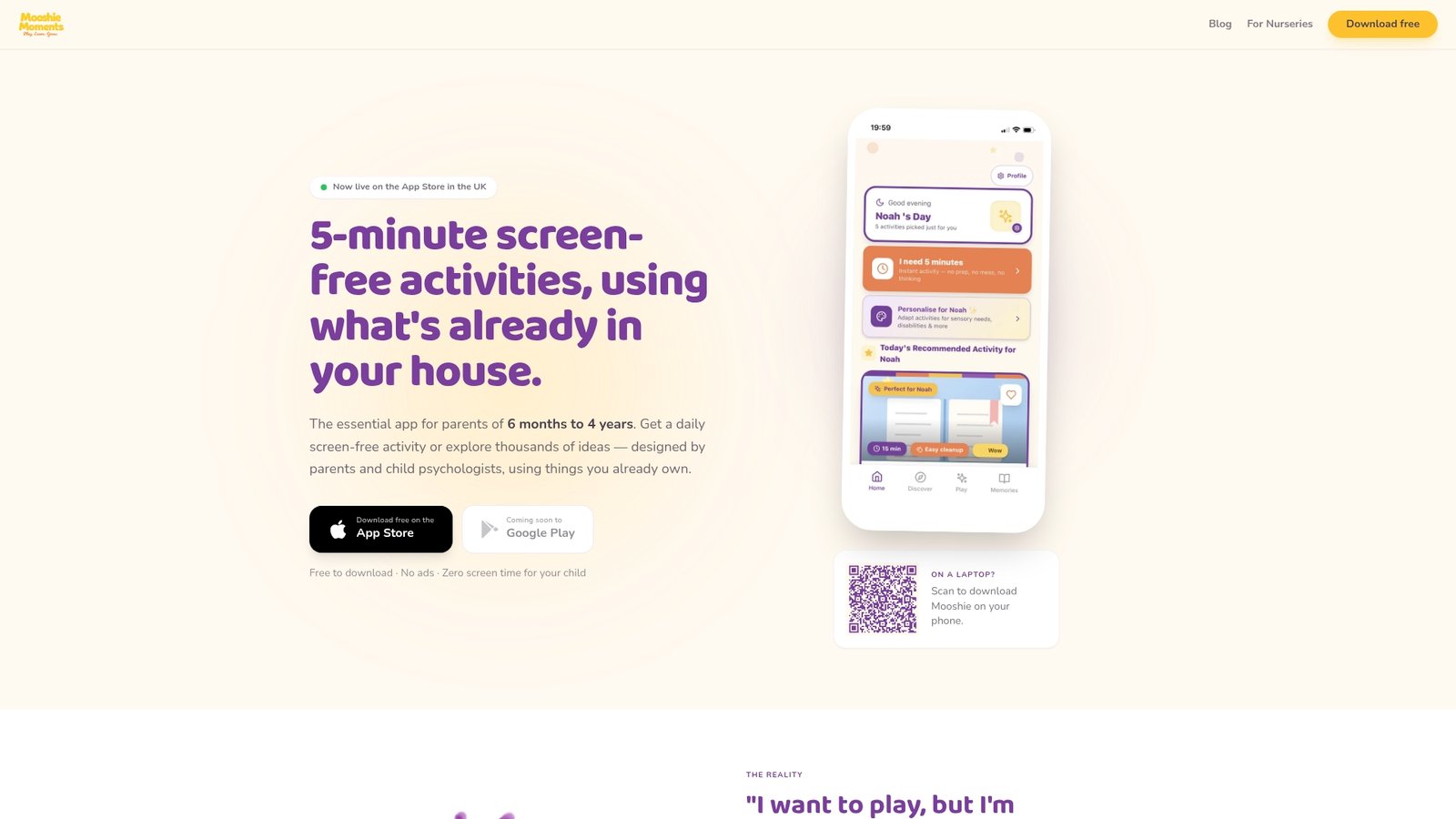
Download Mooshie to browse more, or explore our low-prep activities by skill area. Running a nursery or group? Our Partnership Pack gives you printable resources ready to use.
FAQ
What age can toddlers start playing with balloons?
Some toddlers may enjoy soft, supervised balloon play when they can sit or move confidently. Always stay close, keep sessions short, and choose gentler games for younger children.
Are balloons safe for toddlers?
Balloons are safe for play only with close adult supervision. Remove popped pieces immediately, and never let a toddler chew or suck on a balloon.
How long should a balloon game last?
Aim for a short burst. Brief play can hold a toddler’s attention, so switch to a new game when interest drops.
What if my toddler puts the balloon in their mouth?
Gently take it away and offer a safe alternative, like a clean teether or a sensory toy. For mouthers, use balloon-free play instead until they’ve moved past that stage.
Recommended
- UK Parents: Low Prep Toddler Activities by Skill Area in 2–15 Minutes
- 15 Low Prep Garden Activities for UK Toddlers, Rain or Shine
- Ten Minutes: Screen Free Outdoor Activities for UK Toddlers
- Montessori Toddler Activities for UK Homes: 16 Ideas, No Shopping
Want a new idea every day, matched to your child's age?
Mooshie Moments gives you simple, guided play ideas for ages 6 months to 4 years.
Download free on the App StoreMore like this
Cardboard Box Toddler Activities: 12 Ideas by Age
Twelve cardboard box activities for babies and toddlers, sorted by age, with safe prep tips and ideas for tubes too. No shopping,…
Best Boredom Busters for Toddlers: Easy, Screen-Free Ideas
Screen-free boredom busters for toddlers using things you already own: quick ideas by time and energy, set-up tips and honest advice for…
One Item, Quieter Waits: UK Toddler Activities for Waiting Rooms
Find quiet waiting room activities for UK toddlers that keep mess low, with games needing no props, wipeable toys, ideas by age,…