
5 Minute Daily Slot Builds Toddlers’ Hand Eye Coordination, EYFS
Posting, threading, pouring, ball play and playdough are the quickest, safest ways to build hand eye coordination in toddlers, and every one of them uses things you already own. These activities work because they combine grasping, visual tracking and bilateral hand use in short, repeatable bursts. The only real rule is supervision: small parts and mouthing toddlers don’t mix.
TL;DR:
- Most activities should use large, safe materials to prevent choking hazards and be supervised at all times, especially during pouring and tool use.
- Rotating no more than three coordination activities at once helps toddlers stay engaged and speeds up skill development.
- Activities like threading large pasta, pouring, rolling a ball, and using playdough build different fine motor skills and can be adapted as toddlers improve.
- Incorporating routines such as dressing, feeding, and tidying provides ongoing coordination practice without extra preparation.
- Short, routine-based play sessions using household items, linked to existing family activities, are most effective for developing hand-eye coordination.
Table of Contents
- 1. Posting, threading, and transfer games that build coordination
- 2. How to adapt activities as your toddler’s skills grow
- 3. Safety checklist and when to ask a health professional
- 4. Why household play builds real coordination
- 5. Fitting coordination play into real family life
- Try tailored activities with the Mooshie app
- FAQ
- Sources
1. Posting, threading, and transfer games that build coordination
These five activity groups cover the skills toddlers need most: grasping, transferring, visual targeting and tool control. None require special equipment, and most take only a few minutes to set up.
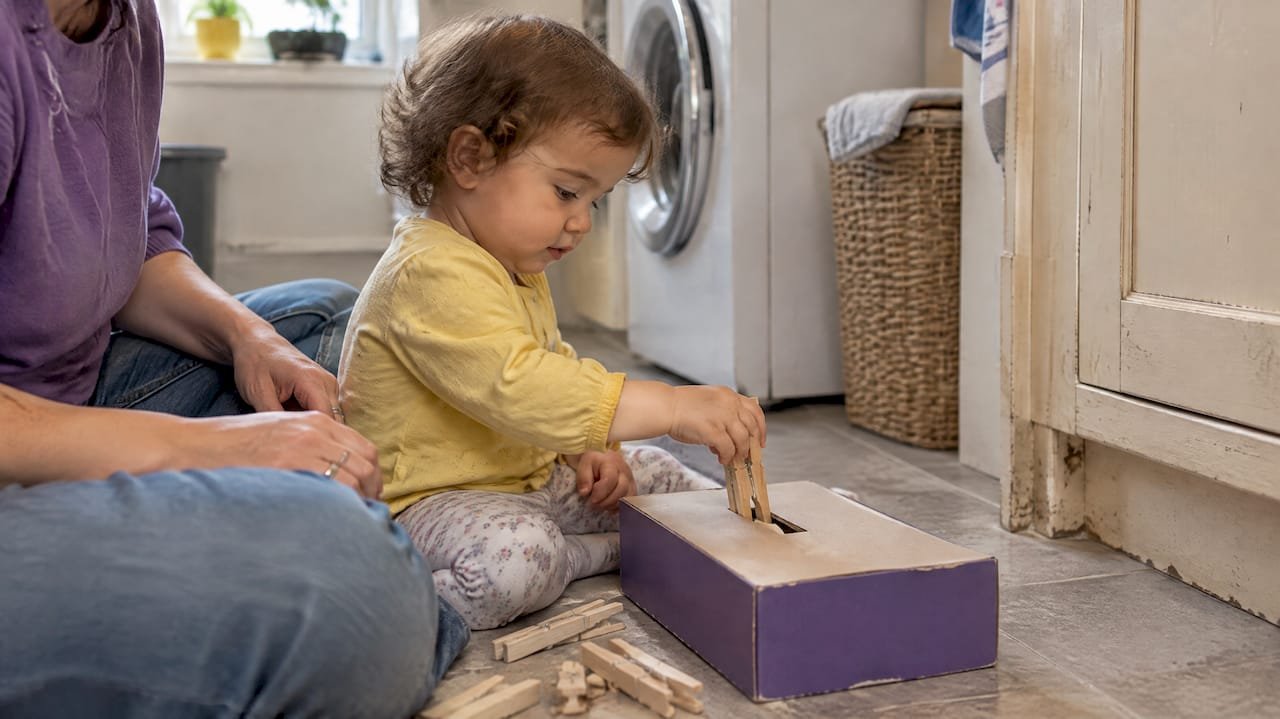
Reach and grasp, posting games. Cut a slot in a shoebox lid and let your toddler post clothespins, large buttons, or bottle caps through it. This practices the pincer grasp and teaches a child to line up an object with a target, which is the foundation of hand eye coordination. Start with pieces large enough to be safe for younger toddlers who still explore with their mouths, and only move to smaller pieces once posting feels easy. Healthier Together’s hand skills guidance lists posting into a box alongside stacking blocks and shape sorters as core early activities, all practicing grasping and visual targeting rather than being isolated drills.
Threading and lacing. Begin with something forgiving, like threading large pasta tubes onto a shoelace or a thick piece of string. As confidence grows, move to wooden beads, then smaller beads or dried penne. The WUTH NHS fine motor guidance recommends threading large pasta or beads as a core activity for toddlers aged one to three, noting that children progress at different rates and there’s no single deadline to hit.
Transfer, tongs, and pouring. Give your toddler a bowl of dried pasta or pom-poms and a second empty bowl, then let them transfer pieces by hand or with child-safe tongs. Pouring water or rice between two cups does the same job: it trains the eyes to track a moving target while the hands make small, controlled adjustments. Both activities also build bilateral coordination, since one hand usually steadies the container while the other pours or scoops.
- Start with a wide-mouthed jug and large pieces before moving to narrower containers or smaller objects
- Use a tray underneath to contain spills and reduce cleanup stress
- Let your toddler use cutlery during snack time as a built-in version of this same practice
Playdough and hand strength. Rolling, pinching, and squeezing playdough builds the hand strength that underpins every other fine motor task. Roll a ball, flatten it into a pancake, then pinch off small pieces: each step uses a different grip. A simple homemade playdough recipe using flour, salt, oil, and water gives you an activity that costs almost nothing and lasts for weeks in an airtight container.
Ball play and aiming. Rolling a soft ball back and forth trains visual tracking long before a toddler can catch reliably. Once rolling feels easy, try gentle target throwing: aim for a laundry basket or a chalk circle on the floor. Ball play might look like gross motor exercise, but it builds the core strength and body stability that make precise hand movements possible later.
Pro Tip: Rotate just three activities at a time instead of offering everything at once. Toddlers engage longer with fewer choices, and you’ll see the skill-building happen faster.
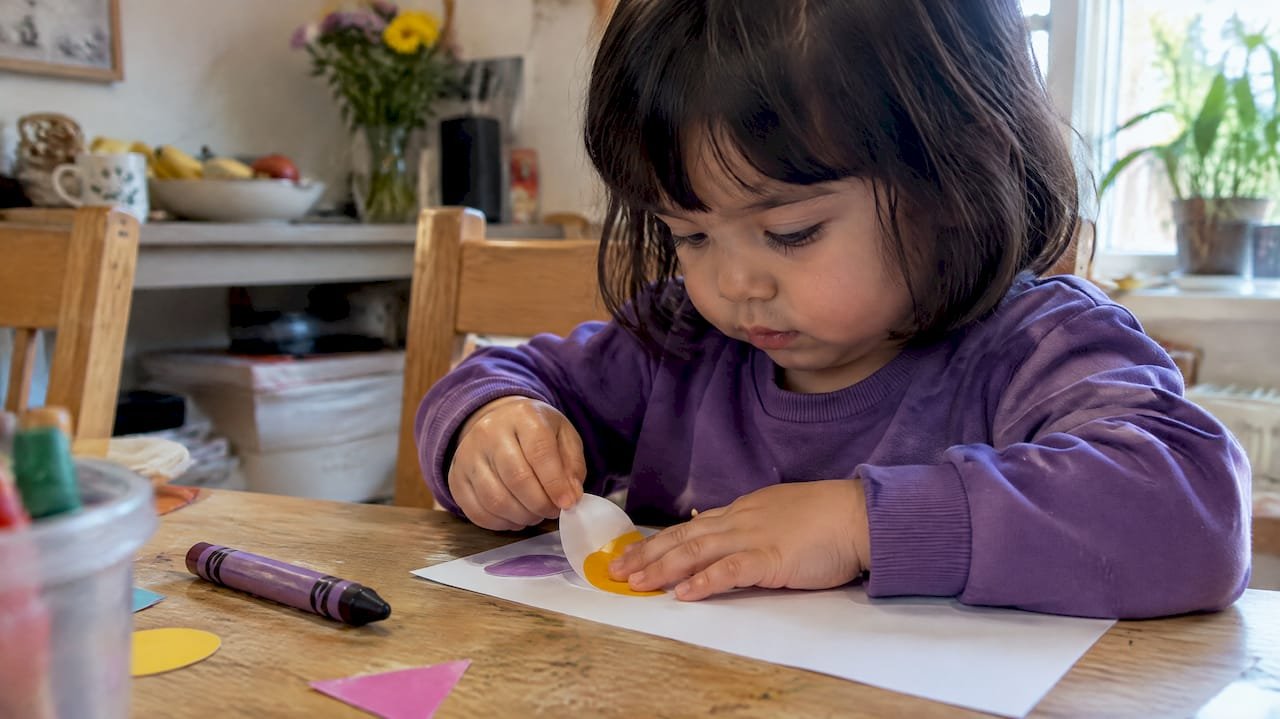
Arts and pencil control. Scribbling with a chunky crayon, pressing stickers onto paper, or peeling and sticking paper shapes all practice the tripod and pincer grips needed for later pencil control. Peel-and-stick collage work is especially good because peeling the backing off a sticker takes real finger strength and precision.
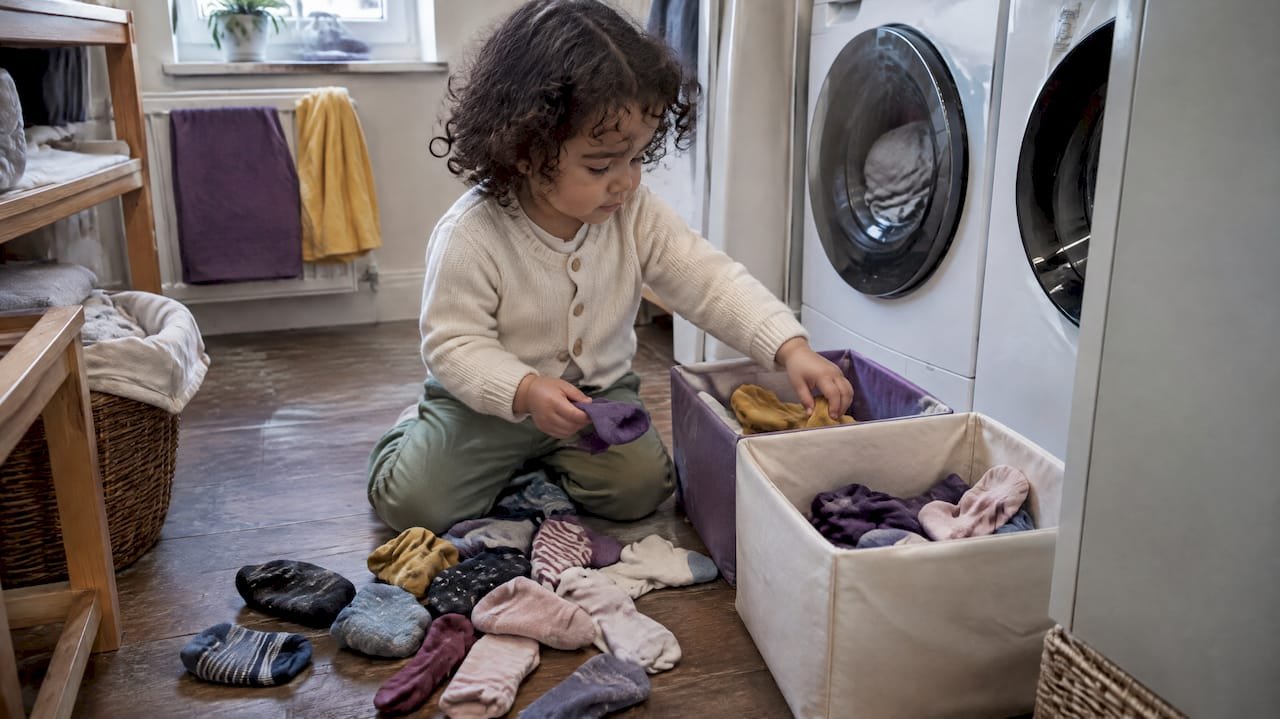
Everyday routines. Dressing, feeding, and tidying up are coordination practice in disguise. Let your toddler push their own buttons, scoop their own cereal, or sort laundry by color. None of this needs to be labeled as an activity. It just needs to happen regularly, and Surrey County Council’s early years guidance specifically names unpacking shopping, self-feeding, and dressing with buttons or zips as valid coordination practice.
2. How to adapt activities as your toddler’s skills grow
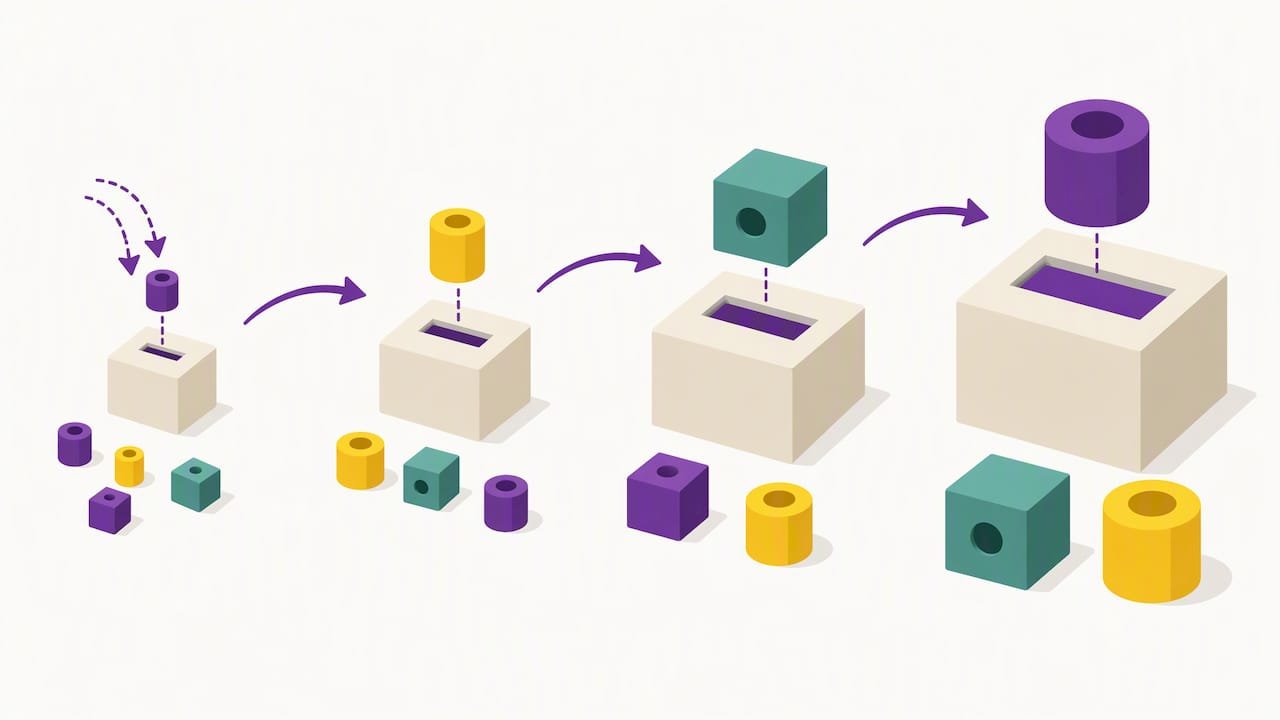
Every activity above can flex up or down depending on your toddler’s age and mood that day. The trick is knowing which direction to adjust, and doing it before frustration sets in.
- Start with larger, more forgiving materials: big pasta tubes, wide-necked jugs, chunky crayons.
- Once an activity feels easy for a week or two, shrink the materials slightly or add a small challenge, like a timer or a target to aim for.
- If your toddler struggles, don’t push through: enlarge the pieces again or simplify the task rather than insisting they finish.
- Model the action first, then offer brief hand-over-hand guidance only if needed, and let go as soon as they take over.
- Celebrate attempts, not just finished results: a lopsided tower or a half-threaded string still means the hands did real work.
A concrete example: threading starts with spaghetti tubes on a shoelace, moves to large dried pasta once that’s easy, then to wooden beads, and finally to small plastic beads for toddlers closer to three. Each step takes weeks, not days, and that’s normal.
NHS Borders occupational-therapy guidance makes the adult’s role clear: demonstrate the task, encourage attempts, and adapt rather than test. If threading or drawing turns into a meltdown, the fix usually isn’t more practice. It’s bigger pieces, a simpler version of the task, or a few seconds of hand-over-hand support to get the motion started.
Pro Tip: Keep a small box of “step down” materials, like oversized beads or a chunky crayon, on hand so you can simplify instantly when an activity isn’t landing that day.
3. Safety checklist and when to ask a health professional
A few habits keep hand eye coordination play safe without slowing it down.
- Never leave small objects within reach of a toddler who still mouths things; posting and threading pieces should be large enough to fail a choke-hazard test.
- Supervise pouring, ball play, and tool use at all times, even when an activity feels routine.
- Choose washable, non-toxic materials for playdough and art activities, and avoid loose items like dried beans for toddlers who explore with their mouths.
- Swap small parts for taste-safe sensory alternatives if your toddler is still in the mouthing stage.
Most toddlers develop these skills at their own pace, but a few signs are worth mentioning to a health visitor, GP, or occupational therapist: not using both hands by around 18 months, not passing toys between hands by around 8 months, or any concern about vision. Oxford Health NHS guidance is clear that ongoing concerns deserve a professional conversation rather than reassurance from an activity list.
Everyday movement counts too. Surrey County Council’s guidance describes under-five physical activity recommendations as several hours of physical activity spread across the day, and notes that every movement, from pouring juice to chasing a ball in the garden, counts toward that total.
4. Why household play builds real coordination
None of this is guesswork. Development Matters guidance from the Department for Education links repeated, varied play opportunities to stronger core strength, coordination, and fine motor control, which in turn support early literacy and independence. The logic runs from the ground up: a toddler needs core stability before their hands can make precise, controlled movements, which is part of why ball play and floor-based games belong in a fine motor plan alongside threading and posting.
NHS occupational-therapy materials add a practical layer on top of that theory.
Demonstrate, encourage, and adapt the task. Enlarge materials, simplify the activity, or offer brief hand-over-hand guidance if your toddler finds threading or drawing frustrating.
That’s the core message from NHS Borders’ occupational-therapy guidance on developing grasps, and it reframes the adult’s job: not to test performance, but to show the movement, step back, and adjust the materials when needed.
Local early years guidance closes the loop by treating ordinary routines as legitimate practice rather than a lesser substitute for structured activities. Pouring cereal, zipping a coat, or sorting socks all count, which takes the pressure off needing a dedicated “activity” every time.
5. Fitting coordination play into real family life
We know the hardest part isn’t knowing which activities work. It’s finding five spare minutes between snack time, nap time, and the next meltdown.
One simple fix: pick a single five-minute slot each day and attach it to something that already happens, like unpacking the shopping or waiting for toast. Tidy-up time becomes a transfer game. Snack prep becomes a pouring exercise. The activity doesn’t need its own slot on the calendar if it rides along with a routine you’re already doing.
We designed our approach around the idea of offering activities tailored to your toddler’s age and the time you have available, using everyday materials like those described above.
Try tailored activities with the Mooshie app
The Mooshie app aims to help you quickly find suitable activities by asking for your child’s age and available time, then suggesting screen-free options using common household items.

Every suggestion comes with a plain-language explanation of what it builds, so you’re never just following instructions blindly. A few ways we can fit into what you’ve already started here:
- Age-specific activity sets, including our 2-year-old activity ideas if your toddler has graduated past the basics
- Quick five-minute options for days when that’s all you’ve got
- No purchases required: every suggestion works with household items you already own
If you run a nursery or early years setting, our Partnership Pack offers ready-made home-learning resources for the families you work with. Download Mooshie to try it for yourself.
FAQ
What games help toddlers improve hand eye coordination?
Posting games, threading large beads or pasta, pouring between cups, rolling a ball, and playdough all practice hand eye coordination in different ways. Healthier Together’s guidance groups these together because they all combine grasping with visual targeting. Rotate a handful at a time rather than offering every option at once.
What activities build fine motor skills in young children?
Threading, playdough, pouring, and pencil or crayon scribbling all build fine motor skills by practicing pincer and tripod grips. NHS fine motor development guidance recommends starting with large, forgiving materials like big pasta tubes before moving to smaller pieces. Everyday tasks like self-feeding and buttoning a coat practice the same skills without feeling like a dedicated exercise.
What hand eye coordination activities suit a 1-year-old?
At around one year, stacking blocks, posting large objects into a box, and rolling a soft ball back and forth are good starting points. These activities match the grasping and visual tracking skills a 1-year-old is still developing, and NHS guidance notes that pacing varies a lot between children at this age. Keep pieces large and supervise closely, since mouthing objects is still common at this stage.
How can I help my toddler improve hand eye coordination at home?
Offer a short burst of posting, pouring, or ball play each day, and attach it to a routine you already do, like unpacking groceries or tidying toys. Demonstrate the action first, then let your toddler try it themselves, adjusting the materials if they get frustrated. NHS occupational-therapy guidance recommends enlarging materials or offering brief hand-over-hand support rather than pushing through frustration.
Sources
- Hand skills :: Healthier Together
- Fine motor development ideas for toddlers (1–3 years) — WUTH NHS PDF
- Developing grasps — NHS Borders occupational-therapy guidance
- Development Matters — DfE (2023)
Recommended
- Research Backed Nursery Activity Plans: 3 Daily 5 Minute Slots (UK)
- Junk Modelling for Toddlers: Easy EYFS-Aligned Activities
Want a new idea every day, matched to your child's age?
Mooshie Moments gives you simple, guided play ideas for ages 6 months to 4 years.
Download free on the App StoreMore like this
Babysitting Toddlers: 12 Low Prep Ideas and Why They Help
Explore 12 low prep toddler activities for babysitters, with developmental benefits, age adaptations, UK safety advice, and optional activity coaching.
10 EYFS Backed Sock Games for Toddlers Under Five Minutes
Ten EYFS aligned sock games to start in under five minutes, each with a one line developmental benefit, simple adaptations, and two…
Busy Parents: 12 No Prep Shopping Activities for Toddlers
Busy parents: keep toddlers learning and calm at the store with 12 no prep, screen free activities that take under five minutes…