Autism Activities for Toddlers: Calm, Predictable Play Ideas

ADDITIONAL NEEDS · AGES 1 TO 4

Autism Activities for Toddlers: Calm, Predictable Play Ideas

Autism-friendly activities for toddlers aged 1 to 4, built on routine, low demand and sensory comfort. Easy ideas at home with the exact words to say.

  • Free to download
  • No account needed
  • No screen time for your child
QR code to download Mooshie MomentsOn a laptop?
Scan to get Mooshie on your iPhone.
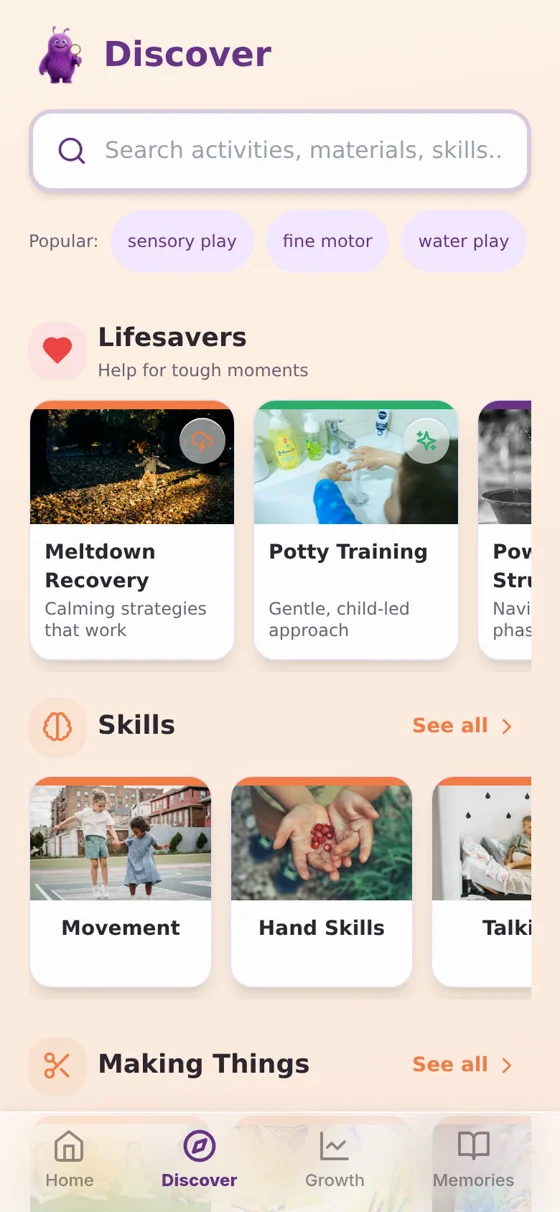
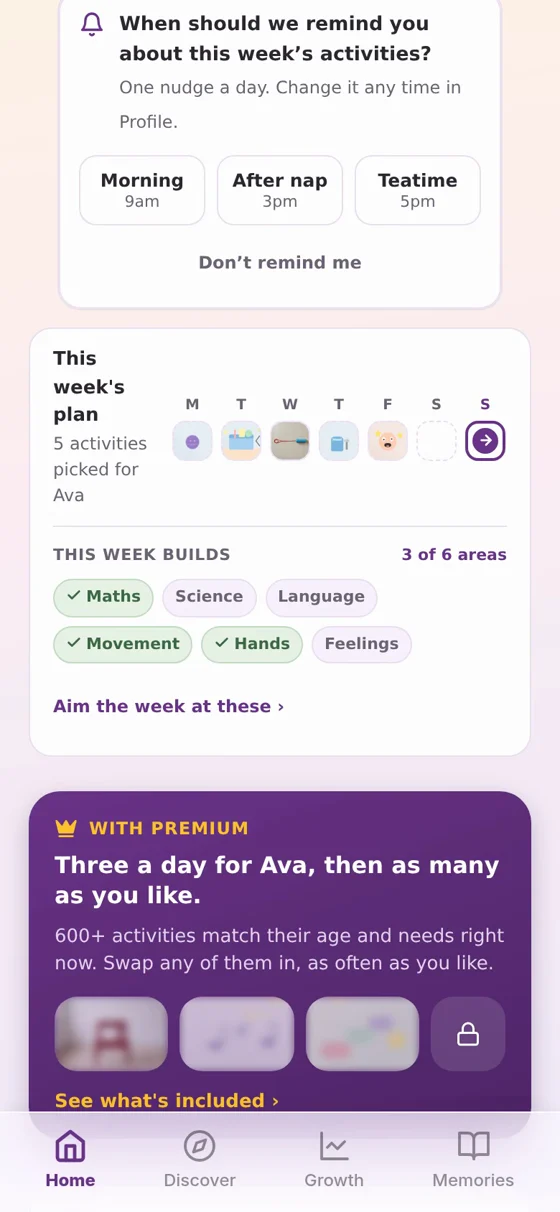
Mooshie Discover screen with Lifesavers for meltdowns and potty trainingThis week's plan showing five activities and the areas they build
5,918activities, adapted to your child
13additional needs you can add
Filteredwhat won’t suit them is left out
0child details uploaded, ever

Autism activities for toddlers work best when they follow your child’s lead, not a checklist. Lining things up, repeating the same game, needing it done the same way every time: none of that is a problem to fix. It is how many autistic children make sense of the world, and it is a brilliant place to start playing together.

Below are nine autism-friendly activities from the Mooshie Moments app for children aged 1 to 4. Each one uses things you already have at home, takes about 10 minutes, and comes with the exact words to say. They are built around predictability, low demand and sensory comfort, so your child can join in on their own terms.

What makes an activity autism-friendly?

There is no single “autism activity”. Every autistic child is different. But the activities that tend to land well share a few things:

The same every time.

Same words, same order, same speed. Repetition is not boring for your child. It is what makes play feel safe.

A clear start and a clear finish.

“First, then, done” tells your child exactly what is coming, so transitions stop being a battle.

No pressure to talk, look or share.

Eye contact, turn-taking and “say please” can wait. Being together is the win.

Sensory input they can control.

Squeezing, pressing, rocking and pouring can help a busy nervous system settle. Loud surprises and sudden mess often do the opposite.

Their interests at the centre.

Obsessed with trains, the letter T or spinning things? Build the game around that. Special interests are the hook, not the distraction.

Autism-friendly activities for 1 to 2 year olds

1 to 210 minutes

1. First, Then, Done dumping

Toddlers love to tip things out. This game uses that instinct to teach what comes next, which makes everyday transitions much easier.

You’ll need: a plastic cup and some blocks or balls

How to play
  1. Say “First, in the cup” and drop one block in.
  2. Say “Then, out it goes” and tip the blocks onto the floor together.
  3. Say “Done! All out.” Pause for two seconds.
  4. Ask “Again?” and repeat the exact same sequence.
Say this: “First, in!” · “Then, out!” · “Done, all out!” Celebrate any word they echo back. “Out” counts.
1 to 210 minutes

2. Stacking and knocking down

Build a small tower, then let your child knock it down. Build it again the same way. The predictable crash is the reward, and every rebuild is a lesson in cause and effect. If loud crashes upset your child, use fabric blocks or paper cups.

You’ll need: soft blocks or plastic cups

Autism-friendly activities for 2 to 3 year olds

2 to 310 minutes

3. Line it up

Lining up is a very common way for autistic toddlers to organise their world. Instead of redirecting it, join in. You are telling your child that their way of thinking is okay.

You’ll need: blocks, cars or any small toys

How to play
  1. Put one block down and say “Line.”
  2. Put another next to it: “Another line.”
  3. Let them take over. Say “You’re making a line.”
  4. Sit beside them and watch. Don’t rearrange anything.
Say this: “Line, line, line!” · “So long!” · “You did it!”
2 to 310 minutes

4. Deep pressure squeeze dough

Squeezing gives the body deep pressure input, which many autistic children find calming. Offer it regularly, not only after a meltdown, so their body learns what calm feels like.

You’ll need: soft playdough or homemade dough

How to play
  1. Hand them the dough and say “Squeeze it.”
  2. Narrate gently: “Squeeze, squeeze, squeeze. Feels good.”
  3. If they hand it back, say “Your turn again” and pass it back.
  4. No shapes, no goal. If they break it into pieces or line them up, that’s perfect.
2 to 310 minutes

5. Predictable shaker

Unexpected loud noises can overwhelm autistic toddlers. A sound that always arrives the same way helps the nervous system relax and predict.

You’ll need: a plastic bottle with a screw cap, dried beans, strong glue and tape

How to play
  1. Half-fill the bottle with beans. Glue and tape the cap on tightly, and check nothing escapes.
  2. Shake it slowly three times: “Shake, shake, shake.”
  3. Stop completely: “Quiet now.” Leave a real pause.
  4. Repeat the same pattern three or four times, then offer them a turn.
2 to 310 minutes

6. First, Then, Done ball roll

A simple roll back and forth becomes a gentle way to practise turn-taking without social pressure. “First I roll. Then you roll. Done!” Keep every round identical: same words, same speed, same order. Then ask “Again?”

You’ll need: a soft ball

Autism-friendly activities for 3 to 4 year olds

3 to 410 minutes

7. Echo game

Many autistic children repeat words and phrases they have heard (echolalia). It is a real part of learning language, not meaningless copying. This game makes echoing the whole point.

You’ll need: just your voice

How to play
  1. Say a short, fun phrase: “Choo choo train!”
  2. Wait and listen for them to echo it, or anything close.
  3. Celebrate: “You said it! Choo choo!”
  4. Try a new one: “Spin, spin, spin!” Let them choose the next phrase if they want to.
3 to 410 minutes

8. Special interest letter lines

If your child loves a particular letter, number or object, go deeper rather than broader. Lay out five copies of their favourite letter: “All the T’s!” Line them up, count them together (“One T, two T, three T…”) and let them re-arrange as often as they like. Early literacy and counting, built on something they already love.

You’ll need: magnetic letters or letter cards

3 to 410 minutes

9. Side-by-side play

Many autistic children prefer playing near someone rather than with them. Sit beside your child, not opposite, and play with the same toys on your own. Talk about what you are doing (“My car is going fast”), not what they are doing. No turn-taking, no eye contact expected. Real connection often happens quietly, side by side.

You’ll need: their favourite toys

All 5,918 activities adapt to your child.

Add their needs once. Mooshie leaves out what won’t work and adds tips where they help.

Tips that make any activity work better

Set up before you invite them in.

Having everything ready removes a waiting moment that can tip into frustration.

Offer two choices, not open questions.

“Red cup or blue cup?” gives control without overwhelm.

Introduce one sense at a time.

Water, music and mess all at once is a lot. Add one thing, then see.

Let them stay on the part they love.

If they only want to pour, pour. Deep focus is a strength.

Stop while it’s still good.

Five happy minutes beats fifteen that end in a meltdown.

LOVED BY FAMILIES

Parents and experts on Mooshie

“I used to spend 30 minutes looking for an activity on Pinterest, get overwhelmed, and just turn on the TV. Mooshie takes 5 seconds.”
Sarah J.Mum of a 2-year-old
“Finally, an app that tells me to put my phone away. The activities are actually doable with stuff I have in my junk drawer.”
Mark D.Dad of two
“As a pediatric OT, I love that these activities build core developmental skills without feeling like ‘homework’ for parents.”
Dr Emily R.Paediatric occupational therapist
HOW MOOSHIE HELPS

How Mooshie adapts activities for autistic children

When you set up Mooshie, you can tell it about any additional needs, including autism. The app then:

  • Favours calm, structured, predictable activities and steers away from the sensory overload of water-plus-mess or high-energy chaos.
  • Adds advice for your child to each activity, such as when to offer a visual timer or how to handle a transition. Most activities come with an autism note: two tips picked for that activity, plus a line of coaching.
  • Every one of the 5,918 activities is open to you, adjusted for your child rather than kept in a separate autism section.
  • Keeps it private. Your child’s details, including any additional needs, stay on your phone. They are never uploaded.

The phone is for the grown-up, and only for a moment. You check the idea in 30 seconds, put the phone away and play.

Questions parents ask

Are these activities suitable if my child doesn’t have a diagnosis?

Yes. Every activity here is safe and useful for any toddler. Many parents use them while waiting for an assessment, or simply because their child loves routine and repetition.

My child doesn’t talk yet. Will these still work?

Yes. None of these activities need your child to speak. Pointing, reaching, handing you something, a sound or a look all count as communication, so respond to them warmly.

Should I stop my child lining things up?

There is usually no need. Lining up is often calming and a way of organising the world. Joining in, as in the “Line it up” activity above, is a lovely way to connect.

How long should an activity last?

Around 10 minutes is plenty. Follow your child’s cues. If they walk away, that’s okay. Try again another day, the same way.

Is Mooshie a therapy app?

No. Mooshie helps parents play; it isn’t a clinical tool. It doesn’t diagnose or treat anything and doesn’t replace speech and language therapy, occupational therapy or advice from your health visitor or GP. If you have concerns about your child’s development, please speak to them.

Mooshie is a play app, not medical advice. If you’re worried about your child’s development, speak to your health visitor or GP.

Make memories. Build skills. Play together.

Your first moment is ready as soon as you tell us their age.

Mooshie MomentsFree on iPhone
Get it free