Adapted Activities for Toddlers with Additional Needs (SEND)

ADDITIONAL NEEDS · AGES 2 TO 4

Adapted Activities for Toddlers with Additional Needs (SEND)

Inclusive, adapted activities for toddlers with SEND: wheelchair users, Deaf, blind, Down syndrome, cerebral palsy and more. Easy ideas using things at home.

  • Free to download
  • No account needed
  • No screen time for your child
QR code to download Mooshie MomentsOn a laptop?
Scan to get Mooshie on your iPhone.
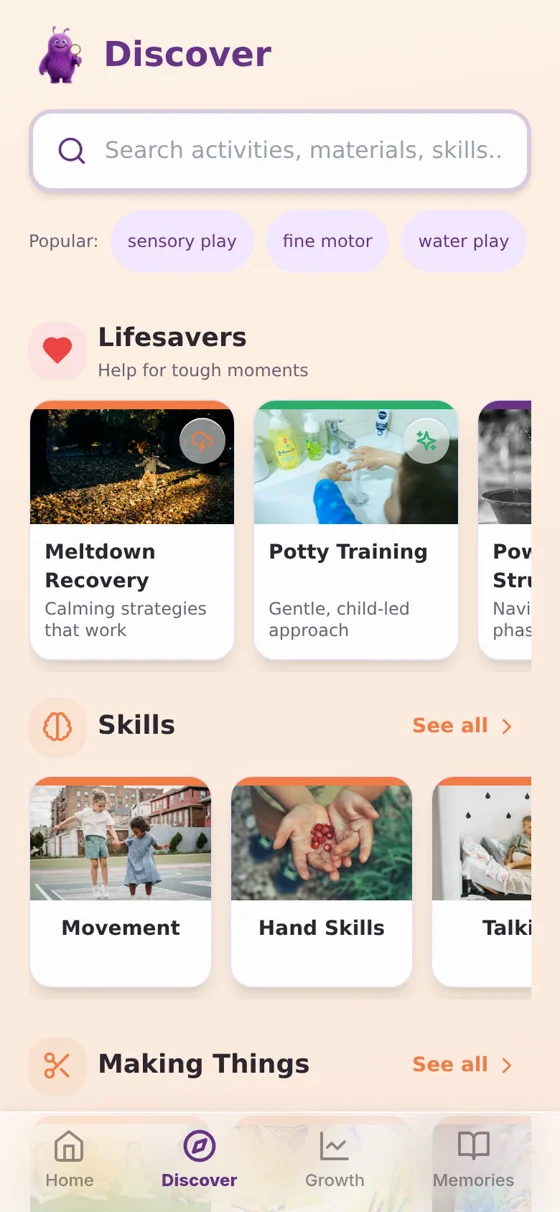
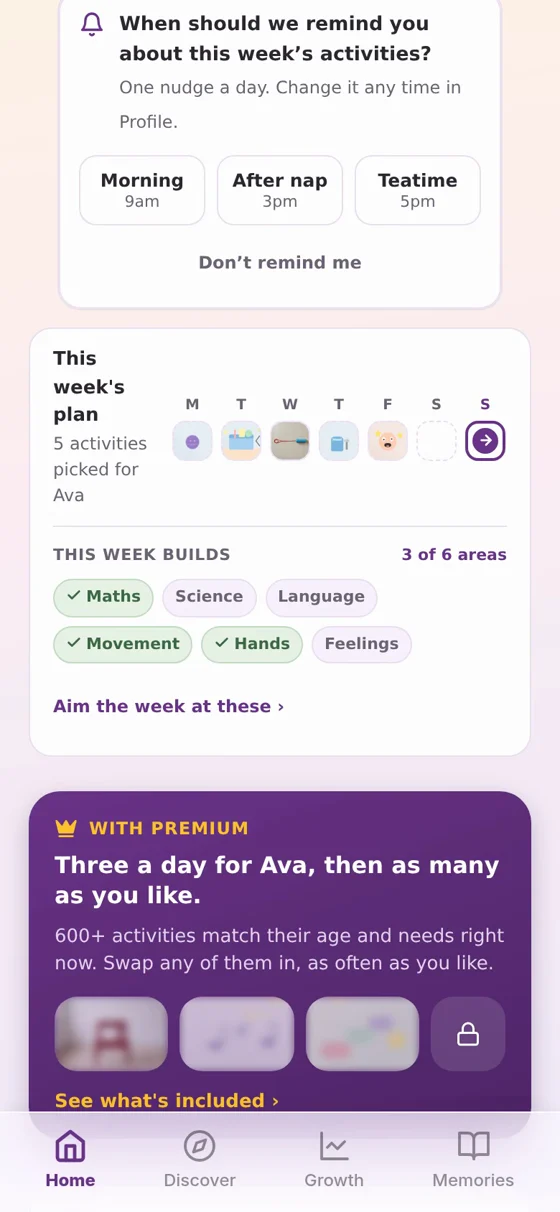
Mooshie Discover screen with Lifesavers for meltdowns and potty trainingThis week's plan showing five activities and the areas they build
5,918activities, adapted to your child
13additional needs you can add
Filteredwhat won’t suit them is left out
0child details uploaded, ever

Every child can play. Sometimes the activity just needs adapting. Whether your little one uses a wheelchair, is Deaf or has hearing loss, is blind or partially sighted, has Down syndrome, cerebral palsy, a global developmental delay or another additional need, the right activity is out there. It’s usually a familiar game, set up a little differently.

This guide brings together adapted activities for toddlers with special educational needs and disabilities (SEND), taken from the Mooshie Moments app. They are for children aged 1 to 4, use everyday things from around the house, and focus on what your child can do.

Four principles behind every adapted activity

Adapt, don’t eliminate.

A child in a wheelchair can still paint, build, experiment and make music. Bring the activity to them.

Effort over perfection.

A shaky line, a lifted arm, a sound instead of a word: all of it counts, so celebrate it.

Short and often beats long and rare.

Three or four goes, then rest. Stamina and skills build through repetition across days.

Hand-over-hand is teaching, not taking over.

Guide gently at first, then loosen your grip as they gain confidence.

Seated and wheelchair-friendly activities

Most toddler activities assume a child can stand, crawl or run. These don’t. Everything happens on a lap tray or table at the right height, with materials brought within easy reach.

3 to 410 minutes

Tray-top marble run

Your child designs it and watches it work. That “I made this happen” feeling builds real confidence.

You’ll need: cardboard tubes cut in half lengthways, masking tape, a large marble or ball, a small cup, a lap tray

How to play
  1. Make two or three half-tube channels.
  2. Ask “Where should this one go?” and let your child point to direct you.
  3. Tape each channel where they choose, sloping downwards, with the cup at the bottom.
  4. Release the marble together. “Faster or slower next time?” Adjust and go again.
2 to 410 minutes

Tray finger painting

Put a dollop of paint on the tray: “It’s all yours. What will you make?” Let them swirl, mix and explore. Name what you see without judging it: “Red swirls! Look at those colours!” There’s no right result, just expression.

You’ll need: washable paint and a plastic-lined tray or paper

Tip: turn any movement game into a seated version using arms, hands and head. Clapping, waving scarves and drumming on a tray all work.

Activities for Deaf toddlers and children with hearing loss

Lean into sight, touch and vibration. Get their visual attention before you communicate, speak face to face, and use signs if your family is learning them.

2 to 310 minutes

Stomp and wave dance

Rhythm doesn’t have to be heard. Your child feels the beat through their whole body. Drumming and percussion are great for the same reason.

You’ll need: a bright scarf and a wooden or hard floor

How to play
  1. Face your child, hold the scarf at eye level, stomp and wave it.
  2. Put their hand on the floor as you stomp: “Feel that? Vibration!”
  3. Give them the scarf. You stomp while they wave and feel the floor shake.
  4. Swap. Then go faster, then slower.
2 to 310 minutes

Face copy game

Make a big surprised face, count to two, then hide it behind your hands. “Now you make it.” Then drop your hands: “Do they match?” Swap over. Emotions live in faces, and this builds the facial expression skills that sign language relies on.

Activities for blind and partially sighted toddlers

Touch and hearing lead the way. Narrate what’s happening, describe textures and temperatures, and guide their hands gently to explore.

2 to 310 minutes

Touch and tell texture box

You’ll need: a small box with soft fabric, a bumpy ball, a smooth lid and some crinkly paper

How to play
  1. Sit beside your child. Put an item in their hand: “Feel this. It’s soft.”
  2. Let them squeeze and explore. “You found soft.”
  3. Swap for the next item: “Now bumpy. Feel the bumps.”
  4. End with “Which one?” and let them reach in for their favourite.
2 to 310 minutes

Hand-over-hand action songs

Sing a familiar song. Place your hands over theirs to clap on the beat, then tap your chests together. Repeat two or three times, loosening your hands a little more each round until they lead the actions.

Activities for toddlers with Down syndrome

Children with Down syndrome often love social connection, songs and rhythm, and learn well through repetition. Keep instructions simple and concrete, and pair words with signs.

2 to 310 minutes

Mirror copy game

Sit in front of the mirror together. Wave slowly, hold it for three seconds and say “Wave! Hi there!”, adding the sign. Wait for them to copy. Any arm lift or reach counts. After three or four waves, rest together for 30 seconds, then try touching your nose or tapping your chest. Seeing themselves copy you helps build coordination at their own pace.

You’ll need: a mirror at floor height

2 to 310 minutes

Chunky crayon scribble

Place a chunky crayon in their palm. A whole-fist grip is perfectly fine. Make the first mark together, then let go. Scribbles, dots and lines are all success: “You drew! Blue lines!”

You’ll need: a thick crayon and large paper

Activities for children with cerebral palsy

Choose light, easy-grip objects, let gravity do some of the work, and keep sessions short so fatigue doesn’t take over.

2 to 310 minutes

One-handed tea party

Set everything out on a lap tray. Show them how to tip the jug one-handed until water flows. Then it’s their turn: “You filled it!” Pretend teddy sips the tea: “Mmm! What does Bunny say?” Real fine and gross motor practice, wrapped up in pretend play.

You’ll need: a lightweight jug half-filled with water, two plastic cups, a teddy and a plate

2 to 310 minutes

Chunky knob puzzle

Guide their hand to the knob and move the piece slowly toward the slot. It drops in, and gravity does the precise part. “In! You did it!” Three or four pieces, then rest.

You’ll need: a wooden puzzle with large knobs

Global developmental delay, speech delay, ADHD and sensory processing

Global developmental delay:

break activities into small steps, repeat the same game over several days, and celebrate participation over outcome.

Speech and language delay:

label what your child is doing, pause and wait for any response, and model words without correcting. See our speech and language activities.

ADHD:

short bursts of five to ten minutes with a clear start and end, movement breaks, and a small goal (“paint one thing”).

Sensory processing differences:

introduce one sensory element at a time, contain mess on a tray, and offer deep pressure (squeezing dough, firm hugs) to help regulate.

Autism:

see our full guide to autism-friendly activities for toddlers.

All 5,918 activities adapt to your child.

Add their needs once. Mooshie leaves out what won’t work and adds tips where they help.

LOVED BY FAMILIES

Parents and experts on Mooshie

“I used to spend 30 minutes looking for an activity on Pinterest, get overwhelmed, and just turn on the TV. Mooshie takes 5 seconds.”
Sarah J.Mum of a 2-year-old
“Finally, an app that tells me to put my phone away. The activities are actually doable with stuff I have in my junk drawer.”
Mark D.Dad of two
“As a pediatric OT, I love that these activities build core developmental skills without feeling like ‘homework’ for parents.”
Dr Emily R.Paediatric occupational therapist
HOW MOOSHIE HELPS

How Mooshie adapts activities for additional needs

When you set up Mooshie, you can add one or more additional needs, including autism, ADHD, Down syndrome, speech and language delay, hearing impairment, vision impairment, sensory processing differences, motor delay, wheelchair use, walking aids, cerebral palsy and global developmental delay. Then:

  • Activities your child can’t do are filtered out. A wheelchair user won’t be offered a hopping game, and a Deaf child won’t be offered a guess-the-sound game.
  • Adaptation notes are picked for each activity. For autism, ADHD and sensory processing, most activities come with a note. For physical needs like wheelchair use, a note appears when the activity involves movement or reaching.
  • All 5,918 activities adapt to your child. There is no separate special needs section: the whole library is filtered and adjusted for them.
  • Your child’s needs never leave your phone. They’re stored on your device and are never uploaded.

Questions parents ask

What does SEND mean?

SEND stands for special educational needs and disabilities. It’s the term used in UK nurseries and schools for children who need extra support to learn and play.

Do I need a diagnosis to use adapted activities?

No. If an adaptation helps your child join in, use it. Many families start adapting play long before any assessment.

Can nurseries and childminders use these activities?

Yes. They work for early years settings as well as at home. Mooshie also offers a free partnership for nurseries and daycare.

Is Mooshie a therapy or medical app?

No. Mooshie is a play app for parents and carers. It doesn’t diagnose or treat any condition and doesn’t replace advice from your child’s therapists, health visitor or GP.

Mooshie is a play app, not medical advice. If you’re worried about your child’s development, speak to your health visitor or GP.

Make memories. Build skills. Play together.

Your first moment is ready as soon as you tell us their age.

Mooshie MomentsFree on iPhone
Get it free