Speech and Language Activities to Help Your Toddler Talk

SKILLS AND LEARNING · 6 MONTHS TO 4 YEARS

Speech and Language Activities to Help Your Toddler Talk

Simple speech and language activities for babies and toddlers aged 6 months to 4 years. Play ideas that encourage talking, with the exact words to say.

  • Free to download
  • No account needed
  • No screen time for your child
QR code to download Mooshie MomentsOn a laptop?
Scan to get Mooshie on your iPhone.
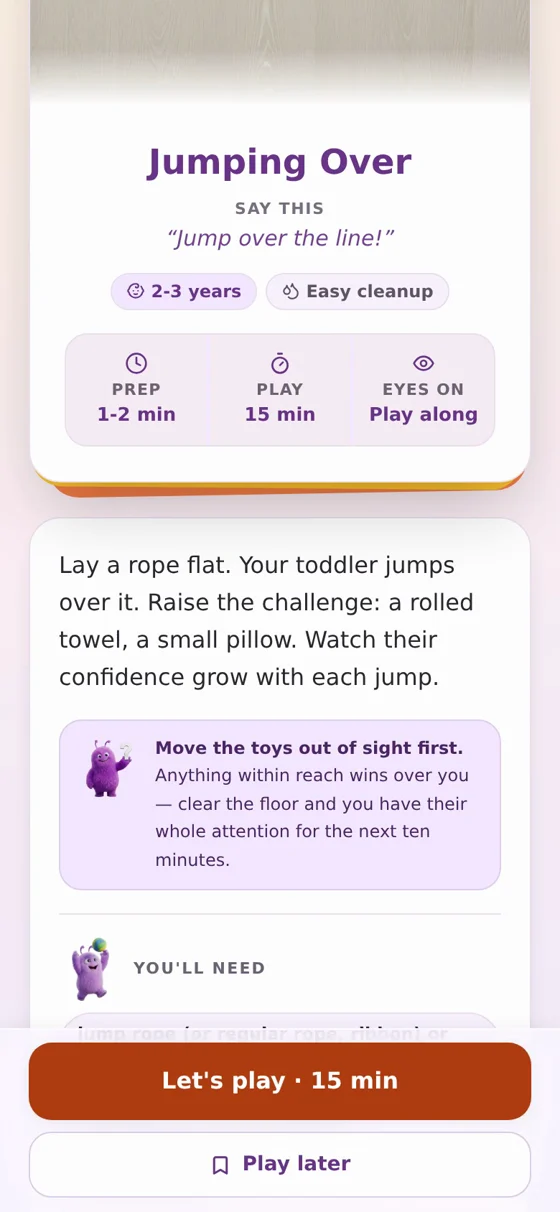
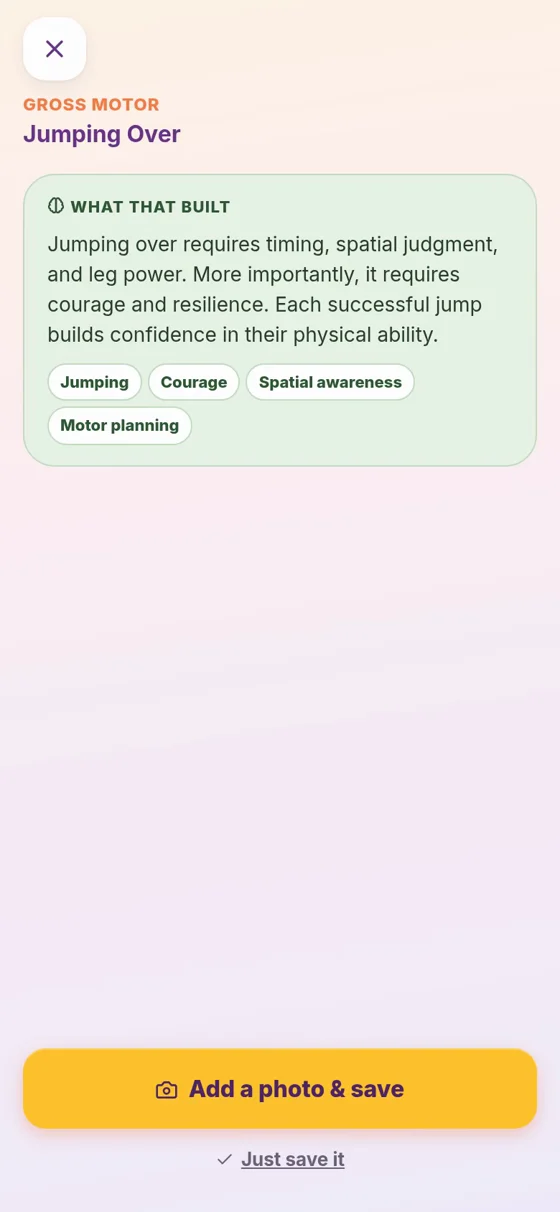
Mooshie activity screen with Say this words to useWhat that built screen showing the skills an activity practised
10free ideas on this page
5,918activities for 6 months to 4 years
Say thisthe exact words on every activity
0child details uploaded, ever

You don’t need flashcards to help your toddler talk. Children learn language through back-and-forth play with the people they love: a coo copied back, a daft word in a favourite song, a toy just out of reach. These moments build speech far better than any screen.

Here are speech and language activities from the Mooshie Moments app for babies and toddlers from 6 months to 4 years. Each one takes around 10 minutes, needs nothing you don’t already have, and tells you exactly what to say.

Five habits that help any toddler talk

Get face to face.

Get down to their level so they can see your mouth move.

Say less, and say it clearly.

Short phrases like “Ball. Big ball. Roll the ball.” are easier to copy than long sentences.

Pause. Then wait some more.

Count to five in your head after you speak. The silence is their invitation to answer.

Count every kind of answer.

Pointing, reaching, a sound, a look or a sign is communication, so respond to it.

Model, don’t correct.

If they say “tat”, say “Yes, a cat!” warmly. No “say it properly”.

Speech activities for babies (6 to 12 months)

6 to 12 months2 to 3 minutes

Coo back chat

This is your baby’s first conversation. They’re learning that their voice makes you respond, which is the foundation of all talking.

You’ll need: just your voice

How to play
  1. Sit face to face and wait. Listen for a coo, babble or squeak.
  2. Copy that exact sound straight back, looking at their face.
  3. They’ll often make the same sound again. Copy it again.
  4. After three or four rounds, wait for a new sound and copy that.
6 to 12 monthsany time

Name it as you go

During nappy changes, bath time and meals, name what your baby is looking at or touching: “Sock. Soft sock. Off comes the sock!” Repeat the same few words every day. Familiar routines are where first words come from.

Activities to encourage talking (1 to 2 years)

1 to 2 years10 minutes

Out-of-reach treasure

This teaches the most important lesson in communication: my pointing and my sounds make things happen.

You’ll need: three or four favourite toys and a low shelf or chair

How to play
  1. Put a favourite toy where your toddler can see it but can’t reach it.
  2. Don’t prompt. Just wait and watch.
  3. When they reach, point, look at you or make a sound, hand it over straight away and say what they wanted: “You wanted bunny! Here’s bunny!”
  4. Swap in a different toy and repeat.
1 to 2 years10 minutes

Fill-in-the-word songs

Do it three or four times, then sing it through properly. Toddlers love being the expert.

You’ll need: a book or song they know well

How to play
  1. Sing or read the first lines normally.
  2. Swap one word for something silly: “Twinkle, twinkle, little… sausage!”
  3. Wait. A frown, a head shake, a laugh or the right word all count.
  4. “Not sausage? What is it then?” If they say it, echo it back: “Star! You’re right.”

Language activities for toddlers (2 to 3 years)

2 to 3 years10 minutes

Action word play

Take turns doing actions and naming them: “Jump! You jumped!” “Now run… stop!” Doing and saying at the same time builds verb vocabulary, the words that help toddlers move from single words to two-word phrases like “me jump” and “more run”.

You’ll need: a bit of floor space

2 to 3 years15 minutes

Animal sound safari

Hide animal toys around the room. When your toddler finds one, make its sound together: “Cow! Moo!” Animal sounds are some of the easiest “words” to say, so they’re a great confidence boost for late talkers.

You’ll need: toy animals or picture books

1 to 3 yearsduring snacks

Snack-time choices

Choices give toddlers a real reason to communicate, and the answer is right there in your hands to copy.

You’ll need: two snacks your toddler likes

How to play
  1. Hold up two options at their eye level: “Apple or rice cake?”
  2. Wait. Let them point, reach or try the word.
  3. Name their choice as you hand it over: “Apple! You chose apple.”
  4. Next time, pause a beat longer before you name it, in case they get there first.
2 to 3 years10 minutes

Sock puppet chat

Pop a sock on your hand and give it a silly voice. Have the puppet ask easy questions (“What’s your name?”, “Where’s your nose?”) and get things hilariously wrong so your toddler can correct it. Shy talkers often find it easier to chat to a puppet than to a grown-up, and it takes the pressure off completely.

You’ll need: an odd sock

Everyday routines that build talking

You don’t need to set aside “speech time”. The richest language happens in the moments you’re already sharing:

Getting dressed:

name each item as it goes on, and leave gaps: “Socks on, now your…?”

Bath time:

talk about what’s happening, like “splash”, “pour”, “wet” and “all gone”, and let them fill a cup and tell you when to tip it.

Out and about:

point things out and wait. Buses, dogs and diggers are brilliant conversation starters.

Tidying up:

“Where does teddy go? In the box!” Simple position words like in, on and under build understanding fast.

A few of these every day adds up to far more practice than one long session, and it all happens while life carries on.

Speech and sound games for 3 to 4 year olds

3 to 4 years10 minutes

Guess the word

Say a word with its first sound missing, like “…at” for “cat” or “…og” for “dog”, and let your child guess. Then swap roles. Playing with the sounds inside words helps later with reading.

You’ll need: nothing

3 to 4 years15 minutes

Story sound hunt

Pick a sound, like “sss”. Read slowly, and your child puts a hand up every time they hear it. Count them together at the end, then try a new sound.

You’ll need: a picture book

Hundreds more ideas like these are waiting in the app.

Plus one picked for your child every day, matched to their age and how today is going.

LOVED BY FAMILIES

Parents and experts on Mooshie

“I used to spend 30 minutes looking for an activity on Pinterest, get overwhelmed, and just turn on the TV. Mooshie takes 5 seconds.”
Sarah J.Mum of a 2-year-old
“Finally, an app that tells me to put my phone away. The activities are actually doable with stuff I have in my junk drawer.”
Mark D.Dad of two
“As a pediatric OT, I love that these activities build core developmental skills without feeling like ‘homework’ for parents.”
Dr Emily R.Paediatric occupational therapist
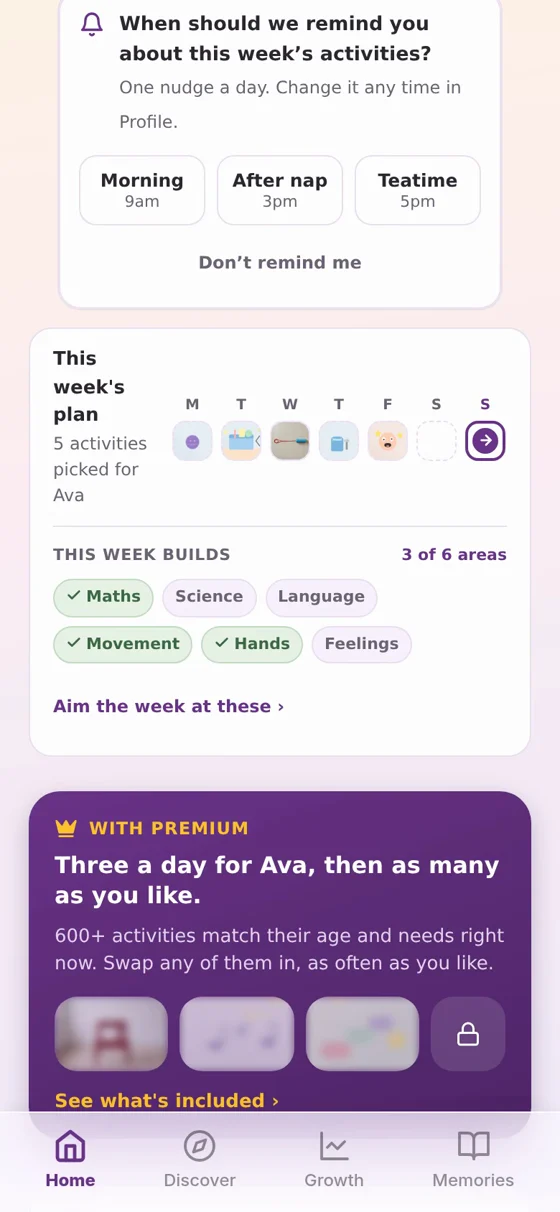
This week's plan showing five activities and the areas they build
HOW MOOSHIE HELPS

How Mooshie helps your toddler talk

  • “Say this” on every activity. Every activity in the app comes with the exact phrases to use, so talking is built into play even when language isn’t the focus.
  • Speech and language activities for every age, from first coos to sound games for preschoolers.
  • A weekly plan that includes language alongside maths, science, movement, hands and feelings, so it gets a regular turn.
  • Speech and language delay support. Tell the app about a speech delay and activities come with extra tips, like pausing longer and repeating songs across days.

Questions parents ask

How many words should my toddler be saying?

Every child develops at their own pace, and there’s a wide normal range. As a very rough guide, many children say their first words around 12 months and start putting two words together around 2 years. If you’re worried, talk to your health visitor or GP. You can also contact a speech and language therapy service directly in many areas.

Do these activities help a late talker?

They’re the kind of play-based, back-and-forth activities speech therapists often recommend for parents to do at home. They support language development but don’t replace a speech and language therapy assessment if you’re concerned.

Does screen time affect speech?

Toddlers learn to talk through real conversation, with someone who responds to them. That’s why Mooshie is built for you to use, not your child. Check the idea, put the phone away and talk together.

How often should we do speech activities?

Little and often is best. A few minutes a day, built into routines like bath time, meals and getting dressed, adds up to far more than one long session a week.

Mooshie is a play app, not medical advice. If you’re worried about your child’s development, speak to your health visitor or GP.

Make memories. Build skills. Play together.

Your first moment is ready as soon as you tell us their age.

Mooshie MomentsFree on iPhone
Get it free