Fit 5 Minute Pre Reading Activities for UK Toddlers Into Any Day

Short, playful activities work best: rhyming songs, syllable clapping, sound games, sensory letter play like Alphabet Soup, and a daily shared book routine. Repeated in short playful bursts throughout the day, these build the foundation for early reading skills long before formal instruction starts. Apps can help you find ready-made versions of these activities so you’re never starting from scratch.
TL;DR:
- Short, play-based activities like rhyming songs and syllable clapping build phonological awareness, which strongly predicts decoding skills.
- Multisensory letter play such as water-based letter fishing and salt tracing enhances letter recognition more effectively than passive viewing.
- Daily shared reading and environmental print hunts develop print awareness, with even brief sessions correlating with vocabulary growth.
- Embedding activities into daily routines, like meal times and car rides, allows for consistent exposure without requiring dedicated time.
- Using scaffolded, open-ended questions and modeling supports learning while maintaining child interest and avoiding pressure or testing.
Table of Contents
- What Are the Best Pre-Reading Activities for Toddlers?
- What Pre-Literacy Skills Do These Activities Build?
- How Do You Fit Reading Readiness Activities Into a Busy Day?
- How Can You Scaffold Learning Without Turning Play Into a Test?
- When Should Toddlers Start Pre-Reading Activities?
- How Mooshiemoments Makes This Easier
- A Note on Keeping It Playful
- Ready-Made Pre-Reading Activities When You’re Short on Time
- Sources
- FAQ
What Are the Best Pre-Reading Activities for Toddlers?
Pre-reading activities don’t need flashcards or a lesson plan. They need five minutes, a few household items, and a caregiver willing to be a little silly. Here’s how to organize them by the skill they build.
Phonological awareness: rhymes, syllables, and sound games
This is the skill that lets your toddler notice that “cat” and “hat” sound alike, or that “banana” has three beats. It’s the single strongest predictor of how easily a child will pick up decoding once formal reading starts.
- Rhyming songs: Sing familiar nursery rhymes and pause before the rhyming word (“Jack and Jill went up the…”) and let your toddler fill in the blank.
- Rhyme completion: Say two words, one real and one made-up (“truck, muck”) and ask if they sound the same.
- Clap the syllables: Say your child’s name, a pet’s name, or a favorite food slowly, clapping once per syllable. “El.e.phant” gets three claps.
- “I Spy” with sounds: Instead of colors, play “I spy something that starts with mmmm” and point to milk or a mug. This isolates the initial phoneme, a skill that shows up again and again in early phonics work.
Listening walks and simple rhythm games, like tapping a wooden spoon on pots while walking around the yard, sharpen the same sound discrimination toddlers need before they can separate spoken words into parts, according to Bright Horizons.
Letter knowledge: multisensory play, not worksheets
Toddlers learn letters through their hands before they learn them through their eyes. Multisensory practice, tracing, sorting, building, sticks far better than pointing at a poster.
- Alphabet Soup: Toss waterproof foam or plastic letters into a water table, sink, or sand tray. Have your toddler fish out a letter, name it (or guess), and make its sound.
- Magnetic letters on the fridge: Keep a small set at toddler height. Rearranging them during snack prep turns a few idle minutes into letter exposure.
- Letter tracing in salt or sand: Pour a thin layer of salt, sand, or even flour onto a tray and trace big letter shapes with a finger.
Tactile, hands-on letter work like this strengthens the connection between a letter’s shape and its sound more effectively than passive viewing, based on findings from the Pride Reading Program.
Print awareness and shared reading
Print awareness is the realization that those squiggles on the page carry meaning, that you read left to right, and that the words in a favorite book stay the same every time you open it.
- Daily read-aloud with finger-tracking: Run your finger under the words as you read, even for board books with a single sentence per page.
- Environmental print hunts: Point out the stop sign, the cereal box logo, the “EXIT” sign. Ask, “What does that say?”
- “My I Can Read” scrapbook: Collect cereal boxes, junk mail logos, and photos of street signs into a simple notebook your toddler can flip through and “read” independently.
Reading aloud every single day, even for two or three minutes, correlates with stronger print awareness and vocabulary growth than occasional long sessions, according to Brightwheel.
Oral language and narrative skills
Before a child can follow a plot on the page, they need practice building sentences and sequencing events out loud.
- Tell-and-retell picture routines: After reading a familiar story, ask your toddler to “tell it back” using the pictures as prompts.
- “What’s my story?” sequence cards: Use three or four photos from your own day (breakfast, the park, bath time) and ask your toddler to put them in order and narrate what happened.
Sensory and open-ended play
- Sand or water letter hunts: Bury magnetic or foam letters in a sensory bin and turn “find the letter” into a dig.
- Shaving-foam tracing: Spread shaving foam on a tray or table and trace letters with fingers, wiping clean and starting again.
- Playdough letter formation: Roll playdough “snakes” and shape them into letters, especially the ones in your toddler’s name.
What Pre-Literacy Skills Do These Activities Build?
Every toddler literacy game on this list maps back to one of a small handful of core skills. Understanding what each skill actually is helps you prioritize when time is short.
- Phonological awareness: Noticing and playing with the sounds in spoken language, rhymes, syllables, and individual sounds (phonemes). This is the strongest single link to how well a child decodes words later on, according to peer-reviewed pediatric research on early language and reading predictors.
- Letter knowledge: Recognizing letter names, shapes, and the sounds they make. This gives phonological awareness something concrete to attach to.
- Print awareness: Understanding that print carries meaning, that English reads left to right, and that the words in a book or on a sign say something specific.
- Oral language and narrative skills: Vocabulary, sentence structure, and the ability to sequence events into a story. A child who can retell “what happened at the park” is practicing the same mental muscle they’ll use to follow a book’s plot.
Rhyming songs and syllable clapping build phonological awareness. Alphabet Soup and letter tracing build letter knowledge. Book-sharing and print hunts build print awareness. Retell routines build narrative skill. None of these skills develop in isolation. They reinforce each other every time you play.
How Do You Fit Reading Readiness Activities Into a Busy Day?
You don’t need a set-aside “reading time.” Research on toddler literacy consistently points to short, repeated exposures rather than long, structured sessions as the more realistic and effective approach for busy households, per findings from Action for Children. A few minutes here and there, tucked into routines you’re already running, add up over a week.
Try slotting activities into moments that already exist in your day:
- Getting dressed: Clap syllables in the names of clothing items (“so.cks,” “pa.ja.mas”).
- Mealtimes: Play “I Spy” with sounds using foods on the table.
- Car rides: Sing rhyming songs and pause for your toddler to fill in the missing word.
- Bath time: Float foam letters and ask your toddler to name or sound out whichever one they grab.
- Bedtime: Read the same book every night, tracing your finger under the words.
A simple plan might include short sessions during morning, midday, and bedtime periods, to fit easily into daily routines.
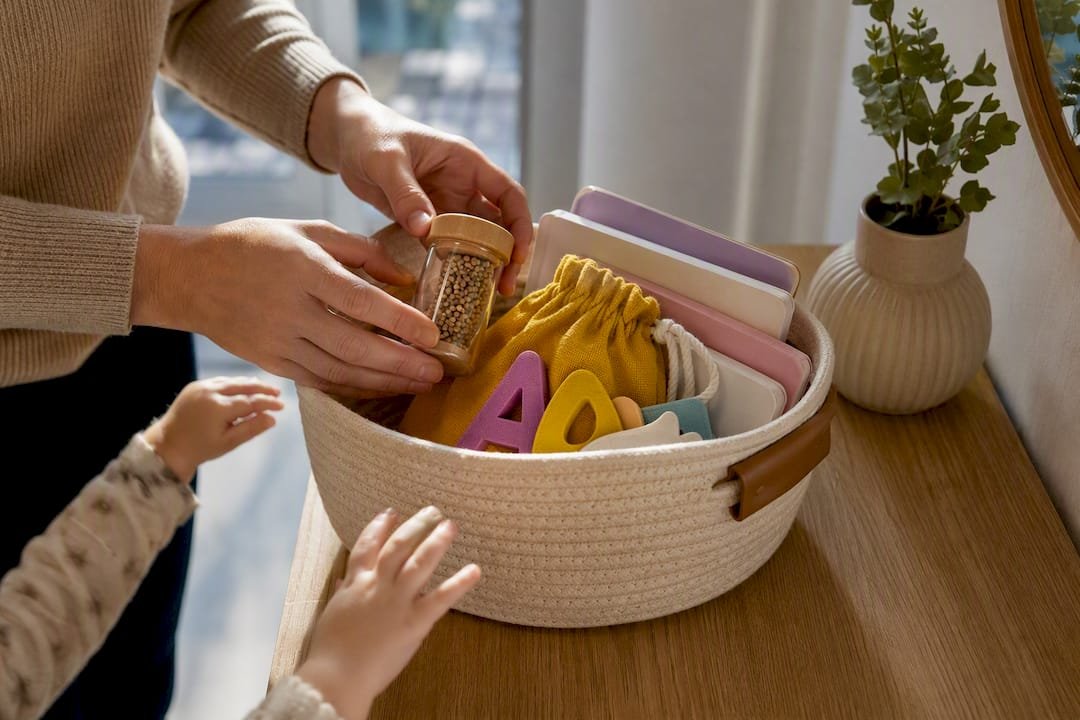
Pro Tip: Keep one small basket of props, foam letters, a shaker, a few board books, near wherever you spend the most time with your toddler. Having them within reach is often the only thing standing between “we should do that” and actually doing it.
How Can You Scaffold Learning Without Turning Play Into a Test?
The fastest way to kill a toddler’s interest in letters and words is to quiz them. Scaffolding means adding just enough support to stretch what they can already do, not testing whether they got it right.
- Model, don’t correct: If your toddler says “the puppy runned,” respond with “yes, the puppy ran fast!” rather than correcting them outright.
- Expand their utterances: If they point and say “ball,” respond with “yes, a big red ball!” adding one or two new words to what they gave you.
- Use open questions: Ask “What do you think happens next?” instead of “What color is this?”
- Give one-step prompts: “Tell me about this page” invites more than “Do you like this book?”
- Isolate sounds gently: “What sound do you hear at the start of ‘sun’?” works better as a game than a drill.
Pro Tip: If your toddler doesn’t answer, answer for them and move on. Pausing to wait out a wrong answer turns play into pressure fast, and pressure is what makes toddlers stop wanting to play at all.
When Should Toddlers Start Pre-Reading Activities?
Pre-reading skill-building starts earlier than most parents expect, often in infancy through simple sound play and shared board books. What changes with age isn’t whether to start, but how long attention lasts and how complex the activity can get.
| Age range | Typical emerging skills | Activity adjustment |
|---|---|---|
| — | Enjoys rhythm, points to pictures, imitates sounds | Keep sessions under 2 minutes; favor songs and pointing games |
| — | Names familiar objects, joins in simple rhymes | Add “I Spy” with sounds; start letter exposure through play |
| 2 to 3 years | Claps syllables with help, recognizes some environmental print | Introduce Alphabet Soup, sequence cards, retell routines |
| Approaching 4 | Isolates initial sounds, recognizes several letters by name | Extend to letter tracing, longer read-alouds, simple story retells |
Every toddler moves through these stages at a different pace, and that variability is normal. If your child shows little interest in sounds, letters, or shared books by the age where most peers are engaging with them, it’s worth mentioning to a health visitor or early years practitioner rather than waiting it out.
How Mooshiemoments Makes This Easier
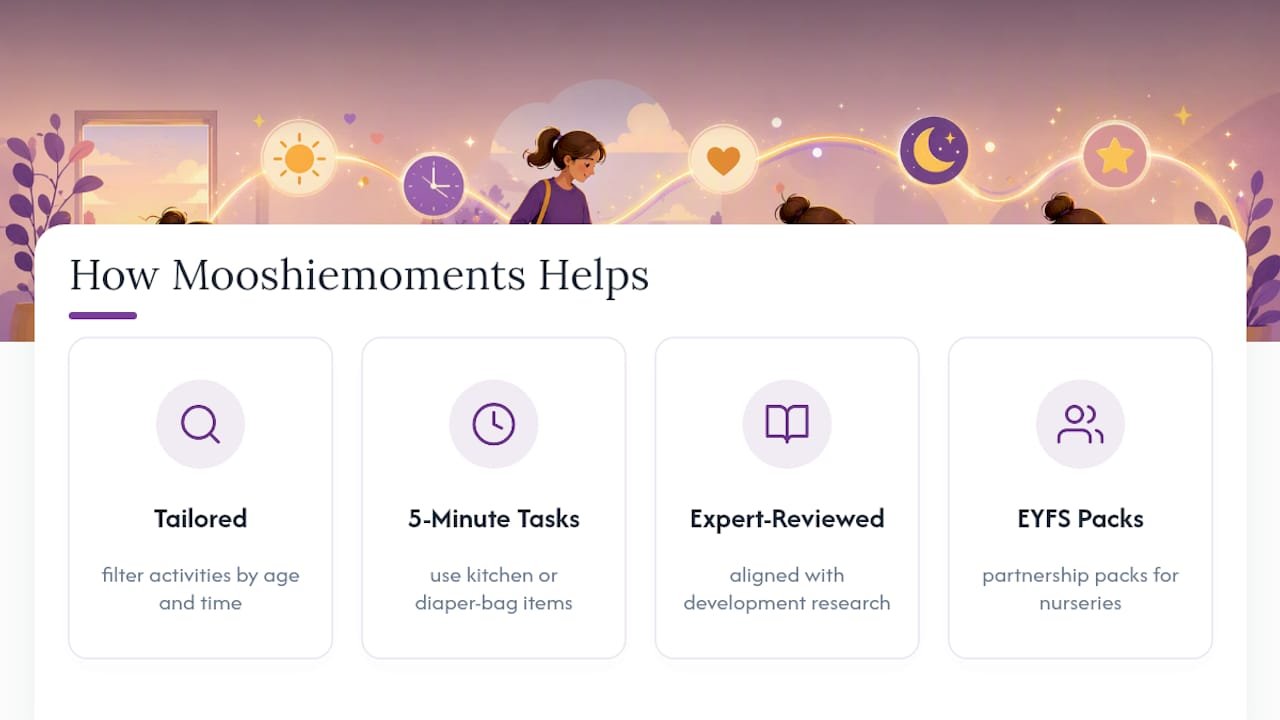
There are apps built around this approach: quick, screen-free activities tailored to a child’s age and to however much time and energy a parent actually has that day. Instead of guessing which letter game suits one age versus another, you can filter by age and get a 5-minute activity using things already in your kitchen or diaper bag. Many activities in such apps are expert-reviewed against child-development research, the same kind of evidence behind rhyming, syllable-clapping, and sensory play covered above. Nurseries and early years settings may have access to ready-made partnership packs aligned with EYFS practice.
A Note on Keeping It Playful
The biggest mistake in early literacy isn’t picking the wrong activity, it’s turning a good one into a chore. Rhyming games and letter tracing work because they feel like play, not because a parent enforced them on a schedule. The moment a toddler senses they’re being tested, the motivation that makes these games effective disappears.
— samit
Ready-Made Pre-Reading Activities When You’re Short on Time
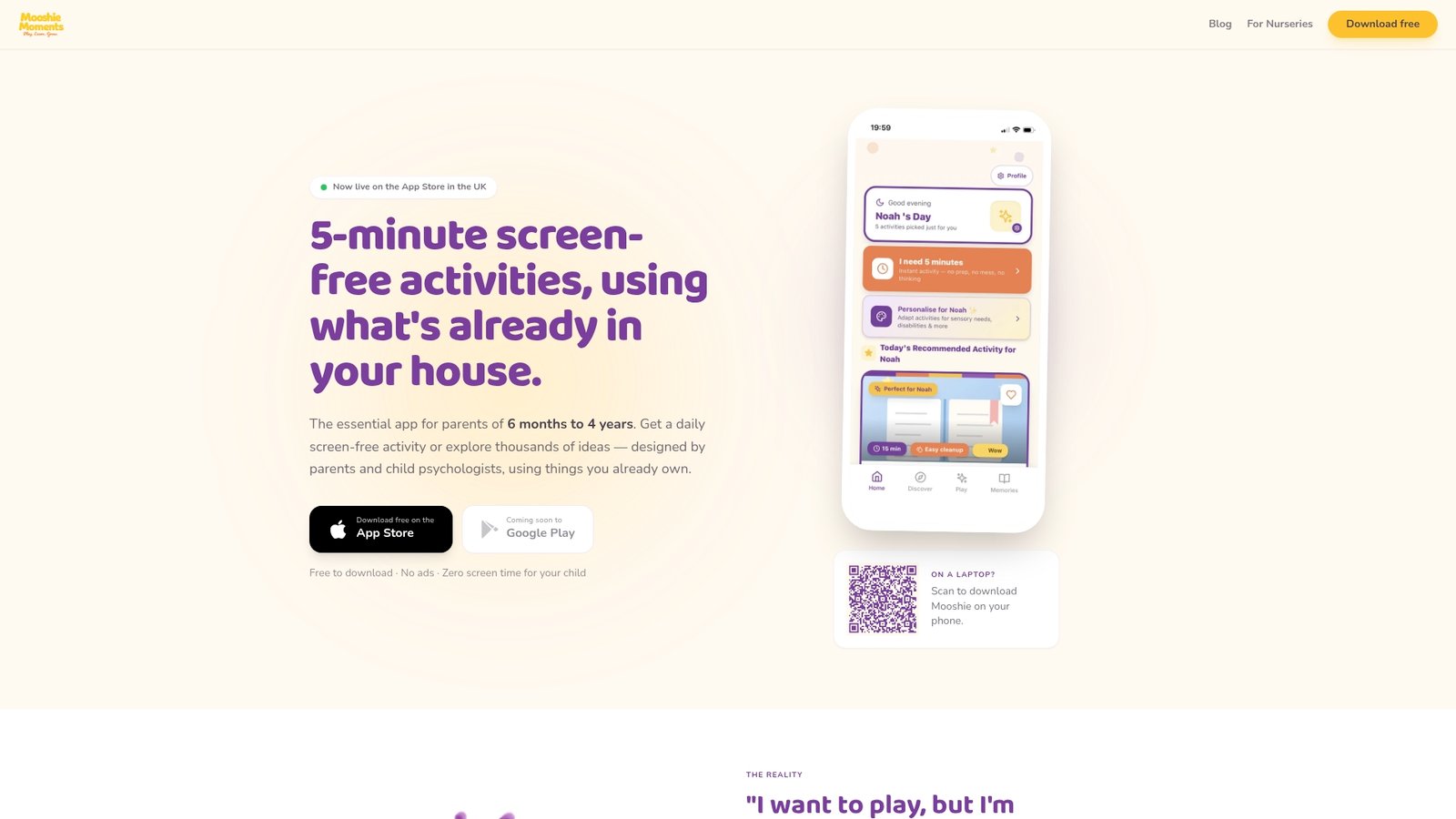
Building your own rotation of rhyming games, sound hunts, and letter play works well, but on a tired weeknight, having a ready-made option matters more than having the perfect one. Some apps fill this gap: instead of scrolling for ideas at 6pm, you open the app, tell it how many minutes you have, and get a specific activity using items already in your home.
The 40 Fun 2 Year Old Activities collection is a good starting point if your toddler is in that stretch between simple imitation and real back-and-forth play. It includes several activities that build directly on the rhyming, sorting, and sensory play covered in this article, each scaled to what a 2-year-old’s attention span can actually handle. Grandparents and other caregivers looking for lower-mobility options can find seated alternatives in the grandparent activity guide instead. Pick one activity, try it in your next spare five minutes, and see how it fits.
Sources
- Infant-Toddler Language & Literacy (Action for Children)
- Fun Pre-Reading Activities to Promote Emergent Literacy (Brightwheel)
- Reading readiness and phonological skills (Bright Horizons)
FAQ
What are examples of pre-reading activities?
Rhyming songs, clapping syllables, “I Spy” with sounds, sensory letter play like Alphabet Soup, daily shared reading with finger-tracking, and picture-sequencing retell games are all effective examples.
What are the 6 basic pre-literacy skills?
Commonly cited pre-literacy skills include print motivation, print awareness, vocabulary, narrative skills, letter knowledge, and phonological awareness; definitions vary slightly by source, but these six cover the range this article addresses.
How can I teach my 2-year-old to read?
At 2 years old, focus on play rather than formal instruction: rhyming games, syllable clapping, pointing out environmental print, and daily shared reading build the foundation reading itself will later be built on. Apps like Mooshiemoments can suggest age-matched activities so you don’t have to plan them yourself.
What are good pre-reading strategies?
The most effective strategies are short, repeated, play-based sessions, roughly 5 minutes at a time, spread across the day rather than one long sitting, paired with open-ended questions and modeling rather than correction.
When should toddlers start pre-reading activities?
Pre-reading exposure can start in infancy through simple sound play and shared board books, with activities growing more complex as attention span and language skills develop through the toddler years.
Recommended
- Research Backed Nursery Activity Plans: 3 Daily 5 Minute Slots (UK)
- 40 Fun 2 Year Old Activities to Start Right Now
- 12 Low Prep Toddler Activities for Grandparents With Seated Options
- Junk Modelling for Toddlers: Easy EYFS-Aligned Activities
Want a new idea every day, matched to your child's age?
Mooshie Moments gives you simple, guided play ideas for ages 6 months to 4 years.
Download free on the App StoreMore like this
Babysitting Toddlers: 12 Low Prep Ideas and Why They Help
Explore 12 low prep toddler activities for babysitters, with developmental benefits, age adaptations, UK safety advice, and optional activity coaching.
10 EYFS Backed Sock Games for Toddlers Under Five Minutes
Ten EYFS aligned sock games to start in under five minutes, each with a one line developmental benefit, simple adaptations, and two…

Busy Parents: 12 No Prep Shopping Activities for Toddlers
Busy parents: keep toddlers learning and calm at the store with 12 no prep, screen free activities that take under five minutes…