Activities for Children with Cerebral Palsy (Ages 1 to 4)

ADDITIONAL NEEDS · 6 MONTHS TO 4 YEARS

Activities for Children with Cerebral Palsy (Ages 1 to 4)

Cerebral palsy activities for toddlers grouped by one-handed, seated tray and easy-grip play, with pacing tips and app support for physio and OT.

  • Free to download
  • No account needed
  • No screen time for your child
QR code to download Mooshie MomentsOn a laptop?
Scan to get Mooshie on your iPhone.
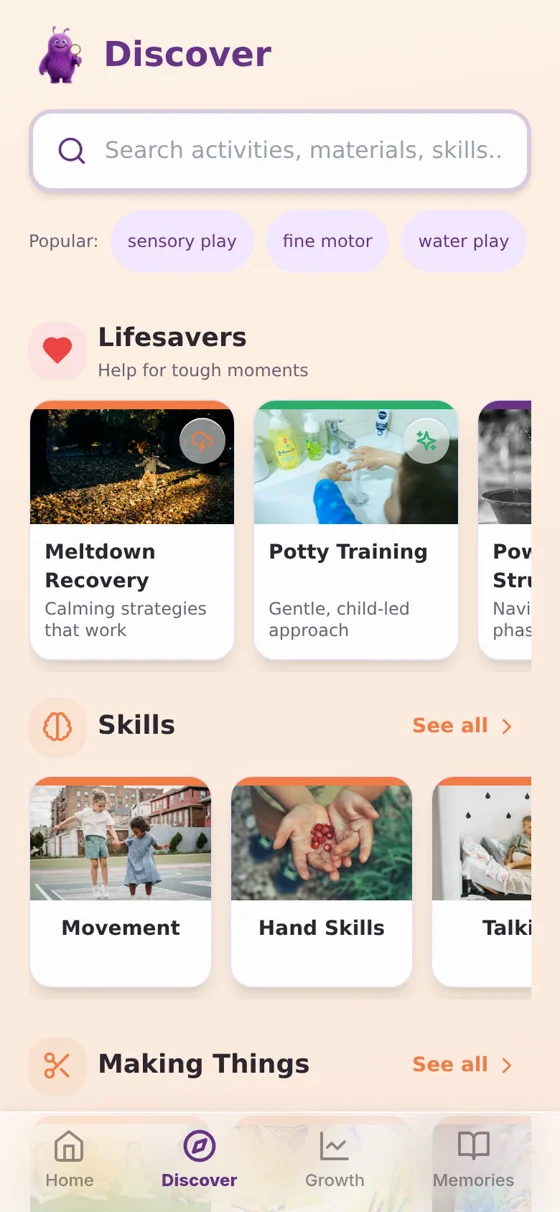
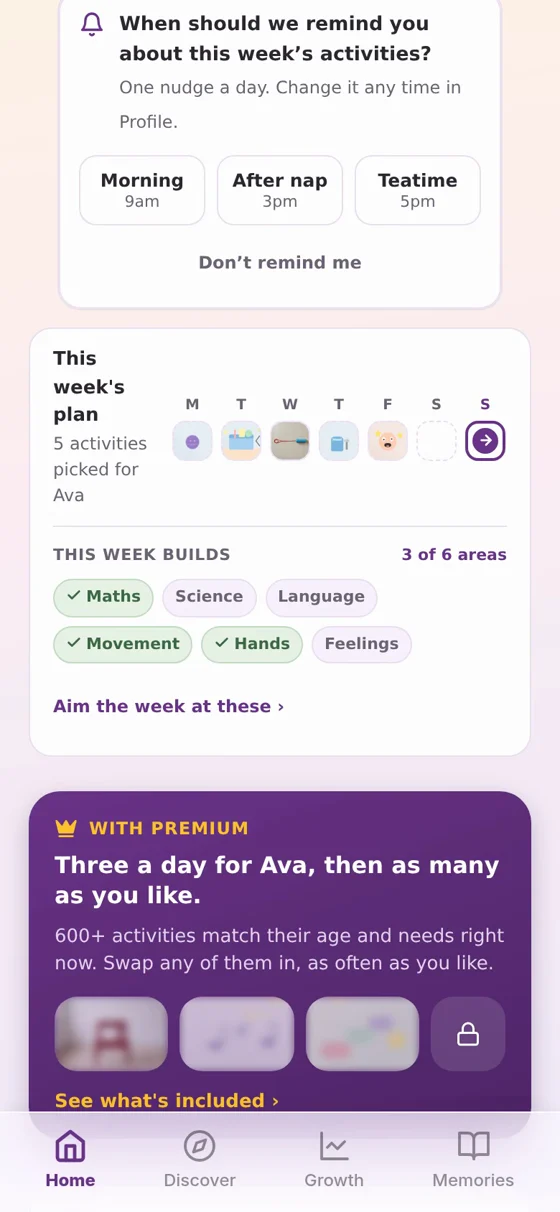
Mooshie Discover screen with Lifesavers for meltdowns and potty trainingThis week's plan showing five activities and the areas they build
5,918activities, adapted to your child
13additional needs you can add
Filteredwhat won’t suit them is left out
0child details uploaded, ever

Activities for children with cerebral palsy usually work better once you let gravity, a good set-up and a light touch do some of the hard work, rather than aiming for a tidy version of the movement. A tremor mid-pour, a one-handed grip, a slow reach: none of it needs correcting before the play can start.

Below are ten activities from the Mooshie Moments app for children aged 6 months to 4 years, grouped by what they ask of the body rather than by age alone. Each uses ordinary household things, takes about 10 minutes, and comes with the exact words to say as you go.

A few things that make everything easier

Bring the activity to the body

, not the other way round. A lap tray or low table at the right height means your child doesn’t need to fight gravity and the game at the same time.

Follow their natural movement pattern.

Cerebral palsy presentations vary hugely, so what works for one child won’t for another; watch and adjust rather than forcing a “correct” position.

Watch for fatigue, not just effort.

Tremor and drooping posture often increase as a child tires. Rest before that point, not after.

Hand-over-hand is teaching, not taking over.

Guide gently at first and loosen your grip as confidence builds.

One-handed play

Many children with cerebral palsy have one stronger hand or side. Rather than insisting on two hands, these use one hand fully and let the other join in if it wants to.

1 to 210 minutes

1. Cup-to-Cup Pour

You’ll need: two plastic cups, a small towel, water

How to play
  1. Set a towel on their tray with two cups on it, one half filled with water.
  2. Put the full cup in their stronger hand and steady it for them if they need it.
  3. Tip together and let the splash happen. Say “you poured it”.
  4. Swap and pour the other way, three or four rounds, floating a large plastic toy for something to chase if you like.
Say this: “Look, water!” · “You poured!” · “Good pouring.”
1 to 210 minutes

2. Button Press Sound Toy

Pressing is usually easier than releasing for a child with cerebral palsy, so a button toy gives quick, clear feedback for a simple motion. Say “press it” and let them discover that each button makes something happen. Ten minutes of pressing different buttons is often plenty of cause and effect for one sitting.

You’ll need: a toy with large, soft buttons

Supported sitting and tray play

A lap tray or low table, with everything within easy reach, turns most seated activities into ones a child can do without needing to hold themselves up at the same time.

1 to 210 minutes

3. Sock Ball Bin

Sit your child supported next to a shallow bin of rolled sock balls, with a cushion behind them for stability. Let them reach in, squeeze and throw the balls, narrating “so soft” and “you’re reaching”. Use balls too big to fit inside a toilet-roll tube rather than pom-poms, which are a choking risk at this age. Ten minutes is plenty before gathering them back in together.

You’ll need: socks rolled into balls, a shallow bin, a cushion

1 to 210 minutes

4. Lift the Flap

Sit your toddler supported in your lap or beside you, facing the book. Point to a picture and say the word clearly, then guide their hand to the flap: “lift it”. If they pull weakly, help them lift it the rest of the way and celebrate what’s underneath. Three or four pages is enough before finishing with a cuddle over the book.

You’ll need: a sturdy lift-the-flap board book

Easy-grip hands

Fine motor demand goes down when the tool is chunky and the result appears with very little pressure.

2 to 310 minutes

5. Sponge Prints

A sponge is easier to grip and press than a paintbrush, and less sensitive to tremor since paint clings to it readily. Dip and press onto paper together, saying “print, a pink print” as the shape appears. If holding steady pressure is hard, put your hand over theirs to press together; any paint on paper counts as a finished print. Five to eight prints is a good session.

You’ll need: chunky sponge pieces, washable paint, large paper

6 to 12 months5 minutes

6. Spoon Dunk

Hold your hand around your baby’s on the spoon and dunk it into the bowl together, lifting it out wet. Say “in and out, in and out” as you repeat the motion six to eight times, then see if they’ll move the spoon a little on their own. This simple, repeated action builds grip and motor memory without asking for anything beyond what they can already do with support.

You’ll need: a soft spoon, a bowl of warm water, a towel

Sensory play and communication

Music, rhythm and signing often meet a child with cerebral palsy where their processing speed already is, since a slow song naturally paces the activity for you.

3 to 410 minutes

7. Sing and Sign Together

Sing a familiar song at half its normal speed, and add one sign on a key word, “star” in “Twinkle Twinkle” for example, holding the sign for a couple of seconds each time. Repeat the verse two or three times. Any attempt at the sign, even a wobbly one, is worth celebrating out loud.

You’ll need: your voice

2 to 310 minutes

8. Dress-Up and Mirror

Body awareness can be harder to build when a child gets less feedback from their own movements, and dress-up in front of a mirror makes the body visible in a playful way. Put the hat on, point to it in the mirror, then take it off and repeat a few times. Keep any scarf loose around the shoulders rather than the neck.

You’ll need: a soft hat, a loose scarf, an unbreakable mirror

2 to 310 minutes

9. Seated Drum

Tap the drum slowly with a pause between taps, then hand the mallet over, guiding their hand if needed. A steady, repeated beat matches many children’s processing speed better than a fast rhythm. Five to eight taps, a short rest, then another round is a good shape for the session.

You’ll need: a soft drum or upturned plastic pot, a soft mallet or wooden spoon

3 to 410 minutes

10. Doctor Play

For a child who spends a lot of the day being helped, positioned or assisted, being the one in charge of the “checking” can matter more than the medical pretend itself. Model listening to the doll’s chest, then hand the stethoscope over and let them take the lead, however they choose to use it. There’s no wrong way to be the doctor here.

You’ll need: a toy stethoscope, a soft doll
All 5,918 activities adapt to your child.

Add their needs once. Mooshie leaves out what won’t work and adds tips where they help.

LOVED BY FAMILIES

Parents and experts on Mooshie

“I used to spend 30 minutes looking for an activity on Pinterest, get overwhelmed, and just turn on the TV. Mooshie takes 5 seconds.”
Sarah J.Mum of a 2-year-old
“Finally, an app that tells me to put my phone away. The activities are actually doable with stuff I have in my junk drawer.”
Mark D.Dad of two
“As a pediatric OT, I love that these activities build core developmental skills without feeling like ‘homework’ for parents.”
Dr Emily R.Paediatric occupational therapist
HOW MOOSHIE HELPS

How Mooshie adapts activities for cerebral palsy

Adding cerebral palsy as an additional need in the app changes what’s shown to you, not just what’s said:

  • Activities your child can’t do are filtered out, so a running or jumping game won’t be suggested for a child who needs seated play.
  • Adaptation tips appear only where they’re relevant to that particular activity, often favouring rhythm and music for motor planning, and easy-grip or hand-over-hand approaches for hands-on tasks.
  • All 5,918 activities are checked against your child’s needs, so what is left suits their body, with tips wherever movement or grip is involved.
  • Everything stays private. Your child’s needs are stored on your phone and never uploaded.

Your child sees your face, not the app. Check an idea in around 30 seconds, then put the phone away and play.

Questions parents ask

My child’s grip is very weak. Should I still expect them to hold things?

Offer chunky, lightweight tools and hand-over-hand support rather than waiting for an independent grip to appear first. Working alongside your child’s occupational therapist or physiotherapist will give you exercises and equipment suited to their specific needs; play like this sits alongside that, not instead of it.

How do I know if an activity is too tiring for my child?

Watch for increased tremor, drooping posture or a loss of interest rather than relying on the clock. Stopping a little early and resting properly beats pushing through to a fixed time.

Should I correct my child’s movements to make them more typical?

Generally, no. Cerebral palsy presents very differently from child to child, so following their own movement pattern usually works better than aiming for a textbook version. Your physiotherapist or occupational therapist is the right person to advise on specific exercises if there’s a movement goal you’re working towards together.

Are these activities suitable for a wheelchair user?

Yes, all of them work from a wheelchair or supported seat with a lap tray. Our wheelchair-friendly activities for toddlers guide has more seated ideas.

Is Mooshie a therapy app?

No. Mooshie is for parents who want play ideas. It doesn’t diagnose or treat anything and doesn’t replace physiotherapy, occupational therapy or advice from your GP or health visitor.

Mooshie is a play app, not medical advice. If you’re worried about your child’s development, speak to your health visitor or GP.

Make memories. Build skills. Play together.

Your first moment is ready as soon as you tell us their age.

Mooshie MomentsFree on iPhone
Get it free