Activities for Blind and Partially Sighted Toddlers

ADDITIONAL NEEDS · 6 MONTHS TO 4 YEARS

Activities for Blind and Partially Sighted Toddlers

Activities for blind and partially sighted toddlers built on touch, sound and narration, with ideas for texture, music and safe movement at home.

  • Free to download
  • No account needed
  • No screen time for your child
QR code to download Mooshie MomentsOn a laptop?
Scan to get Mooshie on your iPhone.
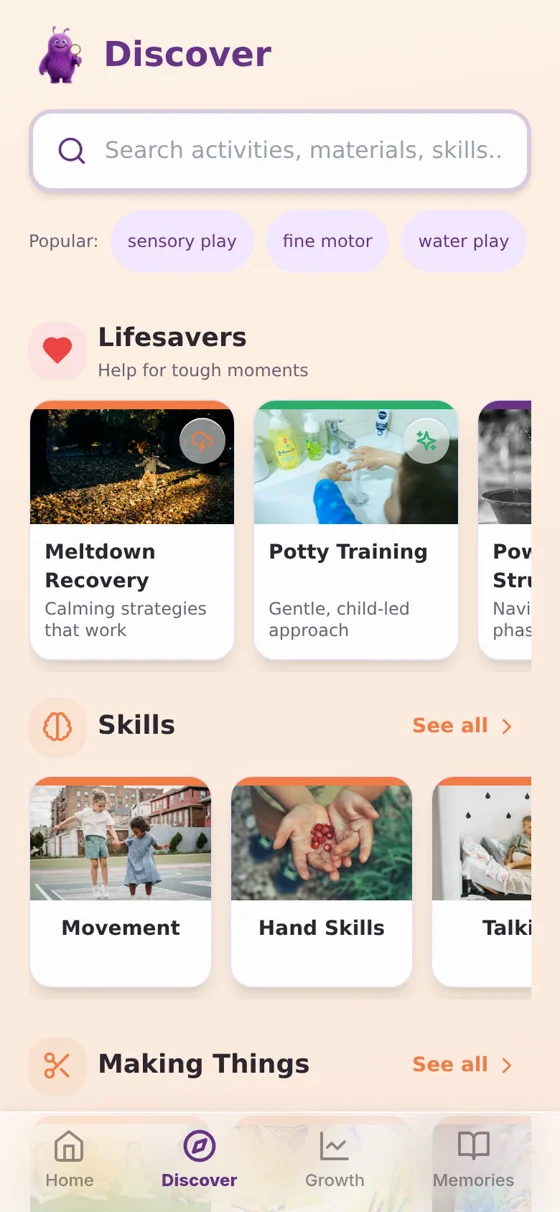
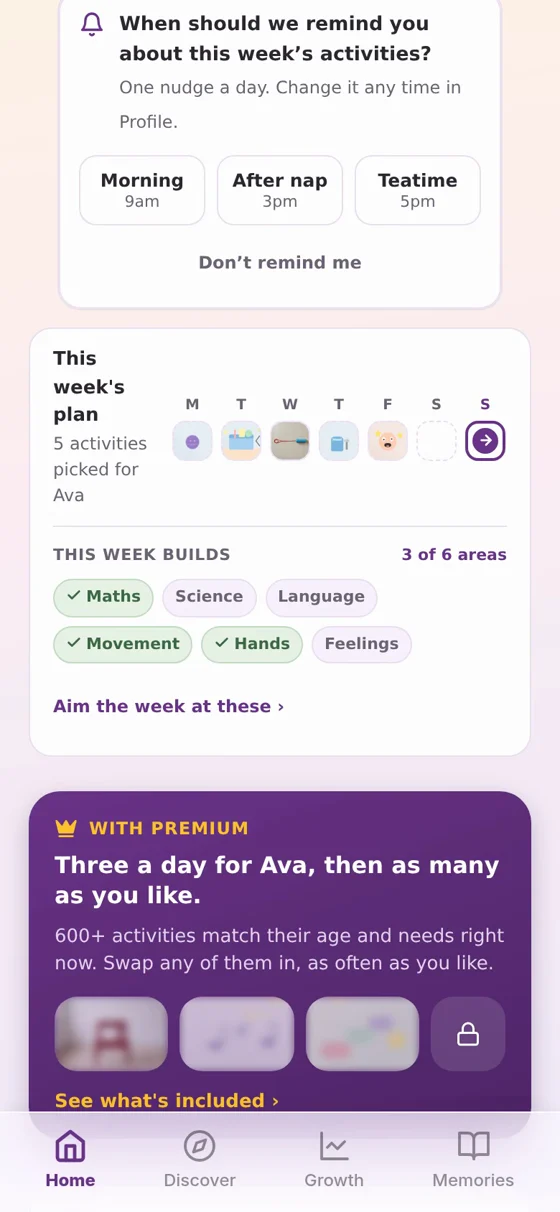
Mooshie Discover screen with Lifesavers for meltdowns and potty trainingThis week's plan showing five activities and the areas they build
5,918activities, adapted to your child
13additional needs you can add
Filteredwhat won’t suit them is left out
0child details uploaded, ever

Activities for blind and partially sighted toddlers put touch and hearing at the centre, because those are the senses doing most of the learning. Hands become eyes, a voice becomes a map of the room, and a familiar sound in a familiar place builds the same confidence that sight gives another child for free.

Below are ten activities from the Mooshie Moments app for children aged 6 months to 4 years. Each uses ordinary household things, takes about 10 minutes, and comes with narration built in, since the words you say are doing a lot of the work here.

A few habits worth building in early

Narrate before you act, not after.

“I’m putting the cup down in front of you” tells your child what’s about to happen before it happens to them.

Guide hands gently rather than moving objects to them silently.

A hand led to an object learns more than a surprise placed in it.

Keep some things in the same place.

A toy box or activity spot that never moves becomes a landmark your child can find independently.

Use rich, specific words.

“Tangy lemon” and “cool water” build a vocabulary of sensation your child can’t get from looking around a room.

Touch and texture

Touch is often the primary way a blind or partially sighted toddler learns what something is, so these lean into that fully rather than treating touch as a fallback for sight.

1 to 210 minutes

1. Textures to Chew

You’ll need: a one-piece teething ring with different textures moulded in

How to play
  1. Check the ring over for cracks, then hand it over: “textures to chew”.
  2. Let them work their fingers and mouth over each section, narrating “that bit is soft” or “now the bumpy part”.
  3. Turn it as they explore so new textures come into reach.
  4. Wash it after every session and let them lead how long they spend on each part.
Say this: “Textures to chew.” · “That bit is soft.” · “Now the bumpy part.”
2 to 310 minutes

2. Wet and Dry

Fill a tray with a little water on one side and lay a dry cloth on the other. Let your child dip their hands in the water, “wet, cold”, then move to the dry cloth, “dry, soft”. Moving back and forth between the two builds a vocabulary of opposites they can feel rather than see.

You’ll need: a shallow tray, water, a sponge, a dry cloth, a floating toy

3 to 410 minutes

3. Touch the Story

Guide your child’s hand over a textured shape as you tell the story: “this is the cat, feel the soft fur, the cat says meow”. Move to the next texture on each page, letting their hand lead a little more each time you repeat the book. If you make your own board, check every glued piece is stuck down firmly before your child touches it, since a loose scrap could come free.

You’ll need: a tactile board book, or a poster board with textures glued on

Sound and music

Sound carries information a sighted child would get by looking, so pouring, tapping and calling all double as lessons in cause and effect.

3 to 410 minutes

4. Pour and Listen

Pour from the jug into a big cup and let your child hear the long splash, then pour into a small cup for a quicker sound. Ask “big splash or small splash this time?” before each pour so they start predicting from sound alone. Adding a metal bowl for a third, sharper sound extends the game nicely.

You’ll need: a small jug of water, two cups of different sizes, a tray

2 to 310 minutes

5. Where Did It Go?

Let them squeeze the toy a few times, then hide it under a blanket right in front of them and squeeze it again so the sound comes through. Ask “where did it go?” and let them reach under to find it once they’ve located the sound. This teaches that things still exist once they’re out of reach, using sound as the proof rather than sight.

You’ll need: a squeaky toy, a soft blanket

Moving safely through space

Confidence with your child’s own body and their immediate surroundings builds gradually, through repeated, predictable games rather than one big lesson.

2 to 310 minutes

6. Find the Tap

Tap your own chest clearly and say “I tapped my chest”, then guide your child’s hand to find where you tapped. Move to your leg, your arm, your head, each time naming the spot before they search. This builds a working map of a body, yours first and then, over time, their own.

You’ll need: nothing but your hands

2 to 310 minutes

7. The Same Box, Every Day

Keep a discovery box in exactly the same spot every day, with a different small item inside each time. Say “box time” and let your child head towards the familiar spot themselves rather than being led there. Over weeks, many children start moving towards the box before you’ve finished the sentence, which is spatial memory doing real work.

You’ll need: a small box with a lid, a rotating small toy inside

Narrating the world

Description is not an add-on for a blind or partially sighted child, it is often the main channel of information, so these activities put your voice to work directly.

3 to 410 minutes

8. The Scented Story

Tell a simple story and pause at each “scene” to introduce a matching scent: “we’re in the lemon orchard, smell the lemons, tangy and sour”. Keep cinnamon in a covered bowl or on a damp cotton ball rather than loose, and let your child smell rather than taste from any bowl. Retelling a favourite part with its scent a few days later often shows the memory has stuck.

You’ll need: a few safe scents such as lemon, cinnamon, vanilla, mint

3 to 410 minutes

9. Meet the Puppet

Give the puppet its own voice and let it ask your child questions, tell a small joke, or simply say hello. There’s no visual performance to follow here, just voice and touch, which suits a child who is building the whole scene from sound and feel alone. Let them hold and “answer” for the puppet if they want to.

You’ll need: a soft hand puppet or stuffed animal

6 to 12 months10 minutes

10. Reach and Find

Place a toy just within reach and say “there’s a toy, reach”, celebrating any movement towards it, however partial. Once they’ve grasped it a few times, move it slightly further and repeat. Every reach, successful or not, is worth a genuine “good reach”, since the trying is what builds the motor pathway.

You’ll need: a soft toy or rattle

All 5,918 activities adapt to your child.

Add their needs once. Mooshie leaves out what won’t work and adds tips where they help.

LOVED BY FAMILIES

Parents and experts on Mooshie

“I used to spend 30 minutes looking for an activity on Pinterest, get overwhelmed, and just turn on the TV. Mooshie takes 5 seconds.”
Sarah J.Mum of a 2-year-old
“Finally, an app that tells me to put my phone away. The activities are actually doable with stuff I have in my junk drawer.”
Mark D.Dad of two
“As a pediatric OT, I love that these activities build core developmental skills without feeling like ‘homework’ for parents.”
Dr Emily R.Paediatric occupational therapist
HOW MOOSHIE HELPS

How Mooshie adapts activities for vision impairment

Adding a vision need in the app changes what’s shown to you, not just what’s said:

  • Activities that depend on seeing something are filtered out, so you’re not offered a visual-only matching game that won’t work for your child.
  • Adaptation tips appear where they’re genuinely useful for that activity, favouring detailed description, tactile exploration and using music and sound as the main channel.
  • All 5,918 activities are matched to your child. Games that rely on sight are left out, and the rest come with tips for doing them by touch and sound.
  • Everything stays on your phone. Your child’s needs are never uploaded.

You read it; your child just gets you. Check an idea in around 30 seconds, then put the phone down and play.

Questions parents ask

How much should I narrate during play?

More than feels natural at first. Describing what’s about to happen, what something feels or smells like, and where your hands are all give a blind or partially sighted child information a sighted child gets for free by looking around.

Is it normal for my toddler to mouth everything?

Very much so, and it’s often a primary way blind and partially sighted toddlers gather information about an object, alongside their hands. Keep anything within reach clean and free of small parts, and let the mouthing continue rather than discouraging it.

Will keeping toys in the same place help or limit my child?

It generally helps, especially early on. A predictable layout builds the confidence to move around independently; once that confidence is established, gently introducing change becomes much easier for them to cope with.

How do I know if my child’s vision needs a specialist check?

If you’re ever unsure about your child’s vision or development, speak to your health visitor or GP, who can refer you on. This page is about play at home, not assessment.

Is Mooshie a therapy app?

No. Mooshie is a play app for parents. It doesn’t diagnose or treat anything and doesn’t replace vision therapy, specialist teaching support or advice from your GP or health visitor.

Mooshie is a play app, not medical advice. If you’re worried about your child’s development, speak to your health visitor or GP.

Make memories. Build skills. Play together.

Your first moment is ready as soon as you tell us their age.

Mooshie MomentsFree on iPhone
Get it free