Sensory Play Ideas for Babies and Toddlers

PLAY IDEAS · 6 MONTHS TO 4 YEARS

Sensory Play Ideas for Babies and Toddlers

Sensory play ideas for babies and toddlers, grouped by sense, with a mess-o-meter for each. From the Mooshie Moments app. Pick one and start playing today.

  • Free to download
  • No account needed
  • No screen time for your child
QR code to download Mooshie MomentsOn a laptop?
Scan to get Mooshie on your iPhone.
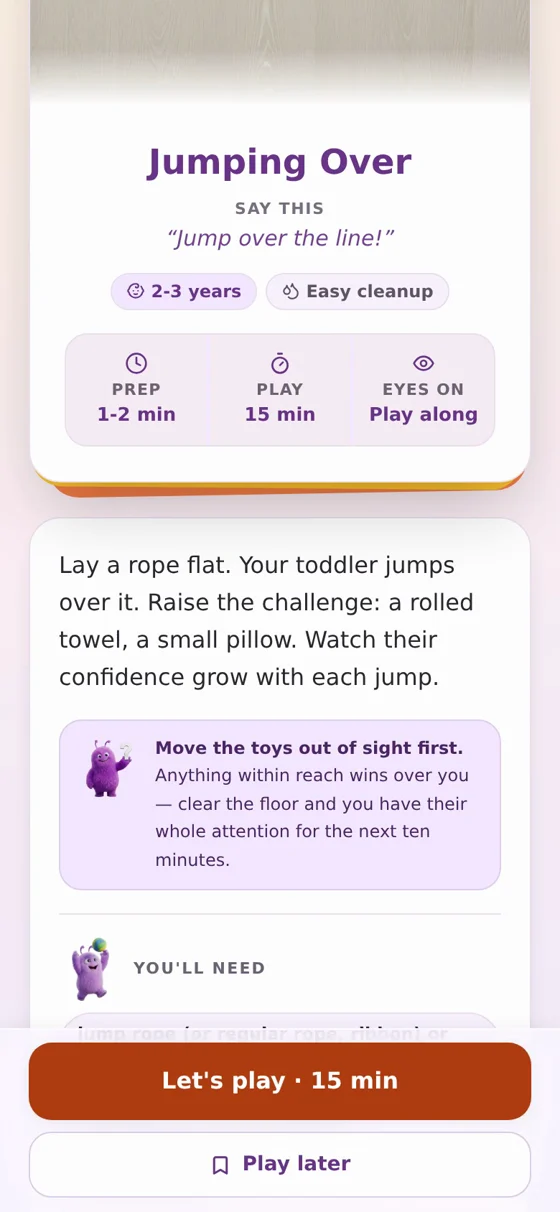
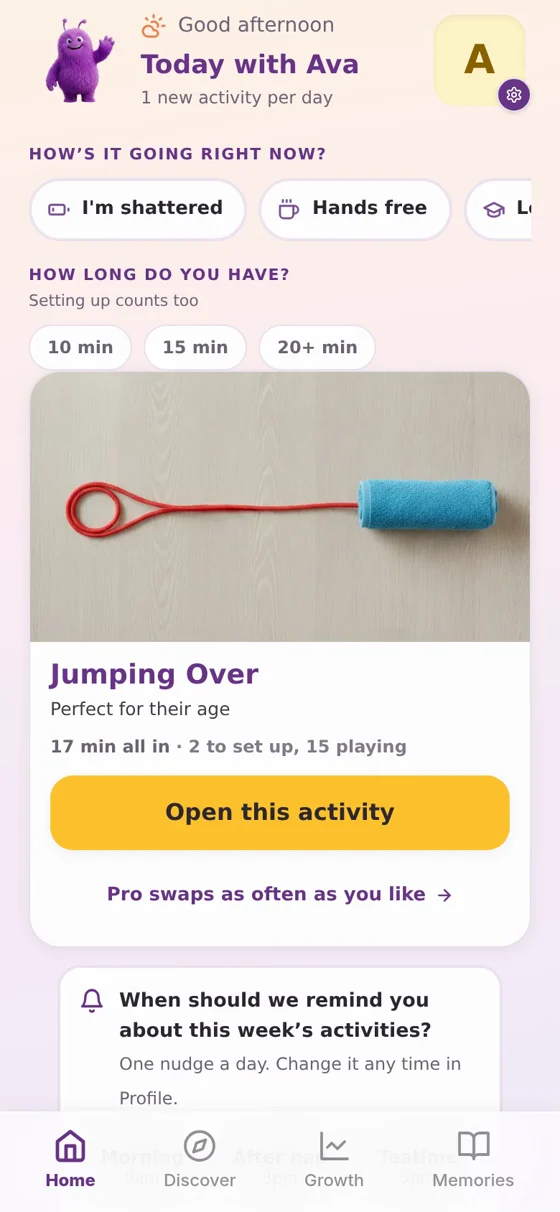
Mooshie activity screen with Say this words to useMooshie Today screen with mood and time options and today's activity
12free ideas on this page
5,918activities for 6 months to 4 years
Say thisthe exact words on every activity
0child details uploaded, ever

Sensory play is any activity that lets your baby or toddler take in the world through touch, sound, sight, smell, taste or movement, and it is how children under 4 learn before they have the words for what they are learning. Search “sensory play” and you mostly find glitter trays and rainbow rice, the sort of thing you’ll find plenty more of on our messy play ideas page. Sensory play is much bigger than mess though, and some of the best sensory activities involve no clean-up at all.

This page is a starting point for exploring the senses at home, grouped by which sense each activity works on. For water-based ideas specifically, see our water play ideas page. Every idea below comes from the Mooshie Moments app, uses things you already have, and comes with the exact words to say while you play. Each one is also marked with a mess-o-meter, so you can pick something for a five-minute window as easily as a whole rainy afternoon.

The senses your child is actually using

Most people learn about five senses at school, but children are working with more than that from birth.

Touch.

Textures, temperature and pressure through the skin.

Sound.

What things sound like, and learning to tell sounds apart.

Sight.

Colour, light, movement and reflection.

Smell.

Often the most overlooked sense, and a strong one in young children.

Taste.

Closely tied to smell, especially in the early years.

Proprioception.

Knowing where your own body is in space, without looking, through joints and muscles.

Vestibular.

Balance and movement, picked up by the inner ear.

Interoception.

Sensing what’s happening inside the body: hunger, a full bladder, a racing heart.

The last three don’t come up in most “sensory play” articles, but they matter just as much. A child spinning, hanging upside down or squeezing into a small tunnel is doing proprioceptive and vestibular work, even though nothing gets messy.

Touch: hands, skin and textures

1 to 2 yearsA few minutes

1. Feather light touch

Gently tickle your toddler’s arms, legs and face with a feather or soft fabric, sitting at their level and narrating as you go. Repeat three to six times or until they lose interest, and watch closely for the point where giggling turns into overstimulation.

You’ll need: a feather or soft fabric strip

Mess-o-meter: none

Say this: “Look at you go!” · “Try this one.” · “Again?”
6 to 12 months10 minutes

2. Warm water drops

Fill a bowl with water that feels warm on your wrist, never hot, and drop single drops onto your baby’s hand, foot and tummy one at a time, pausing between each so anticipation builds.

Never leave a baby alone near water, even a shallow bowl, and empty it as soon as you finish.

You’ll need: a dropper, a bowl of warm water, a towel

Mess-o-meter: some

How to play
  1. Say “I have warm water, watch” and place one drop on the back of their hand.
  2. Wait two seconds and ask “did that tickle?”
  3. Try a foot, then an arm, one drop at a time.
  4. Stop after five to eight drops, once they look relaxed rather than bored.
2 to 3 years20 minutes

3. Gloop making

Mix glue and liquid starch together and stir until it thickens into a stretchy, slimy gloop. Let your toddler pull and stretch it once it’s formed, and expect the moment it stops being liquid to get a very interested look.

You’ll need: white glue or a flour paste, liquid starch, a bowl

Mess-o-meter: lots

1 to 2 years15 minutes

4. Ring chain waterfall

Clip large plastic rings, at least 6cm across, into a chain no longer than 30cm, then pour it slowly over your child’s open hands so it falls through their fingers into a tub. They’ll scoop it back up and pour it out again on their own.

Use only large rings rather than small chain or beads, keep the chain under 30cm so it can never go round a neck, and put it away out of reach afterwards.

You’ll need: large plastic linking rings, a tub

Mess-o-meter: none

Sound: what things sound like

3 to 4 years10 minutes

5. Sound explorer collection

Spread household items that make different sounds across a blanket and let your child tap, shake and compare them: which is louder, which sounds like a drum.

You’ll need: a wooden spoon, an empty tin, a sealed bottle of dried beans, a whisk, a cork, a colander

Mess-o-meter: none

How to play
  1. Tap a wooden spoon on the table and ask them to copy the sound.
  2. Pick up the tin: “this one sounds more like a drum.”
  3. Hand over the sealed bean bottle: “what happens if you shake it?”
  4. Let them experiment freely, naming what they hear as they go.
3 to 4 years15 minutes

6. Sound vibration

Stretch plastic wrap tightly over a bowl, sprinkle a little dry rice on top, then bang a pot near the bowl and watch the rice jump. It’s sound made visible, and a genuine first physics lesson.

You’ll need: a bowl, plastic wrap, rice, a pot and spoon

Mess-o-meter: some

Say this: “Look at that change!” · “Let’s experiment!” · “What do you notice?”

Sight: light, colour and reflection

3 to 4 years10 minutes

7. Metal mirror basket

Gather shiny metal items in a basket by a bright window and let your child catch the light, spot their own reflection and compare how cold each item feels. Check tins and lids for sharp edges first, and drape any chain rather than letting it go anywhere near the neck.

You’ll need: a metal tin, spoon, lid, chain, old keys, foil, a whisk

Mess-o-meter: none

2 to 3 years15 minutes

8. Shadow puppet show

Shine a torch on a plain wall in a dim room and make shapes with your hands. A bunny, a bird, a dog. Tell a small story with the shadows and let your child take over the torch.

You’ll need: a torch, a white wall, hands or cutouts

Mess-o-meter: none

2 to 3 years20 minutes

9. Magnet stick test

Let your toddler hold a large magnet and test it on a spoon, a plastic cup, a fork and a toy car, sorting objects into “sticks” and “doesn’t stick” as they go.

Use one magnet too large to swallow, and clear away any small metal objects as soon as you finish.

You’ll need: a large magnet, a mix of metal and non-metal objects

Mess-o-meter: none

How to play
  1. Bring the magnet close to a metal spoon: “does it stick?”
  2. React big when it does: “the magnet likes the spoon!”
  3. Try a plastic cup and note that nothing happens.
  4. After five or six objects, ask which ones the magnet likes.

Smell: the sense most pages forget

3 to 4 years15 minutes

10. Mystery smell detective

Hide a few strong, safe smells in small holed containers and let your child guess each one before you reveal it. Swap roles halfway through so they get to hide a smell for you to guess.

You’ll need: small containers with holes poked in the lids, orange peel, soap, cinnamon, vanilla

Mess-o-meter: none

Say this: “What does this smell like?” · “Does it smell sweet or spicy?” · “My turn to guess!”

Problem-solving with the hands

3 to 4 years10 minutes

11. Container lid detective

Lay out a jumbled pile of containers and lids on a tray and challenge your child to work out which lid fits which container. Some fit, some don’t, and the trial and error is the whole point.

You’ll need: 5 to 6 mismatched plastic containers and lids, a tray

Mess-o-meter: none

How to play
  1. Pick up a lid: “does this fit this container? Let’s try.”
  2. If it’s too big, say so and try a smaller one.
  3. Celebrate every successful match with “you did it!”
  4. Tip them all out and start again for round two.

Wind, weather and the outdoors

6 to 12 months10 minutes

12. Wind on cheeks

On a breezy day, hold your baby facing into the wind and narrate each gust as it arrives: “there it is, feel it on your cheeks?” Do this four or five times, pausing before each gust so the anticipation has a moment to land.

Stick to mild to moderate wind and avoid strong gusts that could knock a baby off balance.

You’ll need: a breezy spot outdoors

Mess-o-meter: none

Too much? Signs of sensory overload

If your child enjoys squishing more than pouring, our playdough activities page is worth a look too. Sensory play is meant to be enjoyable, not overwhelming. Look out for turning away, covering ears or eyes, sudden crying, going very still or very floppy, or trying to leave. If you see any of these, that’s your cue to stop, not push on. Offer a quiet, low-stimulation break, such as a cuddle in a dim room, and try again another day with less going on at once. If you’re ever worried about how your child responds to everyday sounds, textures or movement, it’s worth mentioning to your health visitor or GP.

Hundreds more ideas like these are waiting in the app.

Plus one picked for your child every day, matched to their age and how today is going.

LOVED BY FAMILIES

Parents and experts on Mooshie

“I used to spend 30 minutes looking for an activity on Pinterest, get overwhelmed, and just turn on the TV. Mooshie takes 5 seconds.”
Sarah J.Mum of a 2-year-old
“Finally, an app that tells me to put my phone away. The activities are actually doable with stuff I have in my junk drawer.”
Mark D.Dad of two
“As a pediatric OT, I love that these activities build core developmental skills without feeling like ‘homework’ for parents.”
Dr Emily R.Paediatric occupational therapist
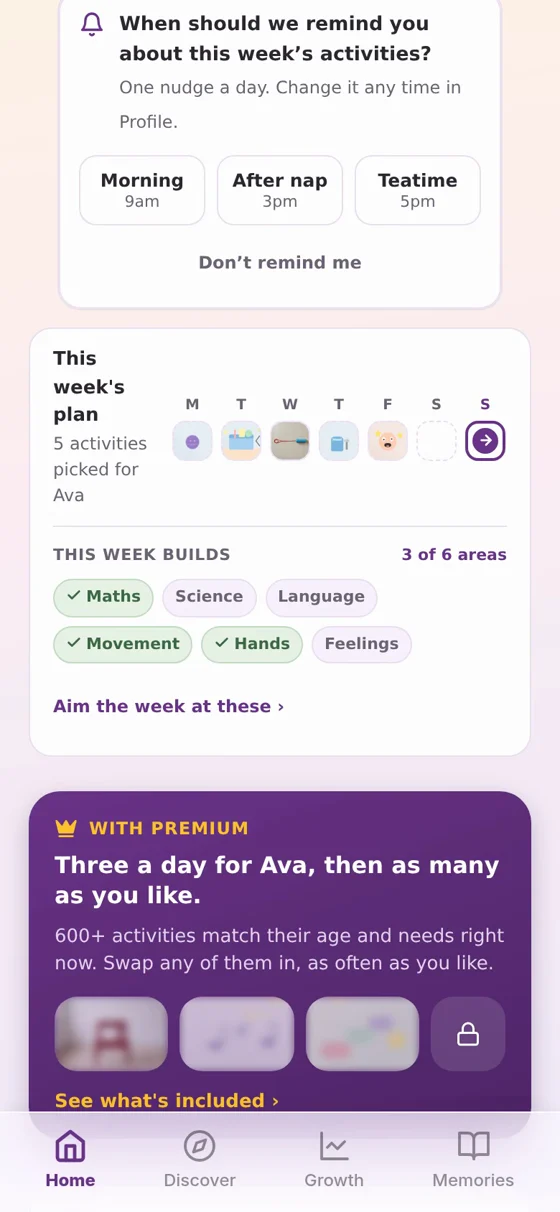
This week's plan showing five activities and the areas they build
HOW MOOSHIE HELPS

How Mooshie helps with sensory play

Mooshie Moments holds 5,918 activities for children aged 6 months to 4 years, all using things already at home, and picks one activity a day for your child’s age and stage. You can tell the app how the day is going and how much time you have, from 10 minutes to 20 or more, and it adjusts what it suggests.

  • Say this phrases, timings and parent tips come with every activity, so you’re never guessing what to say.
  • Tap “We’re done” and the app shows “What that built”: the skills your child just practised.
  • You can add a picture so it lands in Memories.
  • Additional needs can be added, including autism and sensory processing, and the app then favours calmer, more predictable activities and filters out ones your child can’t do.

The app is for you, not your child: check the idea in 30 seconds and put the phone away. It’s free to download, with one activity a day free and no account needed.

Questions parents ask

What counts as sensory play for a 1 year old?

Anything that lets them explore through touch, sound, sight or smell counts, from feeling grass under their hands to shaking a sealed bottle of rice. It doesn’t need to be elaborate: everyday textures and sounds are genuine sensory input at this age.

Is sensory play only for babies and toddlers, or does it help preschoolers too?

It helps right through to age 4 and beyond. Older preschoolers can manage more complex sensory activities, like the magnet test or shadow puppets above, that involve prediction and problem-solving alongside pure sensory input.

My toddler hates messy textures. What should I try instead?

Plenty of sensory play involves no mess at all. Sound, sight and smell activities like the shaker collection, shadow puppets or the smell detective game give rich sensory input without a single sticky finger.

How much sensory play should a toddler get each day?

There’s no set amount. A short burst of 10 to 15 minutes, once or twice a day, is a reasonable place to start, and you can always follow your child’s interest for longer if they’re absorbed.

Can sensory play help with sensory processing difficulties?

Many parents of children with sensory processing differences find that gentle, predictable sensory play helps, but it isn’t a treatment and doesn’t replace advice from an occupational therapist. If you’re concerned, speak to your health visitor or GP.

Mooshie is a play app, not medical advice. If you’re worried about your child’s development, speak to your health visitor or GP.

Make memories. Build skills. Play together.

Your first moment is ready as soon as you tell us their age.

Mooshie MomentsFree on iPhone
Get it free