
Five Minute Montessori Inspired Playdough Activities for Toddlers
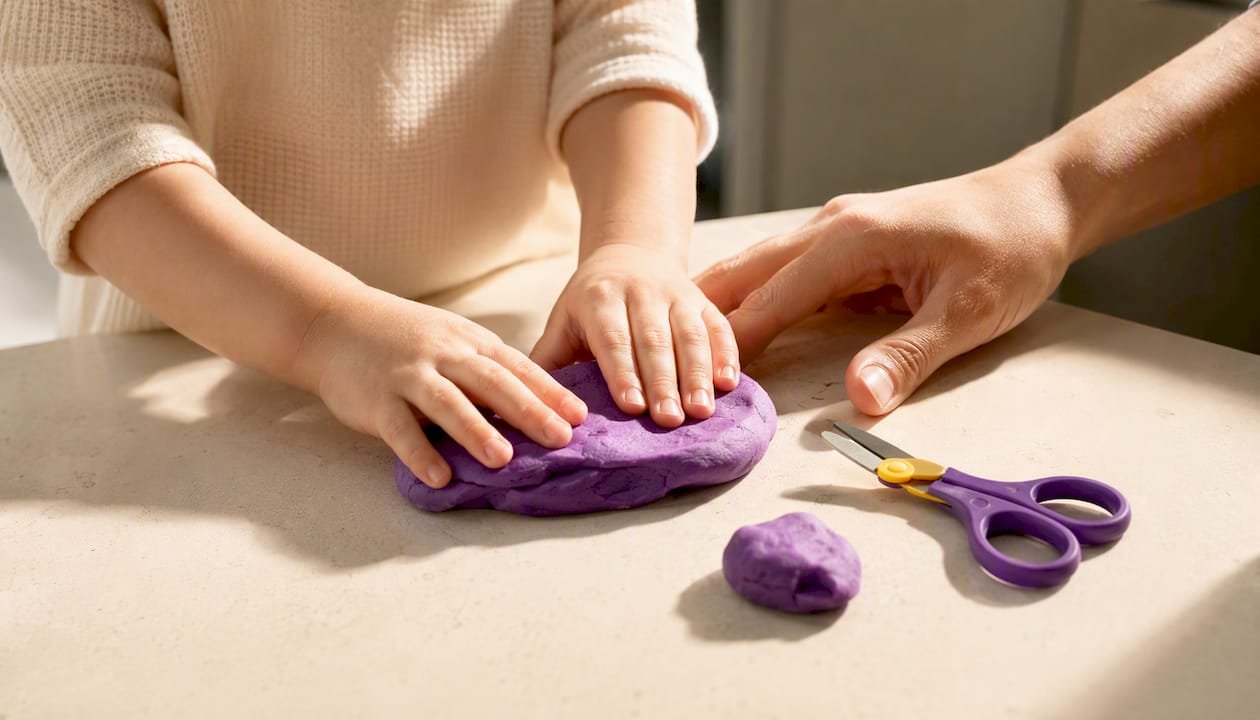
Playdough is one of the simplest, most useful activities you can hand a toddler, and it earns its place in daily play when you supervise it. NAEYC points to real gains in fine motor strength, language, and hand-eye coordination. Below, we cover activity ideas, quick homemade recipes, safety rules, and simple setups, plus how an app like Mooshie Moments can help you pick the right prompt on a busy day.
TL;DR:
- Rotating playdough activities between fine motor, sensory, pretend play, and construction keeps toddlers engaged and supports a range of developmental skills.
- Homemade, salt-based playdough can last several months stored properly in airtight containers, but supervision is necessary due to its salt content and mouthing risk.
- Safety checks should include inspecting tools and props, keeping small parts away from mouthings, and supervising children closely during sessions.
- Simple household items like rolling pins, cookie cutters, and natural loose parts are sufficient for creating varied, themed playdough setups at low cost.
- Short, consistent sessions with age-appropriate prompts and narration aid skill development while making play easy to restart and repeat effectively.
Table of Contents
- 1. Playdough activities grouped by learning goal
- 2. Quick toddler-safe homemade playdough recipes
- 3. Setting up safely: supervision and tool checks
- 4. Low-cost props and simple presentation ideas
- 5. What toddlers learn from playdough, plus two narration prompts
- 6. How Mooshie Moments supports playdough play at home
- 7. Keeping play simple and repeatable
- 8. Try Mooshie Moments for ready-made play prompts
- Sources
- FAQ
1. Playdough activities grouped by learning goal
Different playdough activities build different skills, so it helps to rotate through a few categories rather than repeating the same squish-and-roll routine every day.
For fine motor practice, try rolling snakes to build pincer grip, cutting shapes with a blunt plastic knife, or pressing large beads into flattened dough (check bead size against your toddler’s age before adding small pieces). Sensory-focused sessions might mix in textures like rice or dry oats, add a drop of vanilla for scent, or freeze small dough pieces so toddlers explore temperature change as they squeeze. Pretend play turns dough into a game: set up a pretend ice-cream shop with scoops and cones, a bakery with cookie cutters, or a garden scene using twigs and pebbles as loose parts. For simple construction, offer stacking shapes or textured tools like a fork or comb so toddlers press patterns into flattened dough and notice cause and effect.
- Fine motor: rolling, pinching, cutting with a toddler-safe knife
- Sensory: texture mixes, scented dough, chilled pieces for temperature contrast
- Pretend play: bakery, ice-cream shop, or garden creatures with natural loose parts
- Construction: stacking, pressing tools into dough to make patterns
A rotation strategy keeps interest high. Set out one small ball of dough at a time, on what early years practitioners call a tinkering tray or “buffet,” rather than dumping the whole batch in front of your toddler at once. This buffet-style setup supports longer, more independent play because it gives toddlers a manageable amount to explore rather than an overwhelming pile.
Pro Tip: Pair one fine-motor task, like snipping dough with safety scissors, with one pretend-play scenario in the same session so your toddler practices a skill and uses new words at the same time.
2. Quick toddler-safe homemade playdough recipes
You do not need a stocked craft cupboard to make good playdough. A standard no-cook recipe using flour, salt, water, oil, and cream of tartar or lemon juice comes together in under five minutes and keeps for months when stored in an airtight container. For a milder version, some parents mix cornstarch with a smooth baby food puree, which skips the salt entirely and produces a soft, low-mess dough for younger toddlers still exploring with their hands and mouths.
- Standard no-cook dough: flour, salt, water, a little oil, and cream of tartar or lemon juice, mixed and kneaded until smooth
- Mild cornstarch option: cornstarch blended with baby food puree for a softer, lower-salt texture
- Cloud dough or edible mixes: flour and oil, or oat-based blends, for toddlers who still mouth objects (check for allergens first)
Homemade dough made with a standard salt-based recipe stores for months in an airtight container when kept cool and sealed between uses, according to Rainy Day Mum’s published method. Divide a batch into a few small tubs rather than one big one. It slows drying out and stops colors from bleeding into each other, and a damp cloth tucked into the container helps keep the dough soft between sessions.
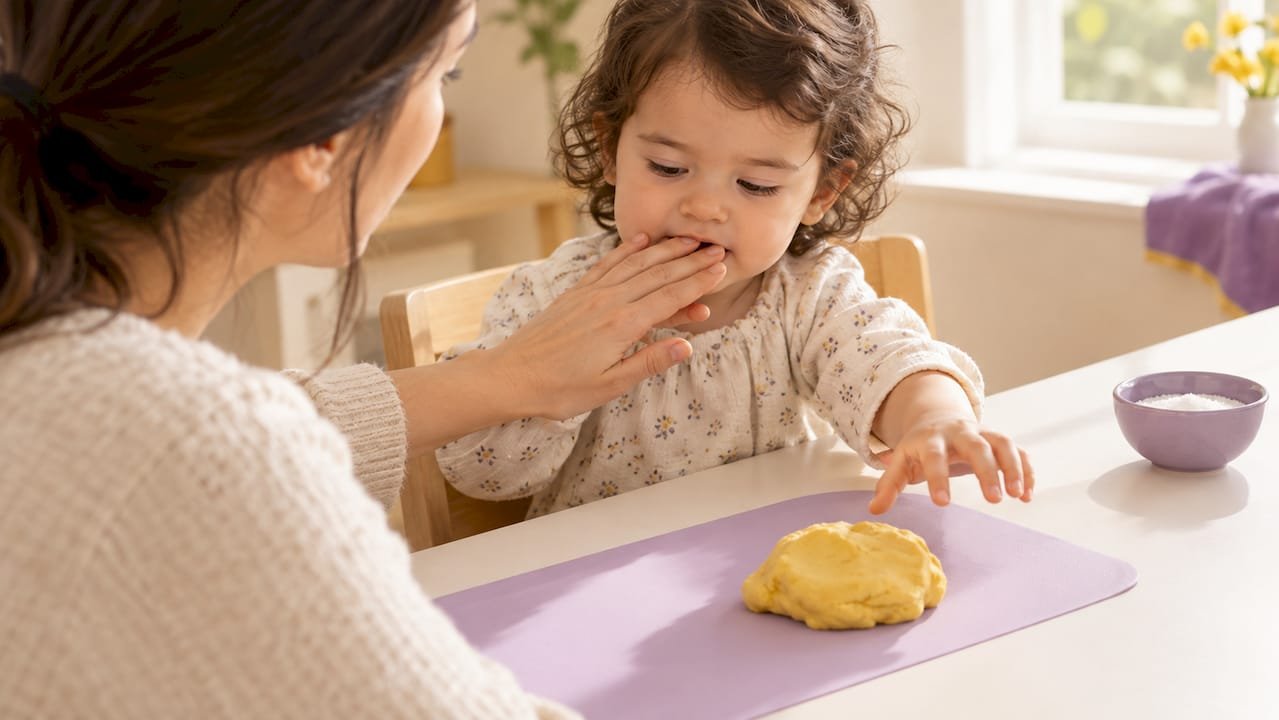
One safety note worth repeating: homemade dough is often quite salty, so it should never be treated as a food, even the mild versions. Supervise closely if your toddler still mouths objects, and check our taste-safe sensory play guide for alternatives designed with mouthing toddlers in mind.
3. Setting up safely: supervision and tool checks
Playdough is safe for most toddlers, but a few habits make it safer still, especially for children who are still at the mouthing stage.
- Stay within arm’s reach of any toddler who puts objects in their mouth, since poisoning and accidental swallowing are among the most common safety concerns for children under five
- Skip beads, small buttons, or any prop with detachable parts small enough to fit in a mouth
- Check plastic tools, cookie cutters, and rolling pins for cracks or broken edges before each use
- Look for accessories that meet the Toys (Safety) Regulations 2011 standards for children under 36 months, which set stricter rules on small parts
- Keep only one or two small portions of dough out at a time, and tidy up as soon as play ends
None of this takes long once it becomes a habit. A quick glance at your tools and a bit of proximity cover most of the risk.
4. Low-cost props and simple presentation ideas
You likely already own everything a great playdough tray needs. A rolling pin or clean glass bottle flattens dough, cookie cutters and bottle caps stamp shapes, and straws, lids, and natural loose parts like pinecones or shells add texture and pretend-play potential.
- Rolling pin, bottle, or wooden block for flattening
- Cookie cutters, bottle caps, or lids for stamping shapes
- Straws, twigs, pinecones, or shells as natural loose parts
Set up a small tinkering tray with three or four props at most, then rotate the selection weekly so the same dough feels new again. A few themed invitations work well: an ice-cream shop with scoops and cones, a bakery with cutters and a rolling pin, or a garden scene with twigs and stones for planting. For more prop ideas built around household items, our junk modeling guide covers a similar loose-parts approach.
5. What toddlers learn from playdough, plus two narration prompts
Playdough does a lot of quiet work behind the scenes. Squeezing and rolling build the hand and finger strength toddlers will later need for holding a pencil, while pinching and shaping support the fine motor skills tied to scissor use down the road, according to NAEYC’s guidance. Sharing tools and taking turns during pretend play builds early social skills, and counting out cookies or ice-cream scoops introduces basic math concepts without it feeling like a lesson.
- Fine motor strength that supports later pencil grip and scissor skills
- Language growth through naming colors, shapes, and actions
- Turn-taking and social skills when playing alongside others
- Early counting through sorting and grouping dough pieces
Try narrating what your toddler is doing: “You’re squishing the blue dough flat” or “Look, you made three little balls.” Simple, open comments like these build vocabulary without turning play into a quiz. Our narrating play guide has more ready-to-use scripts if you want a few on hand.
6. How Mooshie Moments supports playdough play at home
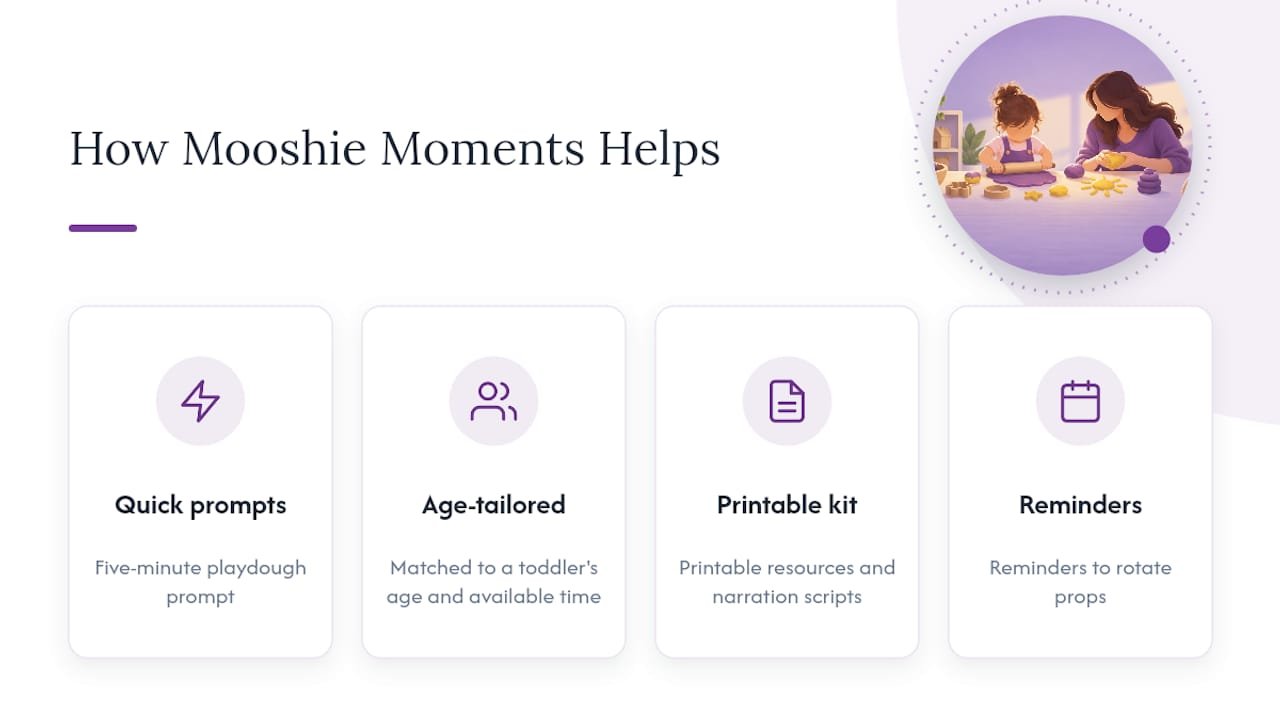
An app can offer quick, age-tailored, screen-free activity prompts and printable resources to help parents get a five-minute playdough prompt, a narration script, or a reminder to rotate props, matched to a toddler’s age and available time.
7. Keeping play simple and repeatable
Short, repeated playdough sessions beat one perfect setup. A lopsided snake or a squished cookie still counts as real learning.
— samit
8. Try Mooshie Moments for ready-made play prompts
Skipping the guesswork on what to set up next is the whole point. Mooshie Moments gives you age-tailored, screen-free prompts and printable resources whenever you need one, no extra supplies required.

- Age-tailored prompts based on your toddler’s stage
- Printable resources for nurseries and home alike, through the Partnership Pack
Browse the Mooshie app to see how it fits into your routine.
Sources
- Playdough Power | NAEYC
- Homemade playdough recipe — Rainy Day Mum
- Gov
- Poisoning and accidental swallowing — Healthier Together (NHS)
- Sensory items and sensory bin ideas — NAPA Center
FAQ
What are some fun activities I can do with playdough?
Try rolling snakes, cutting shapes with a blunt plastic knife, stamping patterns with cookie cutters, or setting up a pretend bakery or ice-cream shop. Rotating through fine motor, sensory, and pretend-play categories keeps sessions fresh without needing new supplies.
What do toddlers learn from playing with playdough?
Playdough builds the hand and finger strength toddlers need for later pencil grip and scissor use, according to NAEYC. It also supports language growth, turn-taking, and early counting skills through everyday play.
Is playdough OK for a 2 year old?
Yes, playdough is generally fine for a two-year-old as long as an adult supervises the session closely. Since many homemade recipes contain a fair amount of salt, watch for mouthing and choose a milder cornstarch-based dough if your toddler still puts things in their mouth.
What can a 3 year old make with Play-Doh?
A three-year-old can usually manage simple shapes, snakes, flattened cookies, or stamped patterns using cutters and household tools. Pretend scenarios, like a garden or bakery setup, also work well at this age since three-year-olds can follow a short storyline while they play.
Recommended
- 40 Fun 2 Year Old Activities to Start Right Now
- Fun 9-Month-Old Activities for Busy Parents
- 12 Low Prep Toddler Activities for Grandparents With Seated Options
- Junk Modelling for Toddlers: Easy EYFS-Aligned Activities
Want a new idea every day, matched to your child's age?
Mooshie Moments gives you simple, guided play ideas for ages 6 months to 4 years.
Download free on the App StoreMore like this
Babysitting Toddlers: 12 Low Prep Ideas and Why They Help
Explore 12 low prep toddler activities for babysitters, with developmental benefits, age adaptations, UK safety advice, and optional activity coaching.
10 EYFS Backed Sock Games for Toddlers Under Five Minutes
Ten EYFS aligned sock games to start in under five minutes, each with a one line developmental benefit, simple adaptations, and two…
Busy Parents: 12 No Prep Shopping Activities for Toddlers
Busy parents: keep toddlers learning and calm at the store with 12 no prep, screen free activities that take under five minutes…