
Three Minute Mess Free Sensory Play For UK Parents
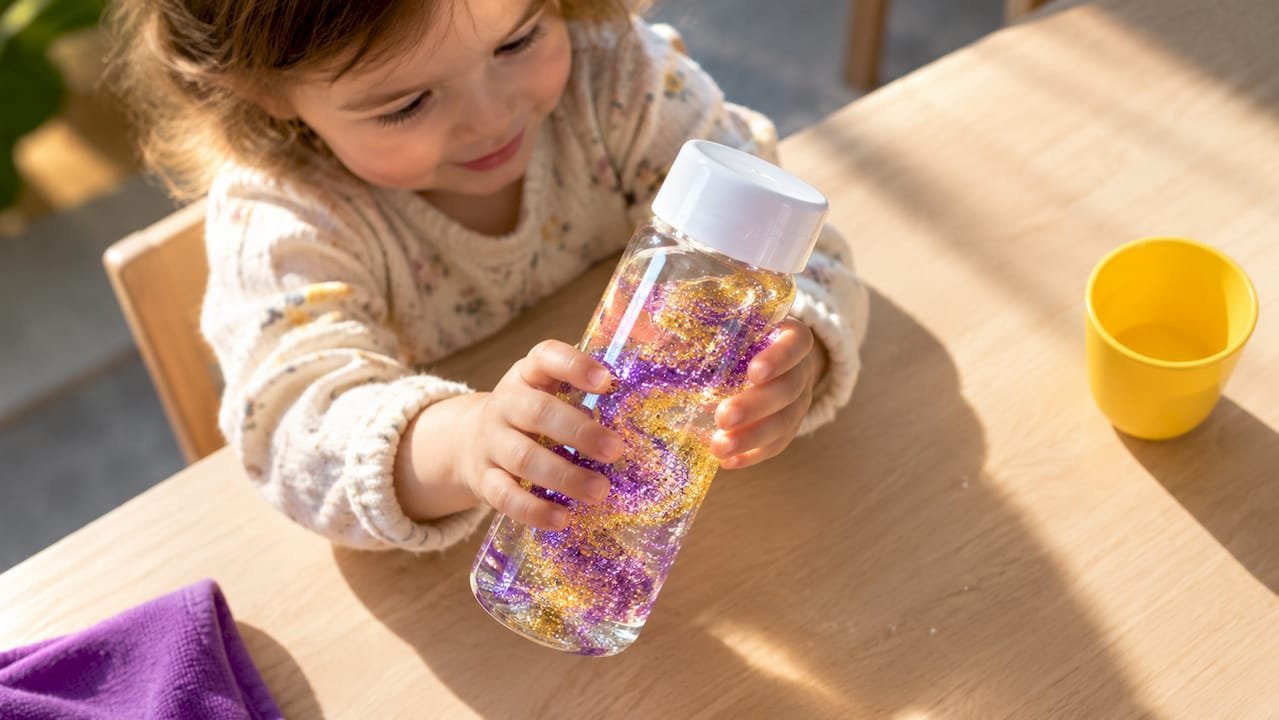
Mess-free sensory play means contained activities like sealed sensory bags, discovery bottles, and contact-paper collages that give babies and toddlers real tactile, visual, and auditory input with no loose fillers to sweep up afterward. The fastest wins are sensory bags packed with paint or beads, sensory bottles with secured lids, and sticky-wall contact-paper art. Each one delivers genuine sensory development in five to ten minutes, and cleanup takes seconds, not a mop.
TL;DR:
- Use a few pre-made, sealed sensory bags and bottles with safe, no-spill contents to provide quick, contained tactile experiences without cleanup.
- Establish firm boundaries and routines, such as taping bags to surfaces and using trays with raised edges, to prevent spills during sensory activities.
- Focus on activities suitable for your child’s age, ensuring small parts are always supervised and never left unattended to avoid choking hazards.
- Keep supplies like resealable bags, contact paper, and washable markers on hand while avoiding loose glitter, sand, small beads, and raw flour for safety.
- Building habits of containment and time limits helps make messy-free sensory play a consistent, stress-free part of your child’s development.
Table of Contents
- Easy Sensory Activities You Can Set Up Today
- Setting Up Without the Spill Risk
- Which Activities Fit Your Child’s Age
- Materials Worth Keeping on Hand (and What to Skip)
- Why This Approach Actually Works
- What Parents Get Wrong About Mess-Free Play
- Sources
Easy Sensory Activities You Can Set Up Today
You don’t need a craft cupboard or a free afternoon to give your toddler a rich sensory experience. These activities use things you probably already have, and every single one skips the loose-fill mess of sand tables, water beads, or shaving cream.
-
Sensory bags. Squeeze non-toxic paint, hair gel, or a little oil and water into a heavy-duty resealable bag, push out the air, and tape the seal shut. Your toddler squishes, swirls, and mixes colors without ever touching wet paint. Sealing paint, oil, or beads inside a bag keeps the mess fully contained while your child still gets the full tactile and visual payoff.
-
Discovery bottles. Fill a clear plastic bottle with water, glitter, and a drop of dish soap for a calm-down shaker, or add dried beans and rice for a noisy version. Screw the cap on tight, then check it twice before handing it over.
-
Contact-paper collage. Tape a sheet of contact paper sticky-side out to a low window or wall. Hand your toddler tissue paper scraps, pom-poms, or fabric bits to stick and peel. It builds pincer grip and hand-eye coordination, and Busy Toddler’s sticky-wall setup is one of the simplest zero-mess activities around because nothing loose ever hits the floor.
-
Cupcake pan sorting. Give your toddler a muffin tin, a small bowl of buttons, pom-poms, or big pasta shapes, and let them sort by color into each cup. It’s counting practice, fine motor work, and a built-in container all at once.
-
Texture baskets. Fill a basket with fabric scraps, a soft brush, a cool spoon, and a bumpy sponge. Name each texture as your child touches it (“bumpy,” “smooth,” “fuzzy”) to stretch their sensory vocabulary alongside the tactile input.
-
Quick rotation ideas. Playdough on a tray keeps stray crumbs off the carpet. A squishy bag of hair gel works as a shaving-cream substitute for toddlers who mouth everything. Sticker mosaics on cardstock give that satisfying peel-and-stick feeling with zero loose parts. Shakers made from empty water bottles and dried lentils turn into instant musical instruments. Dry-erase markers on a window let toddlers draw and wipe clean in seconds. A flashlight in a dark room, aimed at shapes or your child’s own hands, adds a visual sensory layer with no supplies at all.
Pro Tip: Keep three or four go-to sensory bags pre-made and stashed in a drawer. When you need five calm minutes, you grab one instead of building an activity from scratch.
Setting Up Without the Spill Risk
A little structure before you start saves you the cleanup later. Practitioners suggest beginning with contained activities so you can establish routines before introducing anything messier.
- Set a time limit and stick to one surface, like a high-chair tray or a low table.
- Tape sealed bags directly to the tray or a window so they can’t slide onto the floor.
- Use a shower curtain liner or a tray with raised edges under bottles and bins to catch stray drips.
- Store sealed bags and bottles in a labeled bin with a lid so they’re ready to reuse next time.
- Keep a pack of wipes within arm’s reach before you start, not after.
Pro Tip: Clear boundaries matter as much as physical barriers. Busy Toddler notes that firm, consistent rules about what stays on the tray cut down on spills far more than any tray design ever will.
Which Activities Fit Your Child’s Age
Not every contained activity suits every stage, mostly because of what ends up in your toddler’s mouth.
- 6 to 12 months: stick to sensory bottles and taped sensory bags, always supervised and never left unattended.
- 12 to 24 months: contact-paper collage and cupcake pan sorting work well once your toddler can grip small objects without swallowing them.
- 2 to 4 years: shakers, window drawing, and multi-step sorting activities suit growing fine motor skills and longer attention spans.
For anything that touches a baby’s mouth, double-check every seal before play starts, skip loose beads for children under three, and never leave a sensory bag or bottle unattended. If your toddler mouths everything, taste-safe options are worth exploring instead, and our taste-safe sensory play guide covers ten ideas built specifically for that stage.
Materials Worth Keeping on Hand (and What to Skip)
A small stash of the right supplies makes mess-free play something you can pull off on a tired Tuesday, not just a Pinterest-worthy Saturday.
- Keep stocked: heavy-duty resealable bags, clear plastic bottles, contact paper, washable markers, and silicone or non-stick toys.
- Avoid: loose glitter, loose sand, small beads for under-3s, and raw flour near carpet.
- Swap in: pom-poms, fabric scraps, and laminated picture cards instead of any loose filler that scatters.
- One DIY note worth a caveat: some parents tint rice and dry it on parchment paper before sealing it into a bottle. Skip this one entirely if your child still mouths objects, since dried rice is a choking risk once it’s loose.
Why This Approach Actually Works
Some apps build their libraries around exactly this problem: parents want real developmental play without the setup marathon. Some apps match quick, screen-free activities to a child’s age and available parental energy, with ideas checked against child-development research and early-years frameworks like the EYFS.
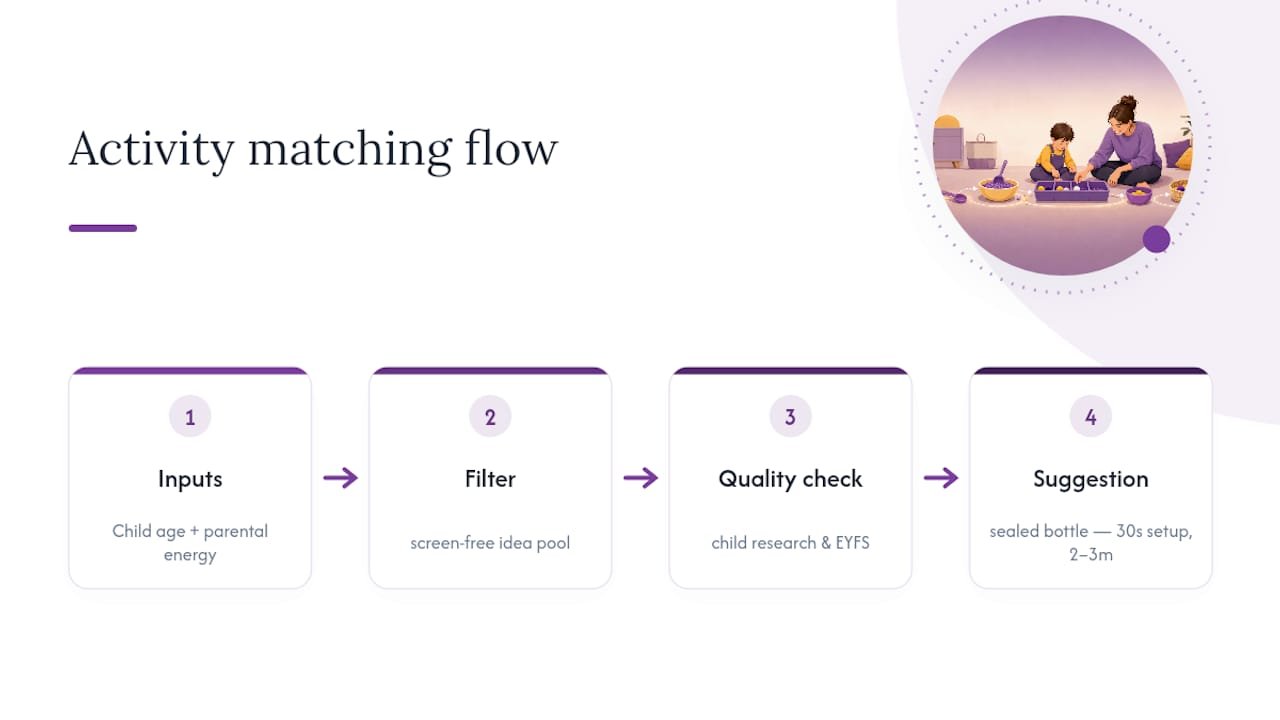
A typical activity for an 18 month old might be to seal glitter, water, and a drop of dish soap in a bottle, tape the cap, and let the toddler shake and watch for two to three minutes while naming the colors together. No spill, no setup beyond thirty seconds, and a genuine visual-tracking win. If you want more prompts like it, the Mooshie Moments app delivers new ones matched to your child’s age every time you open it.
What Parents Get Wrong About Mess-Free Play
The biggest misread on mess-free sensory play is treating it as the consolation prize, something you do because you’re too tired for the “real” version with paint trays and water beads. That’s backward. Starting with contained activities builds your confidence as much as it builds your toddler’s skills, and confidence is what actually gets sensory play repeated week after week rather than abandoned after one bad Tuesday.
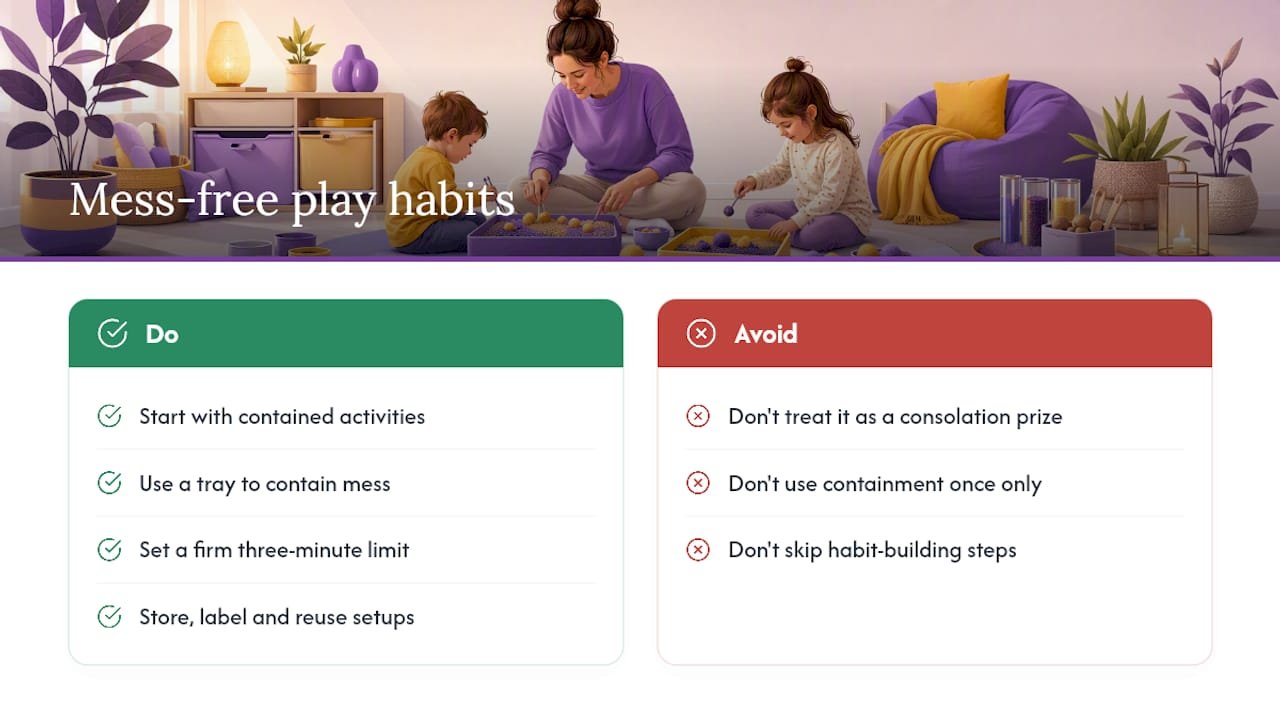
Where most advice falls short is treating containment as a one-time trick rather than a routine. A taped sensory bag is only mess-free the first time if you never plan to use it again. Build the habit of storing, labeling, and reusing your setups, and the whole category stops feeling like extra work.
If you take one thing from this, prioritize the pairing of physical containment with a firm time limit. A tray keeps mess off the floor. A three-minute rule keeps the whole activity from spiraling into something you didn’t sign up for. Get those two habits right before you worry about which activity to try next.
— samit
Sources
Recommended
More like this

Five Minute Routine Activities to Help Speech Delay in UK Toddlers
Quick, routine based activities UK parents can use in 5–15 minutes to support a toddler with speech delay. Evidence backed techniques and…
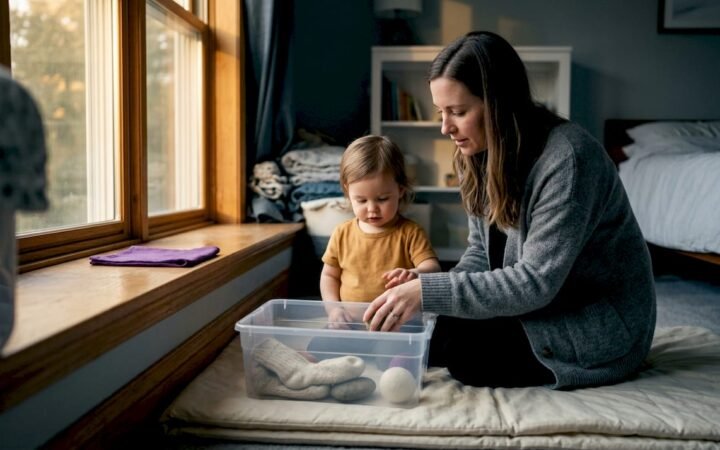
10 Quiet Bin Ideas UK Parents Can Build in 5 Minutes
Practical, EYFS-aligned quiet-bin ideas UK parents can assemble in five minutes. Includes 10 ready bins, a five-bin rotation, safety checks, and quick...
4–8 Toys: Montessori, Behavior Led Toy Rotation for Toddlers
Montessori inspired, behavior led toy rotation for toddlers. Start with 4–8 toys, set up in under 20 minutes, and refresh play without…