Activities for Toddlers with Down Syndrome

ADDITIONAL NEEDS · 6 MONTHS TO 4 YEARS

Activities for Toddlers with Down Syndrome

Strengths-based activities for toddlers with Down syndrome, built on imitation, rhythm and connection, from an app with tips for physio, OT and SALT play.

  • Free to download
  • No account needed
  • No screen time for your child
QR code to download Mooshie MomentsOn a laptop?
Scan to get Mooshie on your iPhone.
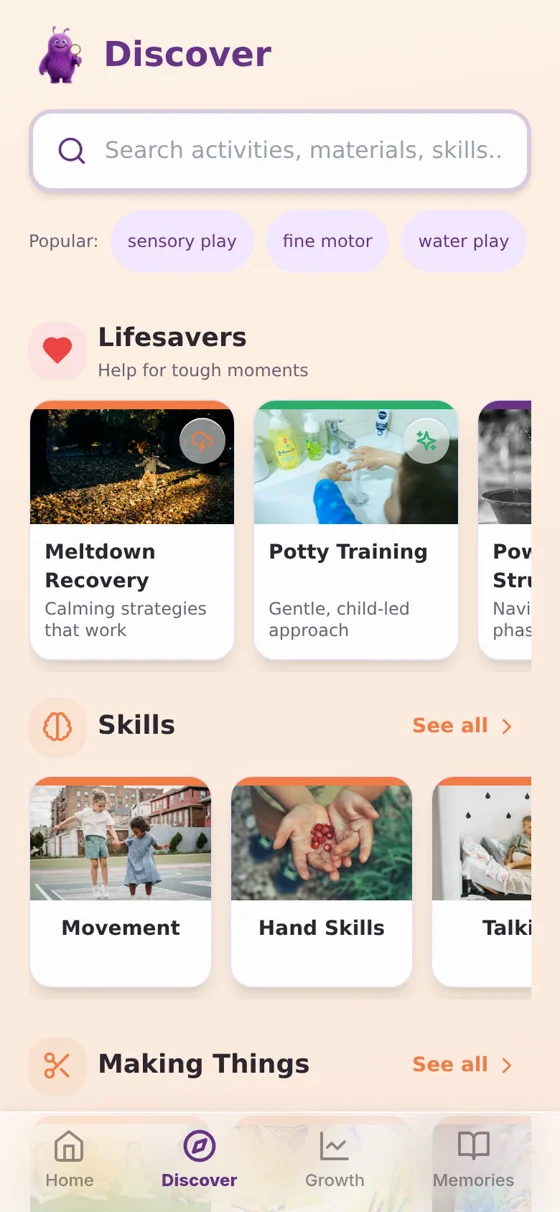
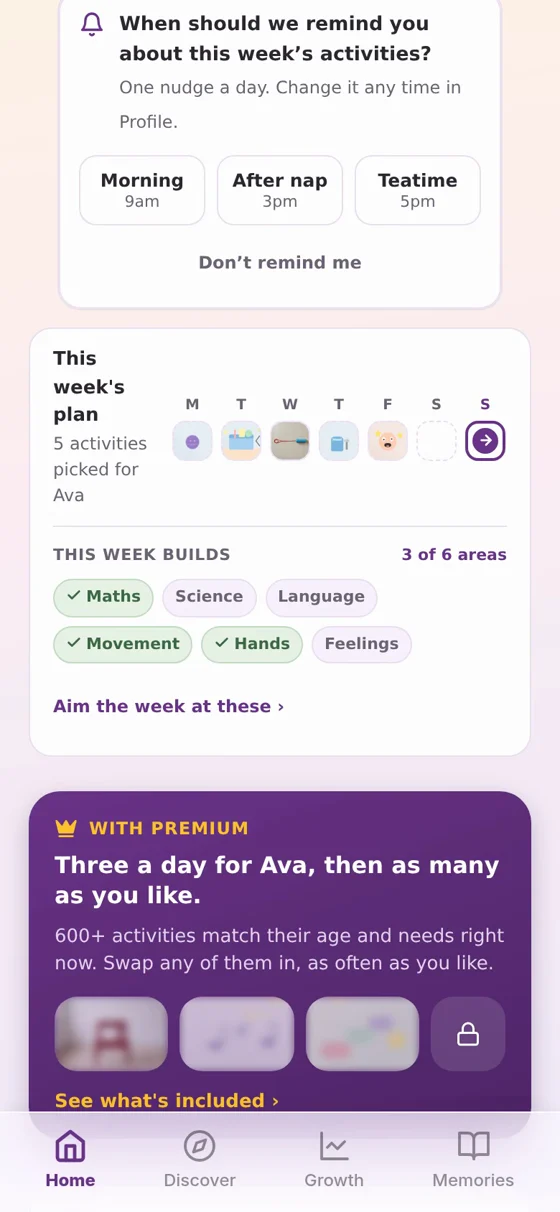
Mooshie Discover screen with Lifesavers for meltdowns and potty trainingThis week's plan showing five activities and the areas they build
5,918activities, adapted to your child
13additional needs you can add
Filteredwhat won’t suit them is left out
0child details uploaded, ever

Activities for toddlers with Down syndrome tend to go furthest when they lean on what your child already does well: watching your face, copying you, and enjoying being close to you. Imitation, rhythm and social connection are common strengths, and the ten activities below are built around them rather than around a list of things to fix.

These come from the Mooshie Moments app, for children aged 6 months to 4 years. Each uses ordinary things from around the house, takes about 10 minutes, and comes with the exact words to say as you go. Every one is paced slowly on purpose, with rest built in.

A few things that help across the board

Slow down more than feels natural.

Extra processing time is common, so pause longer than you think you need to before expecting a response.

Repeat the same activity across several days.

Progress often shows up as slightly more confidence on day four, not as mastery on day one.

Pair words with signs.

Many families find Makaton or simple baby signing gives their child a way to communicate before speech catches up.

Watch for tiredness, not just effort.

Some children with Down syndrome tire more easily during physical play, so short bursts with proper rests work better than one long session.

Movement, with low muscle tone in mind

Hypotonia, or lower muscle tone, is common in Down syndrome and means big movements can take more effort and more time to build than they do for other toddlers. None of that stops a child moving, it just changes the pace.

1 to 210 minutes

1. Slow Spin and Squeeze Hug

You’ll need: open floor space

How to play
  1. Hold your toddler facing you and turn one slow circle together, counting “one, two, three”.
  2. Stop and pull them into a firm three-second hug: “and hug!”
  3. Watch their face before doing another round. Laughing usually means more; wide eyes mean pause.
  4. Two or three rounds is plenty, finishing with a long cuddle.
Say this: “Round and round.” · “And hug!” · “Cuddle time now.”
6 to 12 months10 minutes

2. Tummy Time, Sung Slowly

Lay your baby on their tummy with a small rolled towel under their chest for support if lifting their head is hard work. Sit at eye level and sing “Twinkle Twinkle” very slowly, one line every five seconds. When you see a head lift or turn towards you, say “you looked, strong neck”. Two or three verses is enough before rolling them onto their back for a rest.

You’ll need: a firm mat and a rolled towel

2 to 310 minutes

3. Mirror Copy Game

Sit together in front of a mirror. Wave slowly and hold it for three seconds, saying “wave, hi there” and adding the sign if you use one. Wait for any copy at all, an arm lift counts. Rest for thirty seconds between moves, then try touching your nose or tapping your chest. Seeing themselves copy you in real time often helps coordination land more than watching you alone.

You’ll need: a floor-height mirror

Hands and grip

Many children with Down syndrome also have lower muscle tone in their hands, so a whole-fist grip is normal for longer than it is for other toddlers. Chunky, forgiving materials let them succeed with the grip they’ve got.

2 to 310 minutes

4. Chunky Crayon Scribble

Put the crayon in their open palm and help their whole hand wrap round it rather than expecting a pencil grip. Guide the very first mark, then take your hand away. Scribbles, dots and stray lines are all a win: “you drew, blue lines”. Stop when the crayon drops or interest fades, and try again with a fresh sheet tomorrow.

You’ll need: a thick, walnut-sized crayon and large paper

2 to 310 minutes

5. Knock the Tower Down

Stack two blocks slowly while your child watches, then invite them to knock it over: “knock it down!” Any action counts, a tap, a swipe, even just reaching towards it. Once knocking down is familiar, try building a tower of three, one block at a time with a pause between each, before handing over the knock-down. Stop after five or six rounds.

You’ll need: 4 to 5 large, soft blocks

6 to 12 months10 minutes

6. Reaching for the Rattle

Hold the rattle at chest height and move it slowly towards one hand, stopping a little way off and waiting. Any arm movement is worth celebrating, “you reached, look at you”, whether or not they actually grasp it. Rest between sides and do about four reaches in total, watching for tiredness as low muscle tone can make reaching more effortful than it looks.

You’ll need: a chunky, lightweight rattle

Communication and early signing

Speech often develops more slowly than understanding in Down syndrome, which means a child may follow far more than they can say. Signing, such as Makaton, gives them a way to be understood in the meantime.

2 to 310 minutes

7. Sign and Word Picture Book

Point to a picture, an animal is a good start, and say the word slowly while making the matching sign, holding it for a couple of seconds. Invite them to try the sign too, helping their hand if needed, and celebrate any attempt with “yes, dog”. Five or six pictures is enough for one sitting, and repeating the same book daily builds recognition faster than a new book every time.

You’ll need: a sturdy board book with single pictures

3 to 410 minutes

8. One Step, Then Two

Give one simple instruction at a time, “get the spoon”, pointing as you say it, and wait a good ten seconds before helping. Once one-step directions are landing well, try two together, “get the spoon, put it on the table”, saying each part slowly with a pause between. Mixing a few one-step requests with the occasional two-step one respects where your child’s language processing actually is, rather than where a chart says it should be.

You’ll need: familiar household objects

Connection and rhythm

Social warmth and a love of rhythm are common strengths, and much of this play is really about being close together with a shared, repeated rhythm to hold onto.

6 to 12 months10 minutes

9. The Nest Song

Arrange blankets into a soft, enclosed nest on the floor and sit inside it together, dimming the lights if you can. Sing a lullaby very slowly, stretching each line, and sway gently as you go. Between verses, say quietly “safe here, I’m with you”. A minute of quiet together after the song often does as much as the song itself.

You’ll need: three or four blankets

3 to 410 minutes

10. Colour Baskets

Sort blocks by colour together, no speed and no pressure, saying the colour clearly each time a block goes in: “red goes in red”. If they choose the wrong basket, simply show the right one without a correcting tone. The repeated word alongside the repeated action is what builds colour vocabulary here, not the sorting itself.

You’ll need: two baskets and blocks in two colours

All 5,918 activities adapt to your child.

Add their needs once. Mooshie leaves out what won’t work and adds tips where they help.

LOVED BY FAMILIES

Parents and experts on Mooshie

“I used to spend 30 minutes looking for an activity on Pinterest, get overwhelmed, and just turn on the TV. Mooshie takes 5 seconds.”
Sarah J.Mum of a 2-year-old
“Finally, an app that tells me to put my phone away. The activities are actually doable with stuff I have in my junk drawer.”
Mark D.Dad of two
“As a pediatric OT, I love that these activities build core developmental skills without feeling like ‘homework’ for parents.”
Dr Emily R.Paediatric occupational therapist
HOW MOOSHIE HELPS

How Mooshie adapts activities for Down syndrome

When you add Down syndrome as an additional need in the app, it changes what you’re shown, not just what you’re told:

  • Activities your child can’t yet do are filtered out, so you’re not offered something that assumes strength or speed they haven’t built yet.
  • Adaptation tips only appear where they’re relevant to that specific activity, favouring repetition, songs and rhythm, and simple, concrete instructions with hand-over-hand guidance where it helps.
  • You get the full library of 5,918 activities, adjusted for your child rather than a separate, smaller set.
  • Everything stays on your phone. Your child’s needs are never uploaded anywhere.

Children don’t use Mooshie; parents do. You check an idea in around 30 seconds and put the phone away to play.

Questions parents ask

Is it normal for my child with Down syndrome to be behind on milestones?

Many children with Down syndrome reach milestones at their own pace, often later than typically developing peers, and that’s not something to fix through play alone. Working alongside your child’s physiotherapist, occupational therapist or speech and language therapist gives you a plan tailored to your child; these activities are for playing together, not a substitute for that support.

Should I use Makaton if we’re not sure yet?

Many families start signing early, well before it’s clear how speech will develop, simply because it gives a child a way to communicate sooner. It’s worth asking your speech and language therapist or health visitor what they’d recommend for your child specifically.

My child tires quickly during play. Is that normal?

Lower muscle tone and, for some children, heart conditions associated with Down syndrome can mean physical play is more tiring than it looks. Short sessions with real rests, as in the activities above, are the sensible default; if you’re ever worried about fatigue or breathing during play, speak to your GP or health visitor.

How long should each activity last?

Around 10 minutes is a reasonable target, but follow your child’s cues over the clock. Stopping while it’s still enjoyable, even after five minutes, beats pushing to the full ten.

Is Mooshie a therapy app?

No. Mooshie is a play companion for parents and carers. It doesn’t diagnose or treat anything and it doesn’t replace physiotherapy, occupational therapy, speech and language therapy or advice from your health visitor or GP.

Mooshie is a play app, not medical advice. If you’re worried about your child’s development, speak to your health visitor or GP.

Make memories. Build skills. Play together.

Your first moment is ready as soon as you tell us their age.

Mooshie MomentsFree on iPhone
Get it free